


4, Apr 2026
Air Ticket Prices Rise Sharply Due to Costlier Fuel
New Delhi: Air travel in India has become more expensive as flight ticket prices have increased sharply in recent weeks. The rise is mainly due to higher fuel costs caused by global tensions.
Compared to last year, airfares in April have gone up by about 44%. A ticket that cost around ₹5,850 in April 2025 now costs nearly ₹8,450. International ticket prices have also increased, rising from about ₹52,000 to ₹74,500.
Major routes are seeing big jumps in fares. For example, Delhi to Bengaluru tickets now cost between ₹10,500 and ₹14,000, up from ₹7,200–₹8,500 last year. Mumbai to Chennai fares have also increased significantly, and Mumbai to Delhi tickets are now much more expensive than before.
The main reason for this increase is the rising price of aviation fuel. Global oil price hikes, airspace restrictions, and changes in currency value have made airline operations more costly.
The government has taken some steps to control the situation, including offering relief on fuel prices and trying to improve seat availability. However, ticket prices are still rising. Experts say fares could have been even higher without these measures.
Passengers are likely to continue facing high ticket prices, especially during busy travel seasons.

- 0
- By Neel Achary

4, Apr 2026
Russia Steps In to Boost Oil and Gas Supply to India Amid Global Disruptions
New Delhi: In a move that underscores long-standing strategic ties, Russia has offered to increase oil and gas supplies to India as global energy markets face uncertainty due to ongoing tensions in the Middle East.
The assurance came during high-level discussions between Russian First Deputy Prime Minister Denis Manturov and key Indian leaders, including External Affairs Minister S. Jaishankar and National Security Advisor Ajit Doval. Manturov also met Prime Minister Narendra Modi and Finance Minister Nirmala Sitharaman to explore ways to deepen bilateral cooperation.
The discussions placed strong emphasis on expanding collaboration in the energy sector. Manturov noted that Russian companies are well-positioned to quickly ramp up supplies of oil and gas to meet India’s growing needs.
The offer comes at a critical time, as disruptions in shipping routes—particularly around the strategically important Strait of Hormuz—have affected global energy flows following conflict in the Middle East. These developments have raised concerns about potential supply shortages, especially in West Asia.
With this renewed commitment, Russia once again signals its readiness to support India during periods of global uncertainty, reinforcing a partnership that continues to play a key role in energy security.
3, Apr 2026
Springtime Indulgence: Easter at ITC Royal Bengal & ITC Sonar, Kolkata

As spring blooms in the city, ITC Royal Bengal and ITC Sonar come together to mark Easter with two beautifully curated brunch experiences, set to unfold on 5th April 2026.
At Grand Market Pavilion, the Easter Garden Brunch from 1:00 PM to 3:45 PM transforms the space into a charming garden escape alive with the warmth and colour of spring. Families can enjoy a festive spread of seasonal favourites and indulgent desserts, complemented by interactive live stations, an Easter egg hunt, and cupcake decorating activities — making it a thoroughly delightful afternoon for all ages.
Meanwhile, Eden Pavilion hosts Easter Eggcitement, a refined celebration featuring a lavish buffet of gourmet delights, festive flavours, and decadent sweet creations in an elegant, relaxed setting — ideal for gathering with loved ones and toasting to the season. Priced at INR 1,800 plus taxes per person, this is available from 12:30 PM to 3:30 PM.
Whether you seek festive family fun or an elevated culinary affair, both venues offer the perfect backdrop for a truly memorable Easter celebration. Reserve your table and make this spring one to cherish.
3, Apr 2026
Georgia Tech Pioneers First Space Sustainability Course in the U.S.
When Polina Verkhovodova began her aerospace engineering Ph.D. at Georgia Tech in 2022, she never imagined developing an interest in space sustainability policy. But a pair of courses showed her how her technical engineering background could merge with policy.
Verkhovodova enrolled in courses on space policy and space sustainability taught by Thomas González Roberts, an assistant professor in the Sam Nunn School of International Affairs and the Daniel Guggenheim School of Aerospace Engineering (AE). Although Roberts is new to Georgia Tech, he is deeply connected within the international space community and regularly brings outside experts into his classroom. Guest speakers introduce students to the breadth of careers in the field, from technical analysis to national and multinational policymaking.
One lecture in the policy class, delivered by a representative from the Matthew Isakowitz Commercial Space Scholarship program, opened a door for Verkhovodova. She later won the scholarship while in Roberts’ sustainability course and spent a summer in Washington, D.C., on the government affairs team for Voyager Technologies Inc., the space technology company.
“These courses gave me a new perspective on how we use and consider the space environment,” Verkhovodova said. “They revealed the interdisciplinary nature of the field of space sustainability to me. Now, I see myself working at that intersection of policy and engineering.”
Georgia Tech’s space sustainability course is the first of its kind in the United States, and each year, it focuses on a different theme. In 2025, it was space congestion in low Earth orbit; this year, it’s lunar surface coordination among nation-states.
Building a New Kind of Class
Roberts designed the course around three components: foundations of space sustainability, an introduction to the principal sustainability challenges in the space domain and how space actors try to solve them; a signature guest lecture series he calls “Space Sustainability According To…” to show students how these solutions work in practice; and a project workshop, where students break into small groups to answer research questions under the mentorship of Roberts and an external partner organization.
The guest lecture series brings in professionals from a wide range of organizations — economists, astronomers, diplomats, and industry leaders — to discuss what sustainability means within their part of the space ecosystem. Past speakers have represented institutions including NASA, the United Nations, and Northrop Grumman.
“They all have different perspectives on what it means to be a sustainable steward of the space domain,” Roberts said. “A company needs to be profitable, while NASA’s mission focuses on expanding human knowledge. I want students to see the full spectrum of career paths that will let them work on space sustainability for the rest of their careers, if they choose to.”
These conversations expose students to the tools, ideas, and people shaping the emerging discipline — connections that often extend well beyond the classroom.
Modeling the Future of Space Some guest speakers are part of the course’s external partnerships with leading space sustainability organizations, like last year’s collaboration with The Aerospace Corporation and this year’s with the Open Lunar Foundation.
In 2025, The Aerospace Corporation showed students how to use important research tools and also mentored student research teams as they developed their final projects. One of these tools was the MIT Orbital Capacity Assessment Tool (MOCAT), an influential model used to study the effects of space debris on the long-term usability of the most popular portion of the space domain. Space debris and the resulting congestion for satellites and spacecraft navigating around this debris are some of the most pressing challenges in space sustainability.
“One of the most unique experiences was that our professor used his connections to bring the original architects of MOCAT into the class,” said aerospace engineering Ph.D. student Neel Puri.
Among those architects was Miles Lifson. A graduate school colleague of Roberts’ at MIT, Lifson is now a project leader in flight mechanics at The Aerospace Corporation. While Aerospace Corporation already collaborates with Georgia Tech through internships and lab partnerships, Lifson saw the class as a rare chance to work directly with students.
“When I heard about this class, I was really excited,” he said. “Space situational awareness, space debris, spacecraft coordination — these issues are becoming increasingly important as we put more spacecraft into orbit. It’s immensely rewarding to work with students because they’re passionate about solving problems and full of ideas. These are skills the space industry really needs.”
From Classroom to Conference Stage Lifson also supported students in their final projects, helping them use the MOCAT model to analyze real-world problems and craft policy recommendations. One project, led by Puri, grew into a published conference paper, “Space Sustainability Implications of Combining Space Environment Pathways With Shared Socioeconomic Pathways,” which he presented at the American Institute of Aeronautics and Astronautics SciTech Conference in January.
Their research builds on recent findings that climate change is thinning the upper atmosphere, reducing drag and causing debris to remain in orbit longer. Their work shows that, depending on future climate scenarios, predicted debris in low Earth orbit could vary by 15% to 100%, underscoring the significance of climate factors in long-term analysis and planning for space traffic management.
Even though sustainability is already part of Puri’s research focus, he credits Roberts and the course with opening another door in the field and providing valuable context to his doctoral dissertation.
A New Model for Tech-Driven Policymaking Roberts sees the course as part of a larger mission.
“Georgia Tech can be a factory for producing tech‑driven policymakers,” he said. “When I was choosing where to go in my career as a faculty member, I wanted to be part of that factory. I get to help shape it, both in my lab and new course offerings like this one.”
With its blend of policy, engineering, real-world tools, and direct access to leading practitioners, Georgia Tech’s space sustainability course is not just pioneering a new curriculum. It’s preparing the next generation of space leaders to navigate and protect an increasingly crowded frontier.
3, Apr 2026
SAIL Records 20.14 MT Steel Sales in FY26
Steel Authority of India Limited (SAIL) achieved a record 20.14 million tonnes of steel sales in FY26, marking its strongest performance to date.
The growth was driven by robust demand from construction, automotive, and infrastructure sectors. SAIL’s focus on high-quality products, efficient production, and expanding distribution networks helped meet nationwide industrial needs.
Beyond volume, the company emphasized sustainable production practices, aligning with environmental goals while supporting India’s economic growth.
With plans for modernization and capacity expansion, SAIL is well-positioned to maintain momentum and continue contributing to India’s industrial development.
3, Apr 2026
Two-Wheeler Makers Close FY26 Strong Amid Rural Recovery and Premium Demand
India’s two-wheeler industry wrapped up the fiscal year 2025-26 on a high note, buoyed by a revival in rural markets and a growing appetite for premium models. Manufacturers reported robust sales across motorcycles, scooters, and high-end bikes, signaling renewed consumer confidence and shifting preferences.
Rural Markets Drive Growth
A key factor in the industry’s strong performance has been the resurgence in rural demand. After a period of muted consumption, improved monsoon patterns, higher farm incomes, and targeted financing schemes have encouraged rural consumers to invest in personal mobility. Entry-level motorcycles, especially those priced below ₹80,000, saw healthy uptake, supporting sales volumes for brands catering to tier-2 and tier-3 towns.
Premium Segment Sees Surge
While rural recovery drove volume growth, urban markets contributed through heightened demand for premium two-wheelers. Scooters and motorcycles with advanced features, stylish designs, and superior fuel efficiency gained traction among young professionals and aspirational buyers. Electric two-wheelers are also slowly finding a foothold, with government incentives and rising environmental awareness nudging consumers toward sustainable options.
Strategic Moves by Manufacturers
Two-wheeler companies leveraged the favorable market environment with aggressive product launches, extended dealer networks, and targeted financing offers. OEMs invested in marketing campaigns highlighting safety, style, and efficiency, while expanding digital sales platforms to tap into tech-savvy buyers. Collaborations with fintech companies for easy loan approvals also played a crucial role in boosting rural demand.
Industry Outlook
Industry analysts expect the momentum to continue into FY27. Rural income growth, urban aspirational demand, and rising adoption of premium and electric models are likely to drive further expansion. Manufacturers are also focusing on after-sales service improvements, localized supply chains, and innovation in design and technology to sustain growth in a competitive landscape.
The combination of robust rural recovery and premium demand not only reinforces India’s position as one of the largest two-wheeler markets in the world but also highlights the evolving dynamics of consumer behavior. The sector’s ability to adapt and innovate will determine how it capitalizes on these trends in the years ahead.
3, Apr 2026
Sweet Surge: India’s Sugar Output Grows 9% This Season
India’s sugar production has seen a significant boost this season, rising 9% to reach 272.31 lakh tons as of March 31, 2026, according to data from the Indian Sugar Mills Association (ISMA). This increase reflects favorable crop conditions and higher yields across key sugar-producing states.
The latest figures indicate a steady recovery in output compared to the previous year, driven by improved cane availability, timely harvesting, and supportive weather conditions. Maharashtra, Uttar Pradesh, Karnataka, and Tamil Nadu remain the largest contributors to India’s sugar production, collectively accounting for a major portion of the total output.
Higher production is expected to ease pressure on domestic supply and could support steady prices in the coming months. The industry has also been focusing on enhancing efficiency and adopting modern milling techniques to maximize sugar recovery from sugarcane.
With India being one of the world’s largest sugar producers, the rise in production this season strengthens its position in global markets while also meeting domestic demand. The government and industry bodies continue to monitor output and market trends to ensure balanced supply and pricing stability.
3, Apr 2026
Chelvies Coffee Company Opens Its Doors at Spectrum Metro, Bringing a New-Age Café Experience to Noida
Noida, Apr 03: Strengthening its vibrant retail and F&B mix, Spectrum@Metro has welcomed the launch of Chelvies Coffee Company, a contemporary café concept that promises to redefine the coffee and dining experience for visitors.
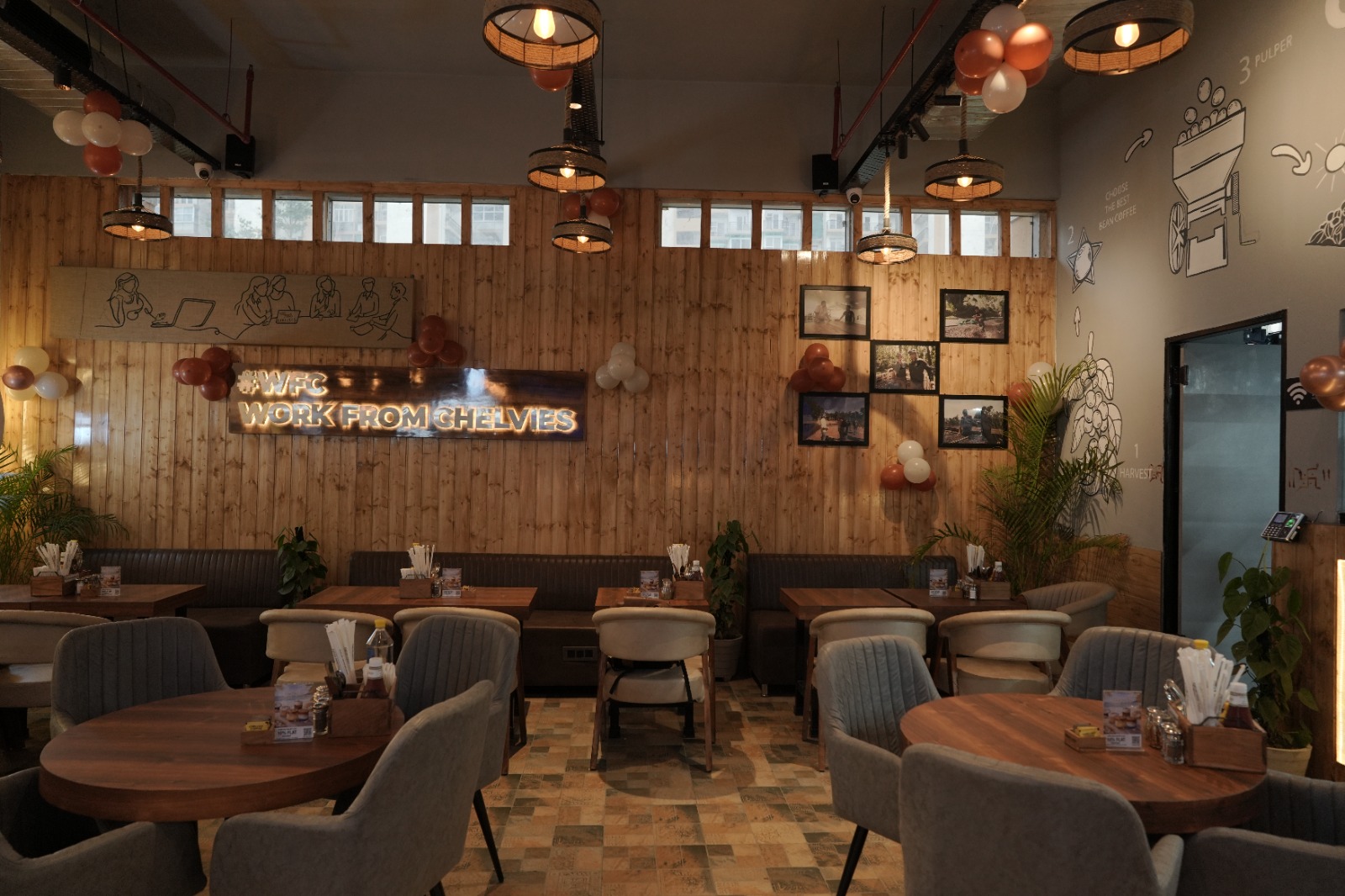
Located at Tower C, First Floor, Spectrum Metro Phase 1, Sector 75, the newly opened café offers a unique blend of a live kitchen, French bakery, in-house coffee roastery, and Italian woodfire pizzeria, making it a one-stop destination for food and coffee enthusiasts. With its thoughtfully designed interiors and artisanal approach, Chelvies Coffee Company aims to create a space “where every cup tells a story.”
The café brings together freshly brewed specialty coffee, handcrafted baked goods, and a curated menu of global flavors, catering to the evolving tastes of urban consumers seeking experiential dining.
Speaking on the launch, Ajendra Singh, Vice-President – Sales & Marketing, Spectrum@Metro, said,
“We are delighted to welcome Chelvies Coffee Company to Spectrum@Metro. The brand’s unique concept of combining a coffee roastery with a live kitchen and bakery aligns perfectly with our vision of offering a dynamic and experience-driven retail environment. We are confident that this addition will further enhance the overall lifestyle quotient for our visitors.”
With this addition, Spectrum@Metro continues to strengthen its positioning as a preferred destination for premium retail and culinary experiences in Noida, attracting leading brands and offering visitors a vibrant, all-encompassing lifestyle hub.
3, Apr 2026
Dubai property market sales hit AED176.7B in Q1 2026
fäm Properties analysis shows transactions rose 23.4% YoY in value, 5.5% in volume to 47,996 deals as off-plan growth continued in March
Dubai, UAE, 3rd April, 2026: The Dubai real estate market recorded 47,996 sales transactions worth AED176.7 billion in Q1 2026, a 5.5% year-on-year increase in volume and a 23.4% rise in value, as the property sector showed strong resilience in March.
A market report issued by fäm Properties today reveals that the off-plan segment dominated in Q1, accounting for 70% of sales transaction volume and 71% of total value, reflecting Dubai’s ongoing pipeline of new launches from major developers.
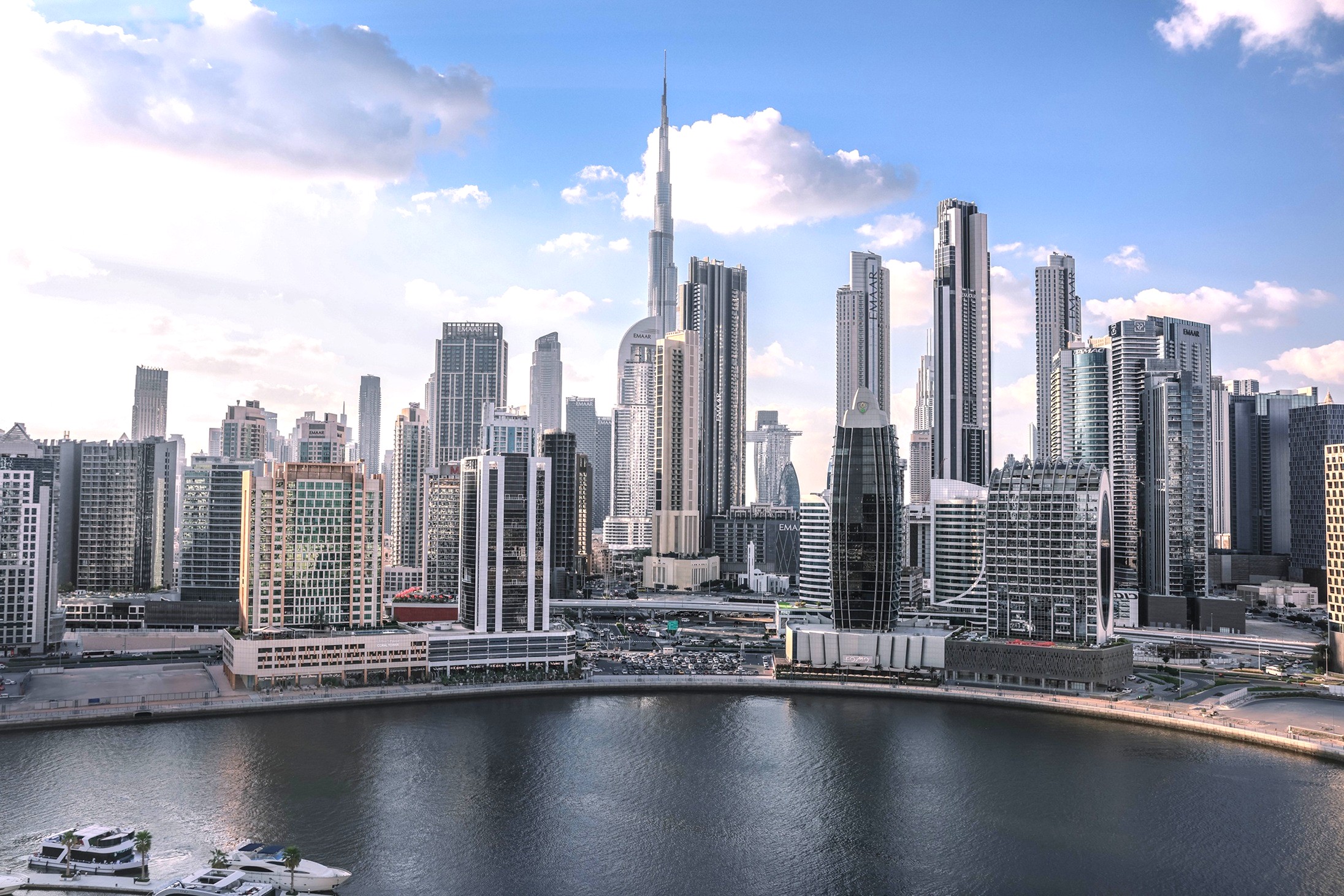
Data from DXBinteract showed that the off-plan market remained strong in March, with 10,303 sales transactions amounting to AED31.2 billion, representing YoY increases of 5.4% in volume and 8.9% in value.
“The market continues to show clear resilience even against a backdrop of regional uncertainty,” said Firas Al Msaddi, CEO of fäm Properties. “The investor confidence we’re seeing now is built on strong fundamentals, transparency and long-term growth drivers that remain firmly in place.”
Apartments led the way in Q1, with 36,428 sales transactions worth AED75.2 billion, a 10.5% increase in value. Villa sales transactions were up 17.9% in volume YoY to 8,261 deals amounting to AED59.1 billion, while commercial sales transactions, including offices and shops, soared by 69.1% to AED10.2 billion in value, despite a marginal 0.6% fall in volume to 2,048.
Meanwhile, sales transactions for plots rose 3.2% in volume YoY to 1,193, and by 14.3% in value to AED31.9 billion. The volume of Q1 mortgage transactions increased by 7.5% to 11,829.
In the primary market, the median price for villas climbed 35.3% YoY to AED4.1 million, while off-plan apartments were up by 3.1% YoY to AED1.4 million. Meanwhile, plots fell 23.6%, likely reflecting a shift in buyer preferences towards ready property.
A similar trend was seen in the resale market, where median prices for villas climbed 16.2% to AED4.3 million over 2025, and are now 35.1% above 2014 levels. Apartment resale prices rose 6.3% YoY to AED4.3 million, while plot resale prices dropped by 38.3% to AED4.8 million.
Mortgage transactions totalled 11,829 in Q1, up 7.5% year-on-year, with an overall value of AED59.8 billion, a 46% increase. In the resale segment, cash transactions accounted for 67% of activity, compared to 33% for mortgage-backed purchases.
The most expensive properties sold during Q1 went for AED 422 million at Aman Residences Tower 2, while the most expensive villa was sold for AED350 million at Jumeirah First. Led by Al Barsha South Fourth, the highest transaction volumes were concentrated in emerging communities attracting buyers with competitive pricing and new off-plan launches.
Top 5 Performing Areas by Volume in Q1
|
Area |
Transactions |
Value AED |
|
Al Barsha South Fourth |
3,162 |
4.0B |
|
Dubai South |
2,889 |
5.4B |
|
Al Yelayiss 1 |
2,885 |
12.9B |
|
Wadi Al Safa 5 |
2,694 |
4.5B |
|
Wadi Al Safa 3 |
2,273 |
5.3B |
Apartment Average Prices in Top 5 Areas
|
Area |
Avg. Price |
Price/sqft |
|
Dubai Creek Harbour |
2,940,888 |
2,559 |
|
Dubai Islands |
2,677,091 |
2,782 |
|
Business Bay |
2,265,000 |
2,595 |
|
Nad Al Sheba First |
1,405,000 |
3,567 |
|
Dubai South |
1,290,000 |
1,533 |
Villa Average Prices in Top 5 Areas
|
Area |
Avg. Price |
Price/sqft |
|
Me’Aisem Second |
15,831,888 |
1,784 |
|
Me’Aisem First |
12,213,000 |
2,016 |
|
Al Yelayiss 5 |
7,890,888 |
1,482 |
|
Nad Al Sheba First |
6,906,000 |
2,301 |
|
Dubai South |
4,250,000 |
1,327 |
Best Selling Projects in Q1 2026
Primary Market Apartments
|
Project |
Volume |
Value |
Median Price |
|
Binghatti Vintage |
539 |
412.4M |
699.0K |
|
Maybach 6 – Tower B |
403 |
689.6M |
1.4M |
|
Sierra By Iman |
338 |
483.2M |
1.3M |
|
Binghatti Cullinan |
326 |
393.0M |
880.0K |
|
Samana Boulevard Heights |
281 |
250.6M |
757.8K |
Primary Market Villas
|
Project |
Volume |
Value |
Median Price |
|
DAMAC Islands 2 – Bahamas 2 |
376 |
1.2B |
2.8M |
|
DAMAC Islands 2 – Cuba |
371 |
1.2B |
2.9M |
|
DAMAC Islands 2 – Bahamas 1 |
357 |
1.2B |
2.9M |
|
DAMAC Islands 2 – Tahiti 2 |
331 |
1.1B |
2.9M |
|
DAMAC Islands 2 – Bermuda |
323 |
1.0B |
2.9M |
Resale Apartments
|
Project |
Volume |
Value |
Median Price |
|
Peninsula Four |
62 |
151.7M |
2.2M |
|
The Holland Gardens |
54 |
81.1M |
1.5M |
|
Peninsula Three |
48 |
87.9M |
1.8M |
|
Ashjar |
47 |
94.8M |
2.0M |
|
The Neighbourhood C1 |
46 |
92.8M |
1.9M |
Resale Villas
|
Project |
Volume |
Value |
Median Price |
|
Rukan 3 |
46 |
65.4M |
1.2M |
|
Jumeirah Village Triangle |
41 |
203.2M |
5.0M |
|
The Valley-Nara |
36 |
111.8M |
2.9M |
|
The Valley-Orania |
34 |
103.1M |
2.8M |
|
Aura |
33 |
176.5M |
5.2M |
3, Apr 2026
India’s AgriTech Expertise Poised to Unlock $90 Billion Growth in Southeast Asia
ndia’s experience in agricultural technology could help Southeast Asia tap into a $90 billion growth opportunity in the AgriTech sector by 2033. The region, home to a large farming population, stands to benefit significantly from digital innovations that improve productivity, market access, and value chain efficiency.
Agriculture remains a backbone of Southeast Asia’s economy, yet many countries still rely on traditional farming practices and face fragmented supply chains. Experts say that wider adoption of AgriTech solutions—such as digital marketplaces, precision farming tools, agri-finance platforms, and crop innovation technologies—can transform the sector and drive both economic and social benefits.
India’s journey in fostering a supportive ecosystem for AgriTech startups offers a practical blueprint for Southeast Asian nations. From creating digital infrastructure for farmers to enabling specialized financing and innovative value chains, India’s approach demonstrates how technology can empower farmers while boosting rural economies.
The study highlights several areas with strong growth potential, including digital platforms connecting producers to markets, agri-fintech solutions providing easier access to credit, life sciences innovations to enhance crop yields, and sustainable consumer brands aligned with changing consumption patterns.
Realizing this potential could not only increase agricultural productivity and farmer incomes but also strengthen rural livelihoods, modernize food systems, and reinforce Southeast Asia’s position in global AgriTech innovation.