


26, Mar 2026
Rethinking Home Value: How Residential Space Economics Are Evolving

Residential space has never been just about shelter. It reflects how people live, work, and assign value to their surroundings. Over the past decade, the economics of residential space has shifted in ways that are both subtle and dramatic. From changing work patterns to rising land costs and evolving lifestyle expectations, the idea of what makes a home valuable is being redefined.
More Than Square Footage
Traditionally, the value of a home was closely tied to its size and location. Larger homes in desirable neighborhoods commanded higher prices, and buyers often prioritized square footage above all else. That model is now evolving.
Today, how space is used matters as much as how much of it exists. A well-designed 900-square-foot apartment with smart storage, natural light, and flexible layouts can outperform a poorly planned 1,500-square-foot unit. Buyers and renters are paying more attention to functionality, not just scale.
This shift has introduced a new layer to housing economics: efficiency. Developers are now investing in design innovations that maximize utility per square foot, which directly impacts pricing strategies and long-term value.
The Remote Work Effect
One of the biggest drivers of change has been remote and hybrid work. Homes are no longer just living spaces. They double as offices, classrooms, and even wellness zones.
This has led to increased demand for:
-
Dedicated workspaces or adaptable rooms
-
Soundproofing and privacy features
-
Access to natural light and ventilation
As a result, properties that can accommodate these needs are seeing higher demand and, in many cases, higher valuations. Suburban and peri-urban areas have also gained popularity as people move away from dense city centers in search of more usable space.
Storage as a Value Driver
Another overlooked but increasingly important factor is storage. Built-in storage solutions, modular furniture, and optimized layouts are becoming major selling points.
Buyers are recognizing that clutter-free living improves quality of life. This has pushed developers to rethink how storage is integrated into homes rather than treated as an afterthought.
In fact, thoughtful storage solutions can significantly influence property worth. Studies and market observations show that well-designed storage can enhance both perceived and actual value. A deeper look into this trend can be found in this analysis on Residential Property Valuations, which highlights how customized storage impacts financial outcomes in housing markets.
Urban Density vs. Livability
Cities continue to grow, but space within them is becoming more constrained and expensive. This creates a tension between density and livability.
Micro-apartments and compact housing units are becoming more common in high-demand urban areas. While these units offer affordability and central locations, they also challenge traditional expectations of comfort.
To balance this, developers are investing in shared amenities:
-
Co-working spaces
-
Rooftop gardens
-
Fitness centers
-
Community lounges
These shared environments effectively extend personal living space beyond the walls of individual units, reshaping how value is calculated.
Technology and Smart Living
Technology is also reshaping residential economics. Smart home features are no longer luxury add-ons. They are increasingly expected.
Features like:
-
Automated lighting and climate control
-
Security systems
-
Energy-efficient appliances
not only improve convenience but also reduce long-term costs. This makes properties more attractive to buyers who are thinking beyond the initial purchase price.
Energy efficiency, in particular, is becoming a key economic factor. Homes that reduce utility costs can command higher prices and attract environmentally conscious buyers.
Changing Buyer Priorities
Modern buyers are more informed and more selective. They are not just buying a property. They are investing in a lifestyle.
Key priorities now include:
-
Flexibility of space
-
Sustainability
-
Connectivity (both digital and physical)
-
Community and surroundings
This shift is influencing how properties are marketed, designed, and priced. Developers who understand these preferences are better positioned to succeed in a competitive market.
The Investment Perspective
From an investment standpoint, residential real estate is also evolving. Investors are looking beyond traditional metrics like location and rental yield.
They are increasingly considering:
-
Adaptability of the space
-
Long-term usability
-
Potential for customization
Properties that can evolve with changing needs tend to hold value better over time. This makes design and functionality critical components of investment decisions.
Looking Ahead
The economics of residential space will continue to change as lifestyles evolve. Urbanization, technology, and demographic shifts will keep influencing how homes are designed and valued.
What remains clear is that space is no longer just a physical measure. It is an experience. And in today’s market, experiences drive value.
Understanding these changes is essential for buyers, developers, and investors alike. Those who adapt to this new reality will not only make better decisions but also unlock new opportunities in an increasingly complex housing landscape.

- 0
- By Neel Achary

26, Mar 2026
Q1 India office market maintains strong momentum with 18.3 msf leasing in Q1 2026, up 15% YoY: Colliers India
Bengaluru, Mar 26 India’s office market across the top seven cities has started on a strong note in 2026, registering 18.3 million sq ft of leasing activity in the first quarter, up by 15% year-on-year (YoY). This continued momentum has been supported by strengthening occupier demand across sectors and expanding Global Capability Centers (GCCs) footprint, despite ongoing global uncertainties. Bengaluru, followed by Hyderabad, together accounted for nearly half of the quarterly leasing activity, cumulatively contributing 8.7 million sq ft of demand. Meanwhile, Grade A space uptake was firm in cities like Mumbai, Pune, Delhi NCR and Chennai, with each of them witnessing leasing in the range of 2-3 million sq ft. Interestingly, office space demand in Hyderabad and Pune more than doubled on an annual basis during Q1 2026.
“India’s office demand continues to display strong resilience, with 18.3 million sq ft of Grade A space uptake recorded across the top seven markets in Q1 2026, reflecting a 15% YoY growth. Space uptake from GCCs too has been firm, accounting for almost half of the overall demand. Although global headwinds continue to loom large and can potentially impact completion timelines, demand side outlook for 2026 remains positive at this juncture. The Indian office market will continue to be one of the best performing markets in the APAC region, supported by long-term GCC expansion, diversification of occupier base, strengthening of flex space offerings and growing preference for high-quality assets,” said Arpit Mehrotra, Managing Director, Office Services, India, Colliers.
Trends in Grade A gross absorption (in million sq ft)
|
City |
Q1 2025 |
Q1 2026 |
YoY change (Q1 2026 vs Q1 2025) |
|
Bengaluru |
4.5 |
5.3 |
18% |
|
Chennai |
2.9 |
2.0 |
-31% |
|
Delhi-NCR |
3.3 |
2.3 |
-30% |
|
Hyderabad |
1.7 |
3.4 |
100% |
|
Kolkata |
0.1 |
0.1 |
0% |
|
Mumbai |
2.2 |
2.7 |
23% |
|
Pune |
1.2 |
2.5 |
108% |
|
Pan India |
15.9 |
18.3 |
15% |
Source: Colliers
Gross absorption does not include lease renewals, pre-commitments and deals where only a letter of Intent has been signed.
The top 7 cities include Bengaluru, Chennai, Delhi-NCR, Hyderabad, Kolkata, Mumbai, and Pune
Completions at 11.8 msf in Q1 2026; New supply sees equally strong 19% YoY rise
New supply across the top seven cities remained strong at 11.8 million sq ft, up 19% YoY in the first quarter of the year. With around 47% share in overall supply additions, Bengaluru drove majority of the quarterly completions, followed distantly by Delhi NCR with a share of 17%. Additionally, Chennai and Mumbai saw completions to the tune of 1.5 million sq ft each, contributing around 13% of the supply additions during Q1 2026.
Trends in Grade A new supply (in million sq ft)
|
City |
Q1 2025 |
Q1 2026 |
YoY change (Q1 2026 vs Q1 2025) |
|
Bengaluru |
3.7 |
5.5 |
49% |
|
Chennai |
0.2 |
1.5 |
650% |
|
Delhi-NCR |
2.7 |
2.0 |
-26% |
|
Hyderabad |
0.3 |
– |
-100% |
|
Kolkata |
0.1 |
– |
-100% |
|
Mumbai |
0.4 |
1.5 |
275% |
|
Pune |
2.5 |
1.3 |
-48% |
|
Pan India |
9.9 |
11.8 |
19% |
Source: Colliers
Top 7 cities include Bengaluru, Chennai, Delhi-NCR, Hyderabad, Kolkata, Mumbai, and Pune
New supply is negligible in Hyderabad and Kolkata during Q1 2026
Technology firms drive 36% of conventional space uptake in Q1 2026; Flex space demand continues to witness sustained growth
Trends in conventional and flex space leasing (in million sq ft)
|
Q1 2025 (Share in %) |
Q1 2026 (Share in %) |
YoY change (%) |
|
|
Conventional leasing (msf) |
13.7 (86%) |
14.4 (79%) |
5% |
|
Flex space leasing (msf) |
2.2 (14%) |
3.9 (21%) |
77% |
|
Total |
15.9 |
18.3 |
15% |
Source: Colliers
Data pertains to top 7 cities – Bengaluru, Chennai, Delhi-NCR, Hyderabad, Kolkata, Mumbai, and Pune
During Q1 2026, leasing in conventional spaces remained robust at 14.4 million sq ft driven by Technology and BFSI occupiers. These two sectors together drove nearly two-thirds of the conventional space uptake, with 9.5 million sq ft of cumulative leasing during the quarter. While Bengaluru & Mumbai accounted for majority of the space uptake by BFSI firms during the quarter, in case of Technology firms, Bengaluru & Hyderabad collectively drove more than 60% of the demand.
Leasing activity by flex space operators too witnessed a notable 77% YoY increase in Q1 2026 with close to 4 million sq ft of space uptake. Delhi NCR followed by Hyderabad together drove more than 45% of the flex space leasing. Interestingly, flex space adoption in cities like Kolkata & Delhi NCR was notably strong, with at least 40% of quarterly leasing of respective cities being driven by flex operators. Further, flex operators contributed nearly one-fourth of the quarterly demand in each of the cities like Hyderabad, Chennai & Pune.
“Q1 2026 reaffirms continued strengthening of India’s office market led by tech occupiers and notable traction from a wider occupier base including BFSI, engineering & manufacturing firms etc. Both Technology and BFSI sectors significantly expanded their office footprint, with higher space uptake on an annual basis and cumulatively accounted for two-thirds of conventional office space demand in Q1 2026. At the same time, leasing by flex space operators continued to gain momentum, registering close to 4 million sq ft of Grade A space uptake, around 77% higher than the leasing in corresponding quarter of 2025. This reiterates the increased occupier focus on incorporating flex spaces into their portfolios for scalability, cost arbitrage, risk mitigation, and hybrid work enablement,” said Vimal Nadar, National Director and Head of Research, Colliers India.
As demand continues to outpace new supply consistently, overall vacancy levels dropped by close to 90 basis points on an annual basis, to around 15.3% at the end of Q1 2026. In fact, 4 out of 7 top office markets witnessed significant drop in vacancy levels of at least 100 bps on a YoY basis during the quarter. Meanwhile, average office rentals across the top seven markets firmed up by around 6% YoY.
26, Mar 2026
Child Care Aware of Missouri Expands Team with Two New Hires
George Stallworth and Ashley Thornton bring accounting and customer service expertise to the growing nonprofit.
(St. Louis, Mo., March 26, 2026) Child Care Aware of Missouri (CCAMO) recently welcomed two new team members as the nonprofit continues to strengthen operations and enhance support for families and child care providers across the state.

George Stallworth has joined CCAMO as Accounting Specialist, managing a range of accounting and financial activities. He will ensure the accuracy of financial reporting while supporting the organization’s budgeting and fiscal management processes. Stallworth brings extensive experience from roles with the Salvation Army and Advantage 2000. A U.S. Navy Logistics Specialist School graduate, he holds a Bachelor of Science degrees in both Accountancy and Business Administration from Southern Illinois University Edwardsville.

Ashley Thornton has been named Assistant Director of Customer Service Experiences, a newly created position designed to lead day-to-day call center operations and provide strategic direction for CCAMO’s offsite customer support team. Thornton previously served as a Call Center Supervisor for Keefe Group. She earned her Bachelor of Arts degree in Psychological Sciences from the University of Missouri-St. Louis.
“We are thrilled to welcome George and Ashley to our growing team,” said CCAMO CEO Robin Phillips. “Their expertise in accounting and customer service strengthens our ability to serve families, child care providers, and community partners with excellence. Each brings a passion for helping others and a commitment to our mission of ensuring that every child in Missouri has access to quality care.”
Founded in 1999, CCAMO is a statewide nonprofit that focuses on a comprehensive early childhood education experience through impactful programs and partnerships. The organization’s services include workforce development, child care business supports, advocacy and policy work, and its new Child Care Keeps Missouri Working, a regional campaign offering concierge solutions to businesses undergoing employee recruitment and retention challenges due to the overwhelming shortage of quality child care options. For more information, call (314) 535-1458 or visit www.mochildcareaware.org
26, Mar 2026
Plasma and lemon juice: Milder method retrieves nearly 95% of critical minerals in battery waste
15-minute pretreatment enables recovery of metals and graphite from spent lithium-ion batteries
HOUSTON, TX (March 26, 2026) – Critical minerals such as those used in lithium-ion batteries come in limited supply and are concentrated in specific regions around the world. Securing a reliable supply of these materials is a priority for governments worldwide, yet most spent batteries end up in landfills, leeching toxic chemicals into the environment.
“Recycling waste batteries is the most practical solution for tackling this strained supply chain, but studies show that that happens with less than 10% of battery waste,” said Gautam Chandrasekhar, a doctoral student in the materials science and nanoengineering department at Rice University who is a first author on a study pioneering a new battery recycling method.

The researchers used a brief microwave-induced plasma treatment to recover nearly all of the valuable metals in battery waste using room-temperature, comparatively mild solvents, including citric acid. The process also regenerated graphite — the main material in a battery’s anode.
“With plasma pretreatment, almost 95% of metals, including lithium, can be recovered from battery black mass using nothing harsher than the acid found in a lemon,” said Chandrasekhar, who is part of Pulickel Ajayan’s research group at Rice.
Current recycling protocols involve shredding battery waste down to a substance known as black mass, which contains minerals such as lithium, cobalt, nickel, graphite, manganese, aluminum and more. Processing black mass for mineral extraction typically requires energy-intensive industrial processes involving high temperatures and strong acids, and recovery rates are uneven.
“Industrial battery recycling processes in use today have very low metal extraction efficiency and focus mostly on the cathode,” said Xiang Zhang, assistant research professor at Rice and a co-first author on the study.
Lithium can be particularly difficult to capture efficiently, and graphite — which makes up roughly 22% of the battery’s weight — is rarely returned to batteries because it gets damaged during conventional recycling processes.
“This is one of the most important things to note regarding battery recycling: As the single most voluminous component in lithium-ion batteries, graphite remains almost irreplaceable as anode in widespread commercial battery applications,” said Sohini Bhattacharyya, a research scientist in the Ajayan group who is a corresponding author on the study.
Bhattacharyya said the goal of the research was to develop a one-step pretreatment process for battery recycling that could be added onto existing industrial processes to improve efficiency and reduce environmental impacts while recovering “all critical materials, including graphite.”
“We hypothesized that using microwave-induced plasma to break down the metal oxide particles as a pretreatment step would make their hydrometallurgical recovery in weaker acids easier,” Bhattacharyya said.
To test their hypothesis, the team used a custom microwave plasma reactor built by Zhang. After exposing black mass to microwave-induced plasma — an energized gas of charged particles — for 15 minutes, more than 90% of all metals were recovered in a citric acid bath at room temperature, while lithium was selectively recovered in water. Moreover, the treatment was found to remove residues and structural defects that accumulate on graphite during battery use.
“The recovered graphite shows excellent performance as an anode when reintroduced in a battery,” Chandrasekhar said.
The technology has been patented, and the team is moving toward commercialization. Early technoeconomic analysis suggests the process could outperform current industrial methods, particularly by recovering graphite in a form suitable for reuse in batteries.
“This is a breakthrough methodology for recovering all critical minerals from battery black mass with minimal chemical and energy usage,” said Ajayan, Rice’s Benjamin M. and Mary Greenwood Anderson Professor of Engineering and professor of materials science and nanoengineering.
25, Mar 2026
Critical Manufacturing Named in 2026 Gartner® Market Guide for MES
The report highlights a broader shift towards more connected manufacturing systems
PORTO, Portugal, 25.03.2026 – Critical Manufacturing, the Industrial Operations Platform company that unites execution, connectivity, analytics and trusted AI, and a subsidiary of ASMPT, has been named a Representative Vendor in the Gartner Market Guide for Manufacturing Execution Systems (MES). The report points to the continued shift in manufacturing systems toward more connected and data-driven models as operational requirements grow, with increasing focus on the role of AI and more open, interoperable approaches to managing production systems.
According to Gartner, MES remains central to digital manufacturing, with vendors evolving their offerings to meet changing business and production needs, including greater emphasis on integration, flexibility, and platform-based capabilities.

Francisco Almada Lobo, CEO and Co-founder of Critical Manufacturing, said, “We are pleased to be recognized in the Gartner Market Guide for MES. In our opinion this reflects our continued focus on helping manufacturers succeed in highly demanding and regulated industries now and in the future. We continue to evolve our solution embedding the latest technologies such as AI on a strong foundation that manufacturers can trust to make digital transformation effective and profitable.”
As manufacturing becomes more intricate, organizations are placing greater emphasis on how their systems improve visibility, coordination, and decision-making. Critical Manufacturing addresses these needs through its Industrial Operations Platform approach, where MES serves as the execution core within a broader framework that brings together production, data, and intelligence.
“Manufacturing is no longer just about controlling processes on the shopfloor. It is about turning production data into meaningful, timely decisions that improve performance across the entire operation,” added Almada Lobo. “We are seeing a clear shift away from isolated systems toward environments where execution, data, and intelligence continuously inform each other. That is what enables manufacturers to respond faster, operate with greater clarity, and remain competitive in increasingly complex markets.”
Within this approach, MES plays a central role in capturing and contextualizing manufacturing data, which is then linked with analytics and enterprise systems to create a continuous flow of information between the shopfloor and business decision-makers.
Critical Manufacturing continues to advance its solution for high-tech industries such as semiconductors, electronics, medical devices and life sciences, and industrial equipment. Recent enhancements include improved batch management with lot matching, resource cluster services for multi-chamber equipment, and more detailed labor tracking at the activity level. Additional capabilities such as flexible BOM management, advanced substrate mapping, and smart barcode scanning further strengthen control and traceability across manufacturing processes.
The platform has also been extended with improvements to line clearance and maintenance management for reusable spare parts, alongside new reporting capabilities through tools such as Grafana and Stimulsoft. The introduction of Unified Namespace streaming via MQTT, combined with a centralized enterprise data platform, provides broader visibility across multiple sites.
At the same time, Critical Manufacturing is advancing its AI roadmap through initiatives spanning machine learning and generative AI to more advanced autonomous systems. These capabilities are embedded within the MES and data platform to enable contextual understanding, predictive insights, and more efficient workflows for both operators and decision-makers.
The report also encourages manufacturers to assess how MES solutions will meet future needs, including integration with other systems, responsiveness to changing processes, and the ability to scale across sites. For organizations operating in complex sectors, selecting solutions aligned with specific operational requirements can help reduce implementation effort while preserving long-term flexibility.
With customers across APAC, EMEA, and North America, Critical Manufacturing works with manufacturers in sectors where traceability, quality, and responsiveness are essential. By bringing together MES, data, analytics, and AI within a unified platform, the company helps manufacturers build more resilient, transparent, agile and future-ready operations.
Gartner disclaimer
Gartner does not endorse any vendor, product or service depicted in its research publications and does not advise technology users to select only those vendors with the highest ratings or other designation. Gartner research publications consist of the opinions of Gartner’s research organization and should not be construed as statements of fact. Gartner disclaims all warranties, expressed or implied, with respect to this research, including any warranties of merchantability or fitness for a particular purpose.
Gartner is a trademark of Gartner, Inc., and/or its affiliates.
25, Mar 2026
Aviator cuts half of business travel emissions through SAF initiative in Sweden

Aviator Airport Alliance, the largest independent ground handling provider in the Nordics and part of Avia Solutions Group, has joined Swedavia’s Sustainable Aviation Fuel (SAF) procurement initiative, resulting in a significant reduction in emissions from its business travel.
Through this initiative, Aviator Sweden has reduced approximately 50% of emissions from its business travel in 2025.

“As part of our continued climate efforts, we at Aviator Sweden have invested in sustainable aviation fuel (SAF) through Swedavia’s recently completed SAF auction,” said Jonas Brundin, Managing Director of Aviator Sweden. “Investing in SAF is a concrete way for us to contribute to the development of more sustainable aviation – something we see as essential for the future of transportation.”
Sustainable Aviation Fuel can reduce lifecycle CO₂e by up to 80% compared to conventional jet fuel and can be used within existing aircraft and infrastructure. This approach reduces emissions at the source, rather than relying solely on traditional offsetting.
Starting from December 1, 2025, Aviator Sweden’s own ground handling operations are fully fossil-free. The SAF investment marks a further step in extending emission reduction efforts beyond direct operations and supports Aviator’s broader ambition to achieve carbon-neutral ground handling by 2030.
25, Mar 2026
Livpure Marks World Water Day with ‘Bring Your Own Bottle’ Initiative, Driving a Shift from Awareness to Action
Gurugram, Mar 25: On the occasion of World Water Day, Livpure, one of India’s most trusted and customer-centric brands committed to enhancing consumer well-being, has launched a purpose-led initiative, ‘Bring Your Own Bottle (BYOB)’, encouraging mindful water consumption at a time when the gap between awareness and action continues to widen.
While conversations on water conservation continue to grow stronger each year, everyday behavior still tells a different story, over 50% of water served in meetings goes unfinished, and across offices, cafés and public spaces, nearly 14 million litres are wasted daily in the form of half‑drunk glasses. Even the common habit of picking up bottled water on the go reflects a broader pattern of unconscious consumption that adds to the problem.
Recognizing the need for a shift from passive intent to conscious daily behaviour, the BYOB initiative encourages individuals to adopt a simple yet powerful habit, carrying a reusable water bottle and pouring only what they will actually consume. This idea is rooted in mindful usage, urging people to pour only what they’ll drink, sip only what they need, and leave zero drops behind, reducing everyday wastage in a way that feels achievable and personal.
As part of this initiative, Livpure is leading by example through an activation at its Head Office. Employees and visitors will be invited for a pledge-signing activity, committing to mindful water consumption in their daily lives. This will be complemented by the distribution of reusable steel water bottles carrying a strong conservation message, transforming intent into action while creating authentic, behaviour-led content for social media amplification.
Nitin Malhotra, Chief Marketing Officer, Livpure, said “Water is not just a resource, it is the foundation of life, yet its value is often realized only in scarcity. At Livpure, we have consistently championed access to pure, safe drinking water while equally advocating for responsible consumption. Our commitment goes beyond purification; through innovations such as high-recovery RO systems offering up to 60% water recovery, we are actively working to minimise wastage and maximise impact. With initiatives like ‘Bring Your Own Bottle’, we aim to shift the narrative from passive awareness to conscious action, because the future of water depends on the choices we make today.”
Amplifying the campaign beyond the workplace, Livpure is rolling out a digital-first content in collaboration with Vox Pop artist Siddharth Amar. Conceptualised around ‘Awareness vs. Action’, the Delhi-based street interviews capture real, unfiltered responses, highlighting a key insight: while awareness is high, consistent action remains limited.
With this latest campaign, Livpure continues to reinforce its commitment to sustainability by not just enabling access to clean water, but also advocating for responsible consumption, turning everyday habits into powerful acts of conservation.
25, Mar 2026
Comau and Reis Robotics Sign Pact for Multi-Industry Automation Projects
COMAU AND REIS ROBOTICS SIGN A COOPERATION AGREEMENT TO PURSUE ADVANCED AUTOMATION PROJECTS ACROSS MULTIPLE INDUSTRIES
Stuttgart, March 25, 2026 – Comau and Reis Robotics have signed a cooperation agreement aimed at jointly developing and delivering advanced automation products and solutions for multiple industrial sectors through a coordinated technical and commercial approach.
The agreement signed today by Comau and Reis Robotics, respectively Italian and German companies, testifies to the strength of the European technology framework in advanced industrial development. The initiative brings together the complementary expertise and experience of both companies to design and deliver integrated complex systems that improve efficiency, flexibility, and scalability, with the initial focus on sectors such as shipbuilding, intralogistics, giga casting, battery production, heavy industry and critical infrastructure, among others.
The cooperation combines Reis Robotics’ proprietary control technology, and multi-process automation with Comau’s global industrial footprint and advanced automated solutions and robotics portfolio. A further element of the agreement sees Comau and Reis Robotics working together to identify and develop additional market segments and technical applications where their combined expertise can generate value.
“Working together with Reis Robotics is an important element in our diversification strategy and a further demonstration of our pledge to bring advanced automation technologies to new sectors and applications,” emphasized Pietro Gorlier, CEO of Comau. “The synergy that comes from uniting our shared expertise, allows us to pro-actively meet the evolving needs of the market, where automation is becoming an increasingly key factor, and to strengthen our presence in Germany in particular, which represents a key market for us.”
“The cooperation with Comau represents a strategically important step in strengthening our international business and expanding our capabilities in key industrial sectors,” said Uwe Eich, Managing Director of Reis Robotics. “By combining our expertise in system integration and automation with Comau’s global reach, we are well positioned to deliver efficient and scalable solutions to our customers.”
25, Mar 2026
Qair and Ultragaz strengthen Brazil’s energy transition with PPA for Bom Jardim Solar project in Nordeste
Paris & São Paulo – 25 March 2026 – Qair, an independent renewable energy company, and Ultragaz, Brazil’s largest LPG distributor, announce the signing of a Power Purchase Agreement (PPA) for the Bom Jardim solar project. Located in Icó (Ceará), the 192 MW project was fully commissioned earlier this year, supporting Brazil’s ongoing diversification of its renewable energy mix, and will supply 131.5 GWh of renewable electricity annually to Ultragaz, reinforcing Qair’s ability to create value in a dynamic market environment.
Addressing market dynamics with innovation
In Brazil’s evolving renewable energy landscape, Qair’s proactive approach ensures long-term benefits for its partners and local communities. By diversifying its portfolio, selecting sites with robust grid infrastructure, and designing flexible PPA structures, Qair continues to deliver sustainable, high-performance energy solutions tailored to Brazil’s evolving needs.
Modelling consumer-centric renewables
This agreement between Qair and Ultragaz sets a new standard for how renewable energy contracts can be structured to maximize value for all stakeholders. By aligning Qair’s expertise in innovative energy solutions with Ultragaz’s strategic objectives, the Bom Jardim project delivers not just electricity, but a pathway to long-term energy security and shared success.
This agreement marks a significant step in our capacity of leading the energy transition in the Brazilian private sector and also in our collaboration with local partners like Qair.
Lucas Witzler, Energy Director for Ultragaz
Bom Jardim demonstrates Qair’s ability to combine energy performance and sustainable development. Thanks to the expertise of our local teams we are delivering solutions that drive value to all partners. Looking forward for the next achievements.
Camille Donnadieu
Industrial Partnerships Director for Qair
25, Mar 2026
EFT and Bharat Skytech Launch “EFT BHARAT”, Bringing the E610P Agricultural Drone to India with Local Manufacturing
Mar 25: Global UAV technology leader EFT has announced a strategic co-brand partnership with Bharat Skytech Private Limited (BSPL) to launch EFT BHARAT, marking the localisation of manufacturing, service, and distribution for its flagship agricultural drone E610P in India.
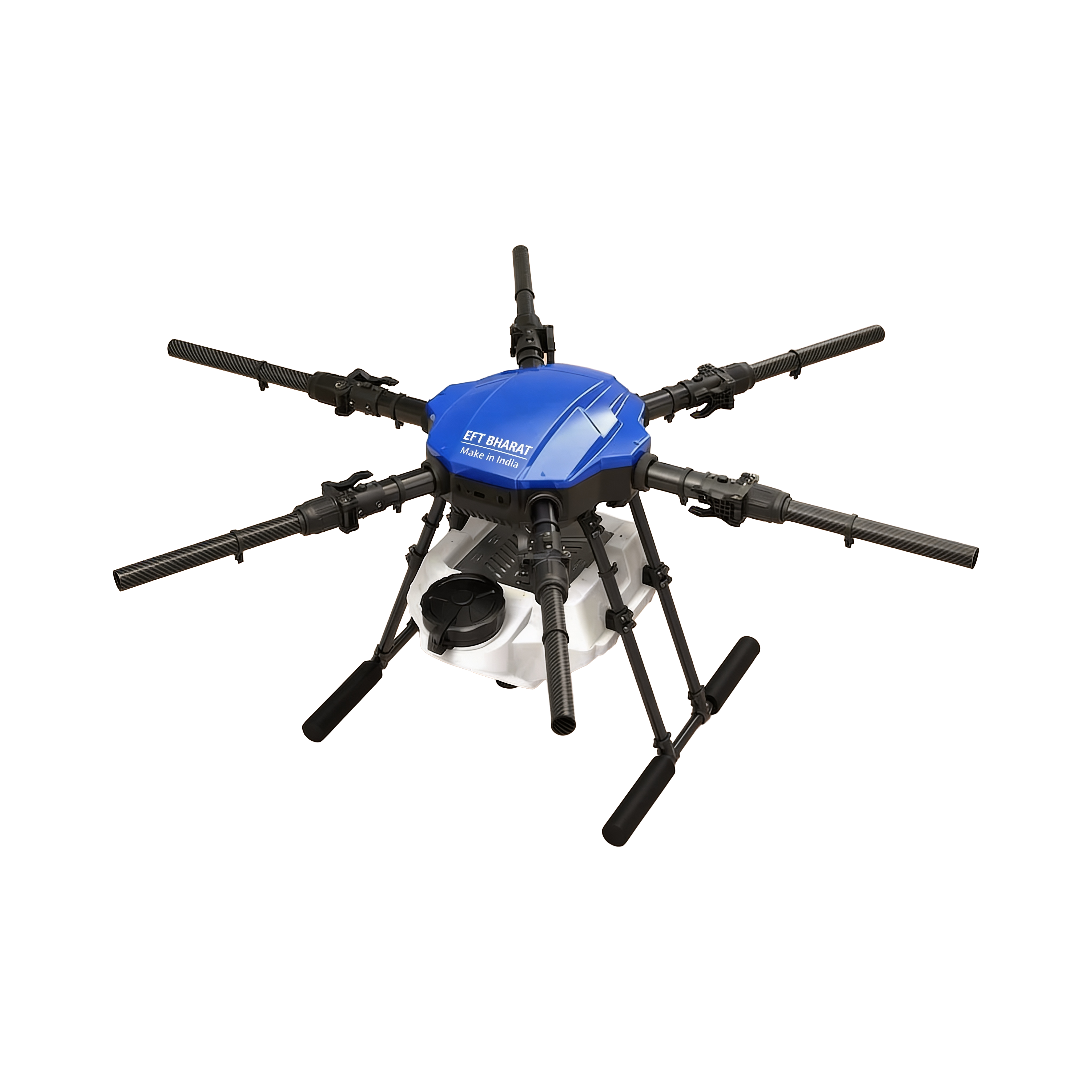
As part of this collaboration, EFT has officially commenced Make in India production of the E610P agricultural drone, with BSPL serving as the designated manufacturing and distribution partner. The initiative represents a significant step in EFT’s long-term commitment to the Indian drone ecosystem and its effort to combine global engineering expertise with India’s growing manufacturing capabilities.
To ensure seamless localisation while maintaining global quality standards, EFT has completed the formal transfer of official production moulds for the E610P’s tank and canopy components to BSPL. This technology transfer ensures that the India-manufactured drones maintain the original design integrity, engineering precision, and performance standards that EFT’s agricultural platforms are known for globally.
The collaboration is expected to accelerate the development of India’s agri-drone ecosystem, enabling faster deliveries, improved service support, and wider availability of genuine EFT components and spare parts. By integrating local manufacturing and supply chains, the initiative will also generate demand for Indian vendors, create skilled employment opportunities, and strengthen the country’s UAV manufacturing ecosystem.
Commercially, the India-manufactured E610P under the EFT BHARAT brand will provide customers with improved supply chain reliability, structured warranty support, and lifecycle service delivered through BSPL’s authorised service network trained to EFT’s global standards. Enterprise customers and institutional partners will benefit from joint product demonstrations, customised deployment solutions, and integrated after-sales support.
Speaking on the collaboration, Sweety Liu, CEO, EFT said:
“The launch of EFT BHARAT represents a major milestone in our long-term commitment to the Indian market. By combining EFT’s globally proven UAV technology with India’s strong manufacturing capabilities, we aim to build solutions for India, in India. This partnership ensures that Indian farmers and industry stakeholders have access to reliable, future-ready agricultural drone platforms designed to address the country’s unique farming needs.”
Gurmeet Singh, CEO of Bharat Skytech Private Limited, added:
“We are proud to partner with EFT for this landmark Make in India initiative. EFT’s leadership in UAV technology is globally recognised, and the transfer of production moulds and engineering expertise to India will enable us to scale responsibly while maintaining the authentic quality of EFT products. Through EFT BHARAT, we look forward to bringing advanced agricultural drone technology closer to farmers and enterprises across India.”
The EFT BHARAT initiative marks the beginning of EFT’s broader localisation roadmap in India, with plans to deepen manufacturing capabilities and strengthen the domestic UAV supply chain in the coming years.


