


21, Mar 2026
Krishna Kumar Thakur Takes Charge as Director (Personnel) at NMDC
New Delhi, March 20 (BNP): Krishna Kumar Thakur has assumed charge as Director (Personnel) at NMDC Limited, the country’s largest iron ore producer.
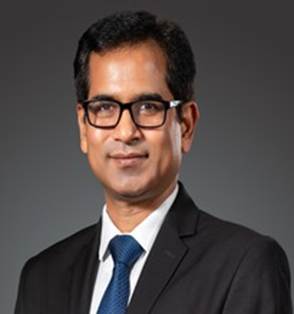
A 1998 batch officer of the Indian Railway Personnel Service (IRPS), Thakur brings over two decades of experience in human resource management and administration across Indian Railways and central public sector enterprises.
During his tenure in Indian Railways, he handled key HR functions in major divisions including Solapur, Bhopal, and Mumbai. As Chairman of the Railway Recruitment Cell, Western Railway, he oversaw large-scale recruitment, facilitating the induction of around 12,000 employees.
He has also worked with RITES Limited, where he was involved in an international train operations project in Saudi Arabia, and served as head of HR at Konkan Railway Corporation Limited, contributing to policy reforms and streamlining HR processes.
Prior to joining NMDC, Thakur served as Director (HR) at Bharat Heavy Electricals Limited, where he led initiatives in HR, legal, and health, safety, and environment (HSE) domains. His work included restructuring HR functions, introducing uniform incentive schemes, and implementing multi-skilling initiatives to improve workforce efficiency and retention.
An alumnus of Tilka Manjhi Bhagalpur University, Thakur holds a postgraduate degree in Literature and a PGDM in Human Resources from Tata Institute of Social Sciences.
Officials said his extensive experience is expected to strengthen NMDC’s human resource framework and support the organisation’s focus on employee development and operational excellence.

- 0
- By Neel Achary

21, Mar 2026
Centre, States Discuss Energy Security at Bharat Electricity Summit 2026; DISCOM Reports Released
New Delhi, March 20 (BNP): Union Power Minister Manohar Lal Khattar chaired a high-level ministerial meeting with States and Union Territories during the Bharat Electricity Summit 2026, focusing on strengthening energy security and accelerating sectoral reforms.
The meeting, held on the second day of the summit, was co-chaired by Minister of State for Power and New & Renewable Energy Shripad Naik and attended by senior officials and energy ministers from across the country.
Addressing the gathering, the Union Minister highlighted that India has achieved over 520 GW of installed power capacity and has made significant progress in improving distribution company (DISCOM) performance, expanding smart metering, and reducing power shortages.
He stressed that coordinated efforts between the Centre and States are essential to ensure affordable, efficient, and reliable power supply. Emphasising the importance of energy security amid global uncertainties, he called for increased per capita energy consumption and faster adoption of renewable energy sources.
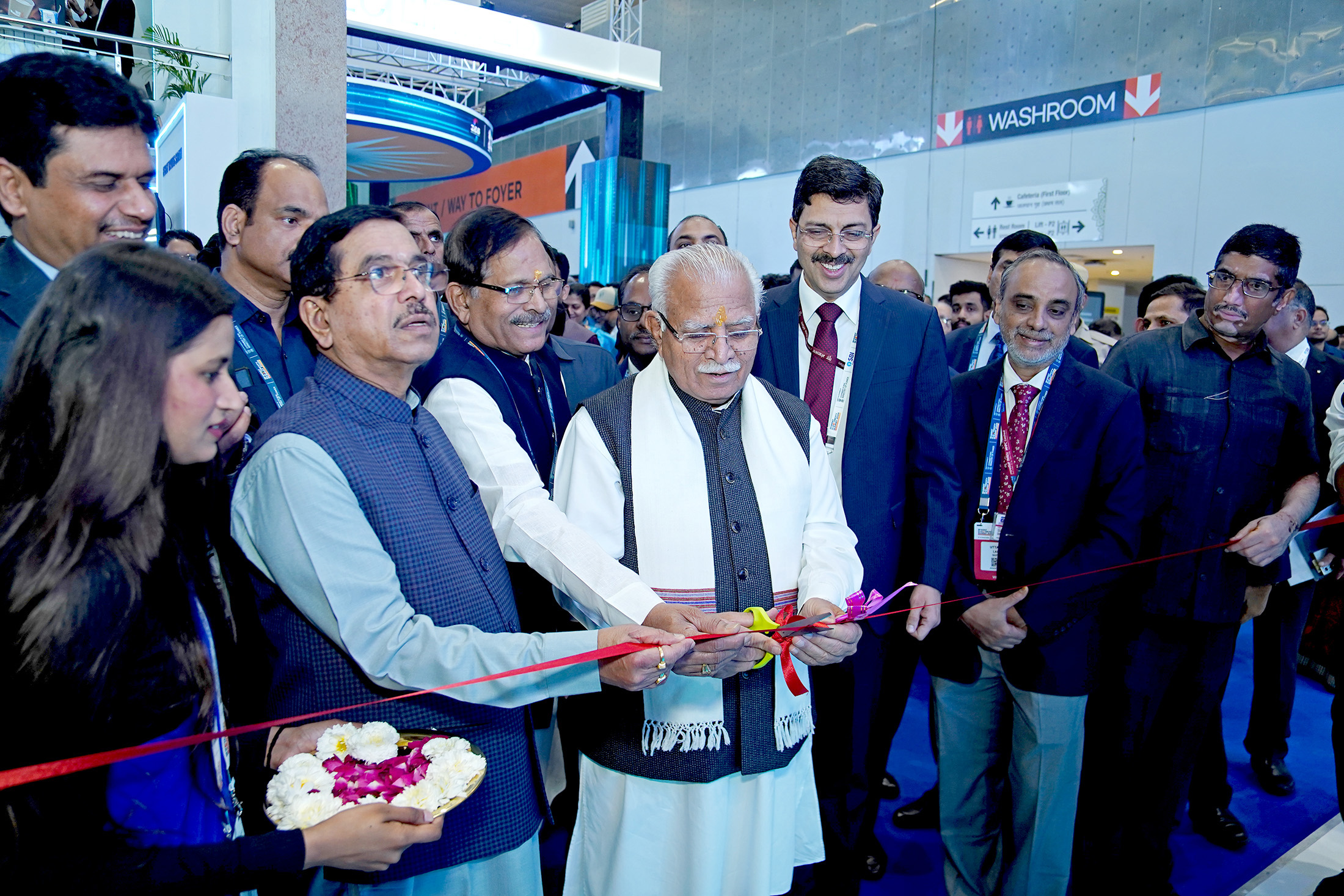
The Minister also pointed to the potential of nuclear energy as a clean power source and described the SHANTI Act as an important step towards strengthening the energy framework. He assured States of full support from the Centre in implementing necessary legal and administrative reforms.
Speaking at the meeting, Shripad Naik underlined the role of technology and artificial intelligence in transforming the power sector, particularly through initiatives such as smart metering. He noted that nearly half of India’s installed power capacity now comes from non-fossil fuel sources and highlighted the draft National Electricity Policy aimed at achieving long-term energy goals.
During the meeting, the Ministry of Power released two key reports for FY 2024–25 — the Consumer Service Ratings of DISCOMs (CSRD) and the Distribution Utilities Ranking (DUR).
The CSRD report evaluates DISCOMs on parameters such as billing accuracy, grievance redressal, and tariff transparency. Based on performance, utilities are graded from A+ to D to promote competition and service improvement. Of the 66 DISCOMs assessed, six received the top A+ rating, while 21 were rated A and 27 received B+ grades.
Officials said the improved ratings reflect better service delivery and consumer satisfaction, with fewer utilities falling in lower performance categories, indicating an overall positive trend in the power distribution sector.
The meeting underscored the need for collective action to meet rising energy demand while ensuring sustainability, reliability, and affordability across the country
21, Mar 2026
Govt Invites Global Bids for Rare Earth Magnet Manufacturing Under Rs.7,280 Crore Scheme
New Delhi, March 21 (BNP): The Ministry of Heavy Industries has invited global bids for setting up integrated Sintered Rare Earth Permanent Magnet manufacturing facilities in India, under a flagship scheme aimed at boosting domestic production and reducing import dependence.
The Request for Proposal (RFP) seeks to establish facilities for manufacturing Sintered NdFeB Rare Earth Permanent Magnets with a total capacity of 6,000 Metric Tonnes Per Annum (MTPA). The bidding process will be conducted online through the Central Public Procurement (CPP) Portal using a transparent two-stage Least Cost System (LCS), comprising technical and financial bids.

According to the Ministry, the tender documents have been made available from March 20, 2026, with a pre-bid conference scheduled for April 7. The last date for submission of bids is May 28, while technical bids will be opened on May 29.
The scheme, approved by the Union Cabinet chaired by Prime Minister Narendra Modi in November 2025, has a financial outlay of ₹7,280 crore and aims to position India as a key player in the global rare earth magnet market.
Under the initiative, selected beneficiaries will be eligible for a capital subsidy of ₹750 crore and sales-linked incentives worth ₹6,450 crore. Each participant will be allocated manufacturing capacity ranging from 600 to 1,200 MTPA.
The scheme also provides for limited assured supply of NdPr oxide from IREL (India) Limited to the three lowest bidders, ensuring raw material availability for production.
Rare Earth Permanent Magnets are critical components used in sectors such as electric vehicles, wind energy, electronics, aerospace, and defence. Officials said the development of a complete domestic value chain—from raw materials to finished magnets—will significantly reduce reliance on imports and strengthen India’s strategic and industrial capabilities.
The Ministry said the initiative marks a major step towards building a self-reliant ecosystem in advanced materials and clean energy technologies.
21, Mar 2026
Sitharaman Launches ‘PRARAMBH 2026’ Campaign to Promote New Income Tax Act
New Delhi, March 21 (BNP): Union Finance and Corporate Affairs Minister Nirmala Sitharaman on Saturday launched ‘PRARAMBH 2026’, a nationwide awareness campaign aimed at educating taxpayers about the upcoming Income Tax Act, 2025.
The multimedia campaign, which will run across print, television, radio, digital and social media platforms, seeks to familiarise citizens with the key features of the new law ahead of its implementation from April 1, 2026.
As part of the initiative, the Minister also inaugurated the upgraded Income Tax Website 2.0, designed to offer improved navigation, enhanced usability, and more efficient service delivery for taxpayers.
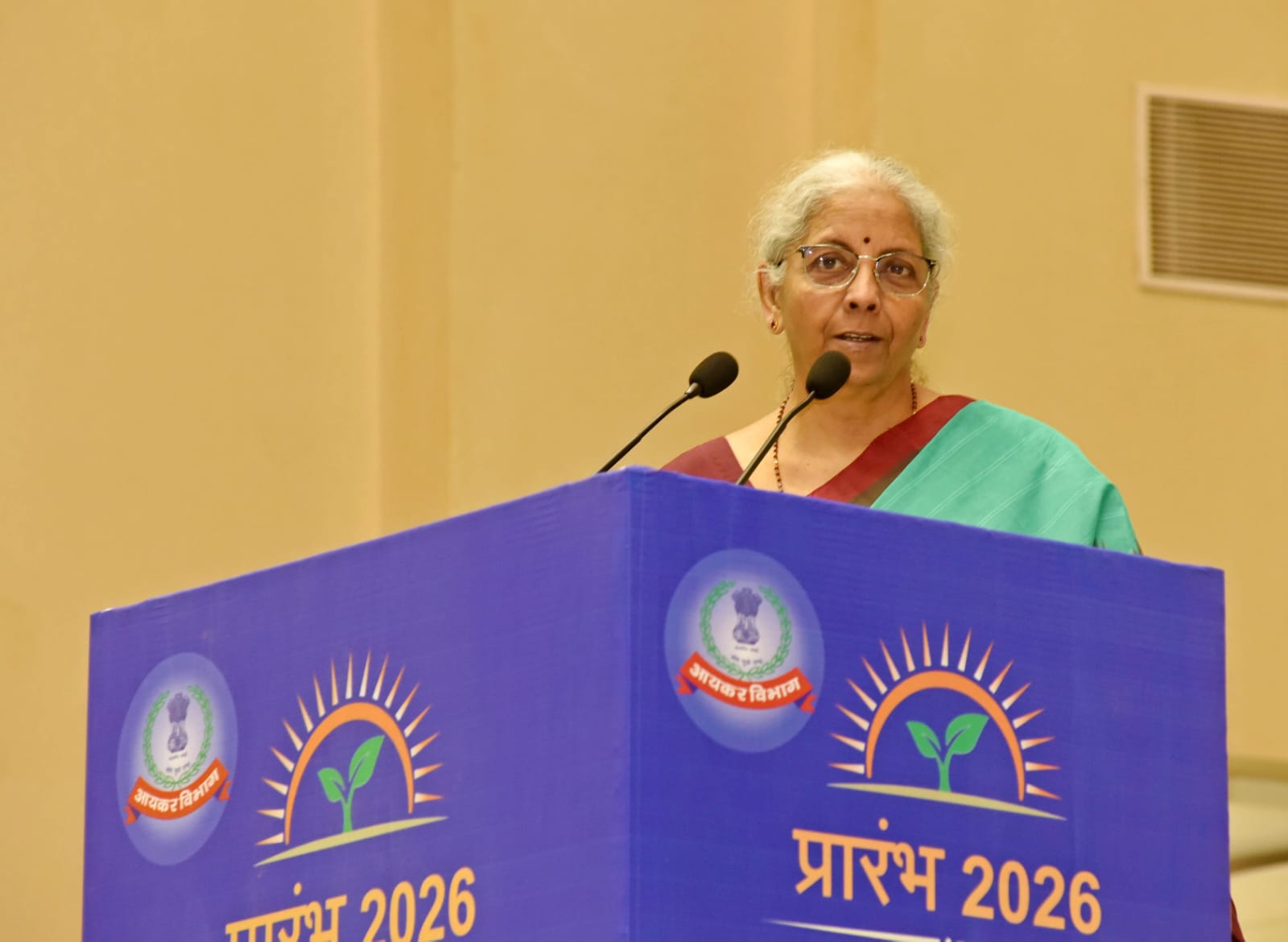
Addressing the gathering, Sitharaman said the new Income Tax Act represents a major step towards simplifying tax laws, reducing disputes, and improving voluntary compliance. She noted that, for the first time in independent India, both direct and indirect tax systems are being overhauled simultaneously to create a more citizen-centric framework.
The Minister emphasised that effective implementation of the law is as important as its formulation, urging tax officials to adopt a trust-based and empathetic approach while leveraging technology to minimise human interface.
Highlighting outreach efforts, she said the campaign includes guidance materials such as brochures, tutorial videos, FAQs, and interactive initiatives like quizzes to ensure better understanding among taxpayers. The Department is also focusing on multilingual communication and digital engagement to reach a wider audience.
Referring to Prime Minister Narendra Modi’s vision of a human-centric digital era, Sitharaman said the new tax regime should be rooted in ethical governance, accountability, and inclusivity.
Revenue Secretary Arvind Shrivastava said the Income Tax Act, 2025 marks a shift towards a simpler and more user-friendly tax system, supported by capacity-building efforts within the department.
Chairman of the Central Board of Direct Taxes (CBDT), Ravi Agrawal, described PRARAMBH as a comprehensive outreach and facilitation initiative aimed at easing compliance through clear communication and digital tools.
The campaign will include over 300 workshops and stakeholder consultations across the country. An AI-enabled chatbot, “Kar Saathi,” has also been introduced to assist taxpayers with queries related to the new law.
Officials said PRARAMBH 2026 marks the beginning of a more transparent, simplified, and technology-driven tax administration system, aligned with the government’s broader push for citizen-centric governance.
21, Mar 2026
Centre Reviews Agriculture Sector, Orders Swift Relief for Farmers Hit by Adverse Weather
New Delhi, March 20 (BNP): Union Agriculture and Farmers’ Welfare Minister Shivraj Singh Chouhan conducted a comprehensive review of the agriculture sector, focusing on crop losses, insurance claims, and timely assistance to farmers affected by adverse weather conditions.
The high-level meeting, held at Krishi Bhavan, examined the impact of heavy rainfall, hailstorms, and other weather-related disruptions across several states. The Minister stressed that the government’s approach goes beyond production and includes scientific assessment of crop damage, proper insurance settlement, and prompt relief measures.
Chouhan directed officials to ensure that crop-cutting experiments are conducted without delay and losses are assessed accurately using scientific methods. He emphasised that affected farmers must receive timely compensation and should not face delays in insurance claim settlements.
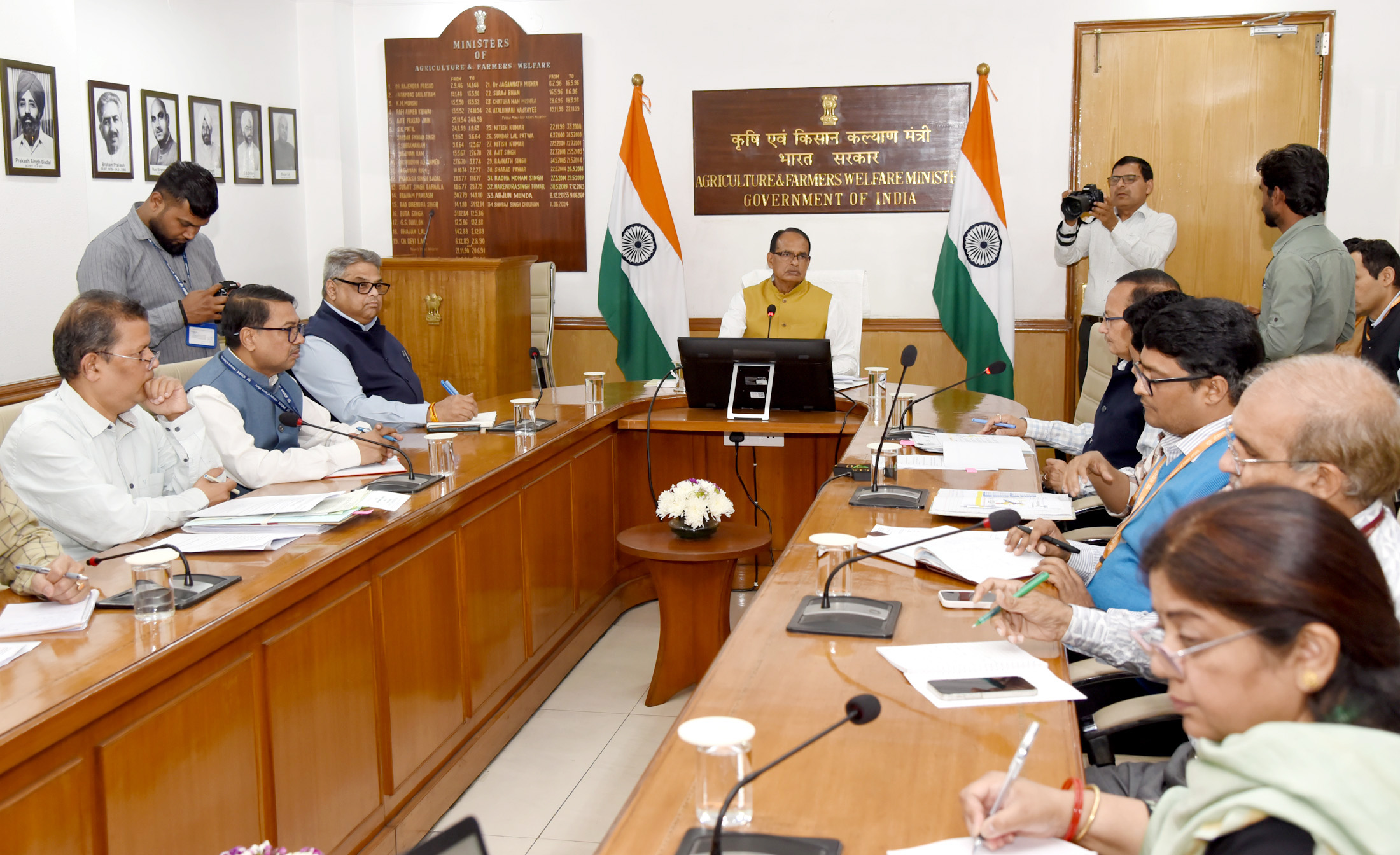
Highlighting the need for coordination, the Minister instructed central and state authorities to work closely to strengthen relief mechanisms and improve field-level implementation. He also noted that forecasts by the India Meteorological Department indicate possible further weather disturbances, underlining the urgency of preparedness and advisory services for farmers.
The review also focused on long-term agricultural strategy, including farmer welfare, income stability, and risk management. Chouhan said the sector must prioritise not only production but also farmer security and resilience against climate-related risks.
On procurement, the Minister stated that the government is prepared for the upcoming wheat and paddy procurement season, noting sufficient stock levels. He highlighted a renewed push under the self-reliance mission for pulses, assuring farmers that crops such as tur, urad, and masur will be procured at Minimum Support Price (MSP) through agencies including NAFED and NCCF.
Emphasising quality alongside quantity, Chouhan called for promotion of superior crop varieties and bio-fortified produce to help farmers secure better market prices. He also reviewed preparations for the nationwide Viksit Krishi Sankalp Abhiyan, aimed at delivering scientific advisories and region-specific agricultural guidance to farmers.
The Minister announced that regional agricultural conferences will be held across five zones, with upcoming meetings scheduled in Jaipur, Lucknow, and Odisha, to develop crop-specific and state-specific roadmaps.
Reaffirming the Centre’s commitment, Chouhan said the government is working to ensure that farmers receive comprehensive support from sowing to marketing, with the broader goal of strengthening agricultural growth and rural prosperity.
21, Mar 2026
Inspected Celebrates Florida Legislature’s Unanimous Passage of Building Inspection Reform That Reduces Fees, Speeds Timelines, and Cuts Red Tape
PLANTATION, Fla., March 21, 2026 – Inspected, a Florida-based, tech-enabled private provider offering alternative plan review and remote virtual inspections for residential and commercial contractors, celebrates the Florida Legislature’s unanimous passage of amendments to the state’s private provider statute. HB 803 will now reduce bureaucratic barriers that stall or drastically slow renovation and building projects, which have a crippling effect on the state’s building industry.
Homeowners and builders will see immediate benefits, as the amended legislation requires local enforcement agencies to reduce permit fees by 25-50% when private providers are used to review plans or inspect buildings on commercial projects. The bill also establishes strict deadlines for permit approvals, mandates local agencies must accept electronic document submissions, and allows counties, municipalities and school districts to use private providers on public work projects.

Additional changes include banning building departments and local governments from charging additional fees and documentation requirements when using a private provider during building code inspections and calls on the Florida’s Building Commission to create uniform commercial and uniform residential permit applications.
“These statutory improvements represent a major victory for contractors and property owners across Florida,” said Ian Cohen, CEO of Inspected. “We worked closely with legislators and industry partners to create clarity where confusion existed and ensure that contractors maintain their right to choose the inspection services that work best for their projects and the people of Florida.”
The Florida House passed the measure 109-0, while the Senate approved it 37-0, demonstrating broad bipartisan support for inspection reform that will benefit contractors and property owners across the state. With Governor Ron DeSantis’s signature, the changes could take effect as early as July 1, 2026.
Inspected worked with the Florida Home Builders Association to push these amendments forward and remove statutory ambiguity while establishing clear processes between contractors, fee owners, private providers, and building departments. While most Florida building departments operated in compliance with F.S. 553.791, the changes will force persistent non-compliance issues in certain jurisdictions like Miami-Dade that willfully misinterpreted statutes to make immediate changes.
For example, building departments that refused to modernize legacy practices despite state requirements, or created unauthorized processes that obstructed private inspection services and delayed project completion for contractors and property owners will need to change immediately.
“The growth opportunities for virtual and remote inspections just expanded significantly with this legislative victory,” said Marty Hebert, Director of Growth at Inspected. “These changes will help contractors in every corner of Florida access faster, more efficient permit processing and inspection services while maintaining the highest safety standards.”
The amended legislation strengthens existing contractor rights while providing building departments with clearer guidance on working with private providers. Contractors and fee owners throughout Florida can now move forward with greater confidence that their choice to work with qualified private providers will be honored and supported by local building departments without delays or additional barriers.
20, Mar 2026
Organic Tattva and Kareena Kapoor Khan Champion ‘Shuddhasana’: Inspiring India to Balance Pure Food with Everyday Wellness
Mumbai, India Mar 20th: Organic Tattva, one of India’s leading organic food brands, has unveiled its latest campaign featuring brand ambassador Kareena Kapoor Khan. At the heart of the campaign is the concept of Shuddhasana – the belief that true wellness begins with the purity of what we eat.
While yoga and fitness routines have become an integral part of modern lifestyles, the campaign reminds audiences that good health is a balance of mindful exercise and pure, nourishing food. Through this message, Organic Tattva aims to encourage Indian households to rethink wellness not just as time spent on a yoga mat, but also as the everyday choices made in the kitchen.
Kareena Kapoor Khan, brand face for Organic Tattva Rice and Pulses range said: “For me, wellness has always been about balance. A daily dose of yoga keeps me centered, but what truly completes it is the food I eat. I love simple, home-cooked meals like dal chawal, khichdi and even the occasional indulgence like biryani. Knowing that the ingredients I cook with are pure and organic gives me peace of mind for my family. That’s why I trust Organic Tattva. It’s about making small, mindful choices every day that lead to a healthier and happier life.”
The film builds on the idea that popular yoga postures such as Padmasana and Tadasana may strengthen the body, but they remain incomplete without Shuddhasana – the practice of eating food that is clean, organic and free from harmful chemicals.
As a mother and a strong advocate for balanced living, Kareena Kapoor Khan highlights how simple lifestyle habits, regular yoga and wholesome home-cooked meals play a crucial role in maintaining health and wellbeing.
The campaign also showcases Organic Tattva’s industry-leading QR code based traceability system, enabling consumers to scan product packs and instantly access detailed test reports and quality data. This initiative reinforces the brand’s commitment to transparency, authenticity and informed food choices.
Rohit Mehrotra, CEO, Organic Tattva, said: “Eating pure and organic is not just a concept, it’s a lifestyle choice. At Organic Tattva, we believe that true wellness comes from the right balance of good food and an active lifestyle. Through the idea of Shuddhasana, we want to inspire Indian households to consciously choose purity, transparency and organic ingredients in their everyday meals.”
With the powerful message, “Switch to Purity. Switch to Organic Tattva,” the campaign speaks directly to modern Indian families especially mothers who seek uncompromised safety and purity in the food they serve their loved ones.
With this campaign, Organic Tattva and Kareena Kapoor Khan hope to inspire millions of Indians to adopt ‘Shuddhasana’, where pure food and mindful movement come together to create a truly holistic approach to health.
20, Mar 2026
HCLFoundation Announces Winners of 11th HCLTech Grant, Empowering NGOs Across Water, Biodiversity, Health, and Education
NOIDA, Mar 20: HCLFoundation, which drives the corporate social responsibility agenda of global technology company HCLTech in India, today announced the winners of the 11th edition of the HCLTech Grant.
HCLTech Grant supports Indian non-government organizations (NGOs) undertaking innovative and transformative projects across the themes of Water, Biodiversity, Healthcare and Education. This year’s edition sees the introduction of Water as a category and increased grant outlay to ₹24 crores (approx. $2.58 million, 1 INR=93 USD).
Four NGOs will receive ₹5 crore (approx. $537,000) each for their proposed projects.
- Water Category: Gramin Vikas Vigyan Samiti (GRAVIS), Rajasthan. To enhance water harvesting and storage to build resilient and sustainable desert communities in the Thar desert, covering 10 villages in Barmer district.
- Biodiversity Category: Live Foundation, Jharkhand. To revive biodiversity and forest ecosystems through community-led in-situ conservation in 50 villages in West Singhbhum district.
- Health Category: Goodwill Foundation, Mizoram. To improve the health and well-being of rural communities by enhancing access to healthcare services in 40 villages in Mamit district.
- Education Category: Mahila Jan Adhikar Samiti, Rajasthan. To promote gender equality among young women through holistic education in 30 villages in Ajmer district.
Additionally, eight NGOs will receive ₹50 lakh (~$53,700) each for their proposed projects.
- Water: Leh Nutrition Project, Ladakh; Watershed Organisation Trust, Madhya Pradesh
- Biodiversity: Regional Centre for Development Cooperation, Odisha; South Asian Forum for Environment (SAFE), West Bengal
- Health: EKJUT, Jharkhand; Utkarsh Welfare Foundation, Uttar Pradesh
- Education: Shri Bhuvneshwari Mahila Ashram, Uttarakhand; Youth Council for Development Alternatives, Odisha
“Over a decade now, HCLTech Grant has been a catalyst for change in the development sector and contributed to the Viksit Bharat vision. It has empowered NGOs to innovate and scale up creatively to solve complex social and environmental issues, especially at the last mile. Congratulations to the winning NGOs and we wish them the very best for their mission to bring visible and inclusive changes to the communities they are working in,” said Dr. Nidhi Pundhir, Director, HCLFoundation.
For this edition, 7,274 registrations were received from NGOs across India. The winners were selected by a distinguished jury, which included Roshni Nadar Malhotra, Chairperson, HCLTech; Robin Ann Abrams (Jury Chair), Former Board Member, HCLTech; Pallavi Shroff, Managing Partner, Shardul Amarchand Mangaldas & Co; BS Baswan, Former HRD Secretary and Former Director, Indian Institute of Public Administration; Dr. Richard Lariviere, Sanskrit Scholar & President Emeritus, The Field Museum, Chicago and Suresh Narayanan, Former Chairman & Managing Director, Nestle India Ltd.
The HCLTech Grant-supported projects have significantly advanced sustainable development over the past decade, uplifting 2.2 million lives across 60,000+ villages. The grant-funded initiatives have led to the planting of 177,000 saplings, the rejuvenation of 128,100 hectares of land and a reduction of 67,095 tons in CO2 emissions. To learn more about HCLTech Grant, visit: www.hclfoundation.org/hcltech-grant
20, Mar 2026
Proof Over Perception, Code Over Combat: India Redefines Modern Warfare Playbook at WION World Pulse

New Delhi, Mar 20th: At the Defence Pulse session of WION World Pulse, leading voices from India’s military and defence technology ecosystem highlighted how modern warfare is being reshaped by credibility, speed, and indigenous innovation.
The session featured Air Chief Marshal Rakesh Kumar Singh Bhadauria, Former Chief of the Air Staff in Indian Air Force; Prahlada Ramarao, Former Distinguished Scientist and Chief Controller, Missiles & Strategic Systems, DRDO; and Ankit Mehta, Co-founder, ideaForge.
Drawing from India’s recent military response under Operation Sindoor, Air Chief Marshal Bhadauria emphasised that in today’s conflicts, verifiable proof holds more power than narrative-building, asserting that visible outcomes define credibility on the global stage.
Air Chief Marshal Rakesh Kumar Singh Bhadauria said, “When you have satellite images showing all nine targets struck, what narrative is left to build? The images themselves become the narrative—clear, credible and undeniable.”
Highlighting the technological shift in warfare, Mehta pointed to the rapid evolution of battlefield tactics, stressing that adaptability and indigenous systems are becoming decisive factors.
Ankit Mehta, co-founder of ideaForge, said, “Warfare today is increasingly software-defined. The speed at which you can adapt, upgrade and respond in real time is what determines your advantage on the battlefield.”
Adding to this, the discussion reinforced the importance of self-reliance in defence capabilities with a strong focus on building domestic ecosystems that reduce dependence on external supply chains during critical moments.
Prahlada Ramarao, former distinguished scientist and chief controller, of missiles & strategic systems, DRDO said, “Strategic autonomy in defence is no longer optional—it is essential. Indigenous capability ensures resilience, faster innovation, and preparedness in an increasingly uncertain security environment.”
The session underscored a broader shift where warfare is no longer just about firepower, but about information dominance, technological agility, and credible deterrence, positioning India at the forefront of a rapidly transforming global defence landscape.
20, Mar 2026
India’s Energy Transition Accelerates: Focus on Self-Reliance, Clean Power and Global Leadership
India’s energy transition is entering a decisive phase, driven by strong policy direction, rapid capacity expansion, and a clear focus on Aatmanirbharta (self-reliance), Union Minister of State for Power and Renewable Energy Shripad Naik has said.
Highlighting India’s progress in the power sector, he noted that the country is not only expanding its clean energy capacity at record speed but also strengthening its position as a global leader in renewable energy transformation.
Rapid Growth in Clean Energy Capacity
India’s installed power generation capacity has more than doubled since 2014, with the share of non-fossil fuel sources rising to over 51% by October 2025. This milestone has enabled India to achieve its Nationally Determined Contribution (NDC) target of 50% non-fossil capacity nearly five years ahead of schedule.
In FY 2025–26 alone, the country added a record 47.3 GW of non-fossil energy capacity, reflecting strong momentum in solar, wind, and other renewable sources.
Solar energy, in particular, has seen exponential growth—from just 2.8 GW in 2014 to more than 140 GW by early 2026—making it one of the fastest-growing segments in India’s energy mix.
Strengthening Energy Independence
A key focus of India’s strategy is reducing dependence on imported fossil fuels through large-scale electrification and clean energy adoption. The government is pushing electrification across mobility, agriculture, and industry to reduce oil imports and improve long-term energy security.
Officials estimate that these combined efforts could save over ₹1 lakh crore in fossil fuel imports by the end of the decade.
India is also targeting 30% electric vehicle penetration by 2030, signalling a strong shift towards cleaner transport systems.
Boost to Domestic Manufacturing
The push for clean energy is being matched with efforts to strengthen domestic manufacturing capabilities.
Under the Approved List of Models and Manufacturers (ALMM) framework, India has developed:
-
Around 172 GW of solar module manufacturing capacity
-
Approximately 27 GW of solar cell production capacity
This expansion is aimed at reducing import dependency and building a strong domestic renewable energy supply chain.
Social Inclusion Through Energy Access
Alongside industrial growth, the transition is also focusing on inclusive development. Key government programmes are improving energy access for rural and underserved communities.
The Revamped Distribution Sector Scheme (RDSS) is supporting electrification of 13.6 lakh vulnerable tribal households, strengthening rural infrastructure and energy access.
Similarly, the PM Surya Ghar: Muft Bijli Yojana aims to bring rooftop solar power to 1 crore households by 2027. So far, over 32 lakh households have already adopted rooftop solar systems under the scheme.
The PM-KUSUM scheme is also transforming agriculture by promoting solar-powered irrigation, benefiting millions of farmers while reducing diesel dependency.
Green Hydrogen and Future Energy Vision
India is also positioning itself as a global leader in the emerging green hydrogen economy. The National Green Hydrogen Mission, with an outlay of ₹19,744 crore, aims to achieve:
-
5 million metric tonnes of annual production by 2030
-
125 GW of dedicated renewable energy capacity
-
Creation of nearly 6 lakh jobs
-
Capture of around 10% of global green hydrogen demand
This marks a major step toward building a future-ready clean energy ecosystem.
From Capacity Building to System Strength
Experts note that India’s energy policy is now shifting from rapid capacity expansion to strengthening grid systems, improving integration, and enabling market reforms.
New regulatory mechanisms such as dynamic solar and non-solar pricing windows and virtual power purchase agreements are being introduced to reduce congestion and improve efficiency in the power grid.
Conclusion
India’s energy transition reflects a combination of scale, speed, and strategic planning. With record renewable expansion, strong manufacturing growth, and increasing focus on self-reliance, the country is steadily shaping its role as a global clean energy leader.
As policy evolves from capacity creation to system optimisation, India’s power sector is expected to become more resilient, efficient, and globally influential in the years ahead.


