


19, Mar 2026
Indigo Appoints Ilex Content Strategies as its Marketing and Communications Agency of Record
London, UK, March 19 – Indigo Telecom Group, a strategic partner for critical digital infrastructure, has appointed Ilex Content Strategies, a global B2B marketing and communications agency, as its marketing and communications agency of record. Ilex will support brand and messaging development, account-based marketing, content creation, internal communications, and Borderless PR as Indigo drives global growth.
Indigo serves critical digital infrastructure providers, from hyperscalers, subsea networks, cloud and OTT players, carriers and fixed and mobile network providers. It designs, deploys, supports and scales critical digital infrastructure through a unified global operating model that delivers consistency, control and assured performance across operations.
“Indigo has a proven model for delivering critical infrastructure right first time and at scale. As we accelerate our global growth, it’s essential that our story reflects the quality, maturity and operational excellence our customers experience every day,” said Michel Robert, CEO at Indigo. “Ilex understands complex, technical businesses and how to position them with clarity and confidence. Together, we will sharpen our messaging, strengthen our brand presence, and ensure Indigo is recognised not just for what we do, but for the strategic value we bring to hyperscalers, carriers and digital infrastructure leaders worldwide.”
Ilex will work closely with Indigo’s leadership team to undertake a brand and messaging refresh, undertake international media relations and support account-based marketing and sales enablement. Using its Borderless PR model, Ilex will ensure consistent messaging and maximum return on investment across priority markets, without the need for multiple local agencies.
“Indigo Telecom plays an important role in the global digital infrastructure landscape, and communicating the scale and complexity of that work requires deep sector understanding,” said Lucia Barbato, CEO and Co-Founder at Ilex Content Strategies. “We’re proud to have been selected as Indigo’s agency of record and look forward to helping the business strengthen its market position, support sales and build momentum internationally.”
Founded in 2012, Ilex Content Strategies works with telecoms, cloud, cybersecurity, data centre and digital infrastructure organisations at key moments of growth, repositioning and market expansion. Its clients range from fast-growing regional specialists to billion-dollar global enterprises. It enables organisations to build credibility, visibility and sustained momentum through strategic communications that ultimately drives sales

- 0
- By Neel Achary

19, Mar 2026
Shipsy Launches AgentFleet, an AI Workforce for Logistics Operations
Mar 19th: Shipsy, a leading provider of end-to-end AI-native solutions for logistics, today announced AgentFleet, a fleet of purpose-built AI agents designed to work alongside logistics teams and execute operational tasks across planning, execution, customer experience, and financial operations.
AgentFleet introduces a digital workforce for logistics operations—a fleet of AI agents organized around operational roles such as customer experience, driver operations, and finance. Each agent is designed to execute specialized operational tasks across logistics workflows while working in coordination with human teams.
Despite decades of digitization, logistics operations remain deeply manual. Every day, operations teams coordinate hundreds of repetitive tasks—calling drivers stuck in traffic, chasing vendors for documents, responding to customer delivery queries, reconciling freight invoices, and escalating shipment exceptions across teams.
Logistics operations are fundamentally coordination-heavy. Customer experience teams, drivers, vendors, hubs, and finance departments must constantly exchange information to keep shipments moving. As shipment volumes grow, this coordination complexity increases—historically requiring organizations to scale operational headcount to keep pace.
Most transportation management systems and visibility platforms can identify what’s wrong in operations. But turning those insights into action still requires humans to investigate issues, coordinate stakeholders, and resolve them manually. At scale, this gap between insight and execution leads to operational cost leakage, delayed settlements, and poor customer experiences.
AgentFleet closes that gap.
With AgentFleet, enterprises deploy AI co-workers across logistics functions—agents that observe operational signals, make decisions within defined guardrails, and execute tasks across systems. Instead of spending their time firefighting operational issues, operations managers become supervisors of an AI workforce—monitoring agent activity, approving exceptions, and focusing on higher-value decisions.
This represents a shift from traditional systems of record to a system of action, where software doesn’t just surface operational problems but actively helps resolve them.
The emergence of enterprise-grade AI models, combined with increasing operational complexity and workforce constraints across logistics networks, is making it possible to automate coordination tasks that previously required large operational teams.
AgentFleet introduces AI agents aligned with real operational roles within logistics teams.
Clara — Customer Experience AI Co-worker
Nearly 40% of inbound logistics support queries are simple delivery status requests, handled today by call center teams responding to repetitive inquiries.
Clara eliminates this burden by proactively communicating delivery updates and resolving customer queries across channels that customers prefer in local languages that they understand. The co-worker can coordinate directly with drivers when needed and maintain real-time two-way communication with customers.
Early deployments show 30–40% reductions in inbound support volumes, alongside measurable improvements in customer satisfaction.
Astra — Driver Experience AI Co-worker
For enterprises managing outsourced fleets, drivers represent the last mile of operational control—and often the least connected part of the technology stack.
Astra provides drivers with real-time route guidance, delivery insights, parking intelligence, and transparent payout visibility, transforming the driver app into a tool that actively supports their work.
Early deployments show 18–20% improvements in driver productivity, with stronger engagement and lower attrition across third-party fleets.
Nexa — Finance AI Co-worker
Freight settlement is one of the most labor-intensive processes in logistics finance. Teams manually validate proof-of-delivery documents, calculate charges, match invoices, and resolve discrepancies across emails and spreadsheets.
Nexa automates this process end-to-end. The agent extracts data from freight documents—including handwritten PODs—validates charges against contracts, computes settlements, and performs four-way matching across vendor claims, execution data, GPS records, and delivery confirmations.
Organizations using Nexa achieve 20–25% faster settlement cycles, up to 50% reduction in manual workload, and significant reductions in freight billing leakage.
Vera — Dispute Resolution AI Co-worker
When financial disputes arise with carriers and vendors, operations teams often spend weeks coordinating across departments to resolve them.
Vera ingests disputes from multiple channels—including dashboards, email, and messaging platforms—collects relevant shipment and contract data, validates claims, and drives disputes to resolution.
Organizations using Vera see 20–25% faster dispute resolution cycles, reduced operational backlogs, and stronger vendor relationships.
AgentFleet operates within a centralized operational layer that continuously monitors logistics workflows and coordinates agent activity across systems. This orchestration layer enables agents to collaborate across functions—such as customer support, driver operations, and finance—to resolve operational issues end-to-end.
AgentFleet is designed to work within existing enterprise technology environments. The agents integrate with existing TMS platforms, ERPs, and third-party logistics systems, allowing enterprises to deploy AI co-workers as an augmentation layer rather than requiring a full technology replacement.
Each agent operates through a defined trigger-and-action framework, executing tasks within pre-approved guardrails covering role-based access, approval workflows, and enterprise data security policies. Human supervisors can monitor all agent activity in real time through web and mobile task views, with full auditability of actions and decisions.
Enterprises can begin with a single use case and expand across additional workflows over time. Initial deployments can scale quickly using templated rollout models that accelerate expansion across geographies.
“Supply chains are under more pressure than ever—from cost and sustainability expectations to rising customer demands,” said Soham Chokshi, Co-Founder and CEO at Shipsy.
“AgentFleet enables enterprises to augment their teams with AI co-workers that continuously observe operations, identify risks, and take action. Our vision is for every logistics team to upskill and amplify outcomes with a fleet of agents that execute at scale, learn continuously, and keep humans in control of what matters most.”
You can talk to Shipsy’s first AI-native sales executive and learn more about AgentFleet at agentfleet.shipsy.ai.
19, Mar 2026
AI Rebuilds Molecules From Exploding Fragments
By Ula Chrobak
Researchers at the Department of Energy’s SLAC National Accelerator Laboratory and collaborating institutions recently built a generative AI model that can recreate molecular structures from the movement of the molecule’s ions after they are blasted apart by X-rays, a technique called Coulomb explosion imaging.
The research, published in Nature Communications, is an important step toward being able to take snapshots of molecules during chemical reactions – an advance that could have important impacts in medicine and industry. The machine learning model closely predicted the geometries of a range of different molecules made of less than ten atoms, paving the way for applying the technique to larger molecules. “We were pretty excited about this,” said Xiang Li, an associate scientist at SLAC’s Linac Coherent Light Source (LCLS) and lead author of the study. “It is the first AI model built for molecular structure reconstruction from Coulomb explosion imaging.”
A new way to see molecules
Currently, there are limited options available for imaging isolated gas phase molecules. With electron microscopy, for example, subjects must be fixed in place, making it impossible to image free-floating molecules. And for diffraction-based techniques to work, the sample of molecules needs to be dense enough to generate a strong signal in the detector. The resulting image is technically an average of many molecules, restricting researchers from studying details only visible when imaging isolated molecules.
In the paper, the researchers instead focused on Coulomb explosion imaging. In this technique, an X-ray pulse hits a single molecule in a vacuum chamber, ripping off the molecule’s electrons. This leaves behind positive ions that explosively repel away from each other and smash into a detector. The detector captures their momentum, which can be used to reconstruct the structure of the molecule. “This technique has the ability to isolate minor details that are chemically relevant,” said James Cryan, LCLS interim deputy director for science, research and development, associate professor of photon science at SLAC and coauthor of the paper.
But this reconstruction process has so far been largely infeasible due to computing constraints. After the X-ray pulse strips away electrons, the remaining ions do not explode apart instantly. During this brief delay, the atoms can shift slightly, making it difficult to reconstruct the original structure using Coulombs law for electrostatic forces. “It will not be accurate because a simple use of that law only works if the charge-up process is instantaneous,” explained Li.
Making things even messier, every additional atom in the molecule adds an exponential level of complexity. “It’s very challenging to work backwards to get the original structure,” said co-author Phay Ho, a physicist with DOE’s Argonne National Laboratory. “It’s kind of like breaking a glass and trying to put it back together from how the pieces flew apart. Many problems in modern physics and chemistry involve reconstructing hidden structures from indirect measurements. This work demonstrates how AI can help tackle such inverse problems.”
Machine learning for molecular structures
The research team set out to build a machine learning model that could overcome this computing constraint. They developed and trained the model at SLAC’s Shared Science Data Facility (S3DF). Generative AI models are well-suited for the task because they “think” differently than a standard computer simulation. Instead of working through a series of equations, they learn by finding patterns in training data. Then, they use those patterns to make statistical predictions.
To gather training data, the team turned to a simulation built by Ho. The simulation analyzes molecular structures and calculates the momentum of their ions following a Coulomb explosion. After running for over a month, the computing-intensive simulation, using both quantum mechanics and classical physics equations, produced a dataset of 76,000 molecular samples.
Initially, the researchers trained the AI on this dataset alone, which is small by AI-training standards, and they found the model predicted inaccurate structures from explosion data. So, they re-did the training, adding in another dataset derived using only classical physics. The second set was less precise but about 100 times larger than the first one.
This two-step training was the trick for predicting precise structures.
The researchers tested the AI model by prompting it to predict molecular structures in a portion of the simulation data it had not seen in training. The model, which the team named MOLEXA (short for “molecular structure reconstruction from Coulomb explosion imaging”), took the ion momenta and calculated the most likely structures. “We found that this two-step training process suppressed the prediction error by a factor of two,” said Li.
The team then tested MOLEXA with experimental datasets recorded at the Small Quantum Systems (SQS) instrument of the European X-ray Free-Electron Laser facility (European XFEL) in Germany. The molecules they tested included water, tetrafluoromethane and ethanol. They entered the experimental ion momenta into the model, reconstructed the molecular structures, and then compared the reconstructions to known structures listed by the National Institute of Standards and Technology.
They found the predictions largely overlapped with the established structures. Overall, the bonds were in the right spots, with only slight variations in their angles. The errors in position were generally less than half the length of a typical chemical bond. “The model is actually, most of the time, doing better than that,” added Li. “It is only a starting point for future research, which will not only improve model accuracy but also extend its applicability to larger molecular systems.”
Expanding to larger molecules and chemical reactions
The paper is a major step in advancing Coulomb explosion imaging, which has long been limited by the challenge of reconstructing molecular structures from experimental measurements. In future work, the researchers plan to scale up the number of atoms the machine learning model can piece back together and apply the model to time-resolved experiments at the LCLS and European XFEL. That will help researchers to reconstruct snapshots of molecules in motion, creating flip-book-like molecular movies with insights into how chemical reactions unfold. It will also help with the interpretation of data collected at the high X-ray pulse rates delivered by SLAC’s superconducting X-ray laser, Cryan said.
The team is also now testing the model’s ability to reconstruct molecules from incomplete data. Much of the time, the detector misses an ion produced in the Coulomb explosion. Li wants to know, for example: Can the AI still reconstruct an ethanol molecule if one or more of its hydrogen ions are not registered in the detector?
If these challenges are resolved, the technique could become more applicable in biology and chemistry research. Proteins, for instance, can consist of thousands of atoms. “That’s really the goal,” said Li. “We will be able to study systems that are more biologically or industrially relevant.”
The team also included researchers from the Stanford PULSE Institute; Stanford University; Kansas State University; European XFEL, Germany; the Max Planck Institute for Nuclear Physics, Germany; Fritz Haber Institute, Germany; and Sorbonne University, France. Large parts of this work were funded by the Department of Energy’s Office of Science. LCLS is an Office of Science user facility.
19, Mar 2026
Odisha’s Investment Surge Powers Jobs, Growth, and a Brighter Economic Future
With fresh approvals worth over ₹4,500 crore and a strong policy push, Odisha is turning industrial investment into real opportunities for its people
Odisha is quietly but confidently reshaping its economic narrative. What was once seen primarily as a resource-rich state is now evolving into a dynamic investment hub—where policy intent is translating into real progress on the ground.
This shift is not accidental. It reflects sustained efforts by the state government to create an environment where businesses can invest with ease and confidence. The results are now visible. In a recent development, the Single Window Clearance Authority approved 23 new projects, bringing in investments exceeding ₹4,500 crore. More importantly, these projects are expected to create employment opportunities for over 10,000 people—an outcome that directly impacts families, communities, and local economies.
Behind these numbers lies a deeper story of governance and reform. Odisha’s focus on simplifying procedures and improving transparency has made a tangible difference. The Single Window system, designed to reduce delays and eliminate complexity, signals a shift toward a more responsive and efficient administration. For investors, this means fewer hurdles; for the state, it means faster execution and stronger industrial momentum.
The Odisha Budget reinforces this direction. By prioritizing infrastructure, industrial growth, and skill development, the government is not just encouraging investment—it is preparing the state to sustain it. Roads, logistics networks, and industrial corridors are being strengthened, while parallel investments in education and training aim to ensure that the workforce is ready for new opportunities.
What makes this growth story particularly meaningful is its human dimension. Industrial expansion is often discussed in terms of capital and output, but in Odisha, it is increasingly about livelihoods. Each new project carries the promise of jobs, stability, and upward mobility for thousands of individuals. The emphasis on skill development further ensures that these opportunities are accessible to the local population, creating a more inclusive growth model.
Odisha’s journey is still unfolding, but the direction is clear. The convergence of investment, policy reform, and employment generation is laying the groundwork for a more resilient and diversified economy. As these projects move from approval to implementation, they will not only strengthen industrial capacity but also deepen the state’s social and economic impact.
In many ways, Odisha today represents a model of steady, purposeful progress—where ambition is matched by execution, and growth is measured not just in numbers, but in the lives it touches.
19, Mar 2026
ADLINK Introduces Advanced Edge AI Platforms for Industrial Automation, Digital Signage, and Smart Transportation
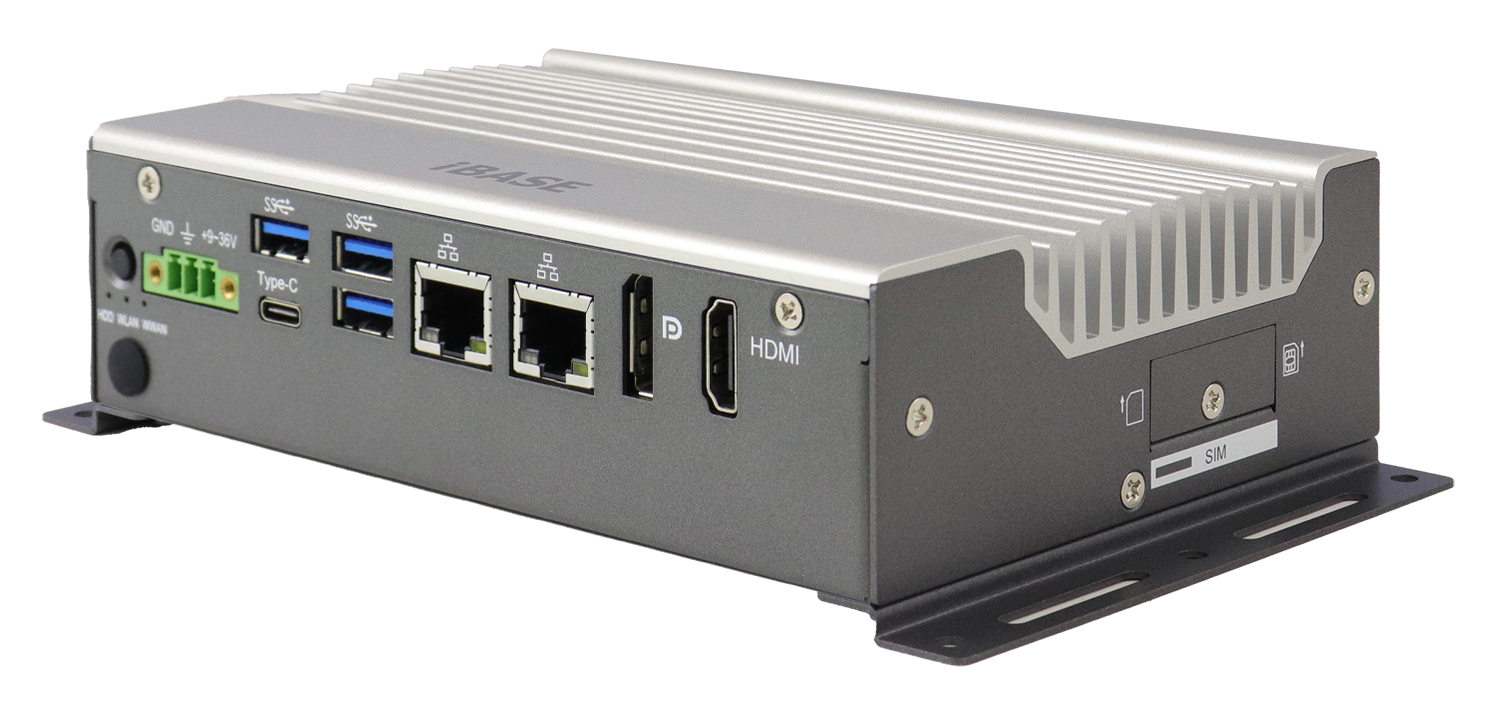
New Delhi, India Mar 19th: ADLINK Technology Inc., a global provider of embedded and edge AI computing solutions, has introduced a new lineup of intelligent computing platforms designed to accelerate AI-enabled operations across industrial automation, digital signage, autonomous systems, and smart transportation.
With more than three decades of innovation, ADLINK continues to expand its portfolio of edge AI platforms that enable organizations to process data closer to where it is generated, improving operational efficiency and enabling real-time decision-making.
Headquartered in Taipei, ADLINK develops hardware and software solutions supporting embedded, distributed, and intelligent computing. More than 1,600 organizations worldwide rely on ADLINK technologies across sectors including industrial automation, transportation, communications, and AI-driven infrastructure.
Compact Industrial Mini PC for Edge AI and Digital Signage
ADLINK’s EMP-520 Series Industrial Mini PC is designed to support modern industrial computing and digital display applications.
Powered by Intel Core™ Ultra processors with integrated GPU and NPU architecture, the system enables advanced edge AI workloads and multi-vision applications while maintaining efficient power usage.
The platform supports quad 4K display outputs with EDID emulation, making it ideal for high-resolution digital signage and display deployments.
Its compact fanless design allows installation in space-constrained environments while maintaining reliable long-term performance. With a wide range of connectivity options including HDMI, USB, Thunderbolt, wireless modules, and expansion slots, the EMP-520 Series enables seamless integration with IoT devices and peripheral systems.
Typical deployment scenarios include:
l Digital signage networks
l Interactive kiosks
l Factory automation systems
l Smart display infrastructure
High-Performance Platform for Autonomous Driving Systems
ADLINK also introduces the ADM-AL30 Autonomous Driving Platform, designed to support advanced AI computing for next-generation vehicle technologies.
The platform is powered by Intel 12th Generation Core™ i9/i7 processors combined with the NVIDIA RTX 4000 SFF Ada GPU, enabling powerful data processing capabilities for intelligent vehicle systems.
To support modern automotive architectures, the platform includes:
l 2 × 10G Base-T Ethernet ports
l 8 × 1G Base-T1 automotive Ethernet interfaces
l 8 × CAN FD interfaces
l 4 × CAN 2.0 interfaces
These capabilities enable seamless integration with vehicle subsystems and automotive communication networks. The system also meets ISO 16750-2 and ISO 7637-2 standards, supporting stable operation across a wide range of automotive environments.
AI-Enabled Edge Platform for Smart Railway Applications
The AVA-7200 Edge AI Platform is designed for intelligent railway systems and onboard computing applications.
Equipped with Intel 13th Generation Core™ mobile processors and an NVIDIA GPU based on the Ampere architecture, the platform delivers scalable computing power for real-time video analytics and AI-driven monitoring.
Certified under EN50155 railway standards, the AVA-7200 supports onboard deployment with a wide 16.8V–137.5V DC input range, isolated industrial I/O interfaces, and extended operating temperature support from –20°C to 70°C.
Typical applications include:
l Train station monitoring systems
l Onboard video security systems
l Passenger information systems
l Rail track monitoring and intrusion detection
19, Mar 2026
Fed Holds Rates Steady Amid War Uncertainty; Powell Signals Slower Inflation Progress, Upgrades Growth Outlook

By Naval Kagalwala, COO & Head of Products, Shriram Wealth Ltd
“Amid steady economic growth and uncertainties from the ongoing war, the FOMC held its policy rates in the March policy meeting, maintaining the target range of 3.5-3.75%. In his post policy speech, the Chair noted a slower progress on inflation going ahead, while also undermining fears around stagflation. The dot plot showed an upward revision in both inflation as well as growth when compared with previous forecasts. Mr Powell noted that higher oil prices would put some downward pressure on spending and employment and upside risks to inflation, though these were said to be offset by higher energy production in the US.
Following Fed’ remarks on limited progress on disinflation, US 10Y Treasury yields moved up to 4.27%. In less than a month, the yields have moved up about 34 bps from an intra-day low of 3.93%. This could be a tactical opportunity for investors looking to invest in US$ fixed income paper. US equities were also down around 1.4%. India sovereign bond yields may witness a continued uptick in yields, while participants await the market borrowing distribution for FY27.”
19, Mar 2026
JSW Realty Signs Development Agreement For ‘malabar Court’, Plans Uber Luxury Residential Development In Malabar Hill
Chandigarh, Mar 19th: JSW Realty, the real estate arm of JSW Group, today announced the signing of a development agreement with the Patel Family for Malabar Court, an exclusive property in Mumbai’s most established residential neighbourhood.
Malabar Court has been home to the Patel family for over seven decades and holds a distinctive place in the neighbourhood’s residential fabric. The agreement reflects the confidence that long-standing property owners increasingly place in JSW Realty.
Sprawling across just under an acre, the plot is located adjacent to the Malabar Hill Club. The project draws from its Art Deco legacy while adopting a contemporary design approach.
Planned as a boutique luxury residential tower, the development is expected to generate a topline of over INR 2,000 crore. It will offer exclusive residences, including single floor homes, duplexes and a signature penthouse.
The project is also expected to feature a curated suite of wellness and lifestyle amenities designed to offer residents a private and tranquil retreat within the city.
Commenting on the development, Sujal Shroff, CEO, JSW Realty, said, “Malabar Court is envisioned as a rare offering shaped by continuity rather than reinvention. Over the last five years, we have meticulously built a portfolio that prioritizes quality and architectural integrity. With Malabar Court, we strengthen our commitment to developments that honour the legacy of the neighbourhood while delivering enduring institutional value.”
19, Mar 2026
AV1 Robot Launches in India to Help Students Stay Connected to School During Extended Absence
Delhi, India Mar 19th: India Market Entry (IME) is proud to launch AV1 in India. AV1 is an innovative telepresence robot designed to help students who are temporarily or for longer periods unable to attend school remain connected with their classrooms and peers. The introduction of AV1 marks an important step toward enabling inclusive and uninterrupted learning experiences for students across India.
 |
India Market Entry (IME) is proud to launch AV1 in India
Developed to bridge the gap between students and their classroom environment, AV1 allows children to virtually attend school through a robot placed on their classroom desk. Using a smartphone or tablet, the student can see and hear everything happening in the classroom in real time, allowing them to follow lessons and stay connected with teachers and classmates even when they cannot be physically present.
Through its market entry and expansion expertise, IME played a key role in bringing this globally recognized assistive technology to India, enabling schools, healthcare institutions, and education partners to adopt a solution that addresses both academic continuity and emotional well-being among students who are unable to be physically present in school.
Commenting on the launch, Dhiraj Trakru, Founder & CEO, India Market Entry (IME), said, “When a child cannot attend school for an extended period, the biggest loss is often the sense of belonging. With AV1, schools can ensure that students remain connected to their teachers, friends, and daily classroom life. At IME, we are proud to bring solutions like this to India that help schools support both learning and student well-being.”
Adding to this, Petter Karal, Chief Growth Officer, No Isolation (the company behind the AV1), said, “School is not only about lessons; it is about belonging. Through AV1, our goal is to help students remain part of their classroom community even when they cannot attend in person. We are delighted to see AV1 introduced in India and look forward to supporting many more students in staying connected to their education and peers.”
AV1 has been widely adopted in several international markets, where it has supported students experiencing extended absence from school by helping them remain socially connected and academically engaged with their schools.
With the increasing focus on inclusive education and digital learning in India, solutions like AV1 can play a crucial role in supporting students who face temporary or prolonged absence from classrooms due to medical conditions. IME aims to work closely with educational institutions, healthcare providers, and social organizations to expand the accessibility of this technology across the country.
19, Mar 2026
Govt Approves Rs.472 Crore Road Over Bridge to Boost Tuna-Tekra Port Connectivity
New Delhi, March 19: The government has approved a ₹472 crore project for construction of a Road Over Bridge (ROB) and associated infrastructure at Tuna-Tekra to strengthen port connectivity and improve cargo evacuation, the Ministry of Ports, Shipping and Waterways said.
Union Minister for Ports, Shipping and Waterways Sarbananda Sonowal approved the project, which includes viaduct structures, a bridge over a creek, and provisions for maintenance over a 10-year period.
The ROB is expected to serve as a key connectivity link for the upcoming mega container terminal and multipurpose cargo berth at Tuna-Tekra. The container terminal is planned with a capacity of 2.19 million TEUs, while the cargo berth will handle up to 18.33 million metric tonnes per annum.
Officials said the project will help reduce logistics turnaround time, ease congestion, and improve overall supply chain efficiency in the region.
The execution of the ROB will be aligned with the commissioning of the Tuna-Tekra container terminal, which is currently about 45% complete. This is aimed at ensuring that supporting infrastructure is ready alongside port operations.
The project is expected to ease rail-road congestion and facilitate smoother movement of heavy cargo traffic to and from the port, strengthening last-mile connectivity.
The development is part of the government’s broader maritime strategy under Maritime India Vision 2030 and Maritime Amrit Kaal Vision 2047, aimed at enhancing port-led development and positioning India as a global maritime hub.
19, Mar 2026
Centre Releases Over Rs.24,600 Lakh for Indigenous Cattle Development in Andhra Pradesh
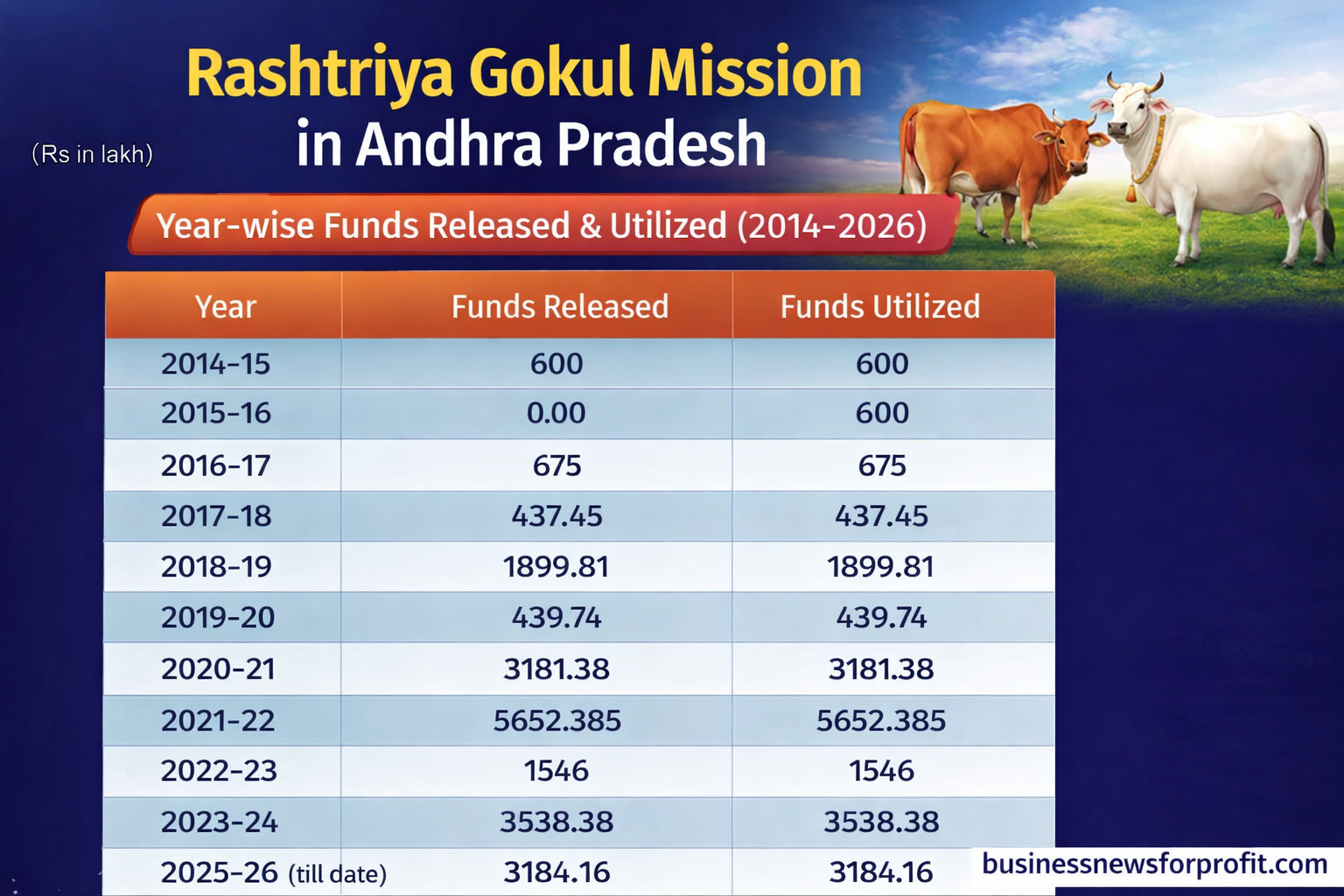
New Delhi, March 19: The Centre has released over ₹24,600 lakh under the Rashtriya Gokul Mission (RGM) to Andhra Pradesh between 2014–15 and 2025–26 to support indigenous cattle development, the Lok Sabha was informed.
In a written reply, Fisheries, Animal Husbandry and Dairying Minister Rajiv Ranjan Singh said the funds have been largely utilised by the state over the years, with utilisation matching releases in most financial years.
According to official data, major allocations were made in recent years, including ₹5,652.38 lakh in 2021–22, ₹3,538.38 lakh in 2023–24, and ₹3,184.16 lakh in 2024–25. An amount of ₹1,500 lakh has been released in 2025–26 so far, with utilisation yet to be reported.
Gokul Grams Established
The minister said 16 Gokul Grams were established in the state under the scheme. However, the component has been discontinued under the revised and realigned Rashtriya Gokul Mission for the period 2021–22 to 2025–26.
Rise in Indigenous Cattle Population
The government said the scheme has contributed to a significant increase in indigenous bovine breeds. At the national level, the population of indigenous cattle rose by nearly 30% between 2013 and 2022.
In Andhra Pradesh, the increase was higher at 62.11% during the same period, reflecting the impact of both central and state-level interventions.
Focus on Breed Improvement
The Rashtriya Gokul Mission aims to conserve and develop indigenous bovine breeds, improve milk productivity, and enhance farmers’ income through scientific breeding and better livestock management practices.
The government said coordinated efforts under the mission have supported breed improvement and strengthened the livestock sector in the state.


