


18, Mar 2026
Centre, States Sign Reform MoUs to Strengthen Rural Water Governance under Jal Jeevan Mission 2.0
New Delhi, March 18: In a major step to strengthen rural drinking water governance, the Government of India has signed reform-linked Memorandums of Understanding (MoUs) with the states of Rajasthan and Madhya Pradesh under the extended phase of the Jal Jeevan Mission (JJM) 2.0. The agreements mark the formal rollout of the reform-based implementation framework of the mission, which was approved by the Union Cabinet on March 10, 2026.
The MoU with Rajasthan was signed in the presence of Union Minister of Jal Shakti C. R. Patil, Chief Minister Bhajan Lal Sharma, and Minister of State for Jal Shakti V. Somanna. The ceremony was attended by Rajasthan’s Public Health Engineering Department (PHED) Minister Kanhaiya Lal Choudhary and senior officials from both the Centre and the state government.
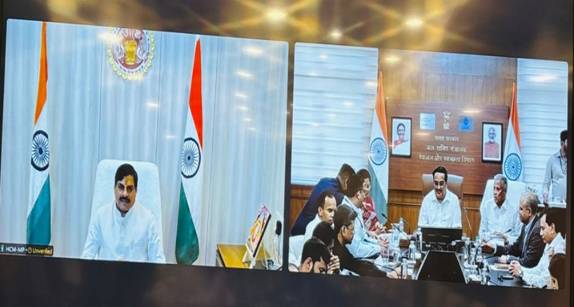
Later in the day, a similar MoU was signed with Madhya Pradesh in the presence of Union Minister C. R. Patil and Chief Minister Mohan Yadav, who joined the event through video conferencing. Madhya Pradesh PHED Minister Sampatiya Uikey and other senior officials were also present.
Senior officials from the Department of Drinking Water and Sanitation (DDWS), including Secretary Ashok K. K. Meena and Additional Secretary and Mission Director (NJJM) Kamal Kishore Soan, attended the MoU signing ceremonies.
For Rajasthan, the agreement was signed between Swati Meena Naik, Joint Secretary (Water), DDWS, and Akhil Arora, Additional Chief Secretary, PHED Rajasthan. For Madhya Pradesh, the MoU was signed between Swati Meena Naik and P. Narahari, Principal Secretary, PHED Madhya Pradesh.
Addressing the gathering, Union Minister C. R. Patil reiterated the Union government’s zero-tolerance policy toward corruption and stressed that quality, transparency and accountability must guide all works under the Jal Jeevan Mission. He urged both states to maintain strict quality standards to ensure that water supply assets remain functional and sustainable in the long term.
Highlighting the different water challenges faced by the two states—including water scarcity in Rajasthan and diverse hydro-geological conditions in Madhya Pradesh—the minister praised both governments for proactively adopting the reform-linked framework.
He also emphasised that effective implementation of the mission would significantly reduce the burden on women and girls, particularly in water-stressed rural regions, while ensuring reliable and safe drinking water supply for households.
Rajasthan Chief Minister Bhajan Lal Sharma reaffirmed the state’s commitment to implementing Jal Jeevan Mission reforms with a focus on timely execution, institutional strengthening and long-term sustainability of rural drinking water systems.
Similarly, Madhya Pradesh Chief Minister Mohan Yadav said the state would fully align with the national reform agenda and work toward strengthening governance systems, improving service delivery and achieving the goal of 24×7 drinking water supply in rural areas.
The MoUs outline 11 key structural reform areas aimed at strengthening governance and sustainability in rural drinking water systems. These include institutional architecture for water governance, service utility frameworks, technical compliance in scheme implementation, citizen-centric water quality governance, water source sustainability, digital data governance, participatory governance through community involvement, capacity building, human resource development, operational and financial sustainability of water supply systems, and research and innovation.
A key feature of the reform framework is a Gram Panchayat-led model of water governance, under which completed piped water supply schemes will be handed over to Gram Panchayats and Village Water and Sanitation Committees (VWSCs) through the “Jal Arpan” process.
The MoU also calls for operationalising a Decision Support System (DSS) developed by DDWS as a digital planning tool for districts and Gram Panchayats to improve water source sustainability and planning.
In addition, the agreement provides for “Jal Seva Aankalan” at the Gram Panchayat level to assess service delivery and share results with citizens through the Meri Panchayat mobile application.
The reform agenda also includes the Jal Utsav initiative, a nationwide awareness campaign celebrating the importance of water through three tiers—Jal Mahotsav at the national level, Rajya Jal Utsav or Nadi Utsav at the state level, and Lok Jal Utsav at the Gram Panchayat level. As part of this initiative, National Jal Mahotsav 2026 began with a nationwide Jal Arpan event on March 8, 2026, and will culminate on March 22, World Water Day. The national event held on March 11 was attended by the President of India Droupadi Murmu.
The extension of Jal Jeevan Mission until December 2028 with enhanced financial outlay aims to shift the programme’s focus toward assured service delivery, water quality, system functionality, sustainability and community ownership.
Through the reform-linked framework, the government aims to ensure that every rural household receives adequate, safe drinking water on a regular basis, strengthening community participation and improving living standards while contributing to long-term water security under the national vision of Viksit Bharat @2047.

- 0
- By Neel Achary

18, Mar 2026
Centre Pushes Capital Goods Sector Competitiveness with Rs.1,207-Crore Scheme
New Delhi, March 18: The Government of India is implementing the “Enhancement of Competitiveness in the Indian Capital Goods Sector – Phase II” scheme to strengthen domestic manufacturing capabilities and support the growth of a globally competitive capital goods industry.
The scheme, implemented by the Ministry of Heavy Industries, has a total financial outlay of ₹1,207 crore, including ₹975 crore in budgetary support from the government and ₹232 crore contribution from industry stakeholders.
The initiative aims to develop a robust ecosystem for the capital goods sector by promoting research, innovation, skill development, and advanced manufacturing technologies.
According to the ministry, the scheme focuses on five key objectives: building a strong and globally competitive capital goods sector, establishing a sustainable ecosystem for research and manufacturing innovation through technology portals, enhancing skill levels of existing manpower while expanding the pool of highly skilled professionals, promoting smart manufacturing and adoption of Industry 4.0 technologies, and encouraging progressive indigenisation of technologies used in capital goods production.
So far, 29 projects have been sanctioned under the scheme. These include seven Centres of Excellence (CoEs), four Common Engineering Facility Centres (CEFCs), six Testing and Certification Centres, nine Industry Accelerators for Technology Development, and three projects focused on creating qualification packs for skill levels six and above.
The scheme builds on the outcomes of its earlier phase. A third-party evaluation of Phase I was conducted by an expert committee chaired by S. Chaudhary. The committee observed that the first phase helped address technological and infrastructure requirements of the capital goods sector to a certain extent.
However, the committee recommended scaling up the initiative to support the broader needs of the capital goods industry across the country. Expanding the programme, it noted, would generate a stronger impact in advancing the government’s Make in India initiative and strengthening domestic manufacturing capabilities.
Following these recommendations, the government formally notified the Phase II version of the scheme on January 25, 2022, aimed at expanding its scope and impact.
To ensure effective implementation, the ministry has constituted a Project Review and Monitoring Committee (PRMC) for each approved project. These committees are responsible for regularly reviewing progress and ensuring that project objectives are achieved in line with the scheme’s goals.
The initiative is expected to play a crucial role in boosting technology development, strengthening manufacturing infrastructure, and promoting innovation within India’s capital goods sector.
This information was provided by Bhupathiraju Srinivasa Varma, Minister of State for Ministry of Heavy Industries, in a written reply in the Lok Sabha on March 17.
18, Mar 2026
Food Processing Industry Must Align with Nutrition Security Goals: Chirag Paswan
New Delhi, March 18: Union Minister of Food Processing Industries Chirag Paswan has called for a long-term strategic roadmap for India’s food processing and nutraceutical sectors, stressing that the industry must align its growth with the country’s broader goal of becoming a developed nation by 2047.
Speaking at “NutriBharat 2026: National Conference on the Role of Nutraceuticals and Functional Foods in Strengthening Nutrition Security,” organised by ASSOCHAM on March 17, the minister urged stakeholders to set clear milestones for the short, medium and long term while working closely with policymakers and regulators.
Paswan emphasised the need for a structured roadmap for the next one year, five years and ten years, highlighting that collaborative efforts between industry, government and regulatory bodies will be essential to unlock the sector’s full potential.
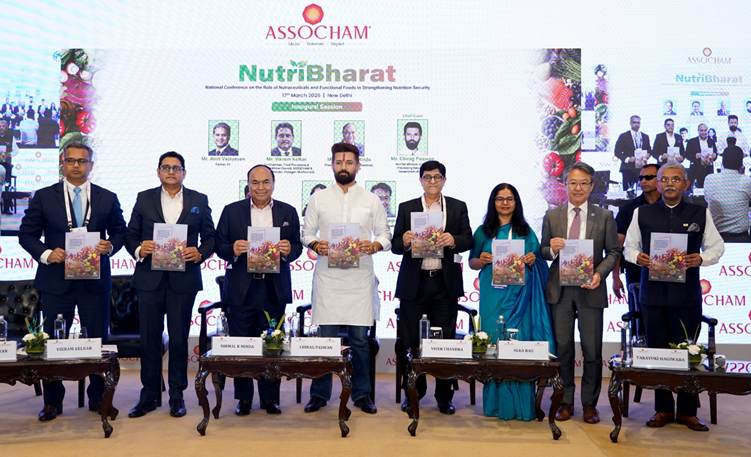
“India has successfully moved from food scarcity to food security. The next frontier is nutrition security, ensuring that our future generations are healthy and free from malnutrition,” he said.
The minister noted that the food processing industry will play a critical role in strengthening the country’s nutrition ecosystem by ensuring the availability of safe, nutritious and high-quality food products. With rising consumer awareness around health and wellness, sectors such as nutraceuticals and functional foods are expected to emerge as key drivers of India’s food economy.
Paswan also stressed the importance of maintaining global standards and stringent quality control to safeguard India’s credibility in international markets. He warned that even a single rejected export consignment at a foreign port could undermine the reputation that Indian food exporters have built over decades.
Calling for higher industry accountability, he urged companies to prioritise quality assurance, innovation, and responsible manufacturing practices, while strengthening collaboration with regulatory authorities and research institutions.
Industry experts attending the conference highlighted that nutraceuticals and functional foods are increasingly becoming important tools for addressing malnutrition, lifestyle diseases, and micronutrient deficiencies. With India aiming to improve public health outcomes, the integration of food processing, nutrition science and regulatory frameworks is expected to play a pivotal role in achieving the country’s long-term nutrition security goals.
The conference brought together policymakers, industry leaders, researchers and nutrition experts to discuss strategies for strengthening the nutraceutical ecosystem and advancing India’s food processing sector in line with national development priorities.
18, Mar 2026
Centre Supports Fisheries Infrastructure in Himachal Pradesh; NABARD Funds Rs.5 Crore Training Centre
New Delhi, March 18: The Government of India has supported the establishment of a state-of-the-art fisheries training centre in Himachal Pradesh to strengthen aquaculture capacity and improve skill development in the fisheries sector.
The Department of Fisheries under the Ministry of Fisheries, Animal Husbandry and Dairying approved a proposal from the Government of Himachal Pradesh during 2022–23 for the establishment of a State-of-the-Art Fisheries Training Centre at Gagret. The project was sanctioned at a total cost of ₹5.17 crore, with the project cost restricted to ₹5 crore for interest subvention under the Fisheries and Aquaculture Infrastructure Development Fund (FIDF).
The National Bank for Agriculture and Rural Development (NABARD), one of the designated nodal loaning entities under FIDF, sanctioned ₹5 crore to the Himachal Pradesh government for the project and has already disbursed the full sanctioned amount to facilitate its implementation.
The fisheries department is implementing several schemes nationwide aimed at holistic development of the fisheries sector across all states and union territories, including Himachal Pradesh. Key initiatives include the Pradhan Mantri Matsya Sampada Yojana (PMMSY), being implemented from 2020–21 to 2025–26, the FIDF scheme covering the period 2018–19 to 2025–26, and the central sector sub-scheme of PMMSY, Pradhan Mantri Matsya Kisan Samridhi Sah Yojana (PM-MKSSY), which runs from 2023–24 to 2026–27.
These programmes aim to address critical gaps in fish production and productivity by strengthening infrastructure, promoting technological adoption, improving post-harvest management systems, and modernising fisheries value chains. The schemes also focus on improving fishers’ livelihoods and enhancing welfare measures across the sector.
The government has also extended the Kisan Credit Card (KCC) facility to fishers and fish farmers since 2018–19, enabling them to meet working capital requirements and improve access to institutional credit for fisheries-related activities.
Data provided by the Himachal Pradesh government shows steady growth in fish production in key districts such as Kangra and Chamba over the past three years. Fish production in Kangra increased from 4,871.09 tonnes in 2022–23 to 5,480.62 tonnes in 2024–25, while Chamba recorded growth from 1,075.36 tonnes to 1,379.48 tonnes during the same period.
Overall fish production in Himachal Pradesh has also risen significantly in recent years. According to official figures, the state’s fish output increased from 13,745 tonnes in 2019–20 to 16,250 tonnes in 2025–26, reflecting steady expansion in aquaculture and fisheries activities.
Within this growth, Kangra district contributed around 2,850 tonnes of fish production, while Chamba district accounted for about 1,920 tonnes, highlighting the expanding aquaculture base in these regions.
The government believes that improved infrastructure, enhanced training facilities, and better access to institutional credit will further strengthen the fisheries ecosystem and support sustainable growth in fish production across the hill state.
This information was provided by Rajiv Ranjan Singh, Union Minister for the Ministry of Fisheries, Animal Husbandry and Dairying, in a written reply to a question in the Lok Sabha.
18, Mar 2026
Government Steps Up Measures to Boost Agricultural Credit Flow, Focus on Small Farmers and Allied Sectors
New Delhi, March 18: The Government of India has implemented a series of policy measures aimed at expanding institutional credit to the agriculture sector, with particular emphasis on underserved segments such as small and marginal farmers and allied activities including dairy, fisheries, and animal husbandry.
The initiatives are designed to improve access to affordable credit, strengthen rural financial institutions, and enhance agricultural productivity through increased financial inclusion in rural areas.
According to information shared in the Rajya Sabha by Pankaj Chaudhary, Minister of State in the Ministry of Finance, the government sets annual Ground Level Credit (GLC) targets for agriculture and allied sectors, which banks are required to meet during each financial year.
These credit targets are allocated region-wise and agency-wise across institutions such as Scheduled Commercial Banks, Regional Rural Banks, and rural cooperative banks. Since the financial year 2021–22, the government has also introduced dedicated credit targets for allied agricultural activities to ensure focused financial support for sectors like dairy farming, fisheries, and animal husbandry.
The credit expansion strategy is also supported by regulatory norms under Priority Sector Lending (PSL) issued by the Reserve Bank of India. Under these guidelines, commercial banks—including Regional Rural Banks, Small Finance Banks, Local Area Banks and primary urban cooperative banks—must allocate at least 18% of their Adjusted Net Bank Credit (ANBC) or credit equivalent of off-balance sheet exposures to agriculture.
Within this mandate, a sub-target of 10% has been earmarked specifically for Small and Marginal Farmers (SMFs), who account for a significant majority of India’s agricultural community. The PSL framework also includes incentive mechanisms to encourage higher credit flow to districts with lower lending levels while discouraging excessive concentration of credit in already well-served districts.
A key instrument supporting farmers’ access to credit is the Kisan Credit Card (KCC) scheme, which provides timely and affordable credit to farmers for purchasing agricultural inputs such as seeds, fertilizers and pesticides, as well as meeting working capital needs. Since 2019, the scheme has also been expanded to cover working capital requirements related to animal husbandry, dairying, and fisheries.
To further reduce borrowing costs for farmers, the government operates the Modified Interest Subvention Scheme (MISS), under which farmers can access short-term crop loans at a concessional interest rate of 7% through Kisan Credit Cards. Farmers who repay their loans on time are eligible for an additional 3% incentive, effectively reducing the interest rate to 4%.
In another move to improve credit access, the collateral-free loan limit for short-term agricultural loans has been raised from ₹1.60 lakh to ₹2 lakh per borrower, effective January 1, 2025. The increase is expected to particularly benefit small and marginal farmers, who constitute over 86% of India’s farming community, by enabling easier access to formal credit without the need for collateral.
The government has also been strengthening rural infrastructure and financial ecosystems through institutional support from the National Bank for Agriculture and Rural Development (NABARD). Funds allocated under the Rural Infrastructure Development Fund (RIDF) are used to support infrastructure projects in rural areas, which in turn enhance credit absorption capacity in agriculture and allied sectors.
As part of the Union Budget 2025–26, the government also announced the launch of the PM Dhan Dhaanya Krishi Yojana (PM-DDKY). One of the key objectives of the scheme is to improve the availability of both long-term and short-term agricultural credit in districts where credit disbursement to the sector remains low.
Efforts are also underway to strengthen rural financial institutions such as cooperative banks and Regional Rural Banks through technology upgrades and institutional reforms to improve their operational efficiency and outreach.
NABARD continues to play a central role in boosting credit flow to the agriculture sector. Under the RBI’s Lead Bank Scheme, NABARD prepares Potential Linked Credit Plans (PLPs) for each district every year to estimate the credit potential under priority sectors. These district-level plans are aggregated at the state level and used as the basis for setting annual credit targets for agriculture.
To support banks in meeting these targets, NABARD provides refinance assistance for both short-term and long-term agricultural lending. Short-term refinance is extended to institutions such as State Cooperative Banks, Regional Rural Banks, and Small Finance Banks for crop loans and other agricultural lending activities.
Long-term refinance support is also provided to rural financial institutions, scheduled commercial banks, small finance banks, and non-banking financial companies to strengthen lending for agriculture and allied sectors.
In addition, NABARD offers concessional refinance under various specialised schemes supporting sectors such as micro food processing, animal husbandry infrastructure development, solar rooftop installations, aspirational districts, and initiatives like the Agriculture Infrastructure Fund and the National Rural Livelihoods Mission.
The government believes these coordinated policy interventions will strengthen the rural credit ecosystem, improve farmers’ access to affordable finance, and support sustainable agricultural growth across the country.
18, Mar 2026
RBI Tightens Oversight on Digital Lending; Govt Steps Up Action Against Illegal Loan Apps
New Delhi, March 18: The Reserve Bank of India (RBI) has strengthened its regulatory oversight of digital lending platforms as part of broader efforts by the government and financial regulators to curb the proliferation of illegal mobile loan applications and enhance consumer protection in India’s fast-growing digital lending ecosystem.
The central bank had earlier constituted a working group to examine issues related to digital lending, including loans offered through online platforms and mobile applications. Based on the recommendations of the panel, RBI introduced comprehensive regulatory guidelines aimed at strengthening the framework governing digital lending activities and safeguarding borrowers.
Under the framework, all regulated entities (REs), including banks and non-banking financial companies, are required to comply with the digital lending guidelines issued by the RBI. Compliance with these rules is periodically assessed during supervisory evaluations, and any deviations identified are required to be rectified. In cases of serious non-compliance, the RBI may initiate supervisory or enforcement actions.
In parallel, the Ministry of Electronics and Information Technology (MeitY) has been empowered to block fraudulent digital loan applications under Section 69A of the Information Technology Act, 2000, following due procedures outlined in the Information Technology (Procedure and Safeguards for Blocking for Access of Information by Public) Rules, 2009.
Authorities have intensified coordinated efforts across ministries and agencies to prevent citizens from being exploited by unauthorised lending platforms, many of which operate through offshore entities or disguise themselves as legitimate financial service providers.
One of the key steps taken by the RBI includes the launch of a directory of Digital Lending Apps (DLAs) on its official website from July 1, 2025. The directory lists apps deployed by RBI-regulated entities and is intended to help customers verify whether a digital lending application is legitimately linked to a regulated financial institution.
The regulator has also been actively engaging with major internet intermediaries and messaging platforms to monitor the activities of unauthorised loan apps. Technology-driven vetting mechanisms and real-time enforcement systems have been introduced to detect and prevent the advertisement and circulation of fraudulent loan apps, particularly those originating from overseas operators.
The Indian Cyber Crime Coordination Centre (I4C) under the Ministry of Home Affairs has also been analysing digital lending applications to identify cybercrime patterns. To facilitate public reporting of such incidents, the government has launched the National Cybercrime Reporting Portal and a dedicated cybercrime helpline number 1930.
Meanwhile, banks have been supporting public grievance mechanisms through platforms such as the SACHET portal, which enables citizens to lodge complaints against entities involved in illegal deposit-taking or unauthorised financial activities. State-level coordination committees among financial regulators further assist in monitoring and addressing such cases.
The RBI and banks have also intensified public awareness campaigns to educate consumers about the risks associated with fraudulent lending apps. These campaigns include SMS alerts, radio outreach programmes, and digital banking awareness initiatives such as the e-BAAT training programme, which focuses on cyber fraud prevention and risk mitigation.
However, enforcement against illegal mobile applications ultimately falls under the jurisdiction of state governments. Under India’s constitutional framework, “Police” and “Public Order” are state subjects, making state law enforcement agencies primarily responsible for the prevention, investigation, and prosecution of such crimes.
The central government continues to support states and union territories through advisories and financial assistance for capacity building of law enforcement agencies to combat cybercrime and financial fraud.
This information was shared by Pankaj Chaudhary, Minister of State in the Ministry of Finance, in a written reply in the Rajya Sabha on March 17.
17, Mar 2026
Government Pushes Crop Diversification, MSP Procurement and Faster Insurance to Strengthen Farmers’ Incomes
New Delhi, March 17: India’s Union Minister for Agriculture and Farmers’ Welfare and Rural Development, Shivraj Singh Chouhan, has outlined a series of policy measures aimed at strengthening farmers’ incomes and risk protection, including crop diversification, record procurement at Minimum Support Price (MSP), reforms in crop insurance, and stricter monitoring of agricultural schemes.
Responding to questions from Members of Parliament in the Lok Sabha, Chouhan said the government led by Prime Minister Narendra Modi is encouraging farmers to move away from tobacco cultivation and adopt alternative crops that offer sustainable and profitable returns.
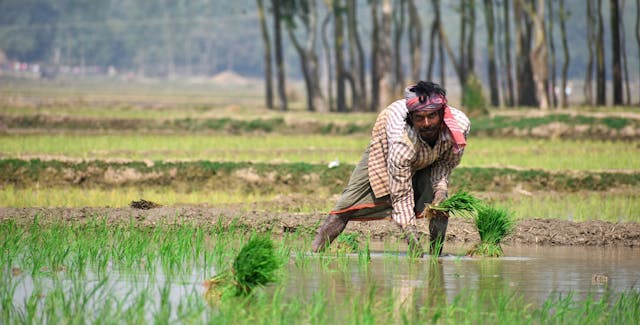
According to the minister, the government has identified a range of crops suited to regions traditionally dependent on tobacco cultivation. These include hybrid maize, chilli, sweet potato, cotton, potato, chia, feed beans, cowpea, ragi, red gram, sugarcane, soybean, sorghum and groundnut. The objective is to ensure farmers maintain stable cash incomes while shifting to more sustainable cropping patterns.
Focus on Integrated Farming
Chouhan noted that the majority of Indian farmers operate on small landholdings, making reliance on a single crop particularly risky. To address this challenge, the government has been promoting integrated farming models that combine multiple agricultural and allied activities.
Under these models, farmers can diversify into cereals such as wheat and paddy alongside vegetables, fruits, livestock, fisheries, beekeeping, goat rearing and agroforestry. Such diversification, he said, helps generate more stable and year-round income streams for farm households.
Strengthening MSP Procurement
The minister also highlighted the government’s efforts to ensure remunerative prices for farmers through enhanced MSP procurement. MSP levels for major crops, including wheat, paddy, pulses and oilseeds, have been increased, while procurement operations during the current season have reached record levels.
Special arrangements have been introduced for pulses such as tur, masoor and urad, enabling registered farmers to sell any quantity of produce to the government at MSP. The measure is intended to provide stronger income security for pulse growers and encourage higher domestic production.
Faster Compensation Under Crop Insurance
Chouhan also detailed reforms introduced in the Pradhan Mantri Fasal Bima Yojana, the government’s flagship crop insurance scheme.
Previously, farmers often experienced long delays in receiving compensation for crop losses. Under the revised provisions, insurance companies are required to compensate farmers even if crop damage affects a single individual farmer. Furthermore, once yield data is available, if the claim amount is not credited to the farmer’s account within 21 days, insurance companies and state governments must pay the amount along with 12 per cent interest.
Stronger Monitoring and Transparency
The minister said the government has also established stricter oversight mechanisms to ensure transparency in scheme implementation. Complaints received through digital platforms, including the Krishi Rakshak Portal, are being reviewed carefully and action is taken wherever irregularities are detected.
He added that in several states, particularly Rajasthan, large sums under crop insurance schemes have been transferred directly to farmers’ bank accounts through the Direct Benefit Transfer (DBT) system in recent years.
Chouhan emphasised that these policy initiatives collectively aim to build a more resilient agricultural ecosystem in which farmers benefit from improved incomes, better risk protection and greater transparency in government support mechanisms.
17, Mar 2026
Cabinet Approves Rs.11,440 Crore ‘Mission for Aatmanirbharta in Pulses’ to Boost Domestic Production
New Delhi, March 17: The Union Cabinet has approved a centrally sponsored scheme titled Mission for Aatmanirbharta in Pulses aimed at increasing domestic production of pulses and achieving self-sufficiency in the sector. The mission will be implemented over a six-year period from 2025–26 to 2030–31 with a total financial outlay of ₹11,440 crore.
The mission focuses on strengthening the pulses value chain by expanding cultivation, promoting improved seed distribution, and developing post-harvest infrastructure across the country.
Processing Units to Strengthen Post-Harvest Infrastructure
Under the post-harvest infrastructure component of the mission, the government has approved the establishment of 1,000 processing units (dal mills) during the mission period. In the first phase, a target of 528 processing units has been allocated to various states and Union Territories.
Among the states, Uttar Pradesh has received the highest allocation with 56 units, followed by Madhya Pradesh with 55, Bihar with 37, Maharashtra with 34, and Karnataka and Rajasthan with 30 units each. Other states such as Gujarat, Assam, Andhra Pradesh, Tamil Nadu, and Chhattisgarh have also been allotted processing units to strengthen local processing capacity.
Free Seed Kits to Expand Pulses Cultivation
To expand pulses cultivation, particularly in rice fallow areas and other diversifiable agricultural regions, the mission provides support through the distribution of free seed kits to farmers.
Under the programme, a total of 87.5 lakh seed kits are targeted for distribution over the six-year period based on the Annual Action Plans submitted by states and Union Territories. For the Rabi season of 2025–26, around 10.36 lakh seed kits have been allocated to states.
The tentative targets for seed kit distribution in the coming years include:
-
2026–27: 15 lakh kits
-
2027–28: 16.25 lakh kits
-
2028–29: 17.50 lakh kits
-
2029–30: 13.75 lakh kits
-
2030–31: 12.5 lakh kits
Focus Districts Identified for Pulses Clusters
To accelerate the mission’s implementation, 489 districts across the country have been identified as focused districts for developing pulses clusters. The list of districts may be modified in the future based on local requirements and evolving agricultural conditions.
Area Under Pulses to Expand by 35 Lakh Hectares
As part of the mission’s long-term strategy, the area under pulses cultivation is projected to increase by 35 lakh hectares by 2030–31. This includes 24.5 lakh hectares in traditional pulses-growing regions and 10.5 lakh hectares in non-traditional areas where pulses cultivation will be promoted.
The mission is expected to significantly enhance domestic pulses production, reduce dependence on imports, and improve farmers’ incomes through improved productivity and better post-harvest infrastructure.
17, Mar 2026
Over 2.12 Lakh Startups Recognised Under Startup India; Over 1 Lakh Have Women Directors
New Delhi, March 17: A total of 2,12,283 entities have been recognised as startups under the Government of India’s flagship Startup India initiative as of January 31, 2026, reflecting the rapid expansion of India’s entrepreneurial ecosystem over the past decade.
Launched on January 16, 2016, the initiative aims to build a strong ecosystem that nurtures innovation, promotes entrepreneurship, and encourages investment across sectors in the country.
According to data shared in Parliament, 1,02,054 recognised startups have at least one woman director or partner, indicating the growing participation of women in India’s startup ecosystem.

However, the government also noted that some startups have ceased operations. Data maintained by the Ministry of Corporate Affairs (MCA) shows that 6,789 recognised startups have been categorised as closed (dissolved or struck-off). Among these, 2,950 startups had at least one woman director or partner.
The recognised startups are registered with the Department for Promotion of Industry and Internal Trade (DPIIT), which oversees the Startup India initiative and maintains the recognition database.
Key Government Support Schemes
To support startups at different stages of their growth cycle, the government is implementing several flagship schemes under Startup India.
One of the major initiatives is the Fund of Funds for Startups (FFS), which aims to catalyse venture capital investment in Indian startups. The scheme is operationalised by the Small Industries Development Bank of India (SIDBI), which provides capital to SEBI-registered Alternative Investment Funds (AIFs) that subsequently invest in startups.
As of January 31, 2026, AIFs supported under the scheme have invested around ₹25,859 crore in startups, including ₹2,995 crore in women-led startups since 2020.
Another major initiative is the Startup India Seed Fund Scheme (SISFS), which provides financial assistance to early-stage startups through incubators. Implemented from April 1, 2021, the scheme has approved around ₹592 crore in funding to selected startups, of which ₹294 crore has been allocated to women-led startups.
The government has also introduced the Credit Guarantee Scheme for Startups (CGSS) to facilitate debt financing for startups through eligible financial institutions. Operational since April 1, 2023, the scheme has guaranteed loans worth around ₹925 crore to startup borrowers, including ₹39 crore to women-led startups.
Startups Supported and Closure Data
Under the Fund of Funds for Startups, 1,382 startups have been selected for support, of which 17 are currently categorised as closed. Under the Startup India Seed Fund Scheme, 3,311 startups have been supported, with 26 reported as closed. Meanwhile, the Credit Guarantee Scheme for Startups has supported 281 startups, with one startup recorded as closed.
State-wise data also shows significant participation of women entrepreneurs in the startup ecosystem across major states such as Maharashtra, Karnataka, Gujarat, Delhi, Tamil Nadu, and Uttar Pradesh.
The information was shared by Jitin Prasada, Union Minister of State for Ministry of Commerce and Industry, in a written reply to a question in the Lok Sabha.
17, Mar 2026
IHCL Announces a SeleQtions Hotel in Digha, West Bengal
Chandigarh, March 17: Indian Hotels Company (IHCL), India’s largest hospitality company, today announced the signing of a SeleQtions hotel in Digha, West Bengal. The upcoming property will be developed as a greenfield project.
Commenting on the development, Suma Venkatesh, Executive Vice President – Real Estate & Development, IHCL, said:
“Digha is one of Eastern India’s most frequented beach destinations, and its growing relevance in spiritual tourism is widening its visitor base beyond the traditional leisure segment. This combination of coastal and cultural appeal is strengthening demand throughout the year and enhancing the destination’s hospitality potential. The signing aligns with our strategy of expanding in emerging tourism hubs. We are delighted to continue our longstanding partnership with the Ambuja Neotia Group for this project.”
Giriraj Damani, Whole-Time Director, CEO and CFO – Ambuja Neotia Hospitality, added:
“We are pleased to collaborate with IHCL to bring the SeleQtions experience to Digha. This project will play an important role in elevating the region’s hospitality infrastructure.”
The 56-key IHCL SeleQtions Digha will feature an all-day dining restaurant and a bar, along with spacious meeting and event venues designed for social gatherings and corporate events. Recreational amenities at the hotel will include a swimming pool, fitness centre, and spa, offering guests a comprehensive hospitality experience.
Situated along the Bay of Bengal, Digha is known for its wide beaches, tranquil shoreline, and scenic beauty. The destination offers a range of attractions, including New Digha Beach, Old Digha Beach, Talsari Beach, Digha Science Centre, Marine Aquarium & Regional Centre, and Amarabati Park.
With the addition of this property, IHCL will have 17 hotels in West Bengal, including 9 under development, further strengthening its presence in the region.


