


23, Sep 2026
Straive and Imagetwin Partner to Strengthen Image Integrity Screening in Scientific Publishing
New York, September 23, 2026 – Straive, a global leader in data and AI operationalization, and Imagetwin, a leading provider of image integrity analysis software, are pleased to announce a strategic partnership to bring image forensics directly into the editorial workflow.
Image manipulation in scientific publishing has moved well past basic photo editing. Generative AI and GAN-generated figures can now produce fake data that bypasses many traditional detection tools, and by the time a problem surfaces post-publication, the investigation and correction process is slow, costly, and damaging to a journal’s credibility. Catching these issues earlier, before peer review, is where the industry needs to focus.
By embedding Imagetwin’s image analysis into Straive’s aiKira Editorial Desk API, publishers can now screen for manipulated, duplicated, plagiarised, or AI-generated visuals as part of a broader set of more than 20 automated integrity checks that aiKira runs across authorship, journal scope, reference verification, and text. In a pilot study, Straive found the combined solution identified 98% of image integrity issues, including known manipulated images and AI-generated figures. Running these checks upstream gives publishers a way to catch compromised research before it moves further through the pipeline.
Srinivasan Govindarajan, Business Head, Science & Research, Straive, says: “Research integrity is at a breaking point, and this partnership directly answers this ever-growing challenge. Together, we’re empowering publishers to not only uphold the credibility of the scientific record at scale, but get ahead of fraud thanks to the technological breakthroughs we’re achieving.”
Patrick Starke, Imagetwin’s Co-Founder and CEO, added: “The earlier an integrity issue is found, the easier and less damaging it is to fix. Partnering with Straive lets us put image integrity screening directly into publishers’ existing workflows through aiKira, so integrity checks happen automatically, at scale, before problems reach peer review.”
- 0
- By Neel Achary

23, Sep 2026
Al-Futtaim Partners with Juspay to Unify Digital Payments Across Brands and Markets
Dubai, September 22nd, 2026: A
The partnership is an
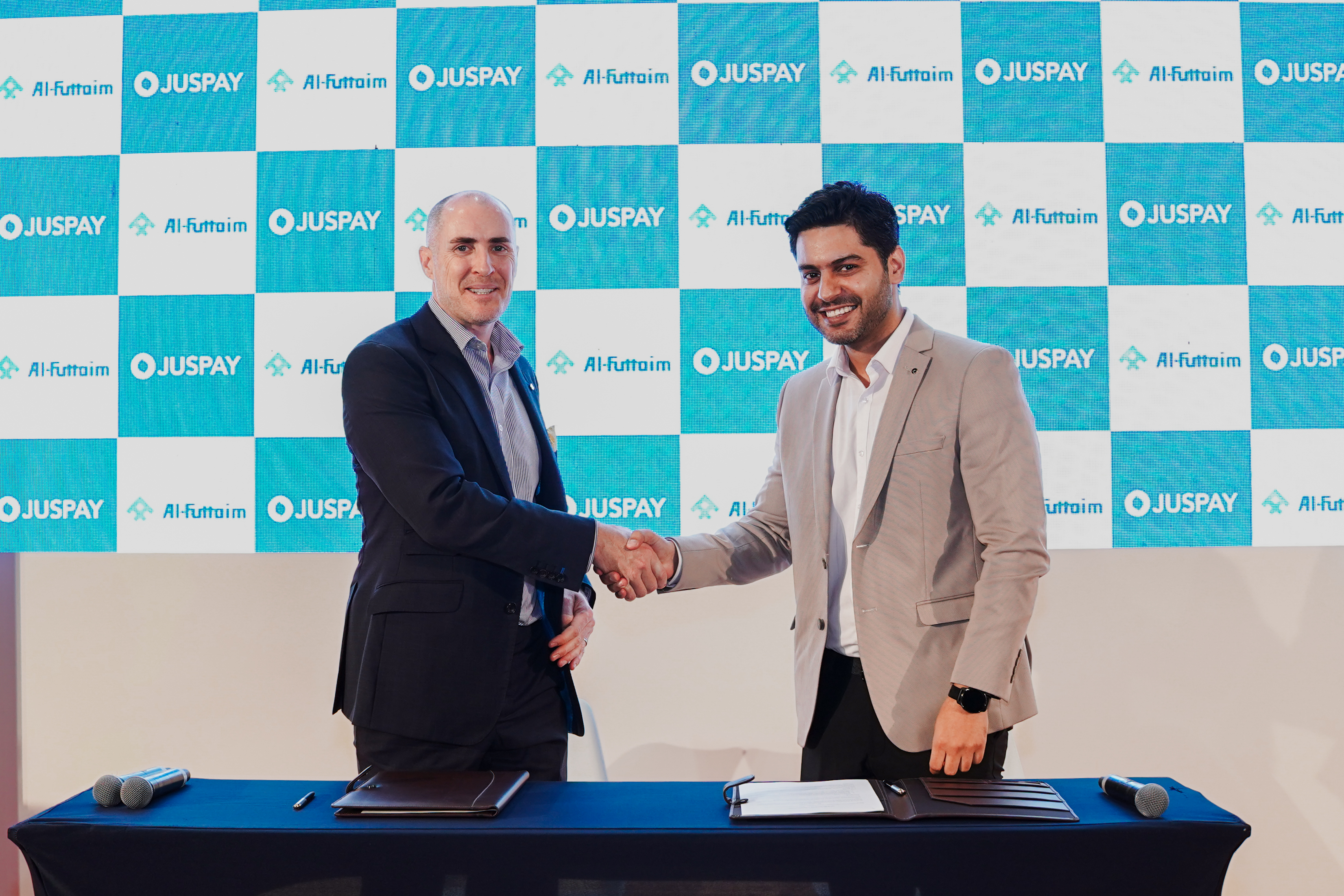
(L-R)Paul Carey, EVP-Cards, Payments & Fintech, Al-Futtaim_ and Nakul Kothari, Head of APAC & Middle East, Juspay
The partnership is designed
For Al-Futtaim, this is
At the heart of the
“At Al-Futtaim Finance, we
CEO, Al-Futtaim Finance.
“Al-Futtaim is the kind of
“The launch of our payment
Juspay’s payment stack
The partnership also sets the
23, Sep 2026
Mirae Asset Sharekhan Onboards ASK Private Wealth as an Authorised Business Partner Under its Newly Launched Premier Wealth Partner Category
Sept 23: Mirae Asset Sharekhan has announced a landmark strategic partnership with ASK Private Wealth, marking the joining of forces between two institutions dedicated to delivering exceptional client value through specialized expertise and best-in-class execution.
ASK Private Wealth is the first to be onboarded under the newly launched ‘Premier Wealth Partner’ category by Mirae Asset Sharekhan. Through this initiative, the company aims to partner with India’s leading wealth managers and financial institutions, while continuing to focus on delivering differentiated wealth advice and relationship management.
As the financial services industry undergoes a fundamental shift, clients increasingly expect an integrated experience—combining trusted advice, seamless execution, digital convenience, operational excellence, and comprehensive support across their wealth creation journey. This partnership bridges ASK’s proven excellence in advising affluent and HNIs complemented with Mirae Asset Sharekhan’s robust broking platform, advanced technology, research, and operational discipline.
ASK Private Wealth has built a strong reputation as one of India’s leading wealth management institutions, serving affluent and HNI clients through deep advisory expertise, long-term conviction and trusted relationships. Mirae Asset Sharekhan, meanwhile, has developed one of the country’s leading broking and investment platforms, backed by robust technology, research capabilities, execution excellence and operational discipline.
A Synergy of Core Strengths
The collaboration allows each organization to focus entirely on its core competencies:
-
ASK Private Wealth continues to focus on delivering differentiated wealth advice, deep market insight, long-term conviction, and high-touch relationship management, without the need to build independent execution infrastructure.
-
Mirae Asset Sharekhan provides a world-class broking and execution platform, empowering ASK’s clients with robust technology, research, risk management and operational excellence.
Strategic Significance and Growth Engine
From a business standpoint, the partnership reinforces a three-pillared strategic vision:
-
Platform-Led Growth: Positioning Mirae Asset Sharekhan as the preferred execution and broking platform for India’s leading wealth managers and financial institutions.
-
Operational Synergy: Allowing both institutions to play to their core strengths, resulting in a more powerful, convenient, and seamless client experience.
-
Scalable Growth Engine: Creating a repeatable framework designed to deepen client engagement, increase wallet share, improve productivity, and drive sustainable long-term growth.
Moon Kyung Kang, CEO, Mirae Asset Sharekhan, said: “We are delighted to welcome ASK Private Wealth as an Authorised Business Partner and as part of our newly launched Premier Wealth Partner category. This partnership brings together ASK Private Wealth’s advisory expertise and Mirae Asset Sharekhan’s execution, technology and research capabilities to deliver a superior investment experience for clients. It also reinforces our vision of becoming the preferred execution and broking platform for leading wealth management institutions.”
Rajesh Saluja, Co-Founder, CEO & MD, ASK Private Wealth, said: “The partnership serves as a strong endorsement of Mirae Asset Sharekhan’s platform capabilities. The platform is seamlessly integrated in our existing digital ecosystem ready to serve our client’s need for direct equity and ETF market participation without compromising on trust and institutional security. We remain committed to building a long-term partnership focused on exceptional client experience, operational excellence and sustainable growth.”
Commenting on the partnership, Hanumanth Rao, Director & Head – Business Partner Group, Mirae Asset Sharekhan, said: “ASK Private Wealth is a landmark addition to our partner network. This is the kind of relationship that validates the strength of our platform and our approach to partnering with the best names in the wealth and broking ecosystem. We are proud of the work that went into building this partnership, and excited about what it unlocks for both organisations and, most importantly, for clients.”
Both Mirae Asset Sharekhan and ASK Private Wealth are committed to delivering a superior client experience through close collaboration, execution excellence and continuous improvement. The partnership aims to create long-term value for clients and set a benchmark for institutional collaboration in the industry.
23, Sep 2026
A Continued Testament to Refined Elegance: OZEN RESERVE BOLIFUSHI Retains Coveted MICHELIN Key for Second Consecutive Year
Maldives, Sep 23: In the rarefied realm of the MICHELIN Key, with nearly 500 bestowed worldwide across a multitude of extraordinary properties, true distinction is found not in abundance, but in scarcity. OZEN RESERVE BOLIFUSHI is counted among just 15 resorts in the Maldives to receive this coveted honour, a distinction that speaks volumes about its unwavering commitment to excellence.

While international hospitality superpowers have long staked their claim on the Maldives, there remains room for something more intimate, a vision both all-encompassing and uncompromising. THE OZEN COLLECTION, an exclusive luxury brand within the island nation, has nurtured a flagship that stands shoulder to shoulder with the most recognisable names in the region. OZEN RESERVE BOLIFUSHI commands its own private island and lagoon in the South Malé Atoll, where a curated collection of suites, villas, pavilions, and RESERVES redefines the art of refined Maldivian living.
The MICHELIN Key serves as a powerful endorsement of the brand’s philosophy of refined elegance, one where every aspect of the guest journey is meticulously curated, from the moment of arrival to the final farewell. At its heart lies the signature RESERVE™ Plan, a comprehensive paradigm of all-encompassing indulgence that ensures a seamless continuum of bespoke experiences: unlimited gourmet dining across multiple specialty restaurants, a curated selection of premium international beverages, and the dedicated service of a private Hiyani butler who anticipates every desire with discreet precision.
Beyond the table and the villa, the resort offers dedicated sanctuaries for wellbeing and connoisseurship. The award-winning ELE|NA Elements of Nature Spa invites guests into transformative wellness journeys. Meanwhile, the exclusive CUVEÉ wine library, housing over 300 prestigious labels, offers a sophisticated enclave for curated tastings, where rare vintages and expert guidance converge.
Speaking on the recognition, Abnash Kumar, General Manager of OZEN RESERVE BOLIFUSHI, remarked:
“To retain the MICHELIN Key is a profound honour. It is not simply an award, it reflects the passion and dedication that our team brings to every guest, daily. It speaks to our commitment to creating experiences that go beyond expectation, where every detail matters, every moment is meaningful, and every guest feels genuinely seen. This recognition belongs to them, and to the guests who inspire us to keep raising the bar.”
Each element of the island converges to create something rare: a holiday that feels both boundless and intimately yours. As OZEN RESERVE BOLIFUSHI looks ahead, it does so with quiet confidence, continuing to redefine what it means to experience the Maldives at its most extraordinary.
23, Sep 2026
Auto Sales May Moderate After Festive Boost as Inflation Risks Rise
Festive Season Keeps Auto Demand Strong, but Growth May Cool After the Rush

India’s automobile market is heading into the festive season with healthy demand, but the industry may see sales growth settle at a more normal pace once the festive rush passes, as manufacturers face a high base of comparison and changing market conditions, according to a sector report by JM Financial Institutional Securities.
The report expects inventory build-up ahead of the festive season to provide near-term support to wholesale vehicle volumes. However, this boost may not continue at the same pace after the festive period, when growth is expected to normalise against stronger volumes recorded earlier.
SUVs continue to drive passenger vehicle demand
Passenger vehicle demand has remained particularly strong. Domestic passenger vehicle volumes increased 37 per cent year-on-year in August 2026, while volumes during the first five months of FY27 were up 30 per cent.
Utility vehicles, especially SUVs, have emerged as the strongest growth driver. Their August volumes increased 46 per cent year-on-year, taking their share of overall passenger vehicle sales to around 69 per cent, compared with about 65 per cent a year earlier.
The shift highlights the growing preference for larger and feature-rich vehicles and is providing an advantage to manufacturers with a wider SUV portfolio.
Two-wheelers maintain steady momentum
The two-wheeler market has also remained resilient, although growth moderated in August. Domestic internal-combustion-engine two-wheeler sales rose 5 per cent year-on-year during the month, taking FY27 year-to-date growth to 14 per cent.
Premium motorcycles are showing stronger momentum. Sales in the 150-250cc segment increased 28 per cent in FY27 so far, while motorcycles above 250cc recorded 34 per cent growth. In comparison, the sub-125cc category grew by around 6 per cent.
The trend points to continuing demand for higher-value models alongside overall volume growth.
Festive inventory could lift near-term sales
The festive season remains a crucial period for automobile manufacturers and dealers. Building inventory ahead of major festivals allows dealerships to offer a wider choice of vehicles and respond quickly when customer demand increases.
However, the industry is also entering the season with a relatively high base. As a result, strong festive volumes may not necessarily translate into equally high growth rates in the months that follow.
West Asia tensions add an inflation risk
Alongside demand, rising costs remain an important concern for the automobile industry. JM Financial has identified sustained inflationary pressure linked to the ongoing West Asia conflict as a key factor to monitor.
Higher energy, commodity and transportation costs can increase expenses across the automobile supply chain, from manufacturers and component suppliers to logistics providers and dealers. If such pressures persist, companies could face challenges in protecting margins while maintaining competitive pricing.
The risk is particularly relevant for the auto-component industry, where higher input costs can take time to pass through to customers.
Industry enters the festive season with mixed signals
The latest data shows that India’s auto sector continues to benefit from healthy consumer demand, particularly in SUVs and premium motorcycles. At the same time, manufacturers will need to carefully manage inventory and costs as the market moves beyond the festive period.
For the industry, the next phase will be less about simply increasing volumes and more about sustaining demand while managing inventory, input costs and changing consumer preferences.
23, Sep 2026
Cathay Cargo moves its Mumbai freighter operations to Navi Mumbai International Airport
Sep 23: Cathay Cargo, the cargo division of the Cathay Group, announced the relocation of its Mumbai freighter operations to Navi Mumbai International Airport, effective 21 September 2026.

Through its dedicated freighter network serving major Indian cities and its well-connected Hong Kong hub, Cathay Cargo connects Indian customers and businesses to key markets across the Chinese Mainland, Southeast Asia, North America and beyond. From its home hub, Hong Kong, Cathay Cargo offers seamless connectivity between India and major global markets, with half of the world’s population reachable within five hours’ flying time. Beyond providing capacity, Cathay Cargo serves as a strategic partner in India’s manufacturing and export growth story by helping Indian goods reach global markets faster, more safely and more competitively.
Cathay Cargo operates three dedicated freighter flights per week from Navi Mumbai International Airport using its Boeing 747-400ERF and Boeing 747-8F freighters, offering robust and consistent main-deck capacity, and nose-door loading capabilities to seamlessly transport odd-size, heavy cargo to and from its Hong Kong hub and beyond.
Cathay Regional Head of Cargo for South Asia, the Middle East, and Africa Rajesh Menon said:
“The move of our Mumbai freighter operations to Navi Mumbai International Airport reinforces our steadfast commitment to the Indian market and its growth trajectory. By combining Navi Mumbai International Airport’s modern infrastructure with our dedicated freighter presence and our ‘We Know How’ expertise, we are providing reliable connectivity and specialist handling for local enterprises, exporters and SMEs. This will also further strengthen connectivity between Western India’s exporters and key global markets through our Hong Kong hub.”
In addition to its Navi Mumbai International Airport freighter service, Cathay Cargo continues to operate its dedicated freighter network across India, operating five weekly freighter flights from Delhi and Chennai respectively.
Cathay Cargo’s operational excellence is anchored in its “We Know How” ethos, with a suite of specialist solutions tailored for each special shipment, including:
-
Cathay Expert: Dedicated handling for odd-sized, heavy and project cargo utilising nose-door freighter loading.
-
Cathay Pharma: Strict temperature-controlled logistics for life-saving pharmaceuticals and vaccines.
-
Cathay Fresh: High-speed cold-chain transport ensuring fresh produce, perishables and seafood arrive in optimal condition.
-
Cathay Priority: Guaranteed space and expedited processing for time-sensitive commercial shipments.
-
Cathay Live: Specialised care and safe transport for live animals.
Furthermore, Cathay Cargo’s specialist solutions and Cathay Cargo Terminal operations at Hong Kong International Airport are backed by a complete set of IATA CEIV certifications – including CEIV Pharma, CEIV Fresh, CEIV Live Animals, and CEIV Lithium Batteries. These internationally recognised accreditations ensure the highest global standards of safety, quality control, and regulatory compliance across all specialised cargo streams.
Complementing its freighter network, Cathay Cargo utilises additional belly-hold capacity on Cathay Pacific’s passenger aircraft across all five of its Indian gateways: Mumbai, Delhi, Chennai, Bengaluru and Hyderabad. Operating 45 passenger flights per week across these five cities, the passenger airline offers time-bound, high-frequency connectivity into Hong Kong and beyond.
23, Sep 2026
Odisha Seafood Exports Fall 14.57 pc Amid Middle East Conflict, Rs 23.40 Crore Loss in 2025-26
Bhubaneswar, Sept. 23 (UDN): Odisha’s seafood trade with the Middle East took a hit amid the ongoing regional conflict, with the value of marine product exports to the war-affected market declining by 14.57% in 2025-26, resulting in an estimated Rs 23.40 crore reduction in export earnings, the state government informed the Assembly on Wednesday.
Representational Image
Fisheries and Animal Resources Development Minister Gokula Nanda Mallik disclosed the figures in a written reply to a question raised by Aali MLA Pratap Keshari Deb.
MPEDA Data Shows Regional Decline
According to data received from the Marine Products Export Development Authority (MPEDA), Odisha recorded a 14.57% fall in the value of seafood exports to the Middle East during 2025-26 compared with the previous financial year.
The decline translated into an estimated loss of around Rs 23.40 crore in export earnings when compared with 2024-25.
The figures cover exports of fish, shrimp and other marine products shipped to the region.
Overall Seafood Exports Continue To Grow
Despite the setback in the Middle Eastern market, Odisha’s overall seafood export earnings increased during 2025-26.
The state recorded a 16.36% rise in the total value of seafood exports compared with the previous financial year. The overall increase amounted to Rs 763.94 crore, according to the minister’s reply.
The contrasting figures indicate that the decline in exports to the Middle East was limited to the affected market and did not result in a reduction in Odisha’s total seafood export earnings.
Conflict Disrupts Trade With Key Market
The Middle East remains an important overseas destination for seafood products, including shrimp and other marine commodities. Disruptions linked to regional conflict can affect shipping activity, market demand and trade flows.
For Odisha’s seafood sector, the fall in exports to the region represents a loss in one overseas market even as demand from other destinations helped sustain overall export growth during the year.
The government’s response did not indicate any decline in Odisha’s total seafood export value. Instead, the state registered a substantial increase in overall earnings despite the contraction recorded in the Middle Eastern market.
23, Sep 2026
India’s Ethanol Market Gears Up for a New Growth Phase as Demand May Touch 17.9 Billion Litres
New Delhi, Sep 23: India’s ethanol industry is heading towards a crucial growth phase, with demand projected to reach 17.9 billion litres by FY31 if ethanol blending rises to 25 per cent. The expected increase could push utilisation of the country’s existing distillation capacity close to full levels, creating a stronger focus on efficiency, feedstock availability and future investment.
India currently has around 18.25 billion litres of installed distillation capacity. Under an E25 blending scenario, demand could absorb nearly 98 per cent of this capacity by FY31. If blending remains at E20, demand is estimated at around 14.3 billion litres, translating into utilisation of approximately 78 per cent.
The industry could, however, face a significantly different investment requirement if blending moves towards E30. Under that scenario, ethanol demand could rise to around 21.5 billion litres by FY31, roughly 18 per cent above current installed capacity. Such a trajectory could shift the sector from maximising existing plants to building fresh distillation capacity.
The changing demand outlook is also reshaping the industry’s raw-material mix. Grain-based ethanol accounted for 72 per cent of allocations in ESY26 Cycle 1, compared with 28 per cent for sugar-based routes. Maize alone accounted for 45.7 per cent of allocations, highlighting its growing role in the country’s ethanol supply chain.
For producers, however, higher demand also brings the challenge of managing production costs. EBITDA margins of grain-based distilleries declined from 9.2 per cent in FY21 to 6.7 per cent in FY25, indicating continued pressure from feedstock costs. This makes efficient sourcing and better utilisation of existing plants increasingly important for the industry’s next phase.
The ethanol programme has already transformed India’s biofuel landscape. Government data shows that ethanol blending in petrol increased from below 1.5 per cent in 2013-14 to 20 per cent in 2025-26, while production capacity expanded from 421 crore litres in 2014 to about 2,000 crore litres in 2026. The expansion has also helped reduce dependence on imported crude oil and support domestic renewable fuel production.
With the E20 milestone largely achieved, the industry’s focus is now moving towards higher capacity utilisation, feedstock optimisation and better returns from existing assets. Emerging applications such as sustainable aviation fuel could also create additional avenues for the sector.
The projected rise in ethanol demand could therefore have implications well beyond fuel blending. It could support investment across distilleries, feedstock supply chains, agriculture-linked businesses and biofuel technologies. At the same time, the pace of future blending and the availability and cost of feedstock will remain important factors in determining how quickly the industry expands.
For India, the next phase of ethanol growth is increasingly about making existing capacity work harder today while preparing for the additional infrastructure that could be required tomorrow.
23, Sep 2026
Wildlife Photography Essentials to Pack for Your Next Outdoor Adventure

Bangalore | Sept 23: As winter’s approaching soon, cooler mornings and comfortable days make it an ideal time to step outdoors with a camera and explore the nature around us. From planning a jungle safari and joining a bird walk to exploring nature trails or simply heading out for a weekend photo walk, the season brings plenty of opportunities to observe wildlife and capture moments in their natural surroundings.
Wildlife photography often calls for patience, flexibility, and equipment that can keep up when a fleeting moment suddenly unfolds. Whether you are photographing a bird taking flight, an animal emerging from the foliage, or smaller details along a nature trail, having the right combination of reach, speed, portability, and image quality can make the experience more rewarding. Here are some Sony imaging essentials to consider for your next outdoor photography adventure.
Sony Alpha ILCE-7RM6: Wildlife photography often comes down to a single moment, whether it is a bird taking flight, an animal turning towards the camera, or a brief interaction that lasts only a few seconds. The Sony Alpha ILCE-7RM6 combines a 66.8MP full-frame fully stacked Exmor RS CMOS sensor with high-speed performance, giving photographers the resolution and responsiveness needed to capture detailed images when the action unfolds unexpectedly.
Powered by the BIONZ XR2 image processing engine with an integrated AI processing unit, the camera can shoot at up to 30fps with full-resolution images and AF/AE tracking, while supporting up to 60 AF/AE calculations per second. Sony also provides specific shooting guidance for wild birds, including Pre-Capture, which can help record the moments immediately before the shutter is fully pressed when the timing of movement is difficult to predict.
Sony FE 100–400mm F5.6–8 OSS: A morning bird walk or wildlife trail can quickly turn into a search for subjects at different distances, making a versatile telephoto lens particularly useful. The Sony FE 100–400mm F5.6–8 OSS offers a 100–400mm focal range in a compact and lightweight design, allowing photographers to follow distant birds and wildlife without carrying a particularly heavy setup throughout the day. Weighing just 654g, the lens is designed for handheld shooting and can be a practical companion for longer outdoor photography sessions.
Fast, precise autofocus and Optical SteadyShot image stabilisation help when photographing active subjects, while its dust and moisture resistant design adds reliability when shooting outdoors. The lens also offers a minimum focusing distance of 0.86m at the telephoto end and up to 0.41x magnification, making it useful for photographing smaller subjects such as birds, insects and flowers encountered along a nature trail. An optional teleconverter can further extend its reach up to 800mm.
Sony RX10V: Not every outdoor photography outing comes with a fixed plan, and photographers may find themselves moving from wide landscape views to distant birds and wildlife within the same walk. The Sony RX10 V offers an all-in-one solution with a ZEISS Vario-Sonnar T 24–600mm F2.4–4.0 zoom lens, allowing photographers to move between wide-angle and super-telephoto perspectives without changing lenses.
The camera combines a 1.0-type stacked Exmor RS CMOS sensor with 20.1 megapixels, a BIONZ XR image processing engine, and an AI processing unit that supports Real-time Recognition AF for different subjects. With blackout-free continuous shooting at up to 30fps and up to 575 phase-detection AF points, the RX10 V is equipped to capture unpredictable moments, whether it is a bird taking flight, an animal moving through the frame, or a fleeting moment during an outdoor walk.
Sony FE 50–150mm F2 GM: Early mornings and late afternoons can offer some of the most interesting conditions for outdoor photography, when softer light adds depth to landscapes and wildlife images. The Sony FE 50–150mm F2 GM combines a versatile telephoto range with a constant F2 aperture, giving photographers greater flexibility to capture subjects against their surroundings while creating a smooth, defocused background.
The lens is particularly suited to situations where photographers want to capture more than just a distant subject, whether that means an animal within its habitat, a bird perched against a textured background, or details emerging as the light changes. Its internal zoom design maintains a consistent lens length while zooming, while the combination of telephoto compression and F2 aperture gives photographers greater creative control over how subjects stand out within the frame.
The appeal of outdoor photography lies in the fact that no two outings unfold in quite the same way. A quiet bird walk can turn into an opportunity to capture a bird in flight, while a planned safari can offer everything from distant wildlife and dramatic landscapes to smaller details hidden along the trail.
With winter bringing more comfortable conditions for exploring the outdoors, it is a good time to plan photography adventures around the subjects and environments you enjoy most. From lightweight telephoto lenses and versatile all-in-one cameras to fast lenses and high-resolution camera bodies, Sony’s imaging lineup offers options that can help photographers stay ready for the moments that make every outdoor adventure worth capturing.
23, Sep 2026
India’s Corporate Globalization Accelerates: Outbound Expansion Grows 53 percentage vs 17 percentage Inbound Growth
Mumbai, Sep 23: The emerging Multinational Benefits Guide by Howden Employee Benefits examines how companies are managing employee benefits across different markets. It looks at Indian companies with overseas operations as well as foreign-owned businesses in India and highlights the challenges employers face in meeting local regulations, responding to employee expectations and managing costs.
The report records 8,285 Indian companies with cross-border investments, an increase of around 53% in two years. These include companies across IT services, pharmaceuticals, manufacturing, fintech, engineering and consumer sectors, with operations in markets such as Singapore, the US and the UK. It also identifies nearly 34,500 foreign-owned businesses operating in India, up 17% over the same period. This includes 2,117 Global Capability Centres, which together employ more than 2.3 million people.
For employers, managing employees across different countries brings a common challenge: how to provide benefits that meet local regulations, remain competitive for employees and continue to make commercial sense. Indian companies entering a new market may initially have relatively small teams, but they are still expected to provide benefits that are relevant to the local workforce.
Cost and measurable value remain important considerations for Indian employers. Benefits programmes therefore need to balance local employee expectations with consistency, cost efficiency and a clear return on investment.
Long-term international deputations add another layer of complexity. Employers must consider international medical insurance, continuity of pension and retirement benefits, repatriation support and, in some cases, continued protection for parents and dependants in India. These requirements can vary significantly across markets and employee groups.
Foreign companies operating in India face a different set of pressures. As Global Capability Centres compete for talent, employee benefits are becoming an important part of attracting and retaining skilled professionals. Programmes designed at a global level may also need to be adapted to the expectations and needs of employees in India.
Howden and REBA’s research shows that half of multinational businesses, in India and globally, do not have a competitive global or multinational benefits strategy in place*. As more companies manage employees across multiple markets, the need for locally relevant, compliant and cost-effective benefits is becoming harder to overlook.
Howden x REBA Multinational Benefits Strategy Research 2023
Leigh Dauncey, Regional Employee Benefit Leader- India, Middle East and Africa at Howden, commented:
“As businesses scale internationally, whether they are Indian companies moving into new markets or global firms expanding their India operations, benefits design is quickly becoming a critical business consideration. Getting it right requires a partner who understands the compliance requirements of each market, the expectations of employees and the commercial need to demonstrate value.
“For Indian companies, the challenge is particularly nuanced. Benefits must support locally hired teams as well as employees on long-term international assignments, without losing sight of cost, consistency or the needs of families who may remain in India. Emerging multinationals need robust benefit structures designed for lean, fast-moving teams, and many are navigating this complexity without the right support.”
Pratyush Ranjan, Associate President & Head of Multinational Employee Benefits, Howden India, commented:
“Global companies are scaling their Capability Centres here and competing for talent, while a new generation of Indian companies is establishing teams overseas.
“For Indian employers, this often means finding the right balance between local compliance, employee expectations and cost efficiency. It also means addressing the needs of employees on long-term deputation, from international medical cover and retirement continuity to repatriation support and protection for dependants in India. The goal is to create benefits that work across borders while delivering clear and measurable value to the business.”


