


4, Mar 2026
Digital Rights Network Launches First Global Platform Connecting Real Estate and Content Creators to Monetize the Digital Layer of the Physical World
More than $400 Billion in value and over 11 Billion in Square Footage registered as buildings become digital content affiliates driving revenue for property and IP owners.
LOS ANGELES, Mar 4 — Digital Rights Network today announced the launch of its groundbreaking platform designed to connect real estate owners with content creators, media companies, brands, and IP holders to monetize the digital layer of real-world properties. The platform enables property owners to register and manage their Digital Rights while allowing creators to deploy immersive 3D and augmented reality (AR) content on buildings transforming the physical world into a scalable, rights-protected content network.
As augmented reality, spatial computing, and AI-driven media rapidly move from screens into physical environments, buildings are increasingly being used as canvases for digital advertising, entertainment, and social content, often without the consent of property owners. Digital Rights Network provides the missing infrastructure, creating a transparent marketplace where property owners and content creators can collaborate, transact, and share value.
Founded by five-time Emmy® Award–winning producer and augmented reality pioneer Neil Mandt, Digital Rights Network operates as both a digital rights platform and a next-generation distribution network for the physical world. Through the platform, television networks, YouTubers, influencers, celebrities, and brands can form partnerships with property owners to display immersive AR content on buildings’ digital layers, reaching consumers directly. Each participating property functions as a digital content affiliate, generating new revenue with no cost, hardware, or operational burden to the owner.
“Every building has both a physical footprint and a digital presence,” said Neil Mandt, Founder and CEO of Digital Rights Network. “Until now, that digital layer has been unregulated and unclaimed. Digital Rights Network gives ownership, structure, and opportunity to that space, allowing property owners and creators to decide what appears, who profits, and how the real world evolves in an augmented future.”
The platform utilizes secure, blockchain-based verification to publicly record Digital Rights ownership and manage licensing, compliance, and monetization. Digital Rights Network unites industries including real estate, media, advertising, insurance, data, finance, and government, providing the legal, financial, and technical foundation for digital content in physical space.
How Digital Rights Network Works:
-
Register Properties: Real estate owners establish Digital Rights for their assets
-
Onboard Creators & IP Owners: Media companies, creators, and brands access verified properties for content partnerships
-
Policy & Compliance: Governments and municipalities define guidelines for acceptable AR content
-
Monetize: Licensed transactions are facilitated and recorded on blockchain through the platform
-
Protect: Proprietary technology supports automated compliance and insurance frameworks
Early Adoption and Market Traction:
During its invite-only beta, Digital Rights Network has registered more than $400 Billion value, including participation from leading real estate organizations such as BXP, Colliers, and BOMA/Chicago.
Registered properties include:
-
BXP assets such as Prudential Tower, Salesforce Tower, Times Square Tower and the GM Building
-
29 million square feet of Colliers-managed properties
-
Iconic landmarks including the Flatiron Building (NYC), One Chicago, TD Garden (Boston), and major Las Vegas resorts such as Treasure Island
-
Mixed-use and retail destinations managed by WS Development
“Buildings are the intellectual property of our industry and deserve the same level of protection and monetization as other forms of IP,” said Bryan Koop, Executive Vice President at BXP. “Digital Rights Network provides a framework that finally recognizes that value and generates a new stream of revenue for property owners.”
“This technology will fundamentally change how people interact with the built environment,” said Steve Weikal, Industry Chair of the Real Estate Transformation Lab at the MIT Center for Real Estate. “Few platforms have the global relevance and scalability of Digital Rights Network; it applies to every building, in every city.”
As the internet expands beyond screens and into streets, skylines, and shared spaces, Digital Rights Network is establishing the trusted infrastructure that defines ownership, enables creativity, and unlocks new economic opportunities in the augmented world.
For more information or to participate, visit www.digitalrightsnetwork.com
- 0
- By Neel Achary

3, Mar 2026
New Research Offers Businesses a Playbook for Surviving Social Media Firestorms
By Anthony Borrelli
This was how critics labeled a 30-second Peloton holiday ad in 2019 that featured a man giving a woman an exercise bike as a gift. Backlash was so severe that Peloton’s stock fell by about 9%, after social media erupted over perceived outdated gender roles and body image standards.
Researchers describe this kind of reaction as online social disapproval (OSD) — the public expression of criticism against businesses on digital platforms — which can rapidly escalate into bursts of public responses with significant reputational and financial consequences. For instance, in 2023, Bud Light faced boycotts and sales declines following backlash over its partnership with a transgender influencer.
In response, new research co-authored by Associate Professor Jinglu Jiang from the Binghamton University School of Management introduces a digital toolkit designed to help organizations anticipate, interpret, and respond to social media backlash more effectively. The conceptual paper, “Bursts of online social disapproval: leveraging analytics for comprehension and detection,”(opens in a new window) was published in the Journal of Business Strategy.
The toolkit, developed by combining a review of existing research with real-world cases, identified four phases of OSD — preburst, initial burst, spreading and contagion, and recalibration — that explain how backlash emerges and evolves over time.
“The whole point is that online social disapproval is different from traditional crisis management. It’s not linear; it’s more like a cycle, because of how the internet and social media algorithms create different bursting patterns affecting how these kinds of responses can spread,” Jiang said. “Negative opinions become a battlefield in the spreading phase, and sometimes one perspective emerges as more dominant. When things settle down and get back to normal, that’s when management should revert to prebursting monitoring practices, rather than just waiting for it to happen again.”

Jinglu Jiang, associate professor in the Binghamton University School of Management. Image Credit: Jonathan Cohen.
Using the four phases, the study offers guiding questions and analytical indicators to give managers more robust capabilities for early detection, response, and recovery:
- Preburst: Is there a process to monitor emerging trends within your firm?
- Initial burst: Have you identified indicators for OSD popularity?
- Spread and contagion: Is a company-specific burstiness threshold defined? Is a structured procedure in place to monitor OSD burst trajectories?
- Recalibration: Have situational and long-term impact measures been defined?
For the final phase, researchers said the critical question is not simply whether online activity has subsided, but what lasting imprint the OSD burst has left on the organization.
“In the short term, firms can track immediate market and financial responses, such as sales fluctuations, stock price volatility, or shifts in customer traffic. These indicators provide situational feedback on the material consequences of the burst,” the study stated. “However, analytics also structure longer-term interpretations by highlighting enduring reputational shifts. Measures such as customer satisfaction, online review trends, survey-based reputation indices, and social media engagement reveal whether stakeholder trust is recovering or whether skepticism persists.”
Each business needs to define its own baseline “normality” for how the public responds on social media to different events or situations for this type of toolkit to be effective, Jiang said. The study also cautions that older events can resurface unexpectedly, triggering renewed backlash as past news and content are rediscovered online.
“The moment you observe that initial burst online, you need to be cautious and strategic about how you respond,” Jiang said, “because once it enters the spreading and contentious phase, it can become a social media battlefield that’s more difficult to contain. That’s something any business would want to avoid.”
Photo: This was how critics labeled a 30-second Peloton holiday ad in 2019 that featured a man giving a woman an exercise bike as a gift. Backlash was so severe that Peloton’s stock fell by about 9%, after social media erupted over perceived outdated gender roles and body image standards.
Researchers describe this kind of reaction as online social disapproval (OSD) — the public expression of criticism against businesses on digital platforms — which can rapidly escalate into bursts of public responses with significant reputational and financial consequences. For instance, in 2023, Bud Light faced boycotts and sales declines following backlash over its partnership with a transgender influencer.
In response, new research co-authored by Associate Professor Jinglu Jiang from the Binghamton University School of Management introduces a digital toolkit designed to help organizations anticipate, interpret, and respond to social media backlash more effectively. The conceptual paper, “Bursts of online social disapproval: leveraging analytics for comprehension and detection,”(opens in a new window) was published in the Journal of Business Strategy.
The toolkit, developed by combining a review of existing research with real-world cases, identified four phases of OSD — preburst, initial burst, spreading and contagion, and recalibration — that explain how backlash emerges and evolves over time.
“The whole point is that online social disapproval is different from traditional crisis management. It’s not linear; it’s more like a cycle, because of how the internet and social media algorithms create different bursting patterns affecting how these kinds of responses can spread,” Jiang said. “Negative opinions become a battlefield in the spreading phase, and sometimes one perspective emerges as more dominant. When things settle down and get back to normal, that’s when management should revert to prebursting monitoring practices, rather than just waiting for it to happen again.”
Using the four phases, the study offers guiding questions and analytical indicators to give managers more robust capabilities for early detection, response, and recovery:
- Preburst: Is there a process to monitor emerging trends within your firm?
- Initial burst: Have you identified indicators for OSD popularity?
- Spread and contagion: Is a company-specific burstiness threshold defined? Is a structured procedure in place to monitor OSD burst trajectories?
- Recalibration: Have situational and long-term impact measures been defined?
For the final phase, researchers said the critical question is not simply whether online activity has subsided, but what lasting imprint the OSD burst has left on the organization.
“In the short term, firms can track immediate market and financial responses, such as sales fluctuations, stock price volatility, or shifts in customer traffic. These indicators provide situational feedback on the material consequences of the burst,” the study stated. “However, analytics also structure longer-term interpretations by highlighting enduring reputational shifts. Measures such as customer satisfaction, online review trends, survey-based reputation indices, and social media engagement reveal whether stakeholder trust is recovering or whether skepticism persists.”
Each business needs to define its own baseline “normality” for how the public responds on social media to different events or situations for this type of toolkit to be effective, Jiang said. The study also cautions that older events can resurface unexpectedly, triggering renewed backlash as past news and content are rediscovered online.
“The moment you observe that initial burst online, you need to be cautious and strategic about how you respond,” Jiang said, “because once it enters the spreading and contentious phase, it can become a social media battlefield that’s more difficult to contain. That’s something any business would want to avoid.”
3, Mar 2026
Hasiru Habba 2.0 Unites Residents at Gopalan Olympia to Champion Sustainable Living
Bengaluru, Mar 03: What happens when residents take ownership of their neighbourhood’s environmental footprint? At Gopalan Olympia, that intention became action through Hasiru Habba 2.0, a resident-led initiative focused on promoting sustainable living practices among residents and local vendors.

Hosted at Yuva Tarabeti Kendra, the event was organised by the Hasiru Hejje Swaccha Usiru Citizen Collective, a community of residents from the surrounding neighbourhood, in partnership with Kumbalgodu Gram Panchayat. Designed as a platform for community engagement, Hasiru Habba 2.0 encouraged practical, on-ground conversations around responsible waste management, mindful consumption, and eco-friendly lifestyle choices at the neighbourhood level.
“We believe sustainable communities are built when residents take the lead, and we are proud to support initiatives like Hasiru Habba 2.0 at Gopalan Olympia. By enabling such platforms, we hope to inspire meaningful change and foster a culture of responsibility and conscious living within our neighbourhoods,” said Dr. C. Prabhakar, Director, Gopalan Enterprises.
The event turned sustainability into action. Residents, volunteers, and local vendors participated in interactive sessions demonstrating how small, consistent efforts—such as waste segregation at the source and reducing single-use plastics—can collectively make a significant environmental impact.
At its core, Hasiru Habba 2.0 showcased the power of citizen-driven movements, where solutions emerge organically from within the community. Gopalan Olympia, as the host community, played a pivotal role in fostering a residential ecosystem that supports community-led sustainability initiatives and encourages civic participation at the grassroots level.
Supporting the initiative, Gopalan Enterprises distributed approximately 1,500 reusable jute bags to local vegetable vendors, retail shops, pushcart sellers, and cloth merchants to actively reduce single-use plastic usage. Additionally, seed-paper tags were provided to promote tree planting and encourage long-term behavioral change. The Group also assisted with on-ground efforts for area clean-up and waste management during the event.
Beyond Hasiru Habba 2.0, Gopalan Enterprises has undertaken regular maintenance and upkeep of the Olympia vicinity, including road cleaning, debris removal, and monitoring to ensure the area remains orderly, safe, and environmentally friendly for residents and commuters.
The event reflected strong collective engagement, marking a positive step toward building a cleaner, greener, and more environmentally conscious community. Through initiatives like Hasiru Habba 2.0, Gopalan Enterprises continues to demonstrate its belief that responsibility extends beyond property boundaries and into the shared urban environment.
3, Mar 2026
Lakshmipriya Devi Shines in 11 Tareng at the 79th BAFTA Awards

Lakshmipriya Devi, best known for directing the Manipuri-language film Boong, was spotted wearing 11 Tareng at the 79th BAFTA Awards, where her film won the Best Children’s and Family Film award. Inspired by the traditional Phanek and Phee, the brand designed a minimal yet striking ensemble in Lavender Grey from its ‘Phiruk’ collection.
3, Mar 2026
The Central African Republic has launched a high-quality digitization project
| The platform is built on an open-source microservices architecture with high resiliency (99.8% availability), encrypted data structure, and API interoperability |
| BANGUI, Central African Republic, Mar 3: A historic step in the modernization of the Central African Republic’s public administration. With the official launch of the Dûnîa digital platform, an entire ministry was fully digitized for the first time – both in terms of internal processes and cooperation with external partners.
The platform was developed on behalf of the Ministry of Economy, Planning and International Cooperation (MEPCI) and marks a unique structural shift in the governance of economic policy, development planning and international partnerships. The official launch of this Platform took place on February 23, 2026 under the patronage of the President of the Republic, Head of State, Professor Faustin Archange Touadera, and is under the banner of the National Development Plan (NDP-2024-2028). “Dûnîa is much more than just an e-government project. It is an integrated, modular and scalable digital platform that maps all of the ministry’s administrative, operational and strategic processes. A strategic lever for development and digitalisation – and an important element of our Ambition28 programme,” says Professor Richard Filakota, Minister of Economy, Planning and International Cooperation. On the platform, all HR and budget management processes of the Ministry of the Economy are automated: document management is managed entirely electronically, project management is digitally centralized, macroeconomic analyses are modeled based on data and international funding is tracked transparently. The platform is built on an open-source microservices architecture with high resiliency (99.8% availability), encrypted data structure, and API interoperability. Concrete gains in efficiency and transparency Digitalization brings measurable improvements. Administrative processing times are reduced by up to 70%. Around 40% of human resources can be used for value-added tasks in the future. In the case of recurring administrative costs, a potential savings of up to 30% is expected. In addition, all processes will be fully digitally traceable in the future to minimize the risk of corruption. After all, reporting is carried out in accordance with international standards – and in an automated way. Of particular importance is the new central project register, which for the first time brings together all governmental, international and humanitarian projects in a common database. This reduces information gaps and avoids duplication of structures – an important step towards making more effective use of international development funds. Digital governance of more than $9 billion in development finance The platform directly supports the implementation of the National Development Plan 2024–2028, for which more than USD 9 billion has been mobilized as part of the International Investors Roundtable held in Casablanca in September 2025. By grouping and digitally coordinating all projects, overlaps can be reduced and a potential savings of 15 to 20 percent can be realized. In addition, outflows of funds are accelerated, impact assessments are improved and territorial imbalances are compensated. This makes digitalization the central instrument for effective development management. The development and implementation of Dûnîa is carried out in partnership with the Central African technology company EDEN TiiiT, led by Cédric PIDJOU who pre-financed the previous phases of the project from his own funds. “This model underlines the growing role of the local private sector in the country’s digital transformation and sends a strong signal to international partners and investors,” says Professor Richard Filakota. “With Dûnîa, the Central African Republic is positioning itself as a pioneer in digital administrative modernization. A model of digital sovereignty for a country! » This platform strengthens the state’s capacity for action, increases transparency and accountability, and creates the basis for evidence-based policymaking. The digitalization of the Ministry is therefore not only a technological step, but also a strategic cornerstone for sustainable growth, institutional stability and international partnership. The name Dûnîa means “the world, the universe, a place with an infinite number of solutions” in Sango, the local language. It was chosen to symbolize the opening of the CAR to the world, its repositioning among the countries with high digital potential, and the acceleration of its economic growth thanks to an infinite number of innovative solutions. |
3, Mar 2026
MDI Regenerative Business Research Discussed at International Doctoral Consortium and ICCMRO 2026 at MDI Gurgaon
Gurgaon, Mar 03: Management Development Institute Gurgaon hosted a two-day academic programme from February 20 to 24, 2026, centred on the theme “Beyond Sustainability: Creating and Sustaining Regenerative Businesses.” The programme brought together the International Doctoral & Early-Career Academics Consortium and the 2nd ICCMRO International Conference 2026, convening scholars, journal editors, and industry practitioners from India and overseas, including representation from partner institutions such as BFH Switzerland, led by Prof. Ingrid Kissling, Director, Business School, BFH Switzerland.
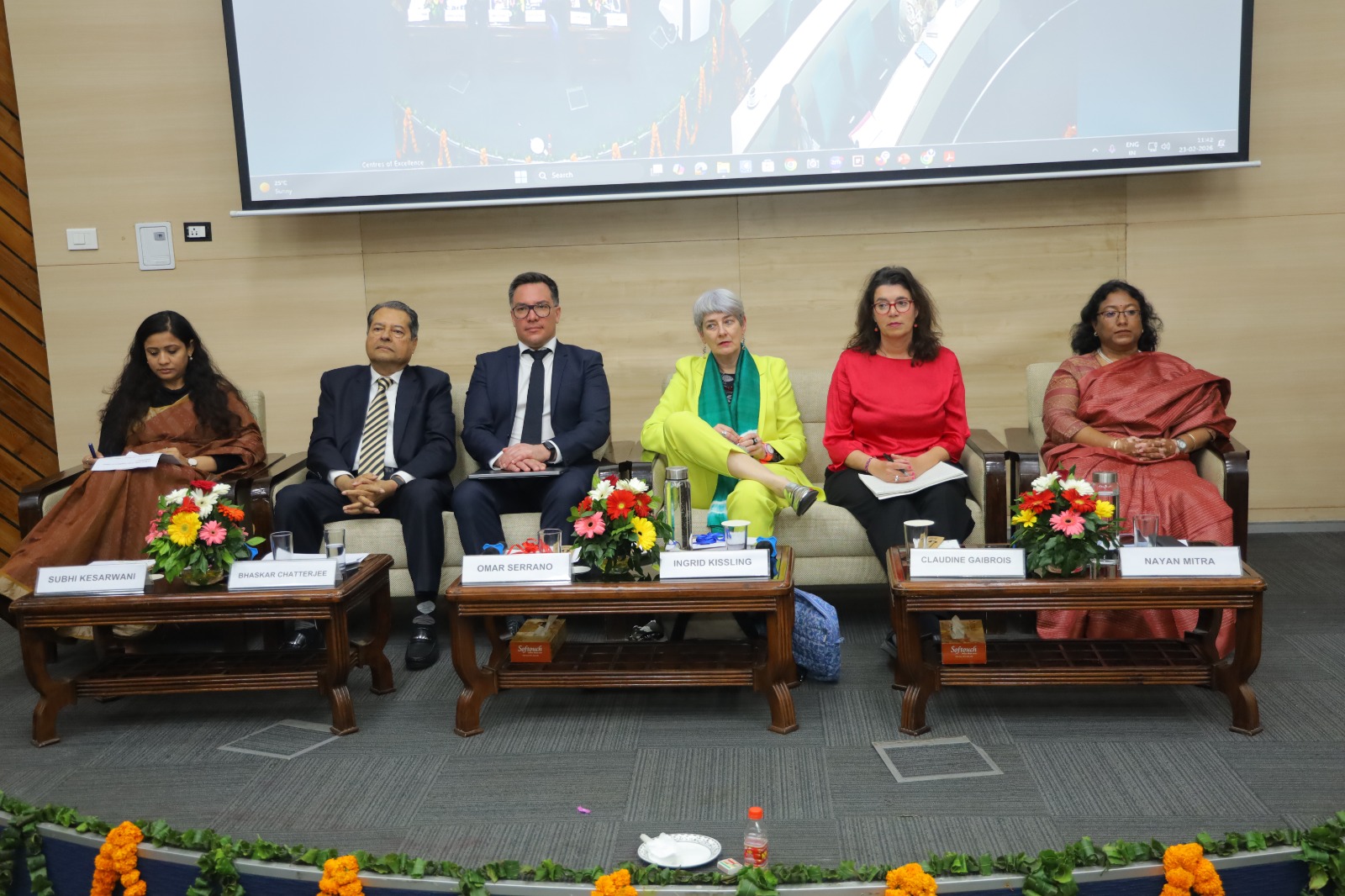
Against the backdrop of evolving sustainability conversations—where the focus is shifting from policy commitments and disclosures to measurable outcomes and system-level impact—the discussions examined how businesses can move beyond incremental ESG compliance towards regenerative models that restore social, environmental, and institutional value.
The initiative brought together doctoral scholars, early-career academics, senior researchers, journal editors, and industry representatives to deliberate on regenerative business practices, ESG-linked governance, ethical decision-making, and responsible management education, with an emphasis on analytical rigour and empirical grounding.
The programme opened with the International Doctoral & Early-Career Academics Consortium on February 20. The inaugural session featured remarks by Prof. Tanuja Sharma and Prof. Ritu Srivastava. Keynote sessions explored the evolving relationship between enterprise, accountability, and long-term value creation.
Anil Gupta, Founder of the Honey Bee Network, highlighted the importance of grassroots innovation and community-embedded knowledge systems in building inclusive and resilient enterprises. Karen Maas of the Open University and Erasmus University addressed impact measurement, sustainability reporting, and the growing demand for evidence-based evaluation of ESG outcomes, noting that credibility increasingly depends on methodological robustness rather than narrative intent.
A panel discussion on “Ethics and Principles for Sustainability in Business” featured perspectives from academia and industry, including Abhishek Chandra and Harry Van Buren from the University of Tennessee, Chattanooga. Panellists discussed ethical governance, accountability mechanisms, and the role of academic research in shaping responsible corporate conduct, emphasising that sustainability must be embedded in decision-making structures rather than treated as an adjunct function.
Emphasising the importance of international academic collaboration, Maya Tissafi, Swiss Ambassador, underscored the growing relevance of partnerships between Indian and Swiss business schools in shaping the future of responsible enterprise. She called upon academia to take its rightful place in the global sustainability movement, noting that universities must move beyond observation to leadership. Highlighting the long-term consequences of present-day decisions, she remarked that the choices we make today are the seeds of tomorrow’s growth, and stressed that cross-border collaboration in research, teaching, and leadership development would be critical to advancing regenerative and inclusive economic models.
Subsequent consortium sessions focused on research methodology, community-engaged scholarship, and publication processes, reflecting the growing expectation that sustainability research demonstrate both theoretical depth and practical relevance. Doctoral participants engaged in master classes and feedback clinics aimed at strengthening research design, causal reasoning, and contribution to international scholarship.
The concluding phase comprised the 2nd ICCMRO International Conference 2026, featuring paper presentations and plenary sessions on stakeholder accountability, climate-related disclosures, governance frameworks, and cross-sectoral sustainability challenges. Researchers and practitioners examined how governance systems can support long-term resilience in the face of environmental and social disruption.
Professor Tanuja Sharma, Chairperson, CERO, MDI Gurgaon, added: “Sustainability research today is increasingly concerned with systems, governance, and long-term value creation rather than checklist-based compliance. Academic platforms such as doctoral consortia enable researchers to test ideas rigorously, sharpen methodologies, and situate their work within broader societal and organisational contexts”
The programme concluded with a vote of thanks by Prof. Vanita Singh, who acknowledged the contributions of keynote speakers, panellists, doctoral scholars, research presenters, institutional partners, and organising teams. She highlighted the collective effort that enabled rigorous academic exchange and international collaboration, noting that such platforms play a vital role in advancing thoughtful, evidence-led discourse on sustainability, ethics, and regenerative business practice.
2, Mar 2026
TEDxHRCollege 2026 Explores “Beyond the Horizon” at Its 11th Edition

Mar 2:TEDxHRCollege is the official TEDx platform of HR College of Commerce and Economics, created to bring the global spirit of TED to a student-led stage in Mumbai. Marking its 11th edition, TEDxHRCollege was held at the C.K. Nayudu Banquet Hall, Cricket Club of India, under the theme “Beyond the Horizon.” Independently organized by students and licensed by TED, the event embodied the mission of “Ideas Worth Spreading,” encouraging audiences to challenge boundaries and envision possibilities beyond the visible.
The event commenced with a classical performance followed by welcome addresses by Principal Dr. Pooja Ramchandani and Head Organizer Ms. Palak Gala.
The speaker lineup featured diverse voices across leadership, literature, and corporate foresight:
Mr. Bharat Dash, management professional, reflected on the enduring relevance of the Panchatantra, contrasting its emotional intelligence and storytelling depth with conventional presentation formats.
Mr. Yusuf Poonawala, entrepreneur and author of The Balanced Leader, delivered “When Everything Burns Down, What Remains?”, urging audiences to build character, values, and resilience beyond titles and applause.
Ms. Alpa Vora, Child Protection Specialist at UNICEF India, spotlighted youth-led initiatives in Maharashtra that safeguard children’s rights and strengthen communities.
Ms. Kaveri Ingale explored leadership through cinematic narratives, emphasizing courage, accountability, and authenticity as everyday practices.
Mr. Vesmir, poet and author, examined the cognitive and emotional implications of over-reliance on AI, advocating literature as essential for human resilience.
Ms. Kamayani Nagar, Head of Retail at Aditya Birla Sun Life, spoke on preparing for corporate life in 2036, highlighting adaptability, AI literacy, ethical judgment, and continuous learning as future essentials.
Ms. Priyadarshini Indalkar, acclaimed Marathi actress, addressed the “Fear of Failure,” encouraging resilience, empathy, and authenticity in navigating personal and professional challenges.
The event would not have been possible without the unwavering support and guidance of our Principal, Dr. Pooja Ramchandani, and our Faculty In-Charge, Prof. Chandani Bhattacharjee. Their constant encouragement, trust and thoughtful mentorship laid the foundation for its success. Their belief in our vision empowered us to execute the event with confidence, responsibility, and excellence.
Beyond being a platform for ideas, TEDxHRCollege is a transformative learning experience. It enables students to build strong communities while developing leadership, communication, hospitality, and problem-solving skills. By taking ownership of real responsibilities, students grow not only as organizers but as capable, confident individuals ready to lead beyond the horizon.
2, Mar 2026
VST Tillers Tractors Wins Best Farm Machinery Display & State Excellence Award at Global Agro Tech 2026
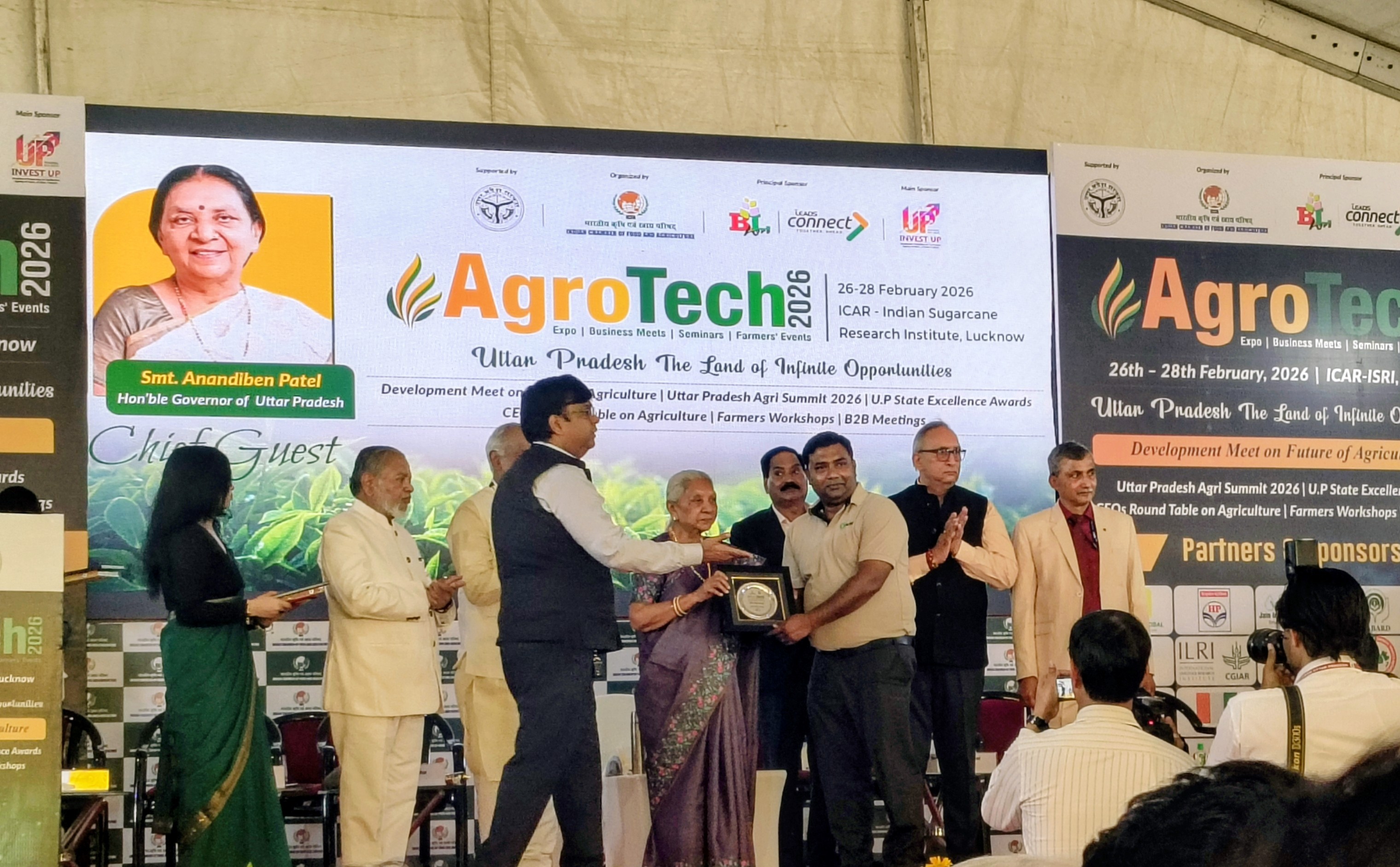
Uttar Pradesh, India | Mar 2: VST Tillers Tractors Ltd, a pioneer in farm mechanization and an undisputed leader in the power tiller segment, has been conferred with the prestigious State Excellence Award at Global Agro Tech 2026, held in Uttar Pradesh. The award was presented by H.E. Anandiben Patel, Hon’ble Governor of Uttar Pradesh, to senior officials of the company in recognition of its pioneering contribution to advancing small and compact farm mechanization in India. In addition to this recognition, VST also received the Best Stall Display Award for showcasing a comprehensive portfolio of innovative farm mechanization solutions tailored to diverse agricultural needs.
At the exhibition, VST displayed its complete range of products spanning from 5 HP to 50 HP, offering integrated solutions for key segments including sugarcane cultivation, orchard farming, and inter-cultivation operations. The display highlighted VST’s commitment to enabling small and marginal farmers with efficient, cost-effective, and technology-driven farm equipment.
The VST stall at the event attracted significant interest from farmers, agri-entrepreneurs, dealers, and policymakers, demonstrating VST’s leadership in compact tractors, power tillers, and specialized farm machinery designed for Indian farming conditions. The recognition at Global Agro Tech 2026 further reinforces VST Tillers Tractors’ position as a frontrunner in sustainable and scalable farm mechanization, supporting enhanced productivity and rural prosperity across the country.
2, Mar 2026
United Way Bengaluru Announced as Philanthropy Partner for TCS World 10K Marathon 2026
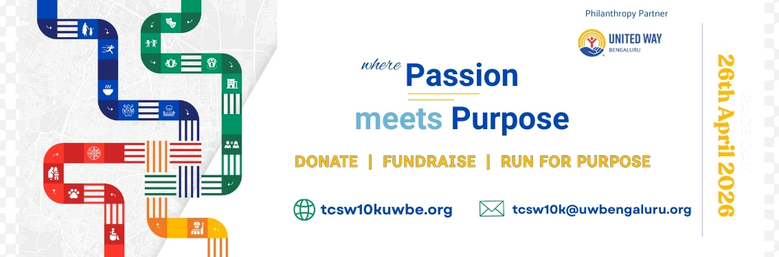
Bengaluru, Mar 2: United Way Bengaluru (UWBe) proudly steps up as the official Philanthropy Partner for the TCS World 10K Marathon, scheduled to be held on April 26, 2026, in Bengaluru.
This year, UWBe provides a structured fundraising platform that empowers participants to support credible grassroots initiatives in education, environment, women empowerment, sports, healthcare, and community development.
As a trusted partner, UWBe ensures every contribution undergoes rigorous due diligence and monitoring, directing funds precisely to the communities that need them most.
For United Way Bengaluru, this is more than just a run; it’s a powerful opportunity for corporates, communities, and individuals to unite and drive meaningful change. Through transparent processes, UWBe connects supporters with NGOs creating real impact on the ground. United Way Bengaluru requests corporates, CSR leaders, NGOs, institutions, and passionate individuals to join hands as changemakers. Participate in the run, fundraise, and turn steps into lasting progress.
2, Mar 2026
Liberty Shoes Partners with neOwn to Bring India’s Reading Revolution to Bangalore
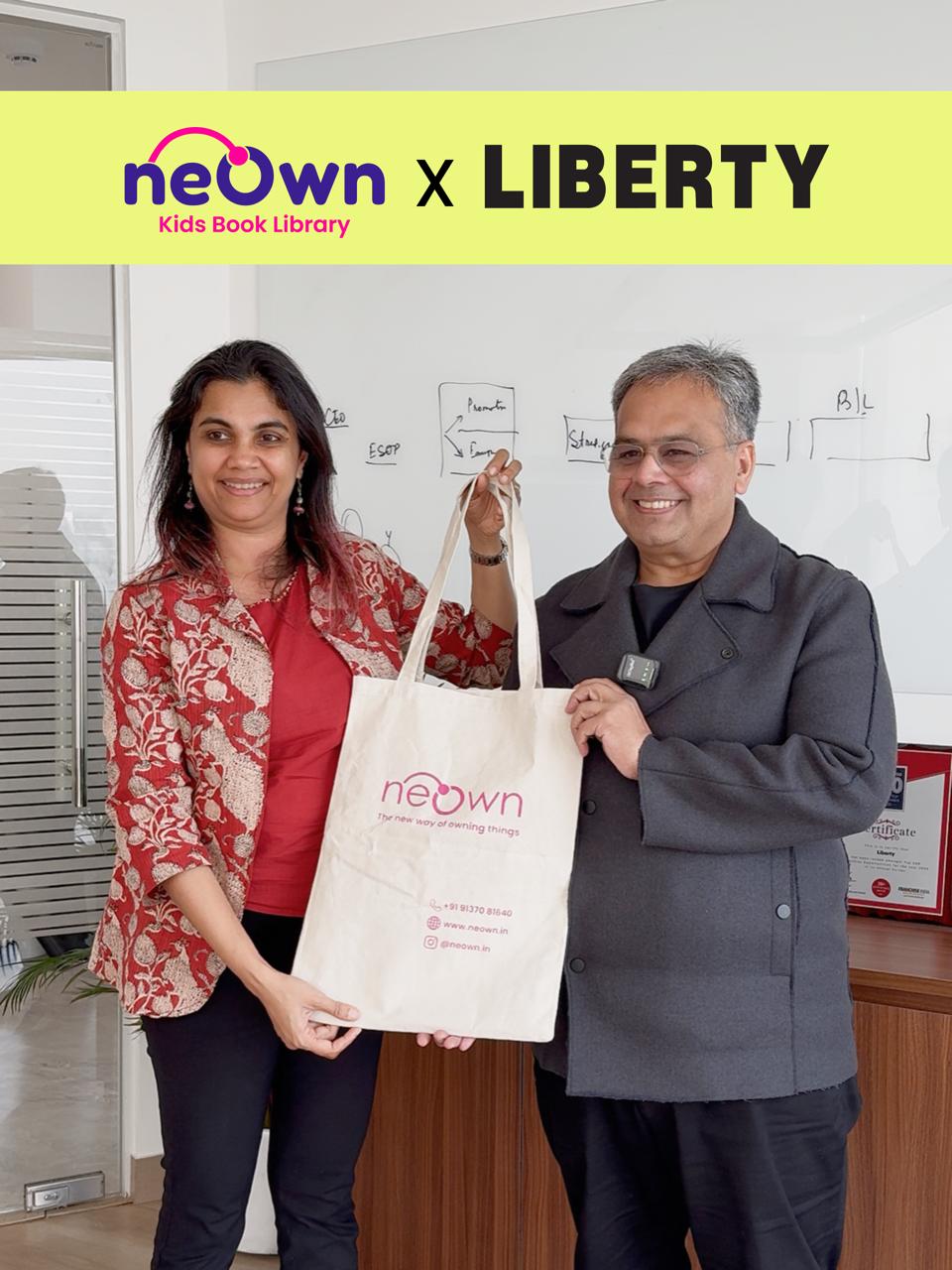
March 02: Liberty Shoes Limited, one of India’s leading footwear brands, has announced a partnership with neOwn, India’s first app-based book rental service for children. For a month, all 25 Liberty stores across Bangalore will provide customers with an exclusive ₹500 discount voucher, with every liberty purchase, redeemable on any neOwn subscription. Liberty‘s approach positions this offer as added value for customers.
neOwn, founded by Kranti Gada (former COO of Shemaroo Entertainment Ltd.), appeared on IdeaBaaz and earned the attention and support of retail industry leader Anupam Bansal, Executive Director of Liberty Shoes, who was one of the Titans on the show.
Discussions between the two companies led to this collaboration, positioning Liberty as a brand that invests not just in children’s footwear, but in their holistic development.
The collaboration represents a shift in how physical retail can add value beyond transactions. Rather than simply completing a sale, Liberty stores now offer parents an opportunity to invest in their children’s cognitive development alongside their physical growth.
“I am deeply grateful to Mr. Bansal for seeing the potential in what we are building,” said Kranti Gada, Founder of neOwn. “Mr. Bansal offered valuable insights from being in the retail business for decades, along with access to Liberty‘s retail infrastructure. This partnership validates our mission in a way that goes beyond capital. It is a testament to the power of believing in a shared vision: that every child deserves to be introduced to books early to grow confident, both physically and mentally.”
“Business today has evolved beyond commercial transactions. Today’s customers are looking for brands that add real value to their lives.” says Mr. Anupam Bansal, Executive Director, Liberty Shoes, “When I met Kranti on IdeaBaaz, I saw a founder who is building something that genuinely helps parents raise confident children. Liberty has the retail infrastructure to help scale that impact. Sometimes the best partnerships aren’t about funding, they are about finding aligned missions and acting on it together. Good shoes give children the physical confidence to explore the world. Good books give them the mental tools to understand it. This partnership makes both accessible to the families who trust Liberty. It’s a natural fit.”
The partnership is supported by a co-branded social media campaign highlighting the connection between physical and mental development in children. Both brands are creating educational content for parents around building confidence through holistic growth.
The Bangalore pilot represents the first phase of what could become a model for similar partnerships nationwide, demonstrating how established brands can support emerging startups while adding meaningful value for customers.


