


23, Feb 2026
Climate Jobs Fair Connects Climate Startups with Young Talent at DCIW 2026
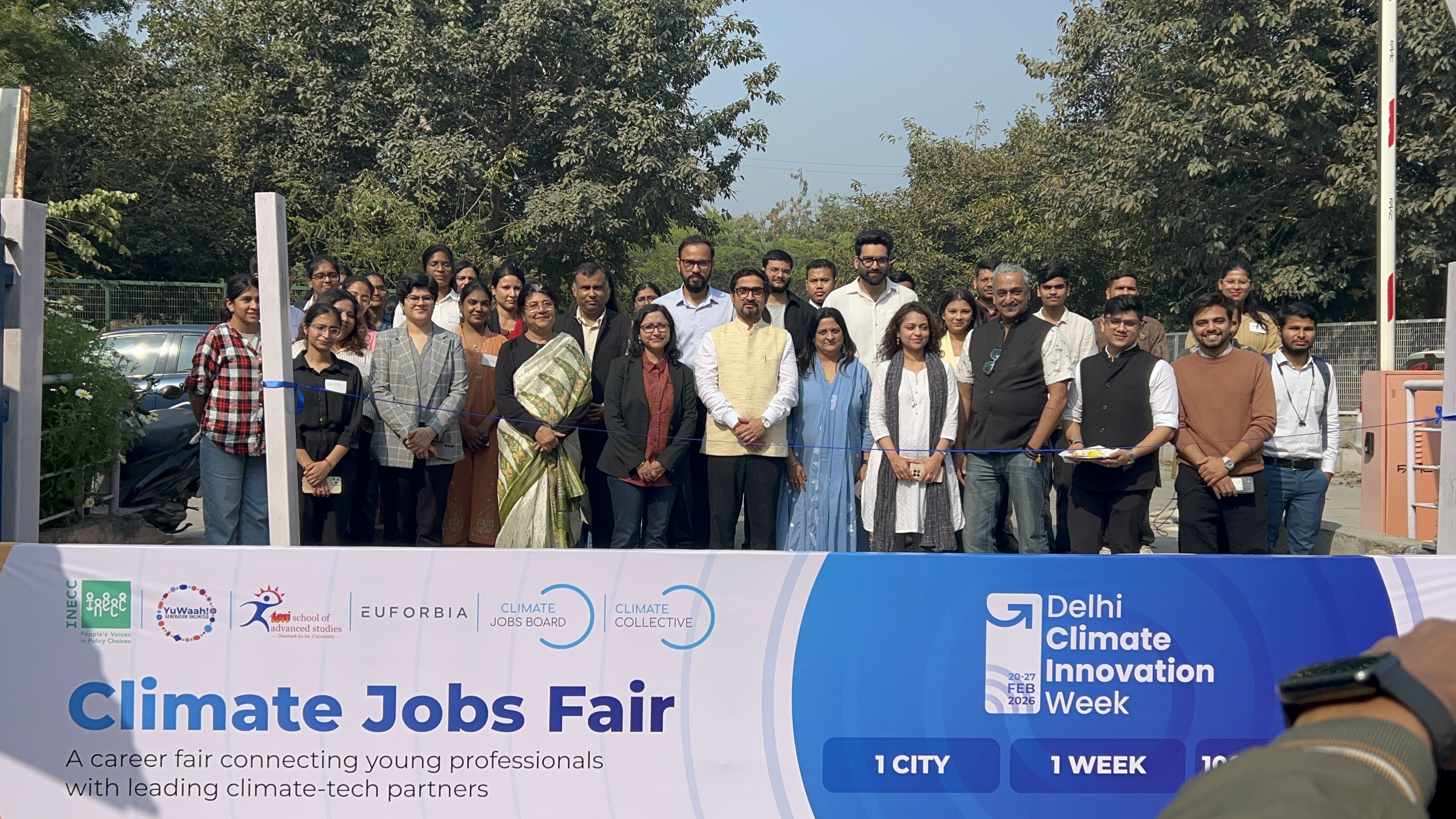
New Delhi, Feb 23: Day Two of Delhi Climate Innovation Week (DCIW) 2026 witnessed 19 events across Delhi NCR, as part of the week-long platform featuring 110+ climate-focused events over seven days.
A major highlight of the day was the Climate Jobs Fair 2026, hosted at TERI School of Advanced Studies (TERI SAS) in collaboration with Climate Collective Foundation (CCF). The fair brought together climate technology-focused startups, students, researchers, and young professionals for a day dedicated to green careers and workforce readiness.
Participating startups represented sectors including clean energy, energy efficiency, mobility, AI, grid intelligence, circular economy, and waste management. Startups engaging with talent at the fair included KHEONI, Valency Energy, TRILLECTRIC, and 3R Zerowaste Pvt Ltd, among others. About 100+ job seekers engaged with the startups and spot interviews were conducted across the day.
Beyond recruitment interactions, the Climate Jobs Fair featured sustainability games, a climate quiz, resume-building sessions, and direct founder–student networking. The event positioned itself not merely as a hiring drive but as a structured career exploration platform, connecting young people to the expanding climate innovation ecosystem.
India’s climate innovation landscape has expanded significantly in recent years, with nearly 4,000 clean tech startups now active across the country — a sharp rise from just a few dozen a decade ago. Yet, a gap persists between emerging opportunities and awareness among youth. The Climate Jobs Fair aimed to address this mismatch by creating direct pathways between climate enterprises and aspiring professionals.
Prof. Suman Kumar Dhar, Vice Chancellor, TERI School of Advanced Studies, said: “At TERI School of Advanced Studies (TERI SAS), we are committed to nurturing the next generation of ‘sustainability natives.’ The Climate Jobs Fair 2026 is a vital bridge between academic excellence and real-world impact. The future of work is undeniably green. As a pioneer in sustainability education and research, TERI SAS recognizes that solving the climate challenge requires a highly specialized and dedicated workforce. This jobs fair serves as a catalyst for innovation, connecting talented minds with organizations that are at the forefront of climate action. TERI SAS in collaboration with Climate Collective Foundation (CCF) is proud to provide a platform where education meets opportunity, driving the systemic change needed for a sustainable and equitable planet.”
Jui Joshi, Partner, Climate Collective Foundation, added: “Less than a decade ago, climate careers were seen as niche. Today, they are central to India’s growth story. With India’s green economy booming and projected to create 48 million full time jobs by 2047, a large portion of this will be led by fast-growing startups transforming climate goals into a massive employment reality. The climate transition is creating real businesses and real jobs across sectors. The Climate Jobs Fair aims to support startups in building the right talent pipeline during their crucial phase of growth. It makes these opportunities visible and accessible — showing young people that climate is not just impact work, it is a serious and rewarding career path.”
The event also saw participation from school students exploring future academic streams, as well as Masters and PhD scholars seeking internships and placements. Faculty leaders from TERI SAS emphasised the importance of building early exposure at school level while strengthening forward linkages into industry — reinforcing academia–industry collaboration.
Also on Day Two of DCIW, an event titled “Building Climate-Ready Talent: Data and AI Pathways for Climate Action” was hosted by data.org, spotlighting the growing importance of data science and artificial intelligence in climate action. The session explored how data-driven tools are strengthening heat risk and vulnerability mapping, supporting climate finance and Loss & Damage evidence, and enabling informed local climate planning. Through an interactive engagement format, participants explored learning pathways in data-driven climate careers, further reinforcing the central theme emerging from the day: India’s climate transition requires not only technology and capital, but skilled, interdisciplinary talent.
- 0
- By Neel Achary

23, Feb 2026
Surya Brasil Accelerates India Expansion after 30% growth in the US; Launches New Hair Care Range

New Delhi: Feb 23:Surya Brasil, the Brazilian clean beauty brand known globally for its natural henna-based hair colour solutions, has announced the expansion of its product portfolio in India. The company aims to further reinforce and amplify its flagship Henna Cream while introducing a wider range of hair care and treatment products tailored for the Indian market.
With a presence in over 40 countries, Surya Brasil is strengthening its focus on key growth markets including India, supported by increased investments in marketing and trade engagement to deepen reach and visibility.
The expansion builds on Surya Brasil’s strong growth momentum in the United States, where the brand recorded 30% growth last year and outpaced the hair colour category by 16 percentage points, according to NielsenIQ data. This performance reflects rising consumer preference for natural and clean beauty alternatives.
The timing aligns with the rapid growth of the global natural cosmetics industry, which is projected to reach USD 74 billion by 2028. Increasing consumer awareness around ingredient transparency and sustainability is reshaping buying behaviour in India, particularly in the hair care segment. Surya Brasil’s expanded range aims to serve both professional salons and conscious consumers looking for effective, plant-based alternatives.
“At Surya Brasil, we have always believed that what you apply to your hair and skin matters,” said Clelia Angelon, Founder and CEO of Surya Brasil. “India has been an inspiration to us through Ayurveda, and expanding our portfolio here feels both strategic and meaningful.”
As part of its expansion, Surya Brasil is introducing a broader portfolio of complementary hair care and treatment products designed to create a complete clean beauty routine. The new additions include The Color Fixation line, The Hair Therapy range, The Balanced Cleansing Shampoo, The Nourishment & Protection conditioner, Brazilian Vegetable Keratin, The Force line and The Bio Finishers range. Henna Clean and Henna Force further extend the brand’s offering with treatment-focused solutions aimed at improving scalp health and strengthening hair from root to tip.
The flagship product Henna Cream remains at the centre of Surya Brasil’s India strategy. Formulated with up to 98% natural ingredients, the product offers full grey coverage while nourishing and strengthening the hair. Free from harsh chemicals such as ammonia and its by-products, including ethanolamine and triethanolamine, as well as PPD, Surya Brasil is aiming for a considerable market penetration in the natural hair care category with this flagship product.
With manufacturing headquartered in São Paulo and operations in Houston and Milan, Surya Brasil brings international quality standards and long-standing clean beauty credentials to the Indian market. The company says it remains committed to ethical formulations, responsible sourcing, and long-term investment in the region.
21, Feb 2026
Hon’ble Dr Justice (Retd.) Sanjaya Kumar Mishra, President of GSTAT, inaugurates the GSTAT Summit in Hyderabad
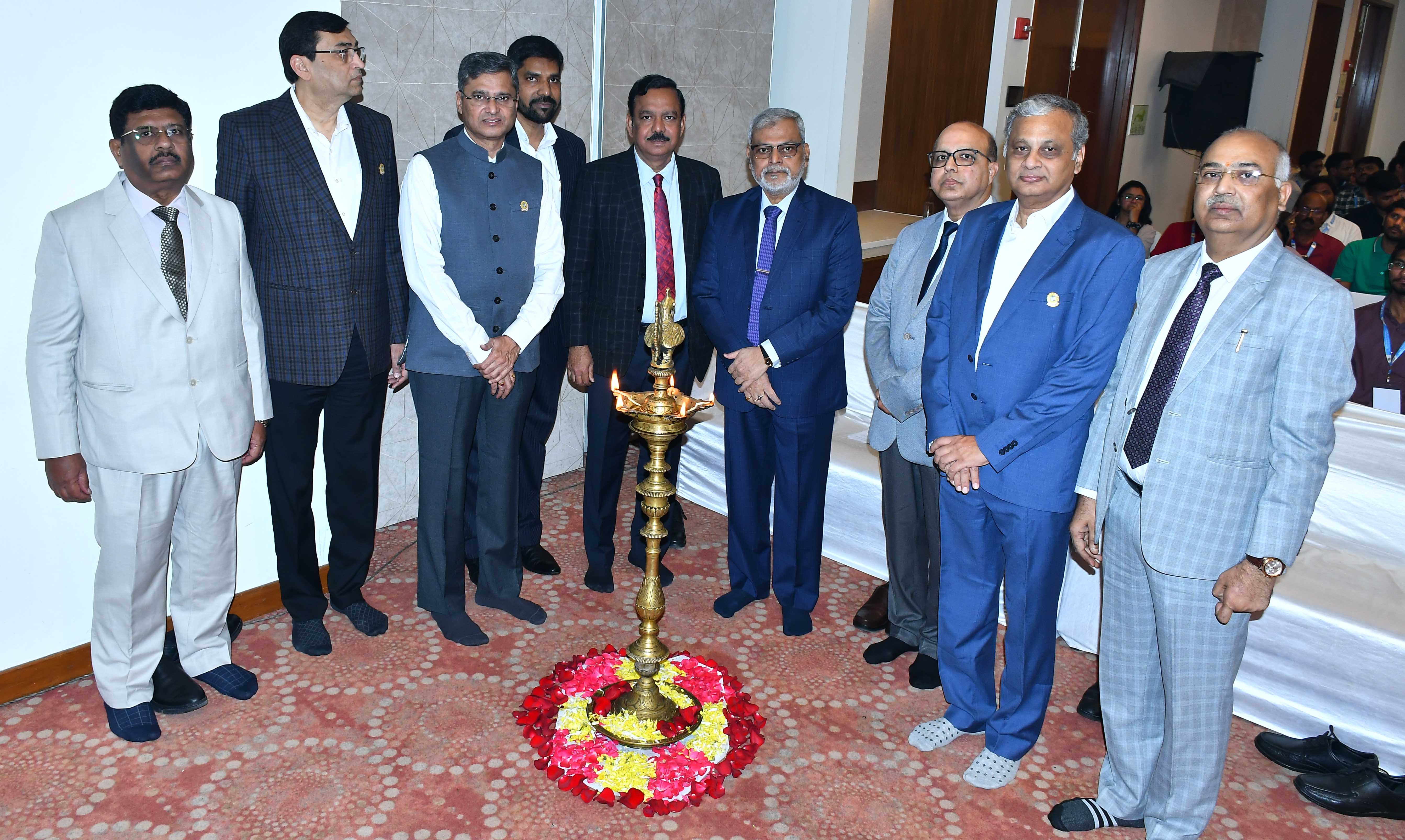
GSTAT is designed to provide a transparent, efficient and fully digital platform for GST appeals, says President, GSTAT
Hyderabad, Feb 21,: Hon’ble Dr Justice (Retd.) Sanjaya Kumar Mishra, President of the Goods and Services Tax Appellate Tribunal (GSTAT), inaugurated a half-day Summit on GST Appellate Tribunal in the city on Saturday.
Addressing the gathering as Chief Guest, he observed that multiple lakh appeals are expected to be filed before June 30, 2026, the notified cut-off date for filing appeals before GSTAT.
Creating awareness about the newly operational tribunal, Justice Mishra said that GSTAT is a specialised appellate body that hears disputes related to GST and functions as the second appellate authority in the GST dispute resolution mechanism.
The operationalisation of GSTAT marks a transformative step in India’s indirect tax dispute resolution framework. It is designed to provide a transparent, efficient, and fully digital platform for addressing GST-related appeals, he said.
He further urged taxpayers and practitioners not to wait until the last moment to file appeals.
With a significant number of appeals expected before the June 30, 2026 deadline, I strongly advise taxpayers and professionals to file well in advance. Early filing will ensure smoother processing and avoid unnecessary hardship, he said.
Explaining the appellate framework, he stated that under the GST Act, if a taxpayer is aggrieved by an order passed by a GST Officer, an appeal can first be filed before the First Appellate Authority. If still dissatisfied, the taxpayer can approach GSTAT.
Prior to GSTAT becoming operational, taxpayers had to approach High Courts directly after the first appeal, which led to delays and increased litigation costs.
Justice Mishra noted that GSTAT will handle tax demand disputes, Input Tax Credit (ITC) issues, refund claims, penalties, classification disputes, and interpretation of GST provisions. The tribunal offers a structured technical and judicial forum, speeds up dispute resolution, and reduces the burden on High Courts.
He informed that the system is transparent, paperless, and fully online, with appeals to be filed electronically through the designated GST portal.
Interacting with the media on the sidelines of the summit, Justice Mishra observed that the proposed simplification under GST 2.0 could potentially reduce litigation in the long run.
He earlier inaugurated the summit in the presence of several luminaries from the GST regime, R Ravi Kumar, KK Maheshwari, Srinivas Garimella, and the office bearers of the FTCCI
The operationalisation of the GST Appellate Tribunal marks a defining moment for the business and professional community. A structured and specialised appellate forum like GSTAT strengthens confidence in the GST framework by ensuring timely and expert resolution of disputes. As industry stakeholders, we welcome this development and encourage businesses and tax professionals to understand the procedures thoroughly and make proactive use of the system. FTCCI remains committed to creating platforms that bridge policymakers, administrators, and industry for a more transparent and efficient tax ecosystem, said R Ravi Kumar, President of FTCCI giving his welcome address
The summit was organised by the Federation of Telangana Chambers of Commerce and Industry (FTCCI) at Hyatt Place, Banjara Hills.
Titled “GSTAT: Navigating the New Era of GST Litigation,” the summit was conducted in the backdrop of the formation and operationalisation of GSTAT.
Members of GSTAT from Telangana and Andhra Pradesh participated in the programme, along with senior officials and experts from GSTN and the State GST Department.
In his opening remarks, Mohd. Irshad Ahmed, Chair, GST & Customs Committee, FTCCI, said that the summit was organised at a crucial juncture in the GST framework.
“With GSTAT becoming operational, it marks a significant step in strengthening the GST dispute resolution mechanism. The programme aims to equip professionals and businesses with clarity and practical insights into the functioning and procedures of the newly formed appellate body,” he said.
The half-day summit featured technical sessions on the structure and functioning of GSTAT, a practical walkthrough of the GSTAT e-filing system by experts from GSTN/NIC, and a panel discussion involving senior tax practitioners, legal experts, and departmental officials on emerging challenges and best practices in GST litigation.
Over 250 participants attended the summit, including Chartered Accountants, Company Secretaries, Cost Accountants, Advocates, tax practitioners, business executives handling GST matters, and finance professionals.
- –
21, Feb 2026
Canara Bank to Host Canara Utsav 2026: A CSR Campaign dedicated towards women’s entrepreneurship, empowerment and preservation of cultural heritage
Bengaluru, Feb 21st: Canara Bank will host Canara Utsav 2026, a two-day exhibition celebrating entrepreneurship and art while empowering women and local artisans. The event is scheduled on 22nd and 23rd February 2026 at Jayamahal Convention Hall, Jayamahal Road, Bengaluru from 10:00 am to 8:00 pm.
Since its inception, “Women Empowerment” has always been a primary objective and commitment for Canara Bank. As a part of its corporate social responsibility and community development, Canara Bank continues to support women entrepreneurs and skilled artisans by providing them a platform to showcase their skills and promote their handmade products in the form of organizing “CANARA UTSAV” at multiple locations.
The exhibition will feature a variety of handcrafted items such as organic food, pottery, sweets, handcrafted jewellery, candles, and many more. Visitors can also get a hands-on experience at the live pottery and mehendi counters at the venue.
20, Feb 2026
HE DATO Dr. Bhargav Mallappa & HE DATO Dr. S. Selvaganesh Selvaraj Ink Kampung Bharu 2.0 Twin-Tower MoU
Indian Investor & Entrepreneur HE DATO Dr Bhargav Mallappa & HE DATO Dr S. Selvaganesh Selvaraj Meets Yam Raja Izzuddin Iskandar Shah Al-Haj Ibni Almarhum Sultan Idris Afiffullah Shah, Seeks Blessings for Kampung Bharu 2.0 Project
Signs Major MoU to Speed Up Iconic Twin-Tower Plan, Boost FDI, Create High-Value Jobs, Modernize City Infrastructure, and Strengthen Malaysia–India Ties
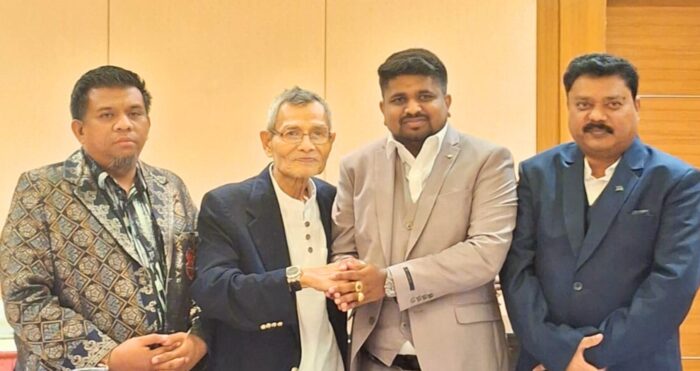
Malaysia / India, Feb 20: HE DATO Dr Bhargav Mallappa, a prominent Indian investor and entrepreneur from the MBRA Group, along with HE DATO Dr S Selvaganesh Selvaraj, recently met Yam Raja Izzuddin Iskandar Shah Al-Haj Ibni Almarhum Sultan Idris Afiffullah Shah, a Member of the Malaysian Royal Family (Perak), on February 15 at the Mid Valley Hotel in Kuala Lumpur.
During the meeting, HE DATO Dr Bhargav Mallappa sought His Highness’s blessings for the ambitious Kampung Bharu 2.0 redevelopment project. The discussion focused on shared vision, mutual respect, and long-term cooperation aimed at transforming one of Kuala Lumpur’s oldest and most historic neighbourhoods.
Following the meeting, a major strategic partnership was formalized with DSAT Private Equity Sdn. Bhd., under which HE Dato Dr Bhargav Mallappa is committing substantial investment to accelerate the redevelopment initiative. A key highlight of the project is the proposed iconic twin-tower development, designed to redefine the city’s skyline while carefully preserving the cultural and historical identity of Kampung Bharu.
As part of the agreement, HE DATO Dr Bhargav Mallappa has acquired equity in DSAT Private Equity Sdn. Bhd., a company licensed and regulated by the Securities Commission Malaysia. The regulated structure ensures that all investments follow strict legal, regulatory, and governance standards, maintaining full transparency and accountability.
Speaking about the initiative, HE DATO Dr Bhargav Mallappa said:
“Malaysia stands out for its economic resilience, stable governance, and vast opportunities in urban transformation. Kampung Bharu 2.0 presents a unique opportunity to create a landmark that honors heritage while embracing modern progress. Our commitment is to invest responsibly, transparently, and with a long-term development vision.”
Adding to this, HE DATO Dr. S Selvaganesh Selvaraj stated:
“This collaboration reflects the growing strength of Malaysia–India partnerships in strategic development. By combining international expertise with local vision, we aim to contribute meaningfully to sustainable growth, job creation, and long-term economic value.”
Welcoming the engagement, Yam Raja Izzuddin Iskandar Shah Al-Haj Ibni Almarhum Sultan Idris Afiffullah Shah said:
“We appreciate the confidence shown by international investors in Malaysia’s growth story. Development must be forward-looking while respecting our cultural roots. Initiatives like Kampung Bharu 2.0 have the potential to generate economic value, create skilled employment, and further strengthen Malaysia–India relations.”
The partnership is expected to attract foreign direct investment (FDI), create high-value jobs, upgrade urban infrastructure, and deepen economic ties between Malaysia and India, while supporting inclusive and sustainable national development goals.
20, Feb 2026
It Is Time to Exit the Macaulay Mindset and Lead India into Viksit Bharat — Dharmendra Pradhan
Dharmendra Pradhan Announces Conversion of SRCC GBO Diploma into Full-Fledged Master’s Degree Programme at Yugantar ’26
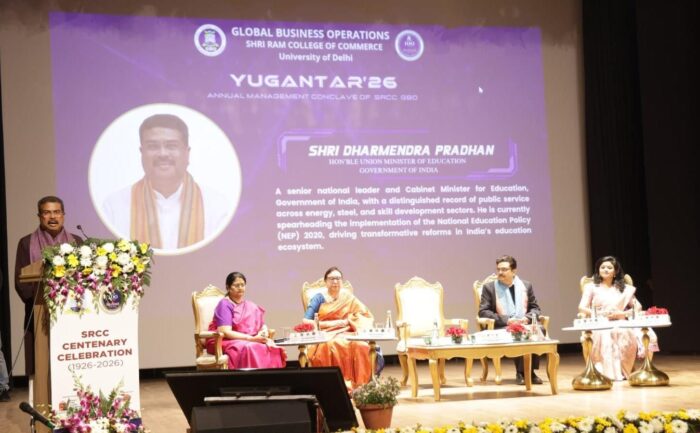
Feb 20| New Delhi: The Education Minister on Friday called on institutions to “exit the Macaulay doctrine” and align higher education with the vision of Viksit Bharat, and announced the conversion of SRCC’s Post Graduate Diploma in Global Business Operations (PGDGBO) into a full-fledged Master’s degree programme.
He made these remarks while inaugurating Yugantar ’26, the Annual Management Conclave of SRCC’s Post Graduate Diploma in Global Business Operations (PGDGBO), themed “AI for Sustainability & Startup Innovation.”
The inaugural session at the Shridhar Shriram Auditorium was graced by Dharmendra Pradhan, Hon’ble Union Minister of Education, Government of India, as the Distinguished Chief Guest. The ceremony was presided over by Prof. Yogesh Singh, Vice-Chancellor, University of Delhi, and hosted by Prof. Simrit Kaur, Principal, SRCC. Senior faculty members, industry leaders, alumni, and students attended the event, along with Dr. Misha Govil, GBO Coordinator, SRCC; Dr. Sapna Bansal, Convener, Yugantar 2026; and Dr. Sunita Sharma, Co-Convener, Yugantar 2026.
The programme opened with a tribute to Sir Shri Ram, followed by the ceremonial lighting of the lamp.
“We Must Not Be Afraid to Accept Change”
In his keynote address, the Education Minister described the National Education Policy (NEP) as a structural reset of India’s academic framework.
“We have to get out of the Macaulay doctrine that enslaved India academically. The National Education Policy, envisioned by Prime Minister Modi ji, will ensure that Bharat becomes a Vishwa Guru. Institutions like SRCC must lead this transformation. SRCC is sowing the seeds to achieve the vision of Viksit Bharat.”
He emphasised technological sovereignty and institutional reform: “In this age of technology, the nature of competition has fundamentally changed. We know that change is needed — but we must not be afraid to accept it. India must move toward sovereign AI ecosystems, strengthening institutions like IIT Madras and IIT Bombay, and building indigenous capabilities so that Bharat becomes a leader in Artificial Intelligence.”
He urged higher education institutions to embed research, patents, startup incubation, and AI-led innovation into their academic structures.
PGDGBO to Be Upgraded into Master’s Degree Programme
The Education Minister announced that SRCC’s two-year Post Graduate Diploma in Global Business Operations (PGDGBO), offered by Shri Ram College of Commerce, University of Delhi, will be converted into a full-fledged Master’s degree programme.
The transition is expected to strengthen academic recognition, align the programme with National Education Policy reforms, and enhance its global academic equivalence while integrating greater research and innovation components.
Universities Must Build Market-Ready Innovation
Vice-Chancellor Yogesh Singh said universities must convert research into commercially viable outcomes.
“Only three words can safeguard the future of young minds — innovation, creativity, and originality. Universities must go beyond publications; we must develop patents, prototypes, and commercially sustainable products.”
He cautioned institutions against resisting technological shifts and called for stronger university–industry collaboration.
AI Must Be Ethical and Inclusive
Principal Simrit Kaur said institutions must guide artificial intelligence with responsibility and human judgment.
“Artificial Intelligence has the capacity to shift both demand and supply curves, improving productivity and efficiency. But without the intelligence of humans, there is no optimal solution. AI must be coordinated with humanity and adopted responsibly.”
She added, “We are committed to viewing Artificial Intelligence as our destiny — ensuring that its growth remains inclusive, accountable, and sustainable.”
Day 1 of Yugantar ’26 featured corporate panels on AI-enabled sustainability, founder sessions on startup scaling, and case simulations across finance, marketing, analytics, HR, and international business.
The Education Minister also visited the Viksit Bharat Startup Expo 2026, where student-led ventures showcased innovation prototypes.
With the announcement of the Master’s degree upgrade for SRCC GBO and a push toward NEP-led reform and sovereign AI capabilities, Yugantar ’26 positioned SRCC within the broader roadmap toward Viksit Bharat 2047.
20, Feb 2026
Asia’s Protein Buyers Still Trail Global Best Practice — But Momentum is Building, New ARE Benchmark Finds
SINGAPORE, Feb 20 - Asia’s largest food retailers, manufacturers, restaurant chains, and hospitality groups remain behind international better practice on sustainable and responsible protein sourcing, but progress is accelerating across the region, according to The Asian Protein Buyers 100: An Assessment of Responsible and Sustainable Sourcing released today by Asia Research & Engagement (ARE).
The APB100 is a benchmark based on investor-backed priorities – assessing how 100 of Asia’s largest listed protein-buying companies — headquartered or operating across Hong Kong, India, Indonesia, Japan, Mainland China, Malaysia, Philippines, Singapore, South Korea, Taiwan, Thailand and Vietnam — manage environmental, social, and governance risks embedded in meat, dairy, poultry, and seafood supply chains. Collectively, the companies assessed represent more than USD500 billion in market capitalisation and sit at the choke point of Asia’s protein system, where procurement decisions shape production standards, risk management and food-system outcomes.
The companies assessed include some of Asia’s most recognisable food and retail groups. These include China Mengniu Dairy, Yili Group, Yonghui and Yum China (Mainland China); AEON, Seven & I Holdings, Meiji, Nissin and NH Foods (Japan); CJ CheilJedang, Lotte and E-Mart (South Korea); Charoen Pokphand Foods and Thai Union (Thailand); Jollibee, Century Pacific Food and San Miguel Food & Beverage (Philippines); Vinamilk (Vietnam); and Hindustan Lever, Nestle India, Jubilant, Devyani, DMart, Westlife Foodworld (McDonald’s India) (India), among others.
Scores are improving, but the baseline remains low
Now in its second edition, the benchmark shows clear momentum since 2023 — but also highlights that most companies remain at an early stage of credible implementation.
The average overall score increased from 9% in 2023 to 16% in 2025, with around 80% of companies improving year-on-year. More than half of comparable companies moved up at least one performance tier.
However, no company reached the top two performance tiers, underscoring a persistent gap between sustainability commitments and on-the-ground execution.
A growing group of leaders is emerging
The number of companies in the leading Tier 3 group more than doubled from 10 in 2023 to 26 in 2025, while the lowest-scoring group halved from 44 to 21 companies.
Progress, however, remains uneven and concentrated among a subset of early movers and sustainability themes, while a significant minority of companies continues to disclose little or nothing across several material risk areas.
Climate, labour, and waste are moving fastest
Companies performed strongest on Water & Waste, Labour , and Climate Change, reflecting wider uptake of international disclosure frameworks and growing expectations around supply-chain due diligence.
Climate and labour show the fastest improvement since 2023, driven by emerging regulatory pressure and investor scrutiny, particularly around Scope 3 emissions and labour standards in supply chains.
Governance and protein diversification remain critical gaps
Several material risk areas continue to show weak performance. Governance in relation to protein sustainability, remains the lowest-scoring theme, averaging just 4.5%, with most companies scoring zero. Few have board-approved protein sustainability strategies, capital allocation plans, or accountability mechanisms.
Protein diversification also remains underdeveloped at 7.4%, indicating that most companies have yet to articulate how they will shift product portfolios toward truly low carbon plant proteins at scale.
Disclosures on deforestation and biodiversity, animal welfare, and antimicrobial resistance (AMR) also remain thin and rarely quantified. The intersection of climate and deforestation is still not being duly harnessed. Similarly, policies and procurement practices that strengthen animal welfare and enable antibiotic reduction remain a low point, with average animal welfare performance at just 14.1% and only one company aligned with recognised higher-welfare standards or independently certified disclosure.
Why this matters: Asia is the decisive region for global protein systems
Compared with innovative international peers, many of Asia’s protein buyers remain behind on deforestation-free sourcing, antibiotic stewardship, higher-welfare policies and procurement, plant-protein targets and science-based climate transition planning.
However, Asia now represents the most important opportunity for global leadership in responsible protein systems. And with less than five years to implement meaningful change towards various 2030 United Nations and related targets, the vision of a more responsible and sustainable food system is at risk.
“Asia is the world’s fastest-growing protein market, which means what happens here will determine the future of global food systems,” said Kate Blaszak, ARE Director, Protein Transition. “ThisAPB100 shows that disclosure and awareness are improving and aims to trigger a shift from Policy to Practice. With a realm of better practice examples in the report to also assist companies, the next phase must focus on full supply-chain coverage, measurable targets, and annual progress with board-level accountability.”
20, Feb 2026
Judge India Solutions Plans Strategic Hiring Drive to Boost U.S. Staffing
Noida, Feb 20 : Judge India Solutions, a leading IT solutions company and the India arm of The Judge Group, today announced an active strategic hiring drive to expand its U.S. staffing team, reinforcing its role as a critical growth engine for the company’s global talent solutions business.
As part of this expansion, Judge India Solutions plans to onboard specialized recruiters across high-impact domains, including Information Technology, Engineering, Healthcare, Aerospace, and Banking, Financial Services, & Insurance (BFSI). The initiative is aligned with rising demand from U.S. enterprises for high-quality, domain-specific talent and reflects the company’s continued investment in building scalable, future-ready staffing capabilities.
On this announcement, Mr. Abhishek Agarwal, President – Judge India & Global Delivery at The Judge Group, said,
“Demand for specialized talent in the U.S. market is accelerating across multiple industries. This strategic hiring drive strengthens our ability to deliver speed, precision, and expertise to our clients, while reinforcing India’s role as a center of excellence for global staffing operations.
The company supports over 10,000 placements each year, partnering with many of the world’s most respected corporations, including 60 Fortune 100 companies. With over five decades of experience, Judge has evolved into a global organization with more than 30 offices across the United States, Canada, Europe, and India.
Established in 2016, Judge India Solutions serves as The Judge Group’s Center of Excellence (CoE) for technology-led innovation and talent delivery. The organization employs over 300 professionals across Noida, Bangalore, and Hyderabad, supporting global clients through technology, staffing, and consulting solutions.
This expansion underscores Judge India Solution’s growing importance in The Judge Group’s global delivery model, particularly in supporting U.S. staffing operations with specialised recruitment expertise, advanced sourcing strategies, and technology-enabled processes.
20, Feb 2026
Prego at Westin Gurgaon Brings Italy to the Table with New Sunday Brunches

The Westin Gurgaon, New Delhi invites guests to slow down their weekends with the launch of Sunday Brunches at Prego, a refined Italian dining experience curated by Expat Chef Davide Di Domenico. Designed as an elegant yet leisurely escape, the brunch brings together soulful Italian flavours, artisanal craftsmanship, and the comforting warmth of a true Italian table.
Hosted every Sunday from 11:30 AM to 3:30 PM, the brunch celebrates Italy’s timeless culinary traditions where meals are unhurried, conversations linger, and indulgence is embraced without guilt. At the heart of the experience is Chef Davide’s passion for authentic Italian cooking, drawing from regional classics, handcrafted pastas, and wood-fired favourites.
Sunday Brunch at Prego
Every Sunday
Time : 11:30 AM – 3:30 PM
Venue : Prego, The Westin Gurgaon, New Delhi
20, Feb 2026
Toyota Kirloskar Motor Conferred With Golden Peacock Award 2025 for Corporate Social Responsibility
Chandigarh, Feb 20: Toyota Kirloskar Motor (TKM) has been conferred with the prestigious Golden Peacock Award 2025 for Corporate Social Responsibility (GPACSR). The award recognizes TKM’s sustained commitment to environmental stewardship, community development and inclusive growth.
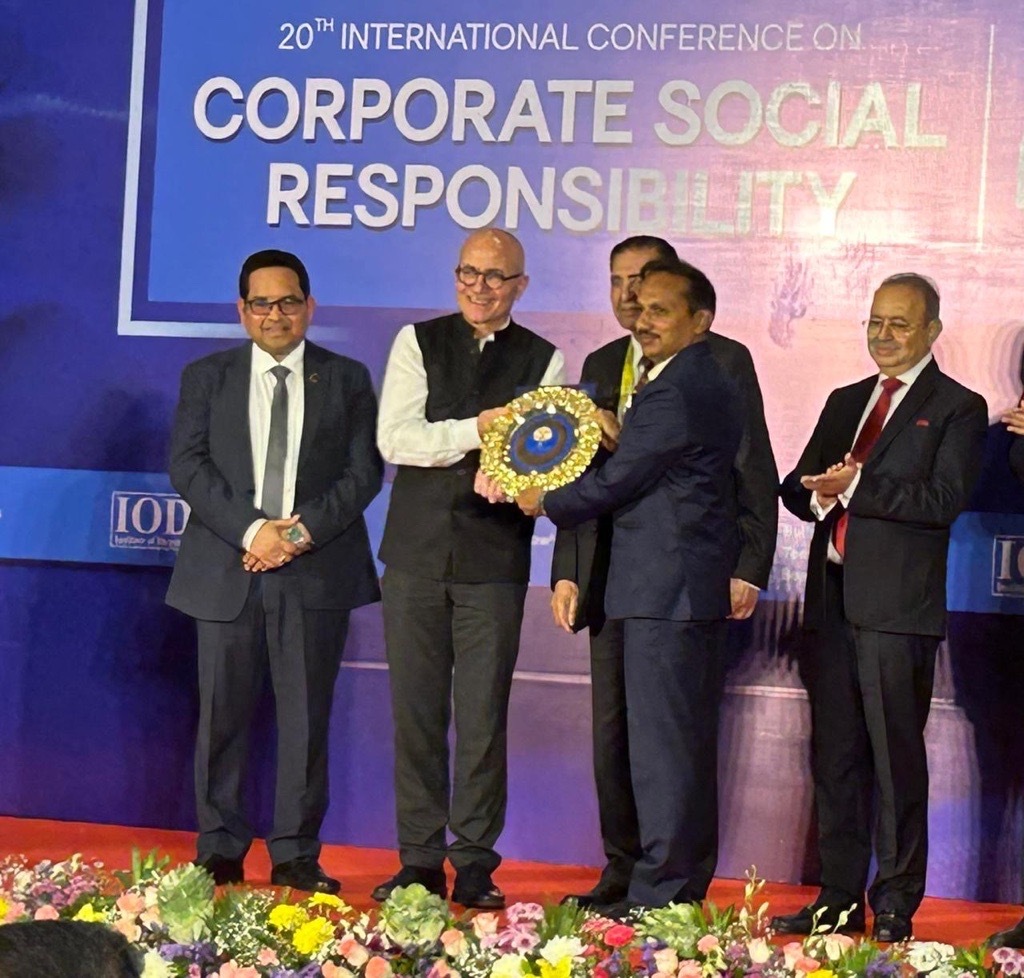
The Golden Peacock Awards, established by the Institute of Directors, recognizes excellence in the areas of Corporate Social Responsibility, HR Excellence and Innovative Management practices. The award was presented by Prof. Charlie Jeffery, Vice Chancellor and President, University of York, UK, at the 20th International Conference on Corporate Social Responsibility held at Hotel Taj Lands End, Mumbai.
Expressing delight on receiving the award, Mr. Vikram Gulati, Country Head & Executive Vice President, Corporate Affairs and Governance, Toyota Kirloskar Motor said,
“It is an honor to receive the Golden Peacock Award for our sustainable and meaningful CSR activations with measurable impact. Commitment to social responsibility is integral to our corporate philosophy, shaping the design and execution of community initiatives. This recognition reaffirms that our efforts toward inclusive growth, environmental stewardship and responsible business practices are creating tangible value while advancing Toyota’s philosophy of “Creating Mass Happiness for All.”
The Awards Jury was chaired by Hon’ble Justice Shri. Uday U. Lalit, former Chief Justice of India, along with other eminent personalities to shortlist finalists. For 2025, the Golden Peacock Awards Secretariat invited applications from corporates across public, private and government enterprises including large organizations and SMEs. This year, over 447 entries were received across categories. Following a rigorous three-tier assessment process, 157 applications were shortlisted across diverse business sectors for final evaluation.
Since 2001, TKM has been committed to uplifting communities across Education, Environment, Road Safety, Skill Development, Health & Hygiene, and Disaster Management. Its CSR reflects a strong focus on need-based initiatives that address local challenges and create meaningful socio-economic impacts. Guided by its “Child to Community” approach, the company implements inclusive interventions in healthcare and education that generate long-term benefits for communities.


