


1, Feb 2026
Experts Call for Pragmatic Digital Asset Reforms in Union Budget 2026
“With the Union Budget 2026, there is an opportunity to rationalize India’s digital asset framework through targeted, pragmatic refinements. The current 1% TDS and 30% flat tax, without loss set-off provisions, have constrained liquidity and pushed activity offshore. Reducing TDS to a workable range, allowing loss set-off within VDAs, and clarifying cost basis treatment, including transaction costs, would help keep activity onshore while maintaining compliance.
A pragmatic starting point would be to set clear rules for rupee-linked digital instruments, whether that means tokenized bank deposits issued under existing banking oversight or a regulated stablecoin model with strict requirements around reserves, disclosures, audits, redemption rights, and licensed issuers.
Countries across the Middle East, Singapore, and Japan are moving decisively on this front. India’s young, tech-savvy population and strong fintech ecosystem make it naturally positioned to lead, provided the right tax and policy signals are in place.”
“India’s strength has always been its ability to create outsized impact at unprecedented scale—often by scaling within chaos rather than waiting for perfect conditions. From universal suffrage to digital payments and physical infrastructure, the country has built systems that serve 1/5th of the world’s population and unlocked opportunity at a speed few nations have ever matched. This ability to operate, adapt, and compound within complexity is deeply embedded in India’s institutional DNA.
However, there is a natural ceiling to how far scale alone can take us. Over time, other economies matched and surpassed India by relying on rigid, rule-based structures designed for predictable environments. AI now changes that equation. Intent-driven, adaptive systems align far more closely with India’s strength of scaling within chaos than traditional software ever could. Union Budget 2026 can focus on sustained investment in AI research, compute, and deployment across government and industry, enabling India to once again turn its unique approach to scale into a durable global advantage.”
- 0
- By Neel Achary

1, Feb 2026
Dubai emerges as wellness real estate hub as wealthy buyers seek quality of life
MENA region outpaces Europe as second-fastest-growing market in global wellness real estate boom
Dubai, UAE, Feb 1: Dubai has become the regional hub in a trend reshaping the luxury real estate market as wealthy global buyers make quality of life their main investment goal.
The global wellness real estate market, which has more than doubled since 2019, is projected to reach $1.1 trillion by 2029, with the Middle East playing its own part in this transformation.
According to the Global Wellness Institute (GWI), the MENA region is the second fastest-growing market worldwide, expanding at just over 22% annually, just behind Latin America–Caribbean (24%), and ahead of Europe (22.4%).
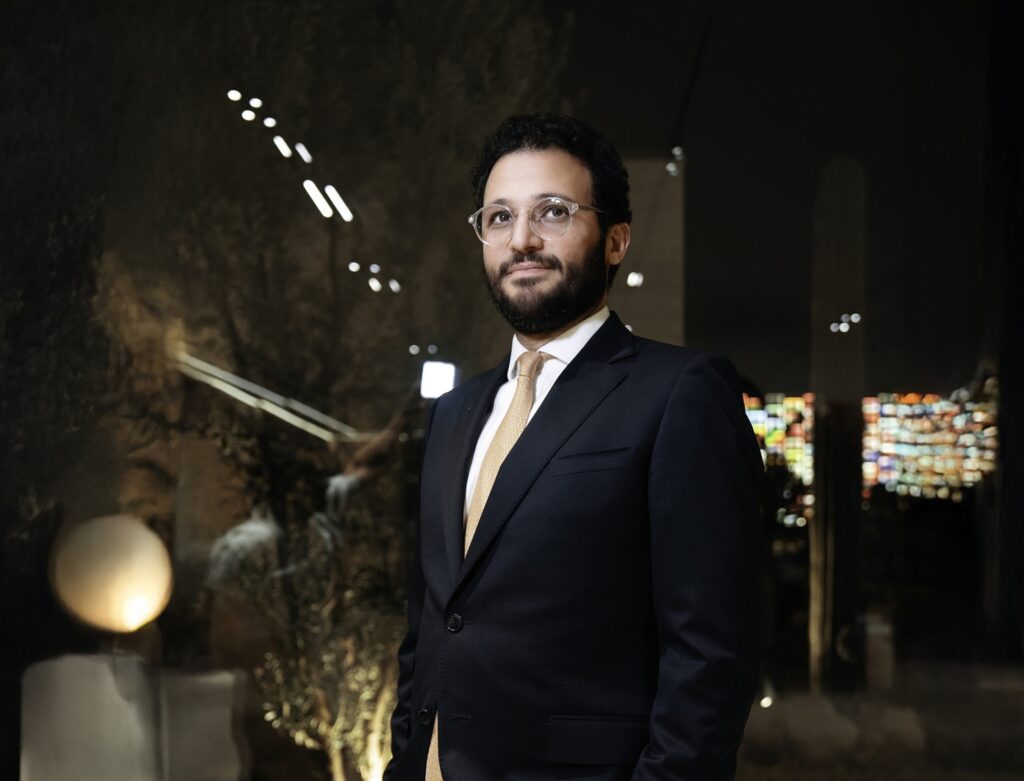
“Over the last few years, there has been a big change in the way luxury real estate is defined and valued,” says Talal M. Al Gaddah, CEO and Founder of the Keturah luxury brand. “No longer is it just driven by well-known names, size, or prestige. Today, buyers seek homes to improve their health and wellbeing.”
“They are now asking, ‘Is this home going to make me healthier? Will it help me sleep better, improve my mood, my family’s well-being? Will it connect me to nature, and give us all the quality of life we need?”
“This was our motivation in developing Keturah Reserve as the first community of its kind in the region where wellness science shapes every architectural decision.”
Interiors across the AED5.7 billion luxury Keturah Reserve development in Meydan feature natural materials and rich greenery to promote daily wellness. Bio-living features include sophisticated air and water purification systems, as well circadian lighting to improve sleep, mood, and energy levels.
Dubai’s luxury market is shifting from volume-driven growth to innovation-led development, with new projects addressing real lifestyle and health needs that challenge conventions, capture global attention, and reinforce the city’s reputation as a forward-thinking destination.
Most luxury buyers are long-term (5+ years) or medium-term (2-4 years) investors, though the distinction is increasingly based on purpose rather than timeframe, with two distinct profiles emerging.
“The lifestyle investor acquires a unit as a primary or secondary residence, considering it as a long-term sanctuary,” says Talal. “They are committed to holding for at least five years because they are investing in their family’s health and happiness, not merely capital appreciation.
“The strategic investor acknowledges the scarcity value of wellness-focused luxury assets, and recognizes that as the wellness real estate market grows annually in this region, early entrants will appreciate significantly. Generally, they hold for 3-5 years before exiting with substantial returns.”
Both categories of investors are quality-focused and prepared to pay a premium. They also seek assurances that the developer will deliver, that the asset will appreciate, and that they will have viable exit options.
As Dubai’s luxury real estate market continues to flourish, rather than worrying investors, they perceive it as evidence of the market’s vitality and Dubai’s standing as a global luxury destination.
1, Feb 2026
Budget 2026: Industry Looks for Policy Stability, Tax Relief and Growth-Driven Reforms
Chandigarh, Feb 01: As the Union Budget 2026–27 approaches, leaders across sectors have shared their perspectives on policy priorities that can accelerate India’s economic growth, strengthen global competitiveness, and support innovation-led development.
Accounting, Compliance, and Global Business Structuring
Mr. Satya Yeruva, Co-Founder & CEO, FinStackk, highlighted the importance of tax certainty and procedural simplification for startups and global businesses.
“Faster and fully automated GST refunds, clearer guidance on transfer pricing and foreign remittances, and rationalised compliance timelines would significantly ease the burden on businesses. Additional incentives for SaaS and fintech-led service providers, investment in digital public infrastructure for finance, and continued support for MSME formalisation will strengthen India as a preferred base for global entrepreneurship. A stable policy environment enables businesses to scale confidently while maintaining strong governance and financial transparency,” he said.
Digital Marketing and AI Adoption
Mr. Akhil Nair, Founder & CEO, BigTrunk Communications, emphasised the need for the Budget to align with modern marketing realities.
“Marketing is now a core driver of India’s digital economy, and policy support must enable AI-led innovation and advanced analytics. Allocations supporting AI/ML research for marketing, along with incentives for MSMEs to adopt MarTech tools like CRM, automation, and analytics, can accelerate ecosystem maturity. Simpler compliance and clearer taxation for digital service exports will help Indian agencies compete globally, while continued investment in Digital Public Infrastructure will strengthen omnichannel growth and export-readiness,” he said.
Food Processing and Frozen Foods
Mr. Ekansh Garg, Co-founder & CEO, Cravicious Foods, called for stronger policy support for value-added agriculture and food processing.
“With rising demand for hygienic, convenient, and ready-to-cook foods, the Budget should prioritise cold-chain infrastructure, modern processing facilities, and advanced freezing technologies. Incentives for in-house manufacturing, quality certification, and energy-efficient cold storage will help domestic brands scale sustainably and reduce wastage. Simplified compliance, GST rationalisation, and easier access to working capital will accelerate growth for bootstrapped manufacturers, positioning India as a global hub for high-quality frozen foods,” he said.
Gems and Jewellery
Mr. C Vinod Hayagriv, Managing Director & Director, C. Krishniah Chetty Group of Jewellers, stressed pragmatic reforms to restore sector momentum.
“A reduction in gold import duty to 3% would ease cost pressures and revive livelihoods across the value chain. Greater transparency through publication of gold bar numbers on customs portals and more flexible inventory management can help mitigate challenges from high metal prices and lower sales. These steps are critical to sustaining small and medium jewellery businesses in a challenging global environment,” he said.
Electronics and Original Design Manufacturing
Mr. Shishir Gupta, Co-founder & CEO, Oakter, urged the Budget to support India’s journey from assembly-led production to innovation-driven manufacturing.
“Priority areas should include design-linked incentives, deeper component localisation, easier access to working capital, and expansion of PLI support for ODM-led manufacturing. Incentives for batteries, power electronics, IoT hardware, and semiconductor supply chains, coupled with stable GST structures and faster input tax credits, will help Indian manufacturers move up the value chain, create IP-driven products, and emerge as trusted global suppliers,” he said.
Electric Mobility
Mr. Sameer Moidin, Founder & CEO, EVeium Smart Mobility, called for policies that scale domestic EV manufacturing.
“The Union Budget must focus on Make-in-India electric two-wheelers that are designed, manufactured, and scaled domestically. Incentives should support battery localisation, affordable financing, mass production, and robust charging infrastructure, making EVs practical for all users. This will strengthen supply chains, create jobs, and position India as a global EV leader,” he said.
Healthcare
As India’s healthcare sector evolves, industry leaders emphasised that the Budget should strategically support digital health, medical infrastructure, skill development, and research-led innovation to improve access, quality, and affordability for all citizens.
1, Feb 2026
L&T Secures Contract for Heavy Civil Infrastructure Business
Chandigarh, Feb 01: The Heavy Civil Infrastructure business vertical of L&T has won a contract from the Royal Commission of Riyadh City in Saudi Arabia for works pertaining to the extension of the Riyadh Metro. The order is a part of an ultra-mega project won by a consortium of Webuild S.p.A, L&T, Nesma & Partners Contracting, Alstom and IDOM.
The order pertains to the extension of Red Line of Riyadh Metro Network. The scope of work includes design and turnkey construction of 8.4 km long metro line comprising both elevated and underground sections, and five stations.
L&T has a proven capability in constructing fast and reliable mass transit systems across the globe, and this latest order stands as a testament to the trust customers place in the company.
Background:
Larsen & Toubro is a USD 30 billion Indian multinational engaged in EPC Projects, Hi-Tech Manufacturing, and Services, operating across multiple geographies. A strong, customer–focused approach and the constant quest for top-class quality have enabled L&T to attain and sustain leadership in its major lines of business for over eight decades.
1, Feb 2026
Air India Places Order for 30 Additional Boeing 737 Aircraft, Strengthening Single-Aisle Growth Strategy
Chandigarh, Feb 01: Air India today announced a firm order for 30 additional Boeing single-aisle aircraft, comprising 20 Boeing 737-8 and 10 Boeing 737-10 jets, reinforcing the airline’s long-term fleet expansion and modernisation strategy. This order is in addition to the 220 Boeing aircraft ordered in 2023, taking Air India’s total aircraft orders with Boeing to 250.
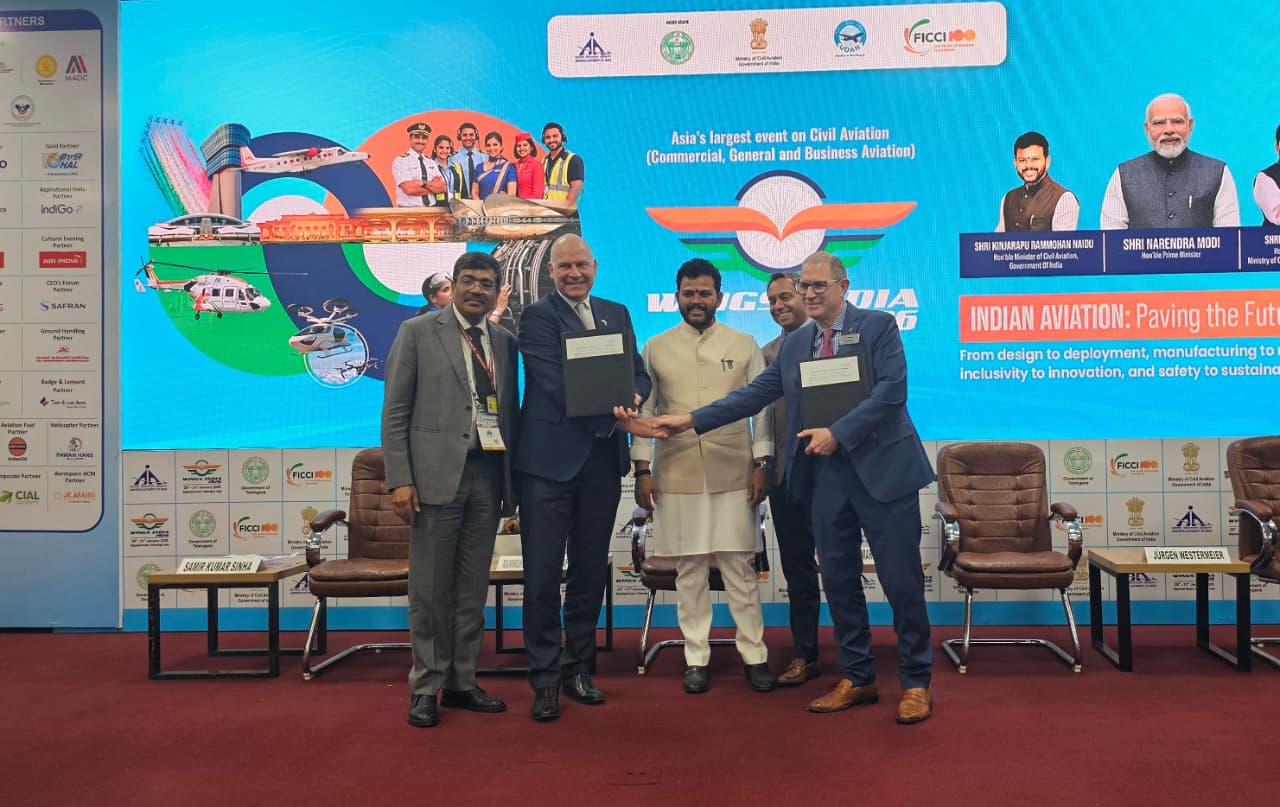
The announcement was made at Wings India 2026, one of Asia’s premier civil aviation events.
With this latest order, Air India now has 198 new Boeing aircraft scheduled for delivery. Of the original 220 aircraft ordered in 2023, the airline has already taken delivery of 52 aircraft, including 51 Boeing 737-8 aircraft currently in service with Air India Express, the Group’s value carrier, and one brand-new Boeing 787-9, which is set to enter commercial service on the Mumbai–Frankfurt route from February 1, 2026.
Commenting on the announcement, Campbell Wilson, Chief Executive Officer and Managing Director, Air India, said,
“This additional order for 30 Boeing 737 aircraft is an integral part of our broader fleet strategy to firmly position Air India for the future as a world-class global carrier that India deserves and the world expects. Building on our 2023 aircraft orders and subsequent additions, this commitment supports steady deliveries and planned fleet upgrades over the coming years.”
Paul Righi, Vice President – Commercial Sales and Marketing, Eurasia, India and South Asia, Boeing, added,
“Air India’s continued investment in the 737 MAX family underscores the strong performance of its existing 737-8 fleet as the airline expands connectivity across India and the South Asia region. We value Air India’s confidence in the 737-10 and 737-8, which offer the capacity, efficiency, and versatility required as a cornerstone of its single-aisle growth strategy.”
Powered by CFM LEAP-1B engines, the Boeing 737 family delivers enhanced fuel efficiency, passenger comfort, and operational reliability, making it ideally suited for high-frequency single-aisle operations.
Since its privatisation in January 2022, the Air India Group has added nearly 170 aircraft to its fleet through a combination of new deliveries, strategic leasing, the merger of erstwhile Vistara into Air India, and the reactivation of long-grounded aircraft—marking significant progress in capacity expansion and fleet modernisation.
1, Feb 2026
State Bank of India commits responsible and scalable financing for Next-Gen growth sectors
Chandigarh, Feb 01: State Bank of India (SBI), the country’s largest public sector bank, today announced the launch of ‘CHAKRA’ – Centre of Excellence (CoE) for Sunrise Sectors, a strategic initiative aimed at enabling responsible, scalable, and innovation-led financing for sectors critical to India’s long-term economic transformation.
Aligned with the national vision of Viksit Bharat 2047, CHAKRA will serve as a knowledge-driven platform to strengthen SBI’s institutional capabilities in financing next-generation, technology-intensive, and sustainability-focused sectors. The initiative underscores SBI’s commitment to channel capital efficiently while enhancing risk assessment frameworks and developing innovative financing structures tailored to evolving business models and policy priorities.
The Centre was inaugurated by Shri M. Nagaraju, Secretary, Department of Financial Services, Government of India, in the presence of Shri Challa Sreenivasulu Setty, Chairman, State Bank of India. The launch event was attended by SBI’s Managing Directors, senior representatives from public and global banks, leading conglomerates, financial institutions, industry bodies, and key ecosystem stakeholders.
Commenting on the launch, Shri M. Nagaraju said,
“The CHAKRA Centre of Excellence is a commendable initiative by State Bank of India. Its vision to function as a coordinated ecosystem platform—covering knowledge-sharing, project appraisal, capacity building, and evidence-based policy engagement—will meaningfully accelerate India’s journey towards Viksit Bharat 2047.”
CHAKRA will focus on eight high-impact sunrise sectors—Renewable Energy, Advanced Cell Chemistry and Battery Storage, Electric Mobility, Green Hydrogen, Semiconductors, Decarbonisation, Smart Infrastructure, and Data Centre Infrastructure. These sectors are expected to collectively attract capital investments exceeding ₹100 lakh crore by 2030, positioning them as key engines of India’s future growth. The Centre will play a catalytic role in enabling this large-scale investment.
Speaking on the occasion, Shri Challa Sreenivasulu Setty, Chairman, State Bank of India, said,
“India’s growth over the coming decades will be anchored in innovation, sustainability, and advanced manufacturing. With CHAKRA, SBI is strengthening its ability to understand emerging sectors, design specialised financing solutions, and collaborate with the broader ecosystem to support projects that contribute meaningfully to national development. This Centre of Excellence reinforces SBI’s leadership in new-age technologies and climate finance, strengthens India’s integration into global value chains, and accelerates progress towards Viksit Bharat 2047.”
CHAKRA will deliver tangible outcomes through white papers, sectoral reports, knowledge series, industry roundtables, and policy dialogues, enabling informed decision-making for clients, investors, and policymakers. The Centre will also facilitate structured engagement with development finance institutions, multilateral agencies, banks, NBFCs, corporates, start-ups, academia, industry bodies, and policy think-tanks.
This initiative builds on SBI’s earlier Centre of Excellence for MSMEs at the State Bank Academy and reflects the Bank’s continued focus on strengthening institutional knowledge, supporting innovation-driven enterprises, and improving capital flows to sectors shaping India’s sustainable and technology-led future.
31, Jan 2026
Budget 2026 Seen as Catalyst for Indigenous Defence Manufacturing and HVAC Growth
Ravalnath Shende, Chairman and Managing Director, Shree Refrigerations Limited:
“The Union Budget 2026 is an opportunity to strengthen the manufacturing ecosystem that underpins defence, infrastructure and core industrial sectors. As national security priorities and industrial growth become increasingly interconnected, sustained policy support for indigenous manufacturing, R&D and energy-efficient technologies will be pivotal to make India’s vision of a self-reliant defense ecosystem . As the demand for HVAC systems is continuously rising, encourages long-term capital investment and support advanced manufacturing can help build scale and operational resilience. A balanced approach that combines fiscal discipline with steady investment in defence-linked manufacturing will not only reduce import dependence but also strengthen India’s position in critical supply chains and enhance the competitiveness of domestic manufacturers in the defence sector.”
31, Jan 2026
Vedanta Delivers Record Q3FY26 Performance; Profit After Tax Jumps 60% YoY
Mumbai, Jan 31: Vedanta Limited (BSE: 500295 | NSE: VEDL) today announced its Unaudited Consolidated Results for the third quarter and nine months ended December 31, 2025, reporting an exceptional financial and operational performance. Profit After Tax (PAT) surged 60% year-on-year, supported by record EBITDA, margin expansion, and strong operational execution across businesses.
Financial Highlights – Q3FY26
Vedanta recorded its highest-ever quarterly revenue, reflecting a 19% year-on-year growth, driven by higher commodity prices, increased volumes, favourable premiums, and forex gains. EBITDA rose 34% year-on-year to a record level, with margins expanding by 629 basis points to 41%.
Profit After Tax for the quarter marked a 60% year-on-year increase. Return on Capital Employed (ROCE) remained strong at 27%, improving by 296 basis points year-on-year. The Net Debt to EBITDA ratio further improved to 1.23x, reflecting balance sheet strength and disciplined capital management.
Vedanta’s credit ratings were reaffirmed at AA by both CRISIL and ICRA following the approval of the Company’s proposed demerger by the National Company Law Tribunal (NCLT).
Strong Operational Performance
The Company delivered record or near-record production across multiple businesses:
-
Aluminium: Highest-ever quarterly production; alumina output surged to a record level
-
Zinc India: Record third-quarter mined and refined metal production; achieved the lowest Q3 cost of production in the last five years
-
Zinc International: Production increased 28% year-on-year
-
Iron Ore: Ore production rose year-on-year; pig iron output increased
-
Copper: Highest quarterly cathode production in the last seven years
-
Ferro Chrome: Production increased 32% year-on-year
-
Power: Sales volumes rose 61% year-on-year
Strategic Milestones
During the quarter, Vedanta received approval from the National Company Law Tribunal (NCLT) for its proposed demerger, marking a significant step toward the creation of five independent, pure-play entities. The Company also acquired Incab Industries, strengthening its downstream capabilities in copper and aluminium.
Vedanta continued to invest significantly in growth capital expenditure during the first nine months of FY26, reinforcing its commitment to long-term expansion and operational excellence.
Shareholder Value Creation
Vedanta delivered a total shareholder return of approximately 30% during the quarter, significantly outperforming benchmark indices. Over the past five years, total shareholder returns stood at 428%, supported by a strong cumulative dividend payout.
Management Commentary
Commenting on the performance, Mr. Arun Misra, Executive Director, Vedanta, said:
“Q3 FY26 has been a landmark quarter for Vedanta, with our highest-ever EBITDA and strong performances across key businesses. Aluminium and Zinc India delivered their best-ever financial results, supported by record production and cost efficiencies. The approval of our demerger into five pure-play entities further strengthens our readiness to unlock long-term value as we advance Vedanta’s 2.0 journey.”
Mr. Ajay Goel, Chief Financial Officer, Vedanta, added:
“This has been a remarkable quarter marked by record PAT, revenue, and EBITDA, alongside sharp margin expansion. Our balance sheet continues to strengthen, reflected in improved leverage metrics and reaffirmation of our AA credit rating. These results underscore market confidence in Vedanta’s growth trajectory and value-creation strategy.”
ESG Highlights – Q3FY26
-
ESG Leadership: Vedanta Aluminium ranked second globally in the S&P Corporate Sustainability Assessment for the third consecutive year. Cairn Oil & Gas ranked among the top five globally in its first participation.
-
Environmental Progress: Renewable energy usage increased quarter-on-quarter, greenhouse gas intensity declined, and water recycling levels improved significantly.
-
Social Impact: CSR initiatives positively impacted millions of lives globally, with a strong focus on education, skill development, and women empowerment.
Outlook
With strong operational momentum, an improving balance sheet, and key strategic initiatives underway, Vedanta remains well positioned to sustain growth and unlock long-term value for all stakeholders.
31, Jan 2026
Blue Star Announces Board and Leadership Changes
Mumbai, Jan 31: Blue Star Limited announced a series of Board and senior leadership changes, underscoring the Company’s focus on strong governance, leadership continuity, and long-term growth.
Sam Balsara to Retire as Independent Director
Mr. Sam Balsara will retire from the Board of Blue Star Limited on January 31, 2026, upon completion of two consecutive terms as an Independent Director, having attained the age of 75 years.
Chairman of Madison World, one of India’s largest media and communication agencies, Mr. Balsara joined the Blue Star Board in June 2017 and was reappointed for a second term in June 2022. A stalwart in marketing and advertising with over five decades of experience, he provided valuable guidance to the Company on brand-building strategies, consumer insights, and evolving media trends.
As Chairman of the Nomination and Remuneration Committee, Mr. Balsara made an invaluable contribution to leadership development and succession planning initiatives at Blue Star.
M S Unnikrishnan Appointed Independent Director
The Board has appointed Mr. M S Unnikrishnan as an Independent Director with effect from January 29, 2026, for a term of five years.
Mr. Unnikrishnan brings over four decades of leadership experience and currently serves as Head & CEO of the IITB–Monash Research Academy, a joint venture between the Indian Institute of Technology, Bombay, and Monash University, Australia. Previously, he served as Managing Director of the Thermax Group, where he led a diversified engineering business with a global manufacturing footprint focused on energy and environment solutions.
He currently serves on the boards of KEC International Limited, Kirloskar Brothers Limited, Greaves Cotton Limited, and Livguard Energy Technologies Pvt. Limited. He is also a trustee of Akshayapatra and Jehangir Hospital, Pune.
Mr. Unnikrishnan is a Mechanical Engineering graduate from Visvesvaraya National Institute of Technology, Nagpur, and has completed the Advanced Management Program at Harvard Business School.
B Thiagarajan Reappointed as Managing Director
The Board has reappointed Mr. B Thiagarajan as Managing Director for a further term from April 1, 2026, up to May 24, 2027, following the completion of his current term on March 31, 2026.
Mr. Thiagarajan holds a bachelor’s degree in Electrical and Electronics Engineering from Madurai University and has completed the Senior Executive Programme at London Business School. With over four decades of professional experience across B2B and B2C businesses, he has been associated with Blue Star since 1998.
He was inducted to the Board in 2013, appointed Joint Managing Director in 2016, and assumed charge as Managing Director in April 2019. Mr. Thiagarajan actively participates in industry forums and currently serves as a member of the CII National Council, National Chairman of the Indian Green Building Council, and the CII Green Cooling Council.
Mohit Sud Elevated as Executive Director
Mr. Mohit Sud has been appointed Executive Director, Unitary Cooling Products, for a period of five years with effect from April 1, 2026.
Mr. Sud joined Blue Star in March 2025 as Group President, Unitary Cooling Products, overseeing Room Air Conditioners and Commercial Refrigeration businesses. His responsibilities span sales, marketing, service, R&D, manufacturing, and supply chain.
A Mechanical Engineer with an MBA from XLRI, Jamshedpur, Mr. Sud brings over two decades of experience from Hindustan Unilever, where he led sales and marketing across multiple product categories and geographies. In his last role as Vice President, he was responsible for premium retail distribution for the Beauty & Wellbeing business.
Leadership Commentary
Commenting on the announcements, Mr. Vir S. Advani, Chairman & Managing Director, Blue Star Limited, said:
“Blue Star is an 82-year-old brand, and Sam has played a significant role in strengthening the Company’s strategic efforts to make it more youthful and relevant, including deeper penetration into Tier 3, 4 and 5 markets. His marketing insights helped Blue Star gain market share consistently. On behalf of the Board, I place on record our deep appreciation for his outstanding contribution and exemplary service.
Unnikrishnan’s exemplary leadership experience in engineering businesses and exposure to international markets make him a valuable addition to the Board.
The extension of Thiagarajan’s tenure will help accelerate our strategic programmes in growth, R&D and manufacturing, while ensuring a seamless leadership transition.
Mohit has been groomed for a Board-level leadership role, and I am confident that his strong consumer-focused experience will support Blue Star’s mission to enhance market share and profitability in the Unitary Cooling Products business.”
31, Jan 2026
Blue Star Posts Modest Growth in Q3FY26 Amid Challenging Market Conditions
Mumbai, Jan 31: Blue Star Limited reported moderate growth in its consolidated revenue and operating profit for the third quarter of FY26, despite a challenging market environment. The performance was supported by steady momentum in the Electro-Mechanical Projects business and inventory build-up in the Room Air Conditioners (ACs) segment ahead of the mandatory energy-label transition effective January 1, 2026.
For the quarter ended December 31, 2025, the Company recorded year-on-year growth in Revenue from Operations, while Operating Profit (PBIDTA excluding Other Income) also improved, with operating margins remaining stable.
Other income for the quarter increased compared to the corresponding period last year, while tax expenses declined. Profit Before Tax (before share of profit/(loss) of joint ventures and exceptional items) was marginally lower year-on-year.
During the quarter, the Company recognised a one-time exceptional provision towards gratuity and leave encashment following the notification of four new Labour Codes by the Government of India. Consequently, Net Profit for Q3FY26 declined compared to the same period last year. Earnings per share were impacted due to this non-recurring exceptional item.
As of December 31, 2025, Blue Star’s carried-forward order book showed a healthy increase, reflecting sustained demand across key business segments.
Segment Highlights
The Electro-Mechanical Projects, Commercial Air Conditioning, Service and International Business segment reported strong revenue growth, supported by healthy enquiry momentum from data centres, factories, hospitals, malls, and select commercial office developments. Segment margins moderated due to changes in project mix.
The Unitary Products segment, comprising Room Air Conditioners and Commercial Refrigeration, delivered stable performance. Growth in the Room ACs business was driven by advance inventory stocking by channel partners ahead of the new energy-efficiency norms, while Commercial Refrigeration growth remained subdued during the quarter.
The Professional Electronics and Industrial Systems segment recorded a decline in revenue, largely due to continued regulatory uncertainty impacting the Med-Tech Solutions business. However, segment profitability improved on a year-on-year basis.
Nine-Month Performance
For the nine months ended December 31, 2025, the Company reported growth in Revenue from Operations and maintained stable operating profitability. Net Profit for the period declined year-on-year, primarily due to the exceptional item recorded during Q3FY26.
Outlook
Commenting on the performance, Mr. Vir S. Advani, Chairman & Managing Director, Blue Star Limited, said:
“The first three quarters of the current fiscal year were challenging, but early signs of market revival are encouraging. We expect Q4FY26 to be a strong quarter for the Room Air Conditioners, Commercial Air Conditioning and Commercial Refrigeration businesses. In preparation for robust growth in FY27, we continue to invest in R&D, manufacturing, digitalisation and brand-building, while implementing cost optimisation and productivity improvement measures.”
Blue Star remains optimistic about demand recovery and is positioning itself to capitalise on growth opportunities in the coming quarters.