


31, Jan 2026
Bank of Baroda Reports Strong Performance in Q3FY26 and 9MFY26, Driven by Robust Growth and Asset Quality
Mumbai, Jan 31: Bank of Baroda (BoB) announced its financial results for the quarter and nine months ended 31st December 2025, reporting continued growth momentum supported by stable asset quality, strong profitability, and a healthy balance sheet.
Financial Highlights – Q3FY26 & 9MFY26
-
Net Profit for Q3FY26 rises YoY; 9MFY26 Net Profit shows steady growth.
-
Operating Profit for the quarter and nine months demonstrates consistent performance.
-
Net Interest Income (NII) and Non-Interest Income grow steadily, reflecting balanced revenue streams.
-
Return on Assets (ROA) and Return on Equity (ROE) remain strong.
-
Cost of deposits declines, and Global and Domestic Net Interest Margins (NIM) remain healthy.
Asset Quality and Capital Strength
-
Gross and Net NPA ratios improve, reflecting strong credit quality.
-
Provision Coverage Ratio (PCR) remains robust.
-
Credit cost remains well under control.
-
Capital adequacy ratios, including CRAR, Tier-I, and CET-1, remain strong.
Business Performance
-
Global and domestic advances register healthy growth.
-
Deposits show steady increase across domestic and international segments.
-
Retail, Agriculture, and MSME (RAM) portfolios grow, driving portfolio diversification.
-
Corporate advances demonstrate steady expansion.
“Bank of Baroda has delivered another quarter of steady growth, underpinned by strong asset quality and robust profitability. Our strategic focus on retail, agriculture, and MSME segments continues to drive balanced growth across the portfolio. With a resilient balance sheet, prudent capital management, and customer-centric initiatives, we remain well-positioned to support India’s economic growth and strengthen our market leadership.”
Bank of Baroda continues to maintain a strong and diversified portfolio, with disciplined credit practices, robust capital adequacy, and focus on retail and MSME segments driving sustainable growth.
- 0
- By Neel Achary

31, Jan 2026
Škoda Auto India and BBH India roll out ‘You Never Drive Alone’, spotlighting Škoda Super Care
Mumbai, Jan 31: Škoda Auto India, in partnership with BBH India, has launched an integrated campaign ‘You Never Drive Alone’ as it debuts its brand-wide service programme ‘Škoda Super Care’. Aimed at enhancing customer ownership experience across Škoda Auto India’s entire product portfolio from 2026, ‘Škoda Super Care’ introduces best-in-class ownership benefits as part of a unified service framework.
Designed with a clear business and consumer insight, the campaign ‘You Never Drive Alone’ is led by a brand film that brings Škoda’s philosophy to life. The campaign portrays driving as an experience to be enjoyed with peace of mind, beyond simply a means of reaching a destination.
The film follows a couple on a scenic drive, pausing to take in the lush, serene landscape from the comfort of their car. As they glance back, they notice the Škoda Super Care team nearby, a reminder that with a rapidly growing network across 183 cities in India, and a strengthened customer support throughout the vehicle ownership lifecycle, Škoda owners are never truly alone on the road.
Commenting on the initiative, Ashish Gupta, Brand Director, Škoda Auto India, said,
“Today marks a meaningful step forward in how we support our customers beyond the showroom. Ownership is about confidence, clarity and value every time a customer drives their car, visits a service centre or needs support. With Škoda Super Care, we are bringing together best-in-class warranty coverage and roadside assistance for four years, along with four free services including the Škoda Check-in services at 1,000 and 7,500 Kms. This gives customers an early connect with Škoda service along with affordable & predictable service costs, strong support through the ownership journey and the peace of mind they deserve. It’s a simple promise, yet a powerful one.”
Discussing the campaign, Parikshit Bhattaccharya, Chief Creative Officer, BBH India and Propagate India, added,
“Service is usually communicated through information. We chose to communicate it through feeling. The idea was to visualise support without making it loud, to show that reassurance can exist quietly in the background of a journey.”
‘You Never Drive Alone’ is currently live across television, digital, print, and OOH. With purposeful storytelling, the campaign builds upon long-term ownership confidence through periodic maintenance services, newly introduced Škoda Check-in services, extended warranty coverage, roadside assistance and free services, offering clarity and value.
31, Jan 2026
CREDAI Hyderabad on Economic Survey 2025–26
Hyderabad: Jan 31: CREDAI Hyderabad welcomes the Economic Survey 2025–26, which reaffirms Hyderabad’s role as a key driver of India’s urban and economic growth. The Survey projects 7.4% GDP growth for FY26, supported by strong Gross Fixed Capital Formation nearing 30% of GDP, a resilient services sector growing at 9.1%, and credible fiscal consolidation with the fiscal deficit at around 4.8% of GDP.
Hyderabad’s growth stands out for its simultaneous urban densification and rapid peripheral expansion, reflecting sustained demand for high-density residential and commercial development. This pattern highlights the need for possibility-oriented urbanism, where infrastructure, mobility, and utilities keep pace with city expansion.
The Survey highlights strong sectoral performance, with the Financial, Real Estate and Professional Services sector growing by 9.9% in H1 FY26, while construction recorded 7.4% growth, underscoring the multiplier impact of public capital expenditure on housing, jobs, and infrastructure.
Commenting on the Economic Survey, Mr. Jagannath Rao Bandari, President-elect, CREDAI Hyderabad, said:
“The Economic Survey captures Hyderabad’s unique growth trajectory, with both core densification and peripheral expansion progressing together. To sustain this momentum, it is critical to address constraints in land, mobility, and infrastructure through predictable regulations, contextual compliance, and trust-based governance.”
CREDAI Hyderabad aligns with the Survey’s assessment that the high cost of capital remains a key constraint and calls for risk-mitigation tools, partial credit guarantees, and improved access to long-term finance to support housing supply across segments.
Looking ahead to the Union Budget 2026, CREDAI Hyderabad expects continued emphasis on infrastructure funding and public capex to sustain 7–8% construction growth, along with expanded support for PMAY 2.0, single-window clearances, and viability gap funding for affordable housing.
On taxation for homebuyers, CREDAI Hyderabad urges further reforms including higher income-tax deductions on home loans, NPS-like tax benefits linked to housing finance, and rationalisation of stamp duties, which will enhance affordability and boost middle-class homeownership.
CREDAI Hyderabad reiterates its commitment to reform-led growth, affordable housing, and sustainable urban development, and looks forward to policies that strengthen Hyderabad’s contribution to India’s $5 trillion economy.
31, Jan 2026
Experts flag the East-West OdishaDevelopmental Divide: PRAHAR Seminar
Bhawanipatna, Jan 31 : PRAHAR, (Public Response Against Helplesness & Action for Redressal) a policy-focused development organisation working on employment, livelihoods and regional equity, organised a Seminar on “South-West Odisha: Economic & Employment Growth, Challenges and Opportunities” at Hotel Midtown, Bhawanipatna.
The dialogue brought together economists, development practitioners and industry experts to discuss solutions to bridge the widening intra-state developmental disparities in Odisha. The Panel highlighted that Odisha’s substantial mineral reserves, particularly in Kalahandi and Rayagada, represent an underleveraged opportunity for manufacturing-led growth. Greater integration of these resources into downstream industrial activity could support higher GDP contribution, employment creation, and improved value retention within the domestic economy.
Speaking at the forum, Dr. Ajaya Mishra, Former Professor of Geography, GM University and Kalahandi University, said,
“It is time for all of Odisha to benefit from the Viksit Odisha agenda and align with the Atmanirbhar Bharat 2047 roadmap. When industrial activity is not supported by local clustering, employment remains limited and migration continues. Odisha has a clear opportunity to leverage the world’s second-largest rich Bauxite base, supported by substantial private investments such as refineries, to drive industrialisation and create sustainable livelihoods. Policy must recognise this shift if backward regions are to genuinely catch up.”
Mr Abhay Raj Mishra, President of PRAHAR, said,
“India’s past experience demonstrates that prolonged regional intra-state disparities often translate into political and social fragmentation. From Uttarakhand to Jharkhand to Telangana, demands for separate statehood have been rooted in uneven development. Odisha must not treat regional imbalances as a peripheral issue, but as a core development challenge.”
Unlocking the untapped Bauxite Mining alone has the potential to empower 10,000 SMEs and create 2.4 million jobs for the state, accelerating Orissa’s development multifold. Data from the dialogue highlighted that districts such as Kalahandi and Rayagada continue to lag significantly in income and employment indicators. Kalahandi’s per capita income stands at approximately ₹32,000—less than one-fifth of the state average of around ₹1.8 lakh—while nearly 70 per cent of the workforce in South–Western Odisha remains dependent on agriculture, reflecting the absence of non-farm employment engines despite the region’s mineral resource wealth and home to one of the world’s largest Alumina Refineries in the state.
Mr. Ashok Pattnaik, CEO NGO Kartavya said
“Odisha’s challenge is not the availability of resources, but the absence of a structured pathway from mineral Production to local industrial growth.” Mr. Satyanarayan Pattanayak, Founder Secretary, Seba Jagat, said: “Eastern districts are gaining jobs and industries, while western Odisha continues to lag, which is reflected in sharp per capita income gaps within the state. Odisha can close its own gap only by bringing large-scale industrial activity and employment including farm &forest based industries to western districts and different need based Skills training ( including soft skills) for youths & women which growth reaches every region.”
Speakers noted that states that have built integrated industrial ecosystems combining production, fabrication and MSME clusters have seen higher job creation, stronger regional GDP growth and lower migration. In contrast, delays in developing such domestic value chains have a clear macroeconomic cost: limited utilisation of domestic resources increases India’s reliance on imported raw materials, resulting in avoidable foreign exchange outflows and lost value addition at both the state and national levels.
31, Jan 2026
Budget 2026 Can Accelerate India’s GCC-Led Innovation Growth: Srinivas Nandigam
Srinivas Nandigam, Managing Director, Global Capability Centre, Advance Auto Parts India:
“India’s Global Capability Centre ecosystem has entered a phase of sustained maturity and global relevance. Today, the country hosts over 1,700 GCCs employing more than 1.6 million professionals, representing the largest concentration of GCC talent worldwide. The sector’s economic contribution is estimated at over USD 46 billion, with growth increasingly driven by advanced engineering, data platforms, AI enablement, and product development roles.
Over the past year, continued investments in digital infrastructure, skilling initiatives, and regional development have further strengthened this momentum, enabling GCCs to evolve from support centres into global innovation engines. Enterprises have expanded their India mandates across areas such as applied AI, cloud architecture, cybersecurity, and platform engineering, reflecting rising confidence in the depth and quality of India’s technical talent.
As the focus shifts toward Budget 2026, the opportunity lies in strengthening structured talent ecosystems and long-term capability building. This includes deeper industry academia collaboration, targeted investment in advanced engineering and digital skills, and policy support that enables sustainable growth across both established and emerging talent hubs. With global enterprises increasingly scaling innovation closer to talent, India is well positioned to lead the next phase of engineering excellence and technology leadership.
Advance Auto Parts India Innovation Centre sees Budget 2026 as an important catalyst to further elevate India’s role as a global hub for engineering innovation and enterprise transformation.”
31, Jan 2026
Tata Power Strengthens UP Grid with New 765 kV Transmission Lines
Tata Power Commissions 765 kV Mainpuri–Bara and Mainpuri–Unnao Transmission Lines, Strengthening Uttar Pradesh’s Power Evacuation Network
Bengaluru, Jan 31: The Tata Power Company Limited (Tata Power), one of India’s largest integrated power companies, has successfully commissioned two critical 765 kV Extra High Voltage (EHV) transmission corridors in Uttar Pradesh, marking a significant milestone in strengthening the state’s power transmission infrastructure and enhancing grid reliability across the northern region.
The newly commissioned corridors—Mainpuri–Bara (380 circuit kilometres) and Mainpuri–Unnao (194 circuit kilometres)—have been developed under the South East UP Power Transmission Company Limited (SEUPPTCL) project and form a vital part of Tata Power’s expanding national transmission portfolio. Together, these high-capacity lines create a robust backbone for reliable power flow within Uttar Pradesh and across the Northern Grid.
The project, acquired by Resurgent Power Ventures Pte. Ltd., a joint venture led by Tata Power in partnership with ICICI Bank and global investors, represents a successful resolution of previously stressed power assets. Once operational, the two transmission corridors will enable the evacuation of over 3,000 MW of thermal power generated within the state, significantly improving grid stability while supporting Uttar Pradesh’s long-term energy security and industrial growth objectives.
Execution of the project involved complex engineering and large-scale resource mobilisation. The construction required over 42,000 metric tonnes of tower steel, 6,900 kilometres of conductor stringing, and the completion of more than 100 major crossings, including railway lines, rivers, and existing transmission corridors. The lines also traverse forest stretches and were executed in strict compliance with environmental, safety, and regulatory norms.
Despite these challenges, the project was delivered in line with Tata Power’s benchmarks for operational excellence, quality execution, and stringent safety standards, reinforcing the company’s credentials as a leading developer of high-voltage transmission infrastructure in India.
With the commissioning of these two 765 kV corridors, Tata Power’s operational transmission network now spans 5,312 circuit kilometres, with an additional 1,997 circuit kilometres under construction. This expanding portfolio underscores the company’s growing role in building and modernising India’s high-voltage transmission backbone at a time when enhanced grid capacity is critical to sustaining economic growth and supporting the country’s evolving energy landscape.
31, Jan 2026
Kolkata Hosts Landmark MATECIA & SURFACES REPORTER Architecture Event, Spotlighting East & Northeast India as Emerging Design Powerhouses
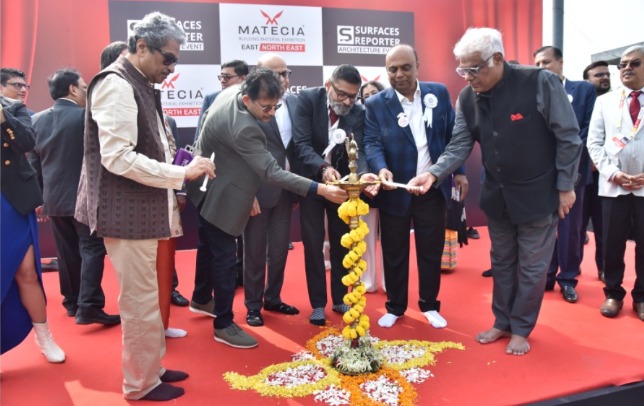
Kolkata, Jan 31: India’s leading building materials exhibition, MATECIA Exhibition (Materials & Products for Construction, Interiors & Architecture), along with SURFACES REPORTER, one of India’s most respected architecture and design media platforms, was formally inaugurated today at Biswa Bangla Mela Prangan (BBMP), Kolkata. The inauguration marks the launch of the largest-ever confluence of architecture, interiors, and building materials for East and Northeast India.
Held from 30 January to 1 February 2026, the three-day event was inaugurated in the presence of distinguished industry leaders, senior architects, and policymakers. National Award–winning actor, motivational speaker, and Founder of Ashish Vidyarthi & Associates, Mr. Ashish Vidyarthi, graced the occasion as the Chief Guest.
The inaugural ceremony featured the traditional lamp lighting and opening address by Mr. Rajesh Mittal, President, FIPPI and CMD, Greenply Industries Ltd; Mr. Surinder Arora, President, ILMA and Managing Director, Virgo Industries Ltd; Mr. Ramesh Bagla, President, CTMA; and Ms. Meenakshi Ganeshan, Deputy Director General, BIS, East Zone. They were joined by senior leaders including Mr. Manoj Lohia of Merino Industries Ltd, Mr. Joydeep Chitlangia of Duroply, Mr. Vishal Dokania of Durian, Mr. Rushil Thakkar of Rushil Décor, Mr. Gajanan Munka of Saburi Plywood, Mr. Gaurav Bagla, President, BTIA, Mr. Vikas Khemka, Vice President, BTMA, Mr. M.P. Singh, former Director, IWST and FIPPI, and Mr. J. Ahuja of ILMA.
The event brought together over 150 leading architecture and design firms, interior designers, developers, dealers, brands, and channel partners from more than 12 states across East and Northeast India, including Jharkhand, Bihar, West Bengal, Odisha, Assam, Meghalaya, Nagaland, Manipur, Mizoram, Tripura, Chhattisgarh, Arunachal Pradesh, and Sikkim. The strong regional participation positioned Kolkata as a vital cultural and regional bridge, while reinforcing the scale, diversity, and creative strength of the eastern and northeastern design ecosystem.
Speaking at the inauguration, Ashish Vidyarthi said, “Life becomes exciting when people choose to build something meaningful with it. What truly moved me about this industry is that it works quietly, yet shapes everything we live in—from our homes to our cities. Behind every road, bridge and building are passionate creators and manufacturers who rarely seek the spotlight, but whose work defines progress.”
Highlighting the importance of industry platforms, he added, “Platforms like MATECIA and the SURFACES REPORTER Architecture Event bring this unseen ecosystem to life, celebrating both the makers and the architectural fraternity that consistently insists on quality, integrity and thoughtful choices. It is this commitment to relevance, value and responsibility that allows an industry—and the people within it—to remain vibrant and enduring.”
Spread across over 1,50,000 sq. ft., the event featured 100+ leading interior and surface brands and brought together the topmost architects and interior designers from east and northeast representing over 500 landmark projects. The event welcomed an estimated 14,000–16,000 visitors from 100+ towns and cities.
Verticaa Dvivedi, Director, Surfaces Reporter Architecture Event, said, “The successful inauguration of the MATECIA Exhibition and SURFACES REPORTER Architecture Event has affirmed what we have always believed these regions are not peripheral markets, but are the centres of architectural thought and innovation. The local designers view climate, context, and culture not as limitations, but as their source of creativity, teaching the world through their work. This issue is the start of a bigger story at the national level where the architects from the East and Northeast of India get their proper place in the creative arena of the country.”
Emphasising both the material and market opportunity, Pragat Dvivedi, Director, MATECIA Exhibition, said, “The response to MATECIA Exhibition and SURFACES REPORTER Architecture Event clearly confirms that East and Northeast India are rapidly turning into serious growth markets. With rapid urban development, expanding infrastructure, and a growing community of design conscious professionals, these regions are paving the way for the next generation of India’s building materials industry. Our participation in the event is a signal of our firm conviction that the materials market of the country in the future will be driven by the East and Northeast at least as much as by any other region.”
The event witnessed the presence of prominent architects including Ar. Sunil Maniramka, Ar. Rupande Shah, Ar. Monica Khosla Bhargava, Ar. Amber Chandgothia, Ar. J. P. Agrawal, and Ar. Bipratip Dhar, among others. Additionally, architectural associations from Jharkhand, Mizoram, Nagaland, and Arunachal Pradesh participated enthusiastically, reinforcing the strong collective identity and collaborative spirit of the region’s architectural community.
A key highlight of the platform Surfaces Reporter Salutes – Architecture & Design Honours is scheduled for 31 January 2026 from 4:00 PM onwards. As the first collective regional recognition initiative dedicated exclusively to East and Northeast India, the honours celebrates around 100 leading architects and interior designers, the creative forces behind more than 500 of the region’s most notable projects, recognising excellence across residential, commercial, hospitality, institutional and urban design.
The event highlights India Interior Retailing (IIR), a knowledge platform that brings industry and interior retail leaders together, creating a high-energy space for learning, networking, and growth. In addition, the Surfaces Reporter SHOWCASE will address a special presentation zone where brands present and architects review, offering an excellent opportunity for interaction and collaboration between designers and manufacturers.
The MATECIA Exhibition and SURFACES REPORTER Architecture Event East & Northeast India took a firm step forward in the re-interpretation of the region at the national level while establishing the region’s design excellence firmly on India’s architectural map.
30, Jan 2026
Union Budget 2026 Seen as Key Catalyst for Long-Term Real Estate Capital Flows
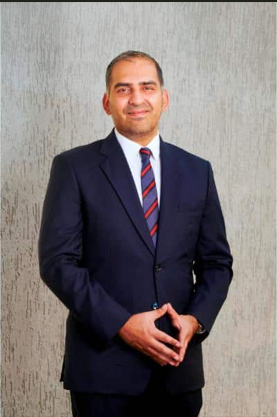
By:- Rohan Khatau, Director, CCI Projects.
The upcoming Union Budget 2026 is expected to play a critical role in shaping longterm capital flows into the real estate sector. Targeted focus on infrastructure investment, clarity on REIT and InvIT taxation and incentives that encourage private and institutional participation can enhance liquidity and transparency across the market. Policy continuity and fiscal discipline will be key to sustaining investor confidence, enabling developers to plan responsibly and scale projects aligned with evolving urban demand. Tax reliefs definitely ease out decision making for the potential buyers sitting on a fence so overall taxation easing will benefit the sector largely too. A forward looking budget can further strengthen real estate’s role as a stable engine of economic growth
30, Jan 2026
Union Budget Could Unlock Tier II Cities as Next Residential Growth Engines

By: Nikhil Madan, Managing Director, Mahima Group
The Tier II cities are ushering in a new phase of residential development with homebuyers looking a cusp of better infra with a more balanced lifestyle. The Union Budget can now compliment this growth by focusing on improvements in urban infrastructure, connectivity as well as sound policies for upgraded premium housings. Stronger planning and investment will help Tier II cities grow into stable, well-rounded urban centres over the long term. Additionally, rationalisation of taxation is the key pillar which benefits buyers, especially the ones investing for the first time in a home. Overall, with the right policy push in this budget, tier 2 cities can emerge as India’s next engines of sustainable residential growth.
30, Jan 2026
Payoneer Expands Capabilities in Mexico and Indonesia
Payoneer Global Inc., the financial technology company enabling business growth across borders, announced the expansion of its global payment platform with new collection capabilities in Indonesia and enhanced local collection services in Mexico.
These additions enable customers to transact and receive funds from local buyers and ecommerce platforms faster and more cost-effectively, helping businesses access new growth markets as global trade flows evolve.
Payoneer empowers small and medium-sized businesses (SMBs) in more than 190 countries and territories to operate globally, whether selling on major ecommerce marketplaces or directly to other businesses. A key part of its offering is enabling SMBs to act as local entities in the markets they serve.
As part of this strategy, and in collaboration with local providers, Payoneer has launched local collection capabilities in Indonesia and Mexico. These capabilities build on Payoneer’s existing local collection infrastructure across North America, Europe, Latin America, and Asia Pacific, helping customers access new demand and expand in fast-growing, strategic trade corridors.
Indonesia, the largest ecommerce market in Southeast Asia, accounts for more than half of the total online business volume within the ASEAN bloc. With this launch, Payoneer enables SMBs to collect funds directly from local marketplaces and businesses in Indonesia, providing greater control over foreign exchange management and access to a burgeoning trade corridor.
Payoneer’s expanded Mexican peso (MXN) collection services reduce friction for global sellers entering the market while supporting shifting international demand. Customers can now collect funds across multiple channels, including major ecommerce marketplaces.
Derek Green, SVP of Treasury and Payment Services at Payoneer, said,
“Global trade is dynamic – reshaping in response to macro factors and trade policy. For over 20 years, Payoneer has supported and enabled our customers’ global ambitions. By expanding our capabilities in critical markets like Mexico and Indonesia, we continue to empower our customers to grow in fast-growing markets, leveraging our ecommerce marketplace ecosystem to access customer demand on Amazon Mexico, Walmart, Mercado Libre, and Shopee.”
Mexican and Indonesian local collection services are rolling out to Payoneer customers worldwide. Through 2026, Payoneer plans to further expand local collection capabilities in high-growth markets, including Latin America and Asia Pacific, scaling the infrastructure that supports the global ambitions of nearly 2 million customers.


