


29, Jan 2026
Metro Brands Launches FILA’s First-Ever New-Concept Store at Mall of Asia, Bengaluru
Metro Brands Limited, has unveiled FILA’s first-ever new-concept store in India at Mall of Asia, Bengaluru (Ground Floor), marking a defining moment in the brand’s retail evolution in the country. Spanning ~1000 sq ft., the store introduces a globally inspired, design-led format that redefines how consumers experience FILA in a modern retail environment.
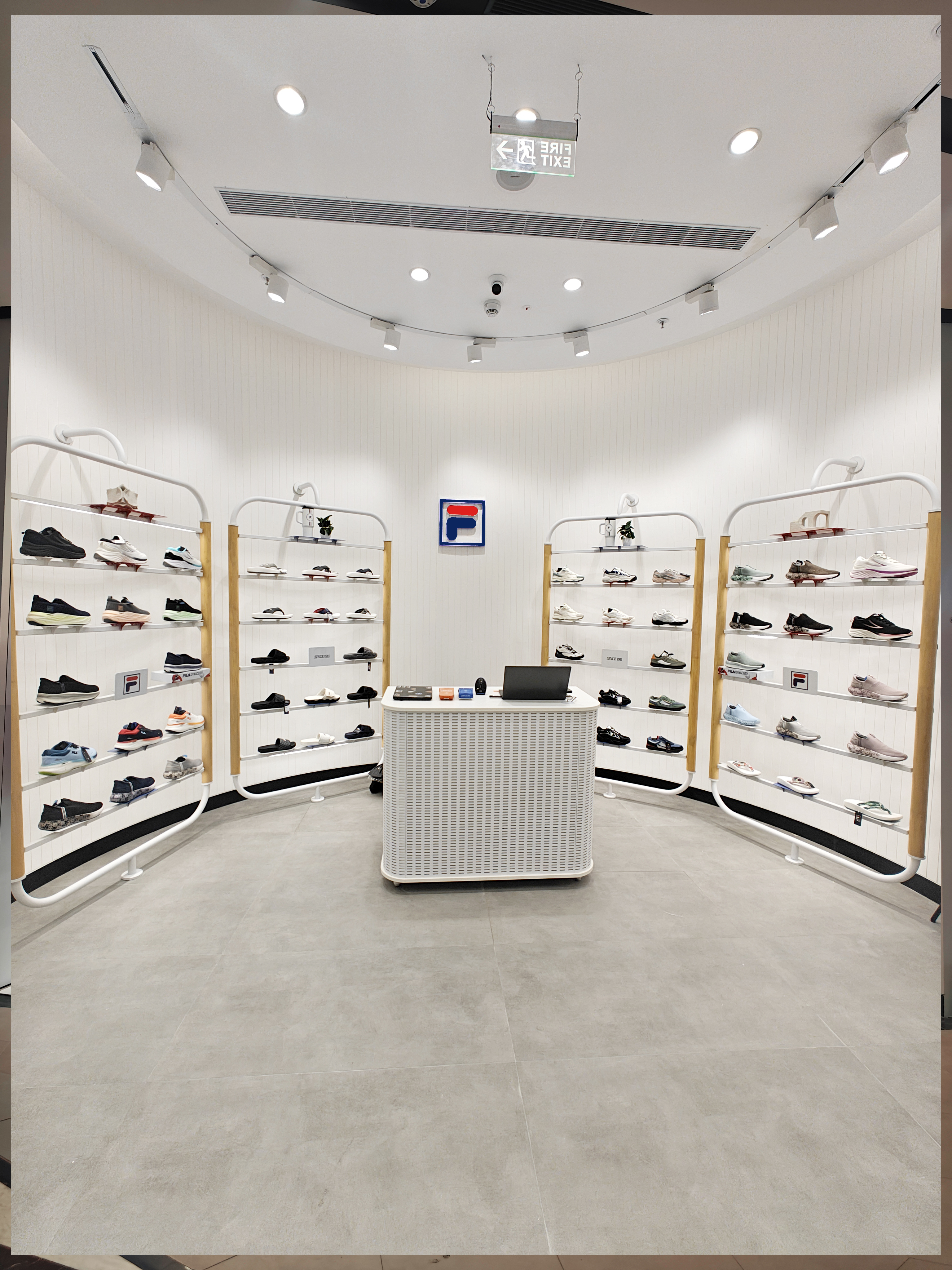
Rooted in FILA’s iconic Italian heritage, the new store blends refined European design cues with a contemporary, fluid layout to create an engaging retail experience. Designed as more than just a shopping destination, the store functions as a lifestyle showcase bringing together performance, streetwear and athleisure. The museum-inspired Library Wall at the core of the store is an exclusive space to limited-edition drops, premium collections and new launches.
To mark the launch, FILA hosted an exclusive store unveiling on 28th January, bringing together prominent lifestyle influencers, fashion creators and key media representatives. The evening featured curated walkthroughs of the store, new product drops including Anna, the Motorsport Collection – Replica, and global collections such as Echappe and SuperBubble, along with immersive brand moments that celebrated FILA’s evolving global identity and its growing presence in India’s premium sneaker and athleisure landscape.
Commenting on the launch, Alisha Rafique Malik, President, Metro Brands Limited, said:
“The new store marks an exciting new chapter for FILA in India—one that brings renewed energy, sharper expression, and a more dynamic connection with today’s consumer. We have created an environment that blends thoughtful design and curated product storytelling, while remaining deeply relevant to the Indian market.”
With this launch, Metro Brands continues to strengthen its commitment to introducing globally benchmarked retail formats that blend design, storytelling and consumer experience, reinforcing their domination in building the sport and athleisure experience in India
- 0
- By Neel Achary

29, Jan 2026
Australia Deepens Karnataka Engagement; University of New South Wales to Establish Bengaluru Campus
Bengaluru, Jan 29: Australia is set to significantly deepen its engagement with Karnataka, positioning the state as a strategic hub for bilateral collaboration across education, technology and business.

Addressing delegates at an interactive session on Tariff-Free Access for Indian Exporters under the India–Australia Economic Cooperation and Trade Agreement (ECTA), Mr. Vik Singh, Consul (Commercial) and Trade & Investment Commissioner, South Asia, Australian Trade and Investment Commission, highlighted the growing momentum in Australia–India relations, with Karnataka emerging as a central pillar of this expanding partnership. The session was organised by the Bangalore Chamber of Industry & Commerce (BCIC) under the aegis of its International Business Expert Committee, in association with World Trade Center Bengaluru.
Education and technology remain priority sectors in the bilateral relationship. In a major development, the University of New South Wales (UNSW) has announced plans to establish a branch campus in Bengaluru, with discussions already underway with the Government of Karnataka. The campus is expected to become operational next year.
“As one of the world’s leading universities, UNSW’s decision to establish a presence in Bengaluru reflects the confidence Australian institutions have in Karnataka’s talent ecosystem and innovation potential,” said Mr. Singh. “The campus will play a key role in strengthening academic collaboration, research partnerships and technology exchange between Australia and India.”
Ranked among the world’s top universities, UNSW’s proposed Bengaluru campus is expected to contribute significantly to advanced education, joint research initiatives and industry-linked innovation, further reinforcing Karnataka’s position as a global education and knowledge hub. The initiative marks an important milestone in Australia’s long-term engagement with India and underscores Karnataka’s growing stature as a preferred destination for international universities and global investors.
“Karnataka has emerged as one of Australia’s most important partners in India, driven by strong synergies in education, innovation and enterprise,” Mr. Singh added. “This is reflected not only in growing trade and investment flows, but also in Australia’s decision to establish one of its largest consular presences in India here, second only to the High Commission in New Delhi.”
India–Australia ECTA: A Landmark Development
Highlighting the trade dimension, Mr. K Ravi, Senior Vice President, BCIC, said, “The implementation of tariff-free access for Indian exporters under the India–Australia ECTA is a landmark development that will significantly enhance India’s export competitiveness. With 100 percent of Australian tariff lines moving to zero duty from January 1, 2026, this historic step unlocks new opportunities across key sectors such as textiles, engineering goods, pharmaceuticals, gems and jewellery, and agriculture—accelerating MSME-led growth, boosting employment and expanding India’s export footprint.”
He added that BCIC will play a key role in supporting exporters by driving industry preparedness, facilitating buyer–seller engagements and ensuring that MSMEs are well-equipped to leverage the agreement, further strengthening bilateral trade and economic cooperation.
The deepening relationship is further underscored by the launch of a direct Sydney–Bengaluru flight by Qantas, significantly improving connectivity and accelerating business, academic and people-to-people exchanges between the two regions.
Mr. Singh also outlined the major sectors poised to benefit from deeper Australia–India engagement. Clean energy stands out, supported by Australia’s net-zero targets and rising renewable investments. Education and skills development continue to enable greater student mobility, academic collaboration and joint research. Agribusiness is gaining momentum through improved market access, food processing opportunities and agri-technology cooperation, while tourism is emerging as a high-growth sector driven by rising outbound travel from India. Overall, the services sector—particularly IT, professional services and education—is expected to be the most significant long-term beneficiary of the partnership.
29, Jan 2026
Fynd’s Republic Day Report 2026 reveals New Shopping Patterns in Fashion E-commerce
Mumbai, Jan 29: Fynd, AI native retail technology company backed by Reliance Retail Ventures Limited, today released its Republic Day Report 2026, offering a data-led view into how India’s e-commerce landscape is evolving during one of the country’s most significant national sale events.
The Republic Day sale period in 2026 recorded 157.4K orders with a gross sales value of ₹298.2 million. While overall volumes were slightly moderated compared to 2025, the data indicates a more measured, value-conscious consumer mindset, signalling a shift away from impulse-led discount shopping toward trust, relevance, and convenience-driven purchases.
Drawing insights from leading marketplaces including Myntra, Flipkart, Amazon, AJIO, and Nykaa, the report analyses shopping behaviour across apparel, footwear, and ethnic wear categories, revealing a maturing e-commerce market where how and when India shops is changing as meaningfully as what it buys.
Key Insights:
- Marketplace leadership holds: Myntra led Republic Day shopping with over 45% of marketplace order share, followed by Flipkart and Amazon, reaffirming marketplaces as the default discovery channel
- Prepaid trust strengthens: Digital payments crossed 53% of total transactions during the sale period, signalling rising consumer confidence in prepaid modes even during high-volume events
- Discounting stays aggressive, but segmented: Fashion-led platforms offered average discounts of 50–60%, while premium and luxury platforms maintained tighter discount strategies under 40%
- Monday outperformed weekends: Contrary to conventional sales patterns, Monday recorded the highest order volumes during the Republic Day sale period
- Late evenings dominate: Order activity peaked around 10 PM, highlighting post-work, leisure-driven browsing as the primary conversion window
- Omnichannel fulfilment balances out: Store-based fulfilment matched warehouse dispatches in 2026, with store leading 50.8% compared to 49.2% by warehouse, reflecting improved store readiness and smarter inventory routing
- Clear category platform affinities: Casual wear category was led by Myntra and Flipkart, ethnic wear was overwhelmingly Myntra-led, while footwear demand was distributed across multiple marketplaces
- Non-metro demand leads: Tier 2 and 3 cities together accounted for over 60% of total Republic Day orders, reinforcing the continued expansion of e-commerce beyond metro.
“This Republic Day, Indian ecommerce proved it’s evolving not just in scale, but in intelligence. Brands are no longer just participating in sales; they are optimizing them. From using stores to fulfill more orders to narrowing discount bands and engaging late-night shoppers, we are seeing a smarter, more agile playbook emerge. With deep omnichannel expertise, Fynd’s platform enables brands to seamlessly unify online and offline operations, bringing data, inventory, and customer experiences together in one intelligent layer,” said Ragini Varma, Chief Business Officer, India, Fynd”, said Ragini Varma, Chief Business Officer – India, Fynd.
While Republic Day is a shorter shopping window compared to festive seasons, the findings mirror broader structural shifts in Indian e-commerce from weekday-led demand and prepaid trust to omnichannel readiness and tighter platform-category alignment, signalling a market that is growing smarter, not just larger.
29, Jan 2026
Astrotalk Reports Over 85 Percent Revenue Growth in FY25
Astrotalk reported a strong financial performance in FY25, led by higher user engagement, an increase in paid consultations, and better monetisation across its app-led services in India’s major urban markets.
Total income rose 85% year-on-year to INR 1,214 crores in FY25, compared with INR 656 crores in FY24. Revenue from operations stood at INR 1,176 crores, indicating continued demand across core astrology consultation services. Tier-I cities accounted for the majority of platform activity, aided by higher usage frequency, improved conversion metrics, and stronger repeat behaviour.
To manage higher volumes and maintain service quality at scale, the company sustained investments across marketing, technology infrastructure, operations, and customer experience. Total expenses increased to INR 1,129 crores in FY25 from INR 542 crores in FY24. The increase largely reflected talent acquisition across technology and operations, undertaken as part of organisational expansion and long-term capability development.
Additionally, FY25 expenses included a one-time exceptional employee-related expense of around INR 120 crores, a majority of which was non-cash. Reported profitability was also affected by a non-cash mark-to-market technical adjustment of approximately INR 80 crores on CCPS instruments, with no cash outflow. This was due to IndAS adoption by the company.
Consequently, adjusted for one time impact of exceptional employee benefit expense and non-cash expense on account of CCPS valuation, PBT for FY25 was INR 285 Crores as against PBT of INR 127 Crores in FY24 registering an increase of approximately 125% demonstrating efficiency in operations at scale.
Commenting on the results, Anmol Jain, Co-founder & CBO, Astrotalk, said,
“FY25 represented a year of steady and consistent revenue momentum for Astrotalk, underpinned by deeper engagement, higher repeat usage, and enhanced monetisation across our app-led services, particularly in urban markets. As volumes increased, we made measured investments in our technology platform and team expansion to ensure service reliability, quicker turnaround times, and a seamless customer experience. These investments were undertaken with a long-term perspective and position us well to improve operating efficiencies and support sustainable growth.”
User engagement increased by 27% year-on-year, with the platform recording higher repeat usage and deeper interaction across services, reinforcing the strength of its app-led model in India’s major cities. As part of its revenue diversification strategy, Astrotalk Store, the company’s e-commerce vertical, generated over INR 140 crores in CY25, within a year of its launch, supported by growing demand for astrology-linked products.
Astrotalk is backed by New York-based venture capital firm Left Lane Capital and Indian growth-stage investor Elev8 Venture Partners. The company last raised approximately INR 117 crores at a pre-money valuation of INR 2,400 crores in June 2024 in a bunch of primary and secondary transactions.
29, Jan 2026
Migsun Mall Adds Tommy Hilfiger to Its Retail Offerings, Leases 2040 Sq Ft Space
Ghaziabad, Jan 29: Migsun Mall has announced the signing of a leasing agreement with global fashion brand Tommy Hilfiger. Spanning 2,040 sq ft., the addition marks a significant step in strengthening Migsun Mall’s premium fashion offering and reinforces its focus on attracting internationally recognised lifestyle brands.

Known for its classic American style with a modern edge, Tommy Hilfiger’s presence is expected to elevate the mall’s appeal among fashion-conscious consumers seeking global trends and contemporary retail experiences. The brand’s entry aligns with Migsun Mall’s strategy of curating a well-balanced tenant mix that combines aspirational labels with strong consumer recall.
Rajeev Srivastava, Leasing Head, Migsun Group, said,
“Global brands today are highly selective about where they expand, and their choices reflect confidence in both the market and the platform. Tommy Hilfiger’s decision to open at Migsun Mall reinforces our belief that well-planned retail destinations still hold strong relevance. Our focus has always been on creating spaces that feel contemporary, accessible and aligned with how consumers want to shop today. This partnership adds significant depth to our fashion portfolio and strengthens the overall brand narrative of the mall. We see this as part of a larger journey towards building a retail environment that delivers consistency, experience and long-term value for both brands and shoppers.”
As retail continues to evolve into a more experience-driven format, the inclusion of iconic brands like Tommy Hilfiger reflects growing confidence in the mall’s location, design sensibility and long-term growth potential.
29, Jan 2026
S&P Global Upgrades Biocon Biologics Credit Rating To ‘BB+’ Revises Outlook to “Stable”
Bengaluru, Karnataka, India: Jan 29: Biocon Biologics Limited, a fully integrated, global biosimilars company and subsidiary of Biocon Ltd., today announced that S&P Global Ratings has upgraded the Company’s long-term issuer credit rating to ‘BB+’ from ‘BB’, and revised the outlook to “Stable”. The rating on the senior secured notes issued by Biocon Biologics Global PLC has also been upgraded to ‘BB+’.
This positive development follows Biocon’s recent equity issuance to settle compulsorily convertible
preference shares (CCPS) issued to Viatris Inc.
S&P Global provided the following Rating Action Rationale:
- Biocon has simplified its capital structure. The company reduced its outstanding structured debt liabilities, and a US$1 billion CCPS issued to Viatris has now been removed through a mix of equity share swaps and cash consideration. Biocon funded the cash payout through fresh equity of about US$460 million that it raised earlier this month.
- New product launches and favorable industry trends will support Biocon’s earnings. Pharmaceutical sector will continue to register healthy growth through 2027, especially for GLP-1s and treatment for oncology and rare diseases.
- Biocon’s financial policy underpins its credit strength. Biocon’s management remains committed to reverting its balance sheet position to levels before its acquisition of Viatris’ biosimilars portfolio. In November 2022, Biocon acquired Viatris’ biosimilar business for US$3.3 billion. The transaction pushed up the group’s debt-to-EBITDA ratio to about 7x in fiscal 2024 from about 2x in fiscal 2022.
S&P said that the stable outlook reflects its view that Biocon’s earnings will grow steadily over the next 12-24 months on the back of growing demand for generics and biosimilars in key international markets and new product launches, which will help the Company to maintain its improved financial position.
29, Jan 2026
Industry Leaders Urge Budget 2026 Reforms to Boost Manufacturing, Housing and MSME Growth Alternate Strong Headlines
Mr. Abhishek Somany, Managing Director and CEO, SOMANY Ceramics
Natural gas constitutes one of the most critical input costs in ceramic tile manufacturing, yet it continues to remain outside the GST framework. This exclusion leads to a significant cascading tax impact, as manufacturers bear tax levies without access to input tax credit, thereby increasing production costs significantly. Bringing natural gas under GST would meaningfully improve cost efficiency and enhance the global competitiveness of Indian tile manufacturers. Additionally, despite tiles being a fundamental material in residential construction and housing-led infrastructure, they continue to be taxed at 18%. A rationalisation of GST on tiles to the 5 % slab would support affordable housing, stimulate demand and strengthen the domestic manufacturing ecosystem. We hope the upcoming Budget considers these measures to enable sustainable growth for the sector.
Mr Santosh Shah, MD of VYNA Electric
Strengthening Domestic Electrical Manufacturing Through PLI Support
“With India’s electronics PLI scheme disbursing over ₹21,500 crore so far and attracting ₹1.76 lakh crore in committed investment, we expect Budget 2026 to double down on support for domestic manufacturing. A modest reduction in import duties on raw materials and extension of incentives to components for lighting and switchgear would help companies deliver global-quality products at competitive prices. For consumers, this could mean access to safer, more durable home electrical solutions built for Indian conditions. For manufacturers willing to uphold strict quality, it would renew confidence in scaling up responsibly.
Mr. Tushar Verma, EVP India & Subcon. REHAU India
As India prepares for the next phase of economic growth, the interiors and furniture sector stands at an important inflection point. Urban housing, commercial real estate, and renovation activity are together creating a strong, long term demand for better designed, more durable, and more sustainable interior solutions. The Union Budget has an opportunity to recognise this shift and support an industry that sits at the intersection of manufacturing, housing, and employment. The sector needs a stable and forward looking policy environment, one that encourages domestic manufacturing, simplifies the cost structure of essential inputs, and improves access to capital for the thousands of MSMEs who form the backbone of the interiors ecosystem. From designers and fabricators to component makers and installers, this value chain drives both innovation and livelihoods. A budget that strengthens housing, infrastructure, and small business financing will directly translate into healthier growth for interior solutions, helping Indian homes and workspaces move toward higher quality, safety, and long term value. That is where the real opportunity lies, for the industry and for the economy as a whole.
28, Jan 2026
Honeywell and TruAlt Bioenergy Sign Agreement to Drive 80,000 TPA SAF Production in India
NEW DELHI, India, Jan 28: Honeywell (NASDAQ: HON) today announced that TruAlt Bioenergy Limited will use Honeywell’s Ethanol-to-Jet (ETJ) process technology to produce 80,000 tons per annum (TPA) of sustainable aviation fuel (SAF) in India. The agreement marks a major step towards establishing one of India’s first grassroots, dedicated SAF production facilities utilizing ethanol as a feedstock.
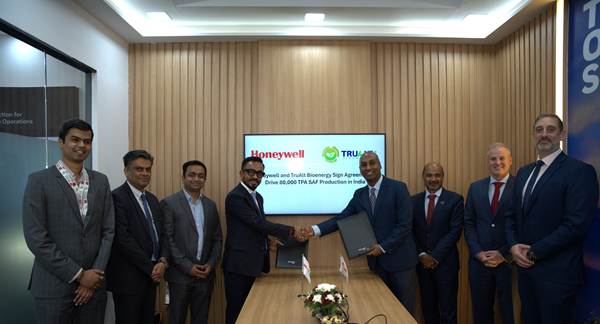
Honeywell UOP’s Ethanol-to-Jet technology enables producers to convert ethanol derived from renewable sources into SAF, offering a cost-effective pathway to reduce carbon emissions of air travel. The process is easily integrated into existing ethanol production infrastructure and can also produce renewable diesel, helping reduce carbon emissions in the road transport sector.
“Our proven Ethanol-to-Jet technology provides a cost-efficient pathway for SAF production and will help TruAlt Bioenergy advance its net-zero ambitions while creating value across the agricultural and energy ecosystems,” said Ranjit Kulkarni, VP & GM – Honeywell Process Technology, India. “This agreement marks another milestone in Honeywell’s journey to help India build self-reliance in sustainable fuel production.”
The collaboration underscores Honeywell’s alignment with the Government of India’s Aatmanirbhar Bharat vision by promoting domestic biofuel production. Once operational, the project will help reduce CO₂ emissions from the rapidly growing aviation sector while also contributing to higher farmer incomes through increased demand for bioethanol.
Vijay Nirani, Managing Director of TruAlt Bioenergy Limited, said, “Our agreement with Honeywell is a defining step in TruAlt’s journey to help build India’s sustainable aviation fuel ecosystem. By leveraging Honeywell technology, we aim to create a scalable, ethanol-based SAF pathway that connects India’s farmers directly to the global aviation decarbonization agenda. Through this project, we are strengthening our conviction that India’s energy transition must be rooted in domestic feedstocks, strong industrial capability and inclusive economic value creation without external dependence. Additionally, it leverages India’s unique geographic and demographic advantages to progressively position the country as a major global hub for sustainable aviation fuel production.”
Honeywell currently offers solutions across a range of feedstocks to meet the rapidly growing demand for renewable fuels, including SAF. The company also offers modular renewable fuels technology that can be built off-site and quickly installed at refineries, lowering risk and accelerating start up compared to traditional methods.
28, Jan 2026
Industry Leaders Call for Sustainable Manufacturing, Design-Led Real Estate and Tech-Driven Logistics in Budget 2026
Neal Thakker, Founder and CEO of Magma Group
“As India’s manufacturing base scales, the next phase has to be about building factories that are not just bigger, but cleaner and more resilient. From our experience on the ground, MSMEs are ready to invest in energy-efficient machinery, better materials, and circular processes if access to capital and policy support is predictable. Budget 2026 is a real opportunity to align sustainability with competitiveness by backing technology upgradation, green materials, and simpler compliance for manufacturers who want to modernise without losing margins.”
“Manufacturing growth today is less about announcing new schemes and more about improving execution at the factory level. MSMEs need easier access to working capital, faster GST processes, and incentives to adopt digital and energy-efficient systems that directly improve throughput. If Budget 2026 strengthens technology upgradation and supports sustainable manufacturing at scale, it will help factories become globally competitive while staying grounded in unit economics.”
Tripat Girdhar, Founder of Arete Design Studio
“The 2026 Union Budget must approach the built environment as a long-term national asset, not a short-term fiscal lever. From a policy perspective, real estate needs stability, tax clarity, and predictable approval frameworks to unlock sustained housing-led growth and investor confidence. For developers, the focus should shift from volume-driven construction to performance-led development, where design efficiency, lifecycle cost, and operational sustainability define value. Architecture must be recognised as core infrastructure that directly impacts energy consumption, public health, and urban resilience. Budget incentives should reward climate-responsive design, passive strategies, and durable materials that reduce long-term maintenance and energy costs for both occupants and asset owners. Affordable housing policy must emphasise liveability, dignity, and long-term performance, not just unit counts. Urban planning, public spaces, and last-mile connectivity deserve stronger fiscal support. A design-led budget will help developers build smarter assets while enabling policymakers to create resilient, efficient, and people-centric cities.”
Ajay Rao, Founder & CEO, Emiza
“The upcoming Union Budget is an opportunity to accelerate India’s journey towards becoming a globally competitive logistics hub. Continued capex under PM Gati Shakti, across roads, rail, ports and integrated logistics parks, will be critical to reducing logistics costs and improving efficiency.
For 3PL players, policy support for technology adoption such as automation, AI and digital supply chains, along with incentives for green warehousing, can significantly enhance productivity and sustainability. Clarity on GST, especially input tax credit on construction, will unlock faster development of Grade A warehouses.
Easier access to long-term financing, focused support for MSMEs in Tier 2 and Tier 3 cities, and sustained investment in air cargo and cold-chain infrastructure will help build a resilient, future-ready logistics ecosystem aligned with the National Logistics Policy.”
28, Jan 2026
India Emerges as Key Investment Hub Amid Global Real Estate Capital Rebound
Global Real Estate Capital Rebounds in 2026 Global R; India Strengthens Position as a Strategic Investment Market: Knight Frank Active Capital 2026
Mumbai, Jan 28: Global institutional investors are set to deploy USD 144 billion into commercial real estate in 2026, marking a clear rebound in investment activity, according to Knight Frank’s latest Active Capital Survey. The research captures the views of 119 of the world’s largest real estate investors, representing more than USD 1.4 trillion in assets under management, and signals renewed confidence underpinned by easing interest rates, improving occupier demand and long-term demographic trends.
The survey reveals that 87% of investors (by AUM) intend to increase direct commercial real estate investment in 2026, while 62% expect to be net buyers, highlighting strong acquisition appetite globally. Against this backdrop, India is emerging as an increasingly relevant destination for global capital seeking scale, income visibility and long-term growth. The resurgence of investor interest is being led globally by a renewed focus on Core and Core-plus strategies, with USD37 billion of planned global investment targeting Core assets.
Shishir Baijal, International Partners, Chairman and Managing Director, Knight Frank India,
“Global capital is returning, but it is far more disciplined than in previous cycles, India is increasingly being viewed as a defensive growth market, supported by strong occupier demand, improving asset quality and long-term structural drivers. This shift closely aligns with India’s evolving commercial real estate market, particularly in Grade A office assets across major cities such as Mumbai, Bengaluru, Delhi-NCR, Hyderabad, Pune and Chennai. Structured partnerships and programmatic platforms are becoming the preferred route to scale and risk management”.
Harry Chaplin-Rogers, Director, International Capital, Knight Frank India,
“Global capital is clearly returning, but with far greater discipline than in previous cycles. India is increasingly being viewed as a core, long-term market, underpinned by resilient occupier demand, a rapidly improving stock of institutional-grade assets, and scalable partnership structures that allow global investors to manage complexity while achieving sustained growth.”
While the UK and Germany currently top global capital destination rankings, India is steadily transitioning from an emerging allocation to a strategic component of Asia-Pacific real estate portfolios, particularly for investors focused on long-term growth and diversification.
Knight Frank’s Active Capital Programme delivers global insights into capital flows, investor sentiment and real estate strategies, enabling clients to navigate market cycles with clarity and confidence.
Offices Reclaim Leadership, Supported by Occupier Confidence
Globally, offices have re-emerged as the most targeted asset class, with 69% of investors planning allocations in 2026. However, investors are highly selective, favouring well-located, ESG-compliant assets that meet modern workplace requirements, while avoiding assets facing long-term obsolescence. This trend mirrors India’s experience, where leasing momentum continues to be driven by Global Capability Centres (GCCs), technology firms and domestic corporates, collectively accounting for approximately 75%, thereby reinforcing confidence in high-quality office stock.
Living, Logistics and Retail Reinforce India’s Long-Term Appeal
Beyond offices, living sectors are the second most targeted globally, with 65% of investors planning allocations, attracted by demographic tailwinds and defensive income characteristics. While institutional living segments such as rental housing and student accommodation remain nascent in India, they represent a significant medium- to long-term opportunity given rapid urbanisation and a young population profile.
Industrial and logistics assets remain a high-conviction sector, targeted by 63% of investors globally, supported by supply-chain reconfiguration, e-commerce growth and infrastructure investment, trends that are particularly pronounced in India.
Retail has also returned to investor focus globally, with 56% of investors planning allocations, reflecting stabilisation and opportunities in dominant, experience-led Shopping Centres.
Partnerships and Joint Ventures Central to India Strategy
The survey highlights a growing preference for collaboration, with 68% of investors, collectively representing USD94 billion of planned investment, willing to consider joint ventures or capital partnerships in 2026. This approach is especially relevant in India, where local expertise, platform scale and execution capability are critical to investment success.
Operational Real Estate Gains Momentum
Operational real estate sectors, including data centres, infrastructure and healthcare, are gaining traction globally as investors seek exposure to long-term structural tailwinds. In India, rising digital adoption, expanding healthcare needs and sustained public infrastructure investment are translating into growing interest across these segments.
Nick Braybrook, Partner and Global Head of Capital Markets, said:
“This is empirical evidence of a turnaround in the global real estate investment market. The nuances within the findings are fascinating – after several torrid years for the global office market, the undeniable return of the occupiers has finally spurred a return of the investors, and the sector has gone from almost last place to now first. The return of core investors is the missing piece of the jigsaw, being the pricing that the rest of the market builds from. Capital remains selective, concentrating in locations where confidence in values, liquidity and exit prospects are highest, but in those markets the growing imbalance between buyers and net sellers points to clear competitive tension. The wide spread of target returns reported in the survey also bodes well for overall global turnover levels going forward.”
Victoria Ormond, CFA, Partner and Head of Capital Markets Insight at Knight Frank said.
“Interest rates are the single most influential factor shaping real estate investment decisions, followed by occupier demand and bond yields. In the year ahead, investors are targeting early-cycle opportunities alongside longer-term thematics, set against a backdrop of global uncertainty. Many are looking beyond short-term volatility to pursue a mix of repriced assets and sectors set to benefit from long-term structural tailwinds. Joint ventures and capital partnerships are emerging as critical tools for accessing scale, managing complexity and entering new geographies and sectors. These structures are particularly relevant for operational segments such as infrastructure, data centres, senior living and single-family rental – areas driven by demographic and technological shifts but requiring specialist expertise. Beyond enabling access, partnerships may also help resolve capital misallocations arising from the downturn. While investors are increasingly prepared to look through geopolitical noise, rigorous sensitivity analysis and scenario planning remain essential to mitigate risk and build resilience.”


