


21, Sep 2026
Sayaji Raipur Brings the Soulful Flavours of Bengal to the City with a Special Bengali Food Festival
Raipur, Sep 21: Sayaji Raipur is set to take diners on a culinary journey to Eastern India with its Bengali Food Festival, bringing the rich flavours, traditions and culinary heritage of Bengal to Cravings – All Day Dining Restaurant from 25 September to 11 October 2026.

The festival has been curated to celebrate the distinctive character of Bengali cuisine, bringing together time-honoured recipes, aromatic spices, seasonal ingredients and much-loved regional delicacies. From comforting fish preparations and fragrant rice to hearty curries and traditional Bengali sweets, the experience aims to recreate the warmth and nostalgia of a traditional Bengali meal.
The specially curated spread will feature an assortment of authentic Bengali favourites including Mochar Chop, Beguni, Koraishutir Kochuri, Bhetki Fish Fry, Dimer Devil, Bengali Chicken Cutlet, Aloo Posto, Shukto, Dhokar Dalna, Kosha Mangsho, Chingri Malai Curry and Shorshe Maach.
The dessert selection will further celebrate Bengal’s famed sweet traditions with favourites such as Mishti Doi, Nolen Gurer Payesh and Sandesh.
The festival is designed to offer diners more than just a meal—it is an exploration of Bengal’s food culture, where every preparation reflects the region’s distinctive balance of spices, textures and culinary traditions.
Speaking about the festival, Rajendra Singh, Executive Chef, Sayaji Raipur, said:
“Bengali cuisine has an incredibly rich culinary identity, with recipes that carry generations of tradition and storytelling. Through this festival, we want our guests in Raipur to discover the depth and diversity of Bengali food while enjoying the comfort and hospitality of Sayaji.”
The Bengali Food Festival will be available for dinner at Cravings from 7:30 PM to 11:30 PM, with the buffet starting at ₹1,199++ per person.
With its focus on regional authenticity and culinary discovery, the festival is expected to appeal to food enthusiasts, families and guests looking to explore a new regional cuisine without leaving the city.
Event Details
What: Bengali Food Festival
Venue: Cravings, Sayaji Raipur
Dates: 25 September – 11 October 2026
Timings: 7:30 PM – 11:30 PM
- 0
- By Neel Achary

21, Sep 2026
Raffles Udaipur Recognized with Two MICHELIN Keys for the Second Consecutive Year, Celebrating a Legacy of Exceptional Hospitality

21, Sep 2026
Aadhaar Authentication Mandatory for Subsidised LPG Refills from October 1
New Delhi, September 21, 2026: Domestic LPG consumers will have to complete Biometric Aadhaar Authentication (BAA) to book refills at the regulated retail selling price with applicable subsidy from October 1, 2026, the Ministry of Petroleum and Natural Gas has announced. The new requirement is aimed at ensuring that subsidised cooking gas reaches eligible consumers and at improving transparency in subsidy delivery.
According to the ministry, 27.43 crore active domestic LPG consumers, or 89.9 per cent of the total, had already completed biometric authentication as of September 19. Consumers who have completed the process do not have to undertake it again and can continue booking their LPG refills as before.
For consumers who have not completed BAA, the key change will take effect from October 1. Their refill booking at the regulated retail selling price with applicable subsidy will become available once the Aadhaar authentication is completed. The government has clarified that the measure is intended to verify the beneficiary associated with each LPG connection rather than stop genuine households from accessing cooking gas.
The government has said the authentication system is designed to make LPG subsidy delivery more targeted. Linking an LPG connection to an Aadhaar-authenticated consumer is expected to help identify duplicate or ineligible connections and reduce the possibility of subsidised domestic cylinders being diverted for commercial or industrial use.
Consumers who have not yet completed the authentication can use several routes. BAA can be completed during LPG cylinder delivery, with the delivery personnel using the oil marketing company’s mobile application. Customers can also visit their LPG distributor’s showroom to complete the process.
There is also an option to complete the process digitally. Indane customers can use the IndianOil ONE app, Bharatgas customers can use HelloBPCL, while HP Gas customers can use the HP PAY app. The government has also made tutorial material available through the Pradhan Mantri Ujjwala Yojana portal to assist consumers with self e-KYC.
The new requirement does not mean that consumers who do not authenticate will be completely denied LPG. According to the ministry, customers who are unwilling or unable to complete BAA can still receive LPG, but they must register their choice through the oil marketing company’s digital channels, which may include the consumer portal, mobile app, WhatsApp chatbot or IVRS.
Such consumers, however, will not receive the applicable subsidy and will have to purchase LPG at the market price. The government has said that 5-kg and 10-kg cylinders can be supplied to such customers, subject to availability with the respective oil marketing company.
The authentication drive has been running for several months. The original deadline was set for June 30, 2026, but it was extended repeatedly to provide additional time to consumers. The final extension took the deadline to September 14, after which the government announced that biometric authentication would become mandatory for subsidised refill bookings from October 1.
The financial implications of the LPG subsidy also form part of the policy backdrop. The government said the implicit subsidy on a 14.2-kg domestic LPG cylinder was around ₹210 in September 2026, compared with about ₹721 in June. It has also been providing compensation to public-sector oil marketing companies to help keep domestic LPG affordable.
The government has maintained that the authentication process is intended to improve the targeting of public support while ensuring that eligible households continue to receive subsidised LPG. With nearly 90 per cent of active domestic consumers already authenticated, the remaining consumers have a limited window to complete the process if they want to continue receiving refills at the regulated price with applicable subsidy.
For LPG consumers, the practical message is straightforward: those who have already completed biometric Aadhaar authentication need to take no further action, while those who have not should complete BAA through their distributor, during delivery or through their oil marketing company’s mobile application. From October 1, authentication will be required for subsidised domestic LPG refills at the regulated retail selling price.
21, Sep 2026
Bank Strike September 28-30: SBI Advises Customers to Complete Transactions Early
New Delhi, September 21, 2026: State Bank of India (SBI) has advised customers to complete important banking transactions in advance of a proposed three-day nationwide bank strike from September 28 to 30, 2026. The strike has been called by the United Forum of Bank Unions (UFBU), and branch operations could be affected depending on employee participation.
The advisory comes after a nationwide bank strike held on September 11 and ahead of further industrial action announced by the bank unions. The UFBU has also announced a continuous strike beginning October 26 as part of its ongoing agitation.
SBI has specifically asked customers to finish transactions and other banking work that require branch visits before September 28. Customers who need documentation, staff assistance or other in-person services have been advised not to wait until the strike period.
The timing of the proposed strike could create additional inconvenience for customers because September 26 and 27 fall on Saturday and Sunday, immediately before the three-day strike. This could result in limited access to normal branch-based services over five consecutive days for some customers.
At the same time, SBI has said that it is making efforts to maintain essential banking services during the strike period. The bank has encouraged customers to rely on alternative channels wherever possible, particularly for routine transactions that do not require a branch visit.
For cash requirements, customers can use ATMs and Automated Deposit and Withdrawal Machines (ADWMs). These facilities can help customers manage withdrawals and other eligible cash-related transactions while physical branch operations may be disrupted.
SBI has also pointed customers towards Customer Service Points (CSPs), which can provide selected banking services outside conventional branch operations. Availability and the range of services may vary by location and transaction type.
Digital banking is expected to play an important role during the proposed strike. Customers can use internet banking, YONO, mobile banking and UPI for routine payments, fund transfers and other eligible digital transactions. SBI has urged customers to make greater use of these channels during the period.
However, customers should distinguish between digital transactions and services that depend on physical branch processing. Activities involving documentation, verification, certain cheque-related processes or direct assistance from branch employees could face delays if branches are affected by the strike.
The proposed strike is being organised by the UFBU, an umbrella forum representing several bank employee and officer unions. Reports on the strike have linked the industrial action to various employee and banking-sector demands. The September 28-30 action follows the earlier September 11 strike.
For customers, the immediate priority is therefore planning. Those expecting to deposit or withdraw significant amounts of cash, submit documents, complete time-sensitive banking paperwork or seek branch-level assistance should consider completing such work before the proposed strike dates.
The SBI advisory does not mean that all banking services will necessarily stop during the strike. The actual impact on branches can depend on employee participation, while ATMs, digital banking channels, UPI and other alternative facilities may continue to provide routine services. Customers should nevertheless complete time-sensitive branch-dependent work early to reduce the risk of delays.
The proposed three-day strike makes early planning particularly important for customers whose banking needs cannot be completed digitally. SBI’s advisory is aimed at reducing inconvenience by encouraging customers to complete essential branch-related work ahead of the strike while using digital and alternative channels for routine banking requirements.
21, Sep 2026
Primebook Is Set to Launch Primebook 3 Series, Expanding What a Personal Computer Can Do

New Delhi, 21 September 2026: Primebook, an Indian full-stack deeptech company building a personal computing ecosystem powered by PrimeOS, is set to launch its third-generation laptop lineup, starting with Primebook 3 Max, around 1st of October. These laptops will also be available at Flipkart Big Billion Days and Amazon Great Indian Festival 2026 at discounted prices. The company will also introduce Primebook 3 Pro as part of the same third-generation lineup at a later date.
With Primebook 3 laptops, the company is bringing together a more capable hardware platform and an expanded software experience designed to support a wider range of computing needs. The result is a more flexible approach to personal computing, combining the performance headroom to take on more demanding workloads with the freedom to work across different software environments, rather than being limited by either the hardware or the operating system.
Commenting on the launch, Chitranshu Mahant, Co-founder and CEO of Primebook, states, “The personal computer industry has spent years pursuing more power, but the more important question today is how efficiently that power is used. Not every task needs the same level of computing, and not every user should have to keep upgrading their hardware as their needs evolve. We see an opportunity to make personal computing more efficient by combining capable hardware with software that makes better use of the computing resources available. For us, the long-term opportunity is not simply to build more powerful computers, but to rethink how much computing capability users actually need to get more done.”
Primebook 3 laptops now move to the MediaTek Genio 720. The processor brings an integrated NPU, giving the laptops the ability to handle AI tasks directly on the device more efficiently. The processor is complemented by 8GB of LPDDR5 RAM, an upgrade from the LPDDR4X memory used in the previous generation. Together, the laptop delivers up to 40% higher performance than its predecessor. The upgrade is equally significant on the software side, with PrimeOS bringing new and enhanced capabilities across productivity, security, software support, and AI.
For everyday productivity, Primebook has built its own office suite, PrimeOffice, which acts as an alternative to Microsoft Office, given the limitations of MS Office for Android. With over 90% of the same functionality, PrimeOffice enables users to work with documents, spreadsheets and presentations. This free, offline-first suite includes: PrimeDocs, PrimeSheets and PrimePresent. The suite is designed with a cleaner, less cluttered interface that keeps necessary tools within easy reach instead of burying them under menus. Although it will initially launch with Primebook 3 Max, Primebook 2 users and users of Primebook 3 Pro will also get to access PrimeOffice in the coming months.
For engineers, aspiring developers and users who need more specialised software, PrimeOS provides free, native access to some popular Linux applications and a Linux terminal by leveraging the same Linux kernel the OS uses. This includes applications such as VS Code, GIMP, LibreOffice, Firefox, Arduino IDE, DBeaver CE, TablePlus and Postman, allowing users to work with tools that typically sit outside the Android application ecosystem. This gives Primebook 3 Max greater flexibility in how it can be used, particularly for those who like to build using Claude or similar CLI tools.
PrimeOS also introduces device health management through its inbuilt Task Manager and PrimeSecurity apps. PrimeSecurity scans for dangerous or fake apps and warns users when an app has a non-authentic developer signature. It can also kill or block dangerous or resource-hungry apps running in the background, helping maintain the health of the device. Task Manager gives users visibility into how their device is running, with CPU and RAM monitoring and the ability to manage startup apps. When PrimeOS detects an issue with device health, users receive a notification with a suggested action that they can take directly.
Beyond the core hardware and software upgrades, Primebook 3 also brings a more refined approach to the physical design of the laptop. The 15.6-inch Primebook 3 Max features a metallic body, a slimmer profile and a matte finish, balancing durability with a more refined look for everyday use.
In its third-generation laptop, Primebook brings upgraded connectivity for a more versatile setup. It supports Wi-Fi 6 and Bluetooth 5.3. There’s a full-function USB 3.2 Type-C port that supports charging, OTG, display output through a Type-C to HDMI cable, and connecting other accessories. This is complemented by USB 3.2 Type-A, USB 2.0 Type-A, a 3.5mm stereo audio jack and an additional USB 2.0 Type-C port for peripheral connectivity.
For calls and online collaboration, Primebook 3 features a 5MP webcam capable of recording 1440p video at 30fps, along with dual microphones and software-based noise cancellation. The laptops also feature dual stereo speakers for loud, clearer audio output. A backlit keyboard with three adjustable brightness levels and multi-finger touchpad gestures further enhance the everyday user experience.
Primebook 3 Max will be available at a starting price of ₹35,990 across Amazon, Flipkart, Primebook’s website, Bajaj Electronics stores in Delhi-NCR and Bangalore, and Sangeetha Mobiles and Pai International stores across Telangana and Andhra Pradesh. Customers purchasing Primebook 3 Max on online marketplaces will also have access to No Cost EMI and Instant Bank Discounts. The laptop will come with a one-year warranty.
21, Sep 2026
Assam CM Himanta Biswa Sarma Lays Foundation Stone for Adani Power’s Rs.48,000-Crore Thermal Plant
Guwahati, September 21, 2026: Assam Chief Minister Himanta Biswa Sarma has laid the foundation stone for Adani Power Limited’s 3,200 MW ultra-supercritical thermal power plant at Chapar in Dhubri district, marking the beginning of one of the largest power-sector investments in the state. The project involves an estimated investment of ₹48,000 crore and is expected to significantly expand Assam’s power-generation capacity.
The proposed plant will consist of four units of 800 MW each and will use ultra-supercritical technology. According to Adani Power, the facility is designed with high-efficiency systems and modern environmental safeguards. Commissioning is planned in phases beginning from December 2030.
The Chapar project is being positioned as a major addition to the energy infrastructure of Northeast India. Once commissioned, the plant is expected to become the region’s largest power-generation asset and provide electricity for household, commercial and industrial requirements in Assam.
The project is part of a larger ₹63,000-crore power investment programme in Assam involving the Adani Group. Besides the thermal plant, around ₹15,000 crore has been earmarked for two pumped-storage projects with a combined capacity of 2,700 MW through Adani Green Energy.
The investment is also expected to have a significant employment impact. Adani Power estimates that the Chapar project could generate up to 20,000 jobs during the construction phase and approximately 5,000 jobs once the plant becomes operational. The project is also expected to create opportunities for contractors, suppliers, transport operators and other local service providers.
Speaking at the foundation ceremony, Chief Minister Himanta Biswa Sarma described the project as an important development for Assam’s emerging energy sector. He said the investment would contribute to employment generation, economic activity and state revenues while creating opportunities for local industries and enterprises.
Adani Group Director Jeet Adani said the project would support homes, businesses and industries by adding reliable power-generation capacity. He also highlighted the potential for local businesses to participate in the project’s supply and services ecosystem as construction progresses.
The project follows Adani Power’s successful bid in a competitive process conducted in 2025. The company emerged as the successful bidder in October 2025 to establish the 3,200 MW facility and subsequently received the Letter of Award from Assam Power Distribution Company Limited (APDCL) in November 2025.
The proposed investment forms part of a broader expansion of the Adani Group’s presence in Assam. Across different sectors, the group has committed investments exceeding ₹80,000 crore, including projects in power, aviation and cement. The group’s Terminal 2 at Lokpriya Gopinath Bordoloi International Airport in Guwahati became operational in February 2026.
The Chapar project also comes at a time when Assam is seeking to strengthen its industrial and infrastructure base. A larger and more reliable electricity supply can support energy-intensive industries, commercial establishments and expanding urban and rural demand. The availability of power infrastructure is also an important consideration for businesses assessing future investments in the Northeast.
The project will use ultra-supercritical technology, which operates at higher temperatures and pressures than conventional subcritical coal-fired generation and can achieve higher thermal efficiency. The company has said the plant will incorporate modern environmental safeguards, although the project’s eventual environmental performance will also depend on its implementation and regulatory compliance.
With construction now set to move forward, the ₹48,000-crore Chapar thermal power project represents a major infrastructure undertaking for Assam. Its progress over the coming years will be closely watched for its impact on electricity generation, employment, local business participation and the wider industrial development of the state.
20, Sep 2026
Etihad Rail and AD Ports Group Launch Integrated Rail Service, Connecting Fujairah Terminals with Abu Dhabi’s Industrial Heartland
New Fujairah-ICAD rail service and customs-enabled inland gateway bring port services closer to customers across Abu Dhabi
Abu Dhabi, UAE – 20 September 2026: Etihad Rail, the developer and operator of the UAE National Rail Network, and AD Ports Group (ADX: ADPORTS), a global enabler of integrated trade, industry and logistics solutions, have partnered to launch a direct rail service connecting Fujairah Terminals with the Industrial City of Abu Dhabi (ICAD).
The integrated inland logistics rail depot solution, linking one of the UAE’s East Coast maritime gateways on the Gulf of Oman with the nation’s industrial heartland in the capital Abu Dhabi, combines a new dedicated rail freight service, and a customs-enabled inland cargo gateway designed to bring trade closer to customers.
Developed in partnership with AD Ports Group, Etihad Rail extends the reach of Fujairah Terminals beyond the port gates by enabling cargo arriving in Fujairah to be transported directly by rail approximately 200 km to ICAD, where customers can access customs clearance, inspection and cargo release services.

A key milestone underpinning the launch is the designation of ICAD with its own UN LOCODE “AECAD”, establishing it as a recognised international logistics location within global shipping and trade systems. For the first time, shipping lines, freight forwarders, and cargo owners can book cargo directly to ICAD as the destination and clearance point. Combined with dedicated customs and inspection infrastructure, this enables containers arriving at Fujairah Terminals to be transported directly by rail to ICAD for inspection, clearance, and release, simplifying customs processes, reducing handling requirements, and accelerating the movement of goods across Abu Dhabi.
The solution is designed to serve importers, exporters, manufacturers, distributors, and logistics providers operating across Abu Dhabi, allowing them to receive cargo closer to warehouses, production facilities, and end markets. The new service offers customers reliable schedules, reduced road congestion, enhanced scalability for high-volume cargo movements and lower carbon emissions compared with traditional long-haul trucking. Operating three times per week, the dedicated Etihad Rail service connects Fujairah Terminals with ICAD, strengthening multimodal cargo flows across the corridor.
Omar Alsebeyi, Chief Executive Officer, Etihad Rail Freight, said: “The launch of our new Fujairah-ICAD rail service represents another important step in unlocking the full potential of the UAE National Rail Network for our customers. Through our partnership with AD Ports Group, we have created an innovative logistics solution that goes beyond transportation by bringing key port services closer to where cargo is ultimately needed. By combining rail connectivity with customs-enabled inland cargo handling and the ability to book cargo directly to ICAD, we are helping customers move goods more efficiently, simplify logistics processes, and reduce the time between vessel arrival and final delivery.”
Saif Al Mazrouei, Chief Executive Officer, Ports Cluster – AD Ports Group, said: “Strong trade corridors are built by connecting gateways with the industrial and commercial ecosystems they serve. The integrated service brings together Fujairah Terminals, the UAE National Rail Network and ICAD (AECAD) as part of a more connected system, extending the reach of our port infrastructure beyond the terminal and bringing essential services closer to customers. Through our partnership with Etihad Rail, we are enabling seamless, reliable and resilient cargo flows, while providing businesses with greater flexibility in how they access markets and manage their supply chains. This seamless approach strengthens connectivity across the trade ecosystem, supports long-term growth and reinforces Abu Dhabi’s position as a gateway of choice for trade and industry.”
The launch of the service reinforces the shared commitment of Etihad Rail and AD Ports Group to strengthening the UAE’s logistics and trade infrastructure through greater connectivity, innovation, and customer-focused supply chain solutions. By combining the capabilities of Fujairah Terminals with the reach of the UAE National Rail Network with an inland gateway offering customs and cargo handling services, the partnership is helping create a more efficient and resilient logistics ecosystem for businesses operating across the country.
As part of the wider AD Ports Group ecosystem, Fujairah Terminals plays a vital role in delivering integrated, end-to-end supply chain solutions, connecting ports, industrial and free zones, logistics platforms, and digital services. Through its comprehensive service offering and strategic location, Fujairah Terminals supports the UAE’s position as a global logistics and trade hub, strengthening connectivity across the GCC, India, the Red Sea, and East Africa.
19, Sep 2026
Foundation Stone for Mahalakshmi Green Energy Project to be Laid in Kolhapur on September 20
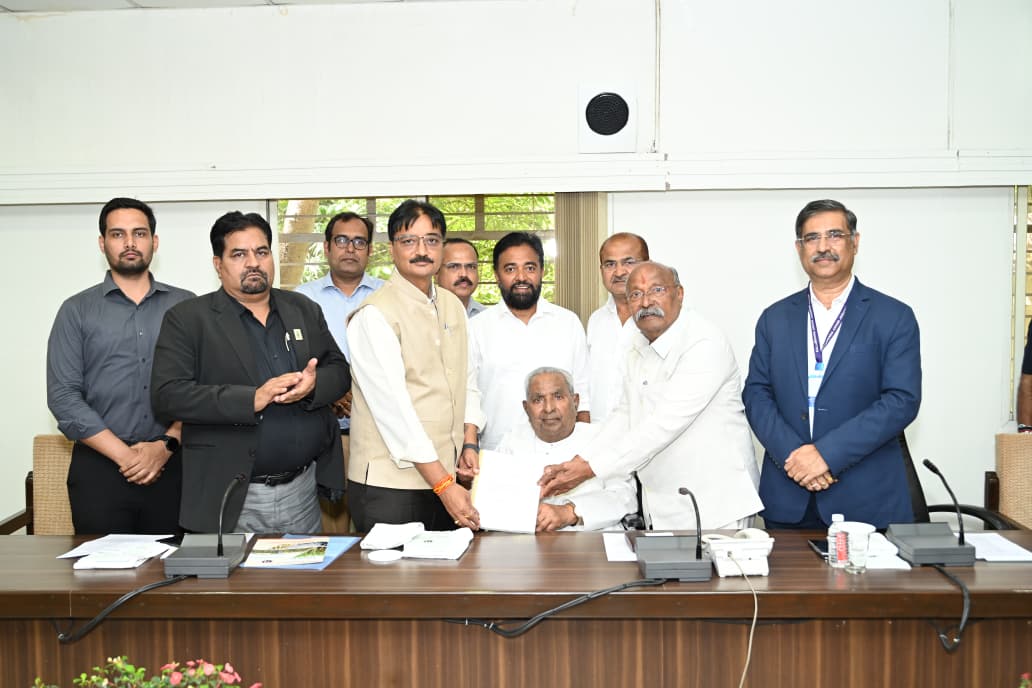
Kolhapur, Maharashtra, September 19, 2026: The Bhoomi Pujan ceremony of the ‘Mahalakshmi Green Energy’ project will be held in Kolhapur, Maharashtra, on September 20, 2026. The foundation stone of the project, being established as a unit of the Cooperative Sugar Value-Added Products and Bio-Energy Multi-State Cooperative Society Ltd, will be laid by Hon’ble Union Home and Cooperation Minister Shri Amit Shah.
Under the vision of Hon’ble Prime Minister Shri Narendra Modi of ‘Sahakar Se Samriddhi’ and the guidance of Union Home and Cooperation Minister Shri Amit Shah, the Multi-State Cooperative Society is being established with the objective of promoting value addition and a circular economy in the cooperative sugar industry. The initiative focuses on better utilisation of by-products generated by sugar mills to create additional value and income opportunities.
Kolhapur district is widely known for its vast sugarcane fields and advanced sugarcane cultivation. However, over the past few years, cooperative sugar mills in the region have faced increasing financial pressures, which have also affected the livelihoods of farmers and their families. In this context, better utilisation of by-products of the sugar industry and production of value-added products from them is an important step towards strengthening the cooperative sugar sector.
With this objective, the Cooperative Sugar Value-Added Products and Bio-Energy Multi-State Cooperative Society Ltd has been established. The society will work towards the revival of closed or loss-making cooperative sugar mills across the country, with the initiative beginning in Maharashtra’s Kolhapur district.
The society’s first project, ‘Mahalakshmi Green Energy’, is being established in Kolhapur district. The project will support the financial strengthening of the district’s Jawahar, Sharad, Rajaram, Mandlik and Halsidnath Cooperative Sugar Mills. Value-added and agricultural-use products will be manufactured from the by-products of these mills, helping reduce financial pressures on the mills and improve the economic condition of farmers.
An integrated project will be established under the initiative, comprising a 250 TPD citric acid plant, a 20 TPD compressed biogas (CBG) plant and a 200 TPD PDM plant. The project will primarily utilise sugar industry by-products such as molasses, press mud, bagasse and other suitable biomass, as well as ash from incineration boilers. Other necessary infrastructure and utility facilities will also be developed as required.
The Mahalakshmi Green Energy project will be an important initiative towards creating a model for downstream value addition in the cooperative sugar sector. It is not merely an industrial investment but also a step towards developing a scalable model for the cooperative sugar industry. In the future, this model could potentially be adopted in other cooperative sugar clusters across the country, promoting better utilisation of sugar industry by-products, development of renewable energy and production of value-added products.
Presence of Senior Dignitaries
The ceremony will be attended by Shri Eknath Shinde, Hon’ble Deputy Chief Minister of Maharashtra; Shri Devendra Fadnavis, Hon’ble Chief Minister of Maharashtra; and Smt Sunetra Ajit Pawar, Hon’ble Deputy Chief Minister of Maharashtra, as distinguished guests.
The programme will also be attended by Shri Murlidhar Mohol, Hon’ble Minister of State for Cooperation and Civil Aviation; Shri Krishan Pal Gurjar, Hon’ble Minister of State for Cooperation; and Shri Babasaheb Mohanrao Patil, Hon’ble Minister for Cooperation, Maharashtra, as guests of honour.
The occasion will also be graced by the presence of Shri Pankaj Kumar Bansal, Managing Director, National Cooperative Development Corporation (NCDC), New Delhi.
The Bhoomi Pujan ceremony will be held at 11:00 AM on September 20, 2026, in Kolhapur, Maharashtra. The programme will include the lighting of the ceremonial lamp and inauguration, welcome of the guests, an address by the Chief Minister of Maharashtra, screening of a short film on the circular economy in the sugar industry, and the formal launch of the Bhoomi Pujan ceremony of the project by the Union Home and Cooperation Minister.
19, Sep 2026
Bhubaneswar Emerges as Major Tier-2 Real Estate Hub as Property Prices Rise 63%
Bhubaneswar, Sept. 19 (UDN): Bhubaneswar is strengthening its position as one of India’s prominent Tier-2 real estate markets, with strong growth reported across the residential, warehousing and retail segments.

Representational Image
According to a CII-Knight Frank India report, residential property prices across 11 emerging cities, including Bhubaneswar, increased by 63% between 2021 and 2026. This growth was substantially higher than the 42% rise recorded across India’s eight major metropolitan markets during the same period.
The report highlighted several factors behind the growing appeal of Tier-2 and Tier-3 cities. These include expanding MSME ecosystems, availability of skilled manpower, growth in the services sector and the increasing presence of Global Capability Centres (GCCs).
Warehousing Activity Picks Up
Bhubaneswar has also emerged as one of the key Tier-2 cities in India’s warehousing market.
The city was among six selected Tier-2 markets that recorded significant warehousing transactions in 2025. Along with Lucknow, Jaipur, Nagpur, Indore and Coimbatore, Bhubaneswar contributed to a combined 5.3 million square feet of warehousing transactions—nearly half of the total recorded across the key Tier-2 markets.
The six cities together registered 11.2 million square feet of warehousing transactions during 2025, underlining the growing demand for logistics and industrial space outside India’s major metropolitan centres.
Retail Sector Also Expanding
Bhubaneswar is additionally contributing to the expansion of organised retail in emerging cities.
The report noted that Bhubaneswar, along with nine other emerging markets, accounted for approximately 60% of the 36 million square feet of shopping-centre stock across 24 Tier-2 cities in 2025.
The growth reflects increasing consumer demand, urbanisation and the expansion of organised retail infrastructure in cities beyond India’s traditional metropolitan hubs.
Infrastructure Key to Sustaining Growth
The CII-Knight Frank report noted that continued investment in infrastructure, connectivity, employment opportunities and urban development will be critical for sustaining the momentum in emerging real estate markets.
For Bhubaneswar, the combination of rising residential demand, expanding warehousing activity and retail development is positioning the Odisha capital as an increasingly important destination in India’s evolving Tier-2 real estate landscape.
19, Sep 2026
SEMICON India 2026 Strengthens Semiconductor Ecosystem with 25 New Industry Partnerships
New Delhi, Sep 19: India’s semiconductor ecosystem received a significant boost at SEMICON India 2026, with 25 new partnerships and industry tie-ups announced across chip manufacturing, semiconductor materials, advanced packaging, power electronics, logistics, research and skill development.
The agreements reflect the growing participation of both Indian and global companies in India’s semiconductor sector and highlight the efforts to build capabilities across the entire value chain rather than focusing only on chip fabrication.
Several partnerships are aimed at increasing domestic access to specialised materials and manufacturing inputs. Tata Electronics has entered into collaborations related to high-purity gases, advanced chemicals and other materials used in semiconductor production. Other initiatives are focused on specialised engineering systems and infrastructure required for semiconductor fabrication facilities.
Advanced packaging is another area receiving attention, with industry collaborations exploring the development and local production of components required for semiconductor packaging. Strengthening these capabilities can help expand domestic value addition and create opportunities for specialised suppliers.
The new partnerships also cover power semiconductor technologies. Initiatives involving silicon carbide devices and other power-electronics solutions are targeting applications such as renewable energy, electric mobility, power transmission, industrial systems and data centres.
Logistics is also becoming an important part of the semiconductor ecosystem. Specialised supply-chain partnerships are being developed to support the transportation, warehousing and handling of sensitive semiconductor equipment and materials as manufacturing activity expands.
The event also placed emphasis on research, deep-tech startups and workforce development. Collaboration between industry, educational institutions and technology organisations is expected to support the development of specialised skills in chip design, semiconductor manufacturing, packaging and related engineering fields.
The growing international participation at SEMICON India 2026 further highlights the increasing interest in India as a semiconductor manufacturing and technology destination. Global companies are exploring opportunities to work with Indian manufacturers, suppliers, startups and research institutions.
The latest tie-ups indicate that India’s semiconductor strategy is gradually developing into a broader industrial ecosystem covering design, materials, manufacturing, packaging, logistics, power electronics, research and talent.
For Indian businesses, this expansion could create new opportunities for local manufacturing and technology services, while strengthening supply chains and supporting the growth of semiconductor-related startups and MSMEs.
With new partnerships emerging across multiple segments, SEMICON India 2026 has provided fresh momentum to India’s efforts to develop a globally connected and domestically capable semiconductor industry.


