


28, Jan 2026
Union Budget Push Accelerates India’s Infrastructure Momentum, Focus Shifts to Water and Urban Growth
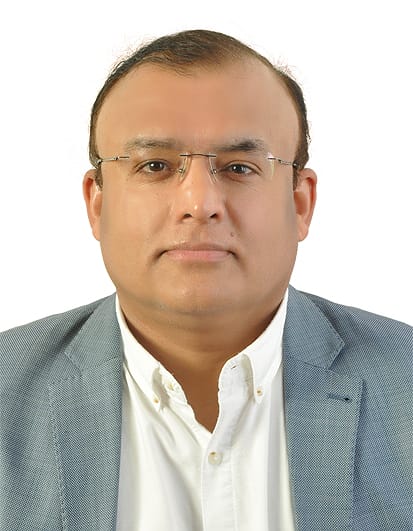
Mr Sunil Nair, CEO, Ramky Infrastructure Ltd.
” India’s infrastructure journey has gained remarkable momentum, and what’s commendable is the government’s steadfast commitment demonstrated in the Union Budget 2025-26. Key initiatives included a massive INR 11.21 lakh crore capex allocation, fueling projects like the ₹1 trillion Urban Challenge Fund for cities as growth hubs and water sanitation, alongside the second Asset Monetisation Plan targeting ₹10 trillion for new builds. Outcomes have been tangible: accelerated progress on Bharatmala highways, 1,000+ railway station modernisations, and metro expansions, reducing logistics costs and boosting urban connectivity—evident in our own INR 215 crore sewage contracts in Hyderabad.
For Budget 2026, the sector anticipates sustained capex at INR 12-13 lakh crore with sharper focus on water infrastructure, including viability gap funding for PPPs in 7,000 MLD sewage treatment under Namami Gange and circular reuse mandates across urban areas. Enhanced support for HAM models in industrial parks, green bonds for STPs, and digital twins for O&M will accelerate nationwide execution. These steps will drive resilient growth, aligning with Viksit Bharat@2047 through sustainable urban transformation.”
- 0
- By Neel Achary

28, Jan 2026
Akme Fintrade Broadens Financial Services, Reinforces Capital Structure
Akme Fintrade Enters Life Insurance Distribution Through Axis Max Life Reinforces Capital Base Through NCD Issuances
Mumbai, Jan 28: Akme Fintrade (India) Limited (AFIL) today announced that it has entered into a Corporate Agency Agreement with Axis Max Life Insurance Limited to solicit and procure life insurance products on behalf of Axis Max Life. Through this strategic partnership, Akme Fintrade will leverage its nationwide customer base to tap cross-selling opportunities in the life insurance segment, thereby expanding its non-interest income portfolio. The initiative is expected to contribute to incremental operating income and support improvement in the Company’s overall profitability, while strengthening the diversity and resilience of its revenue streams.
Elaborating on the development, Mr. Akash Jain, CEO, Akme Fintrade, said,
“Our partnership with Axis Max Life is closely aligned with our long-term strategy of building diversified and sustainable revenue streams, while deepening customer relationships through a broader and more integrated suite of financial solutions. Life insurance represents a natural extension of our existing offerings, and we believe this collaboration will create enduring value for all stakeholders. We see strong potential in cross-selling life insurance products to both existing and new customers, further strengthening the overall value proposition we deliver.”
Strengthening Capital Through NCD Issuances
In parallel development, Akme Fintrade has continued to strengthen its capital base through timely fund-raising in the debt market. In December 2025 and January 2026, the Company successfully raised Rs 50.00 crore through the issuance of Non-Convertible Debentures (NCDs) at a coupon rate of 11.50%.
In addition, during the financial year 2025–26, the Company has raised an aggregate amount of Rs 180.00 crore through multiple tranches of NCDs via the private placement route. The proceeds from these issuances are being utilised to support business growth, improve asset-liability maturity and further enhance liquidity and capital adequacy.
28, Jan 2026
India’s Mid-Scale Hotel Market Set for Rapid Growth, With 30 percent of Brands Planning Global Expansion
Bengaluru, Jan 28: India’s mid-scale hotel segment is witnessing significant growth, with the market expanding at a 13% CAGR and poised to reach USD 6.3 billion by 2030, up from USD 3.75 billion in 2023. A new white paper by Hotelogix, a leading global provider of cloud-based hospitality solutions, highlights key trends shaping the sector, including consolidation, international expansion, technology adoption, and IPO momentum.

Titled “India’s Thriving Domestic Mid-Scale Hotel Brands – Redefining the Industry with Consolidation and Collaboration, International Expansion, and Technology Adoption”, the white paper was released following the 2nd edition of Hotelogix & AxisRooms Connect, the only industry event dedicated exclusively to domestic mid-scale hotel brands.
Consolidation and Collaboration
The report predicts that by 2030, large hotel brands — both Indian and international — will control 75%-80% of branded mid-scale rooms, driven by acquisitions and partnerships with local 3-star and budget-plus properties.
“Consolidation will gather pace. More Indian mid-segment brands will sign up with large domestic and global chains. It will help both stakeholders stay relevant in this competitive industry,” said Aryavir Kumar, Managing Director, The Clarks Hotels & Resorts.
International Expansion
Since 2020, 15-20 domestic mid-scale brands have ventured abroad, targeting markets such as the UAE, Nepal, and East Africa. By 2030, around 30% of India’s mid-scale hotel brands are expected to expand internationally, serving the growing base of 30 million outbound Indian travelers. Brands such as Lemon Tree and Royal Orchid Hotels are already operational in Dubai and Sri Lanka, while others like Elivaas are exploring franchise-led expansion.
“By 2030, about 30% of India’s mid-scale hotel brands will cross borders, transforming themselves into global ambassadors of authentic Indian hospitality,” said Anant Apurv Kumar, Founder, Brij Hotels.
Technology Adoption
Digital adoption is accelerating, with one in three multi-property mid-scale brands already using cloud-based platforms. By 2030, adoption is projected to reach 60%-70%, enabling centralised control, scalability, and AI-driven operational efficiencies.
“Affordable, modern cloud solutions now allow smaller brands like ours to digitise operations, making technology adoption much more accessible,” said Jaideep Ahuja, MD & CEO, Ahuja Residency.
IPO Momentum
Currently, around 5% of domestic mid-scale brands are publicly listed. The white paper projects that 6%-8% more brands will pursue Initial Public Offerings (IPOs) over the next two years.
“Growth-focused brands with asset-light models will continue to attract capital, reflecting buoyant investment across the hospitality sector,” said Arjun Baljee, President, Royal Orchid Hotels Ltd.
“India’s mid-scale hotel brands, representing roughly 60% of the country’s branded rooms, are leveraging local insights and agile business models to capture new demand in emerging cities,” added Aditya Sanghi, CEO, Hotelogix.
The white paper underscores that consolidation, international expansion, technology adoption, and capital market participation will define the next phase of growth for India’s mid-scale hotel industry.
28, Jan 2026
Rajendra Joshi Elevated to Associate General Manager, Pre-opening Operations at Sayaji Hotels Ltd
Mumbai, India, Jan 28: Sayaji Hotels Ltd proudly announces the elevation of Rajendra Joshi to the role of Associate General Manager – Pre-opening Operations, effective from January 2026. In this expanded leadership position, Mr. Joshi will play a pivotal role in driving operational excellence and steering strategic property launches as the hospitality group continues its rapid expansion across India.

With nearly two decades of rich experience in the hospitality industry, Rajendra Joshi brings a deep understanding of hotel operations, food and beverage services, guest experience optimisation and team development. Prior to his current role, he held senior management and general manager positions at several respected hospitality brands, honing his ability to deliver high service quality and operational effectiveness across diverse market segments.
Since stepping into his leadership role at Sayaji Hotels Ltd, Rajendra Joshi has been central to the organisation’s strategic expansion initiatives. He has overseen key operational milestones and contributed to new property launches, positioning the brand to serve emerging markets with a blend of contemporary comfort and personalised hospitality.
On his elevation, Mr. Joshi commented,
“I am honoured to take on this expanded responsibility at Sayaji Hotels Ltd. As we grow our footprint across India, my focus remains on delivering memorable guest experiences while nurturing a team culture rooted in excellence and collaboration.”
Mr. Joshi’s career highlights include significant leadership roles at prominent properties, including The Fern Residency, Aurangabad and U Tropicana, Alibaug, where he was instrumental in enhancing guest satisfaction, streamlining operations, and driving business growth. His expertise spans pre-opening coordination, resource planning, talent engagement and fostering a culture of continuous improvement.
28, Jan 2026
TV Industry Urges Focused Budget Support to Boost Domestic Manufacturing and Exports

As the Union Budget approaches, the television manufacturing industry hopes for a focused policy support that reflects the reality of TVs no longer being a luxury product, but an integral part of the Indian household. With the Indian TV industry valued at nearly USD 15 billion, it plays a significant role in domestic manufacturing, employment generation, and value addition under the Make in India vision.
Despite this scale, the sector has not received the same policy priority as categories like mobile phones. One long-standing expectation that has remained unaddressed across multiple Union Budgets is the introduction of a dedicated PLI framework for television manufacturing. Such a move could significantly accelerate localisation, strengthen domestic value chains, and improve global competitiveness.
While earlier GST rationalisation provided some relief, persistent challenges such as limited display fab availability, volatility in memory prices, rupee depreciation and ongoing semiconductor supply constraints have diluted its impact. Although the government has taken important steps to build a domestic ecosystem for critical components, semiconductors, and display fabs, a stronger and more coordinated ecosystem push is needed to truly encourage domestic manufacturing. In the interim, the industry hopes this Budget considers temporary duty relief and targeted support for critical components to improve supply stability, cost competitiveness, and support the long-term growth of India’s TV manufacturing industry. Additionally, export-focused measures such as duty drawbacks, logistics support, and rationalised trade barriers will be critical to enhance competitiveness, enable scale beyond the domestic market, and strengthen India’s position in global electronics and television exports.
28, Jan 2026
Akums Strengthens Presence in Regulated Markets with EU GMP Approvals for 2 Haridwar Plants
New Delhi, Jan 28: Akums Drugs & Pharmaceuticals Ltd., a leading Contract Development and Manufacturing Organization (CDMO), has achieved a significant regulatory milestone with the renewal of European Union Good Manufacturing Practice (EU GMP) certification for its Plant 1 facility and the grant of EU GMP certification for its Plant 2 facility, both located in SIDCUL, Haridwar. The certifications were awarded following recent inspections conducted by the European Medicines Agency (EMA).
The EU-GMP audits comprehensively assessed Akums’ manufacturing operations, quality management systems, documentation practices, and compliance with EU GMP guidelines across both facilities. Based on the satisfactory inspection outcomes, the Drug agency renewed the EU GMP approval for Plant 1 and granted fresh certification for Plant 2.
With both facilities now operating under EU GMP norms, Akums is well positioned to expand its presence across Europe and other highly regulated geographies, supporting customers with a broader portfolio of high-quality oral formulations.
Akums Manufacturing Plant 1, located in SIDCUL, Haridwar, continues to serve as a key manufacturing hub for oral solid dosage forms. Under the renewed EU GMP certification, the approved scope includes tablets, hard gelatin capsules, and powder sachets. The facility is supported by advanced automation, precision manufacturing technologies, and robust quality systems designed to ensure consistent compliance with stringent international regulatory requirements.
Another Manufacturing Plant (Plant 2) which received EUGMP Certification, The newly granted EU GMP certification covers oral liquid dosage forms, including liquids, syrups, and suspensions. The facility features modern infrastructure and comprehensive quality control systems to support reliable and scalable manufacturing for regulated markets.
Commenting on the development, Mr. Sandeep Jain, Managing Director, Akums Drugs & Pharmaceuticals Ltd., said:
“This milestone goes beyond regulatory approval—it reflects years of focused investment in quality systems, infrastructure, and people. The renewal of EU GMP certification for Plant 1 and the new certification for Plant 2 strengthen our ability to serve regulated markets with confidence. As an organisation supplying a significant share of India’s domestic pharmaceutical needs and exporting to over 65 countries, this achievement supports our long-term partnerships and sustained global growth.”
Mr. Sanjeev Jain, Managing Director, Akums Drugs & Pharmaceuticals Ltd., added:
“EU GMP is amongst the most rigorous global manufacturing standards, and achieving certification across two facilities simultaneously underscores the maturity of our compliance and operational capabilities. This enables our partners to rely on Akums for consistent quality across both oral solid and oral liquid dosage forms, while enhancing our access to Europe and other regulated markets. Our focus remains on building a globally respected manufacturing platform that delivers safe, effective, and affordable medicines worldwide.”
EU GMP certification is widely recognized as one of the highest benchmarks in pharmaceutical manufacturing and is accepted by regulatory authorities across Europe and several other regulated regions. The certification enables Akums to supply products manufactured at both Haridwar facilities to these markets and supports the company’s continued international expansion.
28, Jan 2026
Kia India Delivers More Value with Expansion of Syros Line-Up; Introduces HTK(EX)
Mumbai, Jan 28: Driven by customer feedback and evolving preferences, Kia India, one of country’s leading mass-premium automaker, today expanded the Syros line-up with the introduction of the new HTK (EX) trim. Priced at ₹9,89,000 (ex-showroom) for petrol powertrain and ₹10,63,900 (ex-showroom) for diesel, the new trim enhances the overall value proposition across the range.

“At Kia, customer insights guide every product decision we make. The introduction of the HTK(EX) trim for Syros reflects our constant focus on responding to customer feedback and delivering meaningful value,” said Mr. Atul Sood, Sr. VP and National Head, Sales and Marketing, Kia India. “By expanding the lineup at an attractive price point, we aim to make our SUV more accessible while continuing to offer the features and quality that customers expect from Kia,” he added.
With the expansion of the Syros line-up, customers now have an option to choose from seven different trims. Based on the HTK(O), the HTK(EX) trim comes equipped with LED DRLs, headlamps and tail-lamps, and R16 alloy wheels, enhancing the overall style quotient.
The HTK(EX) also offers a host of premium comfort and convenience enhancements, including an electric sunroof, streamlined door handles, a 31.2 cm (12.3-inch) touchscreen infotainment system, electrically adjustable and foldable ORVMs, and a rear parking camera with sensors. Its comprehensive safety package comprises over 20 robust features, including ABS with EBD, Electronic Stability Control, Hill Start Assist, Six Airbags and Vehicle Stability Management, among others.
To further expand customer choice, the HTK(EX) is now available with a diesel powertrain, strengthening its value proposition across fuel options.
These additions make Syros emerge as a compelling choice in its segment, offering enhanced value to customers. The SUV features a spacious and airy cabin, providing an unmatched experience with refined interior and comfortable seating for all passengers, along with class-leading boot space. Built on Kia’s design philosophy of “Opposites United”, Syros blends bold aesthetics with functional versatility. Based on the reinforced K1 platform and boasting a 5-star BNCAP rating, it ranks among the safest cars for families.
With the introduction of the new HTK (EX) trim, Kia continues to optimize its value-driven offerings, incorporating customer feedback to meet evolving expectations.
28, Jan 2026
India–EU FTA to Unlock Tariff Relief, Services Access and Trade Growth: BDO India
Gyanendra Tripathi, Partner & Leader – Indirect Tax : North & West, Tax & Regulatory Advisory, BDO India
“Under the FTA, the EU will eliminate tariffs on over 90% of tariff lines, and 91% in terms of value on exports made from India, while India would eliminate tariffs on 86% of tariff lines, and 93% in terms of value of exports from EU. Moreover, both sides will partially liberalise a significant additional number of tariff lines, thereby bringing the overall coverage of trade liberalisation to 96.6% for India and 99.3% for the EU.”
The key sectors to benefit in India from customs duty elimination would be textiles, pharmaceuticals, footwear, chemicals, fisheries, gems and jewellery etc., whereas exporters from the EU would benefit from reduced import duties on machinery, medical devices, avionics, automotive and chemicals. This would make exports from these sectors more competitive in their respective jurisdictions.
For India, enhanced affordability of machinery due to reduced customs duties would encourage technological upgradation of manufacturing facilities, improving productivity. Further, duty removal for labour-intensive sectors such as textiles, gems and jewellery, and leather would boost exports. Reduction in import duties on automobiles (under tariff quotas) could also stimulate demand and potentially lead to local manufacturing. In many cases, India’s staggered duty reductions provide adequate time for domestic industries to adapt. Overall, enhanced trade between two of the world’s largest economies will significantly accelerate economic activity and growth.”
Karthik Mani, Partner & Leader – Indirect Tax : South, Tax & Regulatory Advisory, BDO India
“The FTA secures strong commitments from the EU across key sectors, including IT and IT-enabled services, creating significant opportunities for Indian technology companies to expand their export footprint.”
Provisions related to the movement of independent professionals in areas such as R&D, education services, and computer and computer-related services will enable Indian specialists to access a wider range of clients across EU member states. This is expected to enhance cross-border service delivery, deepen professional engagement, and strengthen India’s presence in high-value knowledge sectors within the EU market.”
Munjal Almoula, Managing Partner – Tax & Regulatory Advisory, BDO India
“After nearly two decades of negotiations, India and the EU finalised the landmark Free Trade Agreement on January 26, 2026, hailed by many as the ‘mother of all deals.’ Designed as a ‘living agreement’ with provisions for digital trade, AI and semiconductor collaboration, and CBAM offsets via India’s CCTS linkage, it eliminates tariffs on over 96% of EU goods across 27 nations representing 25% of global GDP.”
Textiles, gems and jewellery, leather, pharmaceuticals, and high-tech engineering are expected to see strong growth, with bilateral trade projected to double to $136 billion by 2032 amid ongoing global trade realignments. The agreement also eases professional mo
28, Jan 2026
India–EU FTA Signals Shift Toward Strategic, Long-Term Partnership: Sachin Alug
By:- Sachin Alug, CEO, NLB Services
“The India–EU Free Trade Agreement marks a clear shift toward a more strategic and enduring economic partnership. For Europe, India offers scale, diversified capabilities, and services that support innovation, resilience, and competitiveness. For Indian enterprises, the agreement provides structured access to one of the world’s most regulated and quality-driven markets, encouraging higher standards and value-led growth.
As European organizations deepen delivery footprints in India, the focus is steadily moving beyond offshore hiring toward building resilient Global Capability Centers with stronger governance, compliance, and operating rigor. This evolution is expected to drive sustained demand for specialised capabilities across compliance and trade, ESG and sustainability reporting, data protection and regulatory programmes, digital and engineering delivery, GCC build-outs, and workforce and vendor governance.
The phased reduction of motor vehicle tariffs- from 110% to 40%, with a longer-term aim of 10% within defined quotas- has the potential to reshape automotive supply chains. It lowers entry barriers while incentivising alignment with global quality, safety, and sustainability standards rather than volume-led exports.
Equally important is the focus on people mobility, including simplified student access supported by a dedicated EU office in India. Over time, this will strengthen education-to-employment pathways and the broader talent ecosystem across both regions. The India-EU startup partnership adds further momentum by connecting capital, research, and enterprise demand. Ultimately, the real impact of the agreement will depend on the speed of execution and how effectively policy intent translates into outcomes on the ground.”
28, Jan 2026
India Energy Week 2026 Opens in Goa, Positioning India at the Centre of Global Energy Growth and Partnerships
Prime Minister Shri Narendra Modi highlights $500 billion energy investment opportunity and landmark India–EU trade agreement; Dr. Sultan Al Jaber calls reliable partnerships the “real strategic reserve” in an era of transformation.

Jan 28- India Energy Week (IEW) 2026 officially opened today in Goa, bringing together global policymakers, energy ministers, CEOs, investors and innovators to shape the future of energy security, sustainability and growth.
With representatives from nearly 125 countries, the opening day included key speeches from leading global figures, highlighting India’s influence at a time when global energy systems are undergoing transformation.
Prime Minister Shri Narendra Modi: India’s energy moment has arrived
Addressing the inaugural ceremony via video conferencing, Prime Minister Shri Narendra Modi welcomed global delegates and emphasised the importance of India Energy Week as a key forum for shaping a secure and sustainable future.
“India is a land of immense opportunities for the energy sector,” the Prime Minister said. As the world’s fastest-growing major economy, India’s demand for energy is rising continuously – and at the same time, India offers the capacity and capability to help meet global demand.
Prime Minister Modi highlighted India’s expanding role in global energy markets – India is among the top five exporters of petroleum products, supplying more than 150 countries worldwide. He emphasised the opportunities for India’s large refining base – currently the world’s second largest.
The Prime Minister also highlighted the landmark Free Trade Agreement between India and the European Union, describing it as a remarkable example of coordination between two of the world’s largest economies.
This agreement represents nearly one-quarter of global GDP and around one-third of global trade, Shri Modi said. Beyond trade, it reinforces India’s shared commitment to democracy and the rule of law.
In addition to Europe, the Prime Minister highlighted India’s expanding international engagement, including discussions with Canada on strengthening cooperation across the energy value chain. Discussions between Canadian Energy Minister Tim Hodgson and Indian Petroleum and Natural Gas Minister Hardeep Singh Puri were held on the first day.
Outlining India’s ambition, Prime Minister Modi said the country was moving beyond energy security towards the mission of energy independence, supported by wide-ranging reforms, deep-sea exploration initiatives, LNG infrastructure expansion and rapid growth in city gas distribution.
“Our energy sector lies at the heart of India’s aspirations,” he said. “It holds $500 billion in investment opportunities. That is why Make in India. Innovate in India. Scale with India. Invest in India.”
Dr. Sultan Al Jaber: “Reliable partnerships are the real strategic reserves”
Another key speaker at the opening day was Dr. Sultan Al Jaber, UAE Minister of Industry and Advanced Technology, and Managing Director and Group CEO of ADNOC. He urged industry leaders to look beyond short-term volatility and focus on the scale of opportunity created by rising global energy demand.
In an era of constant change, reliable partnerships are the real strategic reserves, Dr. Al Jaber said. “Transformation rewards those who move boldly, not those who wait for calm seas.”
Dr. Al Jaber described today’s energy landscape as being shaped by the rise of emerging markets, exponential growth in artificial intelligence and digital infrastructure, and the transformation of global energy systems – trends that converge in India.
Between now and 2040, oil demand will remain above 100 million barrels per day, he said. Demand for LNG and electricity will grow by 50 percent or more.
Highlighting India’s central role in global energy growth, Dr. Al Jaber noted that over the next 15 years India’s air travel is expected to grow by 150 percent, its urban population will approach one billion, and data centre capacity will increase ten-fold.
“Progress and growth at this scale require a special kind of partnership,” he said. “Partnership that is strategic, long-term, agile and flexible – steadfast, dependable, principled and consistent. This is precisely what defines the UAE-India relationship.”
He reaffirmed ADNOC’s commitment to India, noting that India is the UAE’s number one LNG market, ADNOC is India’s largest LPG supplier, and a reliable provider of crude, feedstocks and chemicals.
Natural gas critical to reducing emissions
Also on the first day of India Energy Week, a high level leadership panel examined the evolving role of natural gas and LNG in strengthening energy resilience, supporting economic growth and enabling a realistic and inclusive energy transition amid geopolitical uncertainty.
The panel included Shri Arvinder Singh Sahney, Chairman, IndianOil Corporation Limited, Shri Sandeep Kumar Gupta, Chairman & Managing Director, GAIL (India) Limited, Ms Fatema Al Nuaimi, CEO, ADNOC Gas, and Mr Steven Kobos, President & CEO, Excelerate Energy. Panellists underscored that natural gas and LNG are increasingly emerging as long-term, foundational components of modern energy systems and that the energy transition must be approached as energy addition rather than abrupt replacement.
Hydrogen Zone inauguration
India’s Union Minister for Petroleum and Natural Gas Shri Hardeep Singh Puri inaugurated the Hydrogen Zone on Day One of India Energy Week. The Hydrogen Zone, one of 11 thematic zones at this year’s event, showcases cutting-edge hydrogen technologies and solutions shaping India’s low-carbon future.
A platform for global collaboration
India Energy Week 2026 continues throughout the week with ministerial dialogues, executive roundtables, strategic agreements and technology showcases – reinforcing India’s position as a global convenor for energy insights and a catalyst for investment, innovation and partnership.


