


20, Jan 2026
Flipkart Deepens Marketplace Governance Framework to Strengthen Trust, Accountability, and Platform Integrity
Bengaluru, Jan 20: Flipkart, India’s homegrown e-commerce marketplace, continues to invest in and strengthen its compliance governance framework to ensure fairness, authenticity, and trust across the platform. These systems are designed to operate with consistent standards, internal control, and audit-ready processes across the organisation. This proactive, layered approach is critical for governing a marketplace with millions of listings and over 1.4 million sellers. By combining sophisticated technology, structured human oversight, and formalized compliance policies, Flipkart maintains a trusted, well-governed environment, enabling genuine businesses to thrive and ensuring customers receive safe, quality products.
Flipkart’s first line of defense is a standardized, risk-based onboarding and monitoring system designed to prevent non-compliant and fraudulent sellers from entering or operating on the platform.
Advanced Seller Vetting
New sellers onboarding with Flipkart are vetted using a risk-based model that moves beyond document submission. In addition to GSTIN and PAN checks, the onboarding system verifies the seller’s device, address, and pincode against historic fraud patterns using internal data models. All GST details undergo two-factor authentication, helping prevent misuse of credentials. These checks are further supported by fraud linkage analysis, ensuring that sellers with prior violations cannot re-enter the platform.
Accountability & Real-Time Monitoring
Flipkart’s monitoring architecture pairs AI-led scale with human supervision and auditability, ensuring that automation is embedded within documented review processes, audit trails, and escalation protocols. The company’s real-time infringement scanning system identifies text and logo infringements on products using detection models, leading to manual validation and subsequent delisting of confirmed infringing items. Additionally, the Marketplace Quality Control team scans millions of listings monthly to ensure compliance with relevant regulatory requirements. In addition to tech-based measures, Flipkart conducts on-ground seller inspections and geo-tagged address verification, including surprise audits of certain sellers for whom heightened observation is indicated.
To amplify vigilance across the ecosystem, Flipkart has also launched an internal employee campaign that enables employees to identify and report seller or consumer abuse patterns ranging from fake listings and multi-account misuse to return manipulation and promotional fraud.
Institutionalizing the Seller Compliance and Transparency Framework Across the Marketplace
Central to this framework is the institutionalization of transparency as a seller’s right of due process. At the point of onboarding, sellers receive a detailed compliance snapshot, including the mandatory ‘Seller Terms of Use’. Ongoing awareness is driven through monthly compliance flyers, pre-festive conclaves, theme-based webinars, compliance policy communication, and escalation-triggered communication. Sellers also have visibility into listing takedowns via reason codes on their dashboards, with the opportunity to contest claims with proof of authorization or purchase. The framework is governed through dedicated compliance, trust and safety, and marketplace risk teams with structured reporting to senior leadership.
Flipkart’s governance systems are focused on early interception rather than merely reactive takedowns. Between October 2024 and October 2025, more than 10 million listings were actioned for counterfeit or compliance policy violations at the source, and 13,000 sellers were removed from the platform. Furthermore, Flipkart’s ‘Brand Assure’ program empowers trademark-registered brand owners to flag non-authorised listings or sellers, with the Trust & Safety team reviewing reported incidents in real time. As of December 2025, the program has onboarded over 11,000 brands and helped them resolve thousands of infringement incidents, including brand name, copyright, design, and logo infringements. The initiative has contributed to a substantial reduction in customer-reported fakes for the onboarded brands. These actions are executed through documented enforcement protocols to ensure consistency, proportionality, and due process.
Sakait Chaudhary, Senior Vice President and Head of Marketplace at Flipkart, said,
“Fostering a trusted and compliant marketplace is fundamental to Flipkart’s operations. We continuously invest in a strong compliance framework, powered by tech-led risk detection and real-time monitoring. This proactive approach and a robust system allow us to remove friction for our genuine seller partners while ensuring our customers always access safe, quality products from verified sources. Strong marketplace governance is not just a trust imperative; it is core to building a resilient, scalable digital commerce platform over the long term.”
The company’s investment in this compliance ecosystem is core to its broader vision of building a resilient, transparent, and responsibly governed digital commerce platform.
For a deep-dive into how Flipkart strengthens trust and platform integrity, read this Q&A with SVP and Head of Marketplace, Sakait Chaudhary. He details Flipkart’s ‘Seller-First’ compliance philosophy and due diligence processes that help provide a fair ground for its seller partners and ensure a safe shopping experience for its customer
- 0
- By Neel Achary

20, Jan 2026
Sheraton Hyderabad Celebrates Swaad Desh Ka with a Grand Republic Day Lunch
Hyderabad, Jan 20: As India marks 77 years of being a sovereign republic, Sheraton Hyderabad transforms patriotic fervor into a plate of memories with Swaad Desh Ka—where every bite tells a story of India’s culinary soul. Forget the usual buffet fanfare; this is about rediscovering the comfort of Chole Bhature eaten leisurely on a Sunday afternoon, the nostalgia of street-side Jalebi, and the simple joy of Masala Chaas that cools more than just the palate. It’s not just a lunch—it’s a return to the flavors that remind us why food is India’s most democratic love language.

Set to a soundtrack where classical ragas meet contemporary rhythms, the afternoon unfolds as a celebration that feels less like a hotel event and more like a gathering at a friend’s place—if that friend happened to have exceptional taste and a stellar culinary team. Whether you’re marking the occasion with colleagues, family, or fellow food enthusiasts, Swaad Desh Ka offers a relaxed yet refined way to honor the day while earning those valuable Marriott Bonvoy Points.
Event Details
When: Monday, January 26, 2026
Where: Feast, Sheraton Hyderabad Hotel
Time: 12:30 PM to 3:30 PM
20, Jan 2026
BLS International Awarded INR 100 Crore PEC Aadhaar Enrollment Project by Government of Bihar
New Delhi, Jan 20: BLS International Services Limited, a global leader in AI & tech-enabled, government-to-citizen services, today announced that it has been awarded the project for Permanent Enrollment Centers (PECs) for Aadhaar enrollment by the Department of Education, Government of Bihar. The project is valued at approximately INR 100 crore, and BLS International will execute it over a five-year period.
The scope of the project includes the setting up and operation of Permanent Enrollment Centers at Block Headquarters, Sub-Divisional Headquarters, Offices of Municipal Bodies, District Headquarters, and other locations as specified. The centers established by BLS International will carry out work related to UIDAI Aadhaar Enrollment, Aadhaar Updation, Aadhaar Supplementary Services, and Aadhaar Lifecycle Management for residents.
Highlighting the significance of the project, Shikhar Aggarwal, Joint Managing Director at BLS International, said,
“We are committed to advancing digital inclusivity, making essential services like Aadhaar easily accessible and empowering every citizen to secure a digital identity. We have developed cutting-edge technology that seamlessly integrates with key systems, ensuring fast, secure, and user-friendly access for all. With our extensive service network and robust infrastructure, we are bridging the digital divide like never before.”
This project further strengthens BLS International’s position as a trusted partner to governments in India and globally. With a strong track record of delivering seamless services across more than 70 countries, BLS International continues to expand its presence in the areas of governance, financial inclusion, and citizen services.
In addition to this, last year, BLS International was awarded a work order from the Unique Identification Authority of India (UIDAI), Government of India, for providing services to establish and run District Level Aadhaar Seva Kendras (ASK), valued at approximately INR 2,055 crore.
20, Jan 2026
Pavna Industries Marks Groundbreaking Ceremony for New Manufacturing Facility in Hosur

“Today’s ceremony is a defining moment in Pavna’s journey of sustained growth and regional outreach. The Hosur facility underscores our strategic intent to be closer to our customers, drive operational excellence, and reliably meet the evolving needs of the automotive industry. Our investment and expansion in Hosur will bolster production capability, strengthen logistics efficiency, and contribute to local economic development. We now look forward to the swift completion of this facility and to commencing operations at the earliest possible time frame.”
20, Jan 2026
Andhra Pradesh Startups to Get Major Boost as IIM Calcutta Innovation Park and Ratan Tata Innovation Hub, Visakhapatnam Partner for Capital & Scale
Visakhapatnam, Jan 20: In a move aimed at converting startup potential into measurable outcomes, IIM Calcutta Innovation Park (IIMCIP) today announced a strategic partnership with Ratan Tata Innovation Hub (RTIH), Visakhapatnam, to create a structured co-incubation pathway for market-ready and revenue-generating startups from Andhra Pradesh.
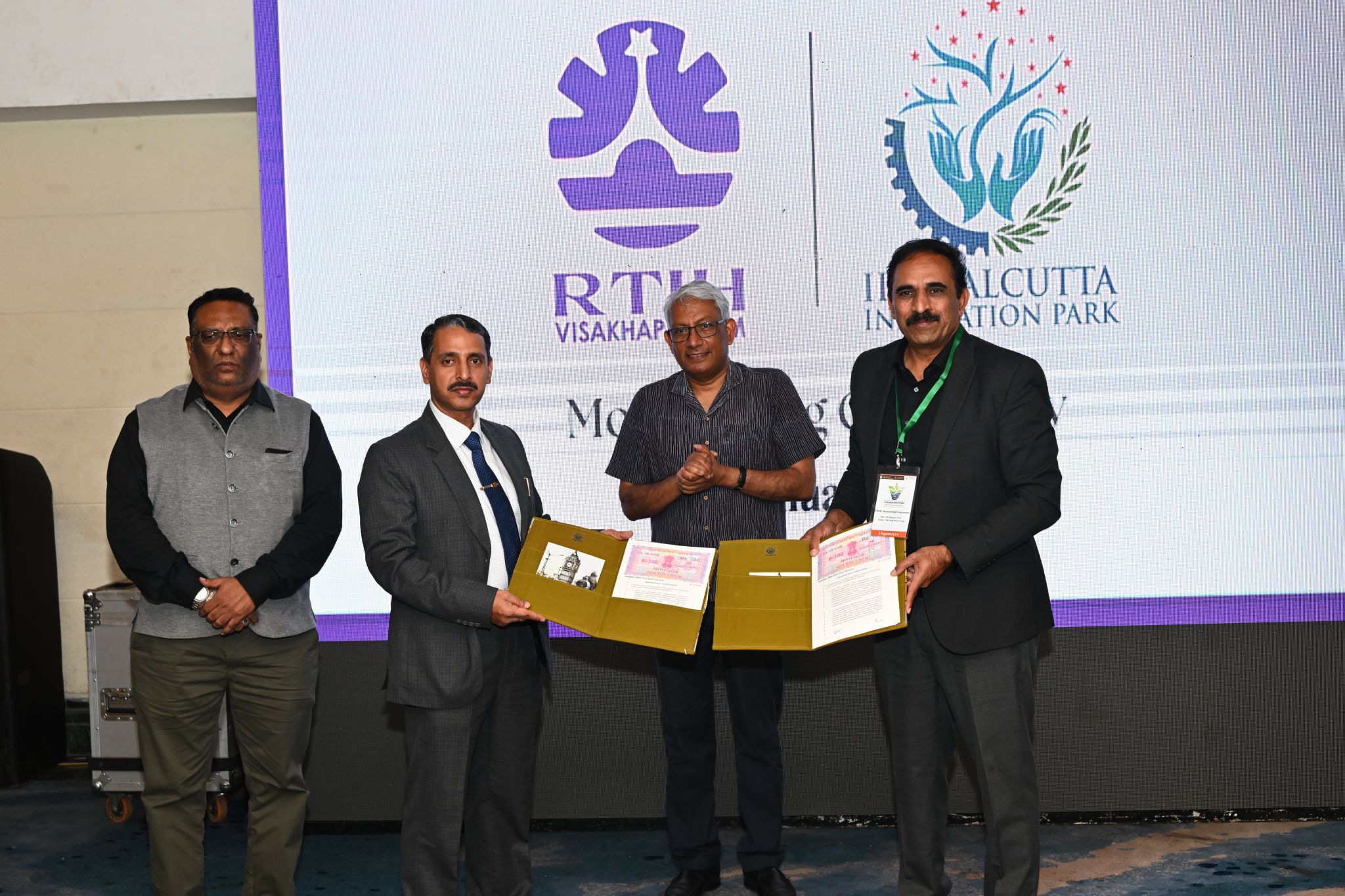
This partnership is focused on execution and measurable outcomes. The collaboration will jointly identify high-potential startups, offer structured co-incubation and hands-on scale support, and enable access to capital of up to ₹2 crore, helping founders move confidently from early traction to scalable growth.
The MoU was signed between Ravi Eswarapu, CEO, RTIH, Visakhapatnam and Dr VK Rai, CEO, IIMCIP, reinforcing a shared commitment to building fundable, scalable, and nationally visible and globally competitive startups emerging from the region.
Focus Areas of the Partnership
Under the agreement, Ratan Tata Innovation Hub and IIM Calcutta Innovation Park will collaborate across three key areas:
- Structured co-incubation with clear milestones and outcome tracking
- Capital access of up to ₹2 crore for selected startups
- Hands-on execution support across product, market access, governance, and scale readiness
The partnership will leverage IIMCIP’s national incubation experience, institutional networks, combined with Ratan Tata Innovation Hub’s strong regional presence and startup pipeline, to create a strong bridge between regional innovation, national capital and markets.
Speaking on the collaboration, Ravi Eswarapu (CEO, RTIH, Visakhapatnam) said,
“This partnership is all about creating real impact. By combining RTIH’s innovation ecosystem with IIMCIP’s proven incubation expertise, together, we aim to empower startups from Andhra Pradesh to scale nationally and globally.”
Dr VK Rai, CEO, IIM Calcutta Innovation Park, added,
“There is a strong entrepreneurial energy in Andhra Pradesh. Our role is to help convert that energy into fundable, scalable businesses with structured support and by connecting founders to the right networks, mentors, and markets. IIMCIP’s partnership with RTIH is about turning regional entrepreneurial potential into scalable, fundable enterprises with national impact.”
This collaboration aligns with IIMCIP’s broader mission of strengthening entrepreneurship in emerging and under-represented regions. And, by focusing on execution, capital enablement, and visibility, the partnership aims to create a repeatable model for converting regional innovation into scalable enterprises.
Shortlisted startups from the first pitching edition under this co-incubation programme will be announced shortly. The selected cohort will enter a structured incubation and scale-up journey supported by mentorship, network & market access, and capital enablement
20, Jan 2026
India’s Insurance Market Poised to Outperform Global Peers on Strong Growth Outlook: Swiss Re
Mumbai, Jan 20: India’s insurance sector is entering a phase of sustained mid-term expansion, underpinned by strong economic fundamentals, rising consumer demand and supportive regulatory reforms, according to a new Swiss Re Institute analysis titled “India’s economic and insurance market outlook 2026–2030: resilient and rising amid global shifts.”
Swiss Re forecasts India’s insurance premiums to grow at an annual real rate of 6.9% between 2026 and 2030, making it the fastest-growing major insurance market globally. This growth is expected to significantly outpace China (around 4%), the US (2%), and Western Europe (about 2%) over the same period.
Strong economic tailwinds support insurance expansion
India is projected to maintain an average real GDP growth of 6.5% over the next five years, supported by robust private consumption, continued public infrastructure investment and improving private capital expenditure. Fiscal measures such as GST simplification and personal income tax concessions are boosting demand, particularly among lower- and middle-income households. The impact of global trade disruptions, including US tariffs, is expected to remain limited, given that goods exports to the US account for only about 2% of India’s GDP.
Amitabha Ray, Market Head for India at Swiss Re, said:
“India is a clear bright spot for insurance growth in the mid-term, with strong opportunities emerging across health and motor insurance. Forward-looking regulatory reforms, digital innovation and an increasingly consumer-centric product mix will support expansion. Insurance will play a vital role as a financial shock absorber for Indian households and businesses facing rising climate, health and longevity risks.”
Regulation and innovation driving the next growth phase
The forecast marks a strong rebound from 3.1% growth in 2025, following adjustments to new regulations. Reforms led by the Insurance Regulatory and Development Authority of India (IRDAI), along with broader government initiatives, are improving transparency and reshaping the sector for long-term growth. Key measures include a higher foreign direct investment (FDI) limit, modernisation of distribution channels and GST reforms, which are expected to attract capital, expand access and stimulate insurance adoption.
Life insurance premiums are projected to grow 6.8% annually over 2026–2030, driven by expanding distribution, rising demand for retirement solutions and steady credit growth. India remains the second-largest life insurance market among emerging economies.
While non-life insurance faces near-term pressures from regulatory changes and medical inflation, growth is expected to recover in the medium term. Health insurance premiums are forecast to grow 7.2% annually, while motor insurance is expected to expand by 7.5%, supported by increased vehicle penetration.
Mahesh H Puttaiah, Head of Insurance Market Analysis at Swiss Re Institute, noted:
“India’s large consumer base, stable inflation and fiscal prudence provide resilience against global uncertainty. These strengths will translate into sustained insurance premium growth, positioning India for a very positive mid-term outlook.”
Rising natural catastrophe risk highlights protection gap
Swiss Re estimates that USD 26–29 trillion in property assets are exposed to natural catastrophe risks across India, with several high-growth regions overlapping with multi-peril hotspots. As asset concentration increases, large-scale disasters could have a material impact on national economic growth.
Addressing this risk will require wider insurance and reinsurance coverage, alongside investments in early warning systems, climate-resilient infrastructure and stricter enforcement of building codes—particularly in rapidly urbanising and coastal regions.
Parvinder Singh, Head of Client Underwriting India at Swiss Re, said:
“Amid rising catastrophe risks and global uncertainty, disciplined underwriting and sustainable insurance solutions are essential to narrowing India’s protection gap and ensuring long-term stability for communities and businesses.”
Insurance market growth outlook (real terms)
-
India: 6.9% (2026–2030)
-
Emerging Asia (ex-China): 6.1%
-
China: 3.9%
-
North America: 1.8%
-
Western Europe: 2.1%
20, Jan 2026
Equirus sole advisor to Kalpataru Projects on Vindhyachal Expressway sale to ActisHealth makes wealth in the stock market too
Mumbai, Jan 20 — Mid-market specialist investment banking firm Equirus Capital announced the successful completion of the 100% stake sale of Vindhyachal Expressway, an 89-km, four-lane operational highway asset of Kalpataru Projects International Limited (KPIL), to leading global private equity investor Actis. Equirus acted as the sole financial advisor to Kalpataru Projects on the transaction.
The divestment marks the 11th successful road M&A transaction advised by Equirus, further reinforcing its leadership in infrastructure monetisation and capital recycling mandates, particularly for mid-market companies. The transaction highlights Equirus’ deep expertise in yield-oriented infrastructure assets, with a strong track record in road sector advisory.
“This transaction underscores our differentiated capabilities in yield-oriented infrastructure assets and road M&A, where value creation is driven by cash-flow durability, risk allocation, and long-term return optimisation. Leveraging deep sector expertise and rigorous process management, we led the transaction end-to-end — from structuring and asset positioning to negotiations and closure,” said Vijay Agrawal, Managing Director and Sector Lead – Infrastructure and Real Estate, Equirus Capital.
As per Kalpataru Projects’ disclosure to stock exchanges, the transaction values the Vindhyachal Expressway asset at an estimated enterprise value of approximately ₹775 crore, subject to closing adjustments. The company also confirmed that “All necessary approvals and conditions precedent for the transaction have been successfully completed,” with the sale expected to be finalised before the long stop date of January 31, 2026.
Brokerages tracking Kalpataru Projects have viewed the transaction positively, noting, “The divestment is financially positive for KPIL, as the asset contributes just ~0.43% of FY24 consolidated revenue while unlocking meaningful capital. The proceeds can strengthen the balance sheet and support redeployment into core EPC segments and growth opportunities, improving capital efficiency without impacting operating scale.”
“This is another example of a win-win deal that we have been able to seal providing Kalpataru Power with strategic capital recycling while giving Actis ownership of a high-quality, stable-yield road asset aligned with its long-term investment strategy,” Mr. Agrawal added.
Vindhyachal Expressway operates under a build-operate-transfer (BOT) concession with a residual concession period of over 20 years. As of March 31, 2024, the asset reported revenue of ₹85.07 crore and a net worth of ₹144.55 crore. The project stretch is located on NH-7 from Rewa to the Madhya Pradesh–Uttar Pradesh border, with traffic largely driven by inter-state commercial vehicle movement.
According to credit rating agency Crisil that rates VEPL Rs 284 crore of bank loans, “Commercial vehicles form a sizeable portion of traffic on the project stretch,” adding that the concession agreement allows for extension of the concession period by up to 20% in case of traffic shortfall, subject to approvals. Crisil further noted that traffic grew at a 6% CAGR between FY2018 and FY2024, while toll collections increased 12.7% year-on-year to ₹70.6 crore in the first nine months of FY2025, supported by inflation-linked toll hikes. The asset is also undergoing major maintenance, with ₹109 crore planned over FY2025–FY2026.
20, Jan 2026
Skilling Rural Youth Is Key to Strengthening India’s Households and Future Workforce
Jan 20: Skilling Rural Youth Is Key to Strengthening India’s Households and Future Workforce New Delhi, 19th January 2026: For millions of rural youths, the transition from education to employment is critical and challenging. Many aspire to white-collar jobs, often unaware that skilled blue-collar and technical roles can offer stable, dignified, long-term careers. Limited access to training and pathways into work pushes many into insecure livelihoods, leaving households dependent on climate-sensitive incomes. Strengthening skilling ecosystems is therefore essential—not only for employment, but for reliable off-farm income that builds household stability.
On the occasion of National Youth Day, this challenge takes on renewed urgency. As India works to harness its demographic dividend and realise the vision of Viksit Bharat, equipping rural and semi-urban youth with relevant, market-linked skills is critical for inclusive growth, reducing distress migration, and strengthening local economies. Beyond livelihoods, meaningful employment builds a sense of agency and confidence – enabling young people to become active contributors and positive role models in their families and communities.
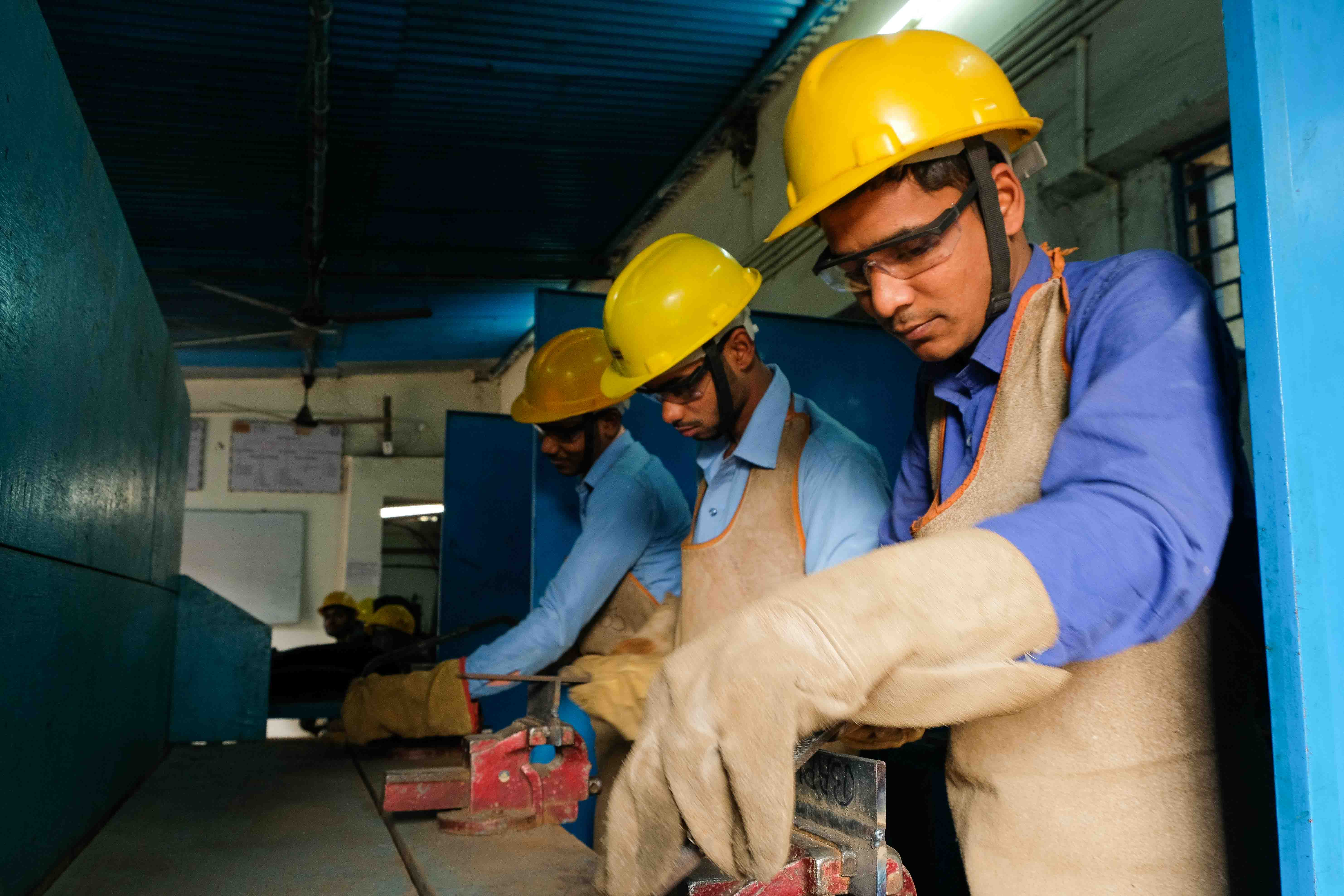
For over a decade, Ambuja Foundation has worked to strengthen rural livelihoods through its Skill & Entrepreneurship Development Institutes (SEDI), creating pathways from education to employment for young people in underserved regions. Operating through a network of SEDI centres across 13 states, SEDI equips rural youth—many from agricultural households and limited local job markets—with practical, job-ready skills across 42 accredited courses in sectors such as retail, healthcare, construction, and emerging industries. To date, the programme has trained over 1,34,000 youth, supported by personalised counselling and strong industry linkages, with 77% of graduates securing wage employment or starting their own enterprises. By enabling dependable off-farm livelihoods, SEDI helps diversify household incomes and reduce vulnerability to climate and economic shocks.
The past year marked a significant milestone, with the SEDI network expanding from 35 to 51 centres, enabled by strong partnerships with corporate, institutional, and technical partners. Fifteen new centres were established across strategic locations in Maharashtra, Rajasthan, Uttar Pradesh, Himachal Pradesh, Uttarakhand, Andhra Pradesh, Gujarat, Delhi, and Chhattisgarh—allowing deeper outreach and more diversified training aligned with local employment opportunities.
Programme outcomes during 2024–25 reflect the strength of this approach. 97,000 youth secured employment, with an 82% retention rate, indicating sustained workforce engagement. Average monthly salaries rose by 10% to ₹14,090, while the programme continued to support dual livelihood pathways—60% of graduates entering wage employment and 40% pursuing self-employment—strengthening household income stability.
Responding to changing skill demands, Ambuja Foundation also expanded its Future Skills programme, introducing artificial intelligence (AI) training across six locations to prepare rural youth—many first-generation learners—for participation in the digital economy. In parallel, new courses such as Solar Technician training across seven centres are opening pathways into India’s growing renewable energy sector.
Beyond training, initiatives like Kaushal Niwas, a transit hostel in Jaipur, have eased the transition into work—particularly for young women—by providing safe, temporary accommodation during interviews and early employment. Since its inception, over 1,800 trainees have used Kaushal Niwas as a stepping stone into the workforce. SEDI Alumni Chapters have further strengthened post-placement support, connecting over 3,000 alumni through mentorship, peer learning, and relocation guidance.
Ravi Nayse, COO (Skills), Ambuja Foundation, said, “For many rural youth, the barrier is not a lack of aspiration, but limited access to quality training, exposure, and pathways into work. Our focus has been on building skilling ecosystems that align industry demand with local realities. When rural youth secure stable employment or build viable enterprises, the impact extends well beyond individual incomes—it provides households with dependable off-farm earnings and helps families better withstand economic and climate-related shocks.”
As India marks National Youth Day, the experience from the ground reinforces a clear message: the vision of Viksit Bharat will be shaped not only by growth in cities, but by the opportunities created for young people in rural India—strengthening households, communities, and the broader economy. Ambuja Foundation reiterates the importance of continued collaboration across government, corporate industry, and civil society to ensure that rural youth are equipped to shape and contribute to India’s future growth.
19, Jan 2026
QualiZeal CFO Calls for AI Skilling, IP-Led Innovation and Climate-Ready Infrastructure in Union Budget 2026
By:- Satish Sureddi, CFO, QualiZeal.
“With India’s real GDP projected to grow at a robust 7.4% in FY 2025–26, driven by strong growth in professional services, the Union Budget 2026 must now focus on converting this momentum into sustained global leadership. At QualiZeal, we see an urgent need to address the structural gap in talent supply. With demand for AI-skilled professionals expected to cross 1.25 million by 2027, the Budget must prioritise high-quality technical skilling for India’s over 5 million-strong tech workforce.
While over ₹1.75 lakh crore in investments under the PLI scheme has helped anchor India’s manufacturing base, the next frontier is IP-led innovation. To bridge the gap between India’s current R&D spending of around 0.6–0.7% of GDP and global benchmarks, the Budget should introduce targeted innovation-linked incentives. Equally critical is national resilience. With climate-related risks posing a growing threat to economic output and agriculture continuing to support around 46% of the workforce, integrating digital engineering into green infrastructure and supply chain modernisation is no longer optional. It is a core economic imperative.”
19, Jan 2026
Aurum PropTech Solidifies Leadership in Indian PropTech Sector, Turns PAT Profitable in Q3 FY2026
Mumbai, India, Jan 19: Aurum PropTech, a leading integrated PropTech platform in India, today announced its consolidated financial results for the third quarter of FY2026, marking a significant milestone as the company delivered a Profit After Tax (PAT) positive quarter. This achievement reinforces Aurum PropTech’s evolution into a scalable, profitable, and technology-led PropTech institution.
Consolidated Financial Highlights (Q3 FY2026 vs Q3 FY2025)
-
Total income recorded strong year-on-year growth of 77%
-
PBT margin improved to 1.6%, reflecting a sharp expansion of 1,535 basis points from the previous year
-
Adjusted EBITDA margin rose to 6.5%, an improvement of 885 basis points year-on-year
These results underscore Aurum PropTech’s disciplined execution, steadily improving unit economics, and sustained focus on long-term value creation.
Segment Performance Highlights
Distribution Business: Scaling Data-Driven Growth
Sell.do
-
Closed over 140 enterprise deals and added 1,100 new licenses during the quarter
-
Achieved 67% growth in new sales, highlighting strong market traction
-
Successfully deployed AI Calling Bot and Personal WhatsApp solutions into production
Aurum Analytica
-
Supported 140+ active clients across 260+ projects
-
Delivered 54% year-on-year growth, with over 117,000 leads sold in Q3 FY26
-
Initiated Aurum Explore MVP to enhance organic reach and expand offerings in Tier-2 markets
PropTiger
-
Maintained 175+ active developer clients across 11 active mandates
-
Recognized with Quarterly Sales Champion and Best Performer awards from leading developers
-
Strengthened multiple growth engines across primary sales, mandates, and mortgage services
Rental Business: Expanding the Rental Horizon
HelloWorld
-
Operated 270+ active coliving spaces across 15+ cities
-
Onboarded 16 new buildings and added over 2,200 new tenants
-
Upgraded the short-stay module and launched a dynamic inventory dashboard
NestAway
-
Closed 1,400+ bookings across Standard and Lite models
-
Scaled the platform to approximately 9,900 rentable units across 5,183 houses
-
Enhanced resale and partner platforms with upgraded dashboards and backend infrastructure
Leadership Commentary
Commenting on the results, Mr. Onkar Shetye, Executive Director, Aurum PropTech, said:
“Q3 FY26 represents a pivotal moment in Aurum PropTech’s journey, as we transitioned from an Adjusted EBITDA-positive position to delivering a PAT-positive outcome. This milestone reflects years of disciplined execution, improving unit economics, and a strong philosophy of capital stewardship across the platform. Our Distribution businesses continue to scale through AI-led innovation at Sell.do, geographic expansion at Aurum Analytica, and sustained operational efficiency at PropTiger. Meanwhile, our Rental platforms—HelloWorld and NestAway—are demonstrating resilience and cash-generative potential. On the Capital side, we are progressing deliberately toward SM REIT opportunities with a strong focus on regulatory readiness and long-term value creation. Together, these developments reinforce our vision of building a scaled, profitable, and technology-led PropTech institution of enduring value.”


