


15, Sep 2026
NASH Group to Showcase Intelligent Electronics, Vision and Energy Solutions at electronica India 2026
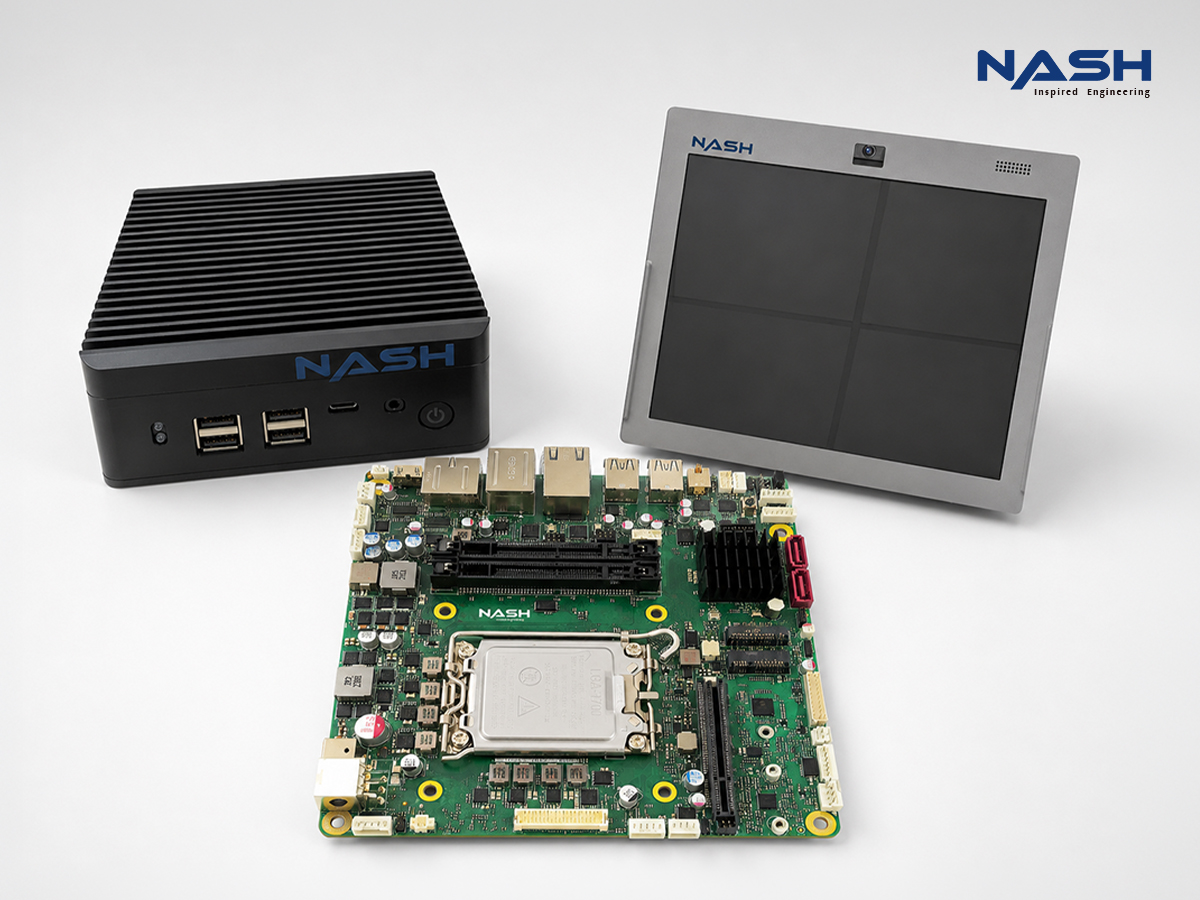
Mumbai, Sep 15: NASH Group, an engineering-led technology and manufacturing company, will showcase its portfolio of intelligent electronics, embedded computing, Smart Vision and energy solutions at the Electronica Bengaluru 2026, being held from September 16–18, 2026 at the Bangalore International Exhibition Centre (BIEC).
At the exhibition, NASH Group will present solutions spanning industrial computing, embedded electronics, Smart Vision, automotive camera systems, AI-enabled vision, kiosks, fanless computing, industrial motherboards, and battery management technologies. The showcase will highlight the Group’s ability to bring together product engineering, electronics, embedded software and manufacturing capabilities to develop application- specific solutions for global customers.
NASH Group has built an integrated engineering ecosystem spanning hardware design, embedded systems, software, AIoT, Smart Vision, energy technologies and advanced manufacturing. This enables the Group to support customers across the product lifecycle, from product development and engineering to manufacturing and deployment.
The Group will place a strong focus on its Smart Vision and automotive camera capabilities at Electronica India 2026. These include an automotive rear-view camera module with an ultra-wide 190° viewing angle, IP67 protection and 360° camera integration capability for surround-view and ADAS applications. NASH will also showcase AI-enabled vision solutions for intelligent monitoring and video analytics, along with RGB and IR camera technologies for smart terminals, authentication and other embedded applications.
The showcase will also feature NASH’s industrial computing and smart infrastructure portfolio, including kiosk platforms, Box PC and AERONIX fanless computing solutions, as well as its industrial motherboard portfolio. The self-service kiosk solutions are designed for applications across retail, hospitality and airports, while the NASH Anthem Industrial Motherboard supports 12th, 13th and 14th Gen Intel Core processors for IPC, HMI, Box PC and other embedded applications.
NASH will also present its energy technology capabilities, including Hardware and Smart Battery Management Systems (BMS) supporting LFP and NMC battery chemistries across applications such as electric mobility, renewable energy storage, UPS and telecom. Its energy technology portfolio is complemented by software and battery management capabilities including Battmonx, BMS Automation and EVolt, bringing together battery monitoring, management and energy management technologies.
NASH Group’s solutions address applications across industrial automation, automotive and electric mobility, electronics manufacturing, machine building, warehouse automation, healthcare, renewable energy, smart infrastructure, retail and industrial equipment. Its integrated approach combines engineering, technology and manufacturing capabilities to develop customised solutions aligned with specific application and industry requirements.
NASH reflects a combination of global technology partnerships and in-house engineering expertise. As an Intel Prestige Partner, the company develops high-performance computing platforms and application-specific solutions designed to address the requirements of industrial and energy customers.
Backed by 175+ R&D engineers, 15+ manufacturing facilities, exports to 25+ countries and more than five decades of manufacturing expertise, NASH Group is strengthening its capabilities as an engineering and technology partner for global customers. Through its group companies, NASH Industries, NASH Tech Labs and NASH Energy, the Group brings together capabilities across precision manufacturing, electronics, embedded computing, intelligent vision, automation and energy technologies.
Founded in 1971, NASH Group has evolved from a manufacturing company into an engineering-led technology and manufacturing enterprise. The Group’s capabilities span product design and development, electronics engineering, embedded systems, AIoT, Smart Vision, industrial computing, automation, energy technologies and advanced manufacturing, enabling it to develop and manufacture technology solutions for customers across global markets.
- 0
- By Neel Achary

15, Sep 2026
DICV Expands Regional Role as India Anchors New ISEAA Customer Region
Hanover, Germany/Chennai, India | Sept 15: Daimler India Commercial Vehicles (DICV), the maker of BharatBenz trucks and buses, today highlighted India‘s growing strategic importance within Daimler Truck following the establishment of the Mercedes-Benz Trucks segment’s ISEAA (India, South-East Asia and Australia-Pacific) customer region. DICV also outlined the next phase of BharatBenz’s growth through product innovation, customer ecosystem expansion and continued investment in India.
Mercedes-Benz Trucks, one of Daimler Truck’s global key segments*, is home to two brands: Mercedes-Benz Trucks and BharatBenz. While BharatBenz serves customers in India through Daimler India Commercial Vehicles (DICV), the Mercedes-Benz Trucks brand serves customers across South-East Asia and Australia-Pacific, as well as other global markets.
As part of its new global operating model, Mercedes-Benz Trucks segment is organized into four customer regions: Europe, LAMEA (Latin America, Middle East and Africa), China, and ISEAA (India, South-East Asia and Australia-Pacific). The ISEAA region brings together markets that were previously managed separately under a single customer-focused structure, serving customers through BharatBenz in India and Mercedes-Benz Trucks across South-East Asia and Australia-Pacific.
India‘s Expanded Regional Role
DICV serves as the anchor entity for the ISEAA customer region. The structure places India at the center of a regional framework spanning India, South-East Asia and Australia-Pacific, reflecting DICV‘s growing role as a manufacturing, engineering and export hub within Daimler Truck. Since commencing operations, DICV has exported more than 75,000 trucks and buses and over 330 million parts to over 70 markets worldwide and supplies medium-duty transmissions from its Chennai facility to Daimler Truck plants in Germany.
The ISEAA customer region spans 42 countries and nearly 2.8 billion people, bringing together some of the most dynamic transportation and infrastructure markets globally. With commercial vehicle demand across the region expected to grow by more than 5% annually, ISEAA represents a significant long-term growth opportunity for Mercedes-Benz Trucks. The regional structure enables closer customer engagement, faster decision-making and stronger collaboration across markets.

Torsten Schmidt, CEO & Managing Director, Daimler India Commercial Vehicles and President Mercedes-Benz Trucks Customer Region ISEAA, said:
“India has long been an important market for Daimler Truck and the home of BharatBenz. Through the new ISEAA customer region, we are bringing India, South-East Asia and Australia-Pacific closer together to strengthen collaboration, share capabilities and respond faster to customer needs across these markets. DICV serves as the anchor entity for the region, building on its established strengths in manufacturing, engineering and exports. For our customers in India, BharatBenz remains focused on delivering products and services designed specifically for local operating conditions, while benefiting from the scale, expertise and collaboration of the broader Mercedes-Benz Trucks segment.”
BharatBenz Enabling India‘s Growth Through Products and Customer Support
Alongside its expanded regional role, DICV is accelerating the next phase of BharatBenz’s product transformation journey, focused on delivering safer, more productive and more efficient transport solutions for customers. As India‘s safety regulations evolve, BharatBenz is preparing its truck and bus portfolio with Advanced Driver Assistance Systems (ADAS) calibrated for Indian operating conditions, ensuring readiness ahead of upcoming regulatory requirements while enhancing on-road safety.
Building on the successful introduction of HX and Torqshift in the construction and mining segment, BharatBenz continues to bring globally proven Daimler Truck technologies to Indian customers across its portfolio. Proven in hundreds of thousands of Daimler Truck heavy-duty vehicles worldwide and adapted for Indian duty cycles, Torqshift Automated Manual Transmission (AMT) technology enhances driver comfort, reduces fatigue and supports safer, more efficient fleet operations while contributing to a lower Total Cost of Ownership (TCO). As fleet operators increasingly prioritize productivity, driver wellbeing and operational efficiency, DICV sees significant potential for the broader adoption of automated transmission technologies in the Indian commercial vehicle market.
Strengthening the Customer Ecosystem
DICV continues to invest in a customer ecosystem designed to maximize uptime, productivity and lifecycle value. BharatBenz’s digital fleet management solution, TruckConnect, enables customers to monitor vehicle performance, enhance operational efficiency and improve fleet management through connected technologies and data-driven insights.
The BharatBenz Rakshana service assurance program now services and delivers more than 98% of vehicles within 48 hours. To further strengthen customer support across the country, DICV plans to expand its nationwide service network from 430 touchpoints today to 600 touchpoints by 2030, with a particular focus on strengthening coverage across northern, eastern and north-eastern India. The expanded network, combined with enhanced digital solutions, improved parts availability and uptime-focused services, will help bring support closer to customers, reduce response times and further enhance the overall BharatBenz customer service experience.
Investing in India‘s Next Phase of Growth
India‘s expanded role within Daimler Truck’s global operations is supported by continued investment in local manufacturing, engineering and technology capabilities. These initiatives build on DICV‘s recently announced additional investment of approximately ₹4,000 crore in Tamil Nadu as part of a non-binding facilitation MoU with the Government of Tamil Nadu. The commitment takes DICV‘s cumulative investment in India to more than ₹14,500 crore and is aimed at strengthening manufacturing capacity, R&D infrastructure, future technologies and long-term competitiveness for BharatBenz.
Today, DICV operates with 92% localization and is supported by more than 400 local suppliers, reinforcing its contribution to India‘s manufacturing ecosystem while strengthening the company’s ability to develop products and technologies tailored for Indian and global markets.
15, Sep 2026
Ownly Puts “Bappa’s Delivery Partner” on Hyderabad’s Roads with Mooshak on Wheels
A larger-than-life Mooshak will travel across key Ganesh pandals, neighbourhoods and high-footfall routes from 14–25 September
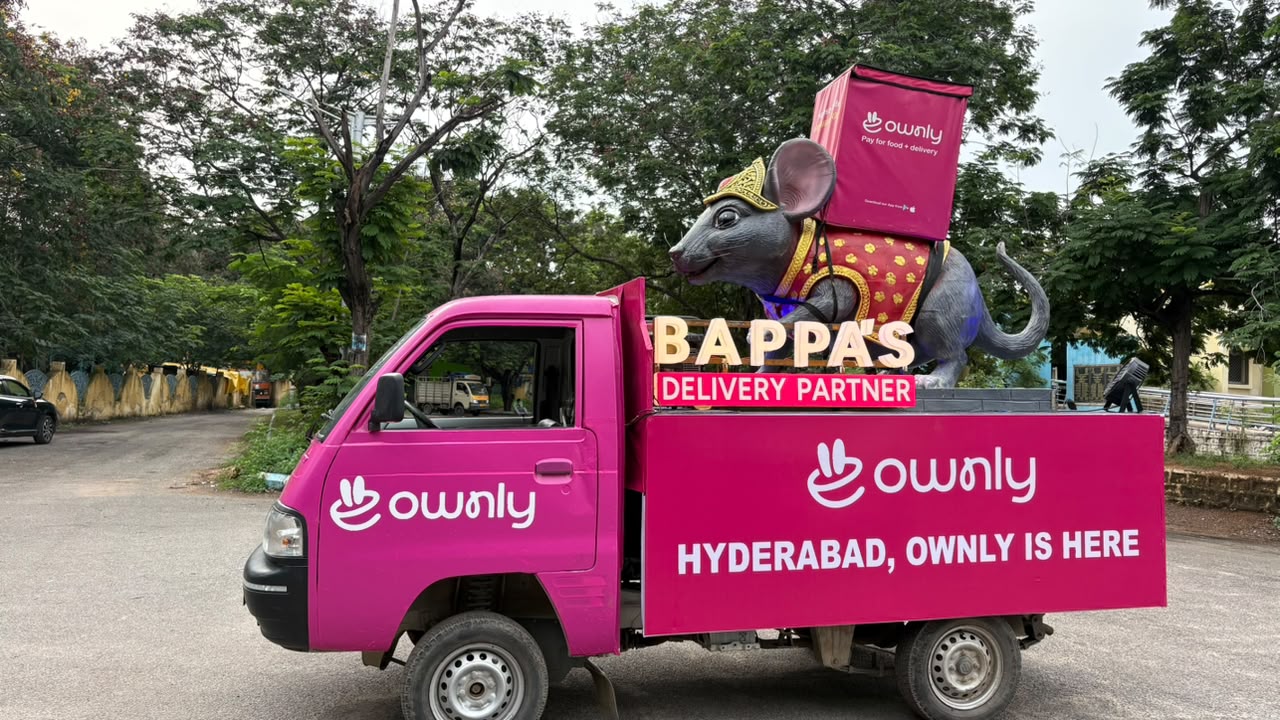
Sept 15: This Ganesh Chaturthi, Hyderabad sees Bappa’s trusted companion take on a role made for the delivery age. Ownly, a standalone food delivery app by Rapido, is rolling out “Mooshak on Wheels: Bappa’s Delivery Partner”, a mobile festive installation featuring a larger-than-life Mooshak mounted on a van.
Mooshak has long been recognised as Lord Ganesha’s vahana and constant companion. Ownly’s activation gives the familiar festive symbol a playful, contemporary interpretation, taking Mooshak beyond pandals and processions and onto some of Hyderabad’s busiest roads.
Designed as a moving festive landmark, the installation will travel through the city from 14 to 25 September, covering prominent Ganesh pandals, high-demand neighbourhoods, key roads and high-footfall areas. The planned route includes Balapur, Old City, Nagole, Secunderabad, Hitech City, Madhapur and Kukatpally.
The van will operate largely between 2 pm and 9 pm, with evenings expected to be the key visibility window as families step out for darshan, festive gatherings and pandal visits. As it moves between traditional celebration hubs, residential neighbourhoods and business districts, Mooshak on Wheels is intended to become a festive sight that Hyderabad residents can spot, photograph and share.
“Ganesh Chaturthi is celebrated with immense joy across Hyderabad and many parts of the country. In Indian households, Bappa’s name is often invoked before embarking on something new, with Lord Ganesha symbolising auspicious beginnings and bringing positivity to new journeys. We wanted to participate in that festive energy in a way that feels familiar, joyful and rooted in the occasion. ‘Bappa’s Delivery Partner’ brings together the cultural association of Mooshak, Bappa’s trusted companion, with a playful Ownly interpretation. Through the Mooshak installation travelling across the city, we hope to add a little more joy to the celebrations and create a festive experience that people across Hyderabad notice, enjoy and remember,” said Ownly’s spokesperson.
While the on-ground activation is centered in Hyderabad, Ownly has also extended the festive experience through Ganpati-themed in-app communication across Hyderabad and Bengaluru, spotlighting Indian Sweets and Pure Veg selections for festive ordering. Alongside the mobile installation, Ownly has also build presence at select Ganesh pandals across Hyderabad, including Khairatabad, Balapur, Madhapur, Miyapur, Ameerpet, Secunderabad, Dilshuknagar and Kukatpally, through festive branding and the distribution of agarbattis to visitors, making the brand part of the city’s neighbourhood-level Ganesh Chaturthi celebrations.
By bringing together on-ground visibility, in-app communication and digital amplification, Ownly aims to become part of different moments of the celebration, from people heading out for darshan and discovering Mooshak on the road to families deciding what to order once they return home. The campaign captures the festive energy of Hyderabad through a simple idea: this Ganesh Chaturthi, Bappa’s Delivery Partner is on the move.
15, Sep 2026
Gold and Silver Stay Range-Bound as Investors Wait for US Fed Signal
Mumbai, Sep 15: Gold and silver prices remained largely steady on Tuesday as investors stayed cautious ahead of the US Federal Reserve’s monetary policy decision. A stronger US dollar and rising US Treasury yields continued to limit the appeal of precious metals.

On the Multi Commodity Exchange (MCX), October gold futures were trading at Rs 1,52,570 per 10 grams, almost unchanged from the previous session.
Gold moved through a narrow range during the morning trade. It briefly climbed to Rs 1,53,000, before slipping to an intraday low of Rs 1,52,424 as buying momentum weakened.
Silver faced greater pressure. December silver futures were trading at Rs 2,31,750 per kg, down Rs 940, or 0.40 per cent. The metal touched a high of Rs 2,32,546 before declining to Rs 2,31,612.
The cautious movement reflects the uncertainty surrounding the Federal Reserve’s upcoming decision. Investors are closely watching signals on US interest rates because changes in monetary policy can have a direct impact on the dollar, bond yields and global demand for gold.
Gold does not provide regular interest income, so higher bond yields can make fixed-income assets more attractive to investors. At the same time, a stronger dollar can make internationally traded gold more expensive for buyers holding other currencies.
In the domestic market, gold is currently facing resistance around Rs 1,54,000-Rs 1,54,700. A sustained rise above this level could push prices towards Rs 1,56,300-Rs 1,57,000.
On the other hand, the Rs 1,50,700-Rs 1,50,000 range is seen as an important support zone. A break below Rs 1,50,000 could put further pressure on prices, with the next support levels around Rs 1,48,000-Rs 1,47,300.
For silver, immediate resistance is placed around Rs 2,33,000-Rs 2,34,000. A decisive move above this range could take the metal towards Rs 2,39,000-Rs 2,40,000. On the downside, support is seen around Rs 2,30,000-Rs 2,29,000, followed by Rs 2,26,000-Rs 2,25,000.
Technical indicators also point to subdued momentum. Gold’s Relative Strength Index was around 45, while silver’s RSI stood near 46, both below the neutral 50 mark.
Meanwhile, the dollar index rose 0.20 per cent, while the benchmark 10-year US Treasury yield briefly moved above 5 per cent, its highest level since October 2023.
For Indian consumers, particularly jewellery buyers and households that use gold as a long-term store of value, global market movements can eventually influence domestic prices. The direction of the dollar, US interest rates, geopolitical developments and the rupee will therefore remain important factors for bullion prices in the coming days.
With the Fed decision approaching, the precious metals market is likely to remain sensitive to every major signal on inflation and interest rates. Investors are expected to closely watch whether the central bank’s next move creates fresh support for gold or keeps pressure on the yellow metal.
15, Sep 2026
The Power Of Engineering Judgement In An AI-Driven World
By Arvind Aravamudhan, Senior Director of Platform Engineering Harness
“Good engineering is often less about what one team can build and more about what their work enables others to achieve. The best engineering takes complexity out of the way, creates strong foundations for others to build on, and ultimately delivers outcomes that matter to customers and the business. It should also stand the test of time, continuing to scale as teams and organisations grow.
What truly matters is judgement, curiosity and the ability to think beyond the problem in front of you to understand the outcome you are trying to create and work backwards from it. As AI makes building faster and more accessible, that engineering judgement becomes even more important: knowing not just what to build, but why it matters and what impact it should create.
On Engineers’ Day, I want to celebrate the engineers whose work creates leverage for everyone around them helping teams build better, solve harder problems and turn engineering effort into meaningful outcomes.”
15, Sep 2026
FIA President Mohammed Ben Sulayem meets Lebanese President Joseph Aoun to discuss shared motor sport priorities
Rallying legend honoured by two Lebanese Presidents says Rally of Lebanon has key role in plans to ensure long-term future of
FIA Middle East Rally Championship
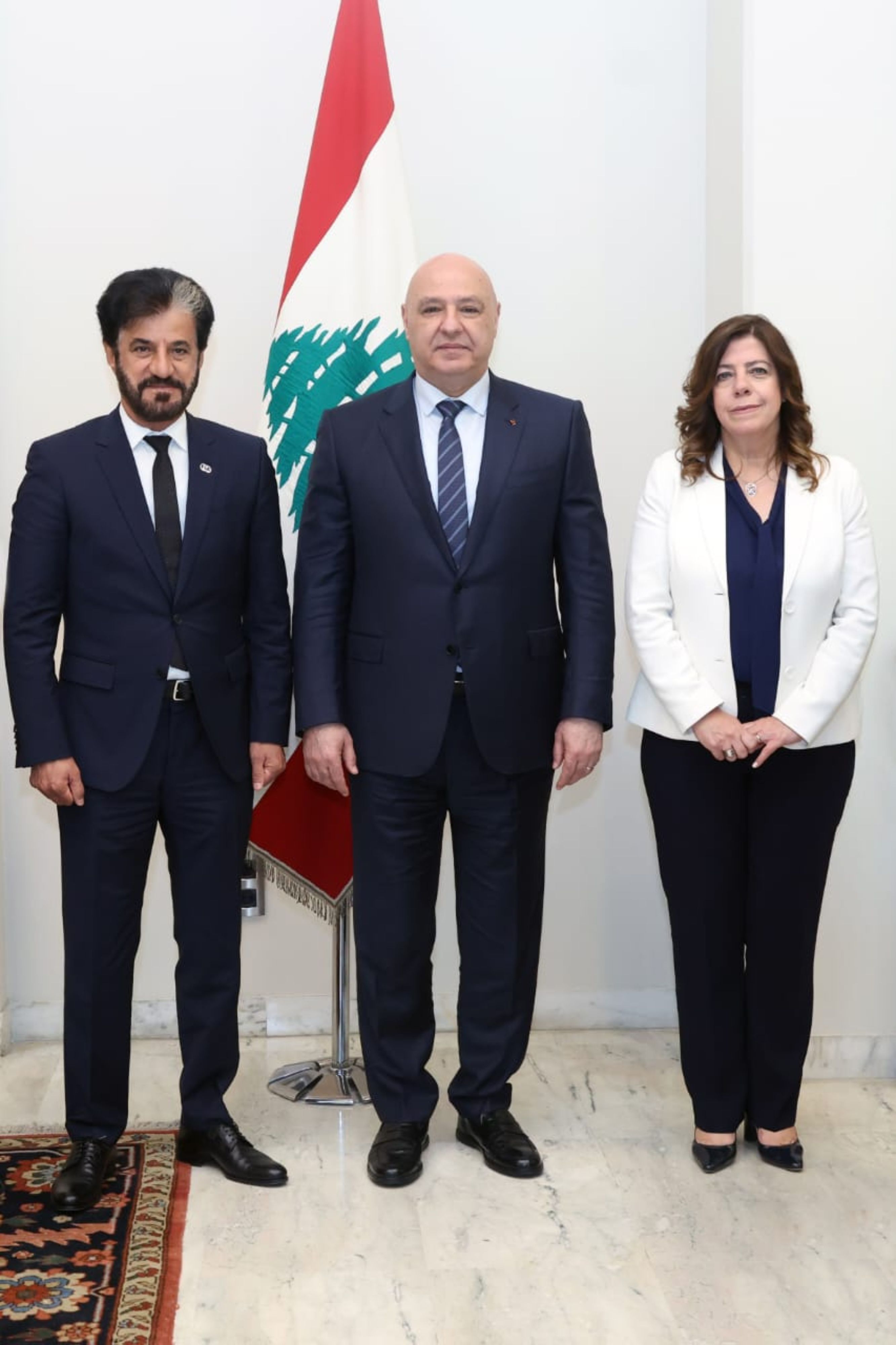
Dubai, UAE, Sept 15: Mohammed Ben Sulayem, President of the FIA, met with Lebanese President His Excellency Joseph Aoun after attending the Rally of Lebanon, an event he won four times in a distinguished rally driving career which established him as a sporting ambassador for the Arab world.
The meeting at Baabda Palace provided an opportunity to reflect on the continued success of the event, and Lebanon’s position as a rallying stronghold in the Middle East.
Ben Sulayem accepted an official invitation from the Automobile and Touring Club of Lebanon and President Nabil ‘Billy’ Karam to attend the 48th Rally of Lebanon. The fourth round of this year’s FIA Middle East Rally Championship reached its finish at the ATCL in Kaslik, Jounieh last night (Sunday) with victory going to Lebanon’s Roger Feghali and co-driver Joseph Matar.
“I was pleased to meet with President Aoun and discuss our shared priorities for the future of motor sport,” said FIA President Ben Sulayem. “The Rally of Lebanon provided me with many great memories during my rally driving career, and I’m thrilled to once again experience the excitement this event creates for competitors and the country’s passionate motor sport fans.”
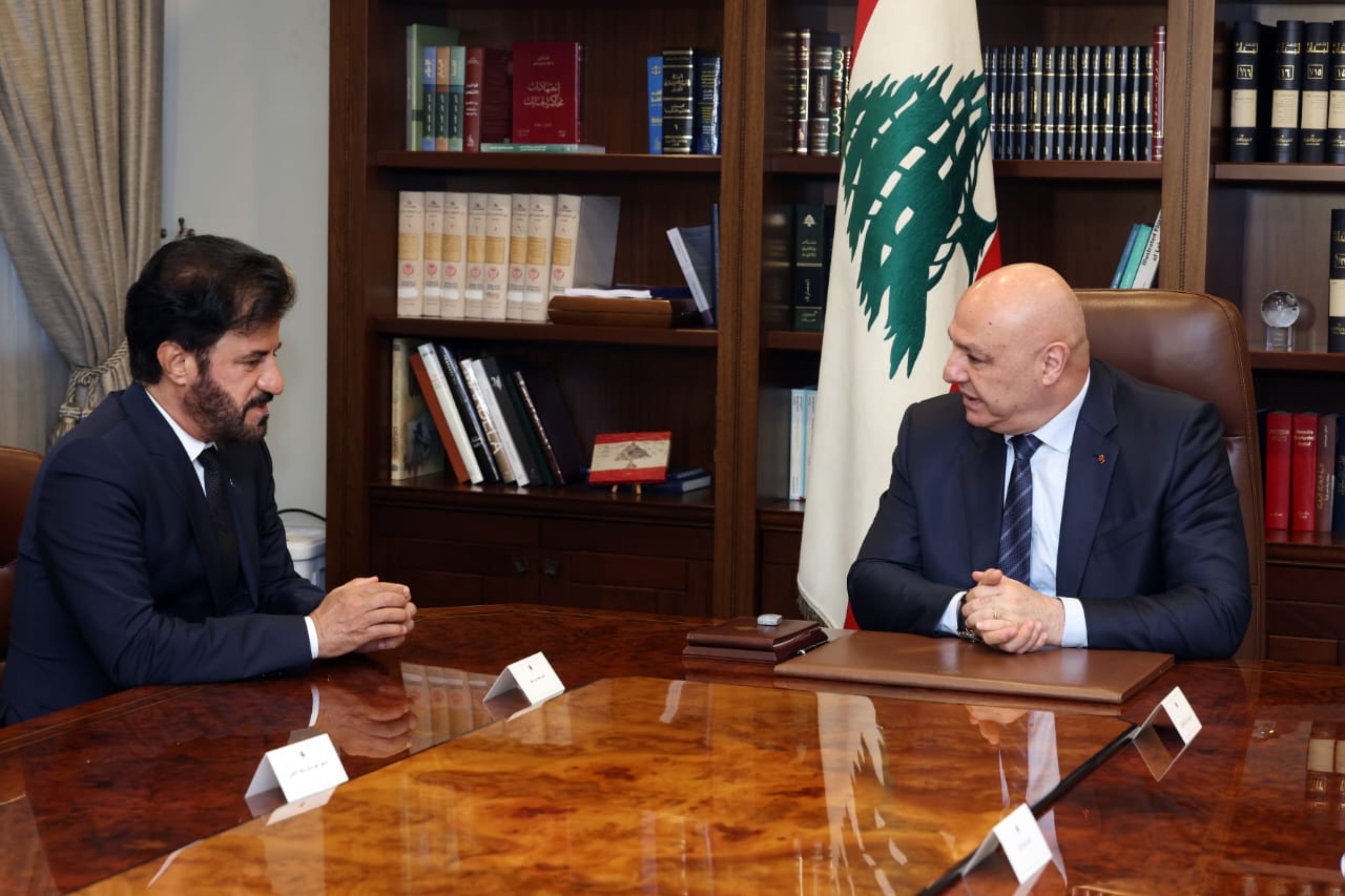
“The event has a rich history embedded in the origins of Middle East motor sport. It is firmly established as the home for asphalt rallying in the region, and plays a key role in our plans to ensure the long-term future of the FIA Middle East Rally Championship.
“Lebanon has always felt like a special place for me, and I want to thank the ATCL and its President, Nabil Karam, for their warm welcome and hospitality. I’m delighted to have met up again with some of the friends I have made at the club, and across the country over the years.”
Ben Sulayem’s legendary rally-driving achievements brought him widespread recognition, and he was awarded the President’s Cup by Lebanese President Amine Gemayel in 1987, and the Medal of Honour from Lebanese President Emile Lahoud in 1999.
Each of his four victories in the Rally of Lebanon, in 1987, 1991, 1998 and 1999, helped him secure the FIA Middle East Rally Championship title, which he won 14 times overall. He achieved the last three of those victories alongside his long-time co-driver Ronan Morgan.
Beyond his success in Middle East rallying, Ben Sulayem recorded his first overseas win in Turkey in 1991, and secured World Rally Championship Group N victories in Spain and Argentina over the following two years. He retired from competitive rallying in 2002.
In July, the FIA announced a landmark long-term commercial rights agreement for the FIA WRC and FIA European Rally Championship, following the acquisition of WRC Promoter GmbH by Cosmobilis and Park Square Capital.
Designed to bring significant new investment into the sport, the biggest deal in the history of these championships supported the FIA’s vision under President Ben Sulayem, who said at the time: “Rallying is a huge part of my personal story. It has shaped who I am and how I work, and I am deeply committed to its future.”
14, Sep 2026
JD Institutes Dalal Family Launches “House of JD” to Take Emerging Design Talent from Portfolio to Marketplace
New e-commerce marketplace will connect students, alumni and emerging designers with consumers, creating a pathway from design creation to products, sales and brand building

Mumbai, Sept 14: A design project can take months to conceptualise and create, but for many young designers, its journey often ends with a portfolio or an exhibition. JD Institute, led by Yogesh Dalal, Payal Dalal and Rinesh Dalal, is seeking to bridge that gap with the launch of House of JD, an e-commerce marketplace designed to take design talent from portfolio to marketplace.
Launching on September 14, House of JD will bring together fashion, interiors, textiles, art, objects and lifestyle, giving students, alumni, aspiring and emerging designers as well as established creative talent an opportunity to showcase and sell their work to consumers.
The platform is an extension of JD Institute of Fashion Technology’s long-standing engagement with the design industry. Established in 1988, JD Institute of Fashion Technology has spent over three decades building a design education ecosystem, with 38+ learning centres and more than 45,000 design graduates. Its alumni have gone on to build labels, work across fashion, interiors, jewellery, styling and other creative fields, and collaborate with brands, design studios and industry professionals in India and internationally.
House of JD takes that ecosystem a step further, from education and industry exposure to consumer access and commerce. For emerging designers, the platform creates an opportunity to take a completed design project beyond the portfolio, turn it into a product and understand what it means to present creative work to a customer.
For many emerging designers, the challenge is not creating the work, but finding the opportunity to take it to market. House of JD aims to create that bridge by providing a dedicated space where designers can showcase and sell their creations.
The platform will allow designers to build experience around presenting, positioning and commercialising their work, while giving consumers access to design-led products and the stories behind the people who created them.
House of JD will also bring together student and emerging work alongside established labels, premium brands and limited-edition collaborations, creating a destination where different stages of the design ecosystem can come together.
Unlike an open marketplace, House of JD will follow a considered curation process, with designers, collections and products reviewed before being featured. An advisory board will review collections as part of this process, to keep the platform “curated, not crowded” and focused on discovering relevant design talent.
The offering will be organised across five categories: hoJD Student, hoJD Next, hoJD Signature, hoJD Collective and hoJD Legendary, connecting students, alumni, faculty, industry and consumers within the larger JD ecosystem.
Commenting on the launch, Mr Rinesh Dalal, Director, JD Institute of Fashion Technology, said, “India has no shortage of design talent. What is needed are more places for designers to start and take their work forward. House of JD creates that opportunity by giving designers a space to bring their work to a wider audience and develop it further. We aim to discover, curate and commercialise the work of the next generation of creative entrepreneurs, while creating a space where consumers can discover the people and ideas behind the work. We want designers to use this space to be original, be themselves and enjoy the process of learning and creating as they take their work forward.”
For consumers, House of JD will focus on discovery and originality, offering fashion and home pieces, art, objects and lifestyle products from new and established creative talent. For designers, it creates another route to reach consumers and begin building a commercial journey around their work.
With House of JD, JD Education Trust is expanding its role from nurturing design talent to creating a pathway for that talent to reach the market, bringing together education, creativity, industry and commerce on one platform.
14, Sep 2026
Indian Railways Boosts Passenger Connectivity and Freight Capacity in August 2026
New Delhi, September 14, 2026: Indian Railways recorded broad-based growth in passenger services and freight operations during August 2026, with freight loading rising 5.4% year-on-year and the network expanding its passenger connectivity through regularisation of Amrit Bharat services and additional festival-season trains.
During the month, 14 Amrit Bharat services were converted from special to regular services, taking the total number of Amrit Bharat services to 86. At the same time, five new Gati Shakti Cargo Terminals (GCTs) were commissioned, strengthening rail-based freight connectivity for industries and commercial centres.
Freight Loading Rises 5.4%
Indian Railways loaded 137.9 million tonnes of freight in August 2026, compared with 130.9 million tonnes during the corresponding month last year. The increase represents a 5.4% year-on-year growth.
Freight revenue also increased, rising 6.27% compared with August 2025, signalling continued momentum in the railway’s freight business.
The growth was supported by higher movement across several major commodity categories, including coal, iron ore, steel, fertilisers and other goods. Increased rail freight movement provides industries with a large-scale transportation network for moving raw materials, intermediate goods and finished products across the country.
Iron Ore, Coal and Container Traffic Lead Growth
Several key freight segments registered notable increases during August.
Iron ore loading grew 12.1%, while clinker increased 10.4%. Domestic container loading rose 9.2%, and coal loading grew 6%. Finished steel recorded 4.9% growth, mineral oil increased 3.1% and fertiliser loading rose 1.6%.
The Balance Other Goods category also registered 8.2% growth.
The increase in container traffic is particularly significant as it supports the movement of a wider range of commodities through rail-based logistics. Higher loading across industrial commodities also strengthens the role of railways in supporting manufacturing, construction, energy and other economic activities.
Five New Gati Shakti Cargo Terminals Commissioned
Indian Railways commissioned five new Gati Shakti Cargo Terminals in August, taking the cumulative number of commissioned GCTs to 149 as of August 31, 2026.
The new terminals are located at:
- Shivlakha, Gujarat
- Nalli, Tamil Nadu
- Shaktinagar, Uttar Pradesh
- Deoragram, Madhya Pradesh
- Brajrajnagar, Odisha
The expansion of the GCT network is aimed at bringing modern freight-handling infrastructure closer to production and consumption centres.
Greater access to such terminals can help streamline cargo handling, improve first- and last-mile connectivity and reduce avoidable logistics movement. The network also supports closer integration between Indian Railways and the country’s broader multimodal logistics infrastructure.
14 Amrit Bharat Services Made Regular
Passenger connectivity received a further boost during August, with 14 Amrit Bharat services regularised from special to regular operations. The move takes the total number of Amrit Bharat services to 86.
Among the routes covered are:
- Subedarganj–Lokmanya Tilak Terminus
- Gorakhpur–Bandra Terminus
- Gorakhpur–Delhi Junction
- Ahmedabad–Bhagalpur
- Lokmanya Tilak Terminus–Prayagraj Junction
- Prayagraj Junction–Udhna Junction
- Dhanbad–Coimbatore
The additional regular services are expected to expand affordable long-distance travel options between major metropolitan centres and regional destinations.
The Gorakhpur–Bandra Terminus and Gorakhpur–Delhi Junction services, for instance, strengthen connections between eastern Uttar Pradesh and two major metropolitan regions. The routes can provide additional travel options for people travelling for employment, education, business and family-related purposes.
Similarly, the Ahmedabad–Bhagalpur service creates a direct rail connection between Gujarat and Bihar, while the Dhanbad–Coimbatore route strengthens connectivity between eastern and southern India.
Services linking Prayagraj with Udhna and Mumbai further expand travel options for passengers travelling from Uttar Pradesh towards western India.
Passenger Traffic Continues to Rise
Indian Railways carried 67.27 crore passengers in August 2026, compared with 64.43 crore in August 2025.
Suburban traffic recorded particularly strong growth, increasing 9.02% year-on-year. Suburban rail services carried 38.01 crore passengers during August 2026, compared with 34.89 crore during the same month last year.
The figures underline the continued importance of the railway network as an affordable and high-volume mode of daily transportation, particularly across India’s densely populated metropolitan and suburban areas.
More Special Trains for Festival Travel
Indian Railways also increased the number of special train services to manage the seasonal surge in passenger demand.
During the Rakshabandhan period from August 25 to 31, 2026, the railways operated 144 trips of special trains, compared with 48 trips operated between August 8 and 14, 2025.
The substantially higher number of special train trips provided additional capacity during the festival rush, particularly for passengers travelling to their hometowns and families.
Additional services during peak periods can help distribute passenger demand, ease pressure on regular trains and provide greater flexibility for travellers during major festivals.
Railways Strengthens Passenger and Freight Network
The performance during August reflects Indian Railways’ simultaneous focus on expanding passenger services and strengthening freight infrastructure.
The regularisation of Amrit Bharat services is widening affordable long-distance connectivity, while additional festival trains are helping accommodate seasonal passenger demand. On the freight side, higher commodity loading and the expansion of Gati Shakti Cargo Terminals are strengthening the railway’s role in India’s logistics ecosystem.
With continued investment in capacity, connectivity and operational infrastructure, Indian Railways is positioning its passenger and freight networks to handle growing demand while supporting everyday mobility, industrial supply chains and broader economic activity across the country.
14, Sep 2026
Dryland Congress 2026 Ends with Delhi Declaration, Sets Agenda for South-South Cooperation
New Delhi, September 14, 2026: The three-day Dryland Congress 2026 concluded in New Delhi with participating governments, institutions, researchers and development partners endorsing the Delhi Declaration on Drylands (3D) and calling for stronger South-South and triangular cooperation to accelerate innovation and action in dryland agriculture.
Held under the theme “Transforming Dryland Agriculture with South-South Cooperation,” the Congress brought together stakeholders from across the Global South to explore solutions for improving agricultural resilience, food security, climate adaptation and rural livelihoods in dryland regions.
The closing day coincided with the United Nations Day for South-South Cooperation, reinforcing the Congress’s emphasis on partnerships, knowledge exchange and the scaling of agricultural innovations across developing countries.
The Delhi Declaration outlines a common agenda for transforming dryland agriculture through collaboration, scientific knowledge, innovation and collective action. It was endorsed during the closing plenary by participating governments, institutions, partners and delegates.
ICAR Calls for Greater Foresight and Data
Addressing the concluding session, Dr M. L. Jat, Secretary, DARE and Director General, ICAR, stressed the importance of incorporating foresight into strategies for dryland agriculture.
Jat called for the creation of a strong institutional mechanism for agricultural foresight and proposed that the ICAR-National Institute of Agricultural Economics and Policy Research (ICAR-NIAP) be given a mandate to lead foresight activities related to dryland agriculture.
He also highlighted the need for robust data and information systems capable of supporting decision-making across dryland agri-food systems. According to him, common innovation platforms and living laboratories could help connect research institutions with farmers, policymakers and other stakeholders.
ICRISAT Stresses Need to Move from Ideas to Action
Dr Himanshu Pathak, Director General, ICRISAT, underlined the critical role of drylands in global food security and called for the outcomes of the Congress to be converted into measurable action.
He urged participants to prioritise the recommendations emerging from the three-day discussions into short- and long-term programmes. The focus, he said, should be on moving from ideas to concepts and ultimately to implementation by combining expertise, knowledge and partnerships.
The valedictory session also highlighted several new collaborations emerging from the Congress, including agreements and Memoranda of Understanding with the Global Crop Diversity Trust.
ICRISAT also entered into MoUs with Avior Life Sciences, NIFTEM, Wipro Limited, and the Angul and Rayagada district administrations of Odisha, strengthening partnerships aimed at promoting innovation and practical interventions in dryland agriculture.
The Congress Co-Chairs, Dr D.K. Yadava, DDG (Crop Science), ICAR, and Dr Stanford Blade, DDG (Research & Innovation), ICRISAT, presented a summary of the deliberations and outlined key recommendations and outcomes.
Strengthening South-South Agricultural Partnerships
The final day began with a commemoration of the UN Day for South-South Cooperation, featuring messages from the UN Secretary-General, FAO Director-General and UNOSSC Director Dima Al-Khatib.
Pathak presented the vision of the International Solidarity for South-South Cooperation in Agriculture (ISSCA) and highlighted the need for stronger partnerships among countries of the Global South.
Representatives from ICRISAT, ICAR, CGIAR, RIS, NABARD and the CGIAR Capacity Sharing Accelerator reaffirmed their commitment to advancing South-South cooperation and increasing its impact on agricultural development.
A subsequent session, “Knowledge Without Borders: Advancing South-South and Triangular Cooperation,” was convened in collaboration with CGIAR. Discussions examined how successful cooperation models could be strengthened, replicated and taken to scale.
Experts and representatives from national agricultural research systems in Ethiopia, Senegal, Brazil, China and India, alongside delegates from CGIAR, FARA and APAARI, shared experiences on building effective South-South and triangular partnerships.
ISSCA Global Awards Recognise Agricultural Innovations
The Congress also hosted the ISSCA Global Awards 2026, which recognise proven agricultural innovations from institutions across the Global South that demonstrate potential for large-scale adoption and adaptation across countries.
The inaugural awards attracted 170 nominations from 34 countries spanning Asia, Southeast Asia, Africa, the Middle East, and Latin America and the Caribbean.
The ISSCA Global Award for Transformative Excellence (Mega Award) was presented to:
- ICARDA, Lebanon, for TAAT Wheat Compact Technologies: Heat-Tolerant Wheat Varieties;
- CIMMYT, Mexico, for e-Agrology 360; and
- Odisha Livelihoods Mission, Government of Odisha, India, for Women-Led Sustainable Farming for Nutrition and Rural Resilience.
Awards Span Crop, Climate and Digital Agriculture
The Crop Improvement & Production Technologies category recognised the Bangladesh Agricultural Research Institute for BARI Chinabadam-9, the University of Agricultural Sciences, Dharwad, for GPBD 4, and Myanmar’s Department of Agricultural Research for climate-smart, early-maturing chickpea, pigeonpea and groundnut varieties.
In Natural Resource Management & Climate Resilience, awards went to the Karnataka State Department of Agriculture for Krishi Bhagya; NECTAR, India, for integrated banana pseudo-stem processing; the Department of Agriculture, Government of Bihar, for rejuvenating Aahar–Pyne landscapes; and Sustainable Farming Solutions, Malawi, for digital land-restoration stewardship.
The Agribusiness & Market Systems awards recognised BIID Foundation, Bangladesh, for e-Krishok; Tamil Nadu Agricultural University for the TNAU-FPO Linkage Programme; and the Nigerian Stored Products Research Institute for its Parabolic-Shaped Solar Dryer.
In Digital Agriculture, the awards went to the Department of Horticulture, Government of Andhra Pradesh, for the APMIP Digital Ecosystem, and the Agriculture, Farmers Welfare and Co-operation Department, Government of Gujarat, for Krushi Pragati.
The Livestock Improvement & Production Technologies category recognised WorldFish, Bangladesh, for its improved carp seed system and the International Livestock Research Institute (ILRI), Kenya, for the Participatory Indigenous Chicken Breed Improvement Program (PIC-BIP).
The Congress also presented 16 Best Poster Awards to students and research scholars, recognising emerging research and scientific talent in dryland agriculture.
Delhi Declaration Sets a Collaborative Roadmap
The conclusion of Dryland Congress 2026 marks a renewed push to make South-South cooperation a practical mechanism for addressing the challenges facing dryland agriculture.
The Delhi Declaration on Drylands places collaboration, evidence-based research, innovation, knowledge sharing and institutional partnerships at the centre of this agenda.
With climate variability, resource constraints and food-security pressures continuing to affect dryland regions, the Congress highlighted the importance of scaling technologies and practices that have already demonstrated results.
The event ultimately sought to move beyond the exchange of ideas towards implementation—connecting scientific institutions, governments, development organisations and farming communities to build more resilient, productive and sustainable dryland agri-food systems across the Global South.
14, Sep 2026
BRICS Pushes for Stronger Global Cooperation on Traditional Medicine
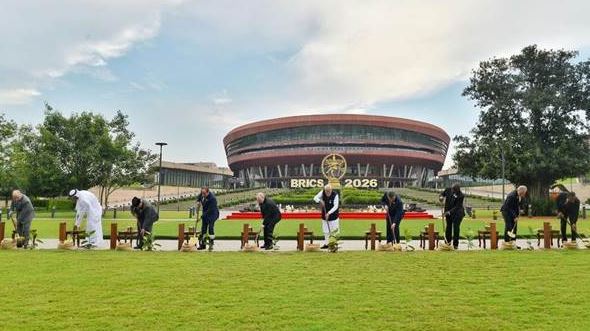
The 18th BRICS Summit has placed traditional, complementary and integrative medicine (TCIM) higher on the international health agenda, with the New Delhi Declaration calling for stronger cooperation, scientific research and evidence-based approaches to traditional healthcare systems.
A major outcome of the declaration is its support for the proposed creation of a BRICS Expert Working Group on Traditional, Complementary and Integrative Medicine under the BRICS Health Track. The proposed mechanism is expected to provide BRICS member countries with a structured platform to exchange knowledge, collaborate on research and develop common approaches to traditional medicine.
Union Minister of State (Independent Charge) for the Ministry of Ayush and Minister of State for Health & Family Welfare, Prataprao Jadhav, said the recognition of TCIM in the declaration represents an important step towards expanding international cooperation in traditional medicine.
He said the proposed expert group could enable member countries to share knowledge, strengthen research and promote evidence-based approaches. India, he added, would continue to advance Ayurveda and other traditional systems through scientific research, quality assurance and international partnerships.
Focus on Research and Medicinal Plants
The New Delhi Declaration places particular emphasis on collaborative research into medicinal plants and herbal preparations used for both preventive and therapeutic purposes.
It notes that the traditional pharmacopoeias of BRICS countries could provide a valuable foundation for developing safe, effective and affordable therapeutic products. Greater collaboration in this area could help countries improve documentation, generate scientific evidence and deepen understanding of medicinal resources.
Secretary of the Ministry of Ayush, Vaidya Rajesh Kotecha, said the declaration provides an opportunity to build more structured cooperation among BRICS nations on TCIM.
According to Kotecha, the proposed Expert Working Group could facilitate collaboration on research, evidence generation, quality standards and regulatory approaches. He said India’s Ayush ecosystem would contribute to the process by promoting rigorous research and evidence-informed practices.
Emphasis on Safety, Quality and Efficacy
The declaration also stresses that TCIM practices and products should meet appropriate standards of quality, safety and efficacy. It encourages evidence-informed approaches and regulatory frameworks that take into account the national circumstances of individual BRICS members.
The emphasis could pave the way for greater exchange of expertise in areas including research methodologies, pharmacopoeial standards, quality control, regulatory systems and scientific validation of traditional medicine.
For traditional medicine systems that have developed over generations, such cooperation could help bridge the gap between traditional knowledge and modern scientific validation while ensuring that new products and practices meet appropriate safety and quality benchmarks.
India’s BRICS Chairship Provides Momentum
The latest development follows the BRICS Meeting on Traditional, Complementary and Integrative Medicine held in Chandigarh on July 21, 2026, during India’s BRICS Chairship.
The meeting brought together government officials, technical specialists and representatives from BRICS member countries to discuss cooperation in areas including research, education, knowledge sharing and regulatory frameworks.
The participating countries also reached consensus on the Terms of Reference for the proposed BRICS Expert Working Group on TCIM, laying the groundwork for more institutionalised cooperation.
The proposed group could subsequently provide a platform connecting policymakers, researchers, academic institutions and technical experts across BRICS countries, potentially allowing cooperation to continue beyond individual meetings and initiatives.
Opportunity for Ayurveda and the Ayush Sector
For India, the declaration is particularly significant because it strengthens the international platform for Ayurveda and other Ayush systems.
India has increasingly focused on scientific research, evidence generation, standardisation, quality assurance and international collaboration as part of its efforts to promote traditional medicine globally. The BRICS framework provides another avenue for India to share its experience while learning from the traditional healthcare systems and research capabilities of other member countries.
The focus on medicinal plants and herbal preparations could also create opportunities for joint research, improved documentation and the development of scientifically validated and quality-assured therapeutic products.
Growing Global Attention to Traditional Medicine
The BRICS initiative comes at a time when traditional medicine is receiving greater attention internationally, particularly in discussions around accessible healthcare, prevention and the strengthening of health systems.
The WHO Global Traditional Medicine Strategy 2025–2034 places emphasis on strengthening the evidence base for traditional medicine, improving safety and quality, and supporting its appropriate integration into health systems.
Against this backdrop, the BRICS focus on TCIM represents more than a formal recognition of traditional healthcare practices. It points towards a model of international cooperation centred on research, scientific evidence, quality, safety and responsible integration.
A More Structured BRICS Health Cooperation Framework
The proposed Expert Working Group could bring together the diverse traditional medicine experience of BRICS countries and encourage collaboration across research, capacity building, knowledge exchange and regulatory practices.
The New Delhi Declaration therefore provides a framework for moving traditional medicine cooperation from dialogue towards more sustained institutional engagement.
For India, it also strengthens the international space for Ayurveda and the broader Ayush ecosystem to participate in global discussions on evidence-based traditional medicine, preventive healthcare and resilient health systems.
By placing TCIM within the BRICS Health Track and connecting it with objectives such as Universal Health Coverage, scientific research, evidence generation, quality, safety and efficacy, the declaration establishes a foundation for deeper cooperation among member countries in developing safe, effective and affordable healthcare solutions.