


14, Sep 2026
Kia India Opens Pre-Bookings for Carens CNG, Carens Clavis CNG and Carnival Limousine Hybrid; Expands Powertrain Choice
Mumbai, 14 September 2026: Kia India, one of the country’s leading mass-premium automakers, announced the opening of pre-bookings for its Carens CNG, Carens Clavis CNG and Carnival Limousine Hybrid models, further expanding its multi-powertrain portfolio and offering customers greater choice across its product range.
Recently showcased at Kia Inspiration Day, the three offerings reinforce Kia India’s commitment to responding to evolving customer preferences through a diversified range of mobility solutions. The introduction of CNG options for the Carens and Carens Clavis, alongside a Hybrid powertrain for the Carnival Limousine, will enable customers to choose what best suits their individual mobility requirements.

The Carens and Carens Clavis CNG, based on G1.5 6MT, will feature a factory-fitted CNG kit with a 60-litre tank capacity, combining the practicality and versatility of Kia’s three-row models with an additional powertrain option. Both Carens CNG and Carens Clavis CNG variants also feature 16-inch wheels and 16-inch disc brakes, along with CNG-specific engine calibration and modified suspension. A CNG Fuel Change Switch and 4.2-inch Colour TFT MID with CNG DTE Logic further enhance the CNG experience, while a modified third-row Seat-Back Frame improves the recline angle for added passenger comfort in both models.
The Carens CNG will be available in Premium (O) G1.5 6MT, while the Carens Clavis CNG will be offered in HTE and HTE (O) G1.5 6MT. For B2B (business-to-business) and commercial mobility solutions, the Carens CNG will be available on M-Drive G1.5 6MT, while the Carens Clavis CNG will be available in HTM G1.5 6MT.
The Carnival Limousine Hybrid, based on G1.6T HEV 6AT, will be offered on the Limousine+ trim, bringing an electrified powertrain option to Kia’s premium MPV portfolio. The hybrid model offers premium comfort, space and convenience, complemented by 18-inch (45.72 cm) Crystal Cut Dual Tone Aero Alloy Wheels, Active Air Flaps (AAF) and Virtual Engine Sound System (VESS). It also features a Smart Pure Air Purifier with AQI Display, Retractable, Height-Adjustable Seat Back Tables with Wireless Charging, Monotone Ambient Lighting and Cup Holders, and Leatherette-Wrapped door trims.
With these new offerings, Kia India takes another step forward in its multi-powertrain approach, bringing Hybrid and factory-fitted CNG options to its portfolio in response to the diverse and evolving mobility needs of Indian customers.
Pre-bookings for Kia Carens CNG, Clavis CNG and Carnival Limousine Hybrid are now open through Kia India’s authorized dealer network. Prices for all three models will be announced soon.
- 0
- By Neel Achary

12, Sep 2026
POWERCON Group Deepens Leadership Bench with Ravindra Chauhan’s Appointment
Pune, 12th September 2026: POWERCON Group, a global leader in renewable energy asset creation and management, has appointed Ravindra Chauhan as Senior Management Officer– Business Development. The appointment reinforces POWERCON’s commercial leadership as it expands across India’s fast-growing renewable energy sector.
Ravindra brings 22 years of leadership experience in wind energy and engineering, spanning business development, strategic customer engagement, engineering services, and operations & maintenance. He has held senior roles at Suzlon, Senvion, and InoxWind, where he drove business growth and supported large-scale renewable energy portfolios.
In his new role, Ravindra will support POWERCON’s business development function, working closely with the leadership team to deepen customer relationships, identify new opportunities, and expand the company’s market presence.
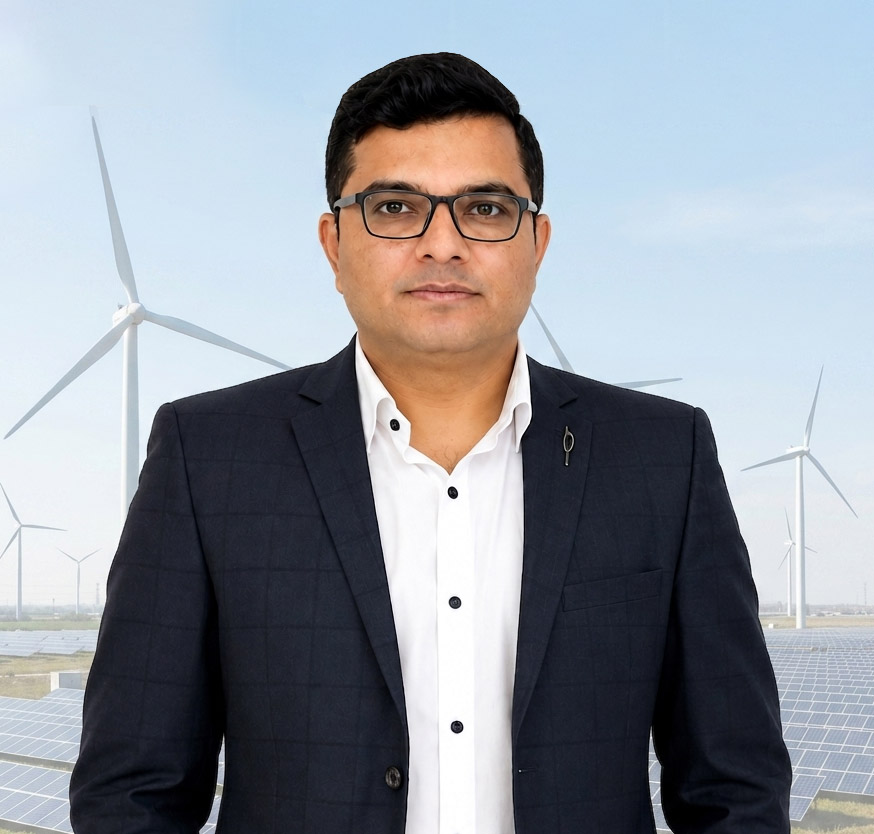
“POWERCON Group has established itself as a trusted partner in the renewable energy industry, and I’m pleased to join the PowerTeam,” said Ravindra Chauhan, SMO – Business Development. “I look forward to bringing my experience to the table and helping deliver greater value to renewable energy asset owners.”
“We are pleased to welcome Ravindra to the POWERCON family,” said Manoj Sonawane, Chief Growth & Resolution Officer, POWERCON Group. “His deep experience and understanding of the renewable energy sector make him a valuable addition to our team.”
POWERCON is currently executing its full turnkey wind projects in Maharashtra and Karnataka, taking end-to-end ownership from concept and feasibility through design, engineering, procurement, construction, and commissioning. It marks a major step for the Group, extending its reach beyond project development to constructing and operating renewable energy assets across their full lifecycle.
12, Sep 2026
The World’s oldest trade body on Biologicals, the Hyderabad based BIPA calls for 25% reduction in Chemical Inputs through Biological Integration; Puts INR 40,000 crore savings potential on table
Hyderabad, Sept 12: The BioAgri Input Producers Association (BIPA), the world’s oldest trade body dedicated to agricultural biologicals, has called for a phased 25% reduction in chemical fertiliser and pesticide usage through the scientific integration of biological inputs, which it estimates could potentially save the national exchequer around ₹40,000 crore annually, besides reducing import dependence, lowering farm input costs, improving soil health and strengthening the competitiveness of Indian agricultural exports.
The proposal will be a key focus of the 6th Annual BioAgri Industry Summit – BIOAGRI 2026, to be held on October 7 and 8 at Ramoji Film City, Hyderabad, under the theme “Biological Intelligence & Smart Agriculture.” More than 250 delegates, 35 speakers and 50 exhibitors are expected to participate in the summit, which will bring together industry leaders, scientists, researchers, startups, policymakers and regulators.

BIPA Office Bearers Srinivas, Dr. John Peter, Dr. Venakatesh Devanur And Paharaju Laxminarayana Seen Unveiling The Summit Brochure
BIPA office bearers Dr. A. John Peter, President; Dr. Venkatesh Devanur, Secretary General; Praharaju Laxminarayana, Vice President; and C.H. V. Srinivas, Joint Treasurer, announced the summit and outlined the association’s priorities addressing a press conference in a city hotel in Necklace Road.
They put Biologicals as a complement to chemical agriculture. BIPA said biological inputs such as bio-fertilisers, bio-stimulants and bio-pesticides should not be seen merely as substitutes for chemical inputs, but should be scientifically integrated into the existing agricultural system.
According to the association, biological inputs can support nutrient availability, beneficial soil microorganisms and sustainable crop protection, thereby enabling farmers to progressively reduce their dependence on chemical inputs without compromising productivity when appropriately selected and used.
“India needs to move from a predominantly chemical-dependent agricultural model towards an integrated system in which biologicals and chemicals work together scientifically and responsibly. A phased 25% reduction in chemical fertiliser and pesticide usage can deliver significant economic, environmental and agricultural benefits,” said Dr. A. John Peter, President, BIPA.
India consumes around 35 million tonnes of urea annually, besides depending substantially on imported raw materials for DAP, potash and other fertilisers. With the annual fertiliser subsidy bill exceeding ₹1.75 lakh crore, BIPA believes that reducing chemical dependence could help contain subsidy expenditure and foreign exchange outflows.
BIPA has urged the Government, industry, research institutions and academia to jointly develop a national programme to improve soil organic carbon, which it considers fundamental to the long-term health and productivity of Indian soils.
The association said restoring soil biological activity should become an important component of India’s agricultural policy, with greater emphasis on sustainable nutrient management, microbial activity and improved soil resilience.
Dr. Venkatesh Devanur, Secretary General, BIPA, said the focus needs to move beyond short-term crop productivity to the restoration of the biological health of agricultural soils.
BIPA also stressed the growing importance of pesticide residue management in protecting India’s agricultural exports. Increasingly stringent Maximum Residue Limit (MRL) requirements in international markets are making residue management an important issue for Indian exporters.
“Food safety and residue standards are becoming increasingly stringent across global markets. Agricultural produce from India, including consignments exported to neighbouring countries such as Nepal, has also faced rejection. India cannot afford to lose valuable markets because of avoidable residue-related issues. Greater adoption of Integrated Pest Management and scientifically validated biological crop-protection solutions can contribute to a safer and more export-competitive agricultural system,” said Dr. Venkatesh Devanur.
As a follow-up to BIOAGRI 2026, BIPA plans to bring out a White Paper on “Integrating Biologicals into the Framework of Chemical Fertilisers and Pesticides.”
The White Paper will draw on scientific research, industry experience and stakeholder consultations to propose a practical roadmap for integrating biological inputs into mainstream agriculture. BIPA also intends to initiate discussions with the Government, industry, research institutions and academia towards a National Policy on Biological Input Integration, covering scientific protocols, research, innovation, responsible adoption and an enabling regulatory framework.
“The next Green Revolution could be biological,” said the BIPA office bearers, noting that agriculture worldwide is increasingly looking for ways to improve productivity while reducing its environmental footprint.
Praharaju Laxminarayana, Vice President, BIPA, said the global focus is increasingly on reducing pesticide residues and moving towards more sustainable agricultural practices. He pointed to Europe’s stated long-term goals for reducing chemical dependence and increasing organic and sustainable farming, adding that residue reduction in food is becoming a global priority.
BIOAGRI 2026 will examine how biological science, biotechnology, artificial intelligence, precision agriculture and smart farming technologies can work together to address the emerging challenges facing Indian agriculture.
A key attraction of the summit will be the BIPA Startup Challenge 2026, which will provide early-stage companies developing innovative solutions in biological agriculture an opportunity to present their technologies and business ideas before industry leaders, investors and researchers.
An exhibition featuring around 50 companies will also showcase products, technologies and services from across the biological agriculture ecosystem.
BIPA, which represents more than 100 industry members, promotes innovation, industry collaboration, regulatory excellence and the wider adoption of sustainable biological solutions in agriculture.
Responding to questions on the increasing incidence of cancer and perceptions linking it directly to excessive use of fertilisers, BIPA office bearers said that a direct causal relationship between fertiliser or pesticide use and cancer has not been scientifically established and should not be presumed without evidence.
They, however, acknowledged concerns over the increasing use of chemicals in the production of vegetables and stressed the need for responsible input use, residue management and scientifically validated agricultural practices.
BIPA also pointed to the distortion caused by subsidised fertiliser pricing. Urea is supplied to farmers at a heavily subsidised price of around ₹280 per bag, against a much higher market-linked price, and the association said the pricing structure can encourage excessive application.
“Fertiliser subsidies are important for farmers, but the present pricing differential can encourage indiscriminate use. There is a need to promote balanced and scientifically recommended nutrient application rather than excessive dependence on urea,” the BIPA representatives said.
Building on the BIOAGRI summits held from 2021 to 2025, BIOAGRI 2026 will provide a national platform for knowledge exchange, research, innovation, business partnerships and policy dialogue in biological agriculture.
The summit is expected to attract stakeholders from across India and further strengthen Hyderabad’s position as a destination for knowledge-led industry conferences and agricultural innovation.
12, Sep 2026
Flipkart Minutes Marks Two Years with 4X Growth, Reaches 150+ Cities
Bengaluru – Sept 12: Flipkart Minutes, the quick commerce offering from Flipkart, marked two years since its launch in August 2024, having grown 4X year-on-year and expanded to nearly 1,200 micro fulfilment centres across 150+ cities. The platform has created more than 4 lakh direct and indirect jobs since inception, while around 60% of customers return to shop on Flipkart Minutes, reflecting the growing adoption of quick commerce across the country.
Tier 2+ markets are emerging as an important driver of this growth, with the customer base growing nearly 25X year-on-year across cities such as Ambala, Barabanki, Bhagalpur, Durgapur, Kanpur, Roorkee, Siliguri, Salem and Tiruppur. Demand in these markets is also extending beyond daily essentials, with strong uptake of products such as Korean noodles, sauces and ready-to-eat meals, alongside premium skincare and personal care categories.
Rising Gen Z Adoption Broadens the Quick Commerce Basket
Gen Z has emerged as the fastest-growing customer cohort on Flipkart Minutes, with the customer base growing nearly 5X year-on-year in the past twelve months. Gen Z drives over 45% of orders across categories such as beauty, electronics, gaming, wearables, fragrance, health and nutrition, and grooming, while accounting for 1 in 3 gourmet orders on the platform. The data points to a generation using quick commerce for a much wider range of products, from everyday essentials to premium and aspirational categories.
Kunal Gupta, Senior Vice President and Head of Flipkart Minutes, said, “In two years, Flipkart Minutes has evolved from a convenience offering into a broader shopping channel, with customers using it for much more than their daily essentials. What is particularly interesting is how quickly this behaviour is spreading beyond the largest cities, while Gen Z is also bringing new categories and new shopping occasions to the platform. With our growing network, we have an opportunity to make this experience available to more consumers across the country, while creating new opportunities for brands, farmers and local businesses to reach customers.”
India’s Evolving Shopping Basket
Beyond daily essentials and fruits and vegetables, premium and aspirational categories are also seeing strong growth on Flipkart Minutes. Gourmet and specialty grocery, launched within the past year, has grown 8X, with demand for cold-pressed oils, imported cheeses, international avocado varieties and Korean ready-to-eat meals. Men’s grooming has grown nearly 6X year-on-year, while pet food has grown 5X, reflecting the expanding range of products customers are choosing to buy through quick commerce.
The platform’s biggest single order to date was worth ₹6 lakh and included five smartphones, illustrating how quickly quick commerce is expanding beyond everyday essentials.
Building for India: Partners, Farmers, and a Greener Footprint
Since August 2024, Flipkart Minutes has built a partner ecosystem of close to 500 D2C brands, giving them access to hyperlocal demand and new customer segments. Through partnerships with Farmer Producer Organisations (FPOs), the platform has also connected thousands of farmers directly to consumers, helping them reach new markets and improve price realisation.
Flipkart Minutes is also building a more sustainable delivery network, with a growing share of last-mile deliveries now using electric vehicles and battery-swapping infrastructure across micro fulfilment centres. The platform has also introduced lighter compostable and biodegradable packaging across key fruits and vegetables categories, reducing the use of virgin plastic.
11, Sep 2026
Universal Music Group And Elevenlabs Announce Multi-year Strategic Agreement, Beginning With A New Licensed AI Music Creation Platform
Santa Monica, Calif. And New York, N.y., September 11: Universal Music Group (UMG), the world leader in music-based entertainment, and ElevenLabs, the leading AI audio research and product company, today announced a multi–year licensing agreement and wider strategic collaboration to launch a new AI-powered music platform for fans as well as to jointly develop AI audio products for artists and songwriters.
The groundbreaking agreement – ElevenLabs’ first with a major label – encompasses licensing and product development. It reflects the companies’ shared commitment to the principles that AI-enabled music innovation should be built responsibly, respect human artistry, and enable artists and songwriters to share in the value created.
The ElevenLabs-UMG relationship will begin with a new AI-powered music creation platform built on licensed music and artist participation. Now in development, the platform will give fans new ways to co-create with music from participating artists and songwriters, including through remixes and mashups, new track interpretations, and personalized vocal experiences. The agreement also includes the development of additional products and fan experiences in the months and years to come.
“The most exciting possibilities for AI and music are those that put artists, songwriters, and fans at the center,” said Sir Lucian Grainge, Chairman & CEO, Universal Music Group. “UMG and ElevenLabs are aligned that responsible AI can inspire discovery, deepen engagement between artists and fans, and unlock new revenue opportunities for the creative community. ElevenLabs’ leadership in AI audio brings a new dimension to our growing ecosystem of partners committed to expanding what’s creatively and commercially possible for human artistry.”
“AI opens up incredible possibilities for interacting with our favorite music and artists,” said ElevenLabs cofounder and CEO Mati Staniszewski. “By combining UMG’s global community and rights management expertise, with our AI models and products, we’ll enable artists and songwriters to create powerful new experiences for their fans, and ensure they are fairly compensated.”
The new platform will be distinct and offered separately from ElevenLabs’ existing music products, which include:
● Music API – ElevenLabs’ studio-grade music models available via API, used by music technology, media & entertainment, social media, and other leading businesses and developers globally.
● ElevenMusic – ElevenLabs’ music creation app for generating and editing original songs, with granular control over vocals, instrumentation, style, arrangement and other elements of a track.
11, Sep 2026
US stocks face weekly losses as investors await key inflation data
New York, Sep 11: US stock markets remained under pressure on Friday as investors turned cautious ahead of key inflation data that could influence the Federal Reserve’s interest-rate decision next week.
The Dow Jones Industrial Average, S&P 500 and Nasdaq were all heading for weekly declines after the major indexes fell for a fourth consecutive session on Thursday. The latest weakness has been driven by rising oil prices, higher Treasury yields and renewed concerns over inflation.

US stock futures showed some recovery in early trading, with Dow, S&P 500 and Nasdaq-100 futures trading modestly higher. However, investors remained cautious as they awaited the August Consumer Price Index (CPI) report, which is expected to provide an important signal for the Federal Reserve’s next policy move.
The inflation report is particularly important because it is the final major inflation reading available to policymakers before the Fed’s upcoming meeting. A stronger-than-expected reading could increase expectations of another interest-rate hike, while softer inflation could ease concerns about tighter monetary policy.
Oil prices have added to the market’s concerns. Brent crude recently climbed above $100 a barrel amid continuing geopolitical tensions, increasing the risk that higher energy costs could keep inflation elevated. The rise in oil prices has also contributed to higher Treasury yields and greater uncertainty in financial markets.
The US 10-year Treasury yield recently approached 5 per cent, reflecting growing concerns about inflation and the possibility of higher interest rates. Higher bond yields can make equities less attractive and increase borrowing costs for companies and consumers.
Technology and growth stocks remain particularly sensitive to changes in interest-rate expectations because higher borrowing costs can affect company valuations and future investment plans. At the same time, strong demand for cloud computing and artificial intelligence infrastructure continues to support parts of the technology sector.
For investors, the combination of expensive oil, elevated bond yields and uncertainty over the Fed’s next move has created a more cautious trading environment. The S&P 500 had already fallen nearly 3 per cent from its August record close after four consecutive sessions of losses, although it remained in positive territory for the year.
The upcoming inflation data could therefore set the tone for Wall Street in the near term. A cooler inflation reading may provide some relief to equities by reducing expectations of further monetary tightening, while a stronger reading could increase pressure on stocks and keep investors focused on the outlook for interest rates.
With global markets also closely watching energy prices and geopolitical developments, investors are expected to remain cautious and closely track economic data for further direction.
11, Sep 2026
Wellness is the New Pre-Festive Ritual at Fairmont Spa & Longevity
Mumbai, Sep 11: As the festive season approaches, the traditional ritual of getting ready for celebrations is evolving. Beyond wardrobes, beauty appointments and social calendars, wellness is emerging as an essential part of the pre–festive preparation, with people increasingly looking to reset, recharge and restore before stepping into a season of back-to-back celebrations.

At Fairmont Spa & Longevity at Fairmont Mumbai, this shift towards pre–festive wellness comes to life through a dual experience that brings together the restorative rituals of the Fairmont Spa and the science-led approach of Blu Xone — India’s first luxury-integrated longevity hub. Designed for the modern wellness seeker, the destination offers a considered pause before the festive rush, bringing together ancient healing traditions, personalised care and advanced non-invasive therapies.
The Fairmont Spa is rooted in Indian, Eastern and global healing traditions, offering sensorial experiences designed to nurture different stages of life. From the Tranquility Suite, created for immersive rituals, botanical elixirs and grounding therapies, to the Express Recovery Suite, designed for focused and time-efficient treatments, the spa offers experiences that allow guests to pause, recalibrate and return to themselves.
At the other end of the wellness spectrum, Blu Xone brings precision wellness into the pre–festive ritual. Inspired by the principles of the world’s Blue Zones, the space combines contemporary longevity science with non-invasive therapies focused on health-span, recovery and cellular wellbeing. Guided by medical wellness practitioners, each journey is tailored to an individual’s physiological blueprint, creating a personalised approach to wellness rather than a standardised treatment experience.
For those looking to prepare their bodies for the physical demands of the season, Blu Xone offers a suite of advanced therapies including Cryotherapy, Hyperbaric Oxygen Therapy, Red-Light Therapy, Intermittent Vacuum Therapy, and Intermittent Hypoxic Therapy. Together, these experiences are designed to support circulation, recovery, rejuvenation and overall vitality, creating an opportunity to address fatigue and restore the body before the festive calendar begins.
The pre–festive reset is not simply about recovery; it is about approaching celebration with greater intention. Whether it is a restorative spa ritual before a packed social calendar, a focused recovery treatment after travel, or a more personalised longevity experience, Fairmont Spa & Longevity offers a spectrum of wellness experiences that can be integrated into the modern festive routine.
With its combination of ritual, recovery and precision wellness, Fairmont Spa & Longevity reframes the idea of festive preparation. In a season traditionally centred around looking the part, the new pre–festive ritual is about feeling the part too — rested, restored and ready to embrace the celebrations ahead.
As Mumbai prepares for another season of festivities, Fairmont Spa & Longevity at Fairmont Mumbai offers a refined destination for that essential pause before the rush — where wellness becomes not an afterthought, but the first step towards celebrating at one’s best.
11, Sep 2026
Indian Bank Launches Digital Solutions to Transform Personal Banking and Cash Management at Global Fintech Fest 2026
Chennai, Sep 11: Indian Bank launched a bouquet of digital banking solutions at the Global Fintech Fest 2026, reinforcing its commitment to technology-led, customer-centric banking.

The Bank further introduced “AI-TARA”, a conversational banking solution that enables customers to access banking services through voice commands in 10 languages, including fund transfers, IMPS and FD creation. The solution aims to make digital banking simpler and more accessible, particularly for senior citizens and customers with limited digital expertise.
Indian Bank also showcased Smart Wealth, a Personal Finance Management module on IndSMART that provides customers with a consolidated view of their financial portfolio across bank accounts, mutual funds, deposits, equities, ETFs and NPS, along with spending analytics and personalised financial insights.
The Bank unveiled IND Cash Optima, a comprehensive digital cash management platform for corporate and institutional customers. The platform brings together digital collections, paperless corporate onboarding, mobile-based cash management and invoice-to-payment solutions, enabling greater convenience, visibility and efficient reconciliation.
Speaking on the occasion, Shri Binod Kumar, MD & CEO, Indian Bank, said:
“At Indian Bank, we are leveraging technology to make banking simpler, more accessible and responsive to evolving customer needs. The solutions showcased at GFF reflect our focus on combining innovation with convenience, inclusion and an enhanced customer experience.”
He further said,
“Our voice banking solution, “AI-TARA” is aimed at bringing senior citizens and customers with limited digital expertise who may face challenges in navigating conventional banking applications into the digital banking ecosystem. By enabling customers to access key banking services through voice commands, we are taking digital banking closer to every customer, irrespective of their level of digital proficiency.”
The initiatives reaffirm Indian Bank’s commitment to digital innovation and building seamless banking experiences for both retail and institutional customers.
11, Sep 2026
Jaishankar Urges BRICS to Build Stronger Trade Links Amid Global Uncertainty
New Delhi, Sep 11: External Affairs Minister S. Jaishankar has called for stronger trade ties, resilient supply chains and a more predictable business environment among BRICS countries as global economies face growing geopolitical and economic uncertainties.
Addressing the BRICS Business Forum, Jaishankar stressed that the grouping’s economic strength will depend on its ability to remain connected, competitive and better prepared to absorb global disruptions.
He underlined the need to deepen trade and investment cooperation within BRICS while building supply chains that can withstand sudden disruptions. Greater diversification of trade relationships and stronger business links can help companies manage risks arising from conflicts, changing trade flows and other global shocks.
A more predictable business environment across BRICS economies can also encourage companies to expand investment and develop stronger cross-border partnerships. For businesses, this could create new opportunities in manufacturing, logistics, technology, energy and other strategic sectors.
Jaishankar also highlighted the importance of greater cooperation in startups and innovation. Stronger links between businesses, entrepreneurs and innovation ecosystems across BRICS countries can help create new avenues for investment, technology development and job creation.
The focus on resilient supply chains is particularly important at a time when disruptions to major global trade routes and geopolitical tensions are putting pressure on businesses and increasing uncertainty in international commerce.
For India, deeper BRICS economic cooperation can provide opportunities to expand markets for domestic producers, strengthen supply-chain networks and encourage investment in sectors that are important for long-term economic growth.
The BRICS Business Forum therefore provides an important platform for governments and the private sector to work together on practical measures that can make trade more reliable, businesses more competitive and supply chains more resilient.
With global economic conditions becoming increasingly unpredictable, stronger cooperation among BRICS economies could help businesses navigate disruptions while supporting trade, investment and sustainable growth.
11, Sep 2026
Affordable Internet and Wider 5G Access Transform India’s Digital Economy
Mumbai, Sep 11: India’s digital journey has undergone a major transformation over the past decade, with affordable internet and wider connectivity bringing millions of people into the digital economy.

Communications Minister Jyotiraditya M. Scindia highlighted the scale of this change at the Global Fintech Fest, saying broadband access has grown from just around 6 crore people 10 years ago to more than 102 crore today.
At the same time, the cost of data has dropped sharply from about Rs 287 per GB to just Rs 9 per GB. The steep fall in data prices has made internet access more affordable for households and businesses and has helped India emerge as one of the most cost-effective digital markets globally.
The impact of this transformation goes beyond simply accessing the internet. Affordable connectivity is making it easier for people to use digital payments, online banking, e-commerce, education platforms and government services. For small businesses, entrepreneurs and startups, wider internet access is also creating new ways to reach customers and participate in the growing digital marketplace.
India’s rapid expansion of 5G connectivity has further strengthened this digital ecosystem. The country began rolling out 5G services in 2022, and within 26 months, 5G network capability had reached 99.9 per cent of India’s districts, covering around 85 per cent of the population. The rollout involved a capital expenditure of about Rs 4,500 crore.
The growing network is also taking digital opportunities beyond major cities. As villages and smaller communities become connected, more people are gaining the ability to participate in digital financial services, online commerce and other technology-driven activities.
For India’s fintech sector, wider and cheaper connectivity provides a stronger foundation for innovation and inclusion. It can help bring more consumers, merchants and rural communities into formal digital systems while giving businesses access to a much larger potential customer base.
The transformation also reflects a broader shift in India’s digital economy—from connectivity being available to a limited section of society to becoming an increasingly accessible tool for everyday life, financial services and economic opportunity.
As more villages and communities come online, the benefits of India’s digital growth are reaching a wider population, strengthening the foundation for a more connected and inclusive economy.


