


10, Sep 2026
Samsung Certified Re-Newed Brings Galaxy S26 Series to More Customers

Gurugram, Sep 10, 2026: Samsung India is now offering the Galaxy S26 series — Samsung’s third-generation AI phones — as part of its Samsung Certified Re–Newed programme (CRN). Available on Samsung.com, Certified Re–Newed Galaxy S26 Ultra and Galaxy S26 devices are in like-new condition and at a great value.
- 0
- By Neel Achary

10, Sep 2026
NABARD Uses AI to Make Kisan Credit Card Loans Faster and More Accessible for Farmers

Kisan Credit Card (KCC) is one of India’s key agricultural credit initiatives, designed to provide farmers with timely and affordable loans for crop cultivation and other farming-related needs. The scheme helps farmers access formal credit without having to depend heavily on informal lenders. Over the years, KCC has also been extended to allied activities such as dairy, fisheries and animal husbandry.
Now, the Kisan Credit Card ecosystem is moving into a more digital phase, with the National Bank for Agriculture and Rural Development (NABARD) developing artificial intelligence-based models that could help farmers access credit on demand.
NABARD develops AI models for Kisan Credit Card loans
NABARD Chairman Shaji Krishnan V said the institution is working on AI models aimed at enabling more convenient and on-demand Kisan Credit loans as rural lending increasingly adopts digital technologies.
The move could significantly change the way farmers access agricultural credit by making the loan process faster, more data-driven and potentially more responsive to their financial requirements.
Instead of relying only on traditional paperwork and physical banking processes, digital lending models can help financial institutions assess relevant information more efficiently and improve the speed of credit decisions.
How AI can transform Kisan Credit Card lending
The use of AI in agricultural lending could help banks and financial institutions process large amounts of information more efficiently. For farmers, this could translate into quicker access to credit when funds are needed for seeds, fertilisers, farm equipment, irrigation, harvesting and other agricultural expenses.
AI-based models can also support more data-driven credit assessment, particularly in rural areas where traditional credit histories may not always provide a complete picture of a farmer’s financial activity.
The larger objective is to make formal agricultural credit more accessible while improving the efficiency of rural lending.
Kisan Credit Card can support affordable farm credit
The Kisan Credit Card scheme was introduced to provide farmers with adequate and timely credit for agricultural operations. Government support through interest subvention and incentives for timely repayment has helped make eligible short-term agricultural loans more affordable.
According to government information, short-term agricultural loans under the scheme are available at a 7 per cent interest rate, with an additional 3 per cent incentive for timely repayment, bringing the effective rate to 4 per cent for eligible loans. The collateral-free credit limit has also been increased to Rs 2 lakh per borrower from January 1, 2025.
These measures are important for small and marginal farmers because timely access to affordable credit can reduce dependence on costly informal borrowing.
Digital lending can strengthen rural financial inclusion
The shift towards digital Kisan Credit Card loans comes at a time when India’s rural financial ecosystem is becoming increasingly technology-driven.
Digital platforms can reduce paperwork, improve access to banking services and make it easier for farmers to interact with formal financial institutions. This can be particularly useful for farmers living in areas where access to traditional bank branches remains limited.
The development of AI-based lending models could therefore become an important part of India’s broader push towards digital financial inclusion in rural India.
Kisan Credit Card and the future of agriculture finance
The future of agricultural lending is likely to depend increasingly on technology, data and faster digital services. NABARD’s AI initiative signals a move towards a system where farmers could potentially receive credit more quickly based on their actual financial and agricultural requirements.
This could help farmers manage seasonal expenses more effectively and reduce delays in accessing working capital.
The development is also significant for banks because improved digital assessment and processing can help lenders manage rural credit more efficiently while expanding their reach.
AI can create wider economic benefits for rural India
Faster access to agricultural credit can have an impact beyond individual farmers. When farmers receive funds on time, they can purchase agricultural inputs, invest in equipment, maintain livestock and improve farm productivity.
Higher agricultural activity can increase demand for seeds, fertilisers, machinery, transportation, storage and other rural services. This creates business opportunities across the wider rural economy.
A stronger digital lending ecosystem can therefore support not only farmers and Kisan Credit Card borrowers, but also rural businesses, agricultural supply chains and employment.
What NABARD’s AI push means for farmers
The development of AI-based Kisan Credit Card lending models represents a broader shift from traditional rural banking towards technology-enabled finance.
If implemented effectively, such systems could make agricultural credit more accessible, reduce processing time and improve the overall borrowing experience for farmers.
At the same time, responsible use of AI, data security, transparency and proper safeguards will remain important as financial institutions expand the use of technology in rural lending.
Conclusion
NABARD’s move to develop AI models for on-demand Kisan Credit Card loans highlights how technology is becoming an important part of India’s rural finance ecosystem.
For farmers, faster and more convenient access to formal credit can support timely investment in agriculture and allied activities. For banks and rural businesses, digital lending can improve efficiency and expand the reach of financial services.
As India’s agriculture sector becomes increasingly connected to digital platforms, the combination of Kisan Credit Card, AI and digital banking could play an important role in strengthening rural financial inclusion and supporting long-term agricultural growth.
10, Sep 2026
IFFCO-TOKIO Strengthens Leadership Team, Elevates Sanjeev Chopra as Director – Operations
Delhi/Gurugram, Sep10: IFFCO-TOKIO General Insurance Company Limited, one of India’s general insurance companies, has announced the elevation of Mr. Sanjeev Chopra as Director – Operations. In his new role, he will focus on strengthening operational efficiency, governance frameworks and organisational capabilities while supporting IFFCO-TOKIO’s continued focus on sustainable and customer-centric growth.
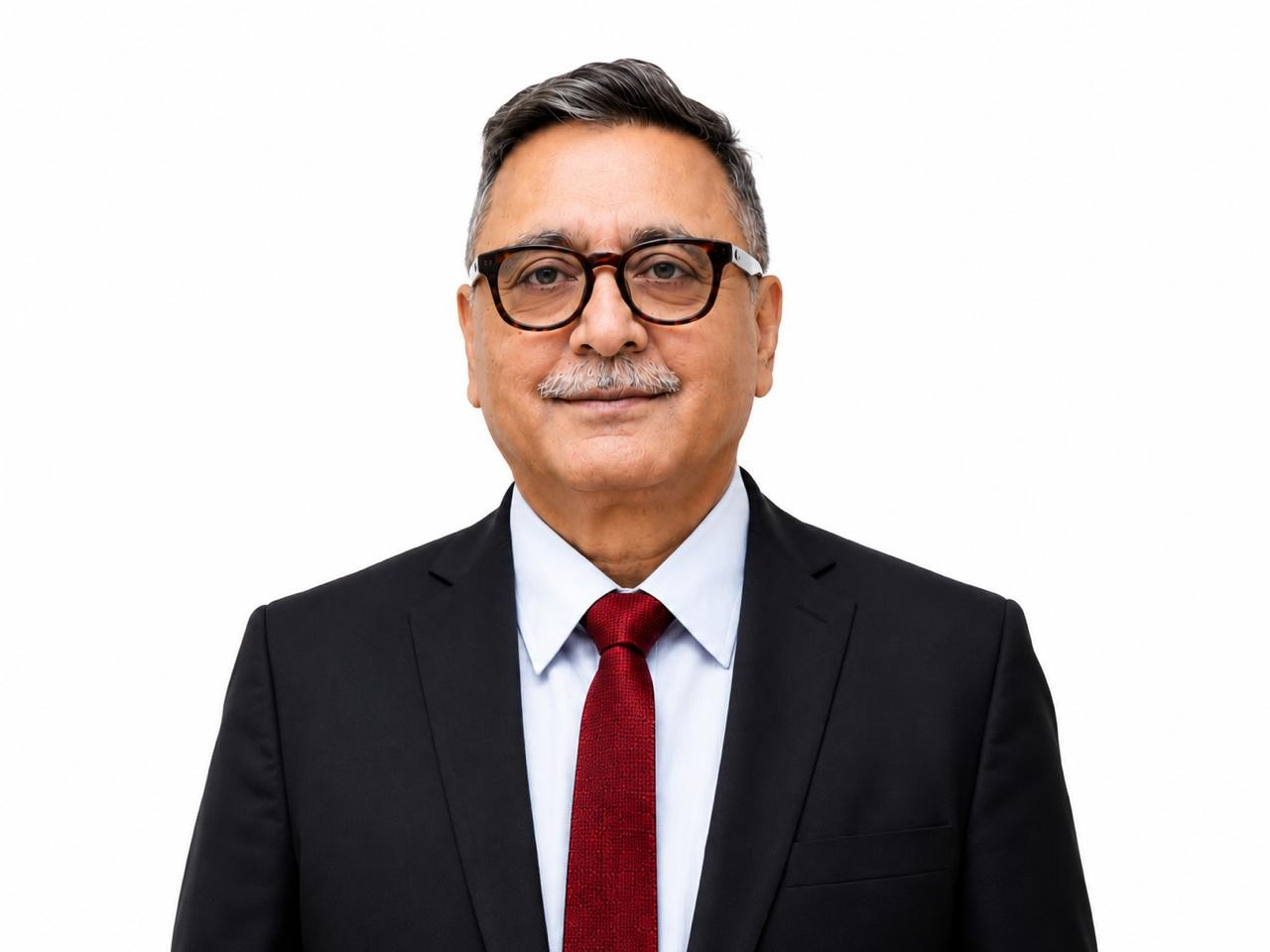
With over four decades of experience in the general insurance industry, Mr. Chopra brings extensive expertise across financial strategy and planning, underwriting, finance and pricing, investments and treasury management, tax strategy, reinsurance, governance, stakeholder management and regulatory compliance. His deep understanding of the evolving regulatory, financial and operational landscape of the industry has enabled him to contribute significantly across multiple facets of general insurance.
Associated with IFFCO-TOKIO General Insurance since 2001, Mr. Chopra has held several key positions during his tenure, including Senior Executive Director & Chief Financial Officer. Over the years, he has played an important role in strengthening the company’s financial and operational frameworks and contributing to its overall growth journey.
Commenting on the elevation, Mr. Tatsuya Fujimoto, Managing Director & CEO, IFFCO-TOKIO General Insurance Company Limited, said,
“Sanjeev has been a valued part of IFFCO-TOKIO’s journey for over two decades. His extensive experience, deep understanding of the insurance industry and strong financial expertise have made him a trusted and accomplished leader within the organisation. We are confident that, in his new role, he will further strengthen our operational capabilities, enhance organisational effectiveness and contribute meaningfully to IFFCO-TOKIO’s continued growth and success.”
Expressing pleasure on his elevation, Mr. Sanjeev Chopra as Director – Operations said,
“It is a privilege to have been associated with IFFCO-TOKIO for over two decades, and I am grateful for the trust and confidence the organisation has placed in me. I look forward to taking on this responsibility and contributing to the company’s continued growth and operational excellence.”
Mr. Chopra is recognised for his extensive experience and expertise across the general insurance spectrum, with a career spanning financial management, underwriting, investments, reinsurance, governance and regulatory matters. His elevation to the role of Director – Operations further strengthens IFFCO-TOKIO’s leadership team as the company continues to enhance its operational capabilities and deliver sustained value to its customers and stakeholders.
10, Sep 2026
Asset Managers Confident of Using AI in their Operations, but Mindful of Necessity for High Quality Data, Global Research Reveals
70% of asset managers believe the quality of their organization’s data is good or excellent, while almost a third (32%) claim it to be excellent
BOISE, Idaho, NEW YORK, CHICAGO, LONDON and HONG KONG, Sept 10 – Asset managers are broadly confident in the quality of the data being used to train artificial intelligence (AI) models being deployed in their organizations, new research from Clearwater Analytics, drawn from its “GenAI and the Data Divide” study, shows.
The study, which covered a broad spectrum of fund managers including insurance asset managers, hedge funds, private markets specialists, and general asset managers, reveals that nearly three quarters of asset managers (70%) surveyed believe their data is good or excellent (32% said it is excellent). That confidence isn’t evenly spread. It depends heavily on which part of “data quality” is being asked about.
As far as accuracy and reliability is concerned, only just over half (56%) said their data was good or excellent, the lowest score of any dimension tested. Yet on the matter of completeness and coverage, almost eight out of 10 (79%) said it was good or excellent, (48% said it is excellent). The gap between the two, roughly 23 percentage points, is the clearest sign that firms have more data than they fully trust.
Almost three quarters (73%) were satisfied that data quality with regard to representativeness and bias was good (31%) or excellent (42%). However, more than a quarter (27%) said it was poor (11%) or average (16%).
Slightly fewer (70%) consider the timeliness and freshness of the data to be good (46%) or excellent (24%). On every dimension but one, confidence holds above seven in 10. Accuracy is the exception, and it’s the dimension that decides whether an AI output can actually be acted on.
The majority (69%) said that their data sets are complete, while 12% of those said they were very complete. However, more than a fifth (21%) said they were incomplete. Coverage, in other words, is largely a solved problem. Trust in what that coverage actually says is not.
Despite the overall confidence in the quality of the data, there remains quite high levels of concern about the potential use of poor quality data in an organization’s AI operations, and those concerns escalate quickly once the conversation turns to consequences. Almost three quarters (72%) said the risk of this made them concerned or very concerned (36% in each group).
Four out of five (80%) were concerned – 20% of them very concerned – that the use of poor quality data could erode trust in the effectiveness of their AI tools, rather than placing the blame on the quality of the data that has been used to develop it. That’s the risk compounding on itself: a data problem gets misread as a technology problem, and the tool takes the blame the data deserves.
Seven out of 10 (70%) of managers are concerned about the financial and legal risks coming from biased investment decisions or regulatory fines, with almost half (48%) very concerned about the impact from the use of poor quality data.
These concerns have an impact on available resources, too. Almost two thirds (65%) were concerned that data scientists are spending their time cleaning up data instead of building better models, with 39% of them very concerned about resources being wasted. The people best equipped to improve AI are the ones stuck fixing the data underneath it.
Almost all asset managers (99%) agreed that the biggest barrier to trusting AI outputs, fueling an “AI trust gap”, is the use of unreliable and opaque data. Near-unanimous numbers like that are rare in any survey. It’s the clearest signal in the entire study of where the industry’s attention needs to go next.
It has been well documented that without careful monitoring, poor quality data can amplify inherent biases within AI models. While almost three quarters (73%) are concerned that this could happen, more than two thirds (67%) are satisfied their organizations’ AI models have the ability to track and audit sources of data. Even so, more than a fifth (22%) were unsure and a further 10% suggested the abilities were incomplete. That leaves close to a third of firms without full visibility into the data their own AI models are relying on.
The vast majority (74%) said the data aggregation platform they use is effective at reconciling and aggregating data from disparate sources into a unified system. A fifth (20%) said it was very effective. Aggregation, like coverage, is a capability most firms have already built. Accuracy is the one they’re still building toward.
Souvik Das, CTO at Clearwater Analytics, said: “The data that a model trains on is the input that actually matters, more than the model itself. That’s why this finding lands the way it does. Firms have built real confidence in their AI, but confidence in the underlying accuracy hasn’t caught up yet, and that gap is what determines whether a firm acts on an output or checks it first. Closing it is the discipline this next phase of AI actually requires.”
10, Sep 2026
BULLET Microdrama Partners with Tata Motors Commercial Vehicles for ‘Apna Superstar’, Celebrating the Spirit of Aspirational India

Mumbai, September 10, 2026: BULLET Microdrama has partnered with Tata Motors Commercial Vehicles for Apna Superstar, starring Naman Arora and Nishi Saxena, marking the launch of its another branded microdrama. Centred on ambition, resilience, and the desire to build a better future, the collaboration uses the emerging microdrama format to bring to life a culturally rooted narrative that reflects the dreams and determination of aspirational India.
As storytelling and consumption habits continue to evolve, BULLET is using the microdrama format to tell stories that are fast paced, emotionally engaging and culturally rooted. With Apna Superstar, the platform extends this approach to branded storytelling, building on its earlier work with JK Cement. Now, Tata Motors Commercial Vehicles has backed BULLET’s vision, trusting the platform to weave its philosophy of aspiration and progress naturally into the narrative.
Speaking about the collaboration, Azim Lalani, Co-Founder & Chief Business Officer, BULLET Microdrama, said, “Apna Superstar is an important milestone for BULLET as our first branded microdrama. The format gives us the opportunity to tell emotionally rich stories in a way that reflects how audiences are consuming entertainment today. What made this collaboration particularly exciting was Tata motors commercial vehicles’s willingness to embrace that evolution and trust BULLET to translate the brand’s ethos into the narrative authentically. That gave us the freedom to create a story rooted in the realities while ensuring the brand had a meaningful role within Sonu’s world.”
Built on the belief that storytelling is evolving as fast as the audiences consuming it, BULLET Microdrama has embraced microdrama as a format that is quick, culturally rooted and unafraid to go straight to the emotional core of a story. Apna Superstar reflects that evolution, speaking to the lives, struggles, and ambitions of audiences today.
At the centre of Apna Superstar is Sonu, a young man honouring his late father’s memory while chasing the dream of building something of his own, a journey of resilience that Tata Azura became part of as a quiet enabler of his progress.
Trailer Link: https://www.instagram.com/p/
Highlighting the significance of the partnership, Munaf Merchant, Head – AVOD & Partnerships, BULLET Microdrama, said, “As microdrama continues to find a wider audience, we’re seeing more brands wanting to be part of stories that carry real emotional weight, rather than just appearing alongside them. With Apna Superstar, the idea was to build a story that reflects everyday ambition, and to bring a brand into that world in a way that feels seamless. This aligns closely with BULLET’s focus on meaningful, high-value content that resonates with audiences. We’re grateful to Tata motors commercial vehicles for their trust and support in bringing this vision to life.”
Tabassum Modi, Chief Content Officer and Head, Havas Play India, who played a key role in bringing this partnerhsip to life, said, “Microdrama is emerging as one of the most consumed storytelling formats in the country today, and brands that recognize this shift early are positioned to build a far deeper connect with audiences. At Havas Play, we conceptualized a deeply resonant narrative designed to truly humanize the brand. By facilitating this collaboration, we are proud to bring together Tata motors commercial vehicles and BULLET Microdrama, a visionary brand and an innovative platform that share a clear conviction in the format’s immense potential.”
Apna Superstar, starring Naman Arora and Nishi Saxena, is now streaming on BULLET Microdrama.
10, Sep 2026
India’s coal demand set to grow 4.2 pc in 2026 amid rising energy needs
NEW DELHI, Sep 10: India’s coal consumption is expected to grow by around 4.2 per cent in 2026, driven by rising electricity demand and continued expansion in economic and industrial activity, according to a report.

The report said global coal demand is also expected to increase in 2026, with emerging economies in Asia likely to remain among the key contributors to overall consumption.
In India, growing power requirements from households, industries and businesses are expected to support higher coal use. Coal continues to remain an important part of the country’s electricity generation mix, particularly as demand for reliable and uninterrupted power increases.
The projected rise in consumption comes at a time when India is also rapidly expanding its renewable energy capacity. The growing use of solar, wind and other clean energy sources is gradually changing the country’s power mix, while conventional sources continue to meet a significant share of current electricity needs.
The report’s outlook highlights the challenge of balancing rising energy demand with the transition towards cleaner sources. For India, ensuring adequate and affordable power supplies while accelerating renewable energy development will remain important for sustaining economic growth.
The expected increase in coal consumption also reflects the broader growth in India’s energy needs as businesses, industries and households continue to require more electricity.
10, Sep 2026
Tata Steel Advances Sustainable Steelmaking with India’s First‑of‑its‑kind Coke Oven Gas Injection Project at Meramandal
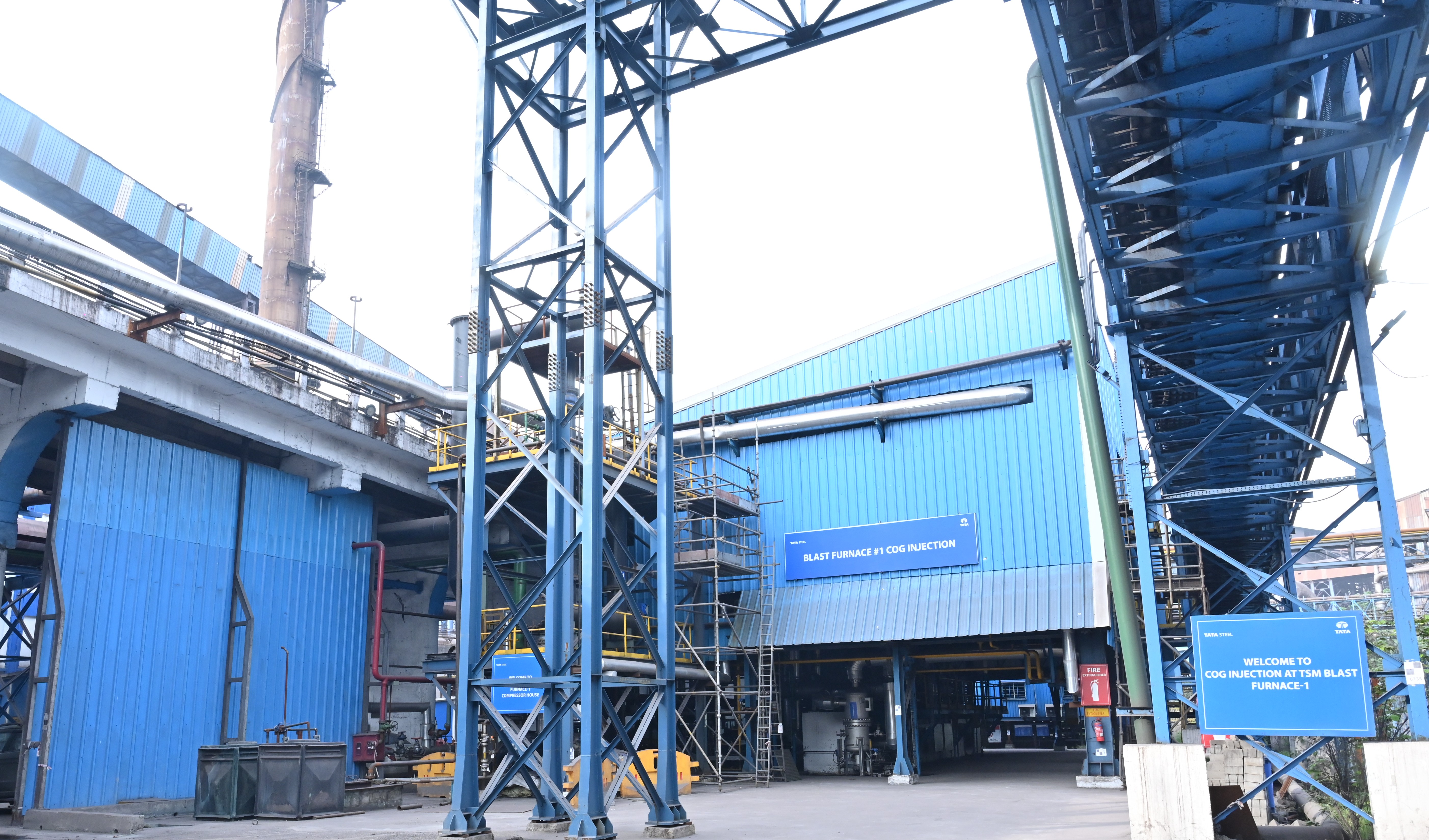
Bengaluru, Sep 10: Tata Steel Meramandali commissioned its groundbreaking Coke Oven Gas Injection Project at Blast Furnace 1 – a first-of-its–kind initiative in the Indian steel industry. The initiative underscores Tata Steel‘s unwavering commitment to its Net Zero by 2045 target and highlights the Company’s leadership in deploying breakthrough technologies for low-carbon iron and steel production.
Subodh Pandey, Vice President – Technology, R&D, NMB and Graphene, Tata Steel, said:
“This initiative of maximising the utilisation of process gases to reduce dependence on external fossil fuels reinforces Tata Steel’s leadership in sustainable manufacturing. We remain focused on demonstrating and scaling low carbon technologies, thereby accelerating our journey towards Net Zero by 2045.”
Sudhir Kumar Mehta, Vice President – Operations, Tata Steel Meramandali, said:
“This project is a good example of how our teams continuously look for ways to improve efficiency while reducing the environmental impact. By finding a productive use for coke oven gas within the blast furnace process, we are making our operations leaner and cleaner.”
In an integrated steel plant, COG – a hydrogen and hydrocarbon-rich byproduct gas – is typically used for power generation, heating, or simply flared. With support from technology partner M/s Paul Wurth-SMS and equipment supplier M/s Kobelco, Tata Steel has successfully implemented the COG injection in the blast furnace through tuyeres, substituting fossil fuel as a reductant, thereby reducing the environmental impact.
Apart from reducing fossil fuel consumption and CO2 emissions, it also provides a unique opportunity to operate the blast furnace with a three-fuel system, enhancing operational flexibility and efficiency. Additionally, the initiative strengthens Tata Steel’s leadership in green steel production through the safe and stable operation of advanced injection technologies. Tata Steel has been a pioneer in the adoption of low-carbon blast furnace technologies, successfully demonstrating coal bed methane, hydrogen, and biochar injection in the blast furnace.
10, Sep 2026
From Kulfi to Ube: Indian Consumers Are Ready for More
As Indian consumers look beyond familiar favourites, stonefield, The Ice Cream Taste Company, brings taste-led innovation to IICE 2026
Chennai, Sept 10: Indian ice cream consumption is entering a more adventurous phase. Consumers are increasingly looking for new flavours, regional nostalgia, global inspirations, premium experiences and formats that offer something worth discovering.
Consumer research conducted by stonefield in partnership with various research firms reflects this changing dynamic. While the category continues to expand, consumption is becoming more occasion-led, with younger consumers showing greater openness towards experimentation and new taste experiences.
Five taste trends shaping the next scoop
1. Nostalgia is being reinvented
Familiar Indian tastes are returning in contemporary expressions — from Kulfi and mithai to regional beverages and desserts. stonefield is developing Desi ice cream concepts that give these familiar tastes a creative new twist.
2. Global flavours are entering the Indian ice cream palette
Ube, Russian Honey Cake, Tiramisu and other global inspirations are creating new opportunities for brands looking beyond conventional flavours.
3. Mango is becoming a story, not just a flavour
Consumers are showing greater interest in provenance, variety and authenticity. stonefield’s Aamrut brings Indian mango varieties such as Alphonso, Totapuri, Dussehri and Banganapalli into contemporary ice cream experiences.
4. Premiumisation is increasingly about sensory experience
Creaminess, richer mouthfeel, indulgent inclusions and layered textures are creating new premium cues. stonefield’s DairyONE range of concentrated dairy boosters is designed to enhance the mouthfeel and creaminess of ice creams and frozen desserts.
5. The format is becoming part of the experience
From Kulfi Pops and rolled Kulfi to bars, sandwiches, cups and sorbets, new formats are giving consumers new ways to experience familiar and emerging flavours.
These shifts are creating an opportunity for brands to move beyond simply adding flavours to their portfolios and instead build distinctive taste experiences around evolving consumer needs.
“Flavour is becoming one of the strongest reasons for consumers to choose a product.” According to Sandeep Devgan, CEO, stonefield: “The consumer today is far more curious about taste. They may want the comfort of a Kulfi one day and the excitement of Ube or a global dessert the next. Our opportunity is to help brands turn that curiosity into products that are distinctive, relevant and commercially viable. Flavour is no longer just an ingredient in the product — it is becoming one of the strongest reasons for consumers to choose it.”
From flavour to taste partnership
stonefield combines consumer insights, flavour technology, application expertise and customised product development to help manufacturers move from an initial idea to a finished product.
Its portfolio spans brown, Indian ethnic, fruit, nut and chocolate flavours, along with advanced solutions for creaminess and mouthfeel in frozen desserts and ice creams, as well as emerging applications such as protein products and new-age dairy formats.
At IICE 2026, stonefield will bring this approach to life through its Ice Cream Studio, showcasing a curated selection of new taste concepts and possibilities for the evolving ice cream category.
With India’s ice cream market estimated at around ₹24,350 crore in 2025, continued growth is being driven by wider penetration, premiumisation and product innovation.
For stonefield, the question is no longer simply “Which flavour should we launch?” but “What new experience can we create for the consumer?”
stonefield — The Ice Cream Taste Company
Indian Ice Cream Expo 2026
Stall F10/11 | 10–12 September 2026 | Chennai Trade Centre, Chennai
10, Sep 2026
PETRONAS Lubricants India and Tata Motors Collaborate to Pilot a Scalable Used-Oil Recycling Model
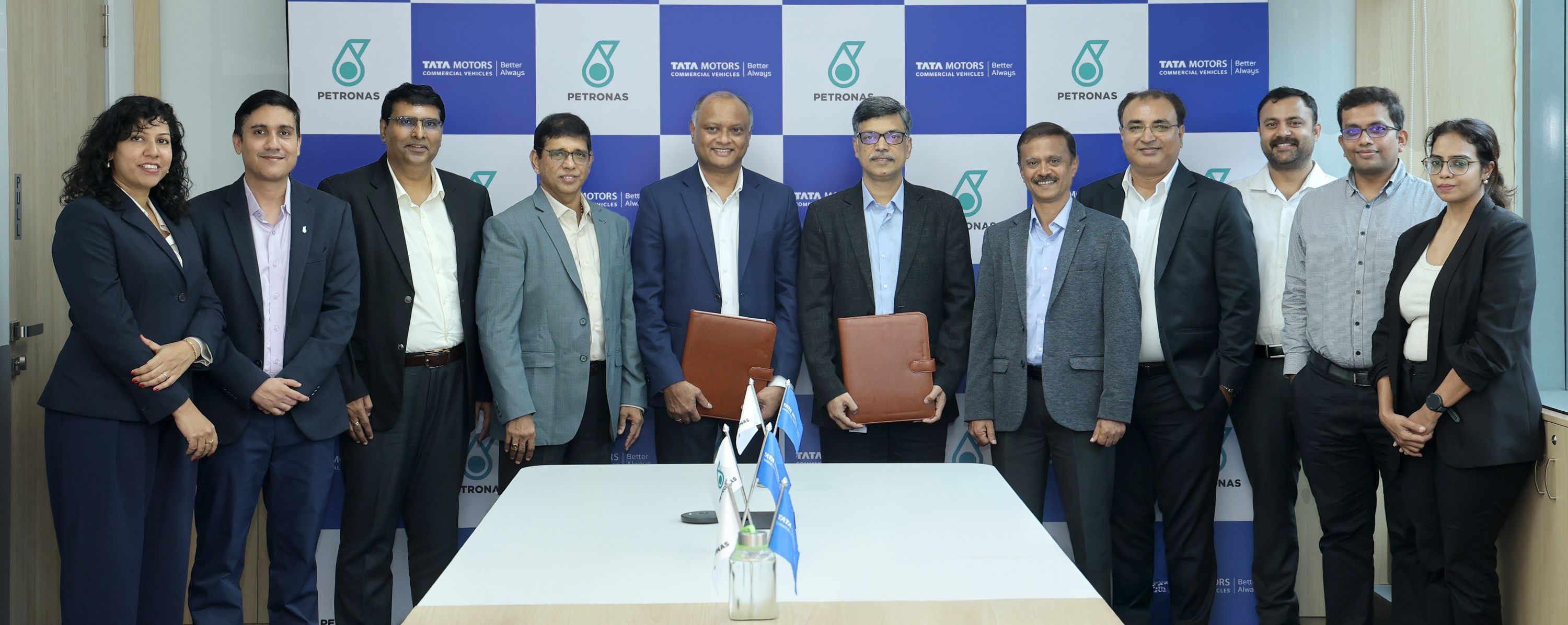
Bengaluru, 10 September 2026: PETRONAS Lubricants India, part of the PETRONAS group and a trusted name in advanced automotive and industrial lubricant technology, and Tata Motors, India’s largest commercial vehicle manufacturer, have signed a Memorandum of Understanding (MoU) for the responsible collection and recycling of used automotive lubricants. The two companies will pilot a structured and scalable model simultaneously across Maharashtra and Tamil Nadu. The collaboration brings together the complementary strengths of two industry leaders to address a critical sustainability challenge. It also supports compliance with India’s evolving Extended Producer Responsibility (EPR) framework and advances the country’s circular economy ambitions.
“Achieving true circularity in used oil begins when re-refined base oil is reintegrated into finished lubricants. Our collaboration with Tata Motors marks an important step toward building a scalable model for used oil circularity and reflects the strength of our channel network as we work to significantly reduce our carbon footprint across operations,” said Mr. Binu Chandy, India MD, PETRONAS Lubricants India, launching the pilot project.
“At Tata Motors, practices and partnerships promoting sustainability are integral to advancing circular economy principles and creating meaningful environmental impact across the automotive value chain. Through our collaboration with PETRONAS Lubricants India, we are taking a significant step towards establishing a structured framework for the collection, recovery, and recycling of used automotive lubricants. This pilot initiative aligns closely with our commitment to responsible resource stewardship and supports India’s broader sustainability ambitions. By bringing together the complementary strengths and expertise of our two organisations, we aim to assess the viability of a scalable used-oil recycling model that can drive long-term value and contribute to industry-wide progress.” said Mr. Vikram Agrawal, Head – Spares and Non-Vehicle Business, Tata Motors Ltd.
The initiative will establish an organised and traceable system for managing used lubricants classified as hazardous waste – from collection and storage through to recycling, where the used oil can be converted into high-quality re-refined base oil. PETRONAS Lubricants India will pilot the aggregation and movement of used lubricants through authorised and specialised collection mechanisms, ensuring their channelisation to genuine, registered recyclers, while Tata Motors will leverage its extensive authorised service network to enable structured collection and promote responsible disposal across its ecosystem. By improving resource efficiency and reducing environmental risk, the pilot seeks to strengthen benchmarks for responsible waste management and support India’s broader transition towards a circular, resource-efficient economy.
10, Sep 2026
What Happens After the Idea: Samsung Solve for Tomorrow Innovators Step Inside the World of Design and R&D
Sep 10, 2026: Every innovation starts with something simple: noticing that something could work better.
For the young innovators of Samsung Solve for Tomorrow 2026, the next question is harder: how do you turn that observation into something real?
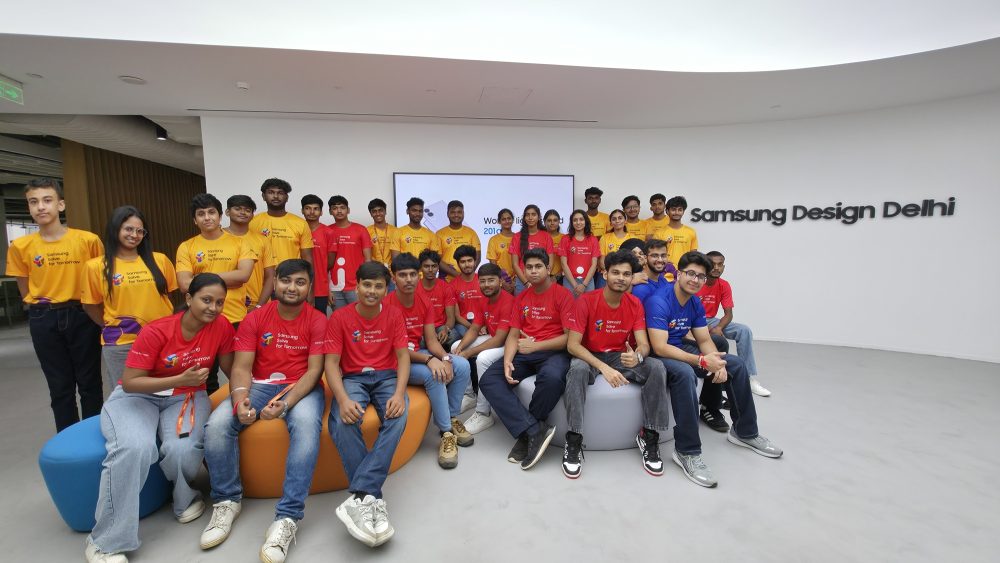
During an immersive Innovation Bootcamp, the Top 40 stepped inside Samsung’s innovation ecosystem across Gurugram, Delhi, Noida and Bengaluru to see how ideas are understood, designed, engineered, tested and refined.
Their journey took them through Samsung’s Head Office in Gurugram, Samsung Design Delhi, Samsung R&D Institute India-Noida (SRI-Noida) and Samsung R&D Institute India-Bengaluru (SRI-B) — bringing them closer to the people, processes and technologies behind some of Samsung’s innovations.
Addressing the young innovators, JB Park, President and CEO, Samsung South West Asia, spoke about where the next generation of ideas could come from.
“Great ideas can come from anywhere. They can come from a small town, a classroom, a college or from a young person simply looking at a problem in their own community.”
That idea is reflected in this year’s cohort. More than half of the participants come from Tier 2 and Tier 3 cities, bringing with them problems and perspectives shaped by communities across India.
Start With People
At Samsung Design Delhi, the young innovators saw that innovation doesn’t begin with technology. It begins with people.
Inside spaces including Rang and the Colour, Material and Finish (CMF) Lab, they explored how designers think about the way people see, touch and experience products — and how choices around colour, material, texture and form can shape that experience.
It was a lesson in looking beyond the solution itself.
Before asking what can be built, understand who you are building it for.
Make It Work
At SRI-Noida, the focus shifted from design to engineering.
The innovators explored areas including PCB design, sensory equipment and AI applications, getting a closer look at what happens when an idea has to work beyond a sketch or a prototype.
Ideas are tested. Assumptions are challenged. Problems emerge. Designs change.
That process of iteration is what turns a promising idea into something that can work reliably in the real world.
At SRI-B, the view widened further. The young innovators explored research across AI, multimedia and camera technologies, advanced communications, IoT and services — technologies that are helping shape the next generation of connected experiences.
Taken together, the visits traced an innovation journey: understand a need, design around people, engineer a solution, test it and keep making it better.
Learning From Each Other
The Bootcamp was also about the people in the room.
Young innovators from different parts of India arrived with different problems to solve — but discovered that many of the questions they were asking were the same.
How do you know if an idea will work? What happens when it doesn’t? How do you make it better?
“A big thank you to Samsung Solve for Tomorrow for this opportunity and for supporting young innovators like us throughout the journey. Now, it’s time to refine, build, learn,” said Priyanka Yadav from Gurugram, Haryana.
“One of my favourite memories from the Samsung Solve for Tomorrow Bootcamp was meeting passionate young innovators from every corner of India, each working to solve a different problem, but all driven by the same belief — innovation should improve lives. I am grateful for the friendships, conversations and inspiration,” said Vidit Bhayana from Delhi.
Conducted in collaboration with FITT-IIT Delhi, the Innovation Bootcamp provided the teams with mentoring and prototyping support as they continued developing solutions across AI Living for India, Health and Education, Environmental Sustainability, and Sport & Tech.
The Work After the Idea
For the Top 40, seeing Samsung’s design and R&D ecosystem first-hand offered something that is difficult to learn from a classroom alone.
Innovation is rarely a straight line.
An idea is questioned. A prototype is tested. Something fails. You learn why. You change it. Then you try again.
The most important part of an idea may not be the moment you have it.
It may be everything you do next.
For these young innovators, that work has already begun.


