


31, Aug 2026
India’s Mobile Manufacturing Sector Records Massive Growth, From 2 Factories in 2014 to 300+ in 2026
New Delhi, Aug. 31: India’s mobile phone manufacturing sector has witnessed a remarkable transformation over the past decade, emerging as a major pillar of the country’s electronics manufacturing ecosystem.
Representational Image
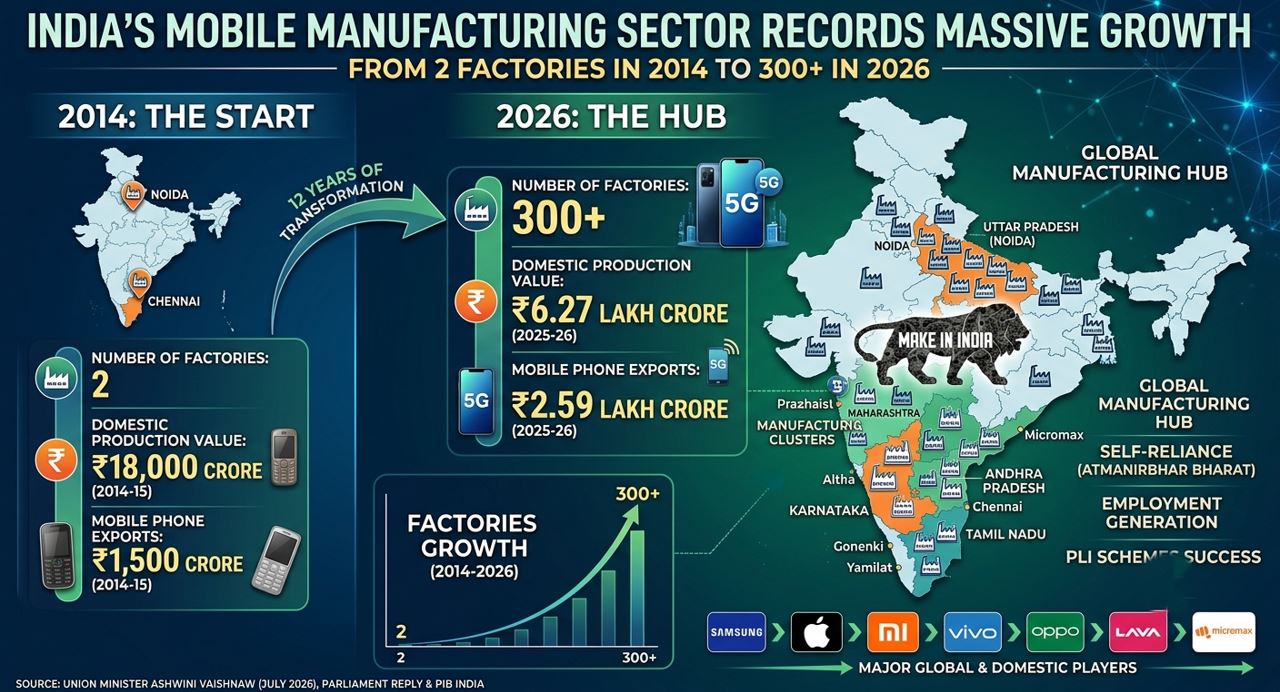
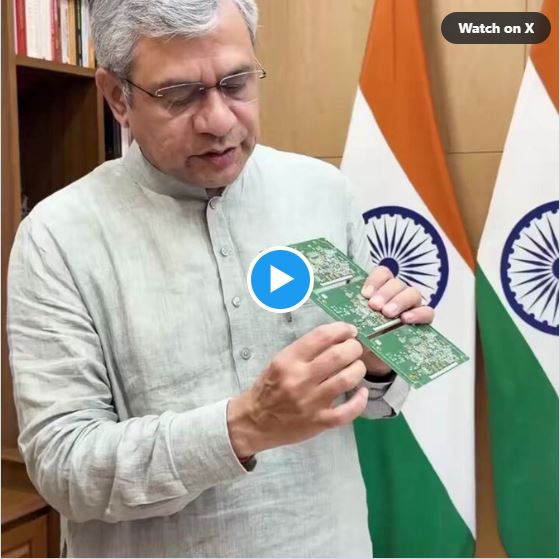
Highlighting the sector’s growth, Union Minister for Electronics and Information Technology Ashwini Vaishnaw said India has moved from having just two mobile phone manufacturing units in 2014 to more than 300 units by 2026.
India’s mobile sector growth, rising from 2 phone factories in 2014 to over 300 by 2026, with production value jumping from ₹18,000 cr to ₹6.27 lakh cr and exports from ₹1,500 cr to ₹2.60 lakh cr.#DigitalIndia @AshwiniVaishnaw pic.twitter.com/7GVy9zmQl8
— Ministry of Electronics & IT (@GoI_MeitY) August 31, 2026
The expansion has been accompanied by a sharp rise in both domestic production and mobile phone exports, reflecting the growing strength of India’s electronics manufacturing ecosystem.
Production value jumps to ₹6.27 lakh crore
According to the figures highlighted by the minister, the value of mobile phone production in India has increased from around ₹18,000 crore in 2014 to approximately ₹6.27 lakh crore in 2026.
This represents a dramatic expansion in manufacturing capacity and underscores India’s growing role in the global mobile phone supply chain.
Exports witness massive surge
Mobile phone exports have also recorded a significant increase during the period.
From around ₹1,500 crore in 2014, India’s mobile phone exports have risen to approximately ₹2.60 lakh crore in 2026.
The sharp increase in exports reflects India’s transition from a largely import-dependent market to a major manufacturing and export base for mobile devices.
Policy push strengthens electronics manufacturing
The growth has been supported by initiatives such as Make in India, the Production Linked Incentive (PLI) scheme and other measures aimed at expanding domestic electronics manufacturing.
The government has now introduced a ₹62,500-crore Mobile Phone Manufacturing Scheme (MPMS) to further strengthen the sector, deepen domestic value addition and improve India’s global competitiveness. The scheme is also aimed at supporting Indian mobile phone brands, design capabilities and domestic intellectual property.
The latest figures underline the scale of India’s transformation in mobile manufacturing and signal the government’s continued focus on making the country a global hub for electronics production and exports.
- 0
- By Neel Achary

31, Aug 2026
Bharat Connect Forex Surges Past INR 11 Crore in Four Months, Signals Rising Digital Demand
New Delhi, Aug 31: Digital foreign exchange services are gaining traction in India, with forex transactions through NBBL’s Bharat Connect platform crossing ₹11.19 crore between April and July 2026.
The sharp rise in transaction value highlights growing consumer acceptance of digital channels for foreign exchange, as customers increasingly look for simpler, more transparent and convenient ways to access forex services.
The forex category on Bharat Connect was launched in 2025 in partnership with the Clearing Corporation of India Ltd.’s FX-Retail platform. During FY26, the platform processed forex transactions worth around ₹2.71 crore. With the latest four-month performance, the cumulative transaction value has reached approximately ₹13.90 crore.
The service allows customers to access forex through participating banking and digital platforms, including facilities for purchasing foreign currency, loading forex cards and making eligible outward remittances. The integration with FX-Retail provides customers access to real-time pricing, helping them compare available rates before completing transactions.
The growing adoption comes as digital financial services continue to expand beyond traditional banking transactions. By bringing forex services onto an interoperable digital infrastructure, Bharat Connect is helping reduce dependence on fragmented and largely offline processes.
The platform has also seen an increase in larger-value transactions, reflecting greater customer confidence in digital forex services and the benefits of transparent, market-linked pricing.
The latest milestone underlines the changing way Indian consumers access foreign exchange, with digital platforms increasingly becoming a preferred route for services linked to international travel, overseas education, remittances and other cross-border needs.
With transaction volumes rising rapidly in the first four months of FY27, Bharat Connect’s forex offering is emerging as another example of India’s expanding digital financial ecosystem and the growing demand for convenient, transparent financial services.
31, Aug 2026
India Likely to Sustain 7 pc or Higher Economic Growth in FY27: Sitharaman
Chicago, Aug 31: India is expected to maintain an economic growth rate of around 7 per cent or higher in the financial year 2026-27, Finance Minister Nirmala Sitharaman said, expressing confidence in the country’s economic resilience despite continuing global uncertainties.
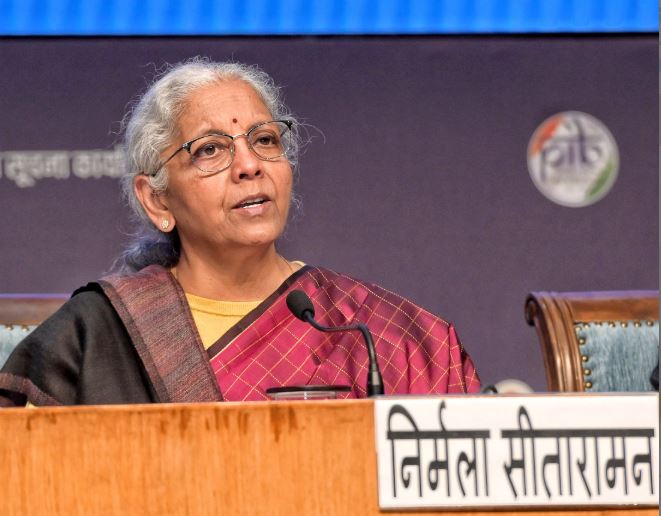
Addressing members of the Indian diaspora in Chicago during her visit to the United States, Sitharaman said India has managed to maintain its growth momentum in the years following the Covid-19 pandemic and is likely to continue on the same path in FY27.
The Finance Minister said India’s ability to closely monitor global developments while keeping domestic economic priorities in focus has helped the country navigate several external challenges.
Geopolitical tensions and disruptions to global supply chains, particularly those linked to the conflict in the Middle East and developments around the Strait of Hormuz, have created fresh risks for the global economy. However, India has taken steps to minimise the impact on domestic supplies.
Sitharaman said disruptions around the Strait of Hormuz had initially affected the movement of important commodities, including crude oil, petroleum products and fertilisers. India, however, was able to reroute supplies and maintain availability in the domestic market.
She also highlighted the government’s efforts to shield farmers from the impact of rising international fertiliser prices by keeping domestic prices stable through subsidies. The country, she added, is adequately stocked to meet fertiliser requirements for the upcoming agricultural season beginning in November.
The Finance Minister also stressed that India’s growth ambitions would require continued investment and capital mobilisation. While domestic private investment has started to improve following the government’s sustained focus on capital expenditure, attracting foreign capital will remain important for meeting the country’s expanding investment needs.
Sitharaman said the government is engaging with global investment funds during her international visits to showcase India’s economic progress and understand the expectations of overseas investors.
She said such discussions are aimed at creating greater clarity for global investors and strengthening India’s position as an attractive destination for long-term investment.
The Finance Minister’s remarks reflect the government’s confidence that strong domestic demand, continued reforms, infrastructure investment and rising global interest in India can help sustain the country’s economic growth momentum despite external headwinds.
31, Aug 2026
180 Students Join Plastic Waste Collection Drive in Mumbai, Collecting 300 Bags of Discarded Legacy Plastic Waste

Mumbai, 31 August 2026: Ahead of the upcoming Plastics Recycling Show India (PRSI) and Bharat Recycling Show (BRS) 2026, a Plastic Waste Collection Drive brought together students, volunteers and organisers for a morning of collective action at Ismail Yusuf College, Mumbai, on 22 August 2026.
Organised by Media Fusion and Crain Communications, and presented by Plastics Recycling Show India and Bharat Recycling Show, the initiative was conducted in association with Keshav Srushti (NGO) and Ismail Yusuf College to engage young people directly in responsible waste management and demonstrate how discarded material can be brought back into productive use.
The drive saw participation from approximately 180 students, including NCC cadets and students of Ismail Yusuf College, who came together with volunteers from Keshav Srushti (NGO) and members of the Media Fusion team. Collectively, they gathered an impressive 300 bags of legacy plastic waste from the surrounding area.
The collected plastic will now be sent for recycling and transformed into recycled plastic benches that will be given back to Ismail Yusuf College – completing the journey from discarded waste to a useful resource for the very community that participated in collecting it.
Mr. Vinay Nathani, Secretary, Keshav Srushti (NGO), said “Such initiatives help students understand the impact of plastic littering by engaging with the issue first-hand. When young people participate in collecting legacy plastic waste, they become more conscious of their own actions and can also encourage positive behavioural change within their families and communities. At Keshav Srushti, we have been conducting such initiatives for several years, with a focus on ensuring that collected plastic is processed and transformed into useful products.”
Mr. Neelakantan Iyer, Joint Secretary, Keshav Srushti (NGO), said “Engaging children in sustainability initiatives is becoming an increasingly important focus for us. Their participation and the impact they can create within society are a major thrust for Keshav Srushti. We were happy to see more than 300 children participate in this initiative, and we look forward to partnering on many more such programmes in the future.”
Prof. Sameer Vairagi, NSS Programme Officer, Ismail Yusuf College, Mumbai, said “Mobilizing youth for environmental action is at the very core of the NSS philosophy. Seeing our volunteers take full ownership of the plastic collection and segregation drive at Ismail Yusuf College was inspiring. Experiential learning of this nature builds true social accountability and leadership. We look forward to driving many more such high-impact sustainability initiatives on campus and in our surrounding communities.”
Mr. Prathmesh Mestry, Student Leader & Volunteer, NSS Unit, Ismail Yusuf College, Mumbai, said “Participating in the Plastic Recycling Drive on 22 August 2026 was a truly transformative experience for all of us. Getting our hands dirty with waste collection and segregation made us realize that environmental responsibility starts with individual action, not just sanitation staff. Working together as a team showed us the real power of collective student effort, and we are now committed to making our campus and homes plastic-free.”
Mr. Taher Patrawala, Managing Director, Media Fusion, said “Meaningful change does not always have to begin with large interventions. Small, consistent efforts can create awareness, influence behaviour and encourage young people to think differently about the resources around them.”
The initiative is part of the continued efforts by Media Fusion and Crain Communications, organisers of PRSI and BRS, to take conversations around recycling beyond the exhibition floor. By involving students in practical initiatives such as this, the organisers aim to encourage greater environmental responsibility among young people and build awareness around recycling and circularity at the community level.
The conversation will continue at Plastics Recycling Show India and Bharat Recycling Show 2026, taking place from 31 August – 2 September 2026 at Hall 4, Bombay Exhibition Centre, Mumbai. The co-located shows will bring together recyclers, manufacturers, technology providers, policymakers and industry leaders to explore the future of recycling and circularity in India.
30, Aug 2026
India’s Digital Fertiliser Network Reaches Over 14 Crore Aadhaar-Linked Farmers

New Delhi, August 30: India’s digital infrastructure for fertiliser distribution has expanded to cover more than 14 crore Aadhaar-linked farmers and fertiliser buyers, strengthening the government’s ability to track the movement and sale of subsidised agricultural inputs across the country.
The Integrated Fertilizer Management System (iFMS), developed with technical support from the National Informatics Centre (NIC) for the Department of Fertilizers, has grown into a nationwide digital platform covering multiple stages of the fertiliser supply chain. The system tracks production, imports, dispatches, transportation, inventories and retail sales, providing authorities with greater visibility into the availability and movement of fertilisers.
The platform currently connects more than 2.5 lakh fertiliser retailers and processes around 7 crore metric tonnes of fertiliser sales transactions each year, highlighting the scale at which digital systems are being deployed to manage one of India’s most critical farm inputs.
The expansion of iFMS is aimed at improving transparency in fertiliser distribution and enabling government agencies to respond more quickly to changes in regional demand and supply.
Digital dashboards provide information on fertiliser stocks and movement at different administrative levels, from the national and state levels down to districts and individual retail outlets. This allows officials to monitor inventories and identify potential supply pressures or unusual purchasing patterns.
The availability of transaction-level information is also expected to support more effective planning during periods of heightened agricultural demand, when fertiliser consumption typically rises.
The government’s next phase of digital integration involves connecting fertiliser purchase information with broader agricultural databases, including land and crop records.
The Department of Fertilizers has already worked towards integrating iFMS with state-level agricultural databases such as Haryana’s Meri Fasal Mera Byora, while exploring integration with the national AgriStack framework.
Such linkages could enable authorities to analyse fertiliser consumption in relation to factors including crop patterns, landholdings, geographical regions and the type of fertiliser being purchased.
This could improve demand forecasting and help policymakers better understand how fertilisers are being consumed across different agricultural regions. At the same time, the effectiveness of such systems will depend on the availability and quality of underlying land and crop data.
Digitalisation has also become an important component of India’s fertiliser subsidy framework. The government provides substantial financial support to keep key fertilisers affordable for farmers, with annual fertiliser subsidy expenditure running into nearly ₹2 lakh crore.
Under the fertiliser Direct Benefit Transfer (DBT) mechanism, subsidy payments to manufacturers and importers are linked to actual retail sales recorded through Point of Sale (PoS) devices.
The system provides a digital trail from the retail transaction to the subsidy claim, helping improve accountability and reduce the scope for leakages or irregularities in the distribution chain.
Farmers purchasing subsidised fertilisers through registered retailers receive transaction records generated through the PoS system, while government agencies gain access to data that can be used to monitor sales and subsidy flows.
The rapid expansion of the digital fertiliser network signals a broader change in the government’s approach to agricultural input management.
Rather than functioning only as a mechanism for recording sales, iFMS is increasingly being positioned as a data and decision-support platform. The large volume of transactions generated through the network can provide insights into regional demand, stock levels, distribution patterns and purchasing behaviour.
For policymakers, this information can potentially help anticipate shortages, improve supply planning and coordinate production and imports with actual market requirements.
The integration of fertiliser data with land and crop information could take this process further by providing a more detailed picture of input requirements at the farm and regional level.
The scale of the iFMS network reflects India’s broader effort to use digital technology to improve the delivery of agricultural services and government support.
With more than 14 crore Aadhaar-linked buyers and a nationwide network of retailers, the system has created a large digital footprint for monitoring fertiliser distribution. The government’s focus is now shifting towards making greater use of this data to improve forecasting, supply-chain management and subsidy administration.
As India continues to digitise its agricultural ecosystem, the integration of fertiliser transactions with farmer, land and crop databases could become an important tool for improving the efficiency and transparency of farm-input distribution.
For the agricultural economy, the development represents a significant move towards data-driven fertiliser management, where digital records can increasingly influence how supplies are planned, distributed and monitored across the country.
30, Aug 2026
PMFBY Enters Second Decade With ₹12,200 Crore Push, Turning Crop Insurance Into a Key Farm-Risk Tool
New Delhi, August 30, 2026: For millions of Indian farmers, a failed crop can quickly turn a weather event into a financial crisis. The Pradhan Mantri Fasal Bima Yojana (PMFBY), now in its second decade, is increasingly positioned as a critical risk-management instrument for agriculture, providing a financial cushion against crop losses caused by extreme weather, pests and diseases.
The Centre has earmarked ₹12,200 crore for PMFBY in the Union Budget 2026–27, signalling its continued focus on expanding crop insurance and strengthening the financial resilience of farmers.
Launched on 18 February 2016, PMFBY was conceived with a straightforward objective: make crop insurance more accessible and affordable while reducing the income shock faced by farmers when crops are damaged.

Nearly a decade later, the scale of the programme has grown substantially. From Kharif 2016 through Rabi 2025–26, more than 92.46 crore farmer applications have been insured, while claims have been paid to more than 26.33 crore farmer applications, with the total value of claims exceeding ₹2.06 lakh crore.
The numbers point to the growing role of insurance in an agricultural economy where weather volatility can directly affect farm output, cash flows and household incomes.
PMFBY provides coverage against a broad spectrum of agricultural risks. These include drought, floods, cyclones, hailstorms, pests and diseases, along with provisions for prevented sowing, localized calamities, inundation, unseasonal rainfall and specified post-harvest losses.
For farmers, the significance of such coverage extends beyond compensation.
A major crop failure can affect the ability to repay loans, purchase inputs for the next season or maintain household expenditure. Timely insurance compensation can therefore act as a financial bridge, allowing farmers to continue participating in the agricultural cycle rather than being forced into distress sales or additional borrowing.
The economics of the scheme are also designed to make insurance affordable. Farmers pay a capped premium of 2% of the sum insured for Kharif foodgrain and oilseed crops, 1.5% for Rabi foodgrain and oilseed crops, and 5% for commercial and horticultural crops, with the government providing the balance of the eligible premium subsidy.
While insurance coverage is one side of the equation, accurately assessing crop damage and settling claims efficiently is equally important.
This is where technology is becoming increasingly central to PMFBY.
The government has introduced the Yield Estimation System based on Technology (YES-TECH) to strengthen technology-based crop-yield assessment. The objective is to reduce dependence on conventional assessment processes and improve the consistency and objectivity of yield estimation.
The Weather Information Network and Data System (WINDS) is another technology-led initiative aimed at expanding the availability of weather data through a network of weather stations and rainfall gauges.
Together, such systems are expected to create a more data-driven insurance architecture, potentially improving the quality of crop-loss assessments and reducing delays in claims.
For an industry dealing with millions of farms spread across vastly different climatic and geographical conditions, the ability to generate reliable, location-specific data could become a significant determinant of how efficiently insurance claims are processed.
The value proposition of crop insurance becomes particularly visible at the individual farmer level.
Consider the case of Anwar, who enrolled under PMFBY by paying a premium of just ₹100. After his crop loss was assessed, he received ₹50,600 in compensation under the scheme.
The experience illustrates the fundamental economics of crop insurance: a relatively small upfront premium can provide substantial protection against an otherwise potentially devastating financial loss.
For farmers operating on tight margins, this protection can make the difference between absorbing a bad season and facing a prolonged financial setback.
The evolution of PMFBY also reflects a broader shift in the way agricultural risk is viewed.
Climate variability, irregular rainfall, extreme weather events and changing pest patterns are increasing uncertainty around farm production. In such an environment, crop insurance is not simply a post-disaster compensation mechanism; it is increasingly part of a wider farm-risk management strategy.
A more predictable insurance framework can also support access to institutional credit and encourage farmers to continue investing in agricultural inputs despite weather-related uncertainty.
The government’s continued financial commitment suggests that crop insurance is being treated as an important component of the country’s broader strategy to strengthen rural incomes and build climate-resilient agriculture.
The scale of PMFBY, however, also brings a major operational challenge: ensuring that coverage translates into timely and accurate payouts.
For farmers, the effectiveness of an insurance programme is ultimately measured not by the size of the allocation but by how quickly and transparently a legitimate claim reaches the beneficiary.
This makes technology-driven assessment systems such as YES-TECH and WINDS particularly significant. Better weather data, more accurate yield estimates and digitised processes can potentially reduce disputes, improve transparency and accelerate settlement.
The next phase of PMFBY is therefore likely to be defined as much by technology and execution as by the size of the government’s budgetary support.
With more than ₹2.06 lakh crore already paid in claims and millions of farmers covered, PMFBY has developed into one of India’s most significant agricultural risk-transfer mechanisms.
The ₹12,200 crore allocation for 2026–27 provides another financial push as the government seeks to deepen crop-insurance coverage and strengthen the programme’s technological backbone.
The larger business story is that India’s agricultural economy is gradually moving from a model where farmers largely absorb weather risk themselves toward one where insurance, government subsidies, digital assessment and weather intelligence share the burden.
For farmers such as Anwar, that shift can have a very tangible outcome: turning a potentially crippling crop loss into a manageable financial setback.
As climate-related risks become a more persistent feature of agriculture, the effectiveness of PMFBY could increasingly influence not just farmer incomes, but also the stability and resilience of India’s broader rural economy.
30, Aug 2026
PMFBY Enters Second Decade With ₹12,200 Crore Push, Turning Crop Insurance Into a Key Farm-Risk Tool
New Delhi, August 30, 2026: For millions of Indian farmers, a failed crop can quickly turn a weather event into a financial crisis. The Pradhan Mantri Fasal Bima Yojana (PMFBY), now in its second decade, is increasingly positioned as a critical risk-management instrument for agriculture, providing a financial cushion against crop losses caused by extreme weather, pests and diseases.
The Centre has earmarked ₹12,200 crore for PMFBY in the Union Budget 2026–27, signalling its continued focus on expanding crop insurance and strengthening the financial resilience of farmers.
Launched on 18 February 2016, PMFBY was conceived with a straightforward objective: make crop insurance more accessible and affordable while reducing the income shock faced by farmers when crops are damaged.
Nearly a decade later, the scale of the programme has grown substantially. From Kharif 2016 through Rabi 2025–26, more than 92.46 crore farmer applications have been insured, while claims have been paid to more than 26.33 crore farmer applications, with the total value of claims exceeding ₹2.06 lakh crore.
The numbers point to the growing role of insurance in an agricultural economy where weather volatility can directly affect farm output, cash flows and household incomes.
PMFBY provides coverage against a broad spectrum of agricultural risks. These include drought, floods, cyclones, hailstorms, pests and diseases, along with provisions for prevented sowing, localized calamities, inundation, unseasonal rainfall and specified post-harvest losses.
For farmers, the significance of such coverage extends beyond compensation.
A major crop failure can affect the ability to repay loans, purchase inputs for the next season or maintain household expenditure. Timely insurance compensation can therefore act as a financial bridge, allowing farmers to continue participating in the agricultural cycle rather than being forced into distress sales or additional borrowing.
The economics of the scheme are also designed to make insurance affordable. Farmers pay a capped premium of 2% of the sum insured for Kharif foodgrain and oilseed crops, 1.5% for Rabi foodgrain and oilseed crops, and 5% for commercial and horticultural crops, with the government providing the balance of the eligible premium subsidy.
While insurance coverage is one side of the equation, accurately assessing crop damage and settling claims efficiently is equally important.
This is where technology is becoming increasingly central to PMFBY.
The government has introduced the Yield Estimation System based on Technology (YES-TECH) to strengthen technology-based crop-yield assessment. The objective is to reduce dependence on conventional assessment processes and improve the consistency and objectivity of yield estimation.
The Weather Information Network and Data System (WINDS) is another technology-led initiative aimed at expanding the availability of weather data through a network of weather stations and rainfall gauges.
Together, such systems are expected to create a more data-driven insurance architecture, potentially improving the quality of crop-loss assessments and reducing delays in claims.
For an industry dealing with millions of farms spread across vastly different climatic and geographical conditions, the ability to generate reliable, location-specific data could become a significant determinant of how efficiently insurance claims are processed.
The value proposition of crop insurance becomes particularly visible at the individual farmer level.
Consider the case of Anwar, who enrolled under PMFBY by paying a premium of just ₹100. After his crop loss was assessed, he received ₹50,600 in compensation under the scheme.
The experience illustrates the fundamental economics of crop insurance: a relatively small upfront premium can provide substantial protection against an otherwise potentially devastating financial loss.
For farmers operating on tight margins, this protection can make the difference between absorbing a bad season and facing a prolonged financial setback.
The evolution of PMFBY also reflects a broader shift in the way agricultural risk is viewed.
Climate variability, irregular rainfall, extreme weather events and changing pest patterns are increasing uncertainty around farm production. In such an environment, crop insurance is not simply a post-disaster compensation mechanism; it is increasingly part of a wider farm-risk management strategy.
A more predictable insurance framework can also support access to institutional credit and encourage farmers to continue investing in agricultural inputs despite weather-related uncertainty.
The government’s continued financial commitment suggests that crop insurance is being treated as an important component of the country’s broader strategy to strengthen rural incomes and build climate-resilient agriculture.
The scale of PMFBY, however, also brings a major operational challenge: ensuring that coverage translates into timely and accurate payouts.
For farmers, the effectiveness of an insurance programme is ultimately measured not by the size of the allocation but by how quickly and transparently a legitimate claim reaches the beneficiary.
This makes technology-driven assessment systems such as YES-TECH and WINDS particularly significant. Better weather data, more accurate yield estimates and digitised processes can potentially reduce disputes, improve transparency and accelerate settlement.
The next phase of PMFBY is therefore likely to be defined as much by technology and execution as by the size of the government’s budgetary support.
With more than ₹2.06 lakh crore already paid in claims and millions of farmers covered, PMFBY has developed into one of India’s most significant agricultural risk-transfer mechanisms.
The ₹12,200 crore allocation for 2026–27 provides another financial push as the government seeks to deepen crop-insurance coverage and strengthen the programme’s technological backbone.
The larger business story is that India’s agricultural economy is gradually moving from a model where farmers largely absorb weather risk themselves toward one where insurance, government subsidies, digital assessment and weather intelligence share the burden.
For farmers such as Anwar, that shift can have a very tangible outcome: turning a potentially crippling crop loss into a manageable financial setback.
As climate-related risks become a more persistent feature of agriculture, the effectiveness of PMFBY could increasingly influence not just farmer incomes, but also the stability and resilience of India’s broader rural economy.
30, Aug 2026
Nostalgia Meets Modern Fashion: KHUSH Launches Exclusive Shaktimaan Collection

29, Aug 2026
Indian Equities End Week Lower as Global Rate Uncertainty Weighs on Sentiment
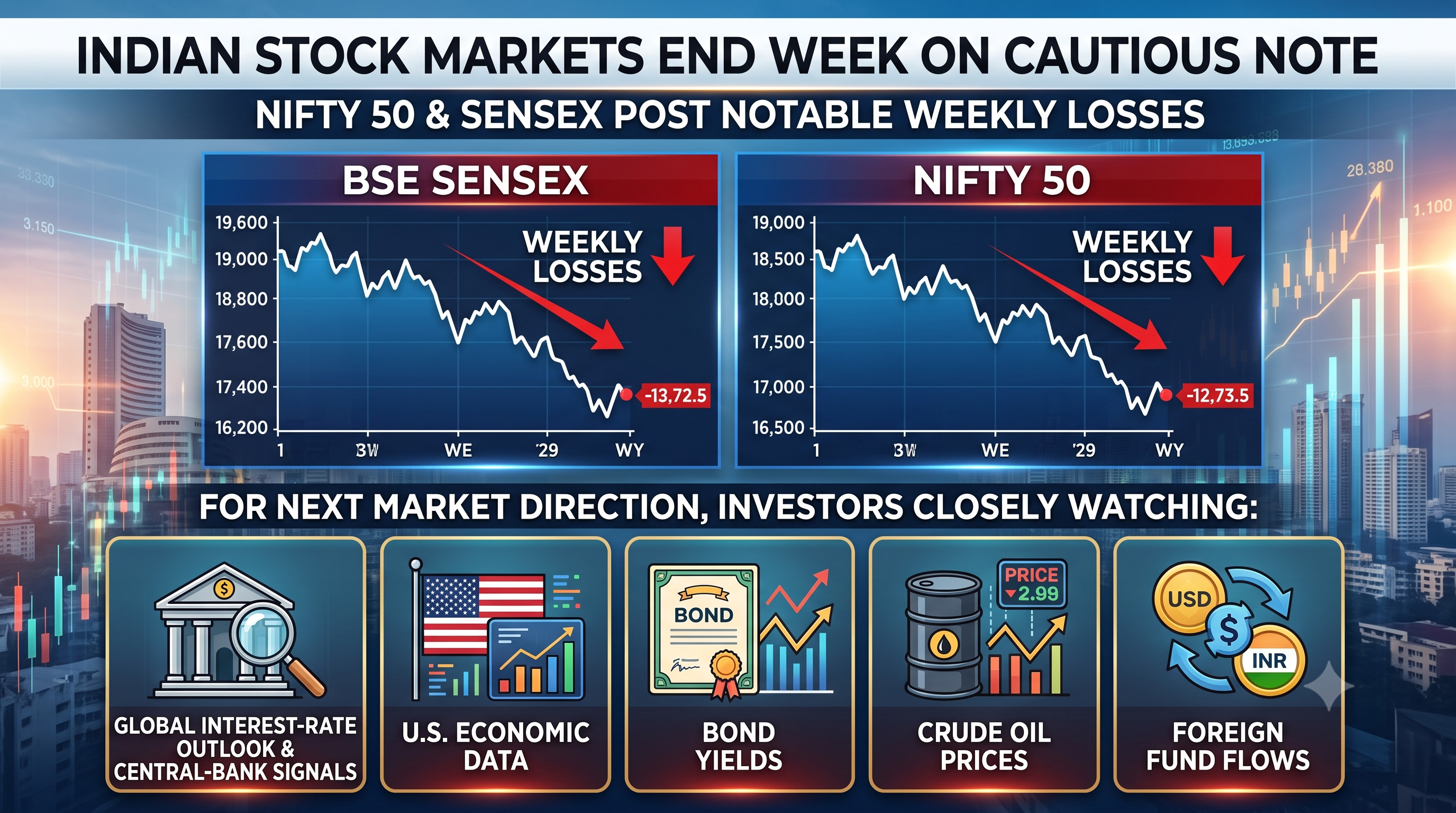
Mumbai: Indian benchmark indices closed higher on Friday but remained under pressure on a weekly basis as investors stayed cautious amid uncertainty over the global interest-rate trajectory. The Nifty 50 and Sensex both registered notable weekly declines, extending their recent losing streak as traders closely tracked signals from major central banks.
Market sentiment was restrained by concerns that global interest rates could remain elevated for longer than previously expected. Persistent inflationary pressures and uncertainty surrounding the pace of monetary easing in major economies have prompted investors to adopt a more cautious approach toward equities.
Domestic factors also contributed to market volatility. Investors continued to assess developments in the derivatives market and the impact of recent changes in the closing auction mechanism, while fluctuations in heavyweight stocks added to intraday swings.
Sectoral performance remained mixed, with information technology stocks finding support, while gains in select pharmaceutical, metal and other heavyweight counters helped the benchmarks recover during Friday’s session. However, the broader market remained sensitive to global cues and foreign institutional activity.
Going ahead, investors are likely to closely watch central-bank commentary, U.S. economic data, global bond yields, crude oil prices and foreign fund flows for clues about the next phase of market direction. Analysts expect volatility to remain elevated until greater clarity emerges on the global interest-rate outlook.
29, Aug 2026
Markets End Third Week in the Red as Global Uncertainty Keeps Investors on Edge
Mumbai, Aug 29: Indian equity markets remained under pressure for the third straight week as investors weighed uncertainty over global interest rates, geopolitical developments and changing market dynamics.
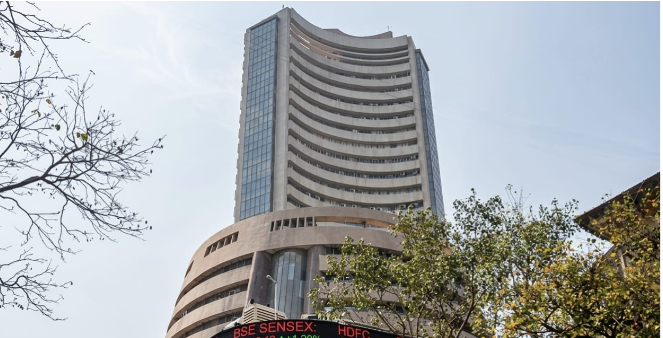
The Nifty slipped 0.31 per cent over the week, although it recovered 0.35 per cent in Friday’s session to close at 24,175. The Sensex gained 330 points, or 0.43 per cent, on the final trading day to settle at 77,264, but still ended the week 0.36 per cent lower.
Trading sentiment was also influenced by the introduction of the Closing Auction Session (CAS) for futures and options stocks. Unusually sharp movements during the monthly derivatives expiry prompted concerns among market participants about short-term price volatility and possible price mismatches, particularly in large and actively traded companies.
The market found some support towards the end of the week, with IT stocks leading Friday’s recovery. Positive signals from global technology markets and better-than-expected results from Nvidia encouraged investors to return to technology shares.
Despite the late-week rebound, the broader market remained cautious as investors assessed signals from the US Federal Reserve. Comments made by the Fed Chair at the Jackson Hole symposium kept attention focused on whether global borrowing costs could remain elevated for longer than previously expected.
The interest-rate outlook remains important for emerging markets. Higher US bond yields and uncertainty over inflation can influence the flow of foreign institutional capital into markets such as India, potentially adding to short-term volatility.
Sector performance was mixed during the week. IT stocks stood out, with the Nifty IT index rising around 2.45 per cent, supported by renewed optimism around global technology spending and positive developments in the international technology sector.
Pharmaceutical and selected metal stocks also attracted buying interest, while weakness in some banking and consumer-oriented shares limited gains in the broader market.
A decline in crude oil prices provided another positive factor for India. Brent crude fell more than 4 per cent during the week to around $88 a barrel, helped by expectations that shipping conditions through the Strait of Hormuz could improve.
Lower oil prices can be beneficial for India because the country relies significantly on imported crude. A sustained decline could help contain input costs and reduce pressure on the import bill. However, geopolitical risks remain a major variable, and any disruption to energy supplies could quickly push prices higher.
From a technical perspective, analysts are watching the 24,000–23,800 range as an important support zone for the Nifty. On the upside, 24,300–24,400 is being seen as a key resistance area.
For Bank Nifty, immediate support is placed around 56,900–56,500, while the 57,800–58,000 range remains an important resistance zone.
Attention will now shift towards upcoming economic data. Domestic growth indicators and global releases are expected to provide investors with fresh clues about the direction of markets.
The US August employment data and non-farm payrolls report, due on September 4, will be particularly important. Strong or weak employment numbers could influence expectations surrounding the Federal Reserve’s next interest-rate decisions and, in turn, global investor flows.
For domestic investors, the recent correction highlights the importance of looking beyond daily market movements. India’s economic fundamentals remain an important support, but global interest rates, crude prices, geopolitical developments and foreign capital flows can continue to create short-term swings.
The market is therefore entering the next week with a mixed set of signals—selective sectoral strength on one side and continued global uncertainty on the other. Investors are likely to remain cautious and selective until greater clarity emerges on monetary policy and the global economic outlook.


