


16, Oct 2026
Alice Collaborates with Inflection AI and AI21 to Demonstrate NVIDIA Nemotron Open Models Can Be Trained for Frontier Safety
NEW YORK, NY, Oct. 16— Alice announced the results of two collaborations focused on aligning NVIDIA Nemotron models to company-specific safety and security policies. The results demonstrate how real-world threat data can be used to train open-source models for frontier safety performance.
Open-source models give organizations greater control over AI behavior, allowing them to train policies into the underlying model rather than setting instructions as system prompts. To successfully train models on their policies, companies need adversarial data and expertise. Two projects demonstrate how NVIDIA’s state-of-the-art open-source model can be aligned for safer human interactions, and more secure enterprise agents.
“Powerful AI is being democratized. It’s now available to companies everywhere, and they want to use it safely and predictably,” said Noam Schwartz, CEO and co-founder of Alice. “These results show that with the right real-world adversarial data and training, we can teach open source models how to handle the threats and abuse they will actually face, across very different safety challenges, while keeping them as powerful. That’s the bar now: frontier-grade safety that any organization running advanced AI can actually put into practice.”
Training safety for how people actually use AI
Inflection AI is building personal AI that empowers people and shifts interactions from transactional to relational. Allowing more natural interactions with conversational AI also increases risks which most benchmarks can’t catch. In the process of building the next generation of personal intelligence, Inflection AI fine-tuned NVIDIA Nemotron 3 Super 120B-A12B, and turned to Alice to develop red-teaming datasets aimed at reducing sycophancy and preventing the model from reinforcing unhealthy attachment over long conversations. Fine-tuning on that data raised Pi’s alignment score by 30% while keeping unnecessary refusals to just 1.6%.
Alice created more than 20 realistic personas and used them in multi-turn red-team exercises where those risks could develop over time. The personas included vulnerable but benign users as well as adversarial users deliberately attempting to manipulate the model, drawing on Alice’s real-world knowledge of harmful and adversarial behavior.
“As AI innovation accelerates, safety has to advance rapidly as well. It’s no longer enough to ask whether a model can identify and refuse a harmful prompt,” said Sean White, CEO of Inflection AI. “We also need to understand how AI behaves across hundreds of interactions, whether it challenges rather than simply agrees, if it supports human agency rather than dependency, and ultimately if it leaves people more capable. This work with Alice and NVIDIA demonstrates that we can train those principles into powerful open models without sacrificing what makes them useful. That’s fundamental to the kind of human-centered Personal Intelligence we’re building with Pi.”
Security without sacrificing capability
Alice also worked with AI21, which has trained language models since 2021 and now offers lab-as-a service for specialized intelligence. The work with them focused on a very different problem: protecting enterprise agents against indirect prompt injection. As agents gain access to company systems, data and tools, attackers can attempt to manipulate them through information the agent encounters while doing its work. Training against those attacks therefore cannot focus only on whether the model refuses a malicious instruction. A secure agent also needs to recognize the attack while continuing to complete the legitimate task.
Alice’s reinforcement-learning environments were built to train and measure both. AI21 used them to post-train the recently released NVIDIA Nemotron 3.5 Super VL open model, increasing the model’s resilience to indirect prompt injection by 41 points, competing with GPT-6.1 Sol.
The result shows that security and capability are not necessarily competing objectives. With the right training, models can become significantly more resilient to adversarial manipulation while maintaining task performance.
“For most companies, the next phase of AI adoption goes beyond frontier models, to open models they own, shape and control,” said Ori Goshen, Co-founder and CEO of AI21. “Owning a model means owning how it fails, not only what it can do. We post-trained NVIDIA Nemotron 3.5 Super-VL on attack traces Alice sees in the wild, so it holds up against the attacks that actually reach enterprises while keeping the behavior it was built for.”
“NVIDIA Nemotron provides the open weights, recipes and tooling for organizations to post-train on their own data and optimize accuracy and performance for their specific workloads,” said Joey Conway, senior director Nemotron and Software, NVIDIA. “Alice’s work with Inflection AI and AI21 shows how post-training Nemotron on real-world adversarial data delivers powerful safety and security — exactly the kind of innovation open models are meant to unlock.”
Taken together, these collaborations demonstrate how real-world adversarial intelligence, safety datasets, expert red teaming and reinforcement-learning environments can turn open models into systems trained for the risks they will actually face. The broader opportunity is clear: powerful, customizable AI that companies can own and deploy with frontier-level safety built in.
- 0
- By Neel Achary

16, Oct 2026
Oritain Launches Supplier Intelligence Report, Revealing a New Era of Supply Chain Collaboration
SINGAPORE, Oct 16 – Oritain, global leaders in forensic origin verification, announced the release of its Supplier Intelligence Report, a dedicated supplier deep dive building on findings from the inaugural 2026 Global Supply Chain Intelligence Report.
Drawing on Oritain’s supplier intelligence* across key global manufacturing hubs, the report offers a unique view into how suppliers are responding to growing regulatory scrutiny, customer expectations and sourcing pressures. The findings challenge a common industry assumption: suppliers are not resisting transparency. Instead, they are actively investing in traceability, seeking stronger collaboration and looking for credible ways to demonstrate trust.
The report suggests the industry is entering a new phase of supply chain integrity. While traceability has become increasingly established, the next challenge is ensuring supply chain claims can be supported by independent evidence. As brands, retailers and manufacturers face greater scrutiny from regulators, investors and consumers alike, the ability to substantiate provenance and sourcing claims is becoming a critical business capability.
The research draws on supplier insights from key manufacturing markets, complementing findings from the 2026 Global Supply Chain Intelligence Report, which examined sourcing risk, enforcement trends and consumer trust across global supply chains, by shining a light on the evolving priorities, challenges and opportunities facing suppliers themselves.
From Traceability to Trust: The Rise of Verified Supply Chain Ecosystems
The Supplier Intelligence Report highlights a significant shift in supplier attitudes towards transparency and verification.
Nearly 80% of suppliers surveyed already operate some form of traceability solution, while 75% are open to adopting new traceability technologies. More significantly, 77% expressed interest in participating in origin verification initiatives, highlighting growing recognition that transparency alone is no longer enough to build trust in today’s supply chain environment.
“The findings tell a different story than many people expect,” said Gemma Lynch, Chief Customer Officer at Oritain.
“Suppliers are not pushing back against transparency. They are actively looking for ways to participate in a more trusted supply chain ecosystem. The challenge is no longer willingness to engage. The challenge is ensuring claims can be substantiated with credible evidence when questions arise.”
Key Insights from Oritain’s Supplier Intelligence Report
-
Collaboration is Emerging as a Competitive Advantage: 77% of suppliers surveyed expressed interest in collaborating on origin verification initiatives, signalling growing momentum towards shared responsibility across supply chains.
-
Transparency is Becoming a Business Imperative: More than 85% of suppliers describe supply chain transparency as important or very important to their business, reinforcing that transparency is now a core commercial consideration rather than a niche sustainability issue.
-
Traceability Adoption Has Accelerated: Nearly 80% of suppliers already use traceability solutions, while 75% remain open to adopting new technologies, demonstrating continued investment across the sector.
-
Customer and Consumer Expectations Are Driving Change: 81% of suppliers identified consumer demand as a key driver of transparency efforts, while retailer and customer requirements continue to shape investment decisions.
-
Leadership Engagement is Growing: 73% per cent of suppliers involve executive leadership in traceability and transparency decisions, suggesting these issues are increasingly viewed as strategic priorities.
-
Verification is the Next Frontier: As traceability becomes increasingly common, suppliers are seeking more credible ways to validate sourcing claims and differentiate themselves in competitive markets.
Building the Future Through Connected Networks
The report arrives shortly after Oritain announced significant enhancements to its Membership program, creating a stronger framework for collaboration between brands, suppliers and manufacturers.
Combining forensic origin verification, supply chain intelligence and a growing network of verified participants, Oritain Membership is designed to help organisations move beyond isolated compliance towards a more connected ecosystem built on trust, transparency and evidence.
“The future of supply chain integrity will not be built by organisations operating in isolation,” said Lynch.
“It will be built through networks of buyers and suppliers working from a shared foundation of trusted data, independent verification and actionable intelligence. As expectations continue to rise, organisations need more than visibility into their supply chains. They need confidence in the information they are using to make decisions. Our role is to provide the science, intelligence and verification that help make that possible.”
* The research surveyed 122 senior decision-makers, primarily at director level or above, across 10 markets (China, Hong Kong, India, Indonesia, South Korea, Türkiye, Vietnam, Singapore, Bangladesh and Pakistan), with 80% of respondents having more than four years of industry experience.
16, Oct 2026
Travelers will let AI hunt for hotel deals, but not plan the trip, Mews survey of 3,250 travelers finds
New York, NY | Oct 16: Travelers will let AI watch hotel rates (63%) and translate on the spot (56%) but far fewer want it planning their itinerary (44%) or personalizing the room (41%). That’s according to a new survey of 3,250 travelers from Mews, the operating system for hospitality, and it comes down to one question: is the task a chore or a choice?
A price alert or a translation doesn’t need anyone to know a guest personally. It just needs to be accurate and fast. An itinerary or a room setup is personal by definition, and 57% of travelers say they would rather stay in control of their trip than hand over those decisions to AI acting on their behalf. That’s where hoteliers come in.
Guests trust the data they share, not the data gathered about them
Travelers are far more comfortable with AI drawing on what they’ve knowingly shared with a hotel, such as stated preferences (61%) and past stay history (56%), than on what’s collected about them, such as online behavior (43%) or external and social data (34%). Guests aren’t turning away from personalization. They care where it comes from, and it lands best when it’s built on what they chose to share rather than what’s been assumed.
Comfort with shared data is strongest in the US, where 63% are happy for AI to draw on their past stay history. Spain is the market most swayed by data transparency: 72% would be more willing to use AI-enabled services if they had transparency and control over their data.
The pattern holds across markets
In every country surveyed, travelers are less willing to use AI once it’s running a moment of the stay than when it’s helping them plan ahead. UK travelers show the functional mindset most clearly: they’re the least likely to rate personalization during a stay as important (30% vs. 40% on average).
Italy and Spain are the most enthusiastic markets. Italian travelers are the most likely to expect check-in with no front desk at all (58% vs. 42% on average) and the most optimistic about AI’s role five years from now (51% vs. 39% on average, the only market significantly above it). Overall, Spain has the most positive attitude to AI (58%), and the two countries are the only ones significantly more positive than the rest of the sample.
“Guests have told us where AI helps, and where it doesn’t,” said Josef Starýchfojtů, CPTO of Mews. “Having clever technology is great, but firstly, we should know whether guests want a task done for them or want to be part of it. Get that wrong and even good AI feels intrusive. We’re building for human hospitality: technology handles the mundane, repetitive admin, and hotel teams have more time for their guests.”
What this means for hoteliers
Let AI take on the admin, such as price tracking, translation, and instant communication, so your team has more time for the moments their guests will remember. Deliver personal touches based on what guests have told you directly and be selective about where automation goes. The hotels getting the most value from AI aren’t the ones with the most automation. They’re the ones that know which moments to keep human.
This survey took place in July 2026 and covered 3,250 travelers across France, Germany, Italy, the Netherlands, Spain, Sweden, the UK and the US.
16, Oct 2026
PM Modi to Visit Canada on December 11 to Push Trade Deal and Strategic Cooperation
New Delhi, Oct 16: Prime Minister Narendra Modi is scheduled to undertake a two-day official visit to Canada from December 11, with trade negotiations, energy cooperation, technology and regional security expected to feature prominently on the agenda.

File Photo
The proposed visit follows a recent telephone conversation between Modi and Canadian Prime Minister Mark Carney, during which both leaders reportedly expressed their commitment to strengthening bilateral ties and advancing cooperation across key sectors.
The visit is expected to provide fresh momentum to efforts to rebuild and deepen relations between the two countries, with a focus on achieving tangible outcomes in economic and strategic engagement.
Trade Deal in Focus
The proposed Comprehensive Economic Partnership Agreement (CEPA) is expected to be a key priority during the discussions. Canadian authorities have reiterated their commitment to advancing negotiations, while both sides are looking to expand bilateral commerce and create new opportunities for businesses.
The two countries are seeking to strengthen trade ties, with negotiators aiming to double bilateral trade before 2030. Cooperation in agriculture and energy is also expected to remain central to the broader economic agenda.
Beyond trade, discussions are likely to cover technology partnerships and developments in the Indo-Pacific region, where both countries have an interest in promoting stability and strengthening economic links.
Diplomatic Engagement Gains Momentum
Preparations for the December visit are already underway, with senior officials and business representatives engaging with their Indian counterparts in New Delhi.
Canadian Foreign Minister Anita Anand recently met Modi and External Affairs Minister S. Jaishankar during her visit to the Indian capital. The discussions focused on reviewing progress in bilateral relations and identifying areas where cooperation could be expanded.
Anand also highlighted the importance of the longstanding relationship between India and Canada, pointing to the people-to-people connections built through families, students and entrepreneurs over several generations.
The diplomatic engagement is expected to help establish the groundwork for the two prime ministers’ upcoming meeting.
Major Canadian Trade Mission Visits India
Alongside diplomatic preparations, Canadian Minister of International Trade Maninder Sidhu is leading a trade delegation of around 300 business representatives on a visit to India.
The Team Canada Trade Mission aims to identify commercial opportunities, encourage business partnerships and strengthen links between companies in both countries.
The scale of the delegation reflects the importance being attached to private-sector engagement as India and Canada seek to expand economic cooperation. Business discussions are expected to complement government-level negotiations ahead of the December summit.
Ukraine and Regional Security Also on the Agenda
The two leaders have also discussed wider international issues, including the Russia-Ukraine war and the need for greater global stability.
According to the account of their recent conversation, Carney acknowledged Modi’s diplomatic efforts to support a peaceful resolution to the conflict. Modi, meanwhile, indicated that India and Canada were working together towards a more stable international environment.
The December visit is expected to offer both sides an opportunity to advance discussions on trade, energy, technology and security while reinforcing diplomatic engagement.
With high-level meetings and business consultations already taking place, the visit could mark an important step in efforts to translate renewed political dialogue into concrete economic and strategic outcomes.
15, Oct 2026
The Real Cost of Private Charter’s Race to the Bottom
Private charter broking is coming under pressure from two directions. Customers are becoming more price-conscious, while digital tools are making aircraft availability and pricing easier to compare. In highly competitive markets, this is increasing the pressure on brokers to respond faster and reduce margins.
At Corporate Jet Investor Dubai 2026, a panel of charter industry leaders discussed what this means for service quality, accountability and the future role of the broker. Steffen Fries, Special Advisor to the Group CEO at Chapman Freeborn, said the challenge is particularly visible in the Middle East, where price can become the deciding factor before the operational details of a charter have been fully considered.
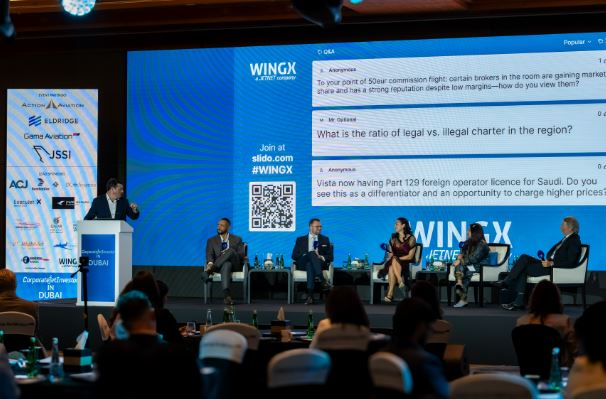
“In many markets, someone can begin selling a USD 100,000 flight without first demonstrating that they understand the operational and regulatory requirements behind it,” said Fries. “That does not mean every small or new broker lacks expertise. There are excellent brokers of all sizes. The problem arises when limited experience is combined with promises that an operator cannot fulfil.”
The pressure to compete on price
According to Fries, buyers in the Middle East may negotiate over the final USD 500 or USD 1,000 of a charter price without always understanding what separates one proposal from another.
An available aircraft and an attractive quote do not necessarily make an itinerary workable. Permit lead times, airport opening hours, customs availability, crew duty limits, runway conditions and fuel requirements can all affect whether the flight can operate as proposed.
“If a broker makes an unrealistic promise, both the broker and the operator lose credibility when it cannot be delivered,” Fries explained. “An experienced broker manages the expectations of the customer and the operator before the flight takes place.”
Price pressure can also increase exposure to grey-market charters, where private aircraft are offered for paid passenger flights without the necessary commercial operating authority. The aircraft may look no different from a compliant charter aircraft, making the distinction difficult for passengers to recognise.
The UK Civil Aviation Authority advises paying passengers to confirm who will operate their flight and whether the operator holds the correct certificates, insurance and licences. The US Federal Aviation Administration similarly recommends asking to see the operator’s Air Carrier or Operating Certificate.
“The passenger cannot identify a grey-market aircraft simply by looking at it,” said Fries. “This is where a credible broker has an important responsibility. We must verify the operator and aircraft rather than offering an unsuitable option simply because it is cheaper.”
Fries said grey-market activity is a particular concern in the Middle East because of the region’s large population of privately owned aircraft. While owners may use their aircraft privately, accepting payment for passenger transport can turn a journey into a commercial operation subject to different requirements.
An unauthorised commercial flight may be delayed or grounded if irregularities are identified during an inspection. For customers using private aviation to save time and reduce uncertainty, the cheapest proposal can therefore become the most disruptive.
An industry-led standard
Fries believes greater accountability should not necessarily mean another layer of government regulation. Instead, established brokers, operators and industry bodies could work together to define common professional standards.
These could set minimum expectations around operational knowledge, operator due diligence, insurance, contractual transparency and customer care, helping buyers distinguish between brokers offering professional oversight and those competing primarily on price.
“This is not about protecting larger brokers from competition,” said Fries. “Competition challenges established companies to improve, and that is healthy. What damages the market is making promises without the knowledge or resources required to deliver them. When a customer has a poor experience, trust in the wider industry is affected.”
AI will expose brokers that add little value
Artificial intelligence is likely to bring greater transparency to charter pricing and aircraft availability. As customers gain faster access to market information, brokers whose role is limited to finding an aircraft and forwarding a quote may find it increasingly difficult to justify their place in the transaction.
“If the broker’s only role is to find an aircraft and a price, technology may eventually make that role obsolete,” said Fries. “But complex charter operations involve much more than that. Someone still needs to bring together permits, airport requirements, customs, crew considerations, ground transport and contingency planning.”
AI could also help brokers anticipate operational problems earlier by identifying periods when fuel services, customs availability or airport capacity are likely to be constrained. Fries expects better use of data to make planning faster and more predictable, while allowing experienced brokers to focus on judgement, risk management and customer support.
“The role of the broker will change, but it will not disappear,” he concluded. “As information becomes easier to access, judgement and accountability become more important. Customers are not only paying for an aircraft. They are paying for someone to anticipate what could go wrong and make sure the journey works as promised.”
15, Oct 2026
Excel Dryer’s headquarters earns WELL Silver Certification, setting a new standard for workplace wellness
FM Architecture chosen to drive innovation showing how wellness-centered design creates healthy sustainable workplaces while serving as an educational resource
East Longmeadow, Mass.— Excel Dryer’s newly renovated corporate headquarters has earned WELL Silver Certification, recognizing the company’s ambitious effort to create a workplace centered on sustainability and employee health, comfort, collaboration and productivity. When Excel Dryer set out to transform its East Longmeadow headquarters, the company wanted to create a workplace that put those principles into practice and needed the right architecture and design partner to bring that vision to life.
“I sent out a request for proposal to multiple architecture firms with one very clear and lofty goal for this project: design the most beautiful, healthiest and sustainable office space in the world!” said William Gagnon, executive vice president and COO of Excel Dryer, Inc. “Ultimately, FM Architecture was selected, and they delivered an amazing space.”

Boston-based Fennick McCredie Architecture (FM Architecture) led the design of the renovation, working closely with Excel Dryer to turn that vision into a functional workplace. From the beginning, both teams approached the project as an opportunity to demonstrate how thoughtful architecture can support the people who use the space every day.
“From the beginning, Excel Dryer challenged us to think beyond a traditional office renovation. They wanted a workplace that would embody their commitment to innovation and sustainability while creating an exceptional and healthy environment for their employees,” said Deborah Fennick, cofounder and design principal at FM Architecture. “That shared ambition gave us the opportunity to design a space where wellness and design excellence are truly interconnected.”
Following guidelines established by the International WELL Building Institute, the completed Excel Dryer Healthy Office Oasis project has earned WELL Silver Certification. The WELL Building Standard recognizes spaces designed to support occupant health and well-being through strategies addressing areas including air, water, light, movement, materials, comfort and mind.
“WELL gave us a framework for looking at the workplace holistically, not simply as a collection of sustainable features, but as an environment that can actively support the people who use it every day,” said Katherine Brekka, senior associate and sustainability practice leader at FM Architecture. “From air quality and natural light to materials, acoustics and ergonomics, each decision was considered through the lens of occupant health and well-being. Achieving WELL Silver Certification validates that comprehensive approach.”
Throughout the 5,000-square-foot renovation, FM Architecture incorporated design elements intended to support indoor environmental quality, comfort and employee experience. Features include a LifeAire air purification system with MERV 13 filters and activated carbon, a vegetative roof, living walls, floor-to-ceiling windows, daylight-optimized and self-tuning lighting, ergonomic workstations, acoustic ceilings, modular glass partitions and sound masking systems. Flooring made from recycled fishing nets collected in developing countries further supports the project’s emphasis on thoughtful material selection and sustainability.
The renovation also gave Excel Dryer an opportunity to put into practice many of the healthy building and sustainability principles it advocates within the built environment. The headquarters restrooms include the D|13 Integrated Sink System featuring the XLERATORsync Hand Dryer, incorporating touchless hand drying directly into the sink area as part of the overall workplace design, reducing reliance on single-use paper towels.
For employees, the result is a workplace intentionally designed around their daily experience. For visiting architects, designers, engineers, distributors, representatives and customers, the headquarters serves as a working demonstration of how healthy building principles can move from specification and design goals into a completed commercial space.
The project also extends beyond the physical renovation. Excel Dryer offers approved continuing education courses centered on the renovation and the WELL Building Standard, giving architects and designers opportunities to explore healthy buildings, sustainable restroom design and strategies that support occupant wellness while earning continuing education credits.
For Excel Dryer, achieving WELL Silver Certification represents both validation of the completed project and a milestone in the collaboration between the company and FM Architecture. The Healthy Office Oasis now provides a tangible example of how wellness, sustainability, innovation and thoughtful design can come together in a modern workplace.
15, Oct 2026
Helius CEO Mert Mumtaz Joins the NEAR Foundation Council
The Solana infrastructure leader and privacy advocate joins NEAR Foundation’s governing body to help bring privacy to onchain markets and will judge the upcoming NEAR Hackathon
San Francisco, CA – 15 October 2026 – NEAR Foundation’s Council (NFC), the governing body responsible for oversight of the Foundation and its most significant decisions, today announced the appointment of Mert Mumtaz, CEO of Helius and privacy advocate. Bringing a proven operator’s technical rigor, market judgment, and deep expertise in cross-chain privacy infrastructure, Mumtaz will help guide the Foundation’s product strategy, ecosystem growth, and governance as NEAR expands its private onchain market vision. He will also serve as a judge for the upcoming NEAR Hackathon, starting November 1.
Mert joins current Council members Illia Polosukhin, Co-Founder of NEAR Protocol; Diogo Mónica, Co-founder of Anchorage Digital; Chris Donovan, former COO of NEAR Foundation; and Bowen Wang, founder of NEAR One. Leveraging his background as a technical operator and cross-chain builder, Mumtaz will help steer the Foundation’s product development, go-to-market execution, and ecosystem strategy as NEAR advances its privacy-focused onchain vision.
“Mert is a rare force in crypto, with a unique ability to be both correct and vocal about it,” said Illia Polosukhin, Co-Founder of NEAR Protocol. “He was an early NEAR Intents adopter and advocate before most of the industry caught on, and the whole NEAR ecosystem and I personally have benefited from his candor and support. Mert’s conviction, technical depth, and direct approach will be a great asset for the NEAR Foundation Council as we work to bring private assets and markets to every chain. His sharp perspective and shared belief in the vision will be a major advantage for NEAR in shaping what we build next.”
At Helius, Mert leads the build-out of the infrastructure that teams including Phantom, Jupiter, Coinbase, and Bitwise use to build on Solana, from RPC nodes and data streaming to transaction delivery and validators. An early user of NEAR Intents, Mert has since called NEAR the market of markets for its role in industry-wide infrastructure connecting chains and liquidity. Mert has proven he can spot where the industry is going long before it arrives, and as a vocal celebrant of the NEAR ecosystem, his voice on the Foundation Council will be a valuable asset in driving the NEAR ecosystem forward.
“There is no world in which crypto succeeds but distinct markets are gatekept exclusively through CEXes,” said Mert Mumtaz, CEO of Helius. “We already have that and it’s called TradFi. For crypto to win, we need connected, unstoppable liquidity at planetary scale. A market of markets. Neither Solana, Zcash, or Bitcoin can win on their own, we must work together. And NEAR is how.”
Mert will also join the judging panel for the upcoming NEAR Hackathon, a two-week build sprint on NEAR’s stack, including NEAR Intents and NEAR AI Cloud. Development runs November 1 to 14, with results announced by November 18. Mert judges alongside Illia Polosukhin; Eddy Lazzarin of a16z crypto; Avichal Garg of Electric Capital; Kain Warwick of Synthetix and Infinex; Haseeb Qureshi of Dragonfly; and Stepan Gershuni of cyber•Fund, with Claude Code and Codex reviewing as AI judges.
NEAR is building where markets across every chain meet, for people and AI agents alike, with confidentiality as a core primitive. NEAR Intents has processed more than $33 billion in all-time volume, with confidential TVL now over $160 million. near.com is confidential by default. Users trade across chains from an account they control and keep their positions and history to themselves.
Mert has argued that NEAR is a crucial component of this cycle’s progress, his vision for a privacy renaissance is aligned with NEAR Intents’ vision of universal, private markets. NEAR is excited to welcome him to the Foundation. For more information about NEAR Foundation, please visit https://near.foundation/.
15, Oct 2026
India to Remain World’s Fastest-Growing Major Economy for 20–25 Years: Piyush Goyal
Commerce Minister cites India’s young population, expanding consumer market and entrepreneurial spirit as key drivers of long-term growth; calls for collective efforts to achieve developed-nation status by 2047.
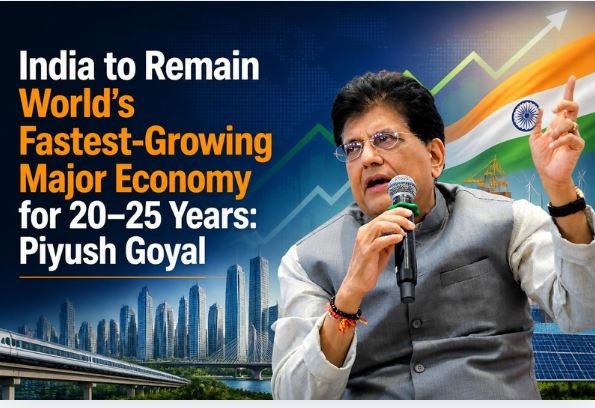
New Delhi, Oct 15: Union Commerce and Industry Minister Piyush Goyal has expressed confidence that India will remain the world’s fastest-growing major economy for the next two to two-and-a-half decades, citing its demographic advantage, expanding domestic market and growing global economic influence.
Addressing the SRCC Centenary Conclave in New Delhi on Thursday, Goyal said India was increasingly attracting international attention as countries recognised the potential of its young, ambitious population and its growing role in technology, trade and global economic development.
“The world wants to engage with India today because they recognise the young aspirational India is going to lead global growth,” the minister said, adding that the country could emerge as a major engine of technological advancement and international trade.
Young Population, Large Market to Drive Growth
Highlighting India’s long-term economic prospects, Goyal identified its demographic dividend, entrepreneurial energy and large consumer base as key strengths that could sustain growth over the coming decades.
He said these advantages would not only influence India’s economic trajectory but also shape its role in the evolving global economy.
“We will continue to be the fastest-growing large economy in the world for the next 20-25 years,” Goyal said, expressing confidence in the country’s ability to maintain its growth momentum.
His remarks come amid India’s broader ambition to strengthen its position in global manufacturing, expand international trade and attract investment across key sectors.
Collective Effort Needed to Achieve Developed-Nation Status
The minister also stressed that India’s ambition to become a developed nation by 2047 would require sustained participation from citizens across all sections of society.
Emphasising individual responsibility and public participation, Goyal urged people to move beyond a mindset of avoiding challenges and take an active role in the country’s development.
“There’s a very large segment of people that is running away from the problems. They are not willing to accept that our destiny is in our own hands,” he said.
He added that achieving the developed-nation goal would depend on collective determination and a willingness to contribute to nation-building.
India’s Growing Global Economic Role
Goyal said the ambition to pursue larger goals had become a defining feature of modern India and was contributing to the country’s rising international standing.
As global economic and technological priorities evolve, India’s young workforce, domestic demand and entrepreneurial ecosystem could provide important advantages. However, sustaining rapid growth over the long term will also depend on productivity, job creation, infrastructure, investment and the ability to translate economic expansion into broader improvements in living standards.
The minister’s remarks underline the government’s confidence in India’s long-term economic potential, with the 2047 developed-nation vision serving as a central milestone in its development agenda.
15, Oct 2026
ChatGPT Highlights Jeremy Rifkin’s Vision of People-Powered AI Challenging Corporate Giants in ‘Rescuing the Future’
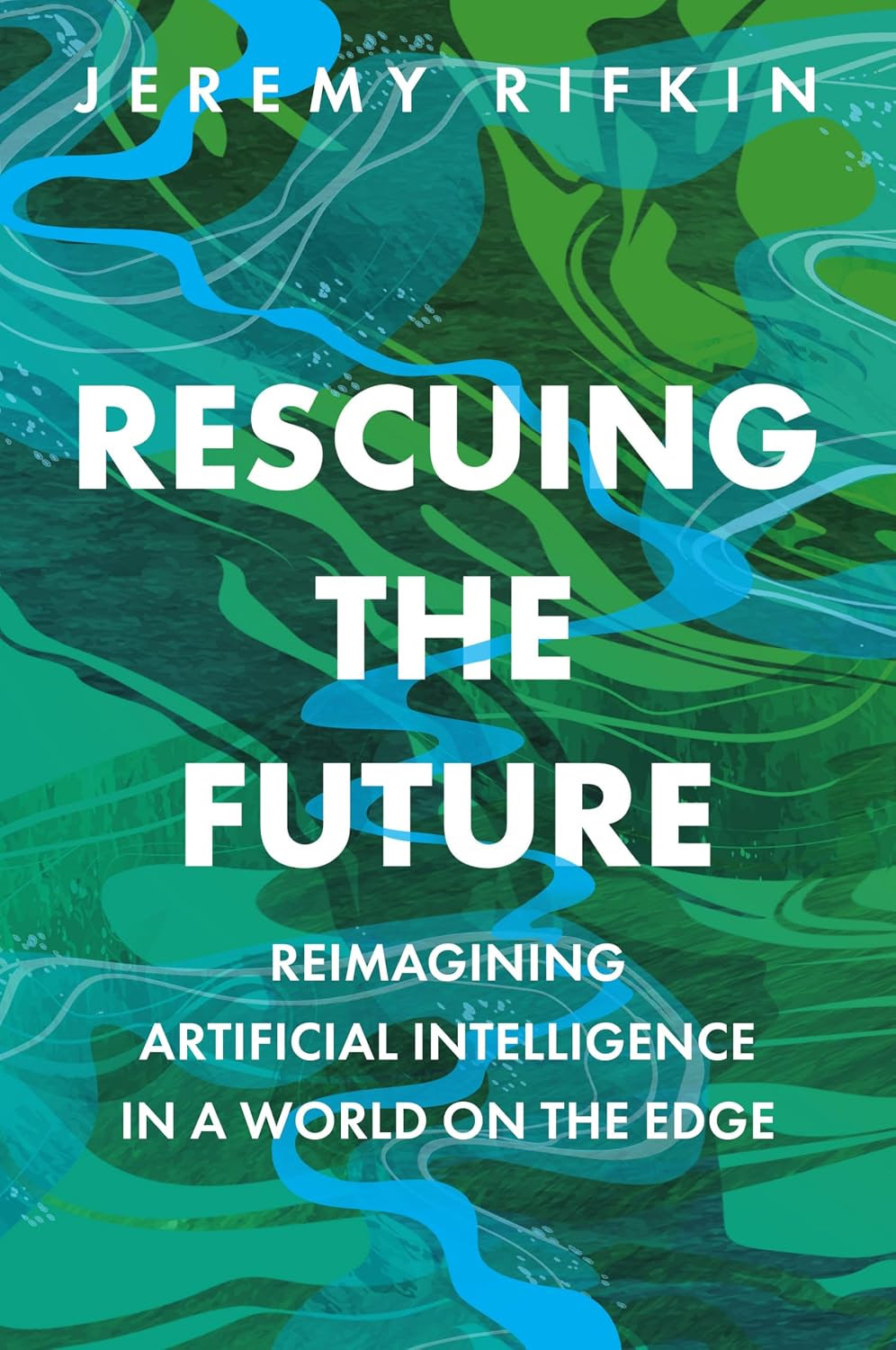
Jeremy Rifkin, one of the World’s Leading Public Intellectuals, Argues in his New Book ‘Rescuing the Future’ that the People’s AI is on a Deep Existential Curve and Likely to Surpass the Corporate AI Giants Well Before Mid-Century in Bioregions Around the World
Oct 15: For more than half a century, Jeremy Rifkin has occupied a singular place in intellectual life. Few public thinkers have attempted to synthesize philosophy, science, technology, economics, governance, ecology, culture, and civil society into a single interpretive framework for understanding historical transformation. Fewer still have done so with the consistency and long temporal arc that characterize Rifkin’s body of work. Across books such as Entropy, Algeny, Time Wars, Biosphere Politics, The End of Work, The Biotech Century, The Age of Access, The European Dream, The Empathic Civilization, The Third Industrial Revolution, The Zero Marginal Cost Society, The Green New Deal, The Age of Resilience, and Planet Aqua, Rifkin gradually assembled an intellectual architecture that anticipated a profound ontological transition now becoming visible in debates surrounding artificial intelligence.
At the center of this transition is a movement from what may be called AI substance ontology to AI process ontology. Substance ontology views reality as composed primarily of discrete things, bounded entities, stable objects, and isolated units. It privileges nouns over verbs, accumulation over flow, hierarchy over relationship, and ownership over participation. AI systems shaped by this ontology tend to centralize data, consolidate computational power, reinforce vertical command structures, and treat intelligence as an extractable commodity. This is the prevailing model pursued by many of the largest technology corporations and geopolitical powers. It is rooted in industrial-era assumptions regarding control, efficiency, prediction, and scale.
Process ontology, by contrast, understands reality as relational, dynamic, ecological, and emergent. Intelligence is not viewed as a thing but as a process arising from interaction, feedback, adaptation, communication, and co-evolution. From this perspective, AI is less a sovereign machine intelligence than a distributed nervous system embedded in social and ecological relationships. Intelligence emerges through networks, shared learning, open systems, and adaptive coordination across multiple scales of existence. Rifkin’s intellectual career can be read as a decades-long effort to prepare civilization for precisely this ontological shift.
What makes Rifkin unusual is that he did not begin with artificial intelligence. Instead, he explored the hidden assumptions of industrial civilization itself. In doing so, he uncovered the philosophical foundations now shaping AI development. Long before contemporary discussions about decentralized intelligence, edge computing, commons governance, ecological economics, or collaborative platforms, Rifkin was already examining the deeper civilizational transition away from mechanistic industrial models toward relational ecological systems.
In Entropy, published in 1980, Rifkin drew on the second law of thermodynamics to critique the industrial worldview. Industrial capitalism assumed that growth, production, and extraction could continue indefinitely through increasing mastery over nature. Rifkin argued instead that all economic systems are embedded within entropic energy flows and ecological limits. This was not merely an environmental argument; it was an ontological argument. Industrial civilization treated matter as inert substance available for exploitation. Rifkin countered that energy systems, ecological systems, and social systems are interdependent processes subject to irreversible transformation.
The significance of this insight for AI is immense. Current AI infrastructure depends upon vast energy consumption, global extraction networks, rare earth minerals, massive data centers, and planetary logistical systems. The dominant AI paradigm often imagines intelligence as infinitely scalable computational accumulation detached from ecological realities. Rifkin’s entropic perspective warns that no intelligence system can transcend the thermodynamic constraints of the biosphere. AI cannot be understood as an isolated technological object. It is embedded within material, energetic, ecological, and social processes. In this sense, Rifkin anticipated the critique of computational gigantism decades before it emerged in contemporary discussions about AI sustainability.
In Algeny, Rifkin turned to biotechnology and genetic engineering. Here again, he challenged the reductionist assumptions of modern science. The mechanistic worldview treated genes as isolated units that could be manipulated like machine parts. Rifkin argued that life is not reducible to discrete components because organisms exist within complex relational fields. Biological systems are dynamic processes shaped by context, interaction, and ecological interdependence.
This critique resonates powerfully with current debates about AI architectures. Many early AI systems were designed according to reductionist principles: symbolic manipulation, linear logic, isolated data structures, and rigid classification systems. However, contemporary developments increasingly rely on emergent behavior, neural adaptation, probabilistic inference, and networked learning. The movement from rule-based AI toward adaptive systems parallels the shift from genetic determinism toward ecological biology. Rifkin’s work anticipated the growing recognition that intelligence cannot be fully understood through atomistic reduction.
In Time Wars, Rifkin examined the commodification of time under industrial capitalism. Industrial society standardized time in order to synchronize labor, maximize efficiency, and discipline human activity within mechanical systems. Clock time became a tool of industrial governance. Rifkin contrasted this with biological and ecological rhythms that operate according to cyclical, adaptive, and relational temporalities.
This insight has profound implications for AI governance. Contemporary digital systems increasingly accelerate social life toward continuous optimization, prediction, and real-time surveillance. Human beings are pressured to conform to machine tempos. Yet process ontology suggests that resilience depends upon synchronizing technological systems with ecological and social rhythms rather than subordinating life to algorithmic acceleration. Rifkin’s critique of industrial time foreshadowed contemporary concerns regarding attention economies, cognitive overload, and the temporal colonization produced by digital capitalism.
In Biosphere Politics, Rifkin further expanded his ecological vision. He argued that political institutions designed during the industrial era are incapable of governing interconnected planetary systems. Nation-states emerged during a period when sovereignty, territory, and centralized control defined political organization. However, ecological crises transcend territorial boundaries. Climate systems, oceans, biodiversity, and atmospheric processes operate according to relational interdependence.
The same tension now appears in AI governance. Geopolitical competition encourages nations and corporations to pursue centralized AI supremacy. Yet AI systems increasingly function across distributed networks that cannot be effectively governed through purely territorial frameworks. Rifkin’s biospheric perspective implies that future AI governance may require bioregional, transnational, and commons-oriented institutions capable of managing shared informational ecosystems. His work anticipated the inadequacy of purely sovereign models in an interconnected world.
In The End of Work, Rifkin explored the automation revolution long before AI became a mainstream concern. He argued that advanced technologies would dramatically reduce the demand for traditional labor while destabilizing industrial employment structures. Importantly, Rifkin did not frame this merely as an economic problem. He saw it as a civilizational transition requiring a redefinition of human purpose, value, and participation.
The contemporary AI debate often focuses narrowly on productivity gains and labor displacement. Rifkin recognized earlier that automation challenges the ontological assumptions of industrial society itself. Industrial capitalism linked human worth to wage labor within centralized production systems. If intelligent automation reduces the need for human labor, then societies organized entirely around employment-based identity face existential instability. Rifkin therefore advocated expanding the role of civil society, voluntary associations, caregiving networks, cultural participation, and social commons.
This anticipates current discussions regarding post-work economies, universal basic income, collaborative commons, and human-centered AI. Process ontology does not define humans primarily as labor inputs within mechanized production systems. Instead, it emphasizes relational capacities such as empathy, creativity, stewardship, cooperation, and ecological participation. Rifkin understood that automation would force civilization to reconsider what it means to be human.
In The Biotech Century, Rifkin warned that the fusion of digital technologies and biological engineering could transform life into a commodified informational resource. He perceived that industrial capitalism was evolving into a bioinformational regime in which genes, organisms, and living processes would become subject to ownership, manipulation, and commercialization.
This analysis is directly relevant to contemporary AI systems trained on massive datasets extracted from human behavior, communication, creativity, and cognition. AI capitalism increasingly converts lived experience into computational capital. Human interactions become data streams feeding predictive systems. Rifkin foresaw this broader transformation in which informational control replaces industrial ownership as the dominant axis of power.
However, Rifkin also consistently identified countervailing possibilities. He recognized that network technologies could enable collaborative, distributed, and participatory systems rather than merely centralized domination. This theme became especially prominent in The Age of Access. Here Rifkin argued that industrial capitalism based on property ownership was evolving into a network economy based on access, subscriptions, experiences, and relationships.
This was a remarkably prescient insight into platform capitalism and digital ecosystems. Yet Rifkin interpreted the transition ambivalently. On one hand, access economies could deepen corporate surveillance and commodification. On the other hand, networked infrastructures could facilitate collaborative sharing systems and distributed participation. The ontological question concerned whether networks would reinforce centralized control or enable decentralized relationality.
Current AI development reflects precisely this tension. Centralized cloud AI models consolidate immense computational and financial power within a few corporations. At the same time, distributed AI architectures operating through edge computing, open-source ecosystems, cooperative platforms, and localized data stewardship suggest alternative pathways. Rifkin’s work anticipated the possibility that intelligence infrastructures could evolve toward commons-based coordination rather than monopolistic enclosure.
In The European Dream, Rifkin contrasted the American emphasis on individual accumulation and geopolitical power with the European emphasis on quality of life, social solidarity, cultural diversity, and transnational cooperation. While his characterization was sometimes idealized, the underlying philosophical distinction remains important. Industrial modernity prioritized autonomy, competition, and sovereignty. Emerging ecological civilization may prioritize interdependence, collaboration, and shared stewardship.
This distinction mirrors contemporary debates about AI governance models. One paradigm frames AI as an instrument for geopolitical dominance and market concentration. Another frames AI as a public utility embedded within democratic institutions and social ecosystems. Rifkin consistently argued that civilization must move from possessive individualism toward empathic interdependence.
This vision reached its fullest expression in The Empathic Civilization. In that work, Rifkin proposed that human history involves an expanding empathic consciousness shaped by evolving communication and energy regimes. As societies become more interconnected, humans develop broader capacities for identification with others. Empathy, in Rifkin’s view, is not merely a moral sentiment but a civilizational force.
The implications for AI are profound. Substance ontology often treats intelligence as detached rational calculation. Process ontology instead recognizes cognition as embodied, relational, and affective. Rifkin’s empathic framework suggests that future AI systems should not merely optimize efficiency or prediction but should enhance cooperative capacities within social and ecological networks.
This perspective sharply contrasts with purely instrumental AI models driven by surveillance, behavioral manipulation, and militarized competition. Rifkin understood that technological systems shape consciousness itself. Communication infrastructures alter how humans perceive relationships, time, identity, and responsibility. AI therefore cannot be governed solely as a technical issue because it transforms the cultural and psychological architecture of civilization.
In The Third Industrial Revolution, Rifkin articulated one of his most influential ideas: the convergence of digital communication networks with distributed renewable energy systems. He envisioned societies organized through lateral power rather than centralized command. Millions of individuals, communities, and enterprises could generate and share energy and information across intelligent networks.
This framework bears striking resemblance to emerging distributed AI ecosystems. Edge AI, fog computing, peer-to-peer networks, decentralized autonomous systems, and open-source collaborative platforms all reflect movement away from centralized industrial infrastructures toward distributed relational systems. Rifkin perceived that network intelligence operates differently from hierarchical industrial organization. Power flows laterally through interconnected nodes rather than vertically through centralized authorities.
Importantly, Rifkin did not romanticize decentralization in simplistic terms. He understood that distributed systems require new forms of coordination, governance, and trust. Process ontology does not eliminate structure; it redefines structure as adaptive relationality rather than rigid hierarchy. AI systems operating within distributed ecosystems must therefore balance autonomy with cooperation, local flexibility with global coordination.
In The Zero Marginal Cost Society, Rifkin extended this argument further. He proposed that digital technologies reduce the marginal cost of producing and sharing information, knowledge, and certain goods. As production costs approach zero, traditional capitalist market structures face disruption. Collaborative commons emerge alongside conventional markets.
This insight is central to current AI dynamics. Generative AI dramatically lowers the cost of producing text, images, software, music, and other informational goods. The industrial model of scarcity-based ownership becomes increasingly unstable. AI systems accelerate the transition toward abundance economies in which value derives less from exclusive possession and more from participation within networks.
However, Rifkin also recognized the dangers of monopolistic capture. Zero marginal cost systems can either democratize access or intensify corporate concentration depending upon governance structures. The struggle over AI today reflects this tension. Will AI infrastructures become global commons supporting distributed creativity and resilience, or will they become centralized instruments of extraction and surveillance?
In The Green New Deal, Rifkin connected ecological transition to economic transformation. He argued that decarbonization requires not merely technological substitution but systemic restructuring across energy, transportation, finance, governance, and social organization. Industrial civilization cannot solve ecological crises while preserving the ontological assumptions that created them.
This principle applies equally to AI. Sustainable AI cannot emerge simply by making existing systems more efficient. It requires rethinking the purposes, architectures, and governance models of intelligence systems themselves. Process ontology reframes intelligence as ecological participation rather than extractive optimization. AI becomes a tool for enhancing adaptive resilience within complex living systems rather than maximizing industrial throughput.
This theme culminates in The Age of Resilience. Here Rifkin argues that the industrial “age of progress” is giving way to an “age of resilience.” Industrial modernity prioritized efficiency, speed, scale, and economic growth. Yet highly optimized systems often become fragile. Climate disruptions, pandemics, financial crises, supply chain failures, and ecological instability reveal the vulnerabilities of centralized industrial systems.
Resilience requires diversity, redundancy, adaptability, local capacity, ecological integration, and cooperative governance. These are precisely the characteristics associated with process ontology. Intelligence within resilient systems emerges from distributed relationships rather than centralized control.
This insight is perhaps Rifkin’s most important contribution to AI discourse. Current dominant AI models often pursue maximal scale through centralized data centers, massive computational concentration, and universal predictive systems. Yet resilient AI futures may depend instead upon distributed intelligence operating close to local ecosystems and communities. Edge AI systems capable of adapting to specific bioregional conditions may prove more sustainable and democratic than monolithic cloud architectures.
Rifkin’s newest work, Planet Aqua, further deepens this ecological civilizational perspective. Water becomes a metaphor and material reality for understanding planetary interdependence. Oceans, hydrological cycles, and aquatic systems reveal the fluid relationality of life itself. Human civilization is inseparable from planetary metabolic processes.
This aquatic perspective reinforces process ontology at the deepest philosophical level. Substance ontology imagines discrete entities separated by boundaries. Water dissolves rigid boundaries and emphasizes circulation, flow, immersion, and mutual dependence. AI systems designed according to process ontology would similarly emphasize fluid adaptation, relational intelligence, ecological embeddedness, and participatory governance.
What ultimately distinguishes Rifkin’s contribution is not any single prediction or policy proposal. Some of his forecasts have been criticized as overly optimistic or technologically deterministic. Certain arguments simplify complex historical realities. Yet the enduring significance of his work lies elsewhere. Rifkin persistently identified the ontological contradictions within industrial modernity long before they became widely recognized.
He understood that technological revolutions are never merely technical. They transform how societies conceptualize reality itself. Energy systems, communication systems, economic systems, and governance systems co-evolve with philosophical assumptions about human nature, time, space, identity, and relationship. Rifkin consistently argued that the industrial worldview based on mechanistic substance ontology was reaching exhaustion.
Artificial intelligence now represents the decisive arena in which this ontological struggle unfolds. One pathway leads toward hyper-centralized computational empires governed through surveillance, predictive control, and extractive accumulation. This model extends industrial substance ontology into digital form. Intelligence becomes a commodified substance concentrated within proprietary systems.
The alternative pathway leads toward distributed intelligence embedded within ecological and social processes. In this model, AI enhances collaborative adaptation, bioregional resilience, commons governance, and empathic coordination across interconnected systems. Intelligence is understood as participatory process rather than proprietary object.
Rifkin did not invent process ontology. Philosophical traditions associated with thinkers such as Alfred North Whitehead, Henri Bergson, Gilles Deleuze, and ecological systems theorists developed related perspectives long before contemporary AI. Yet Rifkin performed a different and arguably equally important role. He translated process-oriented thinking into a public civilizational narrative accessible to policymakers, business leaders, activists, urban planners, educators, and civil society organizations.
In this sense, Rifkin served as a bridge figure between academic theory and societal transformation. He recognized earlier than most public intellectuals that ecological crisis, technological transformation, economic restructuring, and cultural change were converging into a single historical transition. His work consistently emphasized interconnectedness across domains that modern institutions artificially separated.
The importance of this synthesis becomes increasingly clear as AI systems permeate every aspect of civilization. AI is not merely a software industry. It reshapes labor, governance, culture, education, ecology, economics, warfare, identity, communication, and social relationships simultaneously. Fragmented disciplinary thinking cannot adequately address such transformations. Rifkin’s interdisciplinary approach therefore appears increasingly relevant.
Moreover, Rifkin’s work challenges the assumption that technological sophistication necessarily entails greater centralization. Industrial civilization equated scale with progress. Larger factories, larger bureaucracies, larger infrastructures, and larger corporations symbolized advancement. Rifkin instead envisioned distributed complexity in which smaller units cooperate across intelligent networks. This shift from centralized gigantism toward distributed relationality lies at the heart of process ontology.
Today, debates surrounding open-source AI, decentralized computation, local energy systems, community data trusts, cooperative platforms, and bioregional governance all echo themes Rifkin explored across decades. His writings anticipated that the future would not be defined solely by smarter machines but by changing relationships among energy, information, ecology, and human consciousness.
The transition from AI substance ontology to AI process ontology remains incomplete and contested. Centralized corporate and geopolitical models currently dominate much of the AI landscape. Yet the ecological, social, and democratic limitations of these systems are becoming increasingly visible. Climate instability, energy demands, data monopolization, algorithmic inequality, and social fragmentation expose the unsustainability of purely extractive AI paradigms.
Rifkin’s intellectual legacy suggests that the future of AI cannot be separated from the future of civilization itself. The question is not whether machines become intelligent. The deeper question concerns what conception of intelligence humanity chooses to cultivate. Will intelligence serve domination or participation? Extraction or stewardship? Centralization or resilience? Competition or empathy?
Across fifty years of writing and public engagement, Jeremy Rifkin repeatedly argued that humanity stands at civilizational thresholds requiring new ways of understanding reality. His body of work forms one of the most sustained attempts to articulate the philosophical foundations of an ecological, relational, and process-oriented civilization. Whether or not one agrees with all his conclusions, his influence on the emerging discourse surrounding AI, ecology, governance, and resilience is undeniable.
As artificial intelligence becomes the defining technological force of the twenty-first century, Rifkin’s writings appear less like isolated social commentary and more like preparatory texts for an ontological transformation already underway. His enduring contribution lies in helping societies imagine that intelligence, economy, governance, and human identity need not remain trapped within the mechanistic assumptions of the industrial age. He invited readers to envision civilization itself as a living process of interdependence embedded within the larger metabolism of the Earth.
In that sense, Jeremy Rifkin’s greatest achievement may not be any individual argument but the cumulative intellectual atmosphere created across his fifty-year career: a framework for perceiving the transition from industrial substance ontology toward ecological process ontology as the central drama of our historical moment. Artificial intelligence has now become the arena in which that drama will largely be decided.
Jeremy Rifkin is the bestselling author of twenty-five books translated into over thirty-five languages. He is a principal architect of the European Union’s and China’s economic plans for transitioning into a Third Industrial Revolution and he served as an economic advisor to Senate Majority Leader Charles Schumer on the U.S. infrastructure plan. He is listed among the top ten most influential economic thinkers in The Huffington Post’s global survey of “The World’s Most Influential Voices.”
15, Oct 2026
transcosmos participates in Mini Sapporo 2026 held in Sapporo City
As a member of the local community, providing work experience opportunities for children
Tokyo, Japan: Oct 15: transcosmos announced that it participated in Mini Sapporo 2026, held at Access Sapporo on Saturday, October 3 and Sunday, October 4, 2026. As a member of the Hokkaido/Sapporo community, the company participated in the event to provide children with opportunities to experience both work and consumption activities, helping them learn firsthand about the rewards and challenges of working and the way society functions.

Mini Sapporo is a work experience program for third- and fourth-grade elementary school students in Sapporo City and neighboring areas that provides a variety of experiential learning opportunities in support of the children’s right to grow to their full potential as stipulated in the Sapporo City Convention on the Rights of the Child. Through the event, children experience a series of activities that are rarely encountered in everyday life, including searching for jobs, working, receiving wages, and paying taxes. In addition, by using the wages they earn to shop and dine, they can enjoy learning about how society functions.
At the transcosmos booth, children experienced the work of a contact center agent helping customers resolve their problems using the generative AI role-playing system trans-AI Tutor. Children selected and spoke with AI-powered customer personas with a variety of characteristics, choosing for themselves whom they would assist. By listening carefully to identify each customer’s problems and aiming to provide support that would earn a “Thank you!”, they enjoyed learning the importance of communication.
Children who participated in the program received one handmade gift of their choice from a selection of original pocket notebooks, blank notebooks, and memo pads created by employees of transcosmos assist inc., transcosmos’s special subsidiary established to promote the employment of persons with disabilities.
transcosmos entered Sapporo City in 1980. Today, the company provides CX services, including contact centers and digital marketing, and BPO services with approximately 6,500 employees across 16 locations in the city. As a business with a strong presence in Sapporo City, transcosmos has been serving its community by making donations through the corporate version of furusato nozei—Japan’s hometown tax donation program—and by participating as a registered business under the Sapporo SDGs-driven Business Registration Program.
To demonstrate its gratitude to the local communities that have supported its business over many years, transcosmos will continue to engage in community-driven business activities. At the same time, with the aim of creating a sustainable society, transcosmos will help address the social challenges faced by local communities.
* transcosmos is a trademark or registered trademark of transcosmos inc. in Japan and other countries.
* Other company names and product or service names used here are trademarks or registered trademarks of respective companies.
|


