


28, Aug 2026
Sensex Rebounds Over 400 Points as IT Stocks Lead Market Recovery
Mumbai, Aug 28: Indian equity markets staged a strong recovery on Friday, with the Sensex gaining more than 400 points and the Nifty moving above the 24,150 mark as investors returned to technology stocks.

The rebound came after two consecutive sessions of losses and was supported by positive global cues and renewed optimism around the technology sector. The sharp rise in US technology stocks, led by Nvidia’s strong outlook, helped improve sentiment towards Indian IT companies.
The Nifty IT index emerged as one of the strongest performers, gaining around 3 per cent. Major IT stocks, including TCS, Infosys and HCLTech, witnessed strong buying interest as investors responded positively to the global technology rally.
The recovery provided some relief after Thursday’s highly volatile session, when the domestic market witnessed sharp movements towards the close. Investors were therefore closely watching whether Friday’s gains would develop into a broader recovery.
Global markets also provided support. US equities ended higher in the previous session, with the Nasdaq gaining more than 1.5 per cent after Nvidia’s upbeat revenue outlook strengthened confidence in continued artificial intelligence-related spending. Nvidia shares jumped sharply, while technology and software stocks across Wall Street also advanced.
The positive sentiment extended to several Asian markets, although trading remained mixed ahead of Federal Reserve Chair Kevin Warsh’s speech at the Jackson Hole Symposium. Investors are looking for clearer signals on the US interest-rate outlook, which could influence global capital flows and emerging-market equities.
For Indian markets, the IT sector has become a key source of support. Strong demand expectations for artificial intelligence, cloud computing and digital services are encouraging investors to reassess technology stocks, particularly after the recent weakness in the broader market.
However, the recovery remains sensitive to global developments. Movements in crude oil prices, US bond yields and expectations surrounding monetary policy could continue to influence investor sentiment.
Market participants are also keeping an eye on the unusual volatility witnessed during Thursday’s closing session following the introduction of the new Closing Auction Session. The sharp swings near the market close have added another layer of uncertainty for traders.
Despite these concerns, Friday’s rebound indicates that investors are willing to return to beaten-down sectors when global cues improve. The sustainability of the recovery will now depend on whether buying spreads beyond IT stocks and whether the Nifty can maintain levels above 24,150.
For the near term, investors are expected to remain focused on IT stocks, global technology trends, US monetary-policy signals and domestic market volatility as they assess the next direction of the Sensex and Nifty.
- 0
- By Neel Achary

28, Aug 2026
Digital Payments to Merchants Rise 19.6% to Rs 11.7 Trillion in July
New Delhi, August 28: Digital payments made to merchants across India rose 19.6 per cent year-on-year to around Rs 11.7 trillion in July 2026, highlighting the continued shift towards digital transactions among consumers and businesses.
The growth comes amid sustained expansion in India’s digital payments ecosystem, with Unified Payments Interface (UPI) continuing to play a central role in everyday retail transactions. According to data from the National Payments Corporation of India (NPCI), UPI processed a record 2,365.8 crore transactions in July, with the total value reaching around Rs 29.87 lakh crore.
The July UPI figures represented the highest monthly transaction volume recorded since the platform was launched in 2016. Transaction volumes had crossed the 2,300-crore mark for the first time in May, before rising further in July, underscoring the rapid adoption of real-time digital payments.

The rise in merchant payments reflects the growing use of digital transactions for everyday purchases, ranging from small retail payments and food and grocery purchases to payments for services and larger transactions. QR-code payments and smartphone-based payment applications have also made it easier for small businesses and merchants to accept electronic payments.
UPI’s growing penetration has been particularly significant for small-value transactions. Industry data cited by the India Brand Equity Foundation shows that person-to-merchant payments accounted for about 63 per cent of UPI transaction volume, while 86 per cent of P2M transactions in FY2026 were below Rs 500.
For merchants, the expansion of digital payments can improve transaction convenience, reduce dependence on cash handling and create electronic records of sales. For consumers, instant payments provide a faster and increasingly familiar alternative to cash and traditional payment methods.
The broader digital payments expansion is also contributing to India’s financial inclusion and formalisation objectives. As more small businesses accept digital payments, transaction histories can potentially support access to formal financial services and technology-enabled business solutions.
The growth comes as UPI marks a decade since its launch. The government said the number of banks live on the UPI platform had reached 741 by July 2026, compared with 21 banks at the time of its launch. UPI accounted for about 84 per cent of India’s digital payments in FY2025-26, according to government data.
The platform is also expanding its international footprint, with UPI operational in countries including the UAE, Singapore, Bhutan, Nepal, Sri Lanka, France, Mauritius and Qatar. The government has highlighted the system’s interoperability and scale as key factors behind its growing global recognition.
The latest merchant-payment figures therefore point to a broader structural change in India’s payments landscape. With consumers increasingly accustomed to instant digital transactions and merchants expanding acceptance infrastructure, digital payments are becoming an integral part of everyday commerce and India’s wider digital economy.
28, Aug 2026
TECNO brings segment-first IP69 Durability to the masses with the new SPARK Go 3 Pro
New Delhi, Aug 28: TECNO has launched the SPARK Go 3 Pro in India, bringing segment-first IP69 durability to an accessible price point. Built to survive high-pressure water jets, heavy dust and drops, the device is crafted for demanding real world conditions – from rain-soaked delivery routes to dusty agricultural fields.

The TECNO SPARK GO 3 Pro is designed for people whose phones don’t get the luxury of a controlled environment – a farmer checking prices in the field, a delivery worker caught in the rain, a student commuting in a crowded bus. It’s a fitting embodiment of TECNO’s new tagline, ‘Desh Jaisa Dumdaar.’
Speaking on the launch, Mr. Arijeet Talapatra, CEO, TECNO Mobile India, said:
“For millions of people, a smartphone isn’t a luxury item- it’s an essential tool for their livelihood. When your phone is central to how you earn a living, accidental damage stops your entire day in its tracks. We engineered the TECNO SPARK Go 3 Pro so hard-working users never have to baby their device, giving them total peace of mind through every shift, rainstorm, and commute.”
Beyond its exterior toughness, the TECNO SPARK Go 3 Pro is equipped to handle full working days under the hood. It pairs a fluid 120Hz display with a massive 5200mAh battery that keeps going without midday charging breaks. To ensure clear communication in chaotic environments, AI Voiceprint Noise Cancellation actively filters out background racket, complemented by an integrated IR remote for quick appliance control.
28, Aug 2026
MFTA and Central Bank of Jordan Advance Comprehensive Fintech Agenda in High-Level Amman Meeting
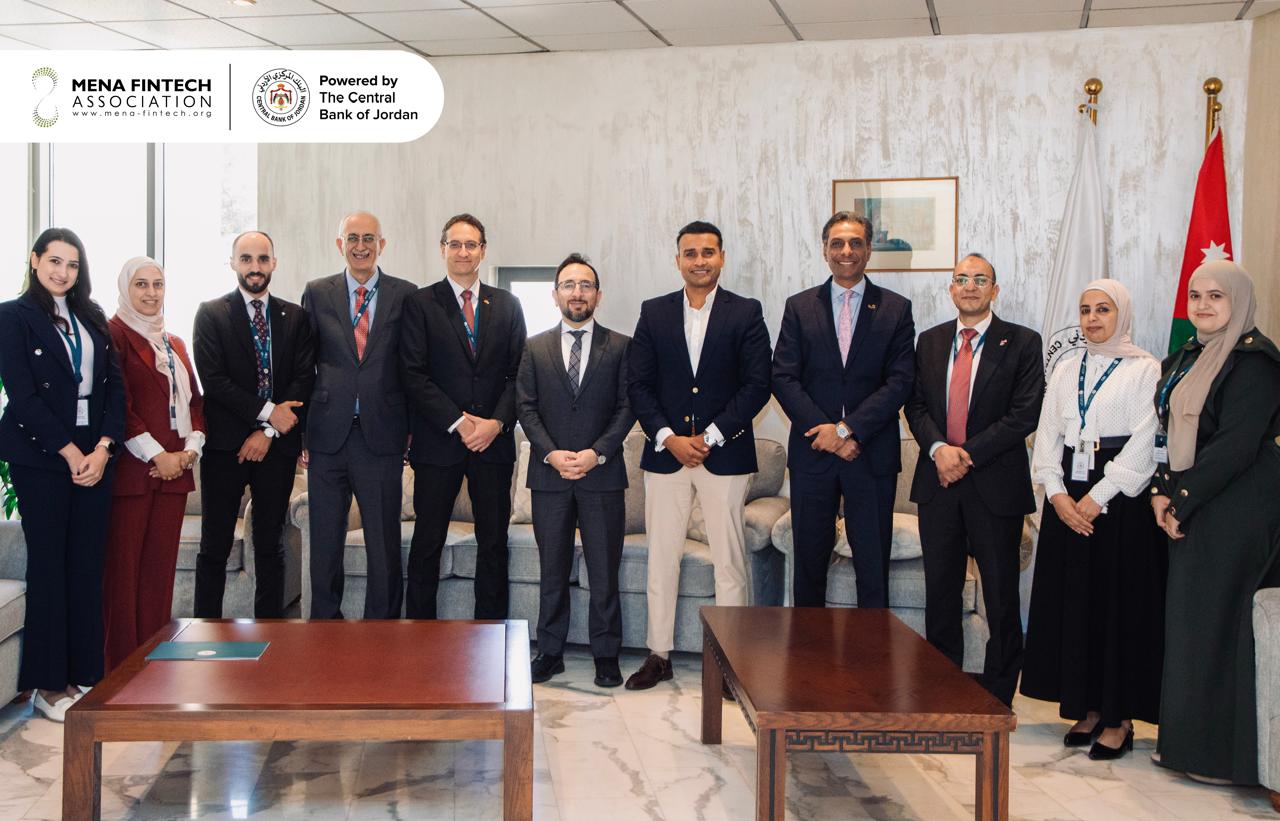
Amman, Jordan – Aug 28: The MENA Fintech Association (MFTA) has concluded a high-level strategic meeting with the Governor and Deputy Governor of the Central Bank of Jordan, H.E. Ziad Ghanma, alongside senior CBJ leadership, the Securities Commission of Jordan, and GIZ.
The meeting, convened in Amman by MFTA Chairman Nameer Khan, underscored Jordan’s growing importance within the broader MENA fintech landscape. Jordan has steadily built a reputation as one of the region’s most credible and proactive regulatory environments, anchored by the Central Bank of Jordan’s early commitment to fintech innovation through its regulatory sandbox framework, a mechanism that has enabled a growing number of licensed entities to test, refine, and graduate into fully regulated operation within the Kingdom.
Discussions in Amman covered a comprehensive fintech agenda, reflecting the depth and maturity of the relationship between MFTA and Jordan’s financial regulatory leadership. Particular emphasis was placed on Jordan’s potential to attract greater foreign direct investment into its fintech and financial services sector, building on the strong regulatory foundation the Central Bank of Jordan has established in recent years.
Speaking following the meeting, MFTA Chairman Nameer Khan said:
“Jordan’s regulatory leadership has done something genuinely rare in this region. They have built a sandbox environment that does not just test ideas, but graduates them into real, licensed, operating businesses. That is the mark of a regulator that understands innovation is not a risk to be managed, but an opportunity to be enabled. Jordan’s role in the growth story of MENA’s fintech sector is significant, and it is only growing from here. We are proud to stand alongside the Central Bank of Jordan in this journey.”
Further details will be announced in due course.
28, Aug 2026
Chakan–Talegaon Needs Better Roads Before Growth Slows Down
An Open Appeal to the Government of Maharashtra, PMRDA, PCMC and MIDC
– By Anil Pharande, Founder & Chairman – Pharande Spaces
Sixteen years ago, in August 2010, we warned in an article entitled ‘Road Development: The Key to Pune’s Real Estate Growth’ that road infrastructure would be one of the biggest drivers of Pune’s future growth. The warning then was simple – if infrastructure did not keep pace with expansion, fast-growing areas would eventually struggle under their own weight. That is exactly what is now happening in the Chakan–Talegaon corridor.
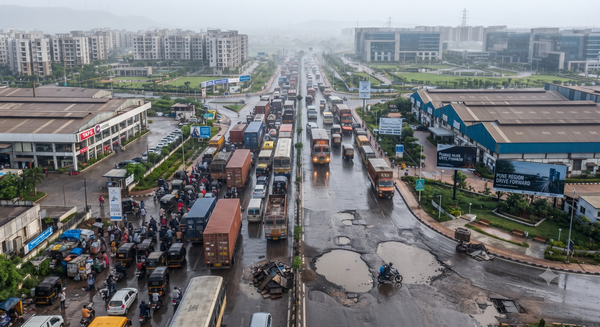
Today, traffic congestion is no longer an inconvenience. It is a fatal public safety crisis. A recent internal report by the Pimpri Chinchwad police reveals that 152 commuters have died, and over 200 have been injured, in road accidents in the Chakan industrial belt since 2024. The highest number of these fatal crashes occurred on the exact stretches that suffer from severe infrastructural neglect – the Talegaon-Chakan and Chakan-Shikrapur corridors.
A Fast-Growing Corridor Under Pressure
Pimpri-Chinchwad has grown over decades with a stronger civic base and a more established urban structure. PCMC covers about 181 sq km, and its official website records a 2011 Census population of 1,729,359, with the current population estimated at around 2.5 million. In contrast, the Chakan–Talegaon belt has expanded rapidly as an industrial and logistics corridor.
This growth has brought major investment and employment, but it has also placed heavy pressure on roads, bridges, junctions, transport systems and basic services. Without stronger road planning and better coordination between agencies, the gap between growth and infrastructure will only widen.
The Connectivity Gap
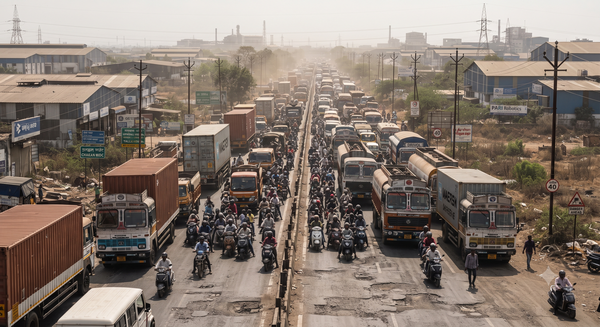
One of the clearest problems in this region is the break in continuity between better-developed urban roads and the weaker links that connect them to industrial areas beyond. The Indrayani River crossings are an important part of this movement network, especially for traffic moving between PCMC and the Chakan side. In several stretches, road conditions and carrying capacity change sharply once vehicles move across jurisdictions.
This results in congestion, delays, freight bottlenecks and poor travel reliability for both workers and goods vehicles.
What Should Be Done Immediately
- Complete the missing road links: PMRDA has already identified key missing-link road projects in this region. These include the Talegaon–Chakan Highway connection from Hingane Chowk to Chakan Industrial Estate, the Nanekarwadi to Samruddhi CNG Pump stretch, and the Western Bypass connection linking Pune–Nashik NH60, Chakan MIDC and Talegaon’s side toward the Old Mumbai–Pune Highway.
- Upgrade river crossings and approach roads: The bridges and road connections serving movement across the Indrayani side need immediate attention. New bridge capacity, widening works, stronger approach roads and better junction planning should be taken up wherever traffic demand justifies it.
- Speed up review of the Bhosari–Chakan proposal: A revised DPR submitted by Maha-Metro reportedly includes a proposed Bhakti Shakti–Chakan Metro project, with a 17-km double-decker section between Bhosari and Chakan combining an elevated road and metro alignment.
- Promote planned housing, not scattered growth : Chakan and Talegaon have the potential to become stronger residential destinations for the workforce employed in the industrial belt. But housing growth cannot be left to happen in a scattered and unplanned way.
The Chakan–Talegaon belt is too important to Maharashtra’s industrial and employment future to be held back by delays, fragmented planning and weak last-mile connectivity. This corridor’s economic value in now byond any dispute, but it is in dire need of the infrastructure backbone to match this importance and unlock its full potential.

Anil Pharande is Chairman of Pharande Spaces, a leading real estate construc
Disclaimer: The views and opinions expressed in this article are solely those of the author, and do not necessarily reflect the views of the publication.
28, Aug 2026
Last-Minute Raksha Bandhan Gifting Made Easier with Premium Fashion, Beauty and Lifestyle Picks on Myntra’s M-Now
Aug 28: This Raksha Bandhan, Myntra’s M–Now brings together a curated selection across premium fashion, beauty, jewellery, watches, perfumes and accessories, with delivery starting in 30 minutes. For shoppers putting together their celebrations closer to the occasion, the assortment also includes 1,500+ Rakhis, making it easier to find both a thoughtful gift and the festive essential in one place.

From festive fashion and beauty favourites to watches, accessories and Rakhis, here are some options to explore this Raksha Bandhan.
Festive fashion from Libas, DIWAS by Manyavar, BIBA, Indo Era and trueBrowns
A new festive look can be just as thoughtful as a traditional gift. Myntra’s M–Now offers ethnic and occasion wear from brands including Libas, DIWAS by Manyavar, Indo Era, BIBA and trueBrowns, making it easier to find styles suited to Raksha Bandhan celebrations.
Beauty and fragrance from YSL, Estée Lauder, Forest Essentials and more
For beauty enthusiasts, skincare, fragrance and personal care make for thoughtful gifting choices. Options from YSL, Estée Lauder, Forest Essentials, Dyson, Beauty of Joseon, Carolina Herrera, Prada and Victoria’s Secret allow shoppers to choose according to individual preferences.
Watches and accessories from Titan, Timex, Armani Exchange, Calvin Klein and Tommy Hilfiger
For siblings who prefer gifts that combine style with utility, watches and accessories from Titan, Timex, Armani Exchange, Calvin Klein and Tommy Hilfiger offer versatile choices across everyday classics and more elevated festive picks.
Rakhis to complete the celebration
The assortment also includes silver Rakhis, alongside classic, contemporary and premium designs from brands such as GIVA, Palmonas and Zaveri Pearls, which also offer a range of jewellery options to gift your sister this Raksha Bandhan.
Handbags and accessories from ALDO, Chumbak, GUESS, Hidesign, Love Moschino and Theater
For siblings who lean towards everyday style essentials, handbags and accessories from ALDO, Chumbak, GUESS, Hidesign, Love Moschino and Theater make for practical yet fashion-forward gifting options that extend well beyond the festive occasion.
For last–minute Raksha Bandhan gifting
For those shopping closer to the occasion, M–Now makes it easier to find a thoughtful gift without the last–minute scramble, with an expanded selection of premium fashion, beauty and lifestyle options. The service is live across Bengaluru, Mumbai, Delhi NCR, Kolkata, Chennai, Hyderabad, Pune, Patna, Jaipur, Lucknow and Ahmedabad, offering access to 1 lakh+ SKUs from 1,000+ brands. With delivery starting in 30 minutes, it brings greater choice and convenience to festive gifting.
28, Aug 2026
FIA President, H.E. Mohammed Ben Sulayem, meets president of Chile H.E José Antonio Kast strengthening cooperation across Mobility and Motorsport

Dubai, UAE, Aug 28: H.E. Mohammed Ben Sulayem, President of the FIA, met yesterday with the President of the Republic of Chile, H.E. José Antonio Kast in Santiago, reinforcing the strong relationship between the Fédération Internationale de l’Automobile (FIA) and the Chilean Government.
During the visit, they discussed their shared priorities across mobility and motorsport, including improving road safety, supporting sustainable transport, and creating further opportunities for the development of motorsport in Chile.
This meeting comes at a key moment for South America as the continent is about to play host to the FIA World Rally Championship in Paraguay, and the FIA’s American Congress, bringing together FIA Member Clubs from across the region to Buenos Aires, Argentina.
The constructive discussions culminated in President Kast and the Republic of Chile signing the FIA’s United Against Online Abuse (UAOA) charter.
Founded in 2023 by President Ben Sulayem, the coalition is leading the fight to tackle online abuse in sport, uniting governments, sporting federations and technology companies with the goal of protecting the sporting community and ensuring it is a safe, inclusive, and respectful space for all. Chile joins 13 other world governments as a coalition member.

Speaking following the meeting, FIA President, H.E. Mohammed Ben Sulayem said: “Chile plays an important role within the FIA community, with a proud motorsport heritage and a clear ambition for the future of automotive mobility.
“From hosting the FIA World Rally Championship to major investment in the country’s road network and connectivity, there is a strong commitment to the championing of these vital areas.
“I was pleased to meet with President Kast and discuss our shared priorities for the future, in particular the significant potential for motorsport in Chile, both as a platform to advance safety, and innovation and as a driver of economic growth and tourism, alongside our shared ambition to deliver safer, more sustainable and accessible mobility for all.
“I also welcome Chile’s decision to become the newest member of the United Against Online Abuse coalition, strengthening our shared commitment to a safer and more inclusive environment across sport.
As part of the discussions on mobility, President Ben Sulayem outlined the FIA’s work to improve road safety outcomes through data-driven initiatives including the FIA Road Safety Index (RSI) and FIA Driver Safety Index (DSI).

The programmes provide governments, organisations and road users with practical tools to measure, benchmark and improve road safety performance, supporting the ambition of reducing road traffic fatalities and injuries.
The FIA President also highlighted the work of the Automóvil Club de Chile (ACCHI), which plays an important role in promoting safer and more sustainable mobility across the country.
The Club, led by President Alejandro Quintana who was also in attendance, recently became one of nine new FIA Member Clubs to adopt the FIA DSI, using technology and data to help organisations better understand and manage driver risk.
Through the FIA Safe and Sustainable Mobility Grants Programme and the FIA Safe Mobility For All and For Life international programme, ACCHI has also been deploying internationally recognised tools to assess road infrastructure around schools and help create safer journeys for children, and is developing a dedicated digital platform to promote awareness on key mobility issues and connect directly with the Chilean public.
Discussions also covered the continued development of motorsport in Chile and the role of the Federación Chilena de Automovilismo Deportivo (FADECH), the FIA’s sporting Member in the country.
28, Aug 2026
Nvidia Boost Lifts Market Mood; Sensex, Nifty Set for Firm Opening
Mumbai, Aug 28: Indian stock markets are likely to open on a positive note on Friday, supported by gains in US technology stocks and easing crude oil prices. However, investors are expected to remain cautious ahead of Federal Reserve Chair Kevin Warsh’s speech at the Jackson Hole Symposium.
The GIFT Nifty was trading at 24,255.5, up 55.5 points, or 0.23 per cent, around 8 am, signalling a firm start for the domestic benchmarks.
Global markets received a boost from a strong performance on Wall Street, where technology stocks rallied after Nvidia delivered an upbeat outlook. The chipmaker’s forecast strengthened investor confidence in continued demand for artificial intelligence-related products and infrastructure.
The Nvidia-led gains pushed the Nasdaq Composite up 1.57 per cent, while the S&P 500 advanced 0.72 per cent. The Dow Jones Industrial Average also ended higher, gaining 0.20 per cent.
The positive global cues could provide some support to Indian equities after the sharp decline in the previous session. On Thursday, the Nifty 50 fell 116.90 points, or 0.48 per cent, to 24,090.85, while the Sensex declined 539.35 points, or 0.70 per cent, to 76,933.59.
However, Asian markets were more cautious on Friday as investors shifted their attention to Warsh’s Jackson Hole address. Traders are looking for clues about the Federal Reserve’s approach to inflation and the future path of US interest rates.
The Fed chair’s comments could have a wider impact on global equity markets, bond yields, currencies and foreign investment flows. Any indication of a change in the US interest-rate outlook could influence investor sentiment towards emerging markets such as India.
Crude oil prices are another factor supporting sentiment. Brent crude was trading below the previous session’s levels, easing some concerns over input costs and inflation. Lower oil prices can be positive for India because the country depends heavily on imports to meet its energy requirements.
For Indian investors, the IT sector could remain in focus following the strong technology rally in the US. Positive sentiment around artificial intelligence spending may also support domestic technology stocks, although global rate expectations and currency movements will remain important factors.
Overall, Dalal Street is expected to begin Friday’s session with a positive bias, but investors are likely to remain selective and cautious ahead of the Federal Reserve chair’s speech and other global market cues.
28, Aug 2026
7 Automation Tools Redefining Content Operations in 2026
By Sameer Kanodia, Vice Chairman and CEO, Lumina Datamatics & TNQTech
As enterprises scale content across channels, geographies and formats, manual workflows are no longer able to keep pace with the speed and volume demanded by today’s always-on audiences. Automation is emerging as the backbone of modern content operations, helping organisations create, manage and deliver content faster while maintaining accuracy, consistency and compliance. From AI-driven creation to intelligent workflow orchestration, a new generation of tools is redefining how content teams work in 2026. Here are seven automation tools redefining content operations this year:
1. AI-Powered Content Generation Platforms
AI content generation tools are automating first drafts, summaries and repurposed formats at scale, allowing teams to focus on refinement rather than production from scratch. These platforms are increasingly capable of maintaining brand voice and factual accuracy across large content volumes.
2. Intelligent Workflow Orchestration Systems
Workflow orchestration tools automate routing, approvals and handoffs across content teams, reducing bottlenecks and manual follow-ups. These systems bring visibility into every stage of production, helping enterprises track progress and meet deadlines with fewer delays.
3. Automated Metadata and Taxonomy Tagging
Automated tagging tools apply consistent metadata, taxonomy and classification across large content libraries, improving discoverability and search performance. This reduces the manual effort required to keep growing catalogues organised and consistent.
4. AI-Driven Quality Assurance and Compliance Checks
Automated QA tools scan content for factual errors, formatting inconsistencies, accessibility gaps and regulatory compliance issues before publication. This helps enterprises catch errors early, reducing rework and reputational risk.
5. Multi-Channel Publishing and Syndication Platforms
Automated syndication tools push content updates across websites, apps, marketplaces and social channels simultaneously, ensuring consistency without manual duplication of effort. This is becoming essential as organisations manage a growing number of digital touchpoints.
6. Real-Time Translation and Localisation Engines
AI-powered localisation tools automate translation, cultural adaptation and formatting for global audiences, significantly reducing the time needed to launch content across new markets while preserving tone and context.
7. Analytics-Driven Content Performance Dashboards
Automated analytics dashboards continuously track content performance, engagement and conversion across channels, feeding insights back into planning. This allows content teams to make data-driven decisions rather than relying on periodic manual reporting.
As content volumes and channel complexity continue to grow, automation is no longer a competitive advantage, it is becoming the operating standard. By adopting these tools, enterprises can build smarter, faster and more consistent content ecosystems, freeing teams to focus on strategy, creativity and customer experience rather than repetitive manual tasks.
28, Aug 2026
HK Vitals Raises the Bar for Collagen in India with Clinically Studied Skin Radiance Collagen

Aug 28: Collagen supplementation and its role in skin health are already well established in markets such as the US and UK. In India, however, awareness of collagen as an important nutritional component for maintaining skin health is limited. HK Vitals, India’s leading collagen brand, is working to bridge this gap with Skin Radiance Collagen, taking a science-backed and clinically studied approach to make the benefits of collagen more credible and relevant to Indian consumers.
Skin Radiance Collagen by HK Vitals is the only collagen in India clinically tested to deliver visible results in eight weeks. The study, done by an independent body, demonstrated a 48% reduction in the appearance of fine lines and wrinkles and 4x smoother skin in 8 weeks. The formulation combines hydrolysed marine collagen peptides with Hyaluronic Acid, Biotin, Vitamin C and Vitamin E, bringing together ingredients that support hydration, elasticity and overall skin health.
The focus on clinical validation is particularly relevant in a category where consumer awareness is still evolving. Collagen plays an essential role in supporting the structure, firmness and elasticity of the skin. As its levels naturally decline with age, changes such as fine lines, wrinkles and loss of elasticity can become more visible. HK Vitals is making the science behind collagen easier for consumers to understand. The brand’s recent awareness campaign, ‘Skin ko Chahiye, Skin ka Protein’, is built around a simple biological fact- just as the body needs protein to build and maintain muscles, the skin relies on collagen (its key structural protein) to support firmness, elasticity and overall skin health. It therefore positions collagen as more than an occasional addition, but as a non-negotiable part of a consistent skin health routine.
Anupam Trehan, Senior Vice President of R&D at HealthKart said, “The collagen category in India has immense potential, but for it to grow meaningfully, credibility has to grow with it. Consumers today are increasingly asking what is actually behind the claims being made to them. That is where clinical validation becomes important. At HK Vitals, we want to raise the standard for how collagen products are developed and communicated. Skin Radiance Collagen reflects that approach, bringing together a carefully designed formulation and clinical evidence that demonstrates measurable results. Our larger focus is to help consumers make more informed choices about collagen and skin health.”
Product link – Shop HK Vitals Skin Radiance Collagen – Orange
Skin Radiance Collagen is available through the HK Vitals D2C platform, quick-commerce channels and leading marketplaces, making it easily accessible to consumers looking to incorporate collagen into their daily wellness routines.


