


26, Aug 2026
JSW MG Motor India Redefines the Future of Mobility; Launches the MG Hector Tomahawk in EV and PHEV
Mumbai, August 26, 2026: JSW MG Motor India today unveiled the Hector Tomahawk, the first product engineered on ADAPT, its newly developed Advanced Drive Architecture Platform Technology and India‘s first Multi-New Energy Vehicle (NEV) platform. Combining intelligent technology, premium comfort, advanced safety and electrified performance, the MG Hector Tomahawk will be offered with both Electric Vehicle (EV) and Plug-in Hybrid Electric Vehicle (PHEV) powertrains.
Parth Jindal, Director, JSW MG Motor India, said, “The Hector Tomahawk represents a significant milestone in our journey toward building a sustainable mobility ecosystem in India. We remain focused on bringing the world’s-best available technologies and environmentally responsible solutions to Indian consumers, while supporting the country’s transition to cleaner transportation. The introduction of the Hector Tomahawk EV and the Hector Tomahawk PHEV, India‘s first plug in hybrid electric vehicle (PHEV)^, reflects our commitment to offering a diverse portfolio of new-age mobility solutions that address evolving customer needs and driving patterns.”
Anurag Mehrotra, Managing Director, JSW MG Motor India, said, “The future of mobility will not be defined by a single technology solution but by providing customers the freedom to choose the pathway that best suits their needs. We recently introduced India‘s First Multi New Energy Vehicle Platform – ADAPT as the foundation for our next generation of products. Today, the Hector Tomahawk becomes the first SUV to bring that vision to life. By offering both EV and Plug-in Hybrid technologies, we are democratising sustainable mobility while addressing the diverse requirements of Indian consumers. The Hector Tomahawk combines intelligent technology, advanced safety, premium comfort and electrified performance, reaffirming our commitment to developing future-ready products for a rapidly evolving automotive landscape.”
Bold, Futuristic Design
The MG Hector Tomahawk stands out with its bold, futuristic design and segment-leading proportions in its class, delivering significant space and comfort for every occupant. Measuring 4,745 mm in length, 2,130 mm in width (including mirrors), and 1,770 mm in height, it has been designed with substantial proportions and a commanding road presence, standing as the tallest and among the longest in its vehicle segment. With an expansive 2,810 mm wheelbase, MG Hector Tomahawk offers a spacious cabin that delivers best-in-segment space. With 230 mm of ground clearance at the battery, the SUV is engineered to deliver both commanding presence and everyday practicality.
The exterior design is enhanced by sculpted dynamic bumpers, signature Beacon Lights, an illuminated MG logo, distinctive Rotor Alloy wheels, and strong character lines that create a commanding road presence. Further elevating convenience and innovation, the Hector Tomahawk features the Automatic Power Tailgate, enabling effortless access to the cargo area at the touch of a button.
Elevated Cabin Comfort
Inside, the MG Hector Tomahawk has been meticulously crafted to deliver a premium blend of comfort, connectivity, and versatility. The cabin showcases the exclusive Desert Squadron Interior, featuring a sophisticated Almond Brown and Carbon Black theme complemented by premium leatherette seat upholstery, leatherette-finished door armrests and dashboard inserts, and a leather-wrapped steering wheel. Enhancing occupant comfort are front ventilated seats, a 6-way power-adjustable driver seat and a 4-way powered co-driver seat. The driver seat also features memory function with auto-retract for easy entry and exit. All windows feature one-touch auto up/down with anti-pinch function, adding further convenience to everyday use. Its spacious cabin is complemented by expansive boot capacity of up to 610 litres with all rows in use in the 5-seater configuration. In the 7-seater, the space can expand significantly as the third and second rows are folded.
There is a flexible second row with 60:40 split, along with recline and slide functionality and an easy tip-and-tumble function for convenient third-row access in the 7-seater.
The expansive dual-pane panoramic Cockpit SkyRoof floods the interior with natural light, creating an open and airy atmosphere for all passengers. At the centre of the cabin is a largest-in-segment 15.6-inch (39.62 cm) HD Grand View Display, bringing infotainment, connectivity and vehicle controls together within one intuitive interface. Drivers benefit from a crisp 8.8-inch Multi Information Display that keeps essential vehicle information easily accessible, while the 10-speaker Infinity premium audio system delivers an immersive entertainment experience.
Practicality is further enhanced through rear window sunshades, intelligently designed storage spaces throughout the cabin, and a PM2.5 air filtration system helps maintain a cleaner, healthier in-cabin environment by effectively filtering fine dust and airborne particles. While the customizable 256-colour ambient lighting enhances the mood of the occupants in the cabin, the thoughtful additions such as dual B-pillar coat hooks further improve everyday convenience.
A New Era of Electrified Performance
The MG Hector Tomahawk redefines sustainable mobility with a choice of advanced electrified powertrains that combine performance, efficiency, and intelligent energy management. The all-electric MG Hector Tomahawk EV is powered by MAGIC Battery delivering a 69.2 kWh high voltage battery pack paired with a Permanent Magnet Synchronous Motor, delivering 150 kW of power and 310 Nm of torque. It offers a certified driving range of 517 km on a single charge and supports DC fast charging of up to 90 kW, ensuring both everyday convenience and long-distance capability.
Further expanding its electrified portfolio, the MG Hector Tomahawk introduces India‘s First Plug-in Hybrid Electric Vehicle (PHEV) in its segment. The advanced powertrain combines a 1.5-litre petrol engine, a Dedicated Hybrid Transmission (DHT) and a 20.5 kWh battery pack delivering over 115 km of pure-electric driving range. The 148 kW electric motor delivers strong and responsive acceleration, enabling 0 to 100 km/h in approximately 9 seconds.
Designed with intelligent innovation at its core, the DHT offers industry-leading thermal efficiency, while its highly efficient drive motor and advanced electric control system form the foundation of its globally proven PHEV technology. The Motor Control Unit (MCU) achieves a maximum efficiency of 99.1%, while advanced IGBT (Insulated Gate Bipolar Transistor) technology helps optimise energy consumption and enhance driving range. The DHT’s electromagnetic clutch enables precise mode transitions with a rapid 0.1-second response time, ensuring a smooth and seamless driving experience.
The Intelligent Energy Management System continuously analyses driving conditions and automatically selects the most efficient operating strategy through four dedicated drive modes:
- Pure Electric Drive: Silent and responsive urban driving.
- Series Hybrid Drive: The engine generates electricity while the motor powers the wheels.
- Parallel Hybrid Drive: The engine and motor work together to deliver maximum performance.
- Engine Direct Drive: Optimised for efficient highway cruising.
Together, these advanced technologies form an integrated powertrain ecosystem that enables the Hector Tomahawk to deliver a remarkable, combined driving range of over 1,100 km, offering the convenience of electric mobility for everyday journeys while providing the flexibility and confidence required for long-distance travel.
Further enhancing its versatility, the Hector Tomahawk introduces India’s first Vehicle-to-Home (V2H) capabilities, enabling customers to power appliances, outdoor equipment and even homes directly from the vehicle’s battery.
Safety at the Core of the MAGIC Battery
The MG Hector Tomahawk EV’s 69.2 kWh high-voltage MAGIC Battery has been developed with a safety-first philosophy at its core. Built using high-thermal-stability cell materials, ceramic insulation layers, and high-temperature-resistant electrolyte, the battery is engineered to deliver exceptional durability and protection under demanding conditions. It has successfully undergone rigorous safety validations, including full needle penetration without fire, 180-degree thermal shock testing, 55-degree short-circuit testing without abnormality, and up to 40% cell deformation without fire or explosion. Reinforcing its robust credentials, the battery system has been subjected to more than 2,000 bench tests, over 490 full-vehicle validation tests, and extensive environmental evaluations across extreme temperatures, high altitudes, and severe cold conditions. Complementing this comprehensive safety architecture is an advanced Battery Management System that continuously monitors battery health in real time, 24 hours a day, 365 days a year, ensuring enhanced reliability and peace of mind for customers. In addition, the company is offering the lifetime battery warranty to the first owner of both Hector Tomahawk EV and PHEV.
Intelligence & Connectivity
Technology lies at the core of the MG Hector Tomahawk experience, delivering a seamlessly connected and highly intuitive driving environment. Equipped with MG’s most advanced connected car platform, i-SMART 3.0, featuring over 80 smart features, the SUV introduces first-in-segment i-SWIPE technology with 2-, 3-, and 5-finger gesture controls, enabling effortless interaction with key vehicle functions. The newly introduced India’s First Gen AI, powered by an advanced voice assistant, allows natural and intuitive conversations along with 30+ Hinglish voice commands, making every journey more personalised and convenient for Indian customers.
Further elevating the in-cabin experience is the segment’s largest 15.6-inch HD infotainment screen, complemented by wireless Apple CarPlay and Android Auto and Digital Bluetooth Key with key-sharing capability, and over-the-air software updates. Reinforcing MG’s ‘It’s a Human Thing’ philosophy, the Hector Tomahawk also offers six thoughtfully designed experience modes: Nap Mode, Pro Pet Mode, Camp Mode, Quiet Mode, Energise Mode, and Smoking Mode, catering to diverse lifestyle needs and making every journey smarter, more comfortable, and more enjoyable.
The first-in-segment Starmaanch Karaoke app transforms the cabin into an interactive entertainment space. With a library of over 8,000+ karaoke tracks spanning Bollywood favourites, English hits, regional music and children’s content, occupants can sing along, record performances and enjoy a truly engaging in-car entertainment environment. The MG App Store also brings together multiple Jio-powered services like access to 18+ entertainment, shopping, social media, quick commerce, food services and gaming apps on a single platform. A new voice-first interface supported by Jio VR and powered by GenAI capabilities and JioSaavn delivers a refreshed and personalized music streaming experience. ETV Bharat, a multilingual digital news and video platform, brings regional content and news closer to customers through multilingual support.
Advanced Safety
Safety remains a cornerstone of the Hector Tomahawk experience. The SUV comes equipped with 6 airbags as standard across all variants, Electronic Stability Program (ESP), Traction Control System (TCS), Hill Hold Control, ABS with EBD, Brake Assist, Electric Parking Brake with Auto Hold, Tyre Pressure Monitoring System (TPMS), ISOFIX child-seat anchors and all-wheel disc brakes.
Further enhancing safety and convenience is the 360° Around View HD Camera System with Wheel View, front and rear parking sensors and a comprehensive suite of Level 2 ADAS technologies. These include Adaptive Cruise Control, Traffic Jam Assist, Lane Keep Assist, Lane Departure Warning, Lane Departure Prevention, Front Collision Warning, Automatic Emergency Braking, Automatic Emergency Braking for Pedestrians and Intelligent Headlamp Control.
MG SHIELD
The MG Hector Tomahawk is supported by MG SHIELD, the brand’s comprehensive ownership programme designed to deliver a convenient and worry-free after-sales experience. Customers of Hector Tomahawk EV can avail 3-3-2 benefit program, which includes a three-year unlimited-kilometre warranty, three years of Roadside Assistance, and two labour-free periodic services. For PHEV Customers, the MG SHIELD will offer 3-3-3 package including three-year unlimited-kilometre warranty, three years of Roadside Assistance, and three labour-free periodic services. For added flexibility and peace of mind, customers can further personalise their ownership experience by opting for extended warranty and roadside assistance packages, or choosing from MG‘s Protect Plans, a range of prepaid maintenance programmes tailored to individual needs. ** Customers of MG Hector Tomahawk can also opt for an Assured Buy Back Program.
The MG Hector Tomahawk EV will be available in six striking single-tone colours: Pearl White, Starry Black, Aurora Silver, Celadon Blue, Shadow Gold, and Khaki Green. In addition, customers can choose from two dual-tone options: Shadow Gold + Black and Khaki Green + Black. The Hector Tomahawk PHEV will be offered in Pearl White, Starry Black, Aurora Silver, Celadon Blue, Turquoise Green, and Shadow Gold, along with two dual-tone combinations: Turquoise Green + White and Celadon Blue + White.^^
The Hector Tomahawk EV will be available in both 5- and 7-seater configurations, while the PHEV will be offered exclusively as a 7-seater. Combining advanced electrified powertrains, segment-leading technology, comprehensive safety features, and a premium ownership experience, the Hector Tomahawk is poised to redefine expectations in the premium SUV segment.
Customers opting for full vehicle ownership can avail of the introductory ex-showroom offering. The MG Hector Tomahawk PHEV will also be offered under an introductory Battery-as-a-Service (BaaS) offering for a limited number of bookings, along with an introductory ex-showroom offering.
Bookings for the MG Hector Tomahawk EV and MG Hector Tomahawk PHEV are now open across MG dealerships in India and on the company’s website. Deliveries of the MG Hector Tomahawk EV will begin in September 2026. For the MG Hector Tomahawk PHEV, test drives and deliveries will commence in November 2026.
- 0
- By Neel Achary

26, Aug 2026
Regulation ‘Significant’ in Determining Fund Structures in Private Equity
Aug 26: Regulation is playing a significant role in fund structuring for private equity fund managers as concerns about regulatory fragmentation grow, new research* from Ocorian, a leading U.S. and global asset services provider, shows.
Regulatory fragmentation is shaping fund structures
The study, which surveyed private equity fund managers across the U.S. and Europe, who collectively manage $3.511 trillion in AUM, found North America is regarded as posing the greatest regulatory complexity ahead of Europe, despite recent relaxation of rules in the U.S. covering climate and ESG disclosures.
Ocorian’s study across key U.S. markets, the UK, Switzerland, Germany, Italy, Spain, Poland, Sweden and Bulgaria, found more than three out of four (77%) said regulatory considerations are a significant but manageable factor in determining fund structures, while 7% said they are a primary structuring constraint.
Respondents identified regulatory fragmentation as one of the most underestimated risks facing the market, ahead of operational scale and resilience. Nearly half (44%) believe the market is underestimating risks from regulatory fragmentation compared with 38% saying the same about operational scale and resilience.
Just 15% questioned believe investor concentration risk is underestimated and only 4% say the same about liquidity risks.
North America is seen as the most complex market
But surprisingly more than half (55%) believe North America currently poses the greatest regulatory complexity for their business despite recent changes. That compares with 38% who say Europe is more challenging. Just 2% say complexity is broadly similar across all regions.
Nearly half (46%) say they have avoided or found it challenging to structure funds due to regulatory complexity in Europe excluding the UK, while 55% have avoided Latin America and 18% have avoided the UK itself.
Rebecca Thorpe, Global Head of Regulatory Consulting at Ocorian, said: “Regulation plays a significant role in fund structuring and there is genuine concern about the risks of regulatory fragmentation being underestimated across the global market.
“Regulation to some extent influences where private equity fund managers launch funds, and there is evidence that firms are avoiding certain regions or finding it hard to structure funds in those regions. That makes it surprising that North America is seen as more complex for regulation than other regions despite recent changes, possibly reflecting the focus by U.S. authorities on transparency and valuations.
“Fund managers increasingly need expert support across different markets and jurisdictions to adapt to different regulatory regimes and practices.”
26, Aug 2026
Premium Housing Emerges as a Key Growth Driver for India’s Real Estate Market
New Delhi, Aug 26: India’s residential property market is seeing a strong rise in demand for premium homes, prompting developers to shift a growing share of new housing supply towards higher-priced projects.

The change reflects evolving buyer preferences, rising purchasing power and greater demand for homes that offer more space, better locations and modern amenities. In major cities, buyers are increasingly willing to spend more for improved quality and lifestyle features.
For real estate developers, this shift is creating an opportunity to increase revenue and strengthen project profitability. Premium homes typically generate higher value per transaction, allowing companies to build larger projects and invest in better amenities and construction quality.
The trend is also encouraging developers to focus on established and well-connected locations where demand for premium housing remains strong. Larger developers with access to capital and land are increasingly expanding their presence in this segment.
The growth of premium housing is benefiting several related industries as well. Construction companies, building-material suppliers, interior designers, furniture manufacturers, home-automation providers and other businesses are seeing opportunities from the increasing demand for high-end residential projects.
At the same time, the changing supply mix raises concerns about housing affordability. Higher land and construction costs, particularly in major urban centres, can make it difficult for developers to deliver homes at lower price points.
For the real estate industry, the shift towards premium housing represents a change in the nature of growth. Developers are increasingly focusing on the value and quality of projects rather than relying only on higher unit volumes.
If demand remains strong, premium housing is likely to remain an important contributor to real estate growth in India. Developers that can combine strong execution, attractive locations, quality construction and competitive pricing could be best placed to benefit from the changing housing market.
26, Aug 2026
SIDBI, RRBs Join Hands to Expand MSME Financing and Strengthen Rural Business Growth
New Delhi, Aug 26: The Small Industries Development Bank of India (SIDBI) has convened the heads of Regional Rural Banks (RRBs) to strengthen collaboration in MSME lending and expand access to formal credit for small businesses in rural and semi-urban areas.
The conclave, held in New Delhi on August 25, discussed the expansion of the SIDBI-RRB co-lending model and ways to create a stronger financing channel for micro and small enterprises. Senior officials from the Department of Financial Services, SIDBI and NABARD, along with the heads of all 28 RRBs, attended the meeting.
The initiative seeks to combine SIDBI’s expertise in MSME financing with the extensive grassroots network of RRBs. With branches located across villages, smaller towns and semi-urban centres, RRBs are in a strong position to identify local businesses and connect eligible enterprises with institutional credit.
Expanding the co-lending framework could help address funding gaps faced by small businesses, particularly enterprises that struggle to secure timely formal financing. Improved access to credit can enable MSMEs to invest in machinery and equipment, meet working-capital requirements, increase production and generate employment.
The programme is also expected to encourage RRBs to increase their exposure to MSME lending while diversifying their loan portfolios. Technology-based credit assessment can help reduce processing times, improve lending decisions and strengthen credit-risk management.
Greater attention is also being given to MSME clusters. Using local business information and cluster-level data can help lenders understand credit demand more effectively, identify viable enterprises and extend financing to a wider pool of eligible borrowers.
Financial awareness among small businesses is another important focus. Better understanding of formal lending options and other financial services can help entrepreneurs choose suitable financing solutions and reduce their reliance on informal sources of credit.
SIDBI’s digital Co-Lending Origination Platform is expected to play a key role in supporting the expanded framework. The paperless platform facilitates digital submission of applications and documents, faster processing and direct disbursement of loans, potentially reducing the need for borrowers to make repeated visits to bank branches.
The initiative follows positive outcomes from an initial pilot involving three RRBs. Its proposed expansion could bring additional banks and borrowers into the co-lending network and widen the reach of institutional MSME finance.
Overall, the effort is aimed at improving the flow of credit to grassroots enterprises and supporting entrepreneurship, production, employment and economic activity across rural India and smaller towns. By strengthening cooperation between financial institutions and local businesses, the initiative could contribute to a more accessible and inclusive MSME financing ecosystem.
26, Aug 2026
India’s Occupied Office Space Crosses 900 Million Sq Ft as Business Demand Stays Strong
Mumbai, Aug 26: India’s occupied office space crossed 900 million square feet in the first half of 2026, reflecting steady demand from companies and continued expansion across major business markets.
According to a report, occupied office space reached around 901.1 million square feet by June 2026, compared with about 847 million square feet a year earlier. The increase highlights continued activity in India’s commercial real estate sector.
Bengaluru remained the country’s largest office market, followed by Delhi-NCR and Mumbai. Pune also recorded significant office space, supported by growing demand from businesses.
The rise in occupied office space has been supported by the expansion of technology companies, Global Capability Centres (GCCs), financial services firms and other businesses. Companies are increasingly establishing and expanding offices in major cities to support their workforce and operations.
The growth of the office market is also creating opportunities for related sectors, including construction, real estate services, transport, hospitality, retail and other business services.
The continued demand for commercial space indicates that companies remain active in expanding their operations in India. It also highlights the growing importance of the country’s major cities as centres for technology, corporate services and global business operations.
With businesses continuing to expand and new offices being added, India’s commercial real estate market is expected to remain an important contributor to employment, investment and overall economic activity.
26, Aug 2026
realme introduces the realme P4s 5G with Dual-Chip Performance, Flagship-Level Display and 8000mAh Titan Battery
New Delhi, Aug 26: realme, the most popular smartphone brand among Indian youth, today announced the launch of the realme P4s 5G, bringing dual-chip performance, a flagship-level display experience and performance-focused hardware to the segment. Powered by the MediaTek Dimensity 7400 Ultra 5G chipset and HyperVision+ AI Chip, the device is designed to deliver enhanced gaming performance, while its 1.5K Samsung flagship display with a 144Hz refresh rate enables smooth and responsive visuals. Complementing this is an 8000mAh Titan Battery with 80W Fast Charge, 7000mm² AirFlow VC Cooling, AI-powered frame interpolation and up to 26GB Dynamic RAM, making the realme P4s 5G a performance-focused smartphone built for gaming, entertainment and everyday use.
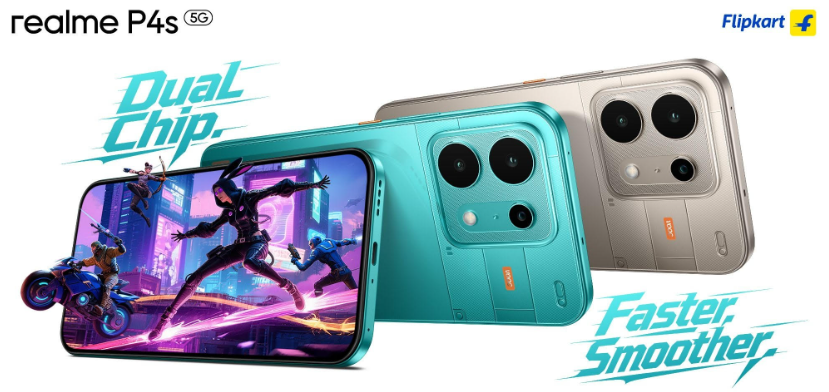
The realme P4s 5G features a 50MP AI Camera with AI-powered imaging tools, 4K video recording and HDR imaging for enhanced photography and video. With IP66, IP68 and IP69 protection, the smartphone offers enhanced resistance against dust and water, while 300% UltraBoom Stereo Dual Speakers deliver louder, immersive audio. The device will be available in Electric Cyan and Titanium Gray.
Hyper Vision+ AI Chip and MediaTek Dimensity 7400 Ultra for Powerful and Immersive Performance At the heart of the realme P4s 5G is its dual-chip architecture, combining the Hyper Vision+ AI Chip with the MediaTek Dimensity 7400 Ultra 5G to deliver powerful performance, enhanced AI capabilities and smoother gaming. The dedicated AI chip handles advanced visual processing, while the Dimensity 7400 Ultra focuses on core computing and gaming performance.
The Hyper Vision+ AI Chip enables AI Hyper Motion, combining 144FPS AI frame interpolation with 90FPS frame stabilization for smoother movement and improved motion clarity. AI Hyper Clarity enhances textures and details up to 1.5K resolution, while AI Always-On HDR dynamically optimizes brightness and contrast for richer visuals on the 144Hz display. Built on an advanced 4nm process, the Dimensity 7400 Ultra along with up to 15% improved AI performance, 94% faster AI camera processing and 63% better AI camera energy efficiency.
144Hz 1.5K Samsung M14 AMOLED Display for a Flagship Visual Experience
Therealme P4s 5G features a 1.5K Samsung AMOLED display powered by Samsung’s latest M14 luminescent material, offering 26% higher luminous efficiency and 50% longer screen lifespan than conventional AMOLED panels. Combined with a 144Hz refresh rate and 3000Hz instantaneous touch sampling rate, the display delivers sharper visuals, smoother motion and responsive touch control for gaming, streaming and everyday use.
The AMOLED display offers 1400 nits global peak brightness and 6500 nits local peak brightness, with HDR10+ and Netflix HDR support for richer colours and enhanced contrast. TÜV Rheinland Low Blue Light Certification and full-brightness DC dimming further enable comfortable viewing during extended use.
8000mAh Titan Battery with 80W Fast Charge for Long-Lasting Endurance
Therealme P4s 5G packs an 8000mAh Titan Battery with 80W Fast Charge, reaching 50% in approximately 28.5 minutes and a full charge in around 75 minutes. All-Scenario Bypass Charging helps reduce heat during intensive gaming, live streaming, navigation and video playback, enabling a cooler and more stable experience. Charging Boost can improve charging speeds by up to 21%, while the battery supports up to 1600 charge cycles for long-term reliability. The AI Scene Battery Life Engine intelligently optimizes power consumption based on usage scenarios, enabling up to 20.76 hours of continuous navigation in supported scenarios.
7000mm² AirFlow VC Cooling and AI Gaming Partner for Sustained Gaming
To support extended gaming sessions, the realme P4s 5G features a large 7000mm² AirFlow VC Cooling System designed to efficiently dissipate heat from key components. The cooling architecture is complemented by a 13,624mm² extra-large graphite area, optimized graphite-layer stacking and a 40% thicker graphite sheet, improving heat dissipation efficiency and helping maintain stable performance during demanding workloads.
The smartphone features an AI Gaming Partner with intelligent tools like GT Mode for boosted performance, Do Not Disturb, and Cleanup Acceleration to optimize resources. Combined with Hyper Motion, Always-On HDR, and Hyper Clarity, these six features deliver an enhanced, distraction-free gaming experience.
The realme P4s 5G will be available from 3rd September, 2026, priced from INR 31,999, through Flipkart, realme.com & mainline stores.
26, Aug 2026
Nasdaq Rebounds 0.66 pc as Chip Stocks Recover; Dow Extends Winning Streak
Mumbai, Aug 26: US stock markets ended higher on Tuesday, with technology shares leading the recovery as semiconductor stocks bounced back from the previous session’s sharp decline.

The Nasdaq Composite gained 0.66 per cent, supported by a broad recovery in chip stocks. The Dow Jones Industrial Average also moved higher, marking its third consecutive winning session, while the S&P 500 finished in positive territory.
Falling US Treasury yields provided additional support to equities by easing pressure on interest-rate-sensitive and growth-oriented stocks. A decline in crude oil prices also helped improve market sentiment and reduced concerns over higher input and inflation costs.
However, the gains remained measured as investors weighed signs of softer consumer sentiment and renewed trade tensions between the United States and Canada. Weaker-than-expected consumer confidence data added to concerns about the strength of household spending and the broader US economic outlook.
The rebound in semiconductor stocks was a key feature of the session, helping technology shares recover some of their recent losses. Investors continued to monitor movements in bond yields, commodity prices and developments in global trade for further direction.
Overall, the session reflected a more positive tone across Wall Street, although investors remained cautious amid uncertainty over economic growth, trade relations and the future path of US interest rates.
26, Aug 2026
Primus Partners Brings Strategic Expertise to SPACEFEST, Advancing Maharashtra’s Vision for a Future-Ready Space-Tech Ecosystem
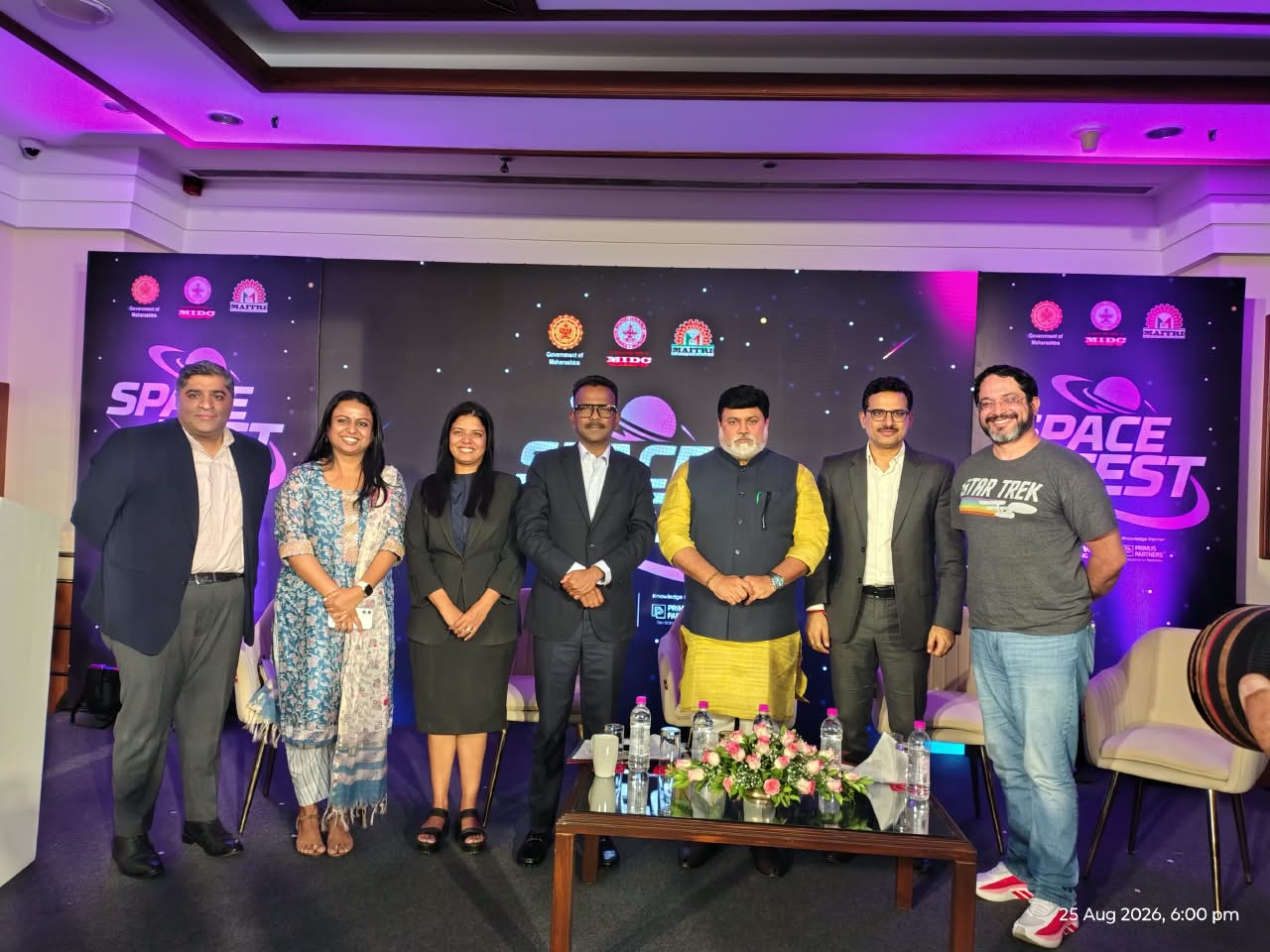
Mumbai, August 26, 2026: SPACEFEST, India’s first dedicated Space Tech and Sci-Fi themed festival, brought together policymakers, industry leaders, innovators, startups, creators, students and space enthusiasts to spotlight the opportunities shaping India’s rapidly evolving space and deep-tech landscape.
Primus Partners, as the Knowledge Partner for SPACEFEST, played a key role in shaping the thought leadership and strategic conversations around the initiative. Aarti Harbhajanka, Co-Founder and Managing Director, Primus Partners India, participated as a speaker, while Amit Purohit, Primus Partners, moderated the proceedings and media interaction.
The event, backed by the Government of Maharashtra and conceptualised by NODWIN Gaming, seeks to create a platform at the intersection of space science, technology, innovation, education and popular culture. SPACEFEST is envisioned as a convergence of space sciences, astronomy, science fiction, gaming, technology, innovation, creator communities and education, with the larger objective of making space and emerging technologies more engaging and accessible.
Nilaya Varma, Co-Founder & Group CEO, Primus Partners, said, “The strategic opportunity around India’s space economy lies in connecting policy ambition with industry capability, capital, talent and public imagination. With its strong industrial base and innovation ecosystem, Maharashtra is well positioned to anchor this convergence. SpaceFest is envisioned as a platform that can bring these elements together over time, creating the conditions for a deeper and more sustained space ecosystem.”
Speaking at the event, Aarti Harbhajanka, Co-Founder and Managing Director, Primus Partners India, emphasised that India’s ambitions in the space economy will require sustained ecosystem-building across policy, industry, startups, infrastructure and talent.
“SPACEFEST is not just a festival; it is the launchpad for a multi-year strategic journey to position Maharashtra as the space–tech and deep-tech capital of Asia. Building a strong space economy requires an enduring and structured ecosystem, with sustained pathways for startups, dedicated infrastructure and a future–ready talent pipeline,” said Aarti Harbhajanka, Co-Founder and Managing Director, Primus Partners India.
She further highlighted the importance of creating stronger connections between policy, industry, academia, startups and young talent, and the role of knowledge platforms and public-private collaboration in accelerating India’s space–tech ambitions.
As part of its contribution as Knowledge Partner, Primus Partners is supporting the strategic vision and thought leadership behind SPACEFEST, with a focus on translating conversations around space technology and innovation into actionable pathways for long-term economic and institutional capability. Aarti also outlined three key areas of focus for Maharashtra’s emerging space ecosystem: facilitating access to capital and startup support, developing infrastructure and industry clusters, and building a sustained talent pipeline through engagement with schools and universities.
The event also underscored the growing importance of Maharashtra as a potential hub for space technology, aerospace, advanced manufacturing and deep-tech. The SPACEFEST agenda highlighted the role of industry, government and knowledge partnerships in creating an enabling ecosystem for startups, technology companies and investors, while strengthening Maharashtra’s position as a destination for future industries.
SPACEFEST is designed to extend beyond a conventional industry gathering by combining serious conversations on science and technology with immersive experiences and popular culture. The festival programme includes scientist interactions, space–tech and startup showcases, sci-fi exhibits, creator sessions, student engagement programmes and future-technology experiences. A dedicated school outreach programme and college-level innovation challenge are also planned to encourage young people to explore opportunities in space, science and deep-tech.
The initiative comes at a significant time for India’s space sector, with progressive policy reforms opening greater opportunities for private participation and the country’s growing stature in the global space ecosystem. SPACEFEST aims to build on this momentum by bringing together the people, ideas and technologies shaping India’s next chapter in space.
Through its participation, Primus Partners reaffirmed its commitment to enabling future–ready ecosystems by bringing together policy expertise, industry understanding and strategic advisory capabilities. The firm’s involvement in SPACEFEST reflects its broader focus on helping governments and industry stakeholders translate emerging opportunities in aerospace, deep-tech and other future sectors into sustainable economic and institutional outcomes.
The inaugural SPACEFEST is envisioned as a platform that can build sustained momentum around India’s space ambitions, while making the possibilities of space technology more accessible to entrepreneurs, students, innovators and the wider public.
26, Aug 2026
UPI’s Decade of Transformation: How India Built a Digital Payments Revolution
New Delhi, Aug 26: In less than a decade, the Unified Payments Interface (UPI) has moved from being a new digital payment system to becoming a familiar part of everyday life for millions of Indians. What started as an effort to make digital transactions simpler and faster has grown into a large-scale payments network that is now attracting global attention.

UPI was launched in 2016 with the broader aim of encouraging Indians to embrace digital payments and gradually reduce dependence on cash. Since then, the platform has changed the way people pay for everything from groceries and transport to household services and business transactions.
The transformation has been particularly striking at the grassroots level. A small shopkeeper can accept payment through a QR code, a student can send money to a friend within seconds, and a customer can complete a purchase without carrying cash or sharing bank details. This everyday convenience has been central to UPI’s rapid adoption.
The numbers underline the scale of the change. UPI recorded around 90,000 transactions in August 2016, its first month of operation. By FY2025-26, it accounted for about 84 per cent of India’s digital payment transactions.
The network has also expanded significantly. The number of banks connected to UPI increased from 44 in FY2016-17 to 703 in FY2025-26. The growing participation of public-sector, private-sector, small finance and cooperative banks has helped extend digital payment services to a much wider section of the population.
Developed by the National Payments Corporation of India (NPCI), UPI allows users to make instant bank-to-bank payments through multiple applications. Its interoperable design means customers are not tied to a single bank or payment application, making the system convenient and flexible.
Transaction volumes have risen dramatically over the years. From fewer than two crore transactions during its first year, UPI crossed 24,000 crore transactions by 2026, with the total value of transactions approaching Rs 314 lakh crore.
The impact of UPI is no longer limited to India. The payment system has expanded into international markets, with UPI-based payment facilities available in countries such as Bhutan, Nepal, France, the UAE, Singapore, Cyprus and Qatar. The expansion is particularly useful for Indian travellers, overseas Indians and businesses looking for easier cross-border payment options.
Global institutions have also taken note of India’s digital payments experience. A June 2025 International Monetary Fund report identified UPI as the world’s largest retail fast-payment system by transaction volume and highlighted its interoperability as an important factor behind its widespread use.
Perhaps UPI’s biggest achievement is that digital payments have become ordinary. Technology that once seemed complicated is now used routinely by street vendors, small businesses, farmers, students, professionals and families. For many users, scanning a QR code and receiving an instant payment has become as natural as using cash once was.
The success of UPI is also giving India an opportunity to share its experience with other countries developing modern payment infrastructure. Its combination of speed, interoperability and accessibility has made it an important example of how digital public infrastructure can support financial inclusion.
As UPI moves into its second decade, the challenge will be to build on this success while maintaining security, reliability and accessibility. Its future could extend well beyond domestic payments, with greater possibilities in international transactions and cross-border commerce.
UPI’s journey is ultimately a story about how technology can become meaningful when it solves everyday problems. What began with a simple idea of making payments easier has evolved into a digital infrastructure that has changed how India conducts business, manages money and connects with the wider global economy.
26, Aug 2026
SMK Sets New Safety Benchmark as Typhoon Earns 4-Star SHARP Rating in the UK
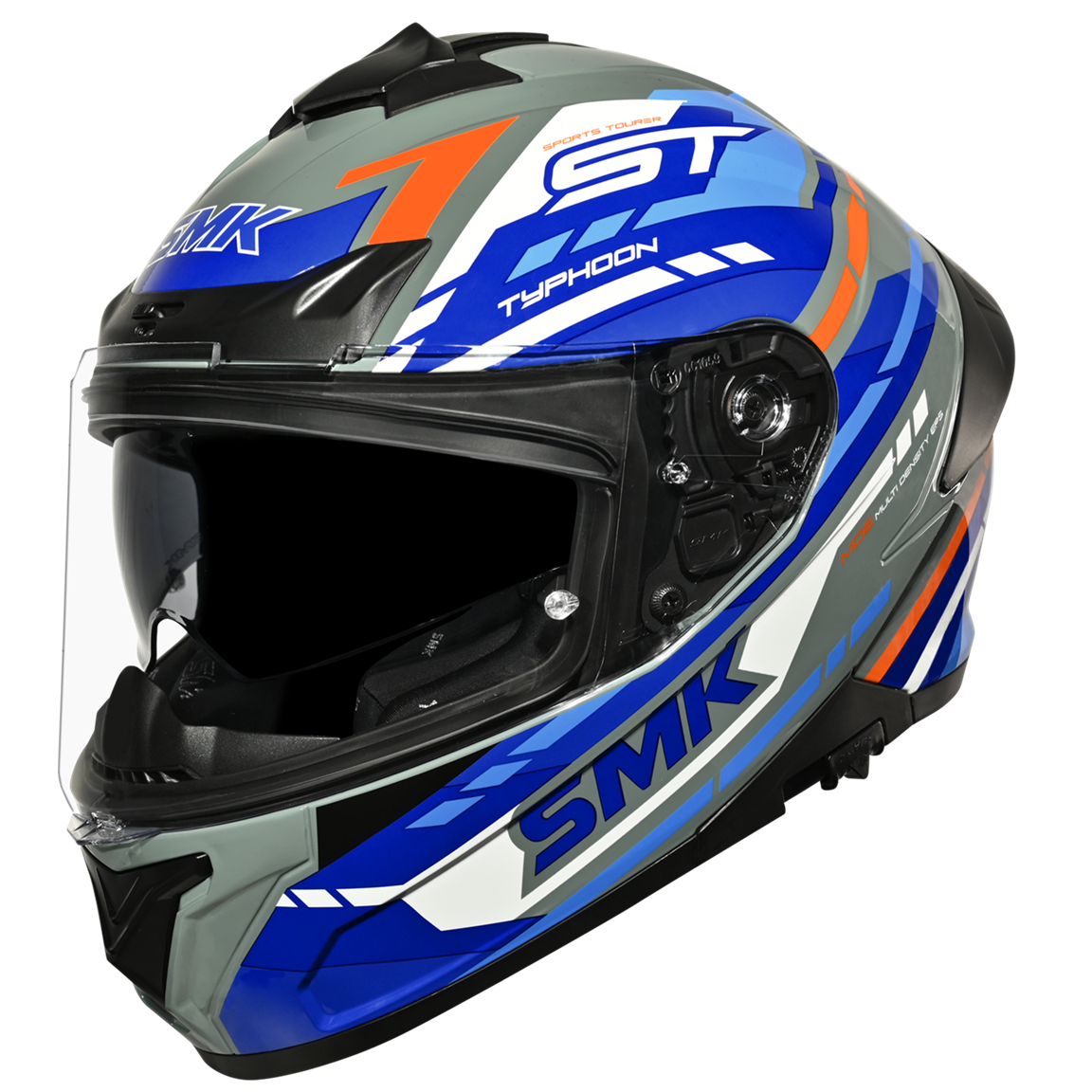
Bengaluru, 26 August 2026: India’s premier performance helmet brand, SMK Helmets, has achieved a significant milestone in helmet safety, with its top selling full-face helmet Typhoon receiving a 4–Star safety rating from SHARP (Safety Helmet Assessment and Rating Programme), the UK’s independent, government-funded helmet safety body. The achievement makes SMK the first Indian helmet manufacturer to secure a 4–Star SHARP rating.
Run by the UK’s Department for Transport since 2007, SHARP was created to give riders safety information that goes beyond the pass/fail minimum required under regulatory certification such as ECE 22.05/22.06. Helmets are bought directly from UK retailers rather than supplied by manufacturers, so the models tested are the same ones available to riders. For every model, SHARP runs 32 impact tests across seven helmet samples of varying sizes, striking each helmet at five head zones under three linear impact speeds – 6, 7.5 and 8.5 metres per second, to measure the force transmitted to the head. And then, the helmet is rated out of a maximum 5 stars. The resulting star rating is one of the most closely watched independent safety benchmarks in the global helmet industry, and the Typhoon’s 4–Star score sits alongside ratings earned by decades-old global helmet brands tested under the same protocol.
Commenting on the achievement, Mr. Sidhartha Bhushan Khurana, Managing Director & CEO at SMK said, “SMK has engineered helmets around top protection for years – The SHARP rating is simply independent, public validation of that approach. The Typhoon‘s score reflects a standard we’ve held ourselves to well before any external test came along to measure it: materials, construction and design built to perform, not just to pass. Indian riders deserve helmets tested to the same yardstick as the world’s best-known brands, and this is a step toward making that the norm rather than the exception.”
The full-face SMK Typhoon is built of Energy-Impact-Resistant Thermoplastic (EIRT) shell weighing ~ 1.6kg, and features a quick-release buckle, drop-down sun visor, Pinlock 30® Lens, anti-scratch visor coatings, and multi-point ventilation. It is certified to the ECE 22.06 standard set by the UN Economic Commission for Europe (UNECE), and is sold in seven sizes from XS to XXXL. The model is available across SMK’s authorized dealer network and online channels in India.
The Typhoon’s SHARP rating and this year’s entry into international motorsport, as technical helmet sponsor of the Moto4 Latin Cup, are two sides of the same effort – years of engineering work behind a brand that’s begun to compete globally, not just sell globally. Across its helmet range, that shows up as a consistent emphasis on materials, construction and testing that goes beyond what regulation requires.
SMK helmets are already sold in more than 40 countries. The SHARP rating is a testament to the fact that Indian helmet engineering can now compete with long-established international brands on measured safety performance, not price alone.


