


24, Aug 2026
Om Patel and Deepshika Vinayagamurthy Lift UNIFI–ITF Junior Tennis Cup 2026 Titles

Chennai, Aug 24: Fifth seed Om Patel and top seed Deepshika Vinayagamurthy, the reigning Junior National Champion, emerged champions in the Boys’ and Girls’ Singles respectively at the UNIFI–ITF Junior Tennis Cup 2026, played at the SDAT Tennis Stadium, Nungambakkam, Chennai.
Boys’ Singles – Final
S5 Om Patel bt S3 Om Verma 1-6, 6-3, 6-1
S1 Deepshika Vinayagamurthy bt S8 Savitha Bhuvaneswaran 6-4, 6-3
- 0
- By Neel Achary

24, Aug 2026
HCL Group’s 50th Anniversary Celebrations Continue in Vijayawada with Sid Sriram Concert
Vijayawada, August 24, 2026: HCL Group continued its celebrations marking 50 years of its journey with a special employee concert in Vijayawada, on 22 August, featuring acclaimed singer and composer Sid Sriram. Held at the HCLTech campus, the concert brought together more than 3,000 employees from HCL Group and the Shiv Nadar Foundation for an evening of music and celebration.
The concert was attended by Roshni Nadar Malhotra, Chairperson, HCL Group and HCLTech, Rahul Singh, Chief Operating Officer, Corporate Functions, HCLTech, Vijay Guntur, Head of CTO & Ecosystems, HCLTech and Shiva Prasad, Centre Head, HCLTech Vijayawada, who joined employees in Vijayawada as they celebrated the Group’s golden jubilee. Sid Sriram took to the stage with some of his most popular songs, with employees singing and dancing along through the evening.
The Vijayawada concert follows similar celebrations held earlier in Noida, Lucknow and Chennai as part of a special concert series marking HCL Group’s 50th year. While HCL marked its official 50th anniversary on August 11, the celebrations have continued across locations, bringing employees together to celebrate the people and shared journey that have shaped the organisation over five decades.
The Vijayawada concert is the fourth in HCL Group’s special 50th anniversary concert series, with celebrations continuing across locations as the Group marks five decades of its journey.
24, Aug 2026
India and Mauritius Move to Deepen Energy Partnership
Port Louis, August 24, 2026: India and Mauritius have taken fresh steps to strengthen bilateral cooperation in the energy sector, with discussions focusing on energy security, petroleum supplies and the wider transition towards a more resilient and sustainable energy system.
Union Minister for Petroleum and Natural Gas Hardeep Singh Puri met Mauritius Prime Minister Navinchandra Ramgoolam during his recent visit to the island nation. The two leaders discussed opportunities to further expand cooperation in the energy sector, while India reiterated its commitment to supporting Mauritius in meeting its energy-security and energy-transition priorities.
The discussions come against the backdrop of growing global concerns over energy supply disruptions and price volatility. For Mauritius, a geographically isolated island economy that relies significantly on imported petroleum products, dependable fuel supplies are particularly important for maintaining economic activity, transportation and essential services.
As part of the expanded cooperation, India and Mauritius exchanged a Government-to-Government Memorandum of Understanding covering cooperation in the oil and gas sector. The agreement is expected to create a broader framework for collaboration and strengthen institutional engagement between the two countries in the energy domain.
A major component of the partnership is a long-term agreement between Indian Oil Corporation and the State Trading Corporation of Mauritius for the supply of petroleum products. Under the arrangement, Indian Oil Corporation will meet Mauritius’ import requirements for key products including motor spirit, high-speed diesel and aviation turbine fuel.
The long-term supply arrangement is significant for Mauritius because predictable access to petrol, diesel and aviation fuel can help improve supply stability and reduce exposure to sudden disruptions in international energy markets. It also strengthens India’s position as a reliable energy partner in the Indian Ocean region.
For India, the agreement represents more than a commercial fuel-supply arrangement. Energy cooperation is increasingly becoming an important element of India’s broader engagement with Indian Ocean countries, combining economic partnerships with regional connectivity, energy security and development cooperation.
The partnership also creates opportunities for cooperation beyond conventional petroleum supplies. The two sides have indicated a shared interest in supporting energy transition, opening potential avenues for discussions around cleaner technologies, renewable energy and more sustainable energy systems alongside traditional oil and gas cooperation.
The latest developments build on a broader India-Mauritius strategic relationship. During Prime Minister Narendra Modi’s meeting with Prime Minister Ramgoolam in June 2026, the two countries reviewed bilateral cooperation and reaffirmed the importance of the Enhanced Strategic Partnership, including collaboration in sustainable development and the blue economy.
From a business perspective, stronger energy ties could provide greater certainty for Mauritian industries and consumers while creating opportunities for Indian energy companies to expand their regional presence. Stable fuel availability is particularly important for sectors such as transportation, tourism, aviation, manufacturing and logistics.
The India-Mauritius energy partnership therefore reflects a broader shift towards long-term and diversified energy relationships. With the latest oil and gas cooperation framework and fuel-supply agreement, both countries are positioning energy security as a key pillar of their economic partnership while keeping the door open for deeper cooperation in the transition to cleaner and more resilient energy systems.
23, Aug 2026
Gold Surges Over 5 percent Weekly as Weaker US Dollar Fuels Bullion Rally
New Delhi: Gold prices registered a strong weekly advance of more than 5 per cent, supported by a weakening US dollar and growing investor interest in bullion as a hedge against economic and financial uncertainty. Spot gold climbed to around $4,624 per ounce on Friday, touching its highest level in more than three months and marking the precious metal’s third consecutive weekly gain.
The rally gathered pace after the US dollar came under pressure following the Treasury Department’s plans to expand purchases of longer-dated government bonds. The move raised questions among investors about the outlook for US debt and the currency, prompting greater demand for alternative stores of value such as gold. A weaker dollar also makes gold cheaper for buyers holding other currencies, further supporting international demand.

Gold’s latest surge has also been reinforced by technical momentum. The metal moved above its 200-day moving average, a level closely watched by traders, strengthening expectations of further gains. Analysts have identified the $4,700 region as an important potential target if the upward momentum continues, although prices remain sensitive to changes in US monetary policy, bond yields and currency movements.
The rally has extended beyond gold, with other precious metals also recording gains during the week. Silver, platinum and palladium all moved higher, reflecting broader demand for metals amid currency and macroeconomic uncertainty. While physical gold demand in India remained relatively subdued because of elevated prices, stable demand in China and continued financial-market buying have helped sustain the international bullion rally.
23, Aug 2026
ACAE Annual Conference 2026 Brings Together 500+ Leaders to Re-Imagine Bengal’s Growth Story
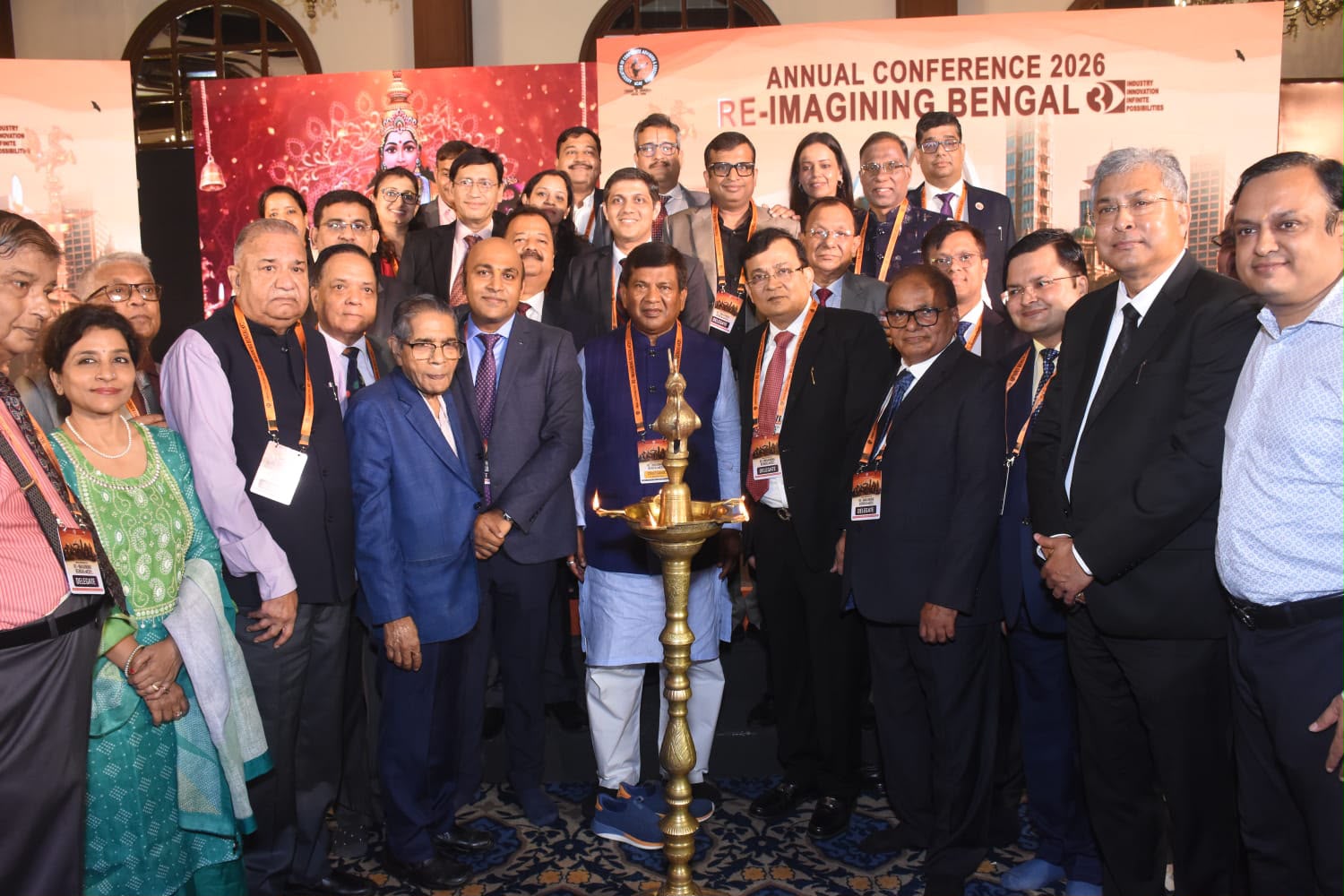
Kolkata, Aug 23: The Association of Corporate Advisers & Executives (ACAE) successfully hosted its flagship Annual Conference 2026 at Taj Bengal, Kolkata, bringing together more than 500 policymakers, industry leaders, professionals, entrepreneurs, investors and corporate executives from across the country.
Held on the theme “Re-Imagining Bengal: Industry, Innovation & Infinite Possibilities,” the conference explored Bengal’s emerging opportunities across industry, investment, entrepreneurship, innovation and sustainable economic development, while reflecting on the state’s rich industrial legacy and its potential for a future-ready growth trajectory.
The conference featured an eminent gathering of policymakers, public representatives, industry leaders, financial experts and thought leaders, who shared perspectives on strengthening Bengal’s position as a preferred destination for investment, enterprise, innovation and sustainable development.
The distinguished speakers and panellists included Dr. Sukanta Majumdar, Hon’ble Union Minister of State for Education and Development of North Eastern Region, Government of India; CA. Rathindra Bose, Speaker, West Bengal Legislative Assembly; Dr. Swapan Dasgupta, Hon’ble Finance Minister, Government of West Bengal; Shri Tapas Roy, Hon’ble Minister for Industry, Commerce & Enterprises, Government of West Bengal; CA. (Dr.) Rajesh Kumar, MLA, Jagatdal Assembly Constituency, West Bengal and Former IPS Officer & DGP; CA. Anand Mohan Bajaj, Deputy Comptroller & Auditor General, Government of India; CA. Niraj Kr. Harodia, President of ACAE; CA. Mohit Bhuteria, General Secretary of ACAE; CA. Kamal Nayan Jain, Chairman of Annual Conference Committee; CA. Vasudeo Agarwal, Co-Chairperson of Annual Conference Committee; CA. Jinesh S Vanzara, Chairperson Press & Publicity of Annual Conference Committee; CA. Anup Kumar Luharuka, Co-Chairperson Press & Publicity of Annual Conference Committee & many other eminent personalities.
Speaking on the occasion, CA. Niraj Kumar Harodia, President, ACAE, said, “The overwhelming participation and diversity of perspectives at this year’s Annual Conference reaffirm our belief that Bengal stands at an important inflection point. Re-imagining Bengal is not merely about looking at what is possible, but about bringing together ideas, institutions, entrepreneurs and industry to turn those possibilities into meaningful outcomes. We hope the discussions at ACAE Annual Conference 2026 contribute towards building a more competitive, innovative, investment-friendly and future-ready Bengal.”
The conference provided a platform for meaningful dialogue on the opportunities and challenges before Bengal and emphasised the importance of collaboration between policymakers, industry, professionals and entrepreneurs in shaping the state’s next phase of economic growth.
The conference also featured Shri Mukul Kanitkar, Author & Thinker; Ms. Monika Halan, Author & Financial Educator; Shri Umesh Chowdhary, Vice Chairman, Managing Director & CEO, Titagarh Rail Systems Limited; Shri Mehul Mohanka, Managing Director, Tega Industries Limited; Shri Utsav Parekh, Chairman, Nexome Capital Markets Ltd; Shri Partha Pratim Sengupta, Managing Director, Bandhan Bank; CA. Veni Thapar, Independent Director, Bandhan Bank; Shri Sudhir Kedia, Investment Banker; CA. (Dr.) Debashis Mitra, Past President, ICAI; and Ms. Avanne Dubash, Television Anchor (Ex ET Now, Times Group).
The deliberations also highlighted the need to leverage Bengal’s strategic advantages, human capital, entrepreneurial ecosystem and industrial capabilities while embracing new-age sectors, innovation and technology.
The successful conclusion of the Annual Conference 2026 marks another significant milestone in ACAE’s continued endeavour to promote professional excellence, knowledge sharing, leadership and constructive engagement with the corporate and business community.
22, Aug 2026
India, Mauritius Deepen Energy Partnership with Long-Term Fuel Supply Agreement
New Delhi, August 22, 2026: India and Mauritius have taken steps to strengthen bilateral energy cooperation following an official visit by Union Minister for Petroleum and Natural Gas Shri Hardeep Singh Puri to Mauritius from August 20 to 21. The visit resulted in agreements aimed at ensuring reliable petroleum supplies to Mauritius while expanding cooperation in oil, gas and biofuels.
During the visit, Shri Puri met Mauritius Prime Minister Dr. Navinchandra Ramgoolam on August 20. In their presence, India and Mauritius exchanged a Government-to-Government Memorandum of Understanding (MoU) on oil and gas cooperation. A separate five-year Sales and Purchase Agreement was signed between Indian Oil Corporation Limited (IOCL) and the State Trading Corporation (STC) of Mauritius for the supply of petroleum products.
Under the long-term agreement, IOCL will meet Mauritius’ entire import requirement for Motor Spirit (MS), High Speed Diesel (HSD) and Aviation Turbine Fuel (ATF). The arrangement is expected to provide Mauritius with greater certainty of supply and reduce its exposure to international price volatility. It also represents one of the first long-term overseas supply arrangements by an Indian public-sector oil marketing company outside South Asia in recent years.
The broader oil and gas MoU establishes an institutional framework for continued cooperation between the two countries. It covers petroleum product supplies, capacity building and training for Mauritian officials, as well as collaboration in biofuels. The agreements are intended to reinforce the longstanding energy relationship between India and Mauritius and create opportunities for deeper technical and commercial cooperation.
During his visit, Shri Puri held bilateral discussions with Mauritius’ Minister of Energy and Public Utilities Patrick Gervais Assirvaden, Minister of Commerce and Consumer Protection John Michaël Tzoun Sao Yeung Sik Yuen, and Minister of Foreign Affairs, Regional Integration and International Trade Dhananjay Ramful. He also attended the groundbreaking ceremony for a 27.5 thousand metric tonne (TMT) bunker marine fuel storage facility being developed by India Oil (Mauritius) Ltd. at Mer Rouge in Port Louis.
The agreements further enhance India’s position as a reliable energy partner in the Indian Ocean region. With 23 refineries and annual refined petroleum product output of around 267 million tonnes (MMT), India has emerged as a major global refining centre and a net exporter of refined petroleum products. The country already supplies petroleum products to neighbouring countries including Nepal and Bhutan, and has continued to meet its regional supply commitments despite disruptions arising from the West Asia crisis.
Biofuels form another important component of the strengthened partnership. Mauritius is a founding member of the Global Biofuels Alliance (GBA), an initiative launched during India’s G20 Presidency. The GBA Secretariat has been working with Mauritius’ Ministry of Energy and Public Utilities on a Biofuels Country Landscape Policy framework to support the country’s energy transition.
Shri Puri and Minister Assirvaden jointly witnessed the launch of the Biofuels Country Landscape Policy framework on August 21. The initiative is expected to provide a foundation for Mauritius to explore the wider use of biofuels while benefiting from knowledge sharing, research, training and technical cooperation with India.
The latest agreements are expected to give a new dimension to India-Mauritius energy relations, positioning India as a dependable long-term fuel supplier while expanding cooperation in emerging areas such as biofuels and strengthening India’s strategic and economic engagement across the Indian Ocean.
22, Aug 2026
NBA Releases Rs.2.82 Crore to States, UTs and ICAR Institute Under Biodiversity Benefit-Sharing Mechanism
New Delhi, August 22, 2026: The National Biodiversity Authority (NBA) has released ₹2.82 crore under India’s Access and Benefit-Sharing (ABS) framework, directing funds towards biodiversity conservation, sustainable resource use and community-oriented activities. The latest disbursement includes ₹2.80 crore for 27 State Biodiversity Boards (SBBs) and three Union Territory Biodiversity Councils (UTBCs), along with ₹2.01 lakh for the ICAR-Indian Institute of Horticultural Research (ICAR-IIHR), Karnataka.
The funds have been generated from ABS payments linked to the commercial use of India’s biological resources. NBA received ₹2.94 crore from Advanta Enterprises Ltd., formerly UPL Limited, for the utilisation of genetic resources associated with several horticultural hybrids, including eight cauliflower hybrids, five hot pepper hybrids, five okra hybrids and six tomato hybrids. Since the biological resources had been obtained through the acquisition of another company and could not be linked to specific farmers, communities or a single geographical origin, an expert committee was constituted to recommend an appropriate benefit-sharing mechanism.
Based on the committee’s recommendations approved by the NBA, ₹2.80 crore has now been distributed among states and UTs. The allocation was determined with reference to the cultivation of the relevant horticultural crops across different parts of the country. Gujarat received the highest allocation at ₹44.59 lakh, followed by West Bengal with ₹41.24 lakh and Madhya Pradesh with ₹32.73 lakh. Odisha received ₹32.57 lakh, while Bihar was allocated ₹30.86 lakh. Chhattisgarh, Uttar Pradesh, Andhra Pradesh, Tamil Nadu and Maharashtra were among the other major recipients.
The State Biodiversity Boards and UT Biodiversity Councils are expected to use the funds for a range of biodiversity-related initiatives. These include updating and documenting People’s Biodiversity Registers, conserving biological resources in natural and controlled settings, restoring degraded ecosystems, strengthening Biodiversity Heritage Sites, building the capacity of Biodiversity Management Committees and supporting livelihood opportunities for local communities. The recipient bodies are required to submit utilisation certificates and expenditure statements within one year.
In a separate transaction, the NBA received ₹7.15 lakh from Sumitomo Chemical India Ltd., Mumbai, formerly Excel Crop Care, as ABS payment for access to two microbial strains developed at ICAR-IIHR: Pseudomonas fluorescens 1% WP (strain IIHR-Pf-2) and Trichoderma harzianum 1% WP (strain IIHR-Th-2). As these biological resources originated from a public research institution and were used for research and commercial purposes, 30% of the ABS amount, equivalent to ₹2.01 lakh, is being transferred to ICAR-IIHR. The institute will utilise the funds for repository maintenance, research, biodiversity surveys, taxonomy capacity building and conservation activities.
The latest release forms part of the NBA’s broader effort to strengthen implementation of the Biological Diversity Act, 2002, and ensure that economic benefits generated through the use of biological resources are channelled towards conservation, sustainable utilisation and socio-economic development. According to the NBA, cumulative ABS disbursements have now reached ₹185 crore, equivalent to about USD 19.34 million.
The initiative also supports India’s international commitments under the Convention on Biological Diversity and the Nagoya Protocol on Access and Benefit-Sharing. It is aligned with the Kunming-Montreal Global Biodiversity Framework, particularly Target 13, which promotes fair and equitable sharing of benefits arising from the utilisation of genetic resources and relevant digital sequence information.
22, Aug 2026
Aludecor Launches Weather-Responsive Intelligent Louvers with Global Remote Access
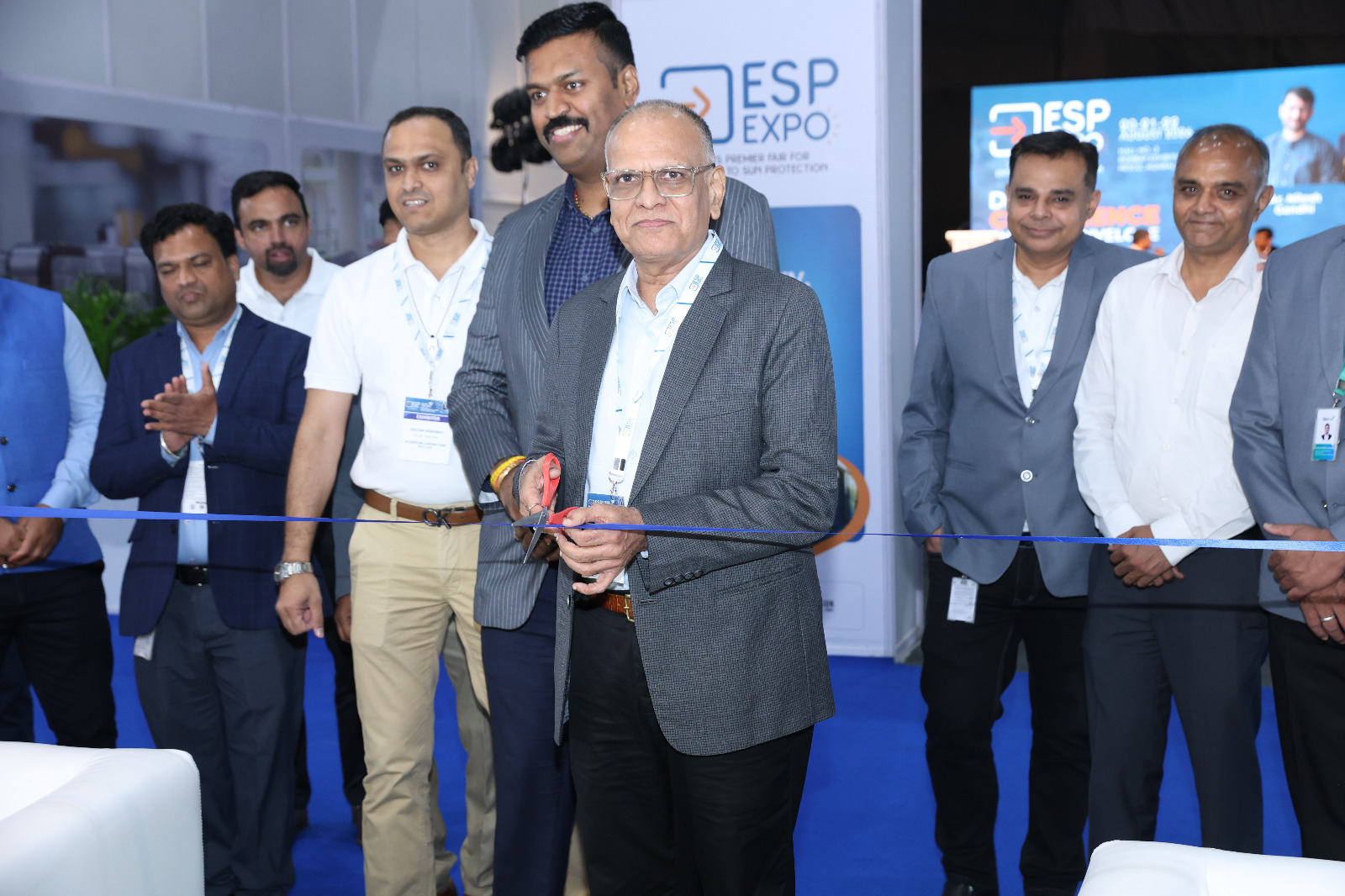
Mumbai, 22 August 2026: As buildings increasingly rely on large, glazed façades, managing heat gain, glare and indoor comfort has become an important consideration in modern building design. Addressing this need, Aludecor, one of India’s leading aluminium composite panel and façade product manufacturers, has unveiled Alubreeze Intelligent Louvers, India’s first indigenously developed intelligent louver system designed to be controlled from anywhere in the world and even to make building façades responsive to changing environmental conditions.
Alubreeze Intelligent Louvers can sense, respond and adjust. The motorised metal sun louver system uses environmental inputs such as sunlight, rain and wind to automatically adjust louver positions, helping manage solar exposure, glare and weather conditions while giving building owners and facility teams greater control over façade operations.
“The façade should do more than define a building’s appearance; it should actively contribute to how the building performs. With Alubreeze Intelligent Louver System, we are making the façade more responsive to its environment, bringing together design, performance and intelligent control in one system,” said Mr. Ashok Kumar Bhaiya, Chairman & Managing Director, Aludecor.
Built on Aludecor’s Alubreeze Architectural Louver Systems, the intelligent system combines a controller, 24V linear actuator, environmental inputs and AluSync Cloud. It can be monitored and operated through a mobile application or web dashboard, while BMS and API integration allows it to connect with wider building automation systems. Hall-sensor feedback enables the system to verify louver position, supporting closed-loop control.
The system is designed to respond to different façade conditions. Louvers can adjust to reduce glare and solar exposure during periods of intense sunlight, with their positions programmable through the day. They can also automatically adjust to the sun’s intensity and move to a protective position during rainfall and strong wind conditions. This allows the façade to function as an active building-performance layer rather than simply as a static architectural element.
The Alubreeze Architectural Louver System is available in fixed and intelligent configurations, giving architects the flexibility to select passive or adaptive façade solutions depending on project requirements. Single and double louver configurations are available in 30°, 45° and 90° angles, with profiles ranging from 100 mm to 600 mm depending on the configuration. The louvers can be installed horizontally or vertically.
Both configurations of Alubreeze including the static metal sun louvers contribute to building energy performance by reducing the effective Solar Heat Gain Coefficient (SHGC) of glazed façades and helping improve the Energy Performance Index (EPI). Independent studies indicate potential cooling-energy savings of 18–40% in climates comparable to India, with actual performance dependent on factors such as climate, glazing, façade orientation, window-to-wall ratio, controls and building usage.
The louvers can be deployed across commercial offices, institutional buildings, hospitality projects, airports and transit infrastructure, parking façades, atriums, canopies, pergolas and public buildings. The system is designed to allow architects to balance solar control and daylight comfort with the visual language of the building, with a range of profiles, angles and finishes available.
With Alubreeze, Aludecor aims to expand the role of architectural louvers from passive shading elements to responsive façade systems that can interact with the building, its occupants and its environment.
22, Aug 2026
Taj Agra Invites Guests to Embrace the Monsoon with a Special Staycation Experience
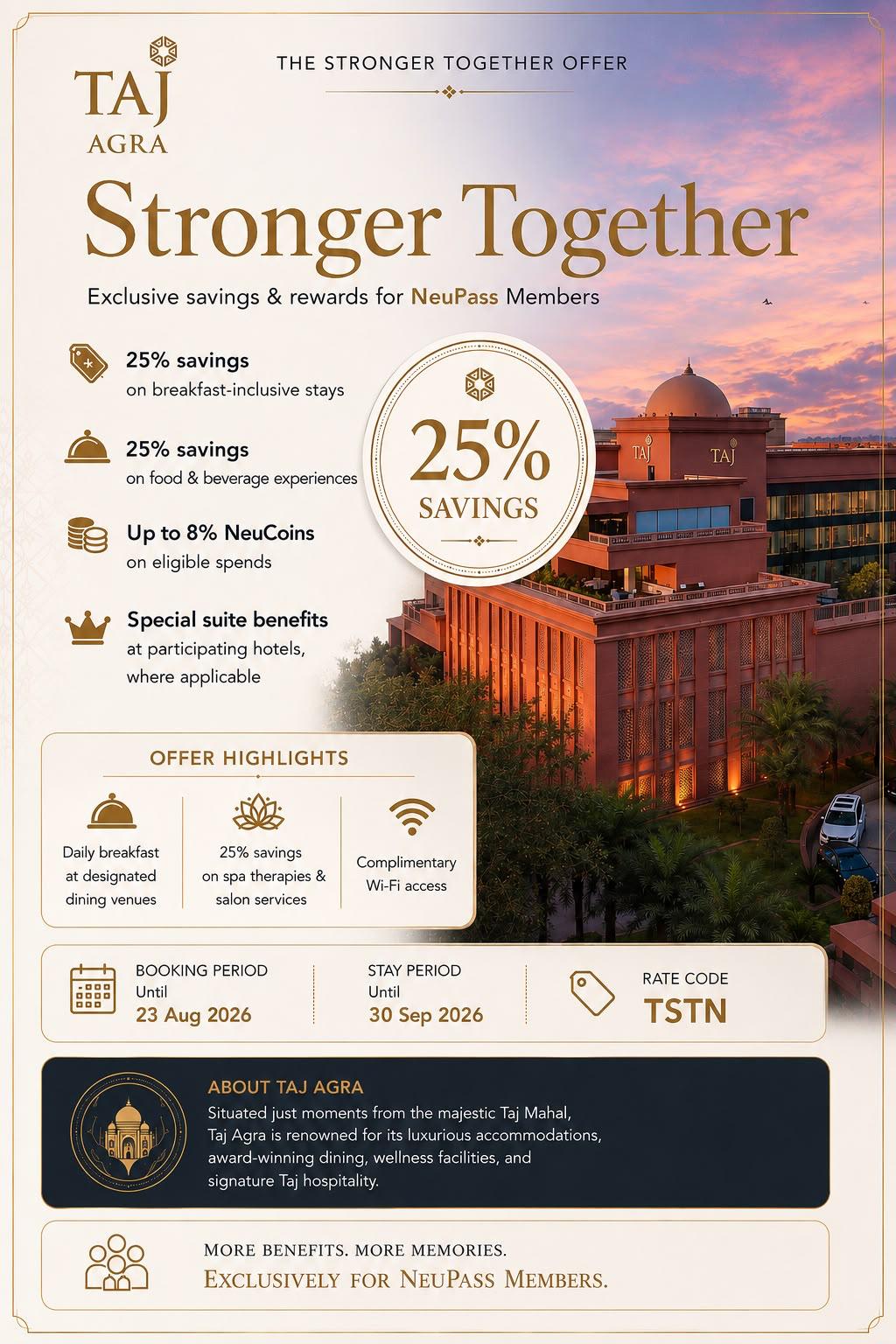
Agra, 21 August 2026: Taj Agra invites guests to make the most of the monsoon season with a specially curated staycation experience that brings together relaxed stays, dining and wellness benefits. Designed for guests seeking a leisurely getaway in Agra, the Monsoon Staycation offers attractive savings across accommodation, food and beverages, and spa and salon services.
The offer includes 25% savings on breakfast-inclusive stays, with daily breakfast at the designated dining venue. Guests can also enjoy 25% savings on food and beverages and 25% savings on spa therapies and salon services during their stay.
Speaking about the offer, Bikram Pradhan Revenue Manager, Taj Agra, said, “The monsoon season offers a wonderful opportunity to slow down, reconnect and enjoy a more leisurely getaway. Through our Monsoon Staycation, we are delighted to welcome guests to Taj Agra for a relaxed and enriching experience, with thoughtfully curated dining and wellness benefits. We look forward to creating memorable stays that allow guests to pause, unwind and enjoy the season in comfort.”
Key Offer Details
● 25% savings on breakfast-inclusive stays
● Daily breakfast at the designated dining venue
● 25% savings on food and beverages during the stay
● 25% savings on spa therapies and salon services
● Up to 8% NeuCoins on bookings and eligible spends
● Standard Wi-Fi during the stay
The Monsoon Staycation is available for bookings from 18 July to 23 August 2026, with stays valid from 18 July to 30 September 2026. The offer provides guests with an opportunity to experience a relaxed monsoon escape while making the most of Taj Agra’s dining and wellness experiences.
Located in the historic city of Agra, Taj Agra combines contemporary hospitality with the rich cultural legacy of the destination, offering a comfortable setting for leisure getaways, celebrations and business stays.
21, Aug 2026
India’s FDI Reform Gains Momentum as 29 Investments Worth ₹4,895 Crore Reported

New Delhi: India’s revised foreign direct investment (FDI) framework is beginning to facilitate faster investment flows, with 29 FDI investments involving proposed investments of ₹4,895.65 crore reported under the new regime up to August 20, 2026.
The investments cover a diverse range of sectors, including Information Technology, Artificial Intelligence, Information & Communication, manufacturing, pharmaceuticals, data centres and transport services, reflecting continued overseas interest in India’s expanding digital, industrial and services economy.
The investments have been reported by investors and entities based in Mauritius, the United States, the Republic of Korea, Japan, Singapore, Luxembourg and the Cayman Islands. The geographical spread highlights the continuing interest of international investors in India as a destination for capital and technology.
The revised framework is designed to simplify and accelerate foreign investment by removing the requirement for prior government approval in cases where ownership from Land Bordering Countries (LBCs) is non-controlling and limited to up to 10 per cent. The reform is aimed at providing greater regulatory certainty, reducing transaction timelines and improving the overall ease of doing business.
The changes were introduced through Press Note 2 of 2026 and the subsequent amendment to the Foreign Exchange Management (Non-debt Instruments) Rules, 2019, notified on May 1, 2026. Under the revised rules, the beneficial ownership test is applied at the level of the investor entity. Investors with non-controlling LBC ownership of up to 10 per cent can therefore invest through the automatic route, subject to applicable sectoral caps, entry routes and other regulatory conditions.
Importantly, eligible investors can proceed without seeking any additional government approval after reporting the prescribed information to the authorities. This represents a significant shift from the earlier regulatory approach under Press Note 3 of 2020, under which foreign investors with even a small degree of beneficial ownership originating from an LBC were required to obtain prior government approval.
The earlier requirement had been viewed as a source of uncertainty and additional transaction time for international investors, particularly in cases involving minimal and non-controlling LBC ownership. The revised framework seeks to address these concerns while maintaining the necessary regulatory safeguards.
The reporting of 29 investments worth nearly ₹4,900 crore indicates that the policy change is already supporting greater clarity and predictability for foreign investors. As India continues to attract capital into emerging areas such as AI, data infrastructure, advanced manufacturing and pharmaceuticals, the streamlined FDI regime could further strengthen the country’s position as a competitive global investment destination.


