


17, Aug 2026
NPS Enrolments Among Zomato Delivery Partners Cross 2 Lakh, Marking a Major Milestone
New Delhi, Aug 17: Zomato, India’s food ordering and delivery platform, announced that the National Pension System corpus built by the delivery partners onboarded on its delivery platform under the ‘NPS Platform Workers Model’ has crossed ₹1 crore, with enrolments under the scheme surpassing 2 lakh Permanent Retirement Account Numbers. The milestone marks a significant step forward from the model’s launch in October 2025, when it was introduced in collaboration with HDFC Pension, India’s largest Corporate NPS Point of Presence and Private sector Pension Fund Manager for the NPS, and enabled by Kfintech, the Central Recordkeeping Agency.
The NPS e-shramik Model allows delivery partners onboarded on Zomato to build long-term financial security through small, regular contributions, with the flexibility of to retain and carry their benefits and entitlements as they move between livelihoods over time. Onboarding is enabled through the delivery partners‘ existing KYC or eKYC, with their consent, at the PRAN generation stage, with additional details submitted subsequently.
Aditya Mangla, CEO, Zomato, said,
“Delivery partners are a key part of the Zomato ecosystem, and we’ve always aimed to support them beyond their day-to-day earnings, towards a more secure future. Crossing ₹1 crore in NPS contributions is an important milestone, made possible through small, regular contributions from delivery partners themselves. We hope our partnership with HDFC Pension encourages more delivery partners to plan and save for their future, while making long-term savings easier and more accessible.”
Sriram Iyer, MD & CEO, HDFC Pension, noted,
“This is a significant milestone, and it truly reflects the collective success of the industry, regulator and corporates coming together for the benefit of a specific customer cohort. The tri-party endeavour started with Zomato’s vision to empower their platform workers with a substantial retirement solution, us pitching with simple on-boarding solution, and PFRDA approving the approach. Today, the solution – The NPS Platform Workers’ Model – is going on to help several other platform workers plan their retirement in a formal and structured manner. I’m happy that we were able partner with Zomato and deliver a pioneering solution for the benefit of many Indians who are a part of the gig-economy driving India’s growth.”
“Retirement security should not depend on the nature of one’s work. The ₹1 crore contribution milestone under the NPS e-Shramik Model is encouraging because it shows that even small, regular contributions can collectively create a meaningful foundation for the future. The participation of over 2 lakh delivery partners also demonstrates that gig workers are increasingly looking beyond immediate earnings and recognising the importance of building long-term financial security. As India’s workforce becomes more dynamic, creating simple, portable and accessible pathways to retirement savings will be critical to making social security more inclusive.” said #NPSzarurihai – Sumit Kumar, Chief General Manager, PFRDA.
Zomato operates on a gig-first model, supporting an average of 6,38,000 independent monthly active delivery partners as of Q1 FY27. The company continues to invest in both industry-first and industry-standard initiatives to enhance the delivery partner experience, including a comprehensive health insurance plan that covers IPD/hospitalization, daycare treatment up to ₹1 lakh, OPD expenses up to ₹5,000, ICU costs, maternity insurance for female delivery partners, and teleconsultations, along with a personal accident cover of up to₹10 lakh – at no cost to partners. Through the delivery partner app, they have access to 24×7 SOS support in more than 850+ cities, connecting them to ambulances, police assistance, and a dedicated SOS response team, as well as real-time visibility into their earnings, enabling them to track income from orders, incentives, and tips on a daily, weekly, and monthly basis.
- 0
- By Neel Achary

17, Aug 2026
Ajmera Fashion Wraps Up Milestone Showcase with 100 Regional Vendors at Bharatiya Vyapar Mahotsav 2026
Aug 17: India’s massive textile industry just got a major collaborative boost. Ajmera Fashion Ltd. brought 100 textile vendors from all corners of the country together under one roof at the Bharatiya Vyapar Mahotsav 2026. The four-day mega-event wrapped up this week on August 15 at Bharat Mandapam. Taking on the role of the official Textile Partner, Ajay Ajmera CEO and Founder Ajmera Fashion Ltd used Ajmera’s pavilion to create a shared national stage, intentionally shining a spotlight on the sheer diversity of regional Indian weavers and suppliers.
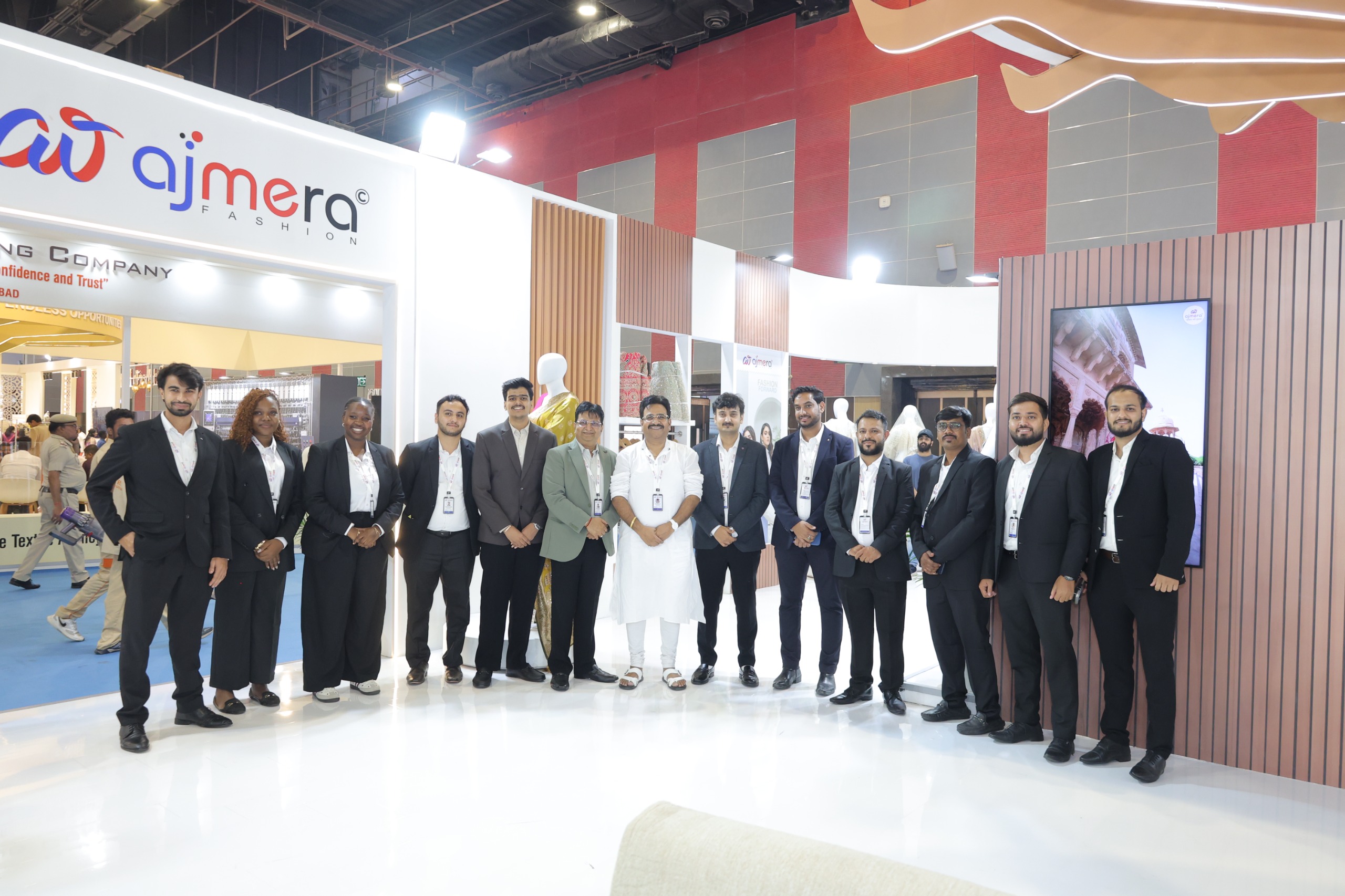
Instead of a standard retail setup, the Ajmera Fashion pavilion ran as a pure exhibition. The goal was simply to get regional businesses noticed and connect them directly with industry buyers. Visitors could walk through the space to see local craftsmanship firsthand, giving small-scale suppliers and regional weavers immediate national visibility.
The pavilion also drew the attention of prominent political leaders during the four-day event. Hon’ble Union Minister of Commerce and Industry Shri Piyush Goyal Ji and Hon’ble Chief Minister of Delhi Smt. Rekha Gupta Ji visited the Ajmera Fashion pavilion, where they witnessed the diverse textile representation and the special displays presented by the company.
By sharing the space with 100 different vendors, Ajmera Fashion aimed to open doors for smaller businesses across the industry. The joint layout gave these local manufacturers and independent entrepreneurs a straightforward way to put their work in front of a massive national audience.
Speaking on the successful conclusion of the Mahotsav, Mr. Ajay Ajmera, Founder and CEO, Ajmera Fashion Ltd., said,
“Bharatiya Vyapar Mahotsav has given us an opportunity to bring the collective strength of India’s textile industry together on one platform. We are proud to have brought 100 vendors from across the country and presented their diversity, craftsmanship and entrepreneurial spirit to a national audience. The response over these four days has reinforced our belief that collaboration can create greater opportunities for Indian businesses. Our heritage is our foundation, and our collective ambition will take Indian textiles to the world.”
The four-day Mahotsav brought together India’s business community around themes of indigenous manufacturing, entrepreneurship, trade expansion and economic development. Its showcases also reflected India’s progress across sectors through initiatives and achievements spanning Make in India, Atmanirbhar Bharat, Vande Bharat, space exploration, solar energy, agriculture, technology and infrastructure.
Looking ahead, Ajmera Fashion plans to build on this momentum by keeping local businesses connected to these larger commercial networks. Moving forward, the company’s focus remains on expanding the market reach for Indian textiles and helping regional suppliers scale up for both domestic and global buyers.
17, Aug 2026
Introducing PcVue 17: Optimize Energy. Maximize Performance. Secure the Infrastructure.
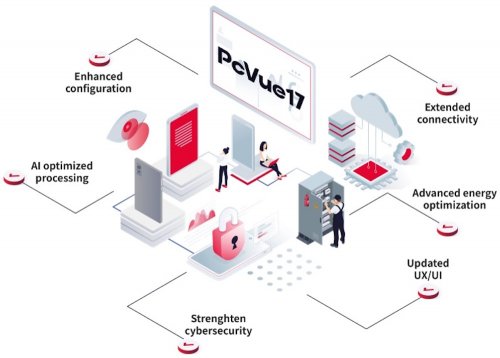
Aug 17: ARC Informatique, publisher of the SCADA/BMS PcVue platform, announces PcVue 17, a major release addressing critical systems challenges: energy efficiency, operational performance, and cybersecurity.
Driving Energy Flexibililty
PcVue 17 improves the energy efficiency of buildings and industrial processes. By centralizing data from multiple sources within a unified ecosystem, it actively optimizes energy demand through optimized control scenarios that can include AI-based forecasting, thus avoiding consumption peaks and reducing energy costs.
Intelligent Assistance for Performance
PcVue 17 introduces intelligent assistance that enables users to configure workflows and orchestrate complex processes through low-code interfaces. By combining AI processing and real-time data analysis, it allows to automate routine tasks and accelerates decision-making across both systems and teams.
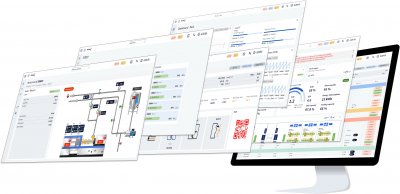
On the engineering side, PcVue 17 helps you design faster and be more efficient with enriched object libraries, and flexible modeling capabilities.
Certifications for Critical Infrastructure Cyber-resilience
Backed by IEC 62443-4-1 and IEC 62443-4-2 certifications, ensuring secure development processes and robust product security for industrial automation systems, the platform not only offers high performance, but also remains secure and resilient to cyber threats, thus ensuring operational confidence for critical infrastructures.
17, Aug 2026
transcosmos receives Special Award for Digital Utilization in JiIT’s Best Customer Support of The Year 2026
Aug 17: transcosmos announced that it has received the Special Award for Digital Utilization at the Best Customer Support of The Year 2026 program, organized by the Japan Institute of Information Technology (JiIT).
The Customer Support Award program was established to promote higher productivity, effective management, enhanced systems, and stronger customer touchpoints in customer support operations across Japanese industry and government organizations. Regardless of organizational size, the program recognizes companies, organizations, institutions, business sites, and departments that have made outstanding contributions to business performance and the advancement of customer support through creative and innovative initiatives in customer support and services, improving customer satisfaction, and addressing other challenges.
■Reasons for the award
At the customer support center recognized by the award, supervisors were spending a significant amount of time on routine tasks such as handling escalations and preparing materials, limiting the time available for higher-value activities such as enhancing the customer experience and delivering value-added proposals to clients.
To address this challenge, transcosmos undertook a business transformation initiative based on the concept of “turning everyday operations into data,” treating conversations during the escalation process as valuable knowledge assets.
Specifically, transcosmos built a fully automated framework that transcribes conversations during the escalation process using an AI voice recorder, generates materials using generative AI, and creates videos using AI video generation tools. This enabled knowledge that had previously resided with individuals to be shared across the organization more quickly, accelerating and standardizing knowledge transfer. In addition, transcosmos continuously refined prompt design and improvement cycles to enhance the accuracy and effectiveness of knowledge sharing.
As a result, transcosmos significantly reduced the time required to prepare escalation materials as well as average handling time (AHT), enhancing both operational efficiency and service quality. By making effective use of the time created through these enhancements, supervisors were able to focus more on voice of the customer (VoC) initiatives and strengthening relationships with clients. This contributed to higher overall customer satisfaction and service satisfaction, as well as lower employee turnover.
The initiative was highly commended for aligning the organization’s Mission, Vision, and Values (MVV) with AI and DX-driven operational efficiency, enabling supervisors to shift away from routine administrative tasks and focus more on enhancing the customer experience and creating value for clients.
Guided by its vision, “to become a bridge between people’s happiness and a well-being society with the power of communication,” approximately 23,000 communicators in transcosmos’s Digital Customer Communications (DCC) sector provide call center and other communication services from 32 locations across Japan. transcosmos will continue its efforts to contribute to people’s happiness and a thriving society.
* transcosmos is a trademark or registered trademark of transcosmos inc. in Japan and other countries.
* Other company names and product or service names used here are trademarks or registered trademarks of respective companies.
|
17, Aug 2026
Samsung Solve for Tomorrow Names India’s 40 Young Innovators

Now in its fifth edition in India in 2026, Samsung Solve for Tomorrow is open to young people aged 14 to 22 and is designed to nurture problem-solving and innovation among the country’s next generation.
“What stands out in this year’s Top 40 is how closely young people are looking at the world around them. They are identifying problems in their communities, classrooms, farms, businesses and playing fields, and asking how technology can make a difference. The fact that more than half of these teams come from Tier 2 and Tier 3 India is particularly encouraging because it shows that the next generation of innovation can emerge from anywhere. Our role through Samsung Solve for Tomorrow is to give these young innovators the mentorship, technology and opportunity to turn their ambition into impact. As Samsung completes 30 years in India, we want to continue investing in the ideas and talent that will shape the country’s next 30 years,” said SP Chun, Corporate Vice President, Samsung Southwest Asia.
“The transition from an interesting idea to a viable solution is often the most difficult part of the innovation journey. What is encouraging about this cohort is that 25 of the Top 40 teams have already started building prototypes. The next phase will challenge them to test their assumptions, learn from users, strengthen their technology and think more deeply about how their solutions can work at scale. That process of learning by building is fundamental to creating strong innovators,” said Dr Nikhil Agrawal, Managing Director, Foundation for Innovation and Technology Transfer (FITT), IIT Delhi.
17, Aug 2026
Ministry of Mines to Hold Patna Roadshow on 8th Critical Mineral Auction Tranche
Patna, August 17: The Ministry of Mines, Government of India, will organise a roadshow on the 8th tranche of auctions for critical and strategic mineral blocks along with a workshop on the National Mineral Exploration and Development Trust (NMEDT) in Patna on August 17, 2026.
The programme will be chaired by Shri Satish Chandra Dubey, Union Minister of State for Coal and Mines, in the presence of Bihar Chief Minister Shri Samrat Choudhary and Dr Pramod Kumar, Mines Minister, Bihar.
Senior officials from the Ministry of Mines, Government of Bihar, Geological Survey of India (GSI), Mineral Exploration and Consultancy Limited (MECL), along with industry representatives and prospective investors, are expected to attend the event.
The 8th tranche comprises 20 mineral blocks, including three Mining Lease blocks and 17 Composite Licence blocks. The blocks contain a wide range of critical and strategic minerals, including graphite, rare earth elements, rare metals, vanadium, gallium, titanium, molybdenum, tungsten, potash, phosphorite and glauconite.
The roadshow will provide investors and industry stakeholders with detailed information on the mineral potential of the blocks, the auction framework, bidding procedures and investment opportunities in the critical minerals sector.
Technical presentations will be delivered by MECL on the mineral blocks, SBICAPS on the auction process and tender documents, and MSTC on the e-auction mechanism.
The programme will also feature a presentation on the NMEDT scheme, which provides for partial reimbursement of exploration expenses incurred by Composite Licence holders. An open-house session will give participants an opportunity to raise questions and seek clarification on the auction process.
The second half of the programme will focus on a workshop titled “Mineral Exploration: Planning, Execution and Reporting.” Sessions will cover India’s mineral exploration potential, the National Geoscience Data Repository (NGDR), identification and preparation of exploration blocks using NGDR, and preparation of mineral exploration reports. Senior officials from the Geological Survey of India will lead the technical sessions.
The initiative is part of the government’s broader strategy to accelerate mineral exploration, attract greater private-sector participation and strengthen India’s supply security for critical and strategic minerals.
Critical minerals are increasingly important for sectors such as clean energy, advanced manufacturing, electronics, defence and emerging technologies. Expanding domestic exploration and production is therefore expected to contribute to India’s mineral security and the broader Atmanirbhar Bharat objective.
16, Aug 2026
Sumitomo Chemicals India Sees Strong Profit Growth, Expands Product and Manufacturing Pipeline
New Delhi: Sumitomo Chemicals India Ltd reported a resilient performance in the first quarter of FY27, with profit after tax rising around 20 per cent year-on-year to Rs 214 crore, even as revenue remained broadly flat amid challenging monsoon conditions and weaker domestic demand.
The company reported revenue of Rs 1,063 crore for the quarter. EBITDA increased 6 per cent year-on-year to Rs 233 crore, while EBITDA margin improved to 21.9 per cent, supported by better gross margins and price hikes. Gross profit margin stood at 39.2 per cent, an improvement of around 110 basis points over the year-ago period.
The company’s performance was supported by strong growth in several businesses. Revenue from metal phosphates increased 26 per cent, while the Animal Nutrition and Environmental Health divisions grew 19 per cent. Exports also recorded strong momentum, rising around 26 per cent to Rs 170 crore. Domestic revenue, however, declined about 3 per cent to Rs 893 crore.

Monsoon recovery could support agricultural business
The agricultural chemicals business faced pressure during the quarter due to the delayed southwest monsoon, rainfall deficit and lower kharif sowing during the early part of the season.
With the monsoon subsequently covering almost the entire country and the cumulative rainfall deficit narrowing to around 11 per cent in August, the outlook for sowing activity has improved. A recovery in agricultural activity could provide support to demand for the company’s crop protection portfolio.
The company has expanded its product portfolio with the launch of seven large products in FY26, including Lentigo, Excalia Max, Powerpull, Advika, Envoy and Oslava. Lentigo and Excalia Max have reportedly received a favourable market response and exceeded internal targets.
Further launches are in the pipeline, with Topgrain and Helibax expected during Q2FY27. The company also has three to four products from its parent company in the launch pipeline.
Greater focus on high-value manufacturing
Sumitomo Chemicals India is also expanding its role within the global operations of its Japanese parent, Sumitomo Chemical Company.
The Indian subsidiary has been elevated to the same tier as Japan, the US, Brazil and Europe for early-stage trials of new molecules. The development could strengthen the company’s role in the global product development and manufacturing chain.
The company is also evaluating opportunities in semiconductor chemicals in India through its operations.
A Rs 150-crore investment at the Dahej facility is progressing as planned. The facility will manufacture high-value patented molecules for the parent company, with commercialisation expected from Q2FY29.
The company has also approved investments in projects at Bhavnagar and Tarapur, which are aimed at meeting requirements of the parent company. Commissioning of these projects is targeted for Q4FY27.
Growth outlook
The company’s financial projections indicate continued growth over the next two financial years. Revenue is estimated to rise from Rs 3,238.3 crore in FY26 to Rs 3,556.7 crore in FY27 and Rs 4,007.2 crore in FY28.
EBITDA is projected to increase from Rs 670.9 crore in FY26 to Rs 800.3 crore in FY27 and Rs 921.7 crore in FY28. Adjusted profit after tax is estimated to rise from Rs 526.9 crore in FY26 to Rs 613.6 crore in FY27 and Rs 695.8 crore in FY28.
The company’s growth strategy is increasingly centred on new product launches, deeper engagement with its global parent, exports and investments in high-value manufacturing. These factors could strengthen its position within India’s agrochemical and specialty chemical sectors.
However, the business remains exposed to risks including weaker-than-expected adoption of new products and adverse weather conditions in domestic and international markets.
Market snapshot: The document cited Sumitomo Chemicals India’s market capitalisation at around Rs 26,774 crore, with a 52-week high of Rs 618 and low of Rs 363.
Disclaimer: This article is for informational and educational purposes only and is based on information available in the referenced company/research material. It should not be construed as investment advice, a recommendation, solicitation, or an offer to buy or sell any securities. Investors should conduct their own research, consider their financial objectives and risk tolerance, and consult a qualified financial adviser before making any investment decision. Stock market investments are subject to market risks, and past performance or projections do not guarantee future returns.
16, Aug 2026
Domestic Investors Sustain Buying Momentum as FIIs Show Signs of Return
Mumbai: Domestic institutional investors (DIIs) have continued to provide strong support to Indian equities, remaining net buyers in every week over the past month, while foreign institutional investors (FIIs) have shown signs of renewed buying interest.
According to market data, DIIs have made cumulative purchases of Rs 38,715.18 crore over the last one month. In August so far, FII buying stood at more than Rs 4,115.93 crore, compared with DII purchases of around Rs 17,053 crore, indicating a notable improvement in foreign investor sentiment.
FIIs had remained heavy sellers during the first two weeks of the recent period, with outflows of Rs 4,205.56 crore and Rs 3,892.77 crore. The selling pressure coincided with the Nifty touching a low of 23,767.45. However, foreign investors subsequently turned buyers from July 28, helping the Nifty recover to 24,774.30 by August 3.
Despite the recent improvement, FIIs remain net sellers on a cumulative basis, with net outflows of Rs 3,173.68 crore, according to Bajaj Broking Deputy Vice President-Research Pabitro Mukherjee. Last week, FIIs were modest net buyers of Rs 1,228.24 crore, despite alternating sessions of buying and selling.
Market sentiment, however, remains sensitive to global developments. Rising crude oil prices, geopolitical uncertainty and mixed international cues weighed on Indian equities during the week. Investors are also assessing the final phase of the Q1 FY27 earnings season and its implications for corporate profitability.
For the week, the Sensex declined 0.62 per cent to close at 78,009.25, while the Nifty fell 0.83 per cent to settle at 24,366.
Analysts have highlighted elevated crude prices as a key risk for the Indian market. Brent crude was trading around $87.18 a barrel after briefly testing the $90 level, raising concerns over India’s import bill, the rupee and inflationary pressures.
With domestic institutions continuing to provide a strong liquidity cushion and foreign investors showing early signs of returning to the buying side, market participants are likely to closely track FII-DII flows, crude prices, geopolitical developments and corporate earnings in the coming sessions.
16, Aug 2026
Independence Day Campaign | Spinny Celebrates 80 Years of India with 36 Artists Turning Cars into Moving Portraits

Gurugram, August 16, 2026: As India marks its 80th Independence Day, Spinny is celebrating the country’s diversity through an artistic expression that brings together 36 artists from across the country, with cars becoming their canvases. Each artist brings alive the India they know through colours, symbols, landscapes and cultural influences that reflect the character of their region.
From the mountains of Arunachal Pradesh and Ladakh to the coasts of Goa and Kerala, and from the cultural richness of Rajasthan and Punjab to the energy of Delhi and Maharashtra, every artwork offers a distinct interpretation of India. Together, these individual expressions come together on four wheels, creating a moving showcase of the country’s incredible diversity.
Link: https://www.youtube.com/watch?v=hoypptfJyEY
The initiative goes beyond celebrating regional art- it celebrates the journeys that connect India. For Spinny, a car is more than a means of getting from one place to another; it is part of everyday Indian life, carrying families, ambitions, memories and milestones. By turning cars into moving canvases, Spinny brings these stories onto the road, allowing India’s many identities to travel together.
After 80 years of progress, India continues to move forward through its people, its places and its aspirations. These cars capture that movement in a way that is both personal and collective: 36 artistic expressions, each rooted in a place, but together telling one larger story of India.
The artworks are created by Sushmita and Chestha from Arunachal Pradesh, Biswajeet from Assam, Anjali from Bihar, Shubham from Chhattisgarh, Rhythm from Goa, Samridhi from Gujarat, Aryan from Haryana, Shreya from Himachal Pradesh, Reva from Jharkhand, Sayeb from Karnataka, Sanjana from Kerala, Vedant Mittal from Madhya Pradesh, Payal Patil from Maharashtra, Vishakha from Manipur, Shradha Bhat from Meghalaya, Sonali and Anshika from Mizoram, Daksh from Nagaland, Priyanka from Odisha, Kshitij from Punjab, Bhavya from Rajasthan, Shreya from Sikkim, Nivi from Tamil Nadu, Indrajit from Telangana, Rathore from Tripura, Riya from Uttar Pradesh, Sagar from Uttarakhand, Deep from West Bengal, Insha from Jammu & Kashmir, Shreya from Chandigarh, Hitashi from Daman and Diu, Shubhangi from Lakshadweep, Mehak from Puducherry, Ariel from Ladakh, Mayank from Andaman and Nicobar Islands, and Alok from Delhi.
The car is the canvas. India is the inspiration. Four Wheels. A Billion Dreams. For Every Dream, There’s a Spinny.
16, Aug 2026
Gold Gains 0.86 percent in a Week as Fed Rate-Hold Expectations Strengthen
New Delhi: Gold prices rose 0.86 per cent on a weekly basis, supported by expectations that the US Federal Reserve may keep interest rates unchanged at its upcoming policy meeting. A series of weaker-than-expected US economic indicators has reduced expectations of an immediate rate hike, improving the appeal of the non-yielding precious metal.
On Friday, MCX gold futures for October delivery gained 0.73 per cent to Rs 1,54,590, while MCX silver futures for September edged up 0.15 per cent to Rs 2,36,272 per kg. In the international market, spot gold also strengthened, supported by a softer US dollar and lower Treasury yields.
Recent US inflation and employment data have reinforced expectations that the Federal Reserve could maintain its current policy stance. The July Consumer Price Index rose 0.1 per cent month-on-month, in line with expectations, while weaker employment data further reduced the likelihood of a near-term rate hike.
Gold typically benefits from lower interest-rate expectations because the metal does not generate interest income. A softer dollar also makes gold relatively more attractive to investors holding other currencies.
Market analysts are watching the $4,470-$4,500 per ounce zone as an immediate resistance area for international gold, while $4,400-$4,370 is seen as an important support range.
Beyond monetary policy, gold continues to draw support from geopolitical uncertainty, central-bank demand and concerns over the global economic and fiscal outlook. These factors could keep the precious metal in focus even as investors assess the Federal Reserve’s next policy decision.
The latest weekly gain highlights how closely gold is currently tracking expectations for US monetary policy, with economic data, dollar movements and Treasury yields likely to remain key drivers of prices in the near term.


