


14, Aug 2026
FADA Academy Goes Global: Successfully Conducts Its First-Ever Ivy League Strategic Leadership Programme at Imperial College London
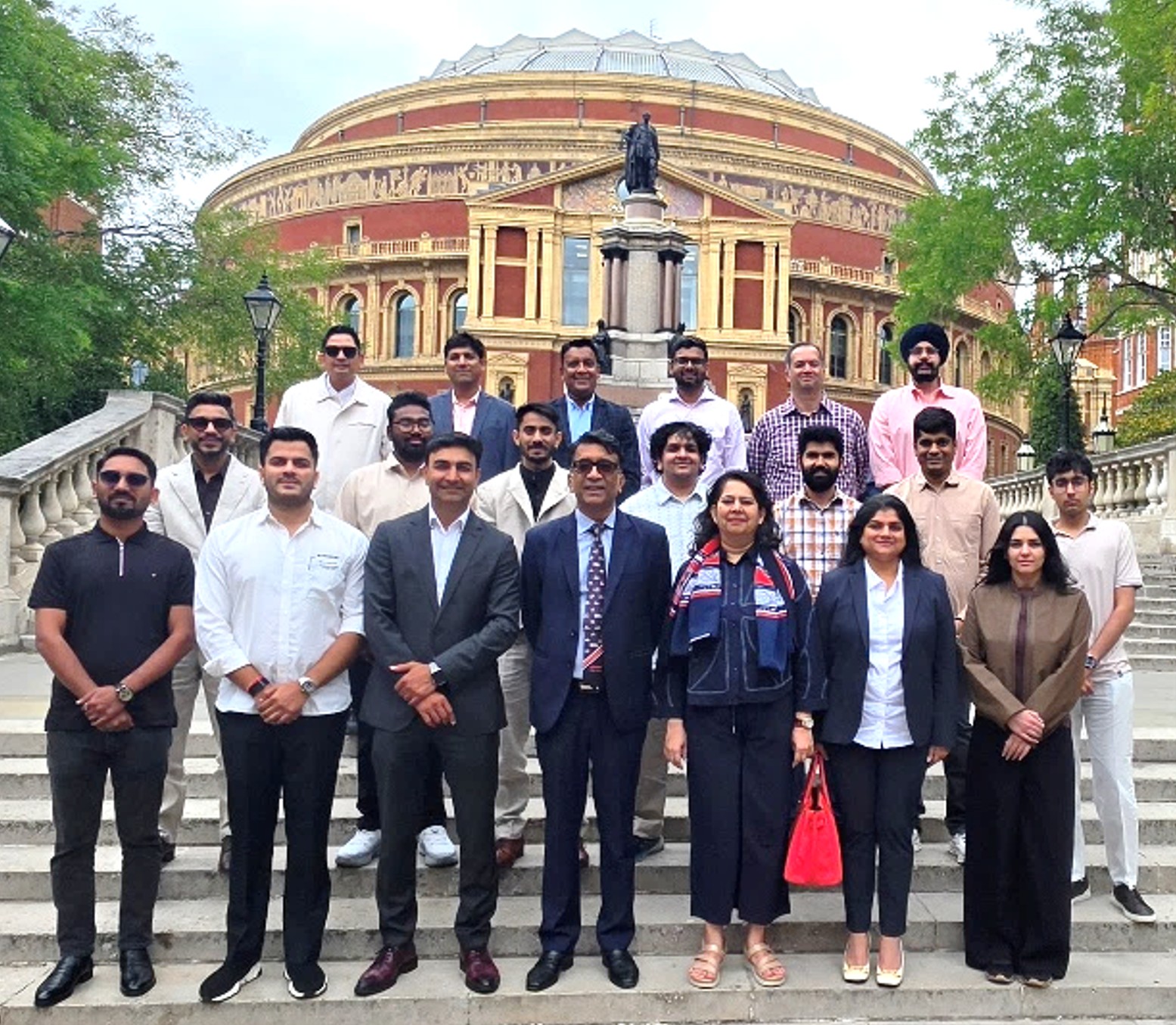
Mumbai, Aug 14: The Federation of Automobile Dealers Associations (FADA), through its learning and leadership platform FADA Academy, successfully conducted its first-ever Global Leadership Programme – Ivy League Strategic Leadership Programme at Imperial College Business School, London, from 20th to 24th July 2026.
The five-day immersive programme brought together an exclusive cohort of 18 accomplished Automotive Retail Leaders, Dealer Principals, Business Owners and Next-Generation Leaders from across India. Designed as a transformational global learning experience, the programme focused on competitive growth, strategic leadership, innovation, entrepreneurial mindset, data-driven decision-making, high-performance teams, emotional intelligence, digital marketing, business transformation, emerging technologies and global best practices, equipping participants with the capabilities required to lead future-ready automotive retail organisations.
The programme marked a significant milestone in FADA Academy’s global journey, with the inaugural participants becoming the Founding Members of the FADA Academy Global Leadership Club, reaffirming FADA’s commitment to developing globally competent leaders for India’s automotive retail industry.
Commenting on the successful completion of the programme, Mr. Manish Raj Singhania, Chairman – FADA Academy & Research, said: “The successful completion of the Ivy League Strategic Leadership Programme marks a historic milestone for FADA Academy and the Indian automotive retail fraternity. As our first-ever global leadership initiative, it reflects our vision of creating internationally benchmarked learning experiences that prepare automotive retail leaders to navigate an increasingly dynamic and competitive business environment.
The inaugural cohort of 18 automotive retail leaders returned with fresh global perspectives, strategic insights and a renewed commitment to innovation, collaboration and leadership excellence. Learning from distinguished faculty at Imperial College Business School, while engaging with accomplished peers, has enriched their ability to drive transformation within their organisations.
These 18 leaders will always be recognised as the Founding Members of the FADA Academy Global Leadership Club, setting a benchmark for future cohorts. I am confident that the knowledge, relationships and experiences gained through this programme will create a lasting impact – not only on their businesses but also on the future of automotive retail in India. This landmark initiative is the beginning of FADA Academy’s global journey, and we remain committed to bringing world-class leadership development opportunities to our dealer community.”
Prof. Sankalp Chaturvedi, Co-Director, Gandhi Centre for Inclusive Innovation, Imperial College Business School expresses his gratitude by saying: “We were glad to welcome FADA Academy and this distinguished group of Indian automotive retail leaders to the Gandhi Centre for Inclusive Innovation at Imperial. Automotive retail is changing faster than almost any part of the industry, and the leaders and business owners in the room are the ones who will have to make sense of it: new technology, new customer expectations, and organisations that need to work differently to keep up.
At the Gandhi Centre for Inclusive Innovation, we believe that meaningful innovation is not only about creating new ideas, but about translating those ideas into tangible societal impact. We were delighted to be part of this learning journey and glad to share perspectives and mentoring that can help leaders think differently, identify new opportunities and create lasting value for their organisations and the wider automotive retail ecosystem in India, and the world.
We hope this experience inspires the participants to return with more curiosity, fresh perspectives and the confidence to lead in their dealerships and beyond. Their experience could help shape the next generation of automotive retail in India through innovation, collaboration and inclusive growth.”
Partnering with FADA, Mr. Prakhar Kasar, CEO – Hero Vired, said: “At Hero Vired, we believe that the leaders of tomorrow will be characterised by their ability to think globally, embrace change and lead with purpose. Our association with FADA for this Global Immersion Programme at Imperial College Business School reflects a shared vision of equipping automotive leaders with global perspectives, exposure and strategic capabilities. We are proud to help shape the next generation of globally minded automotive leaders.”
The programme successfully combined classroom learning, global perspectives, experiential visits, interactive discussions and peer-to-peer engagement, equipping participants with fresh insights to drive business growth, innovation and leadership excellence in the evolving automotive retail landscape.
With the successful completion of the programme, the 18 participants were recognised as the Founding Members of the FADA Academy Global Leadership Club, marking the beginning of FADA Academy’s global journey and reaffirming its commitment to developing world-class, future-ready automotive retail leaders for India.
- 0
- By Neel Achary

14, Aug 2026
Covestro Covestro-backed BioBTX to produce aromatics from waste
Aug 14: Dutch circular chemistry technology developer BioBTX is building its world’s first commercial-scale plant to transform mixed plastic waste into high quality aromatic chemicals based on its in-house developed ICCP technology. Covestro has been a shareholder and strategic partner of the Groningen-based company since 2024, with a mid-single-digit million Euro stake.
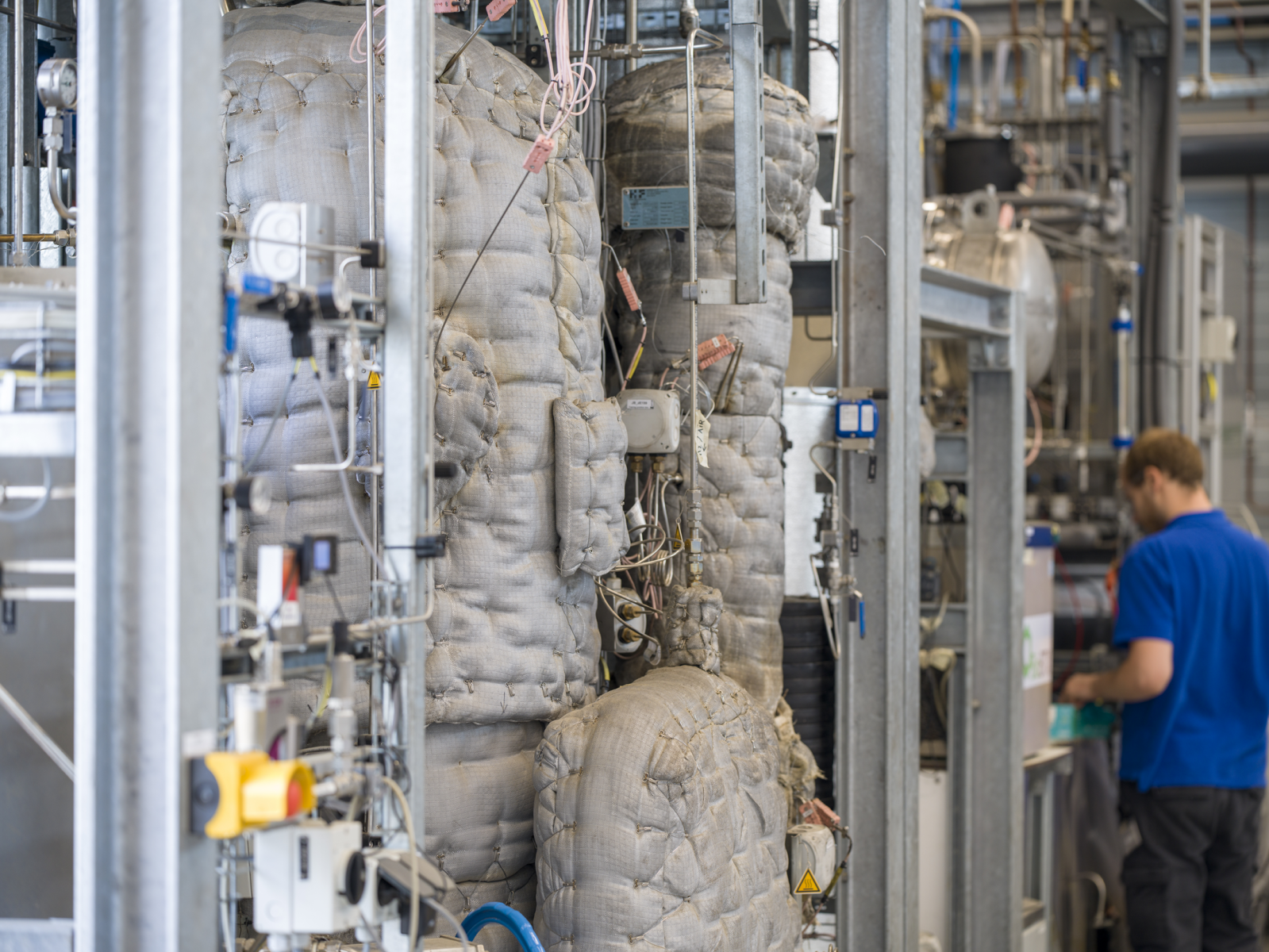
The plant, which shall create 35 new jobs, will be built at Chemical Park Delfzijl at the northern Coast of the Netherlands. It will use BioBTX‘s proprietary ICCP technology, which converts the type of mixed plastic waste that would otherwise be incinerated or put to landfill via catalytic pyrolysis into aromatic oil consisting of benzene, toluene and xylenes. These are the same building blocks the chemical industry uses today in coatings, pharmaceuticals and performance materials. They can also be used for the isocyanate production of Covestro, out of which soft foam for e.g. mattresses or rigid foam for insulating refrigerators are made.
“We’ve followed BioBTX‘s progress for years and are very happy to now see the point where the technology proves itself at industrial scale,” says Dr. Thorsten Dreier, Chief Technology Officer at Covestro. “This marks a very important step. Moreover, it processes mixed plastic waste instead of a single sorted stream, which is exactly the kind of recycling we need more of at scale to make a circular economy become reality.”
In total, the plant is expected to recycle about 20,000 tonnes of waste and produce around 10,000 tonnes of renewable aromatic oil and 8,000 tonnes of sustainable by-products from it annually. Compared to conventional, fossil-based BTX production, the process is expected to cut greenhouse gas emissions of the resulting chemical building blocks by 70 to 80 percent.
“Reaching this key milestone in the development of BioBTX marks an important step in our journey towards our mission of making circular chemistry possible. I am very proud of the full BioBTX team and shareholders whose dedication and commitment has made this achievement possible. We are going to build our world’s first fully sustainable aromatic plant. A great accomplishment!” says Ton Vries, Co-founder and CEO of BioBTX.
This milestone concludes a 14-year journey from an idea in 2012 through lab- and pilot-scale to commercial execution. While this first plant focuses on mixed plastic waste, the ICCP technology is feedstock-flexible, with the potential to expand to other sources in the future, such as biomass.
14, Aug 2026
India’s Goods Exports Surge Nearly 20% in July Despite Global Uncertainty
New Delhi, August 14, 2026: India’s merchandise exports rose 19.63 per cent year-on-year to $44.24 billion in July 2026, marking a strong recovery in outbound trade despite geopolitical tensions and disruptions affecting global supply chains.
The July performance was supported by strong shipments of petroleum products, electronics and engineering goods. Petroleum exports increased nearly 68 per cent to $6.92 billion, while electronics exports climbed 57.4 per cent to $5.92 billion. Engineering goods shipments grew about 17.7 per cent to $12.24 billion.
India’s exports to West Asia also recovered, rising 8.6 per cent to $5.7 billion during the month. The United States remained the country’s largest export market, with shipments to the US increasing by nearly 13 per cent to $9.02 billion. Exports to China also recorded a sharp rise.
However, the strong export performance was accompanied by a rise in imports. Merchandise imports increased 17.52 per cent to $76.22 billion, pushing the goods trade deficit to a six-month high of $31.98 billion. Higher crude oil prices and increased imports of electronics, gold, fertilisers and coal contributed to the wider deficit.
The July numbers underline the resilience of India’s export sector, while also highlighting the need to strengthen domestic manufacturing, logistics efficiency and supply-chain resilience to sustain growth in global trade.
14, Aug 2026
India’s July Exports Cross $80 Billion as Global Shipments Gain Momentum
New Delhi, August 14, 2026: India’s combined exports of merchandise and services rose 13.31 per cent year-on-year to $80.14 billion in July 2026, signalling continued strength in the country’s external trade despite global economic and geopolitical pressures.
The growth was supported by a sharp rise in merchandise shipments, which climbed 19.6 per cent to a record $44.24 billion during the month. Engineering products, electronics and petroleum-related shipments were among the key contributors to the strong goods export performance.
Services exports also remained an important pillar of India’s trade performance. However, imports of goods and services increased faster, rising 15.83 per cent to $95.16 billion, resulting in an overall trade deficit of about $15.03 billion in July.
The latest figures highlight the resilience of Indian exporters at a time when businesses are dealing with higher freight costs, supply-chain disruptions and geopolitical uncertainty. The strong July performance also adds to the positive momentum recorded during the opening months of FY27.
For policymakers and industry, the challenge now will be to sustain export growth while improving logistics efficiency, widening the export base and containing the impact of rising import costs on the overall trade balance.
14, Aug 2026
NITI Aayog Identifies Four Sectors That Could Drive India’s Manufacturing Ambitions
New Delhi, August 14, 2026: NITI Aayog has identified chemicals, textiles, telecom and networking equipment, and solar photovoltaic (PV) manufacturing as four high-potential sectors that could play a central role in strengthening India’s position in global manufacturing.
The policy think tank’s report focuses on sectors where targeted policy interventions, stronger domestic capabilities and greater value addition can help Indian manufacturers compete more effectively in international markets. The broader exercise covers 12 priority sectors with the objective of increasing India’s participation in global value chains.
NITI Aayog has pointed to opportunities across the four sectors while also highlighting challenges such as import dependence, supply-chain gaps, cost competitiveness and skill shortages. Addressing these constraints will be critical for Indian companies to scale production and move higher up the global value chain.
The report comes as India seeks to raise the contribution of manufacturing to economic growth, exports and employment. NITI Aayog’s approach places greater emphasis on building competitive industrial clusters, improving infrastructure and reducing production costs to attract investment and expand exports.
The recommendations are expected to support India’s longer-term ambition of becoming a major global manufacturing centre by combining domestic demand with export-oriented production and deeper integration into international supply chains.
14, Aug 2026
Centre releasesRs.605.71 Crore to Strengthen Agriculture in Rajasthan and Telangana
New Delhi, August 14, 2026: The Centre has approved a combined allocation of ₹605.71 crore for Rajasthan and Telangana under the Pradhan Mantri Rashtriya Krishi Vikas Yojana (PM-RKVY) and the Krishonnati Yojana, aimed at supporting agricultural development and farmer-focused initiatives.
Rajasthan will receive ₹340.59 crore, while ₹265.12 crore has been approved for Telangana. The decisions followed a review of the states’ annual action plans, utilisation of earlier funds and expenditure progress.
Union Agriculture Minister Shivraj Singh Chouhan approved the allocations during a virtual meeting with Rajasthan Agriculture Minister Kirori Lal Meena and Telangana Agriculture Minister Tummala Nageswara Rao.
Chouhan also appreciated Telangana’s Farmer ID and fertiliser distribution model, highlighting its potential to make the delivery of agricultural services more transparent and efficient. For Rajasthan, he called for greater attention to the implementation of Kisan Credit Cards (KCC) to improve farmers’ access to institutional credit.
The latest funding is expected to support state-level agricultural programmes and strengthen efforts aimed at improving farm productivity, farmer services and rural livelihoods.
14, Aug 2026
SEBI Eyes Wider Accredited Investor Pool With ₹5 Crore Securities Threshold
Mumbai, August 14, 2026: The Securities and Exchange Board of India (SEBI) has proposed a new framework that could make it easier for financially sophisticated investors to qualify as accredited investors, with securities-market holdings emerging as an alternative eligibility criterion.
Under the proposal, an individual with ₹5 crore or more in securities assets could qualify for accredited investor status through this route. SEBI has also suggested a ₹20 crore securities-asset threshold for eligible body corporates and trusts, excluding family trusts.
The proposed changes are aimed at expanding the pool of investors who can participate in products and investment opportunities designed for accredited investors, including certain alternative investment structures. The regulator estimates that the new securities-assets route could potentially bring around 3.7 lakh additional investors into the eligible pool.
SEBI is also looking at making the accreditation process more streamlined. Under the proposed framework, investment managers could be permitted to assess and record an investor’s accredited status as part of the onboarding process.
The move reflects SEBI’s broader effort to make India’s investment ecosystem more accessible to investors with substantial market exposure, while maintaining eligibility standards based on financial capacity and sophistication. The proposals are subject to the regulatory consultation and final approval process.
14, Aug 2026
Project Serotonin Unveils Ready-to-Deploy Preventive Healthcare Platform for Hospitals and Clinics
Bengaluru, Karnataka Aug 14: Project Serotonin (www.projectserotonin.com) announced the launch of its tenth-generation Preventive Health Platform and Precision Health OS, at the recently concluded RISE for Healthy Aging, the Longevity India Conference held at the Indian Institute of Science (IISc), Bengaluru. The Platform is designed to enable large hospitals, multispecialty hospitals, clinic networks, and longevity centers to deliver continuous, personalized preventive care by integrating fragmented health information into actionable precision interventions and measurable outcomes.
Preventive Health Platform & Precision Health OS
Project Serotonin’s Preventive Health Platform offers modular, ready-to-deploy infrastructure to operationalize preventive care at scale. It creates a connective layer that brings diagnostics, genomics, blood biomarkers, wearable data, clinical records, and practitioner insight into one model of care. It helps healthcare institutions move beyond isolated interventions toward a coordinated approach that supports individuals before disease progresses rather than after its onset.
The Platform has been designed to complement existing healthcare infrastructure, not compete with it. Hospitals and clinics continue to practice medicine through their established clinical pathways, while Project Serotonin adds a structured prevention layer supporting risk stratification, protocol design, patient engagement, monitoring, and behavior change, without asking clinicians to change how they practice or hospitals to trade treatment revenue for prevention.
The need for change has become increasingly evident. According to the World Health Organization, non-communicable diseases account for nearly 75 percent of all deaths globally. In India, where non-communicable diseases often present three to ten years earlier than in developed nations and multimorbidity has increased dramatically over the past three decades, a recent EY–FICCI assessment concluded that appropriate preventive interventions could reduce hospitalizations by 20 to 30 percent.
Advances in genomics, blood biomarkers, imaging, wearable technologies, and artificial intelligence have significantly expanded the volume and diversity of health information available to clinicians. Yet most healthcare institutions continue to use these datasets in isolation, limiting their ability to build a longitudinal understanding of an individual’s health and leaving preventive care fragmented and difficult to scale.
At the core of the Platform is Project Serotonin’s proprietary Precision Health OS, an orchestration engine that evaluates each individual’s genetic predispositions, biomarker trajectories, wearable trends, lifestyle patterns, pharmacogenetic considerations, and clinical history as one unified health profile. The Precision Health OS incorporates safeguards for contraindications, interactions, and escalation pathways, alongside anonymization, encryption, and role-based access controls.
This intelligence is translated into the SRTN Precision Daily Operating System (SRTN-pDOS), an individualized care framework that converts complex biological information into structured, practitioner-guided protocols across two care formats: foundational preventive care and therapy-adjunct protocols addressing specific health areas such as gut and cardiovascular health.
These SRTN precision protocols draw on an evidence base of more than 44,000 stratified clinical studies and have been refined through real-world pilots. They span nutrition, supplementation, physical activity, sleep, stress management, and other modifiable health behaviors. Recommendations are delivered through the SRTN App and supported by care concierge teams and health coaches who help individuals sustain adherence over time. WHO evidence has documented adherence rates as low as 28 percent for some regular preventive therapies in developed countries, underscoring the challenge of sustaining long-term engagement. Project Serotonin’s engagement architecture is designed to address this gap.
“We are at an inflection point in human health. Project Serotonin is built for the Medicine 4.0 era, which is defined not by how much data we collect, but by how intelligently we connect it,” said Dr Ashwat Visvanathan (PhD), Head – Partnerships and User Outcomes, Project Serotonin. “Healthcare has invested heavily in digitizing records and expanding diagnostics. The next frontier is enabling a continuous understanding of every individual. We built Project Serotonin to help healthcare providers move from episodic treatment to plug-and-play precision prevention, without disrupting the systems and clinical expertise they already have.”
The Platform connects twelve integrated systems that have traditionally functioned in isolation, from diagnostics, genomics, and wearable intelligence to a clinician console, Rx Intelligence screened against more than 2,600 drugs, patient engagement, fulfillment, adherence coaching, and operational management. Institutions can deploy the complete Platform or adopt modular capabilities, determining their own pace and scope of adoption.
14, Aug 2026
VST Tillers Tractors Sustains Profitability as Revenue Climbs 11% Amid Cost Pressures
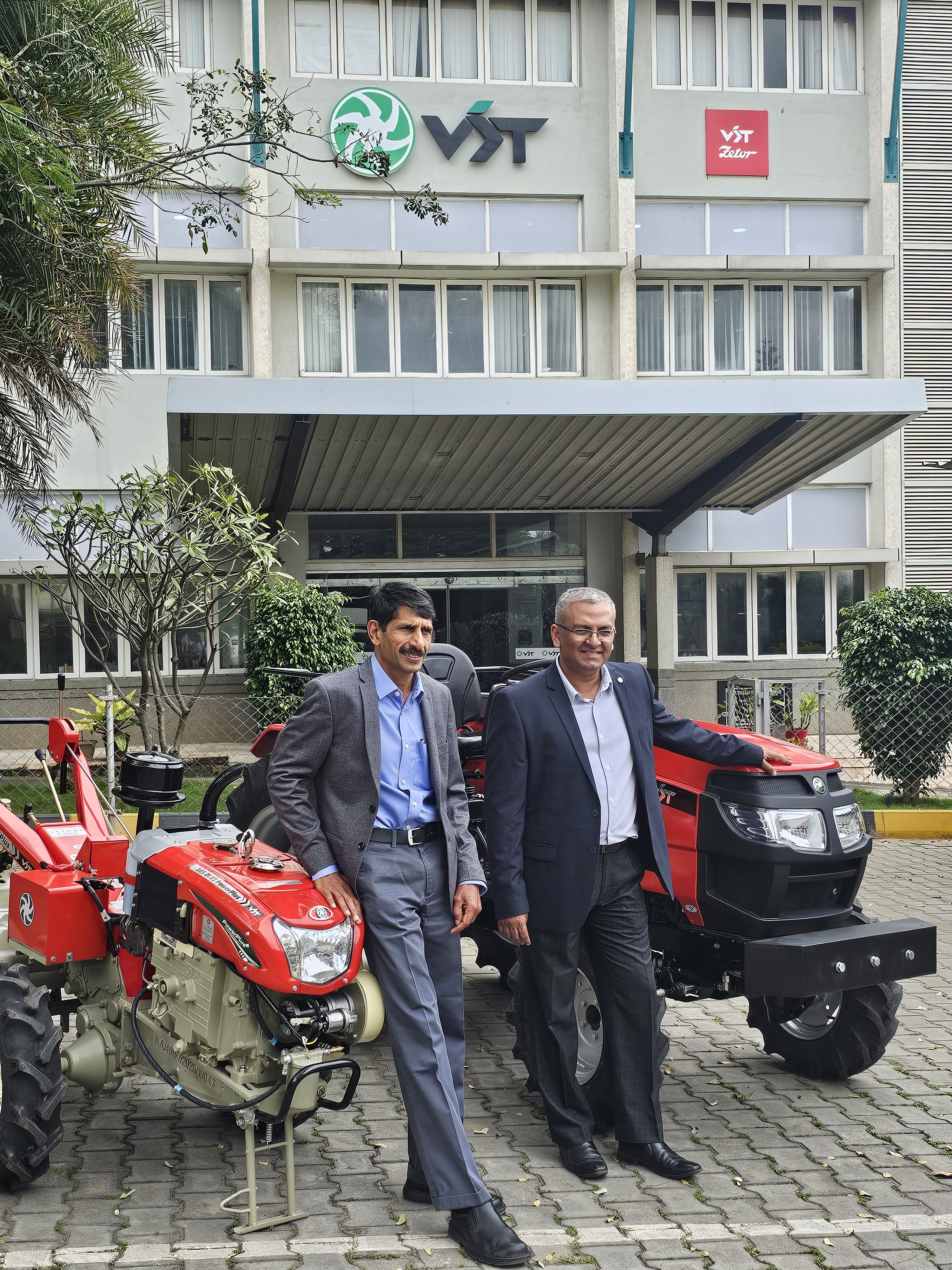
Bengaluru, Aug 14: VST Tillers Tractors Limited (VST), India’s leading farm equipment manufacturer, announced its financial results for the 1st quarter of the financial year, showcasing continued growth momentum and operational resilience.
Financial Highlights – Q1 FY 2026-27
Revenue from operations increased to ₹ 313.40 crore, registering a growth of 11% compared to ₹282.5 crore in Q1 FY26, amid supply disruptions.
Operational EBITDA increased to ₹40.29 crore from ₹37.50 crore in the Q1 of previous year. Operational EBITDA margin is at 12.85% despite commodity inflationary pressures.
Profit After Tax (PAT) stood at ₹48.73 crore as against ₹44.56 crore, an increase of 9.36% over Q1 FY 26.
VST Tillers Tractors Limited (VST) is India’s leading farm equipment manufacturer. VST was established in the year 1967 by the VST Group of companies. With a legacy of more than 55 years, VST continues to drive farm mechanization and empowerment of Indian farmers. The organization is the largest Indian manufacturer of Tillers, and 4WD Compact Tractors, and amongst the leading producers of the other category of Tractors, Engines, Transmission, Power Reaper, and Precision Components. VST also exports products to European, Asian, and African markets.
14, Aug 2026
Rangi Developments – Building a Legacy Across the Tricity

Projects and Services:
RANGI DEVELOPMENTS | RANGI GROUP | RANGI FINANCIALS | MEWS GATE | UBBER Group | HELPMATE | HELPMATE SERVICES | HIGHLAND PARK | HIGHLAND MAYFIELDS | HIGHLAND LIFESPACES | HIGHLAND INDUSTRIAL CITY | HIGHLAND LUXURIA | CRESTA |CRESTA RESIDENCES
Rangi, through Rangi Developments, has built an established presence in the real estate sector across the Tricity and surrounding region. With delivered projects including Mews Gate, Highland Park and Ubber Parkland, Rangi has created residential and commercial spaces that are now home to numerous families, communities and businesses. The journey is supported by the wider Rangi Group and its associated names, including Highland Group, Highland Mayfields and Highland Lifespaces, reflecting years of experience across the real estate sector.
Among its notable developments, Mews Gate is an integrated residential and commercial destination bringing together thoughtfully planned homes and commercial spaces. Highland Park, Highland Mayfields, Highland Lifespaces and Highland Luxuria further represent the group’s experience across residential development, with established communities now living and growing within these projects.
Building on this experience, Rangi Developments is preparing to introduce Cresta, also known as Cresta Residences, an upcoming residential development envisioned around contemporary architecture, thoughtfully planned spaces and modern lifestyle requirements.
With a portfolio shaped by delivered developments and established communities, Arshdeep Rangi is taking the lead in carrying this legacy forward through the upcoming Cresta Residences, building on the experience of the past while shaping the vision for the future.


