


14, Jul 2026
India and Spain Join Hands to Build Resilient Supply Chains
New Delhi, July 14: India and Spain have reaffirmed their commitment to strengthening industrial cooperation and developing more resilient and sustainable supply chains. The renewed partnership aims to expand collaboration across key sectors, promote innovation, and support long-term economic growth in both countries.
As part of this initiative, both nations will work together to enhance industrial partnerships, encourage investment, and create new opportunities for businesses. The collaboration will focus on improving supply chain resilience, increasing trade, and reducing disruptions caused by global economic and geopolitical challenges.
Officials from India and Spain emphasized the importance of closer cooperation in manufacturing, technology, clean energy, and advanced industries. By sharing expertise and encouraging innovation, both countries aim to improve competitiveness and support sustainable industrial development.
The strengthened partnership is expected to benefit businesses by improving market access, promoting knowledge exchange, and creating a more reliable and diversified supply chain network. It also reflects the shared commitment of India and Spain to fostering economic resilience and supporting global trade.
Both countries will continue to explore new areas of cooperation and work closely to strengthen bilateral economic relations, ensuring a stable and future-ready industrial ecosystem.
- 0
- By Neel Achary

14, Jul 2026
Markets Open Lower as Global Uncertainty Grows
Mumbai, July 14: India’s benchmark equity indices, Sensex and Nifty, opened lower on Tuesday as investors reacted to a sharp rise in global crude oil prices and weak international market performance driven by escalating geopolitical tensions in the Middle East.
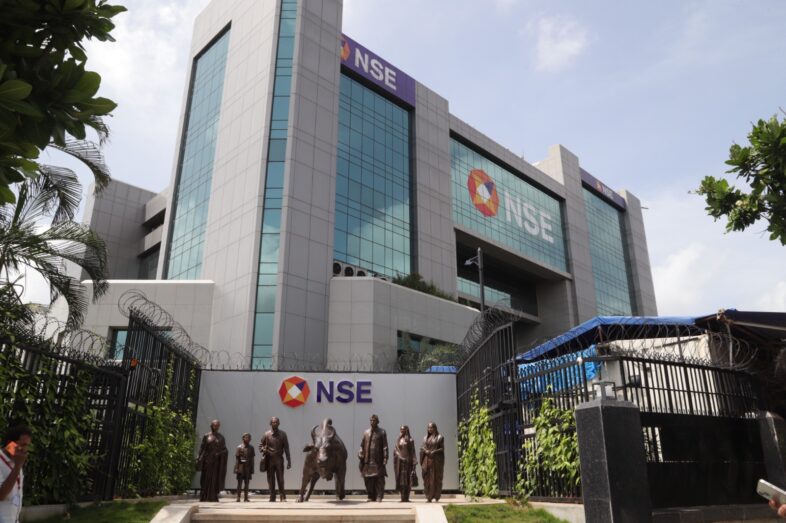
The BSE Sensex fell 344.06 points, or 0.44%, to open at 77,272.34, while the NSE Nifty declined by more than 100 points, or 0.59%, opening at 24,068.00. The cautious start to the trading session reflected growing concerns over rising energy costs and uncertainty in global financial markets.
Financial and automobile stocks led the market decline during early trading. The Nifty Financial Services Ex-Bank index dropped 1.12%, followed by the Nifty Auto index, which fell 1%. Other sectors, including private banking, real estate, and media, also recorded losses as investors remained risk-averse.
Despite the broader market weakness, metal and healthcare stocks showed resilience. The Nifty Metal index gained 0.38%, while the Nifty Healthcare index edged up 0.14%, indicating selective buying in defensive and commodity-linked sectors.
Among the major stocks, Shriram Finance, InterGlobe Aviation (IndiGo), Bajaj Finance, Larsen & Toubro, HCLTech, Mahindra & Mahindra, Kotak Mahindra Bank, and Bajaj Finserv were among the biggest decliners in early trade.
Market analysts noted that the recent surge in crude oil prices, driven by increasing geopolitical tensions, is likely to keep investors cautious in the near term. Although India’s domestic economic fundamentals remain stable, sustained increases in oil prices could raise inflationary pressures and increase operating costs for fuel-dependent industries.
Experts identified 24,300 as an important resistance level for the Nifty and 24,000 as a key support level. A move above 24,300 could strengthen market momentum toward 24,530, while a fall below 24,000 may result in further downside toward the 23,800 support zone.
Global market sentiment also remained weak after continued military action involving the United States and Iran heightened geopolitical uncertainty. These developments pushed international crude oil prices higher, with Brent crude rising to $85.65 per barrel and West Texas Intermediate (WTI) crude climbing to $80.42 per barrel.
Asian markets also traded lower, with Japan’s Nikkei, Hong Kong’s Hang Seng, and South Korea’s Kospi posting losses. In the United States, Wall Street ended the previous trading session on a negative note, with the S&P 500 and Nasdaq Composite closing lower.
Investors are expected to closely monitor global developments, crude oil prices, and upcoming economic indicators for further direction in the markets. Market participants remain focused on balancing near-term risks with the long-term strength of the Indian economy.
14, Jul 2026
On the Eve of Bharat Tex 2026, India Prepares to Host the World’s Largest Global Textiles Expo
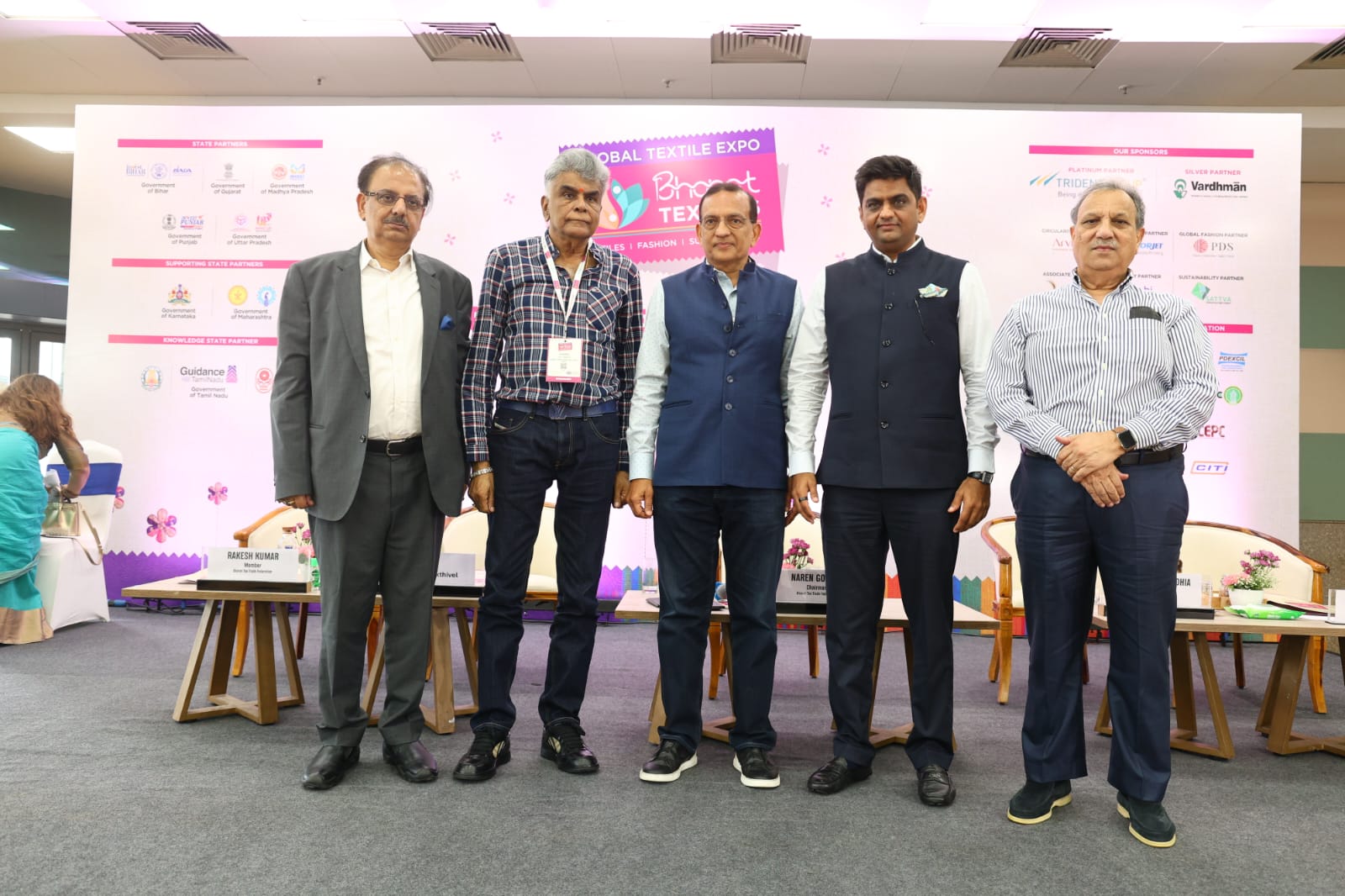
New Delhi, July 14: On the eve of Bharat Tex 2026, India’s largest global textile event, anticipation is building across the country’s textile and apparel ecosystem as final preparations near completion at Bharat Mandapam, New Delhi. Set to open tomorrow and run from 14th to 17th July 2026, the event will bring together the full breadth of India’s textile ecosystem on a unified global platform. Organised by the Bharat Tex Trade Federation, a consortium of Textile Export Promotion Councils and Industry Bodies, with the support of the Ministry of Textiles, Government of India, the event underlines India’s growing global leadership in textiles, fashion, sustainability, technology, investment and international trade.
Inspired by Prime Minister Shri Narendra Modi’s 5F Vision, Farm to Fibre to Factory to Fashion to Foreign, Bharat Tex 2026 has evolved into a premier platform for business, investment, sourcing, innovation, policy dialogue and strategic partnerships across the textile value chain.
Speaking on the eve of the event, Mr. Naren Goenka, Chairman, Bharat Tex Trade Federation, said: “Tomorrow, thousands of exhibitors, 7,000 buyers and delegates from more than 20 countries arrive at Bharat Mandapam to be part of what is, without question, the most ambitious edition of Bharat Tex yet. Bharat Tex 2026 stands as a testament to the remarkable collaboration between the Ministry of Textiles, the Textile Export Promotion Councils and Industry Associations, whose sustained leadership and invaluable support have been instrumental in shaping the event into a premier global textile platform.”
Mr. Bhadresh Dodhia, Co-Chairman, Bharat Tex Trade Federation, added: “With over 4,000 B2B meetings and more than 30 MoUs expected to be signed over the next four days, this edition is designed to convert conversations into commerce and opportunities into enduring partnerships. We have built Bharat Tex 2026 to be a platform where sourcing decisions, investment commitments and partnerships are made in real time, not just discussed.”
Dr. Rakesh Kumar, Chairman, India Exposition Mart Limited (IEML), and Core Committee Member, Bharat Tex 2026, said: “From our State Investor Connect Sessions to over 100 knowledge sessions spanning trade, technology, sustainability and craft, this edition has been built to serve every part of India’s textile ecosystem, from the largest exporter to the smallest MSME. As we open our doors tomorrow, I am confident this will be remembered as the edition where Bharat Tex came fully into its own.”
1. Eight Partner States and Nine Exhibiting States Anchor Government Participation
This edition has seen strong government engagement, with eight Sponsor States: Madhya Pradesh, Bihar, Uttar Pradesh, Punjab, Maharashtra, Gujarat, Karnataka and Tamil Nadu, leading the charge. Alongside them, nine States and Union Territories, including Andhra Pradesh, Assam, Chhattisgarh, Jharkhand, Jammu & Kashmir, Odisha, Manipur, Rajasthan and West Bengal, are participating as exhibitors.
2. State Investor Connect Sessions to Strengthen Centre-State-Industry Collaboration
To strengthen Centre-State-Industry collaboration, dedicated sessions will allow Gujarat, Uttar Pradesh, Karnataka, Madhya Pradesh, Punjab, Bihar, Maharashtra, Telangana, and Tamil Nadu to showcase investment opportunities, industrial infrastructure, PM MITRA linkages, and policy support. This includes a focused PM MITRA Master Developer Session for Gujarat and Uttar Pradesh.
3. Business at the Core: 7,000+ Buyers, 1,600+ Exhibitors, 1.6 Million Sq. Ft. of Trade
On the business front, the third edition expects participation from over 7,000 buyers, 1.3 lakh trade visitors, and 20,000+ textile products, spread across 1.6 million sq. ft. of exhibition space, driving meaningful commercial engagement throughout the event.
Over 1,600 exhibitors will showcase India’s complete textile value chain including fibre, yarn, fabric, apparel and fashion, home textiles, technical textiles and ancillary industries, along with India’s renowned textile clusters such as Tirupur, Ichalkaranji and Ahmedabad. International exhibitors from 14 countries, including the US, UK, Japan, Portugal, Spain, New Zealand, South Korea, South Africa and Nepal, will participate, alongside institutional representation from the United Nations and European Union. Key industry sponsors include Trident, Vardhman Textiles, RSWM, Shahi Exports, Colorjet, Arvind, PDS Limited and Sattva.
4. Over 4,000 B2B Meetings and 30+ MoUs Expected to Drive Trade Outcomes
The platform is set to facilitate over 4,000 curated B2B meetings, 100+ B2G meetings, and the signing of more than 30 MoUs. These agreements span trade, investment, technology, sustainability, and market access, directly benefiting manufacturers, exporters, and global partners.
5. Global Business and Government Delegations to Deepen Trade Partnerships
Bharat Tex 2026 will host over 350 speakers including international experts, industry leaders, CXOs, policymakers and thought leaders from more than 20 countries, supported by a dedicated International Pavilion for structured cross-border engagement.
Ministerial delegations from New Zealand, Sri Lanka, Jordan, Cambodia and Brunei have shown interest in participating, reflecting Bharat Tex’s growing role as a platform for international policy dialogue and bilateral cooperation.
Industry and business delegations from the United States, Japan, Spain, United Kingdom, Portugal, Russia, South Africa, New Zealand, the UAE, Thailand, Bangladesh, Sri Lanka, Myanmar, among others are also expected, creating fresh opportunities for trade, sourcing and investment. Special bilateral sessions include the India-US cotton partnership, India-New Zealand wool ecosystem, India-UK FTA in action, a Japan delegation engagement and Russia-focused textile discussions.
6. 100+ Knowledge Sessions to Support Export Readiness and MSME Growth
The third edition will feature over 100 knowledge sessions, including 39 panel discussions, 16 roundtables, 37 masterclasses and 8 State sessions, supported by more than 50 knowledge partners. Covering themes such as trade and investment, sustainability, Industry 5.0, innovation, technical textiles, fashion, policy and global sourcing, these sessions are designed to strengthen export competitiveness, support MSMEs and address emerging global market trends.
7. CITI Textile Sustainability Awards 2026 to Recognise Responsible Business Practices
Bharat Tex 2026 will also host the CITI Textile Sustainability Awards 2026, built around seven focus areas: Resource Efficiency, Energy & Emissions, Circular Economy, Sustainable Materials, Social Responsibility, Responsible Business, and Industry Collaboration.
8. Digital Platforms Powering Business Matchmaking
To facilitate seamless engagement, Bharat Tex 2026 will leverage its Mobile App and Pre-Fair Directory as integrated digital business platforms. These tools will enable exhibitor discovery, meeting scheduling, event navigation, QR-based lead capture, digital badge access, AI-assisted support and advance buyer-seller matchmaking, creating a more efficient and data-driven business experience.
A Platform for India’s Textile Future
As Bharat Tex 2026 opens its doors tomorrow to the global textile community, it will showcase India’s textile capabilities while embodying India’s vision of building globally competitive, resilient and sustainable textile value chains. By bringing together governments, industry leaders, exporters, policymakers, investors and manufacturers on a single platform, Bharat Tex 2026 aims to deepen international partnerships, unlock trade and investment opportunities, and strengthen India’s position as a trusted partner across global textile value chains.
13, Jul 2026
Future Caribbean’s Global AI Movement
Future Caribbean‘s Global AI Movement Accelerates with Inaugural Agentic AI Assembly, Recruitment Continues Worldwide
BRIDGETOWN, BARBADOS – July 13 – Future Caribbean hosted its inaugural Agentic AI Assembly from July 10–12 in Barbados, bringing together leading Agentic AI builders, founders, investors, and researchers for three days of hands-on collaboration focused on the future of open-source Agentic AI. The event was also live streamed, allowing a global audience to participate virtually, with satellite events held throughout the region.
The Assembly marked the next milestone for Future Caribbean, which had rapidly grown into a global AI initiative in just six weeks. Since launching its Global Open-Source Agentic AI Buildathon, the initiative had attracted nearly 700 builders, founders, investors, advisors, judges, and ecosystem partners from around the world, with applications and participant recruitment continuing as judging took place on a rolling basis.
Future Caribbean continued to welcome founders, developers, engineers, advisors, judges, and partners from around the world to join the initiative, collaborate with the growing global community, and apply to build the next generation of open-source Agentic AI companies with real-world impact.
Hosted at the Inter-American Development Bank Barbados Country Office, the Assembly featured technical workshops, live demonstrations, collaborative build sessions, and discussions focused on deploying AI agents to solve real-world challenges across industries including finance, energy, healthcare, tourism, and climate resilience.
The event was led by Lily Dash, Founder of Future Caribbean and Co-Founder of ACTAI Advisors, alongside Steven Echtman, Founder of ClawCamp, with special guest Ajay Yadav, Founder of The Vibe on Instagram.
“In just a matter of weeks, we’ve seen incredible momentum from builders and partners who share the vision of creating the next generation of AI-native companies for and from distributed markets,” said Lily Dash. “The Assembly was about turning that momentum into collaboration while continuing to grow a global community of builders. We continued to actively recruit participants from around the world, and by live streaming the Assembly and hosting satellite locations around the region, it became easier than ever for innovators everywhere to get involved.”
The technology was designed for distributed markets, and the Caribbean served as a strong example of such a market, with multiple currencies, legal systems, languages, and regulations. The initiative focused on coordinating technologies around that distribution. If the model worked in the Caribbean—a complex distributed market and one of the best deployment environments for companies—it had the potential to scale globally across other distributed environments. The Caribbean was not unique in its distributed nature, as much of the world operates as a distributed market.
Future Caribbean brought together an international network of partners including the New York Stock Exchange (NYSE), IDB Invest, ACTAI Global, ACTAI Advisors, Cayman Enterprise City, Export Barbados, ClawCamp, Highrise AI, MiniMax, OWC, The OECS, DMZ, and numerous global private sector, regional technology, and government organizations.
The Assembly built on the ongoing Global Open-Source Agentic AI Buildathon, where applications from around the world continued to be accepted and reviewed on a rolling basis ahead of the finals at the New York Stock Exchange later this year.
By connecting world-class builders, investors, and institutions, both in person and online, Future Caribbean aimed to establish the Caribbean as a launchpad for the next generation of open-source Agentic AI companies with global impact.
|
|
13, Jul 2026
Punjab & Sind Bank’s Cochin Branch Receives IGBC Green Interiors Certification
New Delhi, July 13: Punjab & Sind Bank is pleased to announce that its Cochin Branch has been awarded the IGBC Green Interiors Certification by the Indian Green Building Council under the IGBC Green Interiors Rating System , reinforcing the Bank’s commitment to sustainable infrastructure and environmentally responsible banking practices.
The certification recognises the Bank’s efforts in developing a workplace that incorporates green interior standards, energy-efficient design and sustainable practices, contributing to a healthier environment for customers and employees while reducing its environmental footprint.
This achievement marks another milestone in Punjab & Sind Bank’s sustainability journey and reflects its continued focus on integrating environmental responsibility into its operational framework. The Bank remains committed to supporting the Government of India’s vision of promoting green infrastructure and sustainable development through responsible banking practices.
13, Jul 2026
India Reaffirms Maritime Security Commitment During PM Modi’s Seychelles Visit
New Delhi, July 13: Prime Minister Narendra Modi’s visit to Seychelles has reaffirmed India’s commitment to strengthening maritime security cooperation and serving as a reliable security partner in the Indian Ocean Region (IOR).
The visit highlighted the close and longstanding partnership between India and Seychelles, with discussions focusing on enhancing cooperation in areas such as maritime safety, defence collaboration, capacity building, and regional stability.
India reiterated its vision of supporting a secure and peaceful Indian Ocean through collaborative efforts with partner nations. The engagement also underlined the importance of collective action in addressing emerging maritime challenges and ensuring the safety of sea routes.
During the visit, both sides explored opportunities to deepen bilateral ties and strengthen cooperation in areas of mutual interest, including development, security, and sustainable growth.
The outreach reflects India’s continued focus on building partnerships in the Indian Ocean Region and contributing to regional peace, stability, and security through cooperation and shared responsibility.
13, Jul 2026
India’s Retail Inflation Rises to 4.38 pc in June Amid Higher Gold and Silver Prices
New Delhi, July 13: India’s retail inflation increased to 4.38% in June, driven in part by a rise in prices of precious metals such as gold and silver, according to recent data.
The increase reflects changes in consumer price trends, with higher costs in select categories influencing the overall inflation rate. Precious metal prices witnessed significant movement during the period, contributing to the rise in the inflation index.
Economists said that while inflation remains within the broader policy framework, price trends across food items, commodities, and other key sectors will continue to be closely monitored.
The latest data highlights the evolving inflation landscape as domestic and global market factors influence consumer prices. Policymakers are expected to continue tracking price movements and economic indicators to maintain stability.
The government and financial authorities remain focused on balancing growth objectives with measures to manage inflationary pressures and support economic stability.
13, Jul 2026
India’s Exports Show Strong Momentum, Rise 11.37 pc to Dollar 232.73 Billion in April-June
New Delhi, : India’s total exports recorded a robust growth of 11.37% to $232.73 billion during the April-June quarter, demonstrating the resilience of the country’s trade sector despite global economic uncertainties.
The strong export performance reflects continued demand for Indian goods and services, along with the growing competitiveness of domestic industries in international markets. Key sectors have contributed to maintaining the positive trade momentum amid evolving global challenges.
Trade experts attributed the growth to supportive government policies, expanding market reach, improved manufacturing capabilities, and efforts to strengthen India’s position in global supply chains.
The government continues to focus on boosting exports through enhanced infrastructure, trade facilitation measures, and initiatives aimed at supporting businesses and improving global market access.
The latest figures highlight India’s ability to sustain trade growth while navigating external pressures and strengthening its role in the global economy.
13, Jul 2026
Titan Raga unveils ‘Paris, with Love’ collection, an ode to Parisian romance, artistry and exceptional craftsmanship

Bengaluru, 13th July: There are cities that become destinations. And then there is Paris: a feeling that lingers long after the journey ends. Its winding boulevards, quiet cafés, moonlit rendezvous and timeless elegance have inspired generations of dreamers, artists and romantics. But Titan Raga‘s newest collection, ‘Paris, with Love,’ is reimagined not as a backdrop for two, but as a mirrored canvas reflecting a woman’s personal journey – the one that begins with embracing herself.
Speaking about the collection, Aparna Ravi, Marketing Head – Watches at Titan Company Ltd., said, “Every collection at Titan Raga begins with an understanding of the woman we are designing for. Today, she is confident in her choices, embraces her individuality and seeks pieces that feel personal. With ‘Paris, with Love,’ we wanted to reinterpret the idea of romance through that lens. Every detail has been crafted to feel intimate, elegant and enduring, much like the woman who wears it. As Raga continues to evolve, our endeavour is to bring global design inspiration to Indian consumers through watches that are both meaningful and beautifully crafted.”
The collection is designed to move effortlessly across occasions. Pair it with a sharply tailored ivory pantsuit for a modern take on power dressing, let it complement the understated elegance of a silk saree at an intimate celebration, or wear it with an evening gown for a candlelit dinner that stretches into the night. Understated yet unmistakable, the watches transition seamlessly across moments.
The Paris, with Love collection is now available across Titan stores and on the official website, inviting women everywhere to begin their most beautiful love story—with themselves.
13, Jul 2026
NHPC Project Set to Take Centre Stage in Nepal-India Energy Talks
New Delhi, July 13: The project order secured by NHPC is expected to be a key point of discussion during the upcoming energy talks between India and Nepal, as both countries look to strengthen cooperation in the power sector.
The development comes amid growing focus on expanding cross-border energy partnerships, improving electricity trade, and harnessing the region’s hydropower potential. The NHPC project is likely to highlight opportunities for greater collaboration between the two nations in renewable energy development.
India and Nepal have been working towards enhancing energy connectivity through joint initiatives, with hydropower emerging as a major area of cooperation. Discussions are expected to focus on project implementation, investment opportunities, and long-term energy partnerships.
The inclusion of NHPC-related developments in bilateral talks reflects the increasing importance of clean energy collaboration in strengthening economic and strategic ties between the two neighbouring countries.
Officials and industry stakeholders believe that deeper cooperation in the power sector can support regional energy security and contribute to sustainable development goals.


