


13, Jul 2026
IIMBue 2026 to Convene India’s Top Business Minds to ‘Change the Orbit’ of Leadership
Noel Naval Tata, Siddharth Sharma, G.V. Prasad, to address IIMBue 2026 Leadership Conclave

Bengaluru, July 13: As businesses confront unprecedented disruption driven by artificial intelligence, shifting geopolitics and rapidly evolving markets, IIMBue 2026 is set to bring together some of the country’s most influential minds to explore one compelling question: How do leaders change their orbit and that of the companies they run, instead of simply staying on course?
The 2026 edition will feature an impressive line-up of speakers, including Mr. Noel Naval Tata, Chairman, Tata Trusts, Mr. Siddharth Sharma, CEO, Tata Trusts; Mr. G.V. Prasad, Co-Chairman & Managing Director, Dr. Reddy’s Laboratories; Mr. Anand Ramamoorthy, Founding Managing Director, Micron India; renowned diplomat Ambassador Deepak Vohra; acclaimed actors Mr. Boman Irani & Ms. Bhumi Pednekar, alongside several other distinguished leaders from industry, public policy and academia.
Organised by the IIM Bangalore Alumni Association (IIMBAA), the two-day leadership conclave will be held on August 1–2, 2026, at The Leela Bhartiya City, Bengaluru. Built around the theme “Changing the Orbit,” the event will bring together more than 1,500 delegates and an influential mix of innovators, policymakers, entrepreneurs, business leaders, investors, academicians and alumni from across the world to explore new pathways for growth, leadership and transformation.
Unlike conventional leadership conferences that focus on managing change, “Changing the Orbit” challenges leaders to rethink their trajectory altogether—to break free from incremental progress, embrace bold thinking and move to a higher orbit of innovation, impact and sustainable growth.
Recognised as one of India’s largest alumni-led leadership platforms, IIMBue has become a vibrant forum where leaders from business, government, healthcare, technology, finance, media, sports and the creative industries come together to exchange ideas that influence the future of enterprise and society.
This year’s programme will revolve around three defining themes:
- New Geometry of Power – Understanding the shifting global economic and geopolitical landscape.
- Redesigning Trajectory – How organisations can reinvent themselves to remain resilient and competitive.
- Tech for Future Orbits – Exploring how artificial intelligence, deep technology and digital innovation are reshaping industries and leadership.
The conclave will feature keynote addresses, fireside conversations, interactive panel discussions and networking sessions covering some of today’s most pressing issues, including:
- From Influence to Impact: Shaping Society for Tomorrow
- From Molecules to Markets: Scaling Healthcare Across Borders
- The Gravity Shift: Leadership in a Multipolar World
- Frontier Technologies Reshaping India’s Future
- Rewiring the System in the Era of AI
- Beyond the Screen: Stories, Stardom & the Art of Reinvention
- The New Architecture of Growth
- Beyond the Scoreboard: Sport’s Next Growth Orbit
Speaking about the event, Harish Mittal, President, IIM Bangalore Alumni Association, said: “The pace of change today demands leaders who are willing to rethink assumptions, challenge established models and create entirely new growth trajectories. IIMBue 2026 is designed to inspire exactly those conversations. With leaders from boardrooms, venture capital, private equity, entrepreneurship, academia and public policy coming together, the conclave offers a unique opportunity to understand emerging trends, identify new opportunities and shape the future of leadership.”
Adding to the experience, Venture Showcase will connect promising startups with investors, mentors and strategic partners, while the IIMB Alumni Authors’ Nook will showcase thought-provoking books written by alumni, creating opportunities for conversations beyond the conference stage.
Over the years, IIMBue has evolved into a sought-after platform for cross-sector dialogue, bringing together distinguished personalities from business, public policy, healthcare, sports, science and the arts. The 2026 edition promises to continue that tradition by creating conversations that are not just about responding to change—but about redefining the future.
As the world searches for new models of leadership, innovation and growth, IIMBue 2026 aims to provide the ideas, insights and connections that can help leaders move beyond today’s challenges—and into their next orbit.
- 0
- By Neel Achary

13, Jul 2026
India Real Estate Sector Attracts Dollar 3.2 Billion in Private Equity Investments in H1
New Delhi, July 13: India’s real estate sector continued to attract strong investor interest during the first half of the year, receiving $3.2 billion in private equity investments between January and June, highlighting growing confidence in the country’s property market and economic prospects.

The investment inflows reflect the sector’s steady growth momentum, supported by rising demand for quality housing, expanding commercial spaces, and increased development activity across key markets. Institutional investors have shown renewed confidence in India’s real estate landscape, recognising the sector’s long-term potential amid rapid urbanisation and evolving consumer needs.
Private equity investments have supported a wide range of segments, including residential developments, office spaces, logistics facilities, and emerging real estate opportunities. The increased participation of institutional capital is also helping improve project execution, strengthen transparency, and encourage the adoption of modern development practices.
Industry stakeholders believe that India’s growing economy, infrastructure expansion, and favourable policy environment continue to make real estate an attractive destination for both domestic and global investors. The sector is also benefiting from changing lifestyle preferences, demand for better-quality spaces, and increased focus on sustainable development.
The strong investment activity during the first half of the year underlines the resilience of India’s real estate market and its important role in supporting economic growth, employment generation, and infrastructure development.
With continued investor confidence and positive market fundamentals, the real estate sector is expected to remain a key driver of India’s growth story in the years ahead.
13, Jul 2026
Strong Supply Network Shields India From Immediate Energy Disruptions
New Delhi, July 13: India is unlikely to face any immediate concerns over energy supply despite rising geopolitical tensions in key global regions, with the country maintaining a stable energy outlook through diversified sourcing and strategic planning.
The government and industry stakeholders continue to closely monitor international developments that could impact global energy markets. However, existing supply arrangements, adequate reserves, and multiple import channels are expected to help India manage potential disruptions and maintain energy security.
India, one of the world’s largest energy consumers, has taken several measures in recent years to strengthen its energy resilience. These include diversifying crude oil import sources, maintaining strategic petroleum reserves, and expanding investments in renewable energy and alternative energy solutions.
While geopolitical tensions have contributed to volatility in global crude oil prices, officials and energy experts believe that India’s preparedness and flexible supply network will help reduce the impact on domestic energy availability.
Market participants continue to track developments in international energy markets, including crude oil price movements, shipping conditions, and supply trends. Any prolonged disruption in global energy flows could influence prices, but immediate shortages are not expected.
India remains focused on ensuring uninterrupted energy access to support economic growth, industrial activity, and consumer demand while continuing efforts to build a more secure and sustainable energy ecosystem.
13, Jul 2026
Global Crude Oil Prices Rally Over 4 pc as Escalating U.S.-Iran Tensions Fuel Supply Risk Concerns
July 13: Global crude oil prices climbed more than 4% in the latest trading session as heightened geopolitical tensions between the United States and Iran raised concerns over the security of global energy supplies. The sharp increase reflects growing uncertainty in international energy markets, with investors closely monitoring developments that could disrupt oil production, exports, or key shipping routes.

The recent escalation has intensified fears of potential disruptions to energy flows from the Middle East, a region that accounts for a significant share of global crude oil production and exports. Market participants reacted swiftly by increasing demand for oil futures, anticipating that prolonged geopolitical instability could tighten supply and lead to sustained upward pressure on crude prices.
Concerns have also centered on the safety of critical maritime trade corridors through which a substantial volume of the world’s crude oil is transported. Any disruption to these routes could affect global supply chains, increase transportation costs, and contribute to greater volatility in international commodity markets.
The rise in oil prices has renewed concerns about broader economic implications, including the potential for higher inflation, increased production costs, and elevated fuel prices. These developments could influence monetary policy decisions, business investment, and consumer spending across major economies, adding another layer of uncertainty to the global economic outlook.
Financial markets responded with caution as investors reassessed geopolitical risks and their potential impact on economic growth. While energy companies benefited from expectations of stronger revenues driven by higher oil prices, several energy-intensive sectors faced pressure due to concerns over rising operating costs and slowing economic activity.
Industry analysts expect crude oil markets to remain highly responsive to geopolitical developments, diplomatic negotiations, and official policy announcements. Market participants will also closely watch inventory data, production levels from major oil-producing nations, and global demand trends to assess the sustainability of the recent price rally.
As geopolitical developments continue to evolve, stakeholders across the energy sector and global financial markets are expected to remain vigilant. Continued monitoring of international events will be essential in evaluating their implications for energy security, commodity prices, and the broader global economy.
13, Jul 2026
Gold, Silver Fall Up to 2 pc on Rising Dollar and Renewed Fed Rate Hike Expectations
July 13: Gold and silver prices witnessed a notable decline of up to 2% during the latest trading session as a stronger U.S. dollar and renewed concerns over potential interest rate hikes by the U.S. Federal Reserve weighed on investor sentiment.
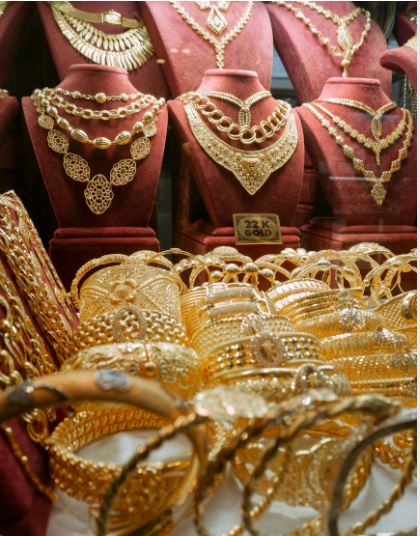
The strengthening of the U.S. dollar reduced the appeal of precious metals by making gold and silver more expensive for holders of other currencies. At the same time, expectations that the Federal Reserve may maintain higher interest rates for a longer period continued to pressure bullion markets, as elevated interest rates increase the opportunity cost of holding non-yielding assets such as gold and silver.
Market participants reacted to recent economic indicators and central bank commentary that reinforced expectations of a cautious monetary policy stance. Persistent inflationary pressures and resilient economic data have led investors to reassess the timing and pace of potential interest rate adjustments, contributing to increased volatility across commodity markets.
Gold prices retreated sharply from recent highs, while silver also registered significant losses as investors shifted toward the U.S. dollar and other interest-bearing assets. The decline in precious metals reflected broader market concerns regarding the future direction of monetary policy and its implications for global financial markets.
Analysts noted that precious metal prices are likely to remain sensitive to upcoming economic data releases, inflation trends, employment figures, and future statements from Federal Reserve officials. These developments are expected to play a key role in shaping investor expectations and determining the near-term outlook for gold and silver markets.
Despite the recent decline, market observers continue to view precious metals as important portfolio diversification assets and traditional safe-haven investments during periods of economic uncertainty. However, their short-term performance is expected to remain closely linked to movements in the U.S. dollar, interest rate expectations, and evolving macroeconomic conditions.
13, Jul 2026
Markets Open Lower as Brent Crude Nears Dollar 80 Amid Escalating West Asia Crisis
July 13: Global financial markets opened lower today as investors responded to escalating geopolitical tensions in West Asia, driving Brent crude oil prices closer to the $80 per barrel mark and increasing concerns about the outlook for global economic stability.

The renewed uncertainty has prompted a cautious approach across equity markets, with investors reducing exposure to risk-sensitive assets amid fears that the evolving situation could disrupt global energy supplies and international trade. Market participants are closely monitoring developments, particularly any potential impact on key oil production and transportation routes that play a vital role in the global energy market.
Brent crude oil extended its gains during early trading, reflecting concerns that further escalation in the region could tighten global oil supplies and place upward pressure on fuel prices. Rising crude prices have renewed worries about inflation, as higher energy costs can increase transportation, manufacturing, and consumer expenses, potentially affecting economic growth and monetary policy decisions worldwide.
Major stock indices in several regions opened in negative territory as investor sentiment weakened. Sectors that are highly dependent on energy costs, including transportation, manufacturing, and consumer discretionary industries, experienced selling pressure. In contrast, energy-related companies and oil producers generally outperformed the broader market, benefiting from expectations of stronger crude oil prices.
Financial analysts noted that geopolitical uncertainty remains one of the primary drivers of market volatility. Investors are expected to continue assessing developments in West Asia alongside upcoming economic data and central bank signals to better understand the potential implications for inflation, interest rates, and global growth.
Market participants are expected to remain vigilant in the coming days, as any significant developments in the region could influence commodity prices, investor confidence, and financial market performance. Continued monitoring of geopolitical events and their impact on energy markets will remain critical in assessing the near-term outlook for the global economy.
11, Jul 2026
Debt Syndication: Bridging India’s MSME Credit Gap
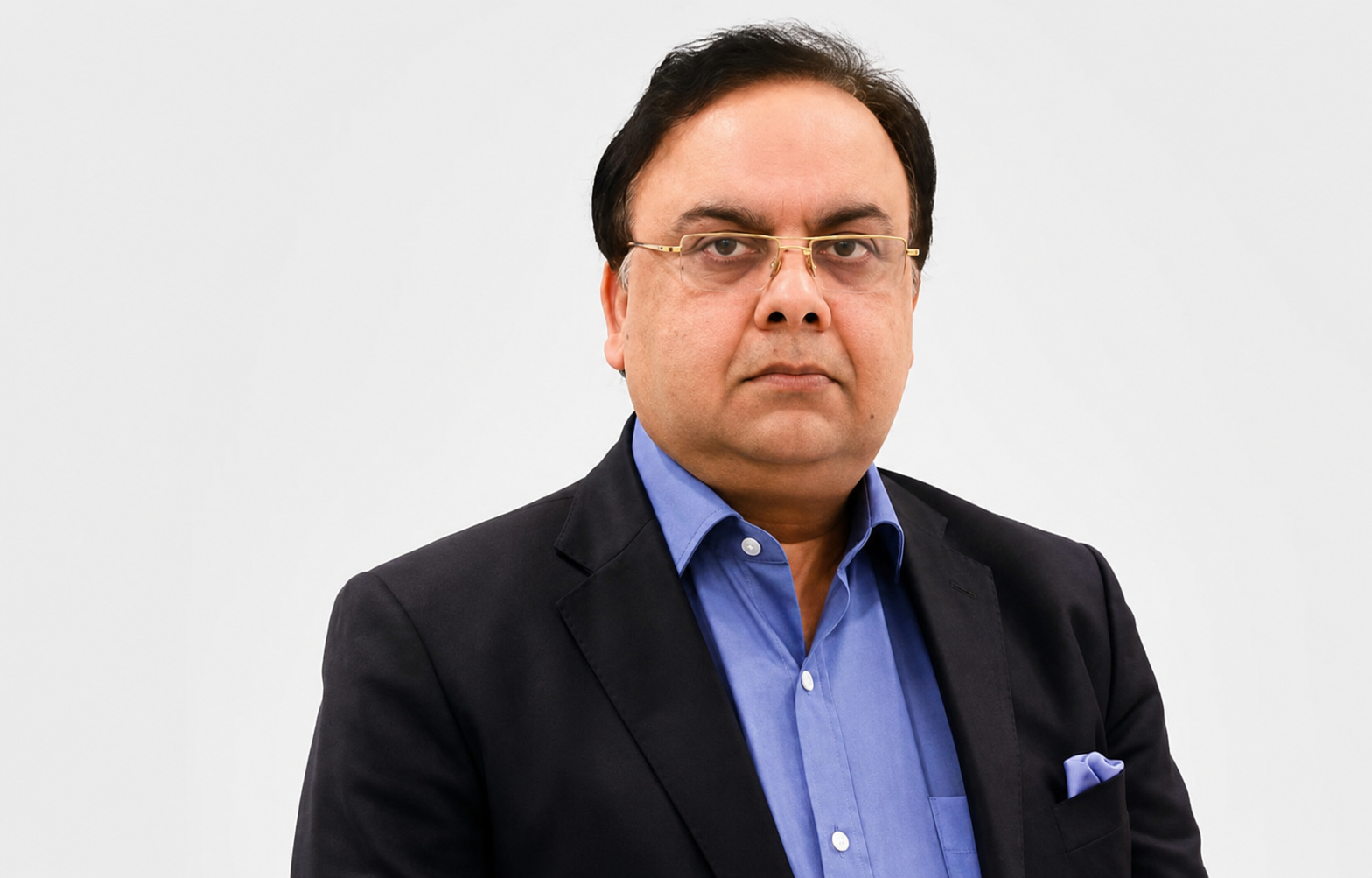
-Mr. Narinder Wadhwa, MD & CEO, SKI Capital Services Ltd.
With India’s growth increasingly driven by its MSME and mid-corporate ecosystem, access to timely and structured capital has become a critical enabler of scale.
With both private and public equity markets becoming more selective and valuation-sensitive, mobilising capital through debt markets is emerging as a highly relevant and practical funding option for growing businesses. Over the past few years, equity investors—both public market participants and private equity funds—have become more cautious due to global interest rate cycles, tighter liquidity and higher scrutiny on profitability and governance. In such an environment, structured debt solutions such as debt syndication are gaining prominence as a reliable pathway for companies to raise growth capital without diluting ownership. This makes the discussion around debt syndication particularly timely and relevant.
The opportunity becomes even clearer when viewed through the lens of India’s MSME ecosystem. India has more than C.3 crore MSMEs, which contribute nearly 30% to the country’s GDP, about 45% of manufacturing output and close to 40–4C% of exports, while also employing over 11 crore people. Despite their importance, access to formal credit remains severely constrained. Estimates from the RBI and IFC suggest that India’s MSME sector faces a credit gap of roughly $330 billion (around ₹27–30 lakh crore), reflecting the mismatch between financing demand and the availability of structured lending. In fact, only a small proportion of MSMEs are able to access formal institutional finance, leaving a large segment dependent on informal sources or suboptimal borrowing structures.
At the same time, the broader credit ecosystem in India is expanding rapidly. Bank credit to businesses and MSMEs has been rising steadily, with total MSME credit alone crossing around ₹40–45 lakh crore in recent years, indicating both strong demand and growing institutional participation. Parallelly, alternative credit channels such as private credit funds and AIFs are also expanding. India’s private credit market deployed about $12.4 billion across 1CC transactions in 2025, representing roughly 35% year-on-year growth, signalling a rapidly deepening ecosystem of non-bank capital providers. This growing pool of capital—from banks, NBFCs, AIFs and private credit funds—creates a powerful opportunity for structured financing solutions.
This is precisely where debt syndication becomes a strategic bridge between capital providers and businesses seeking growth financing. Instead of relying on a single lender, companies can raise larger funding pools through a consortium of lenders, allowing for better risk distribution, competitive pricing and repayment structures aligned with cash flows. For MSMEs and mid-sized corporates that are expanding capacity, entering new markets or funding capex, syndication provides access to institutional capital that may otherwise remain fragmented across the financial system.
As India aims to become a $5 trillion economy and eventually a developed economy by 2047, the ability to efficiently channel credit to productive enterprises will be critical. Structured debt markets and syndication platforms will play an increasingly important role in bridging the massive financing gap in the MSME sector. In that sense, the theme of debt syndication is not only relevant but also represents one of the most significant opportunities in India’s evolving credit landscape.
11, Jul 2026
India Sees Strong Bank Deposit Growth, Reflecting Positive Economic Sentiment
Mumbai, July 11: Rising bank deposits in India indicate stronger capital flows, improved savings, and growing confidence in the country’s economic outlook.
The increase in deposits is expected to strengthen banking sector liquidity and support credit growth during the first quarter. Experts believe the trend reflects positive sentiment among households and businesses.
Higher deposit mobilisation will provide banks with greater capacity to support lending and contribute to overall economic growth.
The banking sector is expected to maintain steady momentum, supported by stable financial conditions, rising credit demand, and improving investment activity.
11, Jul 2026
Piyush Goyal Calls for Stronger Productivity Ecosystem
New Delhi, July 11: Union Minister for Commerce and Industry Piyush Goyal chaired a meeting of the National Productivity Council (NPC) to review initiatives aimed at strengthening India’s productivity ecosystem and enhancing the country’s global competitiveness.
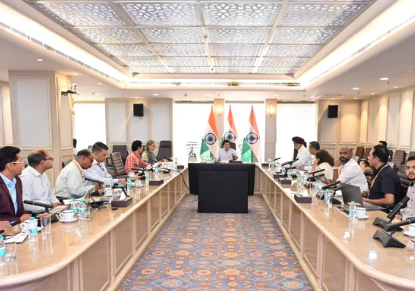
Pic Credit: https://x.com/PiyushGoyal
During the meeting, the Minister emphasized the need to foster a culture of productivity, innovation, and efficiency across industries, services, and government institutions. He called for greater adoption of modern technologies, digital transformation, skill development, and best management practices to improve operational efficiency and drive sustainable economic growth.
The discussions focused on expanding the reach of productivity initiatives, promoting capacity building among industries—particularly Micro, Small and Medium Enterprises (MSMEs)—and encouraging collaboration between government, academia, and industry to enhance productivity standards.
Goyal underscored the importance of productivity as a key driver of economic development, employment generation, and global competitiveness. He urged the National Productivity Council to intensify awareness programmes, training, consultancy services, and research initiatives that help businesses improve quality, reduce costs, and increase efficiency.
The meeting also reviewed the Council’s ongoing programmes and explored strategies to strengthen institutional support for productivity enhancement in line with the government’s vision of building a globally competitive and self-reliant economy.
The National Productivity Council continues to play a pivotal role in promoting productivity-led growth by providing training, consultancy, and capacity-building support across various sectors of the economy.
11, Jul 2026
India, New Zealand Strengthen Trade, Investment Ties
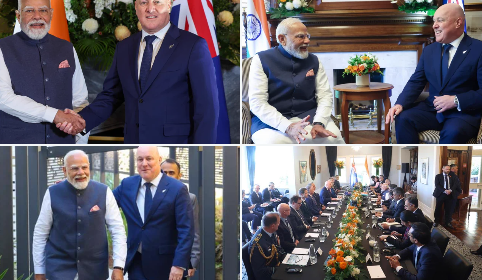
Pic Credit: https://x.com/PMOIndia
New Delhi, July 11: Prime Minister Narendra Modi has invited New Zealand businesses and investors to expand their presence in India, highlighting the country’s vast opportunities across key sectors including manufacturing, infrastructure, renewable energy, technology, agriculture, food processing, innovation, and the digital economy.
The call came as India and New Zealand reaffirmed their commitment to strengthening bilateral economic relations by accelerating the implementation of the proposed Free Trade Agreement (FTA). The two countries agreed to fast-track negotiations and deepen cooperation to enhance trade in goods and services, promote investments, and facilitate greater economic engagement.
The leaders emphasized that a comprehensive and balanced FTA would unlock new opportunities for businesses in both countries by improving market access, reducing trade barriers, and fostering stronger collaboration across strategic sectors. The agreement is also expected to boost exports, create employment opportunities, and strengthen resilient supply chains.
Prime Minister Modi underscored India’s emergence as one of the world’s fastest-growing major economies and encouraged New Zealand companies to take advantage of the country’s investor-friendly policies, expanding infrastructure, and robust manufacturing ecosystem. He highlighted the government’s commitment to ease of doing business and its focus on innovation-driven growth.
Both sides also agreed to strengthen cooperation in agriculture, dairy, education, tourism, clean energy, digital technologies, and skill development, while encouraging greater collaboration between businesses, startups, and research institutions.
The renewed commitment to advancing the FTA reflects the shared vision of India and New Zealand to elevate their economic partnership, expand bilateral trade, and create new avenues for sustainable growth and investment. Officials from both countries are expected to continue discussions to expedite the agreement and deliver tangible benefits to businesses and consumers alike.
The development marks another significant step in deepening India–New Zealand strategic and economic ties, with both nations expressing confidence that enhanced trade and investment cooperation will contribute to long-term prosperity and mutual growth.


