


10, Jul 2026
Nidec Advances Global Transformation with Enhanced Operating Model and Leadership Appointments
St. Louis, Mo. – July 10 – Nidec, a global leader in electric motors, drives, and controls, announced the next phase of its global transformation with the introduction of an enhanced operating model and leadership structure designed to accelerate decision-making, increase organizational agility, and better serve customers worldwide.
Nidec’s business units, group companies, and affiliates will be brought into closer alignment through an integrated enterprise framework. By connecting Corporate Headquarters, Regional Headquarters, and business operations through a common operating approach, Nidec is strengthening coordination across the enterprise while enabling business units to remain focused on customers, innovation, and growth.
Building on Nidec’s global scale and technical expertise, the new operating model demonstrates Nidec’s continued commitment to strengthening its operating foundation through enhanced governance, clear accountability, and disciplined execution. These enhancements position Nidec to respond more quickly to customer needs, capitalize on emerging market opportunities, and advance its long-term strategy.
“As Nidec continues its transformation, we are evolving the way we operate to better support our customers and create long-term value for stakeholders,” said Mitsuya Kishida, Representative Director, President and Chief Executive Officer of Nidec. “The actions we have taken to strengthen governance are an important foundation for our future. This new model builds on that progress and underlines our commitment to building a company defined by integrity, accountability, and operational excellence.”
Carla Otto Appointed to Lead Regional Strategy
As part of the new operating model, Nidec announced the appointment of Carla Otto as President of Nidec Americas Holding Corporation (NAHC) and Chair of Nidec Europe BV (NEUN).
Carla will lead Nidec’s Regional Headquarters strategy across the Americas and Europe. She will work closely with business unit leaders and corporate functions to strengthen regional collaboration, establish common ways of working, and provide enterprise support that enables business units to execute their strategies effectively.
“Carla is a highly respected leader with deep experience driving performance, leading complex organizations, and building strong teams,” said Michael Briggs, Chairman, Motion & Energy and Chief Executive Officer, Appliance Automotive Division. “Her leadership will be instrumental in strengthening regional governance, expanding enterprise capabilities, and accelerating execution across our organization.”
“Nidec has an extraordinary opportunity to leverage its technical expertise and talented teams to deliver even greater value for customers and stakeholders,” said Carla Otto. “I’m excited to help bring our businesses and regions closer together, strengthen collaboration, and provide the support that enables our business units to focus on what they do best: serving customers, driving innovation, and delivering results.”
As global demand continues to increase across markets driven by electrification, automation, digitalization, and energy efficiency, Nidec remains focused on investing in its people, capabilities, and operating model to deliver innovative solutions and exceptional customer support worldwide. These enhancements further strengthen Nidec’s ability to leverage its global capabilities and technical expertise to deliver long-term value for customers, employees, and shareholders.
- 0
- By Neel Achary

10, Jul 2026
Shri Nitin Gadkari Inaugurates Prawaas 5.0, Reinforcing India’s Vision for Safe, Smart & Sustainable Passenger Mobility
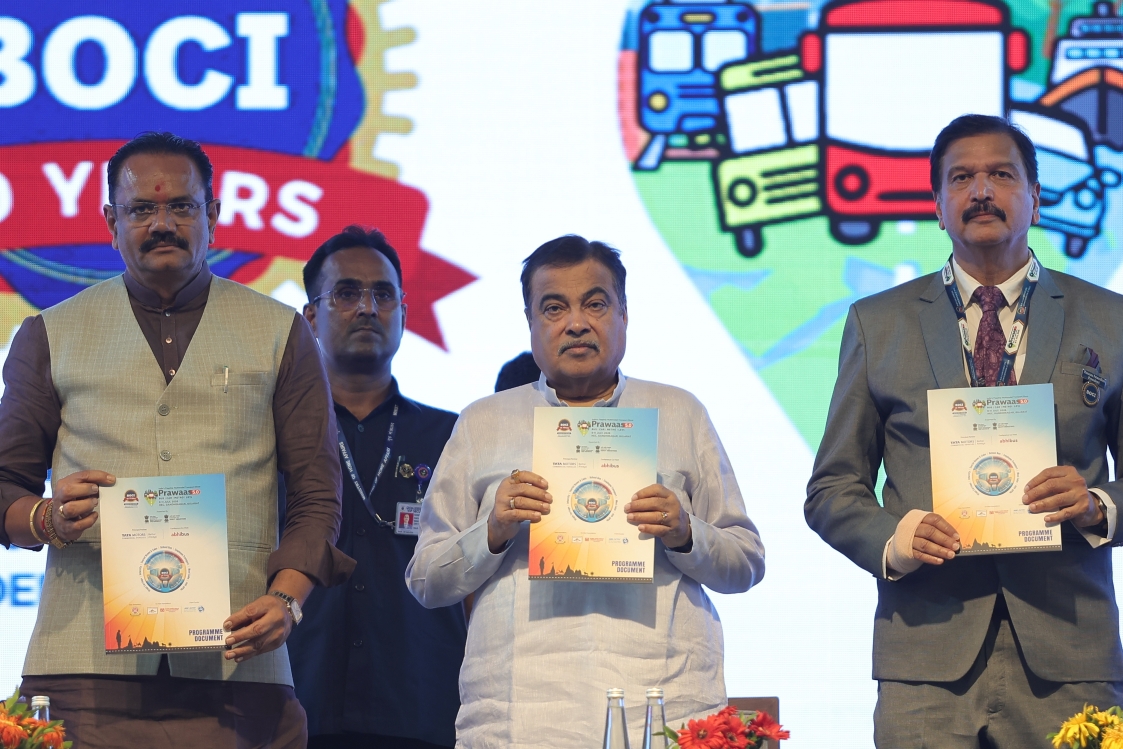
Mumbai / Gandhinagar, July 10: Prawaas 5.0, India’s Biggest Show on Public Transport, was officially inaugurated today by Shri Nitin Gadkari, Hon’ble Minister of Road Transport & Highways, Government of India, at the Helipad Exhibition Centre, Gandhinagar. Organised under the theme “Towards Safe, Smart & Sustainable Passenger Mobility,” the event is aligned with the larger vision of “Steering the Nation Towards Viksit Bharat” by bringing together policymakers, industry leaders and transport stakeholders to accelerate the transformation of India’s passenger transport sector.
The inaugural ceremony was graced by Shri Arjun Singh, Hon’ble Minister for Transport & Labour, Government of West Bengal, Dr. Shankar Ghosh, Hon’ble Minister for Tourism & Parliamentary Affairs, Government of West Bengal, Shri Pradeep Batra, Hon’ble Transport Minister, Government of Uttarakhand, Shri Kantilal Amrutiya, Hon’ble Minister of State, Labour, Skill Development & Employment, Government of Gujarat; Smt. Darshnaben Vaghela, Hon’ble Minister of State for Urban Development and Urban Housing, Government of Gujarat.
The occasion also witnessed the presence of Shri Anand S, Vice President & Business Head – CV Passenger, Tata Motors Ltd., Shri SS Gill, Chief Commercial Officer, VE Commercial Vehicles Ltd. (VECV), Shri Manoj Agarwala, Chief Business Officer, redBus, Shri Aloke Bajpai, Group CEO, ixigo, Shri Jagdeo Singh Khalsa, Chairman, BOCI, Shri Prasanna Patwardhan, President, BOCI, Shri Meghajibhai Khetani, Chairman, Akhil Gujarat Pravasi Vaahan Sanchalak Trust, Shri Lalitkumar Sukhwani, President, Akhil Gujarat Pravasi Vaahan Sanchalak Trust, Ms. Jalpa Jain, Spokesperson, Akhil Gujarat Pravasi Vaahan Sanchalak Trust, Shri Prakashbhai Patel, President, Gujarat Tourist Vehicle Operators Association, Shri Amit Shah, President, Gujarat Luxury Cab Owner’s Association (GLCOA), Shri Siddiq Gandhi, Jt. Treasurer, BOCI, Shri Allah Baksh Afzal, National VP, BOCI, Shri Dharmaraj D R, Gen. Secretary, BOCI, Shri Harsh Kotak, Treasurer, BOCI, Shri Jagdish Patankar, Event Curator, Prawaas 5.0, Executive Chairman, MM Activ, along with senior government officials, industry leaders, and more than 10,000 transport operators from across the country.
Organized by BOCI, hosted by the Akhil Gujarat Pravasi Vahan Sanchalak Mahamandal, co-hosted by the Gujarat Luxury Cab Owners Association and the Gujarat Tourist Vehicles Operators Association, and curated by MM Activ Sci-Tech Communications Pvt. Ltd., Prawaas 5.0 has evolved into India’s premier business and knowledge platform dedicated to the passenger transport industry. The event creates a unique convergence of government, transport operators, manufacturers, technology providers, entrepreneurs, investors and mobility innovators to discuss, demonstrate and drive the future of public transport.
A key highlight of Prawaas 5.0 is India’s Largest Expo Showcasing the Future of Public Transport, Technologies & Services, featuring the latest innovations from OEMs, Components, Aggregators, Systems & Accessories, EVs, Energy Storage & Charging, Smart Mobility & Fleet Management, Tech & Digital Solutions, Alternative Fuels & Lubricants, and Start-ups & Innovation. The exhibition provides a comprehensive platform for businesses to showcase cutting-edge products, emerging technologies and integrated mobility solutions that are redefining passenger transport.
Prawaas 5.0 is also recognised as one of the country’s most preferred platforms for new product launches and technology unveilings, with leading automotive manufacturers and mobility companies choosing the event to introduce next-generation buses, intelligent transport solutions, digital platforms, electric mobility innovations and advanced fleet technologies. The event provides a strategic opportunity for companies to engage directly with transport operators, policymakers and business decision-makers from across India.
Beyond the exhibition, Prawaas 5.0 will host an extensive programme of conferences, leadership addresses, policy dialogues, technical sessions, panel discussions and business networking initiatives, bringing together experts from government, industry and academia to deliberate on the future of passenger mobility. The event will also celebrate excellence across the sector through the Bharat Prawaas Awards, recognising outstanding contributions and innovation within the passenger transport industry.
As India moves towards a future of safer, smarter and more sustainable mobility, Prawaas 5.0 stands as a catalyst for collaboration, innovation and policy dialogue. By bringing together the complete passenger transport ecosystem under one roof, the event continues to strengthen partnerships, encourage knowledge exchange and create new opportunities that will help shape the next chapter of India’s public transport journey.
10, Jul 2026
Westerlay Orchids Expands Farm-Direct Access Through Box of Orchids Online Ordering
Premium Phalaenopsis orchids arrive fresh from the farm, making it easy for florists, event planners, venues, interior designers, and other wholesale buyers to order online
Carpinteria, Calif. – (July 10th 2026): Westerlay Orchids, a third-generation, family-owned company based in Carpinteria, California, is expanding farm-direct access to premium Phalaenopsis orchids through its Box of Orchids online ordering program. Designed for florists, event planners, venues, interior designers, and other wholesale buyers, the program offers a convenient way to order premium orchids shipped fresh from the farm directly to a home, business, or event location.
“The Box of Orchids program was created to make ordering premium orchids simple, reliable, and convenient for our customers,” said Toine Overgaag, Owner and President of Westerlay Orchids. “By shipping our orchids in bud form, we’re able to help ensure the quality, longevity, and presentation our customers have come to expect from Westerlay.”
Most orders arrive within two to three days. Customers simply unpack the orchids, remove the protective sleeves, and allow the buds to naturally open. For the best presentation, Westerlay recommends scheduling delivery 10 to 14 days before an event to allow the orchids to reach peak bloom.
By overseeing every stage of the growing process, from propagation through the finished plant, Westerlay maintains exceptional consistency and quality. This hands-on approach enables Westerlay to consistently provide premium orchids while maintaining the high standards that have defined the company for generations.
Westerlay delivers to customers throughout California, Arizona, Nevada, Utah (Salt Lake City), New Mexico, Idaho, Oregon, Colorado and Texas. Each year, the company distributes more than four million orchids directly to customers, as well as to local and national supermarket chains, florists, and designers.
A pioneer in environmental stewardship and sustainable growing practices, Westerlay Orchids is also deeply committed to giving back through ongoing support of local schools, nonprofit organizations, and community initiatives.
10, Jul 2026
STARLUX Airlines and Pantone Announce New Standard for Metallic Aircraft Liveries with AIRSORAYAMA Silver and Gold
Custom finishes bring Hajime Sorayama’s liquid-metal aesthetic to STARLUX’s A350-1000, redefining the aesthetics of aviation
Jul 10, 2026 — Two new colors have emerged from the STARLUX AIRSORAYAMA project, with Pantone translating acclaimed Japanese artist Hajime Sorayama’s signature metallic aesthetic into bespoke aviation colors. Developed in a collaboration between STARLUX Airlines and global color authority Pantone, these colors serve as the defining element of the STARLUX AIRSORAYAMA aircraft, a three-year initiative that required solving technical problems never before confronted at this scale.
On the AIRSORAYAMA aircrafts, Sorayama’s iconic metallic “silver” and “gold” aesthetic are translated to precision-engineered shades designed for consistent reproduction. The result, visible at scale on STARLUX’s Airbus A350-1000, is a fluid, liquid-metal effect that shifts in depth and tone depending on viewing angle and lighting conditions, transforming the aircraft fuselage into a striking visual statement.
“This time we aren’t just tuning color, we are tuning light.” said Laurie Pressman, Vice President of Pantone Color Institute™. “Through specialized formulation, all visible shimmer particles were removed to achieve an almost liquid smoothness. They embody future luxury—not the ostentation of traditional gold and silver, but a quiet confidence: precise, elegant, and technologically refined. ”
The project united STARLUX, Airbus, and German premium coating specialist Mankiewicz around a fundamental challenge: Sorayama’s signature mirror-like metallic finishes could not be used on the Airbus A350-1000 due to aviation safety, structural, and lightning-protection requirements. A new technical solution needed to be developed.
The solution was a family of high-concentration mica-based pigments capable of producing reflective metallic luster while meeting the rigorous standards of commercial aviation. After extensive testing and validation, the formulation underwent more than 10 iterative adjustments before receiving final approval from Sorayama himself. This process yielded the signature finishes of the AIRSORAYAMA Silver and Gold aircrafts.
With the formula approved, engineers implemented a precision multi-layer coating process to apply the colors at aircraft scale, balancing visual performance with engineering requirements. It took a team of 16 specialists over 20 days to complete the livery.
The STARLUX AIRSORAYAMA livery marks a new milestone in commercial aviation—establishing that color science, artistic collaboration, and aerospace engineering can be integrated at the highest level of craft.
“STARLUX AIRSORAYAMA | PANTONE – Colors That Capture Light” documentary is available here: https://youtu.be/X9vWlWHSF90
9, Jul 2026
JobElephant CEO Named 2026 Top Tech Nominee
San Diego Program Honors Michael Ang Among Region’s Most Innovative IT Leaders
SAN DIEGO, Calif. (July 9, 2026) – Michael Ang, founder and CEO of leading recruitment advertising and technology company JobElephant, has been named a qualified nominee for the 2026 San Diego Top Tech Awards. The annual program recognizes the most outstanding information technology leaders in the San Diego region and will hold its 19th annual awards ceremony on Sept. 17, 2026, at Snapdragon Stadium.
The San Diego Top Tech Awards, presented by Cox Business, celebrates the region’s most innovative technology leaders who shape industries through forward-thinking solutions. Michael Ang’s selection as a Qualified Nominee recognizes his 25-year career transforming how organizations find talent, growing JobElephant from a garage startup into a nationally recognized recruitment advertising technology company that processes more than 93,000 job advertisements monthly for higher education institutions, nonprofits, healthcare organizations, and more across the United States and internationally.
“San Diego has always been home base for us, so being recognized here means a great deal,” said Michael Ang, CEO and Founder, JobElephant. “We built Horton® and JobStats because HR professionals were spending too much time guessing where to post jobs and too little time understanding whether those ads were actually working. Our goal has always been to answer that question with real data.”
Under Michael Ang’s leadership, JobElephant grew from processing 1,500 job ad placements monthly in 2006 to more than 93,000 today, a 6,100% increase in volume. That growth follows a consistent pattern of technology innovation, including the 2018 launch of Horton® with machine learning capabilities, the 2024 integration of API technology connecting JobElephant’s tools directly with applicant tracking systems and job boards, and the 2025 introduction of JobStats, powered by Microsoft Power BI.
“Twenty-five years in, and the problems HR professionals face are still evolving, which means we have to evolve with them,” said Michael Ang, CEO and Founder, JobElephant. “The jump from 1,500 job placements a month to more than 93,000 did not happen because we stood still. It happened because we kept asking what comes next and then built the tools to answer that question.”
The honorees will be announced at the 2026 Top Tech Awards ceremony taking place from 4:30 p.m. to 7:30 p.m. at Snapdragon Stadium in San Diego.
The 2026 Top Tech Awards nomination adds to a growing list of recognitions for JobElephant this year. In March 2026, the company earned finalist status in two categories of the international Digital Job Advertising Excellence Awards, including Excellence in Client Success and Support and Innovation in Job Advertising. JobElephant also earned nominations in four categories of the 2026 MarTech Breakthrough Awards, including Overall AdTech Company of the Year, AdTech Innovation Award, AI-Powered Ad Targeting Solution of the Year, and Predictive Analytics Solution of the Year.
9, Jul 2026
757 Million UPI Payments a Day, and Not One of Them Builds Wealth
In June 2026, India processed over 22 billion UPI transactions, worth more than Rs 28 lakh crore, averaging 757 million payments a day. The money moves instantly. A notification arrives. And then it is gone.
Indians are already buying gold through UPI, but not automatically
Evidence suggests Indians want something more from their digital payments. Data from the World Gold Council shows that digital gold purchases made via UPI nearly tripled through 2025, with monthly transaction values climbing from Rs 8 billion in January to Rs 21 billion by December. Over the course of the year, Indians purchased an estimated 13.5 tonnes of gold through UPI-linked platforms.
This growth did not happen because of a government scheme or a bank campaign. It happened because a section of Indian consumers, largely younger and smartphone-first, started treating UPI as a tool for building assets, not just clearing bills. They were opening apps, choosing an amount, and buying digital gold as a separate, conscious step alongside their regular payments.
The case for removing that extra step
Platforms like GoSats are built around a different model. Instead of asking users to make a separate decision to save, the platform credits Bitcoin or 24-karat digital gold directly to a user’s wallet with every eligible card transaction or bill payment. The accumulation happens in the background, as a function of spending that was already going to happen.
The practical difference is measurable. Take a user spending Rs 15,000 a month on groceries, subscriptions, and utility bills. At up to 3% cashback in Bitcoin or digital gold on eligible transactions, that adds up to a small but real asset position over twelve months, built entirely from spending that required no separate savings decision.
For users who prefer gold specifically, the platform offers a Gold SIP feature that channels rewards from everyday spending into a recurring digital gold position. Gold earned can be held, redeemed as physical gold, or converted into gold-backed instruments through the platform’s Augmont partnership. Unlike most loyalty programmes where points come with an expiry date, rewards on the platform carry lifetime validity.
Why the timing matters
The context around digital gold in India has shifted in the past two years. The government stopped issuing new Sovereign Gold Bond tranches in 2024, removing what had been one of the most trusted vehicles for retail gold investment. That demand has not disappeared. Much of it has moved to digital gold platforms. UPI-linked gold purchases tripling in 2025 reflects that shift directly.
Gold prices rose 183% between January 2021 and January 2026, a compound annual growth rate of around 23%. Investors who started building a position early, even in small amounts, would have seen that appreciation reflected in their holdings. For those starting now, the case for accumulating steadily rather than waiting for the right moment remains the same.
India’s UPI infrastructure now accounts for nearly half of the world’s real-time payment transactions. Every one of those transactions moves money out of someone’s account. A small but growing number of platforms are now built around the idea that at least some of that money should find its way back, in a form that holds value beyond the moment the payment clears.
9, Jul 2026
STJ GROUP Chandigarh Tricity’s Most Trusted Developer Developing Icons Across Tricity The Pinnacle | The Fortune | Genesis Heights | Mohali Citi Centre | STJ FORUM & More
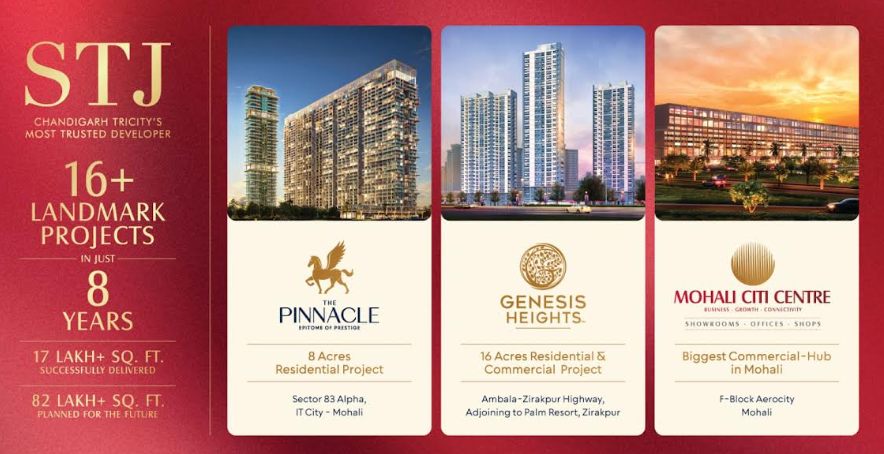
STJ Group, under the visionary leadership of Mr. Anil Goyal, has established itself as one of Chandigarh Tricity’s most trusted real estate developers, delivering thoughtfully planned residential and commercial destinations that redefine modern living and business. Guided by a commitment to quality, transparency, innovation, and timely delivery, the group has developed 16+ landmark projects in just 8 years, successfully delivering 17 lakh+ sq. ft. while 82 lakh+ sq. ft. is planned for the future. With every development, Mr. Goyal’s vision continues to shape thriving communities and iconic destinations that create lasting value for homeowners, investors, businesses, and the region as a whole.
The Pinnacle By STJ
Among its flagship developments, The Pinnacle by STJ stands as the epitome of luxury living. Strategically located in Mohali’s thriving IT City, this iconic residential address offers exquisitely designed 3, 4 & 5 BHK residences, world-class amenities, contemporary architecture, and seamless connectivity. Crafted for those who seek exclusivity and sophistication, The Pinnacle delivers an elevated lifestyle that blends comfort, elegance, and long-term value.
Genesis Heights By STJ
Further strengthening STJ’s residential portfolio, Genesis Heights by STJ is thoughtfully designed to offer modern homes in a well-connected and rapidly developing neighbourhood. Combining smart planning, premium specifications, landscaped open spaces, and lifestyle-focused amenities, Genesis Heights creates an ideal environment for families seeking a perfect balance of convenience, comfort, and community living.
Looking ahead, STJ is set to introduce two landmark developments that will further redefine Tricity’s real estate landscape. Forum by STJ is envisioned as a vibrant mixed-use destination where shopping, dining, entertainment, and business come together under one roof, while The Fortune by STJ will offer premium residences designed around contemporary architecture, exceptional connectivity, and refined living. Together, these upcoming projects reflect STJ’s continued commitment to creating destinations that inspire growth, enhance lifestyles, and build lasting value for generations to come.
Contact Information:
STJ ESTATES LIMITED
Corporate Office : 6th Floor , MCC2 , SAS NAGAR , PUNJAB , INDIA , 140306
Email ID: info@stjgroups.com
Mobile Number: 7230972309
9, Jul 2026
Choice International and NH Investment & Securities Establish Strategic Partnership Through INR 9000 Million Investment in Choice Equity Broking
Commenting on the development, Mr. Arun Poddar, CEO & Executive Director, Choice International Limited, said: “This investment marks a significant milestone in our growth journey and reflects the confidence of a leading global financial institution in our vision, business model and long-term potential.
Commenting on the partnership, Mr. Shin Jae Wook, President & CEO of NH Investment & Securities, said: “This strategic investment marks an important milestone in further strengthening NH Investment & Securities‘ global business portfolio. Through our partnership with Choice Group, we will combine the strengths of both organizations to deliver differentiated financial services and build sustainable long-term growth engines for our global business.”
9, Jul 2026
Industry Leaders Discuss the Future of India’s Private Credit Market at IVCA Private Credit Summit 2026
Mumbai, July 9: At Indian Venture and Alternate Capital Association Private Credit Summit 2026, a panel discussion titled “Private Credit 2035: Scaling the Next Trillion in India’s Financing Stack” featured industry experts discussing how private credit can evolve into a core pillar of India’s financing architecture over the next decade.
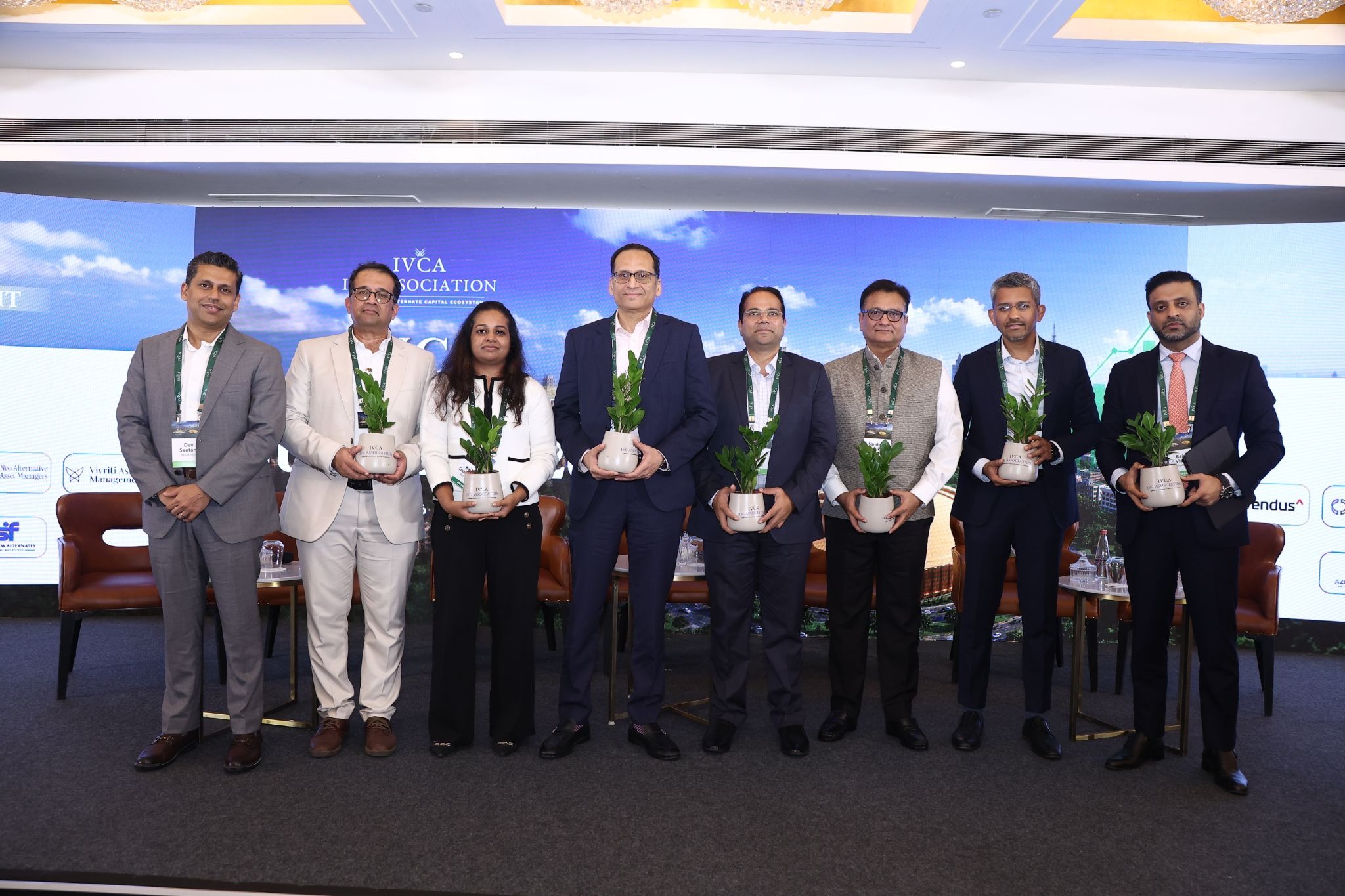
Rahul Shah, Partner, EvolutionX Debt Capital, and Sandeep Adukia, Senior Managing Partner, Ascertis Credit, joined the panel, along with Karthik Athreya, Managing Director, Sundaram Alternates; Piyush Gupta, CEO, Investec Alternatives; and Vineet Sukumar, Founder and Managing Director, Vivriti Group. The panel discussion was moderated by Rajeev Vidhani, Partner, Khaitan & Co.
The session focused on the growth trajectory of India’s private credit market over the next 10 years, as well as the evolution of alternative investment funds , private credit funds, co-lending models, securitisation platforms, and technology-enabled credit markets. Panellists also examined how regulatory frameworks, underwriting standards, and governance practices could play a part in supporting sustainable growth in this segment. Their perspectives touched upon India’s potential to emerge as a leading destination for domestic and global private credit capital by 2035.
“Private credit in India has evolved from an alternative financing solution into an integral part of the country’s capital ecosystem. Today, banks, NBFCs and private credit funds coexist in an increasingly mature market, supported by stronger regulation and broader investor participation. As this momentum continues, private credit is set to play a far more significant role in financing India’s next phase of growth,” said Karthik Athreya, Managing Director, Sundaram Alternates.
He highlighted how India’s private credit ecosystem is steadily evolving into a more mature and integral component of the country’s financing landscape.
“Private credit is playing an increasingly important role in supporting new-age and technology-led businesses whose financing needs are often not addressed through traditional lending channels. For these businesses, underwriting has to go beyond conventional collateral and focus on the long-term strength of the business, its ability to attract future equity capital, and its resilience across market cycles. As India’s innovation economy grows, private credit will continue to complement equity capital by providing flexible financing solutions,” said Rahul Shah, Partner, EvolutionX Debt Capital.
Drawing attention to the role of private credit in addressing the evolving financing needs of Indian businesses, he highlighted the structural trends shaping its next phase of growth.
“India has a deep and growing base of mid-market businesses that require flexible financing solutions to support their next phase of growth. As the private credit market expands, disciplined underwriting, strong cash-flow assessment and continuous portfolio monitoring will remain critical to protecting investor capital. We are also seeing banks increasingly viewing private credit as a complementary source of capital, enabling fast growing businesses to access financing structures that go beyond conventional lending,” said Sandeep Adukia, Senior Managing Partner, Ascertis Credit.
He emphasised the importance of strong underwriting, innovative financing, and a supportive regulatory environment in strengthening investor confidence in India’s private credit market.
IVCA Private Credit Summit 2026, themed “Building India’s Growth Engine through Private Credit”, convened policymakers, regulators, institutional investors, fund managers, legal experts, and industry leaders to deliberate on the developments that could strengthen the private credit ecosystem and support India’s long-term economic growth.
The IVCA Private Credit Summit is an industry platform that brings together leading domestic and global investors, private credit funds, banks, NBFCs, Asset Management Companies , Asset Reconstruction Companies , family offices, wealth managers, institutional investors, policymakers, regulators and industry practitioners to deliberate on the evolving landscape of private credit in India. The 2026 edition of the Summit is supported by 360 ONE as the Platinum Partner; Avendus, Certus Capital, EAAA Alternatives, NEO Alternative Asset Managers and Vivriti AMC as Gold Partners; and Khaitan & Co. and Sundaram Alternates as Strategic Partners. Through thought-provoking discussions and cross-sector collaboration, the Summit aims to strengthen India’s alternative credit ecosystem, encourage innovation in financing solutions and support the country’s long-term capital formation.
9, Jul 2026
India’s Food Market to Hit USD 150 Billion by FY31
July 9: India’s food services industry is heading towards a major transformation, with the market expected to touch USD 150 billion by FY31, according to a latest report. The growth will be driven by changing lifestyles, increasing urban demand, higher spending on dining experiences, and the rapid expansion of online food platforms.
The report highlights that digital adoption is reshaping the way Indians order and experience food. The online segment of the industry is expected to grow steadily, with its share projected to reach 18 per cent by FY31, supported by food delivery apps, digital payments, and technology-based services.
From restaurants and cloud kitchens to food entrepreneurs and delivery networks, the sector is creating new opportunities across the country. Rising consumer expectations and innovation in food services are further helping businesses adapt to a fast-changing market.
With strong consumer demand and growing digital integration, India’s food services sector is set to play an important role in the country’s economic growth story while creating new avenues for investment and employment.


