


6, Jul 2026
India’s Vehicle Sales Surge in June, Marking Best-Ever Monthly Performance
New Delhi, July 6: India’s automobile retail sector recorded its strongest-ever performance for the month of June, with vehicle sales crossing 25.5 lakh units, marking a robust 21.83 per cent year-on-year growth, according to the latest industry data.

The impressive sales performance reflects sustained consumer demand, improved vehicle availability, favourable financing conditions, and rising economic confidence across both urban and rural markets. Growth was witnessed across multiple vehicle segments, including passenger vehicles, two-wheelers, commercial vehicles, and three-wheelers, highlighting the sector’s broad-based recovery.
Industry stakeholders attributed the record-breaking June performance to increased customer demand, a healthy supply chain, and continued infrastructure development, which have collectively strengthened the country’s automotive market.
The strong retail momentum is expected to provide a positive outlook for the coming months, with manufacturers and dealers anticipating continued demand supported by festive season purchases, expanding mobility needs, and improving market sentiment.
The latest figures underscore the resilience of India’s automobile industry and its significant contribution to the country’s manufacturing sector, employment generation, and overall economic growth.
Industry experts believe the record June sales reinforce India’s position as one of the world’s fastest-growing automobile markets and signal sustained momentum for the sector in the months ahead.
- 0
- By Neel Achary

6, Jul 2026
MTR & Vasu Dixit Bring Karnataka’s Love for Sambar to Life with a New Anthem
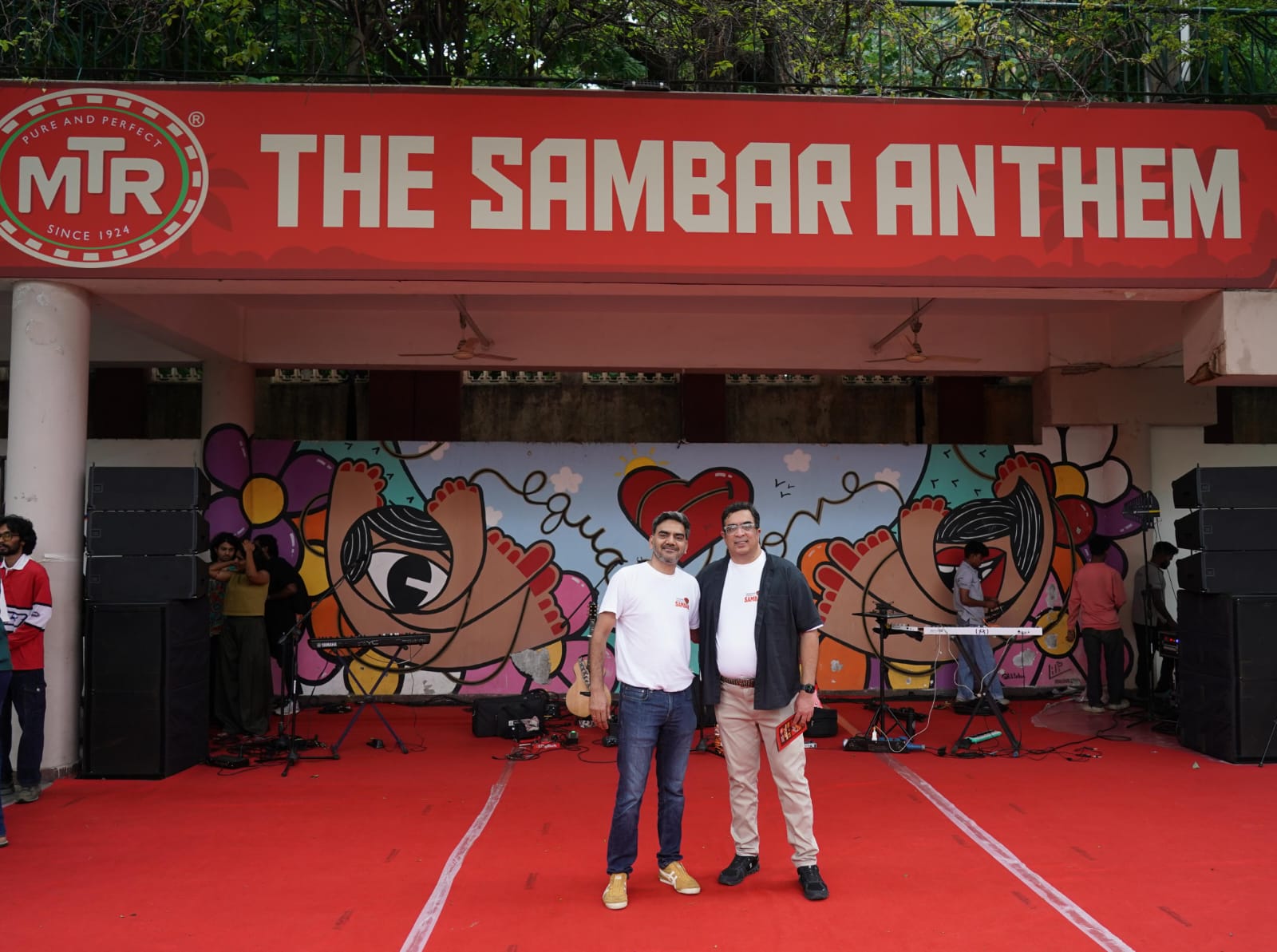
Bengaluru, July 06: MTR Foods, one of Karnataka’s most loved and trusted food brands, has launched the Sambar Anthem, a musical tribute celebrating the state’s deep-rooted love for Sambar. Created in collaboration with acclaimed musician Vasu Dixit, the anthem captures the flavours, traditions, stories and nostalgia that have made Sambar an inseparable part of everyday life across Karnataka.
Speaking about the initiative, Sunay Bhasin, CEO, MTR Foods, said “For generations, MTR has celebrated the authentic flavours that define Karnataka’s food culture, and Sambar remains one of its most beloved culinary icons. Through MTR Sambar Powder and our wider portfolio, we have had the privilege of being part of millions of meals and memories. When we set out to celebrate Karnataka’s love for Sambar, we wanted to do so through a voice that genuinely reflects the culture and spirit of the region. Vasu Dixit, with his deep roots in Karnataka and ability to bring local stories to life through music, was a natural choice for this collaboration. Together, we wanted to create something that brings to life how a simple dish can inspire stories, conversations and a sense of belonging.”Commenting on the collaboration, Vasu Dixit said, “As musicians, we are always looking for stories that bring people together. I don’t think I have come across many things in Karnataka that evoke as much pride, nostalgia and debate as Sambar. When I began working on the anthem, I wasn’t just thinking about Sambar as a dish alone. I was thinking about the sounds, rhythm, memories and emotions that surround it. Through this collaboration with MTR, a brand that has been part of Karnataka’s culinary culture for generations, we wanted to turn a shared cultural experience into something people could listen to, sing along with and celebrate together. I hope every listener finds a piece of their own home, family or favourite Sambar memory in the music.”
4, Jul 2026
Next-Generation Women Leaders from PHI Learning Join Indian Delegation at International Publishers Congress 2026
Pallavi Ghosh and Aditi Ghosh represent young India, women in publishing, and the future of academic publishing on a global platform
New Delhi / Kuala Lumpur, July 04: In a significant moment for Indian publishing, Ms. Pallavi Ghosh (27) and Ms. Aditi Ghosh (25) of PHI Learning Private Limited are participating in the 35th International Publishers Congress 2026 in Kuala Lumpur, Malaysia, as part of the Indian delegation.
Their participation marks an important generational milestone for one of India’s respected academic publishing houses. As two young women professionals represent PHI Learning at one of the publishing industry’s most prestigious global forums, they also reflect the changing face of Indian publishing—young, educated, globally aware, digitally skilled, and increasingly led by women.
At a time when India’s publishing industry is expanding its role in education, knowledge creation, digital learning, and international collaboration, the participation of Pallavi and Aditi sends a strong message about the future of the sector. It reflects the growing role of a new generation of publishing professionals who combine legacy with innovation and tradition with technology.

Pallavi Ghosh, Brand Strategist at PHI Learning, has been associated with the company for the past four years. She holds a BA in English and an MA in Contemporary Literature, Culture and Theory from King’s College London. At PHI Learning, she leads initiatives in branding, marketing, digital outreach, and strategic communications, helping strengthen the company’s engagement with readers, educators, institutions, and the wider publishing community.
With her academic background in literature and contemporary culture, combined with her expertise in branding and digital communication, Pallavi represents a new generation of publishing professionals who understand both the importance of quality content and the need for strong positioning, visibility, and outreach in today’s rapidly evolving knowledge economy.
Aditi Ghosh, Operations Coordinator at PHI Learning, has been associated with the company for the past two years. She holds a BA in Applied Psychology and an MA in Counselling Psychology from Amity University. In her current role, she supports operational management, workflow coordination, and organisational processes, helping strengthen the company’s internal systems and execution.
Aditi brings a people-centric and process-driven approach to publishing, reflecting the increasing importance of professional management, efficient coordination, and streamlined operations in modern publishing organisations.
Their participation also highlights the growing role of women in the publishing industry. While women have long contributed as editors, educators, authors, designers, and publishing professionals, the visibility of young women in leadership-oriented roles is becoming increasingly significant. Pallavi and Aditi’s presence at the International Publishers Congress reflects this positive shift and underscores the important role young women will play in shaping the next phase of Indian publishing.
Speaking on the occasion, Mrs. Sagarika Ghosh, Chairperson, PHI Learning Private Limited, said:
“It is a proud and emotional moment for PHI Learning to see Pallavi and Aditi represent the next generation of our organisation on an international platform. They bring fresh thinking, strong academic foundations, discipline, and commitment to the company. Indian publishing today needs young professionals who understand both the rich legacy of books and the evolving demands of the future. I am confident that Pallavi and Aditi will make meaningful contributions to PHI Learning and to the wider publishing ecosystem in the years ahead.”
PHI Learning carries forward a distinguished publishing legacy built over several decades in academic and professional education. The company has played an important role in making high-quality educational content accessible to students, teachers, researchers, and institutions across India. The late Shri Asoke K. Ghosh, former Chairman and Managing Director of PHI Learning and recipient of the IPA Champion Award, continues to be a guiding inspiration for the organisation.
At the same time, the participation of Pallavi and Aditi at the International Publishers Congress is not only a continuation of that legacy—it is also a reflection of the future. It demonstrates the confidence of a new generation that is ready to contribute to Indian publishing through fresh ideas, professional expertise, digital understanding, and global exposure.
As India continues to strengthen its position in the global knowledge economy, the presence of young publishing professionals like Pallavi Ghosh and Aditi Ghosh signals a promising future for the industry—one in which women, youth, innovation, and global engagement will play an increasingly important role.
4, Jul 2026
Cars24 becomes the first organisation in India to eliminate all bands, grades, and designations
Gurugram, July 4 : Cars24, India’s ai-native automotive ecosystem has today announced one of the biggest organisational changes in its history. Effective immediately, the company has eliminated traditional levels, grades and job titles across the organisation, replacing them with a new operating philosophy called Flatland. With the move, Cars24 becomes one of the few technology companies globally to dismantle conventional corporate hierarchy at scale.
Flatland goes far beyond removing titles. It is a complete redesign of how the company makes decisions, earns authority, evolves careers and gets work done. People are no longer defined by organisational rank, but by the problems they own and the outcomes they create. Every one of the company’s people now shares a single identity: Builder.
The change is rooted in a conviction that AI has rewritten the economics of organisations. For over a century, hierarchy solved one problem: information scarcity. The people at the top had the greatest context, so decisions travelled upward before coming back down. When intelligence, context and expertise become available to everyone, the value of an organisation shifts from distributing information to coordinating exceptional people solving exceptional problems together. Cars24 believes the companies shaping the AI era cannot keep running on models designed for the industrial one.
“Hierarchy was one of humanity’s greatest inventions,” said Vikram Chopra, Builder at Cars24. “It helped organisations scale when information was scarce. AI fundamentally changes that equation. Today, intelligence and context are increasingly available to everyone. The role of an organisation is no longer to move decisions up and down layers. It’s to help exceptional people solve exceptional problems together. Flatland is our attempt to build an organisation for that reality.”
“Every generation gets to question one assumption that previous generations took for granted,” he added. “Ours may be the assumption that companies need to be organised the way they have been for the last hundred years. We don’t claim to have the final answer. But we believe that question is now worth asking and worth building around.”
Under Flatland, leadership is a function of judgment, execution and customer impact rather than position. The best ideas no longer have to climb a hierarchy before they create value; whether an idea comes from a founder or a new joiner, it is evaluated on its merit.
This new centred design is already changing how the business operates. Over the past 18 months, Cars24 has rebuilt the way work gets done, resulting in a 50% year-on-year increase in revenue per employee in H2 FY26 while contributing nearly 300 basis points to EBITDA, without a proportional increase in operating costs. Today, the company operates across India, the UAE and Australia, serves more than 41 million monthly active users, and turned globally profitable this year.
Cars24 has redesigned its people systems from the ground up to remove hierarchy wherever it served only as administrative signalling. Bands and grades have been dissolved, and policies governing benefits, travel, reimbursements and IT assets are no longer linked to rank, they now rest on objective factors such as role requirements, compensation where appropriate, and universal employee benefits. New joiners no longer enter a grade or level; they join Cars24 as Builders.
Flatland does not remove accountability. Every employee still has clearly defined responsibilities, performance expectations and decision rights. What changes is the source of authority: it comes from ownership, not position. The transition has been rolled out in phases over the past several months, beginning with senior leadership before expanding across the organisation, with decision-making, feedback and recognition systems all redesigned to support the new model.
“We don’t believe removing titles automatically creates a great culture,” Chopra said. “Culture comes from behaviour. Flatland simply removes the shortcuts that let people mistake position for contribution. We want the person closest to the problem to feel empowered to solve it regardless of where they joined or how long they’ve been here.”
Over the past decade, Cars24 has evolved from a used-car marketplace into one of the world’s largest AI-native automotive ecosystems, spanning discovery, financing, servicing and ownership. The company believes that as AI reshapes industries, the organisations that endure will not simply adopt AI into existing structures, they will redesign themselves around it. Flatland is Cars24’s first step in building that future.
4, Jul 2026
Gold Posts First Weekly Gain Since May as Fed Rate Hike Concerns Ease
July 4: Gold prices recorded their first weekly gain since May, supported by easing concerns over additional US Federal Reserve rate hikes and improved investor sentiment in global markets.

The precious metal benefited from expectations that interest rates may remain steady in the near term, reducing pressure on non-yielding assets like gold. This shift in outlook encouraged renewed buying interest from investors seeking safe-haven assets amid ongoing global economic uncertainty.
Market participants noted that the softer tone on monetary tightening helped stabilize demand for gold, while fluctuations in the US dollar and bond yields also contributed to price movements during the week.
Analysts believe that gold may continue to attract support if expectations of prolonged high interest rates further diminish. However, they also caution that upcoming economic data and central bank signals will remain key drivers of price direction.
Overall, the weekly performance reflects improving sentiment in commodity markets and growing investor confidence in gold as a hedge against global financial uncertainty.
4, Jul 2026
India and Israel Unlock New Investment Opportunities with Bilateral Pact
July 4: India and Israel have reached a significant milestone in their economic relationship with the entry into force of a landmark bilateral investment agreement, paving the way for stronger investment flows, enhanced business collaboration, and greater economic cooperation between the two nations.
The agreement establishes a modern and transparent framework for promoting and protecting investments, providing greater confidence to businesses and investors seeking opportunities in both markets. By ensuring a stable and predictable investment environment, the pact is expected to encourage long-term capital flows and facilitate deeper commercial engagement across strategic sectors.
The implementation of the investment agreement is anticipated to unlock new opportunities in areas such as technology, innovation, manufacturing, agriculture, healthcare, renewable energy, cybersecurity, defence, and digital infrastructure. Businesses from both countries are expected to benefit from improved investment security, streamlined regulatory processes, and enhanced market access, fostering stronger cross-border partnerships.
India and Israel have steadily expanded their strategic relationship over the years, with economic ties emerging as a key pillar of bilateral cooperation. The new investment framework reflects the shared commitment of both governments to strengthening trade, promoting innovation-driven growth, and supporting sustainable economic development through increased private-sector participation.
Industry leaders believe the agreement will further boost investor confidence by reducing investment risks and creating a more predictable business environment. The pact is also expected to encourage joint ventures, technology transfers, research collaborations, and greater participation by startups and emerging enterprises, reinforcing the innovation ecosystems of both countries.
As global businesses continue to diversify investments and strengthen international partnerships, the agreement positions India and Israel to capitalize on new growth opportunities while expanding bilateral trade and investment. It also aligns with the broader objective of enhancing economic resilience and fostering mutually beneficial partnerships in an evolving global business landscape.
The coming into force of this landmark investment pact marks a new chapter in India–Israel economic relations, laying the foundation for stronger investment cooperation, sustained business growth, and a deeper strategic partnership in the years ahead.
4, Jul 2026
Nifty, Sensex Register Strong Weekly Gains Amid Easing Crude Oil Prices
India’s benchmark equity indices, the Nifty 50 and BSE Sensex, concluded the week on a strong note, extending their upward momentum as sustained correction in global crude oil prices significantly improved investor sentiment. The decline in crude prices eased concerns over inflationary pressures and India’s import bill, creating a favourable environment for equities and encouraging broad-based buying across sectors.
July 4: Throughout the week, market participants remained optimistic amid improving global cues, steady foreign institutional investment, and expectations of a stable domestic economic environment. Lower energy costs strengthened confidence in sectors that are sensitive to input prices, while investors continued to accumulate fundamentally strong stocks across large-cap and broader market segments.

The rally was broad-based, with information technology, pharmaceuticals, financial services, real estate, and select consumer-focused stocks emerging among the key contributors to the market’s gains. Mid-cap and small-cap indices also witnessed healthy buying interest, reflecting improved risk appetite and growing confidence among retail and institutional investors alike.
The sustained correction in crude oil prices is expected to provide multiple benefits to the Indian economy. Lower fuel and transportation costs can help ease inflationary pressures, improve corporate profit margins, reduce pressure on the country’s current account deficit, and support overall economic growth. These factors collectively strengthened investor confidence during the week and reinforced expectations of continued market stability.
Market participants also remained encouraged by resilient domestic economic fundamentals, healthy corporate balance sheets, and expectations of sustained policy support. While global uncertainties continue to warrant caution, the combination of easing commodity prices and steady domestic demand has provided a supportive backdrop for Indian equities.
Looking ahead, investors are expected to closely monitor upcoming corporate earnings, domestic macroeconomic indicators, global monetary policy developments, and movements in commodity prices for further market direction. Analysts believe that if crude oil prices remain stable and broader global conditions continue to improve, Indian equity markets are well-positioned to sustain their positive momentum in the coming weeks.
The week’s strong performance underscores the resilience of India’s capital markets and highlights growing investor confidence in the country’s long-term economic prospects despite an evolving global environment.
4, Jul 2026
Danfoss Innovator Award 2026 showcases the power of young engineering minds in solving real-world industrial and sustainability challenges
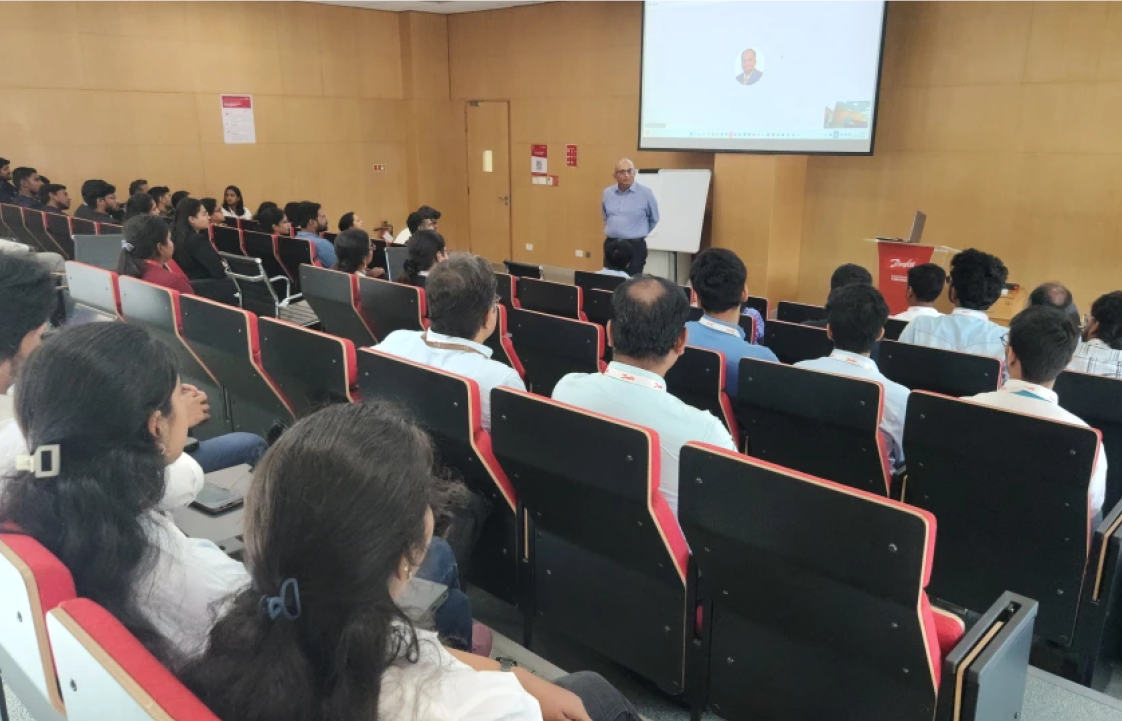
Chennai, July 04: Danfoss India, a global leader in engineering tech solutions for infrastructure, climate, and energy sectors, recently announced the winners of the Danfoss Innovator Award 2026, recognizing outstanding engineering innovations from students across leading institutions in the state. The annual initiative celebrates young engineering talent developing solutions to address real-world industrial challenges across key areas such as digitalization, decarbonization, energy efficiency, and sustainability.
The 2026 edition witnessed an overwhelming response with over 100 nominations received from engineering institutions. Following a rigorous screening process, nine teams were shortlisted for the final round, where their projects were evaluated by a panel of Danfoss experts for technical depth, scalability, and industry relevance. Team Crescendo from PSG College of Technology, Coimbatore emerged as the winner of the Danfoss Innovator Award 2026, demonstrating an innovative approach to solving complex engineering and sustainability challenges.
First runner-up position was awarded to Team Foresight from Vellore Institute of Technology, Vellore for their project “Robust RPM Detection Algorithm from Vibration Data.”
Second runner-up recognition went to Team SolarSync from Vellore Institute of Technology, Chennai for their project, “Digital Twin–Enabled Solar Forecasting and Energy Optimization System.”
About the launch, Mr. Ravichandran Purushothaman, President, Danfoss India Region, said, “India’s transition towards a sustainable and energy-efficient future will be driven by the ideas and innovations of its young engineering talent. The Danfoss Innovator Award provides a platform for students to apply advanced engineering, digital technologies and AI to solve real industrial challenges. This year’s winning teams showcased exceptional technical depth and innovative thinking, presenting solutions with strong potential for real-world application in areas such as predictive maintenance, digitalization and energy optimization. Through initiatives like this, we aim to strengthen industry–academia collaboration and nurture the next generation of innovators who will help accelerate decarbonization and sustainable growth.”
The Danfoss Innovator Award is part of Danfoss India’s broader university engagement efforts aimed at encouraging students to develop practical engineering solutions for industry and climate challenges. Over the years, the platform has brought together students from leading engineering institutions, enabling them to work on innovation-led projects aligned with emerging priorities such as energy efficiency, electrification, digital technologies and sustainable infrastructure.
A panel of experts from Danfoss India, evaluated the shortlisted projects, assessing them on parameters such as technical feasibility, scalability and real-world industrial relevance. The jury also provided constructive feedback to help participants further refine their ideas and strengthen their practical applicability.
Through initiatives such as the Innovator Award, Danfoss India continues to inspire young minds to push the boundaries of engineering innovation. By fostering strong industry–academia collaboration, the company aims to nurture the next generation of engineers and leaders who will drive sustainability and technological advancement.
4, Jul 2026
RVNL Successfully Completes Sitafalmandi–Lallaguda Chord Line Project, Strengthening Rail Connectivity in Hyderabad

New Delhi, July 04: Rail Vikas Nigam Limited (RVNL), through its Secunderabad Project Implementation Unit (PIU), has successfully completed the Sitafalmandi Lallaguda Chord Line Project, a key railway infrastructure initiative executed for Indian Railways to enhance operational efficiency and improve rail connectivity in the Hyderabad region. The project has been executed in connection with the upgradation of the Multi Modal Transport System (MMTS) Phase-II in the twin cities under the Hyderabad Division of South-Central Railway.
4, Jul 2026
CSM Technologies Becomes First Odisha-Born Tech Company Listed on BSE, NSE Mainboards
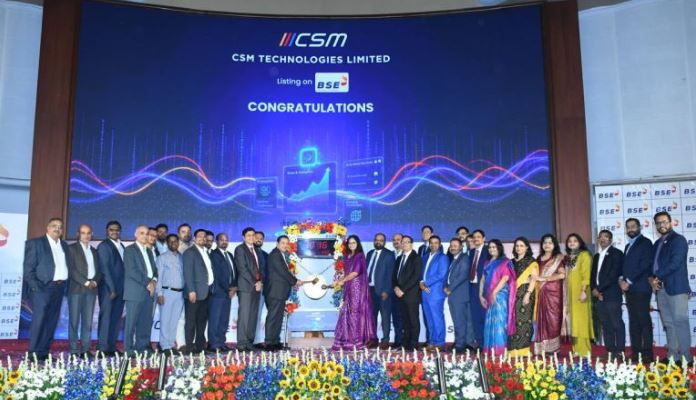
Bhubaneswar: CSM Technologies has achieved a historic milestone by becoming the first Odisha-born technology company to be listed on the mainboards of the BSE and the National Stock Exchange of India.
Marking the occasion, Priyadarshi Nanu Pany reflected on the company’s 28-year journey, highlighting that the achievement is rooted not only in business growth but also in its people-centric values.
Over nearly three decades, CSM Technologies has grown to a workforce of more than 1,700 employees, serving over 200 clients with the support of more than 100 partners. The company credited its success to its “People First” philosophy, which has helped nurture talent, build long-term relationships, and foster a culture of collaboration and purpose.
Expressing gratitude to current and former employees, the company’s leadership said the landmark listing belongs to every member of the CSM family who contributed to the organisation’s growth and transformation over the past 28 years, reaffirming its commitment to innovation, excellence, and creating lasting value for stakeholders.


