


30, Jun 2026
Eplan Next26: Inspiring insights into the future of engineering

Around 1,500 attendees from 36 countries, renowned keynote speakers, fascinating panel discussions and interesting insights into the future of engineering, automation technology and the industry overall is the best way to describe the first Eplan Next conference, which took place in Munich’s Cavalluna Park on 20 and 21 May. Not only did Eplan Copilot and Eplan Smart Sourcing celebrate their premieres – attendees also got a sneak peek of the upcoming Eplan Platform 2027. High-profile speakers, experts from Eplan, users, decision-makers and Eplan business partners engaged in intensive discussions about the hottest topics for the engineering of the future during the two-day festival.
What changes are in store for electrical engineering in the coming years? Which next steps in automation will the industry be facing? How will artificial intelligence influence engineering? These and other questions were answered by internationally recognised experts in a variety of presentation formats at the Eplan Next26.
Eplan CEO Sebastian Seitz set the tone in his opening address: “We are giving you a taste of what’s to come. Here at Eplan Next, we need to discuss one of the greatest challenges facing our shared industry, namely the digitisation of our entire value creation process.” When presenting the new AI, which takes a different approach than many other industrial AI applications – in part due to its protecting of intellectual property – Seitz said: “Today we are launching out Eplan Copilot in the cloud environment.” He emphasised the importance of data security, the AI’s robust architecture, and the long-term goal of making workflows truly autonomous. “We need to contribute a great deal of knowledge and build the right skill sets into the AI, not just to automate processes, but also to autonomously control them. Our goal is to develop this technology so that it evolves from a copilot to a pilot.”
Insights into the industrial production of tomorrow
Attendees from around the globe were able to gain first-hand experience as to how leading industry innovators such as DMG MORI, Eaton and Siemens are preparing for the challenges of the future and which tools the special machine builders and control cabinet manufacturers already use today to succeed in the competitive landscape of tomorrow.
In his keynote, Siemens Digital Industries COO for Automation Business and CTO Rainer Brehm identified the shift from rule-based to goal-based automation as the next step. For instance, this can be achieved with an end-to-end, AI-based Advanced Machine Engineering, which Siemens is developing in close cooperation with Eplan.
In his keynote, DMG MORI Group President and CEO Dr.-Ing. Masahiko Mori introduced DMG MORI’s “Machining Transformation” initiative, and also referred to its collaboration with Eplan toward realizing a digital twin in the field of control cabinet design.
Eaton Operations Director Power Distribution Systems China Andy Lee offered attendees fascinating insights into a showcase factory for extensively automated control cabinet manufacturing in Changzhou, China. There, too, the Eplan Platform is being used as the backbone for electrical engineering and humanoid robots are auditing the connected wires.
Future Lab: Experiencing the future live, in person
The Future Lab featured groundbreaking new developments as well as a range of future technologies – for instance an auto panel design tool that generates a basic mounting panel design direct from an initial bill of materials. Using this as the foundation, a suitable housing can be selected and a reliable cost estimate produced with minimal effort, even during the bidding phase. Another highlight was a software supported production workstation that enables even less-experienced employees to build control cabinets to a very high quality standard – reliably, transparently and in compliance with all individual customer requirements. Topics including the Siemens Teamcenter integration and advanced machine engineering were also presented at the Future Lab – creating a direct link between mechanical engineering, product data management (PDM) and electrical control technology (CAE/TIA).
Looking back and gazing ahead: The Eplan Platform 2027 & Smart Sourcing
Eplan used the event for an exclusive preview of the new Eplan Platform 2027, the development of which has incorporated around 500 customer requirements. It’s been designed to further accelerate electrical engineering projects across three process stages: preplanning, electrical engineering and control cabinet engineering. In terms of component procurement, Eplan Smart Sourcing also offers a new and highly automated solution that celebrated its German premiere at the Eplan Next26. One practical benefit is that the tool makes it clear during the design phase where and how quickly the required parts can be sourced. In various Master Classes, users were able to explore the software’s new features and topics including control cabinet design, efficient machine cabling, and digital product structuring.
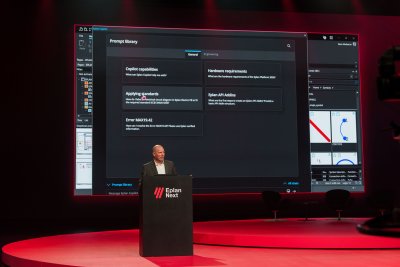
Eplan Copilot made its debut in the cloud, bringing AI to engineering, and was presented live on the main stage.
Conclusion: A successful start that is to be continued

Eplan CEO Sebastian Seitz said in conclusion: “The future lies in cooperation and collaboration – this is the only way we can master the challenges of the future. The technologies are available. The crucial question is how we can consistently integrate these opportunities into our processes
Eplan Software & Service
EPLAN provides software and service solutions in the fields of electrical, automation and mechatronic engineering. The company develops one of the world’s leading design software solutions for machine and panel builders. EPLAN is also the ideal partner to streamline challenging engineering processes.
Both standardised as well as customised interfaces to ERP and PLM/PDM systems ensure data consistency along the whole value chain. Working with EPLAN means boundless communication across all engineering disciplines. No matter whether small or large enterprises: Customers can apply their expertise more efficiently. Worldwide, EPLAN supports 61,000 customers. EPLAN wants to grow further with customers and partners and pushes integration and automation in engineering forward. Within the EPLAN Partner Network, open interfaces and seamless integrations are realised together with partners. „Efficient engineering“ is the focus.
EPLAN was founded in 1984 and is part of the owner-operated Friedhelm Loh Group. The Friedhelm Loh Group operates worldwide with 12 production sites and 94 international subsidiaries. The entire group employs 11.600 people and generated revenues of around €2,6 billion in 2019. For the 13th time in succession, the family business has won the accolade “Top German Employer” in 2021. In addition, Friedhelm Loh Group was recognized as “Top vocational trainer” according to a study of Deutschland Test and Focus Money.
- 0
- By Neel Achary

30, Jun 2026
LTM to Deliver Sovereign Cloud and AI in Europe through Strategic Partnership with OVHcloud
Chandigarh June 29: OVHcloud, a global cloud player and the European Cloud leader, and LTM, the Business Creativity partner to the world’s largest enterprises, today announced a strategic partnership allowing LTM to deploy sovereign AI solutions in Europe. Aimed at enabling organisations to achieve technological sovereignty for critical workloads, the deployment will also accelerate sustainable AI adoption. Through OVHcloud’s open, trusted cloud, extensive presence and AI infrastructure in Europe, LTM will target new markets, further pushing their sovereign AI ambitions in the region.
As enterprises across industries require cloud environments that are secure, scalable, open, compliant with regulations and support high-performance computing and data-intensive AI workloads, the OVHcloud–LTM partnership will address these challenges through standardised industry blueprints without compromising sovereignty, innovation or speed. This partnership integrates OVHcloud’s trusted sovereign cloud infrastructure designed for data control, regulatory compliance and sustainability with LTM’s deep industry expertise and AI‑powered transformation capabilities.
OVHcloud and LTM will collaboratively focus on highly regulated and data‑sensitive sectors such as banking, financial services, insurance, healthcare, public sector, manufacturing and telecoms, enabling industrialised, sovereign‑ready cloud architectures tailored to industry‑specific requirements. Together, OVHcloud and LTM will enable enterprises to modernise their cloud environments with faster AI adoption while maintaining full control over data, costs and technology choices.
Leveraging LTM BlueVerse, the AI‑native ecosystem, LTM will also enable enterprises to build and scale intelligent, agent‑driven solutions that are industry‑ready and secure by design. Additionally, LTM will deliver end‑to‑end consulting, migration, modernisation and AI engineering services to support adoption of OVHcloud’s portfolio including sovereign AI Cloud, hosted private cloud, Public Cloud and high‑performance bare‑metal infrastructure.
“Enterprises today are looking beyond cloud adoption; they are demanding sovereignty, transparency and performance at scale,” said Terry Maiolo, Vice President-General Manager Asia Pacific, OVHcloud. “By partnering with LTM, we are combining our sovereign cloud infrastructure with deep transformation and AI expertise to help organisations build trusted, future‑ready digital foundations.”
“This partnership reinforces LTM’s commitment to helping enterprises become AI‑native while remaining compliant, resilient and in control,” said Krishnan Iyer, Chief Growth Officer, LTM. “Together with OVHcloud, we are delivering an open‑core model that helps organisations on their journey toward technology sovereignty, enabling them to scale AI responsibly and cost‑effectively while meeting all regional regulatory requirements.”
As an Elite Partner of the OVHcloud Partner Network, LTM will help businesses adopt sovereign AI by building their services through OVHcloud’s Infrastructure-as-a-Service solutions, with a particular focus in European markets. By combining OVHcloud’s open and sustainable cloud platforms with LTM’s industry-aligned AI and cloud transformation capabilities, the alliance provides enterprises with a clear path to adopt next‑generation cloud and AI solutions built on trust, openness and long‑term value.
30, Jun 2026
Brands are spending three trillion dollars to be forgotten, neuroscience research finds
Singapore-based brand experience agency Rebel & Soul publishes The Three Trillion Dollar Question, a whitepaper presenting the findings of a six-month memorability study across 81 participants and 24 branded adverts.
SINGAPORE, 30 June – Rebel & Soul today publishes The Three Trillion Dollar Question, a whitepaper drawing on a six-month neuroscience study to examine why most brand experiences fail to convert into long-term consumer memory.
The marketing industry evaluates brand experience through engagement metrics: impressions, reach, dwell time, and social mentions. None of those measures determines whether a brand will surface in a consumer’s mind at a future moment of purchase.
Screen-based attention has fallen by 68% since 2004, from an average of two and a half minutes to 47 seconds in 2025, yet the dominant industry response has been to optimise for capturing more of that shrinking attention window, rather than examining whether attention is converting into memory at all.
The cost of that gap is the subject of the report. Globally, brands invest approximately one trillion dollars a year in advertising. Over a typical three-year strategic horizon, that represents three trillion dollars in collective brand-building investment. A significant proportion of that figure, the whitepaper argues, is lost to memory decay before it can influence purchasing behaviour, not because the creative failed in the room, but because most brand experiences are not designed with memory encoding in mind.
“The industry has spent years debating whether brand experience works at all. The more useful question is why some campaigns stick in memory for six months while others vanish in four weeks, and whether that’s something designers can actually shape,” says Kristy Castleton, founder, Rebel & Soul.
The study tracked 24 branded adverts across 81 participants at five intervals – immediately after viewing, then at one week, one month, three months and six months – measuring how recall curves diverge over time and what design factors predict durability. Content was scored against the INVOLVE framework, seven neuroscience-based principles for memory-encoded experience design, before testing began. High-scoring content was up to 52% more memorable at six months than content that scored below the memorability threshold. The curves produced by each tier never crossed: at every measurement interval, content that scored higher was remembered by more people, and the gap widened over time rather than closing.
One of the study’s most striking findings challenges how the industry measures experience.
Participants were monitored for brain activity via EEG, galvanic skin response, eye tracking and facial expressions during the initial lab session, signals commonly used to assess whether creative is working in the moment. But those signals did not predict which brands would still be recalled six months later.
The INVOLVE score, based on the creative’s design properties collected before participant data were collected, showed a consistent positive association with recall across all measurement intervals.
“Attention in the moment and memory over time are different outcomes, and the study shows they can diverge significantly. What the brain responds to during an experience is not the same as what it keeps. The design of the experience, rather than the intensity of the response it generates, is a better guide to long-term recall,” adds Castleton.
The whitepaper details seven neuroscience-based principles, each addressing a different aspect of how the brain decides what to encode and what to discard. They span the role of curiosity in priming neurochemical readiness for memory formation; the attention effects of novelty and broken patterns; the retrieval advantages of vivid, sensory-rich design; the encoding risks of cognitive overload and how structured information delivery avoids them; the memory effects of physical movement and embodied attention; the value of multi-sensory variety in creating multiple retrieval pathways for the same experience; and the weight that emotional peaks carry in what survives in memory weeks and months later.
Each principle corresponds to a documented mechanism in neuroscience and can be scored against the INVOLVE framework before an experience goes live. The full report sets out the scientific basis for each, alongside evidence from the six-month study and case studies from client work across Asia-Pacific.
29, Jun 2026
Top UK engineers to receive The Princess Royal Silver Medal
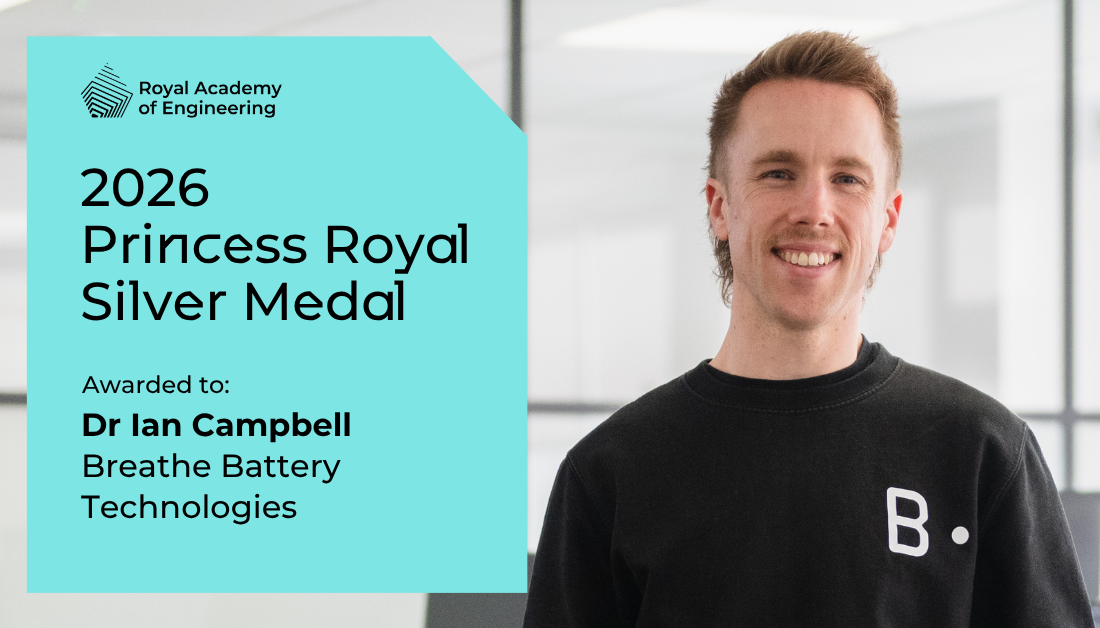
June 29: Three leading UK engineers are to be presented with The Princess Royal Silver Medal, one of the Royal Academy of Engineering’s most prestigious individual awards. They will receive their medals at the Academy Awards Dinner in London on Wednesday 8 July from HRH The Princess Royal, who is a Royal Fellow of the Academy.
The award celebrates an outstanding personal contribution made to UK engineering by an early to mid-career engineer resulting in market exploitation. This year’s winners have used lasers and optical fibres to develop a new way of capturing information from space, created software that makes batteries more sustainable, and applied AI to make touch-responsive materials.
The recipients of The Princess Royal Silver Medals for 2026 are:
· Dr Ian Campbell, Co-founder of Breathe Battery Technologies
· Dr Liucheng Guo, Co-founder and Chief Technical Officer of TG0
· Professor Robert Thomson FREng, Professor of Photonics at Heriot-Watt University
Luke Logan FREng, Chair of the Academy’s Awards Committee, said:
“This year’s winners of The Princess Royal Silver Medal have each pushed the boundaries of engineering. Through their research and innovative ideas, they have supported the UK in being a leader in engineering and sustainability, making significant contributions to our national economy through inspiring entrepreneurship and collaboration.”
Dr Ian Campbell, Co-Founder at Breathe Battery Technologies
With his company Breathe Battery Technologies, Ian has discovered how to extract the most potential from batteries by improving the charging process.
By simulating the internal workings of batteries, the team at Breathe created software that gives insight on the electrochemistry and other issues that can reduce their efficiency. The software helps manufacturers to optimise battery charging and design and can be integrated without hardware changes. By extracting better performance from existing battery chemistries, this technology has the potential to reduce electronic waste and accelerate the transition to cleaner, electrified transport and devices.
Ian achieved his PhD at Imperial College London with his research focus being lithium-ion batteries. Founded in 2019 as a spin-out from Imperial College London, Breathe Battery Technologies has now grown to operate the largest battery testing facility in London and has raised more than $33 million in funding. They have also collaborated with large corporations such as Volvo Cars, OPPO and Polestar.
Ian said:
“I am deeply honoured and humbled to receive the Princess Royal Silver Medal. Climate change and air pollution continue to threaten health and livelihoods worldwide. By combining battery physics simulation with materials libraries built in industrial-scale labs, we can screen millions of potential designs and rapidly optimise the most promising candidates using advanced software. This capability is helping to bring cleaner, quieter, healthier and more affordable cars, trucks and energy storage systems to market faster.”
Professor Ricardo Fernando Martinez-Botas, Head of the Department of Mechanical Engineering at Imperial College London, said:
“Ian’s success in commercialising world-class research from Imperial College London exemplifies how UK academic excellence can translate into real-world impact. His contributions are not only advancing the UK’s position at the forefront of the international battery technology race but helping to shape the future of cleaner transport.”
Dr Liucheng Guo, Co-founder and Chief Technical Officer of TG0
Dr Liucheng Guo, who received his PhD from Imperial College London, has spent the last decade developing a first-of-its-kind “AI for Sensing” technology for electronic products, giving machines a more human-like sense of touch and enabling more intuitive interaction.
Most electronic products, from robotic skins to car seats, rely on having individual buttons for powering on and off alongside multiple sensors and parts for general use. TG0’s patented technology replaces these complex separate parts with intelligent touch-sensitive surfaces powered by lightweight embedded AI, resulting in simpler, lower-cost and more sustainable designs. The system can detect signal changes from different components, for example, detection of pressure, location, direction and movement of touch. This mimics a more human way of perceiving and processing tactile information, creating more user-centric experiences.
The company has received support from Innovate UK, the European Innovation Council, and leading investors including Amadeus Capital Partners and Fuel Ventures. TG0 has been recognised as one of Deloitte UK’s Fast 50 fastest-growing technology companies, selected for Tech Nation’s Future Fifty programme, and received the GBx Best in British Tech Award for Deep Tech Innovation.
Liucheng is currently an Industrial Fellow of the Royal Academy of Engineering and a Fellow of both the Institution of Engineering and Technology (IET) and the British Computer Society (BCS). He was chosen to join the Academy’s Shott Scale Up Accelerator where he graduated as an SME Leader in 2019. He was also a Royal Academy of Engineering Visiting Professor in 2021 and is a STEM Ambassador, helping to inspire the next generation of engineers and innovators.
Liucheng said:
“I am deeply honoured to receive the Princess Royal Silver Medal. This recognition reflects not only my own journey, but also the dedication of my co-founder Ming, the TG0 team, investors, collaborators and mentors. I believe engineering has a vital role to play in shaping a resilient and sustainable future, creating technologies that are not only intelligent, but also accessible, energy-efficient and beneficial to society.”
Professor Wei Liu, Professor of Design Engineering and Innovation at King’s College London, said:
“Dr Guo’s pioneering approach to low-resource, sustainable embedded AI has immense potential for growth. His roadmap includes expanding in-material intelligence into medical wearables, adaptive robotics, and next-generation sustainable manufacturing – fields that will define the next decade of engineering innovation.
“He exemplifies the spirit of this award – engineering that transforms ideas into impact and inspires a more sustainable, intelligent world.”
Professor Robert Thomson FREng, Professor of Photonics at Heriot-Watt University
By applying photonics to astronomy, Robert invented the integrated photonic lantern, redefining what is possible in fibre optics.
Conventional optical fibres carry data as pulses of light. Across longer distances, these are typically single mode fibres that rely on light having a single pattern as it travels. Using single mode optical fibres to collect light in astronomy is challenging because most telescopes create signals inherently composed of multiple patterns. This leads to a loss of signal and increased noise.
To overcome this, Robert developed a new type of photonic lantern small enough to be mass produced and easily integrated into instruments for astronomy and other applications. Using ultrafast laser pulses, tiny 3D light-guiding paths are carved inside glass, creating pathways that smoothly connect the multimode light collection to single mode devices, preserving the information as it travels. Applications of Robert’s integrated photonic lanterns include capturing starlight to look for evidence of exoplanets, advanced medical and biological sensing, and next generation telecommunications.
Robert developed the first integrated photonic lanterns during his Advanced Fellowship funded by the Science and Technology Facilities Council, part of UKRI. He also co-founded a company called Optoscribe, which was later acquired by Intel.
Robert said:
“I am delighted to receive the Princess Royal Silver Medal. Throughout my career, I have been motivated by the challenge of translating fundamental discoveries into technologies that create tangible benefits for society. I have also been fortunate to work with outstanding students, researchers, clinicians and industrial partners, and this award reflects their contributions as much as my own.”
Professor Steve McLaughlin, Vice-Principal of Heriot-Watt University, said:
“Robert Thomson’s work in ultrafast laser microfabrication has redefined the art of the possible in photonics. His seminal inventions – the 3D waveguide interconnect and the integrated photonic lantern – are not only academic breakthroughs but transformative for industry.”
29, Jun 2026
India’s industrial growth rises to 5.1 pc in May
New Delhi, June 29India’s industrial growth accelerated to 5.1 per cent in May, indicating continued expansion in manufacturing, mining, and electricity sectors and reflecting sustained economic momentum.
The growth highlights improved performance across key industrial segments, supported by rising demand, stable macroeconomic conditions, and ongoing policy measures aimed at boosting production and investment.
Officials noted that manufacturing activity remained a major driver of growth, while the mining and power sectors also contributed positively to overall industrial output. The uptick signals resilience in India’s industrial base despite global economic uncertainties.
Economists said the figures point to steady recovery and expansion in core industries, supported by infrastructure development, consumption demand, and increased capacity utilisation.
The government reiterated its commitment to strengthening industrial growth through reforms, infrastructure development, and initiatives aimed at enhancing competitiveness and encouraging private sector participation.
29, Jun 2026
Toyota Kirloskar Motor Concludes 37th iCARE Initiative
Chandigarh,June 29 : Toyota Kirloskar Motor today announced the successful completion of its 37th iCARE initiative under its Employee Volunteerism Program. It marks another milestone in TKM’s efforts to create meaningful social impact through employee volunteering and community engagement. Guided by the company’s core principles of continuous improvement and respect for people, the activity focused on strengthening educational infrastructure and encouraging students to make better use of library resources.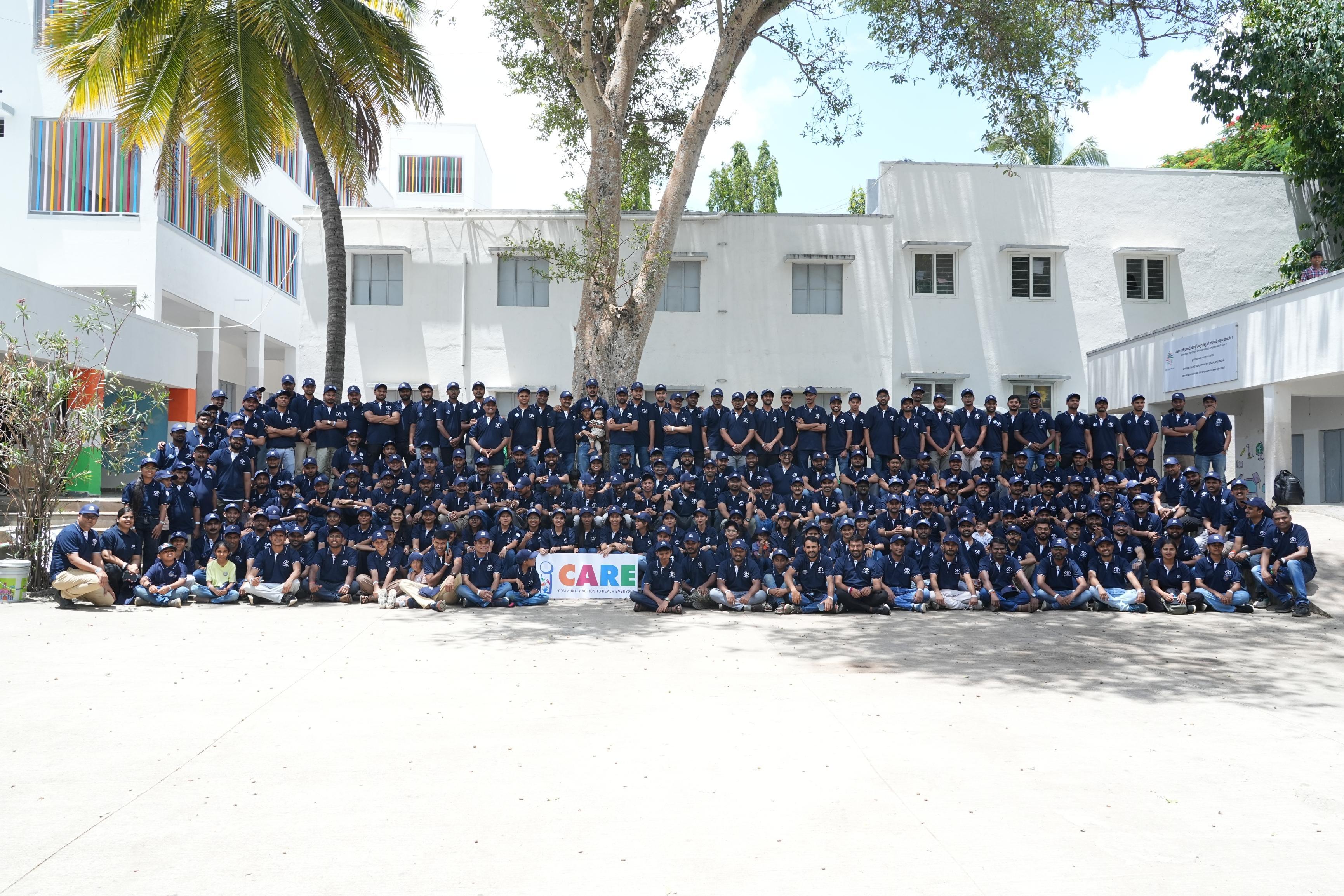
Held at Government High School, Doddaghollarahatti, Karnataka, in observance of National Reading Day, the initiative brought together 250 iCARE volunteers, including TKM employees, their family members and students.
As part of the initiative, volunteers revitalized the school’s library into a lively and student-friendly reading space by adding colorful mural arts, dusting, arranging and cataloguing books, assembling furniture and installing signage to improve visibility. Volunteers also contributed both new and pre-owned books, helping expand the library’s collection and providing students with greater access to reading material. The iCARE volunteers worked on every aspect & stage of the refurbishment, renovation & transformation process of making the library into a bright and welcoming one, ensuring that it is both functional and inviting for students.
This initiative reflects Toyota Kirloskar Motor’s ongoing commitment towards supporting national development goals, particularly in the education sector. Through its CSR efforts, TKM aligns and reinforces the Government of India’s vision under the National Education Policy 2020, which underscores the critical role of libraries as dynamic learning spaces. These institutions are essential for building foundational literacy, encouraging multilingual proficiency, enabling research capabilities and nurturing a culture of lifelong learning.
Speaking about the initiative, Mr. Vikram Gulati, Executive Vice President, Corporate Affairs and Governance, Toyota Kirloskar Motor, said,
“At Toyota, we believe that every child deserves access to spaces that inspire learning and curiosity. A library is often the first place where students discover new ideas, perspectives and opportunities beyond the classroom. Through the 37th iCARE initiative, we have worked to create a more welcoming and engaging environment that encourages students to read, explore and learn. By strengthening access to books and learning resources, we hope to support students in building knowledge, confidence and aspirations that can help shape their future.”
Since its inception in 2017, iCARE has served as TKM’s flagship employee volunteerism initiative, encouraging employees and their families to contribute towards meaningful social causes. To date, over 4,500 volunteers have participated in 37 community programs, positively impacting more than 68,800 lives. By collaborating with local institutions and communities, TKM remains committed to creating sustainable and long-term impact across its six core CSR pillars- Education, Health & Hygiene, Environment, Skill Development, Road Safety and Disaster Management.
29, Jun 2026
India’s airport sector may attract INR 4.2 lakh crore investment by 2029
New Delhi, June 29: India’s airport infrastructure sector is expected to attract investments of up to ₹4.2 lakh crore by 2029, driven by rapid growth in air traffic, expansion of regional connectivity, and large-scale modernization of aviation facilities across the country.
The projected investment reflects ongoing and planned development of new greenfield airports, expansion of existing terminals, upgradation of cargo facilities, and enhancement of aviation-related services to meet rising passenger demand.
Officials said the growth in the sector is being supported by policy reforms, increasing private sector participation, and the government’s focus on improving regional air connectivity under key aviation development programmes. The expansion is also expected to boost tourism, trade, logistics, and employment opportunities.
Industry stakeholders noted that India’s aviation sector is among the fastest-growing in the world, with rising middle-class travel demand and increased connectivity to smaller cities playing a major role in driving infrastructure requirements.
The development is expected to position India as one of the leading aviation markets globally over the coming years, with a strong emphasis on modern, efficient, and sustainable airport infrastructure.
29, Jun 2026
BPCL to acquire 40 pc stake in Tiki Tar, Shell India for INR 85 crore
June 29: Bharat Petroleum Corporation Limited (BPCL) has announced that it will acquire a 40% stake in Tiki Tar Industries and Shell India Markets Private Limited for ₹85 crore as part of its strategy to strengthen its presence in the infrastructure and bitumen segment.
The move is aimed at expanding BPCL’s portfolio beyond traditional fuels and into value-added products used widely in road construction and infrastructure development. Bitumen and related materials play a key role in highways, urban roads, and waterproofing applications, and demand for these products is expected to grow with India’s infrastructure push.
Officials said the partnership is expected to bring together BPCL’s refining and distribution strengths with the technical expertise and market reach of the companies involved, creating operational synergies and improving product availability.
The acquisition is part of BPCL’s broader plan to diversify its downstream business and tap into emerging opportunities linked to India’s rapid infrastructure growth. The deal will be completed after receiving necessary regulatory approvals.
29, Jun 2026
Gujarat’s iNDEXTb earns Guinness World Records recognition
Gandhinagar, June 29: Gujarat’s Industrial Extension Bureau (iNDEXTb) has received a Guinness World Records certificate for successfully bringing together 350 exhibitors in just 11 days, marking a significant achievement in promoting trade, industry, and investment.
The recognition highlights iNDEXTb’s ability to organise large-scale business events within a short timeframe, showcasing Gujarat’s strong ecosystem for commerce, innovation, and industrial collaboration.
Officials said the achievement reflects the coordinated efforts of government departments, industry partners, and event organisers in creating a platform that connected businesses, investors, startups, and entrepreneurs. The initiative also helped showcase emerging technologies, products, and investment opportunities across diverse sectors.
The Guinness World Records recognition reinforces Gujarat’s reputation as a leading destination for business and investment and underlines the state’s commitment to fostering innovation, entrepreneurship, and economic growth.
29, Jun 2026
Vadodara hosts Vibrant Gujarat Regional Conference and Trade Exhibition
Vadodara, June 29: Gujarat Chief Minister Bhupendra Patel inaugurated the Vibrant Gujarat Regional Conference and Trade Exhibition in Vadodara, reaffirming the state’s commitment to promoting industrial growth, innovation, and investment-led development.
Addressing industry leaders, entrepreneurs, and stakeholders, the Chief Minister highlighted Gujarat’s business-friendly policies, robust infrastructure, and skilled workforce, which continue to make the state a preferred destination for domestic and global investments.
The conference and exhibition brought together representatives from industry, trade bodies, startups, and government agencies to showcase emerging technologies, innovative products, and new business opportunities. The platform is expected to strengthen collaboration between industry and government while encouraging investment across key sectors.
Patel said the Vibrant Gujarat initiative has played a significant role in accelerating the state’s economic growth by fostering partnerships, attracting investments, and creating employment opportunities. He encouraged businesses to leverage the conference to explore new collaborations and contribute to Gujarat’s vision of sustainable and inclusive development.
The event also featured exhibitions by leading companies, business networking sessions, and discussions on innovation, manufacturing, exports, and entrepreneurship, reinforcing Gujarat’s position as one of India’s leading industrial and investment destinations.


