


3, Apr 2026
Salesforce & Galgotias Launch Tableau AI Excellence Hub
Greater Noida, April 3 : Galgotias University, in collaboration with Salesforce, the world’s leading AI CRM platform, has established the Salesforce Centre of Excellence Tableau AI Data Lab on its campus. The initiative marks a significant step towards embedding Artificial Intelligence driven data analytics and visualization capabilities into mainstream academic learning, preparing students for the evolving demands of the data driven economy.
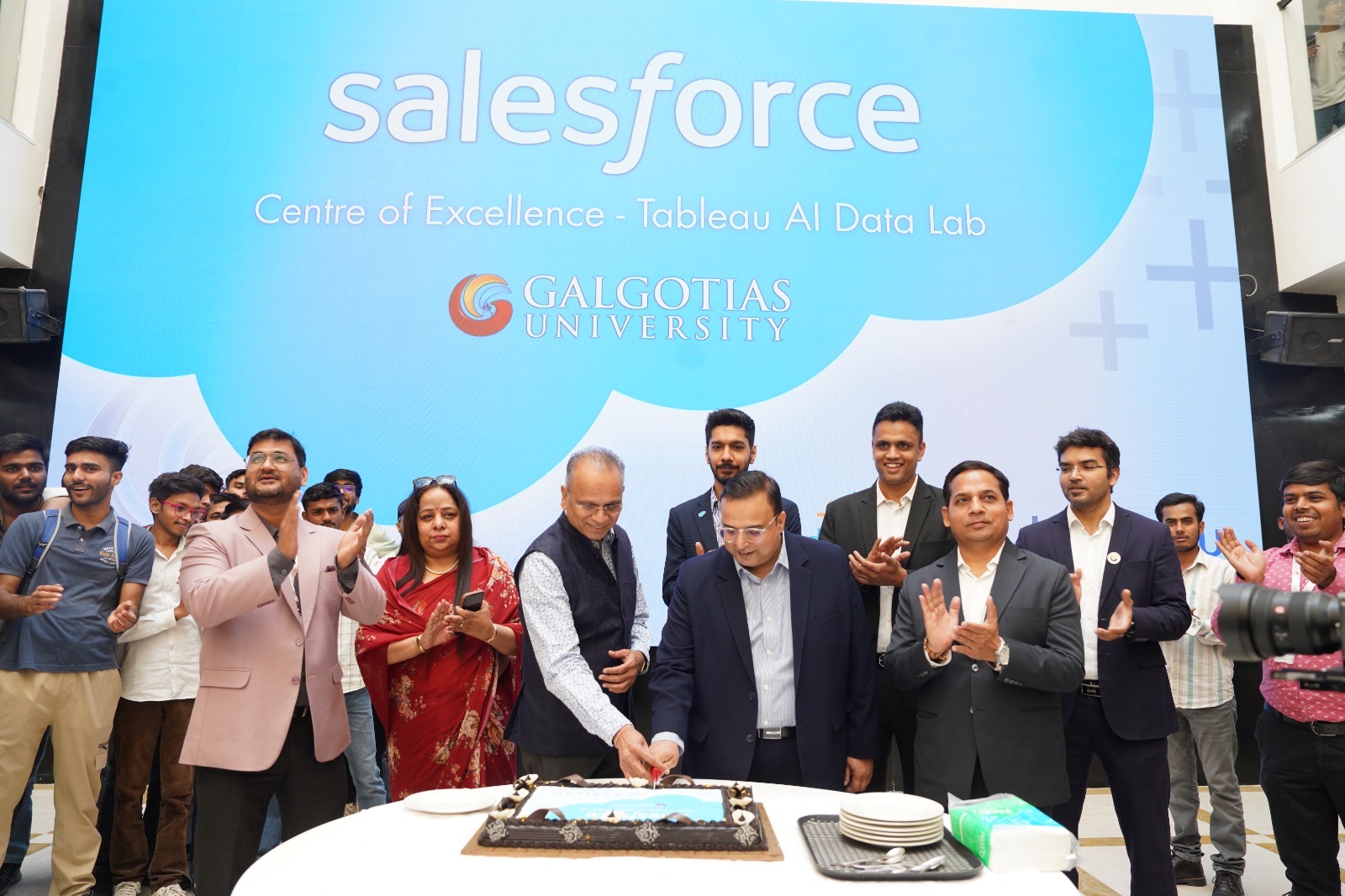
The Tableau AI Data Lab is designed to provide students with hands-on exposure to advanced analytics, business intelligence, and AI enabled data interpretation. With a strong focus on real world application, the lab will enable learners to move beyond traditional dashboards towards intelligent, insight-driven decision making using next generation Tableau and Salesforce technologies.
Through this collaboration, students will gain access to industry aligned curriculum, practical learning modules, and exposure to enterprise-grade analytics platforms. The initiative also integrates faculty development, workshops, and guided learning pathways to ensure effective adoption within academic programs.
Speaking on the occasion, Dr. Dhruv Galgotia, CEO, Galgotias University, said,
“At Galgotias University, our focus has always been on creating meaningful, industry integrated learning experiences for our students. The Salesforce Centre of Excellence – Tableau AI Data Lab is a step in that direction, where students will not just learn tools, but develop the ability to work with data, derive insights, and apply them in real world contexts. As AI continues to reshape industries, building strong data and analytics capabilities becomes essential, and this collaboration will play a key role in preparing our students for that future.”
The Centre of Excellence will be accessible to students across disciplines, enabling interdisciplinary learning in areas such as data analytics, business intelligence, AI driven insights, and digital decision making. It is expected to support a wide range of use cases across domains including technology, business, healthcare, finance, and public systems.
This initiative further strengthens Galgotias University’s commitment to industry integration, experiential learning, and future ready education, while reinforcing its position as a leading institution driving innovation at the intersection of academia and industry.

- 0
- By Neel Achary

2, Apr 2026
CBSE to Introduce Computational Thinking and AI for Classes 3–8 from 2026–27
New Delhi, Apr 2: In a landmark move to prepare students for a technology-driven future, the Central Board of Secondary Education (CBSE) has announced a new curriculum on Computational Thinking (CT) and Artificial Intelligence (AI) for students in Classes 3 to 8, starting from the 2026–27 academic year.
The initiative aims to equip young learners with critical problem-solving skills, logical reasoning, and a foundational understanding of AI concepts. By introducing these subjects early, the board hopes to nurture creativity, analytical thinking, and digital literacy among students.
The curriculum will include age-appropriate modules that help children understand how computers solve problems, interpret data, and make decisions. Teachers will receive comprehensive training and support materials to ensure these concepts are delivered effectively in classrooms.
Education officials believe that integrating computational thinking and AI into school education will not only make students comfortable with digital tools but also foster curiosity and innovation. This step is part of a broader effort to modernize education in India, emphasizing critical thinking, interdisciplinary learning, and skills for the 21st century.
With this rollout, students across India will gain early exposure to future-ready skills, enabling them to navigate an increasingly digital world with confidence and creativity.
31, Mar 2026
Bitget Partners with IIT Delhi to Advance Web3 Education in India
New Delhi, Mar 31: Bitget, the world’s largest Universal Exchange (UEX), partnered with the Indian Institute of Technology Delhi (IIT Delhi) to host a blockchain seminar and workshop under its Blockchain4Youth programme. The campus session brought together more than 280 students for a workshop focused on blockchain fundamentals, decentralized systems, and emerging opportunities in Web3.
Held on March 27, the event drew participants from leading institutions including the Indian Institute of Information Technology Delhi (IIIT Delhi), Netaji Subhas University of Technology (NSUT), University of Delhi (DU) and other institutions across the capital. More than 650 registrations were recorded for approximately 300 seats, highlighting strong demand for structured blockchain education among Indian students.
Blockchain4Youth is Bitget’s global initiative dedicated to expanding blockchain literacy through campus engagements, workshops, and long-term support for young builders entering the digital asset ecosystem. India remains one of the most active regions for technical talent and early-stage blockchain participation, making university engagement an important part of long-term ecosystem development.
“India continues to stand out for the depth of technical talent entering blockchain,” said Gracy Chen, CEO of Bitget.
“What stood out at IIT Delhi was the curiosity students approached the discussions with. Blockchain4Youth is designed to create early access to knowledge and help young builders understand where decentralized technologies are moving beyond theory into practical infrastructure.”
Speakers at the event underlined the long-term importance of sustained ecosystem investment in Indian talent. Vinayak Kalra, founder of KaiFoundry, noted that the level of curiosity and ambition among students reflected how quickly India’s next generation of blockchain talent is emerging, adding that initiatives of this kind are important if leading Web3 organizations want to invest meaningfully in the country’s talent pool. The event also drew strong attention from ecosystem contributors present at the session. Sahil Thakur, founder of BlockseBlock, pointed to the turnout as evidence that blockchain interest on campuses is increasingly driven by long-term curiosity rather than short-term market cycles.
Bitget’s Blockchain4Youth programme continues to expand through partnerships with universities and educational communities worldwide, with a focus on expanding blockchain access and supporting the next generation of developers and entrepreneurs.
30, Mar 2026
Governor Stresses Value-Based Education for a Peaceful Society
Bhubaneswar, March 29: Governor Hari Babu Kambhampati on Sunday emphasized the crucial role of value-based education in shaping a peaceful and progressive society, urging teachers to focus on character development alongside academic knowledge.
Addressing the inauguration of the value education programme for teachers at the Ramakrishna Mission’s Vivekananda Hall, the governor quoted Swami Vivekananda, saying that education is not merely the accumulation of information but the manifestation of inner perfection, strength, and character.
He lauded the Ramakrishna Mission for its long-standing contributions to education, social service, and spiritual growth. “Inspired by the ideals of Ramakrishna Paramahansa and Swami Vivekananda, the mission has consistently promoted a balanced system of education that nurtures intellectual, moral, and spiritual development,” he added.
Highlighting India’s rich civilisational heritage, Governor Kambhampati noted that traditional education emphasized values such as truth, righteousness, peace, love, and non-violence. “These are not just ideals but principles to be practiced in daily life,” he remarked.
Referring to today’s global challenges marked by conflicts and instability, he stressed the importance of fostering understanding, tolerance, and dialogue. The governor concluded by underlining the pivotal role teachers play in shaping students into ethical, responsible, and socially conscious citizens.
28, Mar 2026
D Y Patil International School Hosts IB Global Leadership Event
Mumbai, Mar 28 : D Y Patil International School Worli recently hosted a landmark co-creation session in collaboration with the International Baccalaureate (IB), bringing together global leadership, 12 IB officials, and Heads and Coordinators from nine IB schools across Mumbai. Titled “Shaping the Future of Hybrid Learning,” the session moved beyond conventional discussions on educational formats to explore a more fundamental question: how schools can meaningfully prepare students to think independently and continue learning in a rapidly evolving world.

The session was attended by Olli-Pekka Heinonen, Director General of the IB, along with Mahesh Balakrishnan, Senior Manager for Business Development (India & Nepal), highlighting India’s growing influence in global education dialogue. Designed as a co-creation platform rather than a top-down policy discussion, the session enabled educators to collaboratively examine how hybrid learning, when implemented with intention, can foster self-directed learners, students equipped to manage their own learning, navigate uncertainty, and adapt beyond the structure of traditional classrooms.
A key takeaway from the discussions was the evolving purpose of hybrid learning. Participants agreed that its true value lies not in the integration of online and offline modes, but in its ability to develop the critical skill of “learning how to learn.” This approach reflects the changing expectations of higher education and the workplace, where independence, adaptability, and continuous learning are essential. The dialogue also underscored the importance of building trust with families, ensuring equity and access, and designing learning environments that actively engage students as participants in their own educational journey.
The significance of the session was further reinforced by the recognition extended to the host institution. Reflecting on the co-creation process, Heinonen noted that the manner in which the session was facilitated at D Y Patil International School Worli should be replicated across schools worldwide, describing it as a model for collaborative educational innovation. Ms. Kinnari Shah, Principal of the school, encouraged educators and parents to remain open-minded and to embrace technology as an integral part of this evolving learning landscape.
Commenting on the occasion, Ms. Kinnari Shah, Principal of D Y Patil International School, Worli said,
“Education today must move beyond delivering knowledge to developing thinkers. Hosting the IB’s global leadership at our campus is not just an honour, it is a responsibility. We believe schools must create environments where students learn how to learn, question, adapt, and grow independently. That is the future we are committed to shaping.”
As Mumbai continues to strengthen its position as a hub for international education, the session marks an important step in reimagining how learning is designed and delivered. It highlights a broader shift, from schools that focus primarily on curriculum delivery to institutions that actively shape the future of education itself, with students at the centre of that transformation.
28, Mar 2026
785 students graduate with nine winning gold medals at the 51st Convocation of IIMB
PhD scholar receives award for excellence in research
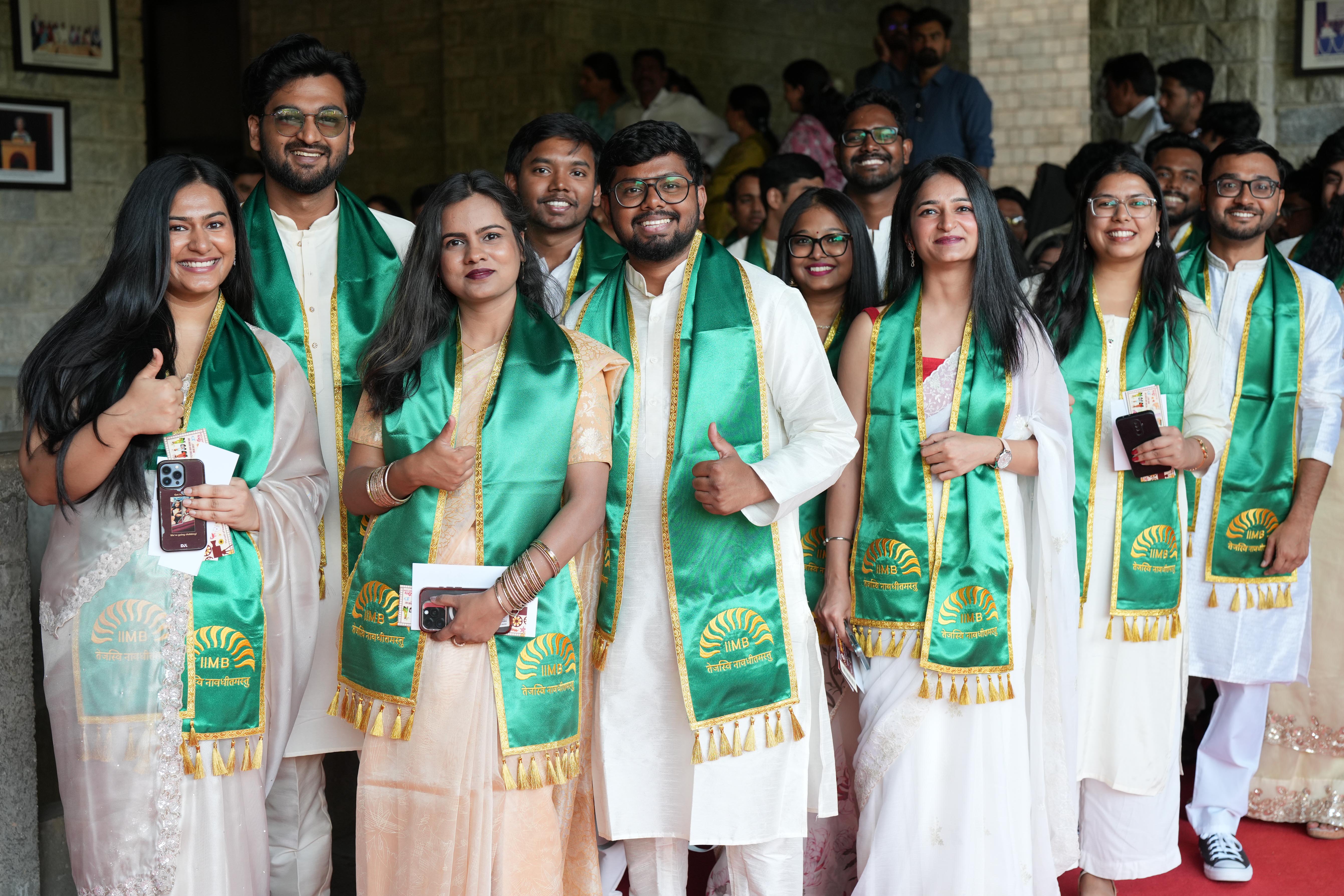
Mar 28, Bengaluru: “Congratulations to the Class of 2026 at the 51st Convocation of IIM Bangalore. As you enter a rapidly evolving business environment, remember that lasting success is built through consistent choices, not just moments of acceleration. The real test of leadership lies in balancing short-term performance with long-term value creation. It is possible to have it all, but not always at the same time – prioritization and resilience act as the key. I wish you the wisdom to play the long game and create meaningful, enduring impact”, said Chief Guest Ms Vibha Padalkar, Managing Director and Chief Executive Officer of HDFC Life, during her special address at IIM Bangalore’s Convocation ceremony, this evening.
Ms Padalkar explained the graduating students that life should go beyond the fast pace of the sprint to make way for a more resilient and enduring marathon. She explained that institutions and careers are not built in sprints but through a process of evolution of a long distance race, with doses of energy, ambition, confidence and courage, and that leadership was about integrating multiple lenses. She also emphasized on the importance of precision meeting persuasion, trust built over years and slowing down to accelerate, to have sustainable careers.
Ms Padalkar also shared that three key decisions proved to be the turning points in her own life – choosing finance as her career, returning to India to build a life in the financial capital Mumbai, and choosing the life partner that she did.
Ms Vibha Padalkar advised the students that the ability to anticipate, discipline to pause and wisdom to choose deliberately, will stand them in good stead in the long run. “IIMB has honed your decision making skills. So, as you enter a new phase of your lives, remember that you need to run fast when it matters, slow down when it counts and stay in the long race.”
Indian Institute of Management Bangalore hosted its 51st Convocation on 27th March 2026. A total of 785 students from various programmes graduated, this evening. Degrees were awarded to the students of the Doctor of Philosophy (PhD) programme and the MBA programmes – the Post Graduate Programme in Enterprise Management (PGPEM), Executive Post Graduate Programme in Management (EPGP), Post Graduate Programme in Business Analytics (PGPBA) and Post Graduate Programme in Management (PGP). Students of the Post Graduate Programme in Public Policy and Management (PGPPM) received the Master of Management Studies (Public Policy) degree. One PhD scholar received the award for excellence in research, while gold medals were awarded for Best All Round Performance, First Rank and Second Rank.
The students graduated from the prestigious institution this year in the presence of the Chief Guest, Board Members, Director-in-charge, Deans, faculty, alumni and staff of the Institute, alongside proud smiles and loud cheers from their families.
Gold medallists and PhD award winner: This year, a total of nine students have won gold medals. Moreover, a PhD scholar received the award for excellence in research.
In the Post Graduate Programme in Management (PGP) 2024-2026,Manasi Anju Mertia is the First Rank Holder, whileDhvit Jayen Mehtais the Second Rank Holder.
Mayur Dattatray Khule is the Gold Medallist for Best All Round Performance for Post Graduate Programme in Management (PGP) and Post Graduate Programme in Business Analytics (PGPBA) 2024-2026 combined.
For the Post Graduate Programme in Business Analytics (PGPBA) 2024-2026, Bharat Mundra is the First Rank Holder.
In Executive Post Graduate Programme in Management (EPGP) 2025-2026, Aysha Shaba PP is the First Rank Holder andRajasilpi SP is the Best All Round Performer.
In Post Graduate Programme in Enterprise Management (PGPEM) 2024-2026,Lakshmi R is the First Rank Holder, while Biswaranjan Mishra is the Best All Round Performer.
In the Post Graduate Programme in Public Policy and Management (PGPPM), Anirudh has won the gold medal for Best Academic Performance.
The Institute Research Award 2026 was won by Divya Dwivedi, Doctor of Philosophy (PhD) student of the Information Systems area of the graduating batch. The award seeks to inspire the school’s Doctoral students to achieve greater heights in terms of research quality and productivity.
Address by Prof. Malavika R Harita, Member, IIMB Board of Governors
The day’s events also included an inspiring address by Prof. Malavika R. Harita, Founder & CEO, Brand Circle, and Member, IIMB Board of Governors. She made mention of IIMB’s new Centres such as the Centre for Digital Public Goods as well as the Tony James Centre for Private Equity and Venture Capital, the newly set up IIMB Development Foundation – the Institute’s fundraising and development arm, and the Institute’s collaborations with leading national and global organizations which play a significant role in enhancing the Institute’s reputation. She also highlighted IIMB’s achievements in terms of placements and the Institute’s position in prestigious national as well as global rankings.
“Be focussed on gaining knowledge, stay authentic, relevant and original, and create the impact you want to”, she advised the budding managers and entrepreneurs.”
Director’s address
Prof. U Dinesh Kumar, Director-in-charge, IIM Bangalore, highlighted some of the achievements of the Institute as well as of faculty, students and alumni, and shared details on IIMB’s programmes, centres, events, digital learning initiatives, rankings, placements, entrepreneurship, and more.
“With a vision to elevate undergraduate education in India with the same academic rigour that defines our postgraduate offerings, we introduced two undergraduate offerings: BSc Honors in Economics, and BSc Honors in Data Science.”
While sharing his message, Prof. Dinesh Kumar commended the Institute for its initiatives on sustainability, inclusivity as well as nation building, apart from academics and research. “The Office of Diversity and Inclusion convened important conversations on accessibility and universal design, and student-led efforts play an important role in our outreach.”
“Sustainability remains our key priority. We released our Sustainability Report on World Environment Day and introduced a new core course on Responsible Business and Sustainability. These efforts were accompanied by practical steps toward greener campus operations, including the introduction of an EV fleet on campus, donated by the PGP 1998 batch. IIM Bangalore won the Award for Excellence in Biodiversity Management and the Award for Excellence in Social Welfare and Community Services, at the ELCITA Sustainability Awards 2025.”
He also congratulated IIMB’s incubation centre, NSRCEL, on completing 25 years of supporting entrepreneurs in November last year.
Prof. Dinesh Kumar also shared three Zen stories to emphasize on the importance of mindfulness to the graduating students. “The destination is not so important, but the journey is, and the journey has to be full of happiness. Be compassionate, which again is necessary to make life happier. Also, make integrity your life motto. These three elements will go a long may in making your lives happier.”
“Consider IIMB to be your home – come back, share your life stories and be an inspiration to the entire country.”
As the graduating students get a step closer to their dreams – with new beginnings, hopes and possibilities in the horizon – the campus today was witness to moments full of emotional farewells, group photos, selfies and other celebrations.
25, Mar 2026
Pravesh Utsav & Khadichuan on April 2 to Mark Children’s First Step into Education
A new chapter in the educational journey of young children is set to begin on April 2 with the celebration of Pravesh Utsav and Khadichuan, organized in line with the National Education Policy.
ଜାତୀୟ ଶିକ୍ଷା ନୀତି ଅନୁଯାୟୀ ଆସନ୍ତା ଏପ୍ରିଲ ୨ ତାରିଖରେ ଆୟୋଜିତ ହେବାକୁ ଯାଉଥିବା ‘ପ୍ରବେଶ ଉତ୍ସବ ଓ ଖଡ଼ିଛୁଆଁ’ କାର୍ଯ୍ୟକ୍ରମ ମାଧ୍ୟମରେ ଆମ ପିଲାମାନଙ୍କ ଶୈକ୍ଷିକ ଭବିଷ୍ୟତର ଏକ ନୂତନ ଅଧ୍ୟାୟ ଆରମ୍ଭ ହେବାକୁ ଯାଉଛି। ଶିଶୁ ବାଟିକା ଓ ପ୍ରଥମ ଶ୍ରେଣୀରେ ନାମ ଲେଖାଇବାକୁ ଥିବା ଯୋଗ୍ୟ କୁନି କୁନି ପିଲାମାନଙ୍କ ପାଇଁ ମାନ୍ୟବର… pic.twitter.com/ZWMTRg3z0Y
— CMO Odisha (@CMO_Odisha) March 24, 2026
This special initiative aims to warmly welcome eligible children enrolling in Shishu Vatika (pre-primary) and Class 1, marking their first step into formal education. The program reflects a strong commitment to nurturing early childhood learning and building a solid academic foundation.
In a heartfelt gesture, invitation letters from the Hon’ble Chief Minister are being personally delivered to parents by government officials and public representatives. This outreach highlights the importance of community participation in ensuring that every child has access to quality education.
The event is not just a ceremonial beginning but a meaningful effort to inspire families and encourage enrollment at the foundational level. It emphasizes the collective responsibility of society in shaping an educated and empowered younger generation.
Citizens are encouraged to actively participate in this noble initiative and contribute to creating a bright educational future for children. By doing so, they play a vital role in building a progressive and prosperous Odisha.
24, Mar 2026
Digital Libraries: Transforming Access to Knowledge in the Modern Era
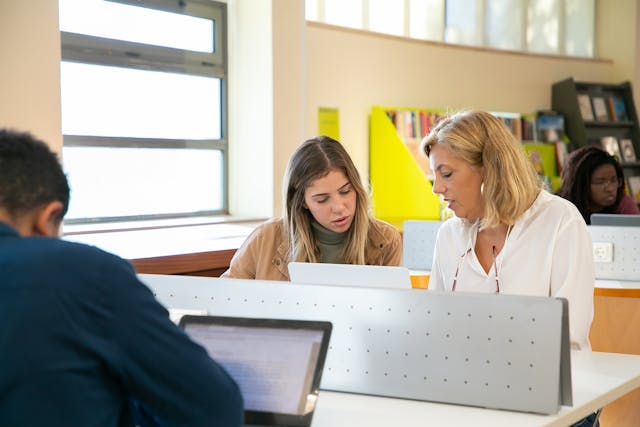
Libraries are undergoing a major transformation in the digital age, evolving from traditional book storage spaces into dynamic, technology-driven knowledge hubs. Digital libraries are now playing a key role in reshaping how information is accessed, shared, and preserved across education, research, and public learning systems.
Pic Credit: Pexel
A digital library is a collection of information resources—such as e-books, journals, research papers, audio-visual content, and archives—stored in electronic form and made accessible through computers and mobile devices. The primary aim is to make knowledge available anytime and anywhere, removing the limitations of physical location and opening access to a wider audience.
Experts say the objectives of digital libraries go beyond convenience. They are designed to preserve rare documents, improve information retrieval through advanced search systems, and support education and research by providing instant access to reliable academic content. They also help reduce costs associated with printing, storage, and physical maintenance of books.
In recent years, digital libraries have gained significant importance, especially with the expansion of online education and remote learning. Educational institutions, universities, and government initiatives have increasingly adopted digital platforms to ensure students and researchers can access updated learning materials without barriers.
In India, initiatives such as the National Digital Library of India have made millions of academic resources available to students across the country. Similarly, universities and public library systems are integrating digital catalogues and e-learning tools to enhance accessibility and improve learning outcomes.
Globally, institutions like the World Digital Library and academic databases such as JSTOR have expanded access to historical documents, research papers, and scholarly publications, supporting global knowledge exchange.
Digital libraries also play a crucial role in bridging the information gap between urban and rural learners. With the help of internet connectivity and mobile technology, students in remote areas can now access the same educational resources as those in major cities.
The rise of mobile applications such as Kindle has further simplified access to digital books and reading materials, making learning more flexible and personalized.
However, experts also point out challenges such as the digital divide, limited internet access in rural areas, and the need for digital literacy training. Addressing these issues is essential to ensure equal and effective use of digital library systems.
Overall, digital libraries represent a major step forward in modern education systems. By combining technology with knowledge sharing, they are helping build a more accessible, efficient, and inclusive learning environment for the future.
21, Mar 2026
PM-Vidyalaxmi Emerges as a Key Gateway for Education Loans
The Government of India’s PM-Vidyalaxmi Scheme has completed one year since its launch, emerging as a significant platform for students seeking financial support for higher education. The scheme has witnessed strong demand, with a large number of applications received from across the country and an approval rate of around 50 percent, indicating steady implementation.
Designed as a single-window digital portal, PM-Vidyalaxmi has simplified the education loan process by allowing students to apply to multiple banks through one platform. This has reduced delays, improved transparency, and made it easier for applicants to track their loan status without navigating complex procedures.
A key feature of the scheme is its focus on accessibility. By offering collateral-free loan options and reducing traditional barriers, it has opened up opportunities for students from middle-class and economically weaker backgrounds. The scheme supports those admitted to recognized institutions, ensuring that financial assistance is directed toward quality higher education.
In its first year, PM-Vidyalaxmi has contributed to strengthening a more inclusive and structured education financing system in India. With growing awareness and participation, it is expected to play an important role in helping students pursue their academic goals without being constrained by financial limitations.
21, Mar 2026
Centre Launches Nationwide Drive via NIOS to Bring Dropout Children Back to School
New Delhi, March 21 (BNP): The Department of School Education and Literacy (DoSEL) under the Ministry of Education has announced a nationwide initiative to strengthen the open schooling framework through the National Institute of Open Schooling (NIOS), with the aim of achieving 100% Gross Enrolment Ratio (GER) by 2030.
The move aligns with the goals of the National Education Policy 2020 and the broader vision of Viksit Bharat 2047, as articulated by Prime Minister Narendra Modi. The initiative focuses on identifying and enrolling out-of-school and dropout children across the country.
According to official data, nearly 2 crore children in the 14–18 age group are currently out of school, while around 11 per cent of children in Classes 3 to 8 remain unenrolled. Additionally, over 50 lakh students fail board examinations annually, highlighting the need for flexible and inclusive education pathways.
Officials said open schooling provides a practical alternative for students unable to attend regular schools due to socio-economic or geographical constraints. NIOS, the world’s largest open schooling board, offers flexible admission, multiple opportunities to clear exams, on-demand examinations, and vocational courses aligned with employability.
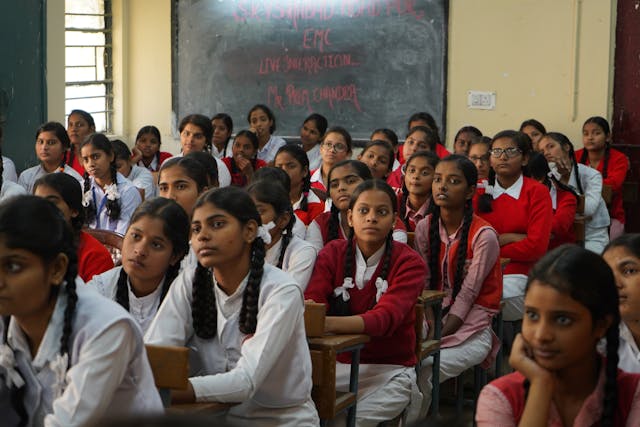
To strengthen outreach, the Ministry will launch the “NIOS Mitra” programme, a technology-enabled initiative aimed at identifying, counselling, and enrolling out-of-school children, particularly from marginalised, tribal, migrant, and economically weaker sections. Trained facilitators will support students through enrolment and academic guidance, ensuring last-mile connectivity and measurable outcomes.
The Ministry also plans to expand infrastructure by establishing at least one NIOS Study and Examination Centre in every block. Existing institutions such as PM SHRI schools, Kendriya Vidyalaya Sangathan schools, and Navodaya Vidyalaya Samiti institutions will be leveraged to support this effort.
Officials said the initiative will be implemented in coordination with States and Union Territories, using district-level survey data to identify dropout children and ensure targeted interventions.
The government emphasised that these measures aim to provide inclusive, flexible, and quality education while advancing universal school participation and reducing dropout rates nationwide.


