


21, Mar 2026
Groundbreaking AI-Generated Documentary on Science and Faith Premieres April 8
DALLAS, Texas, March 21, 2026 — At a time when artificial intelligence is raising urgent questions about authenticity and truth, The Invisible Everywhere: Believing Is Seeing demonstrates how emerging AI tools can be used to explore enduring spiritual questions.
The 80-minute documentary might very well be the first feature-length motion picture created entirely by a single filmmaker using consumer-grade artificial intelligence tools on a standard home desktop computer.
The film chronicles former Harvard physics instructor and Emmy Award-winning ABC News Science Editor (1988-2002) Dr. Michael Guillén’s adventurous and surprising journey from atheism to Christianity — and his conclusion that modern science points beyond materialism.
“While AI raises many legitimate concerns about authenticity and truth, The Invisible Everywhere illustrates how AI is enabling ‘the power of one’ — liberating talented filmmakers from traditional Hollywood gatekeepers by democratizing the cinematic arts and sciences,” Guillén said.
As a scientist and committed atheist, Guillén used to believe that reality is limited to what can be observed and measured. His guiding principle was “seeing is believing.”
That conviction began to unravel when he looked to empirical science for answers to life’s biggest questions:
How did the cosmos begin? Where is the mind located?
How did life on Earth begin?
Is there life after death? Are we alone?
Does God exist?
Through physics, cosmology and rigorous inquiry, Guillén reached a conclusion that stunned him: Modern science does not eliminate God; it clearly points to Him.
“Modern science now believes that most of reality is not visible, not logical and not even imaginable,” Guillén said.
This unexpected revelation shattered his atheism and turned his lifelong motto on its head — from “seeing is believing” to “believing is seeing.”
Many documentaries explore the visible universe. The Invisible Everywhere explores what cannot be seen.
“If I still lived by the motto ‘seeing is believing,’ I’d be blind to most of what’s real,” Guillén said. “Today, because of what I’ve learned on my long, winding journey, I now can see the invisible creator — everywhere. It’s a journey that changed my life forever.”
The Invisible Everywhere premieres worldwide April 8 exclusively at www.theinvisibleeverywhere.com
“Modern science is not the enemy of God,” Guillén added. “It might very well be His strongest ally.”

- 0
- By Neel Achary

21, Mar 2026
Creative Survival in the Algorithm Era: Veteran Showrunner Decodes Mechanics of Modern Storytelling Across Old and New Ecosystems
LOS ANGELES, March 21, 2026 — In a world where anyone can publish, attention spans are finite and platforms control distribution, talent is no longer the differentiator, explains writer and creative executive Daniel Cubillo, who has spent decades shaping stories for entertainment brands such as Top Chef, Fear Factor and Real Housewives.
“About 4 out of every 10 people on earth, between the ages of 14 and 35, want to be content creators, without knowing any details,” Cubillo said. “And, not surprisingly, most independent creators don’t last.”
In his new book, The Creative Mastermind Mind: From Roadrunner to Showrunner, Cubillo reveals the creative systems, behind-the-scenes insights and strategic frameworks that show how creators, storytellers and entertainment professionals can lead, adapt and endure in a landscape ruled by algorithms, audiences and rapid innovation.
Cubillo’s career spans nearly 2,000 hours of produced content across broadcast, cable, streaming and social platforms, including NBCUniversal, Discovery, MTV, Facebook Watch, Netflix and the Zeus Network. His unique experience in storytelling that performs across formats has positioned him at the intersection of legacy media and the emerging creator economy.
In The Creative Mastermind Mind, he distills decades of experience into actionable insights: mastering creative reinvention, understanding the inner workings of the industry and building resilience. Blending mentorship with candid behind-the-scenes stories, the book offers practical frameworks, real-world scenario analysis and a roadmap for anyone determined to make a living — and find meaning — through storytelling.
Readers will discover how to:
- Adapt and evolve in an industry defined by rapid change
- Balance creativity, strategy and resilience in high-stakes environments
- Navigate the realities of show business with honesty and professionalism
- Build a lasting career as a storyteller
“Whether you’re an aspiring creator, a content professional or a seasoned showrunner, this book is a guide to not just surviving — but thriving — in the content arena,” Cubillo said.
The Creative Mastermind Mind: From Roadrunner to Showrunner
Release Date: December 31, 2025
ISBN-13: 979-8993586809 (Hardcover)
ISBN-13: 979-8993586816 (Paperback) Available from: https://www.amazon.com/
21, Mar 2026
Global Feminist, Therapist, and Powerlifter Barrie Zucal Delivers Bold Rallying Cry Against ‘Debilitating Goodness’
WASHINGTON, D.C., March 21, 2026 — Barrie Zucal is a powerlifter in more ways than one. Besides breaking records in the deadlift and bench press, she is a fierce advocate for women’s voices and rights, a global feminist, a former marriage and family therapist, and an executive coach to women in 75 countries. Now, she’s making a daring entrance into the self-help space with BOLD: How Women Play BIG by Leading Instead of Pleasing — a rallying cry against what she calls “debilitating goodness,” the quiet force that keeps many women from realizing their ambitions.
“Women worldwide are constrained by their conditioned conviction that they should serve others even at their own expense; as a result, they end up pleasing, performing, and perfecting instead of leading, living, and developing,” Zucal said.
A lifeline for women everywhere, BOLD blends inspirational stories, self-reflective exercises, and practical steps to help readers tap into their passion, trust their instincts, act on their behalf, and lead with courage and clarity. BOLD isn’t a diatribe; it’s a solution-driven antidote to the deeply rooted beliefs that have kept women playing small for generations.
“I want this book to inspire women everywhere,” Zucal said. “We were born for this moment. It’s time for women to claim their right to develop themselves and use their talents to create a rich future for themselves, their families, and their world.
More than a book, BOLD is a wakeup call — motivating women to explore who they exist for, why they exist, and how they will exist.
“The world needs more women leading unapologetically,” writes author and CEO of Few & Far, Sarah Dusek, in the book’s introduction. “Step into this book with courage, and I promise you will emerge with a stronger, bolder, more empowered version of yourself.”
Releasing in April 2026, BOLD arrives at a moment when women’s leadership is urgently needed — in boardrooms, classrooms, and communities worldwide.
20, Mar 2026
IIT Mandi Invites Applications for Its First 2-Month Multi-Track Summer Residential Programme ‘HIMSHIKHAR 2026’

Mumbai, Mar 20: The Indian Institute of Technology Mandi (IIT Mandi), one of India’s leading IITs, through its Centre for Continuing Education (CCE), invites applications for its first 2–month summer residential programme, HIMSHIKHAR 2026. The programme is designed to equip students and young professionals with industry aligned skills in emerging technologies and entrepreneurship, while bridging the gap between academia and industry.
The programme offers an immersive on-campus experience, enabling participants to live and learn within the IIT Mandi ecosystem while working on real-world projects under the guidance of faculty and industry mentors. Structured across 190 hours of engagement, the programme includes 100 hours of faculty-led sessions, 50 hours of tutorial sessions conducted by PhD scholars, and 40 hours of sessions delivered by industry experts.
Five Specialized Tracks Across Emerging Technologies:
1. Software Development with AI: Focuses on building intelligent applications by combining core software development skills with AI Driven capabilities.
2. Artificial Intelligence & Machine Learning : Covers key concepts of AI and ML to develop systems that can analyse data, learn patterns and solve real world challenges.
3. Agentic AI Systems: Introduces autonomous AI systems that can independently perform tasks and make decisions in dynamic environments.
4. Data Science: Emphasizes data analysis, visualization and predictive modelling to derive actionable insights for decision-making.
5. Entrepreneurship & Venture Building: Develops entrepreneurial skills, focusing on start-up ideation, business model creation, and innovation-driven growth.
Speaking on the launch, Prof. Tushar Jain, Head of the Centre for Continuing Education (CCE) at IIT Mandi, said, “HIMSHIKHAR 2026 programme combines academic rigor, national skilling infrastructure, and outcome-driven training for learners. Every module emphasises building, problem-solving, and working with real tools, guided by practitioners, and faculty who understand industry demands.”
Eligibility and Admission Process:
• Minimum Eligibility: Candidates are eligible to apply for various specialization tracks, with the starting minimum entry requirement being passed in Class 12 or an equivalent qualification from a recognized board.
• Application Submission: Interested candidates are required to fill out the online application form through the official website of HIMSHIKHAR 2026.
• Entrance Test: Applicants must appear for an entrance test assessing reasoning and analytical abilities.
• Counselling Process: Shortlisted candidates will be invited for counselling, where they can select their preferred track and receive provisional admission details.
• Final Admission: Candidates must confirm their seat by completing the admission formalities and fee payment within the stipulated timeline.
Total Seats Available: 250 seats in each track (1250 seats in total)
The programme will commence in May 2026, with reporting starting from May 16, 2026, followed by the beginning of classes from May 18, 2026.
Through this initiative, IIT Mandi continues to strengthen its commitment to bridging the gap between academic learning and industry requirements by equipping young learners with future-ready skills in emerging technologies and innovation-driven domains.
19, Mar 2026
Ariel University to Confer Honorary Doctorate on Grandmaster Boris Gelfand

The Ariel University Senate has resolved to confer an Honorary Doctorate (Doctor Honoris Causa) upon Grandmaster Boris Gelfand, recognizing a career defined by world-class competitive performance, intellectual leadership, and enduring contribution to Israeli and international chess.
Gelfand is a Chess World Cup winner and a World Chess Championship finalist, widely regarded as one of Israel’s most accomplished chess figures and a leading representative of Israeli excellence on the global stage.
The conferral ceremony will take place on Wednesday, 17 June 2026, at Ariel University.
Professor Ehud Grossman, President of Ariel University, said:
“Boris Gelfand is a benchmark for sustained excellence, disciplined preparation, clear decision-making under pressure. By awarding this Honorary Doctorate, the University is recognizing not only extraordinary achievement, but the broader public value of a life that elevates Israel’s standing in the global arena.”
Professor Albert Pinhasov, Rector of Ariel University, added:
“For me personally, as a chess player, it’s a great privilege to honor Grandmaster Boris Gelfand, not only for what he has achieved, but for how he has achieved it. Across decades his outstanding results while representing Israel in international arena have inspired both established players and young talents, setting and maintaining the highest standards of this intellectual game. In recent years, Boris has become a close friend of the University, supporting our Annual Memorial Chess Championship. His presence reinforced what chess at its best represents: character, responsibility, and the commitment to carry a heritage forward. Ariel University is proud to confer this Honorary Doctorate in recognition of a legacy that continues to inspire.”
19, Mar 2026
KL Deemed to be University Opens UG & PG Admissions for Academic Year 2026–27
Mar 19: KL Deemed to be University, has officially announced the commencement of Undergraduate (UG) and Postgraduate (PG) admissions for the academic year 2026–27 across all its campuses.
Campuses Open for Admission
-
Vaddeswaram (Main Campus)
-
KLH Aziznagar
-
KLH Bachupally
-
KLH Global Business School
Programs Offered
Undergraduate Programs:
-
B.Tech – via KLEEE 2026
-
B.Tech (Lateral Entry) – via KLECET 2026
-
B.Sc (Agriculture), B.Pharm, B.Sc Food Technology, B.Sc Animation & Gaming, BCA – via KLSAT 2026
-
BA (Economics), B.Com (ACCA) – via KLHAT 2026
Postgraduate Programs:
-
MBA, MCA, M.Pharm, M.Sc (Chemistry) – via KLMAT 2026
Important Dates
-
Last Date to Apply: March 27, 2026
-
Admit Card Release: March 27–30, 2026
-
Phase 3 Exam Dates: March 28–31, 2026
Application Process
Applicants can apply online by following these steps:
-
Register online
-
Verify mobile number and email
-
Fill the application form
-
Pay the application fee
Key Highlights
-
100+ UG, PG, Doctoral & Post-Doctoral Programs
-
Industry-oriented curriculum with a global career focus
-
State-of-the-art infrastructure and experiential learning environment
-
Open to NRI/PIO/OCI candidates
-
Application editing facility (except email & mobile number)
-
Final program selection during counselling
Entrance Exams Overview
-
KLEEE 2026: Gateway to B.Tech programs
-
KLECET 2026: Lateral entry into 2nd-year B.Tech
-
KLMAT 2026: Admission to MBA, MCA, and other PG programs
-
KLHAT 2026: For Humanities and Commerce programs
-
KLSAT 2026: For Science and Technology UG programs
19, Mar 2026
US University Boosts Sustainability with 21 Philips ePaper Displays for Energy & Paper Savings
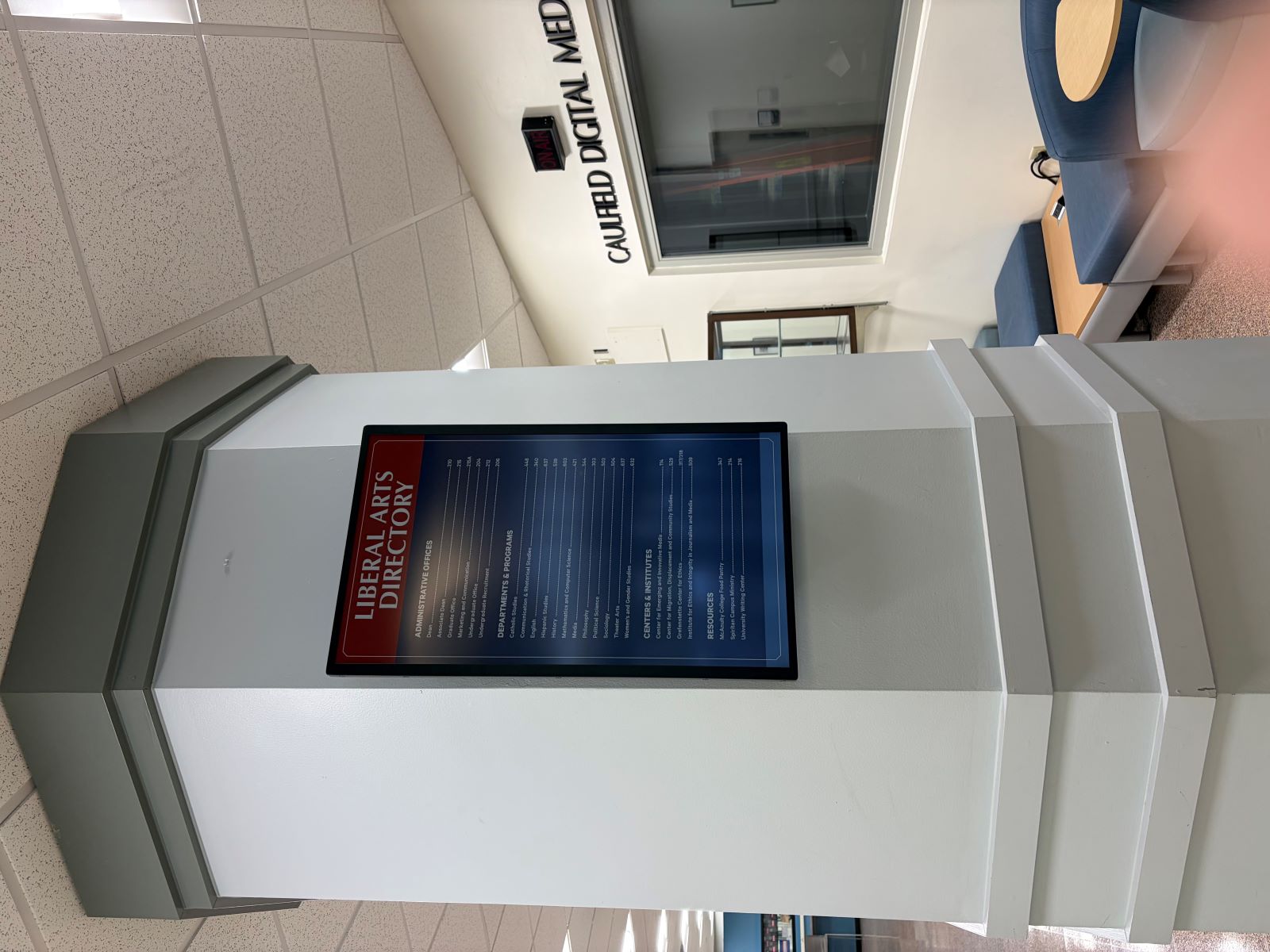
Leading US university reinforces commitment to sustainability with installation of 21 Philips Tableaux ePaper displays for instant energy and waste paper reductions
Creating a more sustainable campus: Pittsburgh-based Duquesne University – one of the nation’s top Catholic colleges – turned to PPDS to seize the sustainable and financial benefits of its groundbreaking ‘zero power’ Philips Tableaux ePaper displays, eliminating paper waste while enhancing communications to its 8,000 students.
Amsterdam, March 2026: PPDS, the exclusive global provider of Philips Professional Displays and complementary solutions, is excited to announce the successful installation of 21 Philips Tableaux ePaper signage displays at Duquesne University, with the range bringing instant energy savings and waste cutting benefits, as well as delivering on a more informed and sustainable campus.
Founded in 1887, Duquesne is among the top 15% educational institutions in the United States. A top ranked private Catholic university in Pittsburgh, it caters for 8,000 students from 80 countries and over 3,000 faculty and staff.
As the university continues to experience exponential growth, both in appeal and in size, its scenic 49 acre (198,300 m2) campus overlooking downtown Pittsburgh continues to evolve, with the university placing a growing focus on enabling students with the latest technologies both in and outside of the classrooms.
Aligned with the United Nations’ Sustainable Development Goals and with a commitment to sustainable ecologies – which saw them recently named on the Princeton Review List of Green Colleges – the team researched the global ePaper market and turned to PPDS to seize the opportunities of the technology to replace the tired paper directories used around its campus.
Concluding the in depth analysis, Philips Tableaux ePaper displays were selected as the standout choice to achieve the team’s ambitions, with a fleet of 21x 32” 5150 and 25” 4050 Philips Tableaux installed in classrooms, study areas, and hallways.
As with other installations of Philips Tableaux ePaper displays – most recently inside the Institut Pasteur’s HQ in Paris – the Philips Tableaux range provides Duquesne University with incredible levels of flexibility and adaptability, interchangeable for a wide range of uses – from wayfinding and safety notices, cafeteria menus and event information, and many more. This includes in areas with limited power sources.
Light in weight and fully portable, Philips Tableaux models used on campus are capable of displaying full colour imagery for days, weeks, months, or even years without using a single kilowatt of energy, only requiring a small amount of electricity (0.0025 kWh for the 25” model) during content changes.
Instant benefits
Running on an Android SoC, Philips Tableaux displays can be managed and updated remotely via a content management or remote display management system such as Philips Wave or as chosen by the team at Duquesne, content can be updated manually via a USB drive.
The project has been deemed a major success, and a second rollout phase is set to include Philips Tableaux displays in other buildings around the campus, including the School of Nursing, the School of Liberal Arts, and the College of Medicine.
Lauren Turin, Director of Classroom Technologies, Duquesne University, commented: “We have eliminated the need for complicated installation, and we are saving on the cost of paper, printing, and time. So, the cost per department is more economical in the long run. When our directories need an update, we use a USB drive with the content and an extension cord for power. The time it takes to update the directory is quicker than the time it takes to walk to the building.”
PPDS Director of Education, Patrick VanTreese, added: “With sustainability now an important focus for businesses and in education, ePaper has become a real game changer, opening new opportunities to reduce wastage, save on costs, and create new opportunities to communicate. We’re delighted to have supported Duquesne University, delivering on their ambitions with our Philips Tableaux range.”
To learn more about PPDS, please visit the website here, or contact your local PPDS sales manager.
18, Mar 2026
Udacity, Part of Accenture, Launches Accredited MBA to Train the Next Generation of AI Product Leaders
MOUNTAIN VIEW, Calif. and NEW YORK CITY – Udacity, part of Accenture LearnVantage and the leading provider of tech skills for the AI economy, announced the launch of a fully accredited Master of Business Administration degree programme designed specifically for the next generation of AI product leaders.
While traditional MBAs have long held a direct path into product management, they often lack the hands-on, technical training required in today’s AI-driven economy. This MBA focused on AI product management combines rigorous business fundamentals with applied, project-based training—equipping graduates with both the strategic foundation and practical experience required to lead in the AI economy.
“As AI continues to redefine the global workforce, the need for leaders who can bridge the gap between technology and business strategy has never been more critical,” said Kishore Durg, global lead of Accenture LearnVantage. “This innovative MBA programme directly addresses the advanced skills crisis by providing an affordable, accredited path for the next generation of AI product leaders. By democratising access to high-quality education, we are helping both individuals and organisations unlock the full potential of the AI economy.”
For the first time, learners can earn an MBA degree built around Udacity’s hallmark project-based curriculum at a fraction of the cost of traditional MBA programmes. Degrees are awarded by Woolf, a global leader in higher education innovation, and are recognised through the European Credit Transfer and Accumulation System (ECTS) across more than 60 countries—including the U.S., Canada, Australia, and 43 European nations.
“Artificial intelligence is defining a new way of doing business, and MBAs need to prepare students for that new world,” said Woolf President and Rector Dr. Joshua Broggi. “We’re proud of this exceptional programme, which brings Accenture and Udacity’s depth of expertise to a degree that is affordable, practical, and rigorous.”
Answering the AI Product Skills Crisis
Young professionals are standing at a crossroads. 59% of executives believe AI automation is actively closing doors for new talent, according to Accenture’s January 2026 Pulse of Change report. Yet, most companies are still struggling to make AI work at scale, with only 32% reporting real enterprise-wide success.
This disconnect presents an outsized opportunity for professionals who retool. AI product management is powering the fastest-growing frontier in tech, with job openings surging nearly 90% last year. By mastering the intersection of AI and product development, professionals can secure roles that pay 36% more than traditional product manager roles while solving the C-suite’s biggest challenges.
An MBA Degree Built for the AI Economy
The Master of Business Administration programme from Udacity and Woolf addresses these critical gaps by providing a flexible, affordable path to advanced credentials for working professionals and career changers without sacrificing career momentum:
- Radically Affordable: Can be completed for less than ₹2 lakh—a fraction of private university MBA programmes with an average cost between ₹4 lakh – ₹25 lakh.
- Industry Relevant: Courses are project-based and developed with input from leading tech companies, helping graduates build portfolios that prove their capabilities.
- Fully Accredited: Degrees awarded by Woolf carry academic weight comparable to other leading higher education institutions in Europe, North America, and Australia—and are widely accepted for immigration, visa applications, and doctoral programmes in 60+ countries.
- Backwards Compatible: With “Recognition of Prior Learning,” Udacity learners can apply previously completed Nanodegree programmes toward a master’s degree, potentially accelerating their path to graduation.
- Highly Flexible: Students progress at their own pace through 14 Udacity Nanodegree programmes plus a capstone project—approximately 2,250 hours in total, the standard workload for a European master’s degree under the European Credit Transfer and Accumulation System.
Pioneering the Future of AI Education
Udacity has pioneered large-scale AI education for over a decade, but its recent entry into accredited degrees has set a new industry benchmark. This MBA with a focus in AI product management follows the successful launch of its Master of Science in Artificial Intelligence degree programme, which amassed more than 1,500 learners in its inaugural cohort—demonstrating the industry appetite for high-rigor, high-ROI AI credentials.
The MBA represents the next evolution of this success. By combining Udacity’s “skills-first” DNA with Woolf’s international accreditation, the company is transforming 15 years of AI innovation into an MBA designed for the next generation of technology product leaders.
“We’re not just adding credentials to existing learning, we’re democratising access to advanced education in one of the most important fields of the 21st century,” said Dr. Kai Roemmelt, CEO of Udacity and Dean of the Udacity Institute of AI & Technology. “This programme combines Udacity’s hallmark project-based curriculum with Woolf’s internationally recognised accreditation to offer an MBA degree that is both radically affordable and industry-relevant. It proves that you can break down traditional barriers to higher education while maintaining the academic rigor necessary to deliver immediate career impact for professionals in the AI economy.”
The creation of the MBA degree programme from Udacity and Woolf is a continuation of Accenture’s $1 billion investment in LearnVantage—a comprehensive learning and training service that helps individuals, organisations, and nations build the skills they need to grow in the AI economy. Since launching LearnVantage in 2024, Accenture has acquired Udacity, TalentSprint, Ascendient Learning, Aidemy, and Award Solutions, scaling Accenture’s deep capabilities as a world-class learning organisation helping clients meet their business growth objectives and enabling people to develop the relevant skills they need to make the most of the opportunities that technological change is bringing.
Enroll now and forge a new future in tech.
17, Mar 2026
NIPER Raebareli Partners with Roche Pharma India to Strengthen Pharmaceutical Education and Research
New Delhi: The National Institute of Pharmaceutical Education and Research, Raebareli, has signed a Memorandum of Understanding (MoU) with Roche Pharma India to promote academic collaboration and advance pharmaceutical education and research in India.
The MoU was signed at Shastri Bhawan, New Delhi, in the presence of Manoj Joshi, Secretary, Department of Pharmaceuticals under the Ministry of Chemicals and Fertilizers.
The partnership seeks to bridge the gap between academic learning and industry practices by providing students and faculty with practical exposure to the evolving pharmaceutical and regulatory landscape.
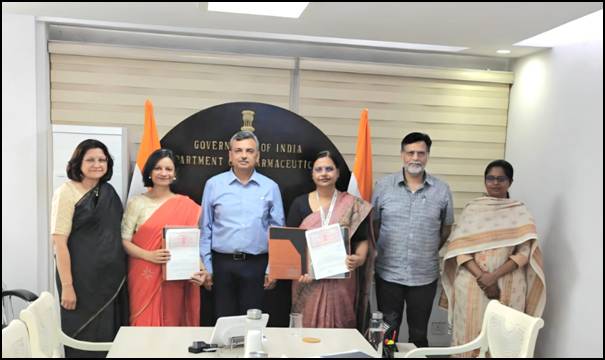
Under the agreement, the two institutions will jointly undertake several initiatives, including a certificate programme in regulatory affairs for students and industry professionals. The collaboration will also feature guest lecture series by industry experts, focusing on emerging areas such as AI-driven pharmaceutical research, drug development and healthcare innovation, aimed at enhancing industry-oriented knowledge and skills among students.
Speaking on the occasion, Joshi stressed the importance of strengthening India’s capabilities in regulatory sciences, biologics and artificial intelligence in pharmaceuticals to sustain global competitiveness. He noted that stronger partnerships between academia and industry would play a crucial role in achieving these goals and positioning India as a leader in advanced pharmaceutical innovation.
The collaboration aligns with the government’s broader development vision and initiatives such as #ViksitBharat and the BiopharmaShakti mission, which aim to transform India’s pharmaceutical sector from a volume-driven model to a value-driven innovation ecosystem.
The initiative is expected to contribute to the development of a future-ready workforce, while also supporting sustainable growth in India’s rapidly evolving life sciences and biopharmaceutical sector.
17, Mar 2026
India’s Unemployment Rate Falls to 4.9% in February
New Delhi — India’s unemployment rate fell to 4.9% in February 2026, down from 5% in January, according to data released by the Ministry of Statistics. The decline reflects improvements in both urban and rural labor markets.

Pic Credit: Pexel
Among urban residents aged 15 and above, the unemployment rate decreased slightly from 6.7% to 6.6%. In rural areas, the overall rate remained steady at 4.2%. Female employment saw significant gains: urban women’s unemployment dropped from 9.8% to 8.7%, while rural women’s rate fell from 4.3% to 4%.
The labor force participation rate (LFPR) for the overall population remained stable at 55.9%, with rural and urban areas recording 58.7% and 50.4%, respectively. Among women aged 15 and above, participation improved to 35.3%, rising to 40% in rural areas, while remaining unchanged at 25.5% in urban areas.
The monthly unemployment figures were compiled in collaboration with the National Sample Survey Office (NSSO), covering 3,74,879 respondents. Previously, India reported only quarterly unemployment statistics, but the government has shifted to publishing both monthly and quarterly data since January 2025 to provide a more timely picture of the labor market.
Analysts say the latest numbers signal steady recovery in employment opportunities across the country, with increased participation of women in the workforce contributing to the overall improvement.


