


17, Mar 2026
Integrating Ancient Wisdom with Modern Knowledge, crucial to achieve sustainability aver experts at Amity
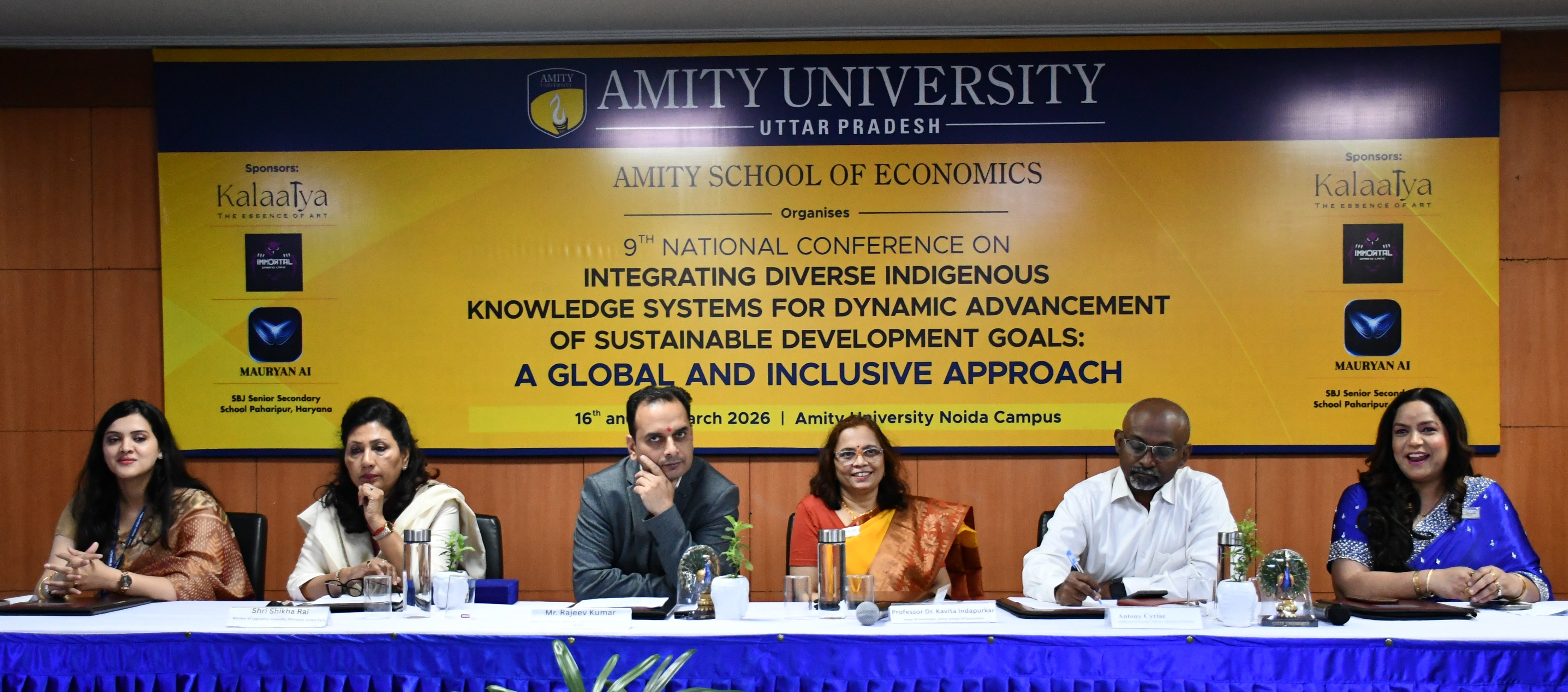
Mar 17: Amity School of Economics, Amity University Uttar Pradesh Noida campus is organizing its 9th National Conference on the theme “Integrating Diverse Indigenous Knowledge Systems for Dynamic Advancement of Sustainable Development Goals” from 16th-17th March, 2026.
Addressing the students during the Inaugural Session, Ms. Shikha Rai, MLA(Delhi), Bhartiya Janta Party, averred, “Sustainability cannot exist without wisdom and therefore, every citizen needs to be extremely careful, wise and responsible, so as to safeguard the planet. Tribal communities have developed agricultural and ecological practices that sustain both livelihoods and ecosystem. These communities inherited sustainability as a way of life. India is building ancient sustainable systems into modern governance. Under the visionary leadership of our Prime Ministers, India has taken crucial steps in combining ancient wisdom with modern innovation. Therefore, India has launched global missions like “Mission Life” which encourages sustainable living inspired by traditional values. The well- being of humanity and the well-being of nature are inseparable, this is why India model of development is based on “Sabka Saath, Sabka Vikaas.”
Mr. Rajeev Kumar, Director, National Accounts Division, Ministry of Statistics and Programme Implementation (MoSPI), said, “If we have to make things sustainable, we must go local and focus on indigenous development, at grassroot level. Traditional knowledge needs to be combined with policy framework, which can be helpful in removing the challenges and obstacles. We need to work on rediscovering traditional medicines since we know the harmful effects of antibiotics on human body. Also, there is a need to brainstorm about how we can revive ancient wisdom and apply it in the present context.”
Mr. Antony Cyriac, Additional Economic Advisor, Ministry of Finance, stated, “When a country is capital deficient, skilled labour cannot flow. Therefore, skill development is essential for making the country economically strong and we need to develop our own systems of resilience. We must know the stage of development in order to make further development in all areas. Ancient wisdom is important, however, we should not be dependent on ancient wisdom for development, rather we must integrate it with modern practices.”
Mr. Atul Kharate, Chief Operating Officer, Indian Oil Adani Ventures, opined, “There is only 6.8% contribution by India in cleaner use of fossil fuels which needs to be increased. Conservation of fossil fuels, biogas and renewable energy are required to achieve a sustainable economy. We should be committed to holistic energy conservation system which includes a comprehensive approach to saving energy, thereby contributing to sustainability.”
Keynote Speaker, Ms. Tanushri Roy, Policy Consultant, Niti Aayog, asserted, “It is important to align traditional medicine with Sustainable Development Goals. Some of the initiatives which have been taken by the government to achieve sustainability include building traditional knowledge digital library, bringing back ayurveda and ancient systems of medicine, establishment of National Innovation Foundation which is working to strengthen technological innovations by integrating it with traditional knowledge, adopting chemical-free agriculture practices, participation of tribal communities in various sectors and many other initiatives. We all must support these initiatives of the government and make our own contribution towards achieving sustainability.”
Welcoming the guests, Prof. (Dr.) Kavita Indapurkar, Assistant Director, Amity School of Economics, said “The Conference will demonstrate the role of Indigenous Knowledge systems for attaining the Sustainable Development Goals. It will also help in facilitating interdisciplinary studies between heritage, science and sustainability in the light of Indian ethos, by providing a national platform to bring together policymakers, practitioners and innovators towards achieving SDGs.”
During the two-day Conference, Technical Sessions on “Integrating Diverse IKS for Dynamic Advancement of Sustainable Development Goals: A Global and Inclusive Approach”, “Enabled Digital Finance and Accounting: Inclusion, Sustainability, and Transparency, “Inspired Governance and Public Service Innovation: Sustainability, Inclusion, and Digital Transformation in a Global Framework”, “Infused Tech Solutions for Sustainable Socio-Economic Progress”, and many others will be conducted.

- 0
- By Neel Achary

17, Mar 2026
National Mission on Libraries Strengthens Digital Access and Upgrades Library Infrastructure Across India
New Delhi, March 17: The National Mission on Libraries (NML) is progressing across multiple components aimed at strengthening library infrastructure, digital access to knowledge, and capacity building of library professionals across India, the government informed in the Lok Sabha.
In a written reply, Gajendra Singh Shekhawat, Union Minister for Culture and Tourism, said the mission operates through four key components, including the National Virtual Library of India, model libraries, library surveys, and capacity-building programmes.
Digital Knowledge Access through NVLI
Under the National Virtual Library of India (NVLI) component, the Indian Culture Portal was launched in December 2019 to provide unified digital access to resources related to India’s cultural traditions, history, literature, arts and heritage.
The Version 2.0 of the portal, launched on March 5, 2026, introduces a modern architecture with a React-based frontend and Drupal backend, improving performance and scalability.
The upgraded portal features an AI-powered chatbot “Bharti”, integrated with the Government of India’s Bhashini language platform, enabling assistance in 22 Indian languages. It also offers advanced multi-level search, operates as a Progressive Web App, and includes 3D walkthroughs, virtual tours, 46 curated cultural categories, and interactive learning activities.
Model Libraries Across States
Under the Setting up of NML Model Libraries component, financial assistance has been sanctioned for 28 State Central Libraries, 41 District Libraries, and five libraries under the Ministry of Culture to upgrade facilities and services.
Libraries upgraded under the scheme are spread across states and union territories including Port Blair, Itanagar, Ambala, Bengaluru, Thiruvananthapuram and Bhubaneswar, among others.
For instance, in Rajasthan, financial assistance has been provided to Dr. Radhakrishnan Rajya Kendriya Pustakalaya, Jaipur with ₹183.51 lakh sanctioned (₹94.81 lakh released) and Rajakiya Sarvajanik Mandal Pustakalaya, Kota with ₹63.46 lakh sanctioned (₹63.21 lakh released).
Survey and Capacity Building
The Quantitative and Qualitative Survey of Libraries component has been completed and the report has been accepted by the Ministry.
Under the Capacity Building Programme, 54 training programmes have been organised so far, training 2,465 library professionals from across the country.
State Responsibility for Libraries
The government clarified that libraries fall under the State List in the Seventh Schedule of the Constitution of India, and therefore public libraries are managed by respective State and Union Territory authorities.
However, the NML scheme provides financial assistance for upgrading one State Central Library and one District Library in each State or Union Territory, based on recommendations from the concerned state authorities.
According to the government, a total of ₹8,671.01 lakh has been sanctioned under the mission, of which ₹6,716.56 lakh has been released so far for library development across the country.
The initiative aims to modernise India’s library ecosystem, expand digital knowledge access, and strengthen the country’s reading and research infrastructure.
16, Mar 2026
University of Birmingham Future-Proofs its Campus Learning Experience
The University of Birmingham is one of the UK’s largest universities with almost 30,000 students in attendance. As with many established universities, it faced the challenge of how to modernise its diverse estate to meet the contemporary learning-styles that have arisen in recent years. Student expectations around audiovisual technology have changed and the University of Birmingham’s LRAT / Libraries and Learning Resources in-house AV team worked with GVAV, its longstanding integration partner, to upgrade dated equipment over the Summer of 2025.
Conceived as a campus-wide initiative to be carried out over the long-term, the university team initially soug
“Some of our older rooms were saddled with dim, non-interactive projection systems and related connectivity issues,” says James Ball, LRAT – AV Designer and Project Lead. Lecturers had become reluctant to use the technology, and students could find the group-work experience frustrating. Our goal was simple: to improve the visual
Avocor was deployed across several distinct teachi
The X Series was chosen specifically over a standard projector wall or LCD videowall for its superior brightness and contrast. This ensures content can be viewed effortlessly and clearly by every person in the room, even those seated at the very back. The high-resolution, high-contrast wall serves as a central focal point, displaying content with unparalleled visual clarity – for sports analysis work, clarity and zero latency are non-negotiable. The Avocor DVLED provided the brightness and the visual scale that simply couldn’t be achieved with a standard projection system, making it a truly immersive experience for our students.
Opting for the X Series also provided a significant logistical advantage during the installation. Projection is notoriously expensive and time-consuming to install due to the requirement for specialist scaffolding. The X Series install was much quicker, delivered to site by Avocor, streamlining the process for GVAV. To maximise adoption, the system was designed for simplicity, and the control panel layouts are intuitively designed, ensuring lecturers can operate the powerful new system with minimal training.
The project also completely redesigned key spaces Muirhead 112 (featuring 8 x 55″ K-Series displays) and Y3 G28 (with 5 x 55″ K-Series displays) to move away from traditional lecture-style seating. These rooms were re-envisioned as highly flexible “collaboration pods,” specifically tailored to facilitate and enhance small-group active learning. Students can connect their personal devices—laptops or tablets—to the Avocor K-Series 55″ displays enabling immediate collaboration. The system also provides the lecturer with effortless monitoring and control over all screens. This capability allows them to quickly share a central content source to all pods simultaneously. The K-Series was selected for its blend of performance and form factor to enable seamless group collaboration.
In further teaching environments, Muirhead 109 and 118, the team implemented a dual-display configuration to support the dynamic requirements of hybrid teaching. A large 98″ K-Series display is expertly paired with a second, smaller 65″ K-Series screen. This setup dedicates the primary 98″ screen to displaying core teaching content, such as slides, digital whiteboards, or lecture materials. The secondary 65″ screen can mirror the content on the 98” screen or can be used independently for group work.
The University of Birmingham’s campus-wide AV transformation stands as a testament to what can be achieved when an integrator partner like GVAV works in close partnership with the client team (LRAT), truly understanding their needs and aspirations. By leveraging Avocor’s versatile range of high-quality display solutions, each tailored to the unique requirements of specific learning environments, the project has delivered flexible, impactful spaces that empower both students and lecturers. This collaborative approach ensured every installation was not only technically robust but also aligned with the university’s vision for modern, engaging education. The result is a series of innovative learning spaces that exemplify best practice in AV integration, demonstrating
16, Mar 2026
Students showcase path-breaking AI Innovations during AI-Craft 3.1, at Amity

Amity Centre of Artificial Intelligence (ACAI) at Amity University, Noida organized the third edition of the National Level Project , Poster Competition and PhD Symposium in Artificial Intelligence, titled AI–Craft 3.1 (Artificial Intelligence Competition for Research and Future Technologies). AI–Craft 3.1 provided a platform for undergraduate, postgraduate, and PhD students to present projects, technical posters, and innovative concepts related to artificial intelligence, in the area of machine learning, deep learning, computer vision, large language models, generative AI, and other emerging AI applications. The event brought together students, researchers, and innovators from different parts of the country to present their work and ideas in the field of Artificial Intelligence.
The competition received a tremendous response from institutions across India and after a screening process conducted by the organizing committee, 94 teams were shortlisted to present their projects and research during the final round including Indian Institute of Technology Guwahati, Indian Institute of Technology Kanpur, Jawaharlal Nehru University, University of Delhi, Aligarh Muslim University, University of Jammu, and IIIT Bhagalpur.
Lauding the students’ innovations, Dr. Atul Chauhan, Chancellor Amity University Uttar Pradesh stated, “Amity University is committed to empowering every student with AI and modern technologies, since it is the need of the hour. We have always encouraged students to develop path–breaking innovations so that their innovations can be patented and used for societal benefit, thereby contributing to Viksit Bharat.”
A student of Amity University, Anand Atreya (B. Tech 4th year), has developed a unique Mood Detection System, Shravan AI, which is a voice companion and talks to elders reducing loneliness with human-like voice. It also helps elders who forget directions and fail to recognize their family members. It detects falls instantly, alerts caregivers and also detects stress or sadness, responding with music or conversation.
Another path–breaking innovation was Smart AI and IoT-based System for Intelligent Plant Disease Detection and Precision Pesticide Spraying, developed by Suman Mandal, a student of BTech AI. Manual disease detection is slow, expensive and not practical for small farmers. The innovation uses AI and IoT to detect plant diseases and enable precision spraying, reducing chemical wastage, lowering costs and promoting sustainable farming.
Tanvi Saraswat, a student of BCA has developed “VANI -Voice-enabled conversational humanoid Robot”, which responds to all kinds of questions, using Grok AI. It is also very helpful for the students, since they can ask “VAANI” for information on any topic.
The other projects included “AEGIS X, Adaptive Explainable Ground-Integrated Surveillance URV”, “Embedded and AI Enabled System for Automated Automobile Electrical Accessories Testing” developed by the students of Banasthali Vidyapith (Rajasthan), “ARES: Autonomous Robot for Environmental Safety”, amongst many others.
Encouraging the participants, Mr. Shibhu KT, Co-founder and CEO, IRA Strive, opined, “The present era is the era of AI, where it is being used in every field. Students must focus on identifying a problem around them and then work towards finding a solution to that problem through AI. They must think out-of-the-box and develop novel solutions and change the world.”
Prof. M.K. Dutta, Director, Amity Centre for Artificial Intelligence stated, “The youth of the country are very bright and intelligent, and the young minds are filled with new ideas and concepts, which lead to developing path–breaking innovations. Through initiatives such as AI Craft, Amity University continues to support students and researchers working on new ideas and technological advancements in AI.”
Outstanding entries were recognized during the prize distribution ceremony. The winners received cash awards of ₹50,000 for the first prize, ₹25,000 for the second prize, and ₹10,000 for the third prize along with certificates. All participants were also given certificates of participation.
15, Mar 2026
Education Ministry Holds Interactive Workshop with Union Territories in New Delhi
New Delhi: The Department of School Education and Literacy (DoSEL) under the Ministry of Education organised a one-day interactive workshop with representatives from Union Territories on March 13, 2026, at the Dr. Ambedkar International Centre in New Delhi.
The workshop brought together senior officials from the Ministry of Education, representatives from various ministries and departments, and officials from all Union Territories to deliberate on key administrative, financial and legal issues related to school education.
Secretary, DoSEL, Sanjay Kumar inaugurated the workshop and emphasised the importance of regular engagement with Union Territories to strengthen coordination and improve the implementation of education programmes. He highlighted the need to fill vacancies in teaching and non-teaching positions in a timely manner, strengthen academic institutions such as State Councils of Educational Research and Training (SCERTs), District Institutes of Education and Training (DIETs) and State Institutes of Education (SIEs), and ensure prompt responses to parliamentary matters and financial proposals.
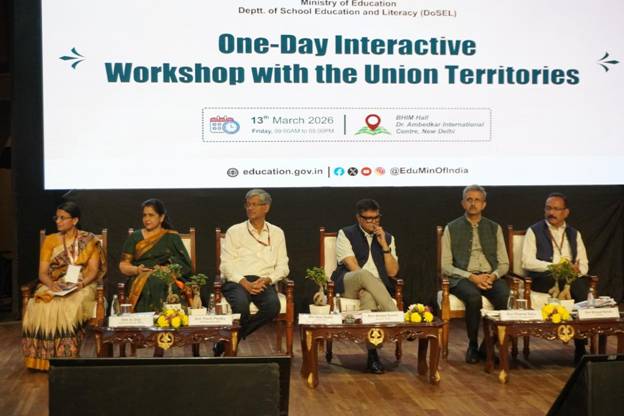
Economic Advisor, DoSEL, A. Srija outlined the context of the workshop and noted that the platform would enable Union Territories to exchange ideas and address operational challenges in the education sector.
During the inaugural session, Additional Secretary, DoSEL, Dheeraj Sahu spoke about the importance of strengthening institutional capacity and improving administrative efficiency across Union Territories. Ajay Gupta, Joint Secretary in the Department of Legal Affairs, addressed key issues related to handling litigation and court cases.
Prachi Pandey, Joint Secretary, DoSEL, emphasised that all schools in the Union Territories should be affiliated with the Central Board of Secondary Education (CBSE). Bhupal Nanda, Principal Chief Controller of Accounts in the Ministry of Education, highlighted matters related to financial management and accounting systems.
The technical sessions covered several important topics including the implementation of Section 12(1)(c) of the Right of Children to Free and Compulsory Education Act, 2009, educational indicators and data reporting for evidence-based policy formulation, onboarding of Union Territories with legislatures onto the SNA-SPARSH platform, and strengthening digital financial management systems.
The sessions also highlighted the role of the Legal Information Management and Briefing System (LIMBS) in monitoring court cases and addressed procurement-related issues on the Government e-Marketplace (GeM) portal to improve transparency and efficiency in government procurement.
Representatives from Jammu and Kashmir, Ladakh, Puducherry, Andaman and Nicobar Islands, Chandigarh, Dadra and Nagar Haveli and Daman and Diu, Lakshadweep, and Delhi made presentations on issues including court cases, vacancies in teaching and non-teaching positions including special educators, vacancies in SCERTs, DIETs and SIEs, release of funds under Samagra Shiksha, submission of annual reports and audited accounts, parliamentary matters, and challenges faced while using the GeM portal.
The workshop concluded with an interactive discussion and a summary of key takeaways. The deliberations reaffirmed the commitment of the Ministry of Education and the Union Territories to strengthen coordination, enhance institutional capacity, and ensure effective implementation of school education initiatives to improve learning outcomes across the Union Territories.
12, Mar 2026
NIH Awards UH $11.8 Million to Study Early Language Development in Houston Toddlers
Study will follow thousands of young children during a critical window for language development
HOUSTON, March 12 – University of Houston researchers have secured an $11.8 million grant from the National Institutes of Health to conduct a first-of-its-kind study of early language development, tracking thousands of Houston toddlers during a critical period of early childhood.
Led by Elena Grigorenko, the Hugh Roy and Lillie Cranz Cullen Distinguished Professor of Psychology, and research professor Jack Fletcher, the project will follow 3,600 children ages 18 to 24 months to better understand how language skills emerge during this early stage and why some children experience delays that can shape later development.
The NIH funding will support a new national Clinical Research Center on Developmental Language Disorders at UH, bringing together experts from psychology, education, health and measurement sciences to study one of the most fundamental questions in human development: how children learn language. This will be the 14th national research center established at UH.
How the Study Will Work
To recruit participants, the research team will partner with the pediatric clinic network at Texas Children’s Hospital, one of the largest in the region. Children will be screened for early language development, allowing researchers to identify those who show signs of delayed speech.
From that group, the team will follow a cohort of about 2,400 children — including both late talkers and children with typical language development — through early childhood to examine how language abilities evolve over time and how early delays may lead to later challenges.
“This will be the first national study to estimate how common late talking is using a large, representative sample of Houston toddlers,” Grigorenko said. “By following these children as they grow, we hope to better understand the developmental pathways that can lead to conditions such as developmental language disorder and autism.”
The Houston Community as a Partner in Discovery
Houston’s linguistic and cultural diversity makes it an ideal setting for this work. The study will include children from a wide range of backgrounds who speak English, Spanish or both, enabling researchers to examine how early communication develops across different home environments and socioeconomic contexts.
“This level of investment from the National Institutes of Health reflects the significance of this work to address a complex challenge affecting children, families and communities,” said Claudia Neuhauser, vice president for research at UH. “By bringing together experts from multiple disciplines and partnering with major health systems across the region, the project reflects our commitment to advancing discoveries that impact our community.”
This research center brings together investigators from multiple UH colleges and departments, along with partners at Baylor College of Medicine and the Texas Center for Learning Disorders. The work also aligns closely with the mission of the Consortium for Translational and Precision Health — a partnership led by Baylor College of Medicine and the University of Houston to accelerate the translation of research into practical health solutions.
“By studying early language development in Houston toddlers, we’re building the knowledge needed to identify developmental challenges sooner and support children at the earliest possible stages,” Grigorenko said.
12, Mar 2026
Erasmus Plus NSIS Launches 10-Module Digital Research & Entrepreneurship Training in South Asia
Mumbai, Mar 12: The Erasmus+ Programme-supported NSIS (Developing Information, Research, and Digital Skills for Business, Innovation and Entrepreneurship) project, co-funded by the European Union, will introduce a 10-module training programme on digital research, data skills, research commercialisation and entrepreneurship for universities across India, Sri Lanka and Nepal. The initiative and its key outcomes were highlighted today during National Awareness Day 2026 organised under the NSIS project and hosted at Manav Rachna International Institute of Research and Studies (MRIIRS), in collaboration with MIT World Peace University, Pune, and Sathyabama Institute of Science and Technology, Chennai.

The event brought together international academic leaders, researchers and policy stakeholders from South Asia and Europe to discuss strategies for strengthening digital research capabilities, innovation support systems and university-led entrepreneurship across the region. The discussions focused on building stronger research ecosystems within universities and equipping higher education institutions with the digital and information skills required to support innovation-driven economic growth and research.
This can be achieved by technology transfer, research commercialisation and entrepreneurship development. Through collaboration between European and South Asian partner institutions, the initiative promotes knowledge exchange, joint research initiatives and the adoption of global best practices in innovation management and research-driven entrepreneurship.
Dr. Padraig Kirby, Project Lead and Erasmus+ Coordinator for the NSIS project, said,
“The NSIS project aims to develop information, research and digital skills, with a particular focus on strengthening the role of libraries and research and improving the services and support that librarians provide for research, business and entrepreneurship. One of the key outcomes of the project will be the development of a 10-module curriculum covering areas such as digital literacy, data skills, Intellectual Property Rights (IPR), online research publication, academic writing, and business and management. These modules will be made available as training opportunities for universities across India, Sri Lanka and Nepal, supported by an online platform that will allow participants to access the courses and resources.”
Dr. Sarita Sachdeva, Erasmus Project Lead and Dean Research at Manav Rachna International Institute of Research and Studies, said,
“We are living in an era defined by rapid technological advancement, digital transformation and knowledge-driven economies, where information access, research capabilities and digital skills have become fundamental drivers of innovation and entrepreneurship. Through the Erasmus+ NSIS project, we aim to strengthen research and academic collaboration among partner institutions in India, Sri Lanka and Nepal, enhance digital and information skills essential for modern research environments, and support innovation, entrepreneurship and knowledge-based economic growth across the region.”
Dr. Naresh Grover, Pro Vice-Chancellor at Manav Rachna International Institute of Research and Studies, highlighted the evolving role of universities in enabling digitally connected research ecosystems, stating,
“Digital transformation in higher education is not merely about introducing new technologies; it is about fundamentally redesigning how learning, research and collaboration take place within universities. The shift towards technology-enabled and globally connected learning environments is enabling institutions to strengthen research, cultivate innovation and connect academic work with real-world challenges. With the support of initiatives such as the National Education Policy 2020 and the Digital India Mission, universities are increasingly leveraging artificial intelligence, cloud computing and digital platforms to improve research capabilities and make institutional decision-making more data-driven.”
The event also included expert deliberations on the role of digital transformation in strengthening innovation ecosystems across South Asia. A panel discussion on “AI & Digital Transformation for Developing Information and Research for Business, Innovation and Entrepreneurship in South Asia” was moderated by Rajiv Kapoor, Managing Director and CEO of Manav Rachna Educational Institutions. Another panel on “Developing Digital Skills in Education, Research and Libraries for Entrepreneurship in South Asia” was moderated by Dr. Monika Goel, Executive Director and Dean Academics at Manav Rachna International Institute of Research and Studies.
The discussions explored strategies to strengthen digital competencies within research institutions and highlighted the role of universities in supporting innovation-driven entrepreneurship and interdisciplinary research. At MRIIRS, Erasmus+ support has contributed to research collaborations in emerging technology areas, capacity-building programmes for professionals including library staff, and entrepreneurship development initiatives aimed at cultivating innovation among students and researchers.
In the long term, the initiative is expected to strengthen regional innovation ecosystems, promote startup culture within universities, enhance collaboration between academia and industry, and create sustainable frameworks for innovation-driven entrepreneurship and technology development.
9, Mar 2026
Stakeholder meet held in Goa to address rising Social Media risks for children
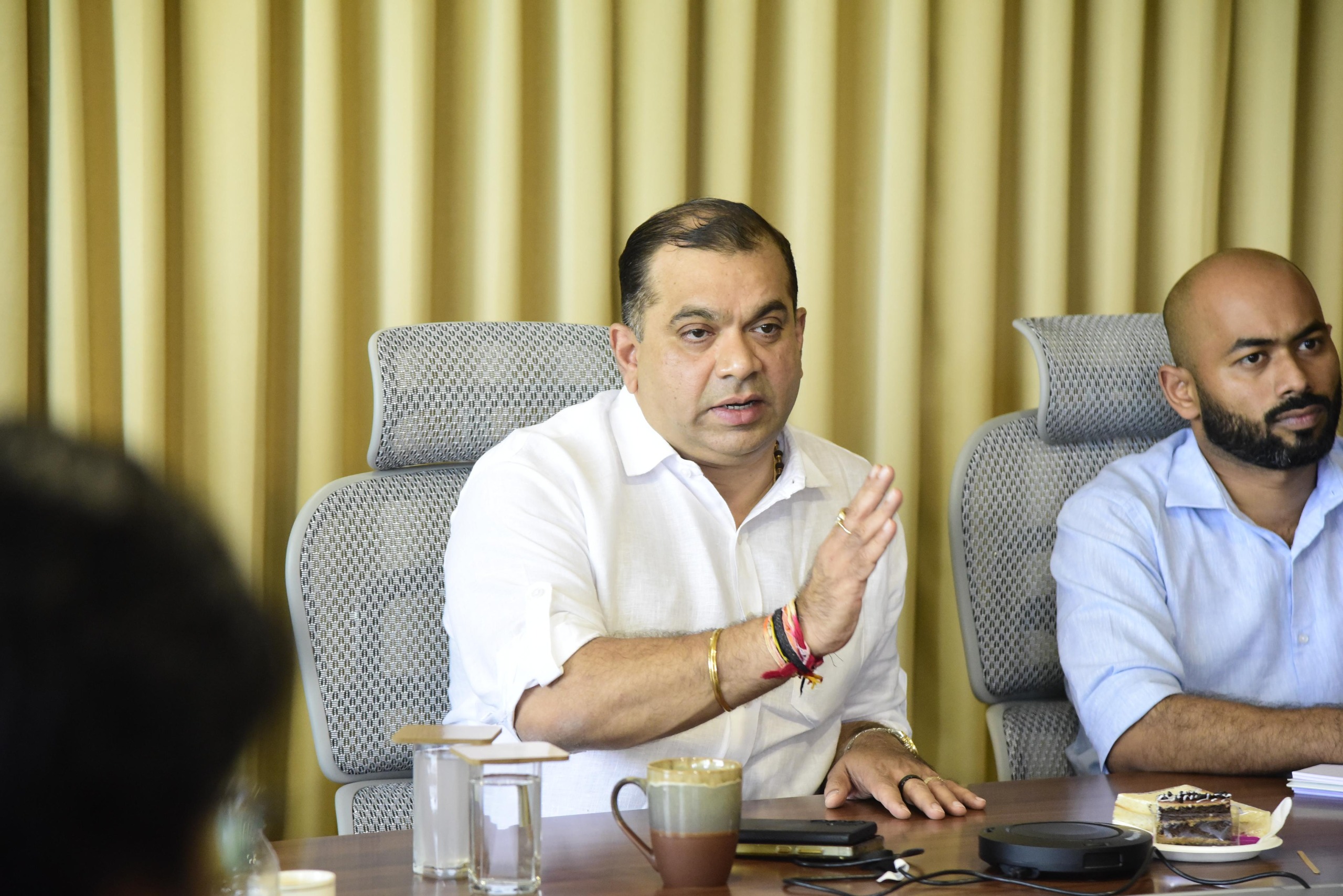
The meeting was held at Paryatan Bhavan, Patto, Panaji, on the theme “Impact of Social Media on Children and Regulatory Safeguards for Child Safety.” It was chaired by Minister for Information Technology, Electronics & Communications, Shri. Rohan Khaunte.
“Children today are often introduced to mobile phones at a very young age, which can eventually develop into an addiction. It’s therefore important for parents to take responsibility, closely monitor their children’s activities and instill good cyber hygiene from an early age. As a State, we must bring together academia, industry and government to create a comprehensive document. Goa needs to strike a balance between enabling access to educational digital tools while identifying and regulating platforms that may be detrimental to children. Through the Hon’ble Chief Minister of Goa, Dr. Pramod Sawant, we will take these recommendations to the Central Government.”
6, Mar 2026
WeNaturalists Mobilises 3,000 Students Nationwide Through Campus Champions Program and Expanding to 15 Plus Campuses
Mar 6: Across India’s campuses, a new wave of student-led sustainability action is quietly taking shape. Through its Campus Champions Program, WeNaturalists is enabling college students to lead environmental & sustainable initiatives that are rooted in real-world impact and long-term cultural change. What began just over a year ago has already grown into a pan-India movement, spanning more than 15 college campuses and reaching approximately 3,000 students across schools and colleges combined.

The Campus Champions Program is designed around a simple idea: students are not just participants in sustainability conversations, but leaders of them. Each Campus Champion leads a group of students from their campus who work closely with the WeNaturalists team, receiving guidance, mentorship, resources, and access to digital tools that help translate ideas into on-ground action. The program is active across campuses in Maharashtra, Gujarat, Delhi, Uttar Pradesh, Madhya Pradesh, Assam, Rajasthan, and Karnataka, reflecting its reach beyond metro cities into diverse regional contexts.
Unlike conventional eco-clubs, the initiative focuses on building continuity and ownership. Campus Champions are supported to design and execute projects that respond to their campus context, while also gaining early exposure to sustainability-linked career pathways. For college students, the emphasis is on career exploration within the green economy, supported through one-on-one guidance, mentorship, and access to relevant networks, depending on each student’s area of interest and study.
The program is currently in its second year, shifting from proof of concept to scale. Students and Campuses that have completed their first year of participation are now positioned as peer mentors for newer students and institutions entering the ecosystem. Student-created content from these campuses gets amplified via WeNaturalists’ growing media ecosystem and connects participants to a wider community of over 500,000 like-minded community members on the WeNaturalists’ digital platform.
Amit Banka, Founder & CEO of WeNaturalists said,
“Through the Campus Champions Program, we’ve seen how powerful student ownership can be when it’s supported by the right structure and community. Our vision is to build sustainable cultures on campuses that don’t disappear when one student graduates, but continue to grow year after year. Over the last few years, students across different states have shown that meaningful climate action can begin right where they are. As we move forward, our focus is on scale with intention, bringing campuses together, amplifying student voices, and creating documented proof of grassroots action from an early age. We believe that when students are given trust, mentorship, and a platform, they don’t just participate in change, they lead it.”
Measurable outcomes have already begun to emerge through these efforts. At a Mumbai college, over 100 students conducted a campus water audit that helped reduce water wastage by nearly 20 percent, translating learning into tangible infrastructure impact. Campus Champions have also led awareness initiatives such as film screenings on plastic pollution and sustainable fishing, and environmental education sessions designed for differently-abled groups in Indore, extending sustainability action beyond campus boundaries. These activities have helped build visible, on-ground change while strengthening student ownership of environmental work.
Over the next three years, WeNaturalists aims to establish active Campus Champions on at least 50 campuses across India, ensuring that sustainability efforts continue beyond individual academic years. The long-term vision is to create a recognized credential for student-led environmental action, offering documented proof of contribution while strengthening the bridge between campus energy and long-term climate action.
6, Mar 2026
Icahn School of Medicine at Mount Sinai Remains Among Top Institutions for NIH Funding
New York, Mar 05: The Icahn School of Medicine at Mount Sinai, part of the Mount Sinai Health System in New York City, continues to rank among the top institutions for National Institutes of Health (NIH) research funding, sustaining its overall standing as No. 11 nationally.
Including grants and contracts, the School received $501.7 million from the NIH in the most recent federal fiscal year, placing it in the 99th percentile among private U.S. medical schools in research dollars per investigator, according to the Association of American Medical Colleges.
Additionally, recently released department rankings published by the Blue Ridge Institute for Medical Research (BRIMR) further underline the institution’s expanding prominence in biomedical research across multiple disciplines. The BRIMR rankings are derived from data gleaned from the NIH for the federal fiscal year ending in September 2025.
Overall, 13 departments representing basic and clinical science at Mount Sinai placed within the top 10 nationwide for NIH funding, a strong indicator of sustained institutional momentum in high-impact research. Notably, the Department of Pharmacology moved up to No. 1 in the standings from No. 2 in 2024. The Department, part of the Graduate School of Biomedical Sciences, succeeded in the standings largely due to its advances into understanding the mechanisms of disease, in addition to leveraging these discoveries for the development of novel therapeutics.
“I am tremendously proud of our faculty, staff, and trainees whose relentless pursuit of discovery continues to elevate Mount Sinai’s research enterprise,” said Eric J. Nestler, MD, PhD, Anne and Joel Ehrenkranz Dean of the Icahn School of Medicine and Executive Vice President and Chief Scientific Officer of the Mount Sinai Health System. “These NIH rankings reflect our enduring commitment to scientific excellence and the translational impact of our work across basic science, clinical research, education, and patient-focused innovation.”
Highlights of NIH Funding Performance and Departmental Standings
- Overall, eight clinical and five basic science departments or fields were ranked among the top 10 across the United States. The clinical departments/fields were Dermatology, Emergency Medicine, Medicine, Neurosurgery, Physical Medicine, Psychiatry, Public Health, and Urology; in the basic sciences, Genetics, Microbiology, Neuroscience, Pharmacology, and Stem Cell Biology and Regenerative Medicine. Twelve departments moved up in the standings in 2025, reflecting strong progress year over year.
- Mount Sinai is now ranked No. 1 in Pharmacology; No. 2 in Neuroscience; No. 3 in Dermatology, Microbiology, and Psychiatry; and No. 4 in Public Health funding.
- The Department of Microbiology secured the largest dollar increase, adding $8.1 million to its funding base for a total of $26.5 million last year.
- The Department of Dermatology’s continuing excellence in skin biology and translational research propelled the Department in securing high-level NIH funding and a top spot in the rankings.
Mount Sinai’s No. 4 ranking in Public Health reflects the established excellence of the Department of Environmental Medicine along with a department established just two years ago, the new Department of Public Health. The former is led by Robert O. Wright, MD, MPH, Ethel H. Wise Professor of Community Medicine, Chair of the Department of Environmental Medicine, and Co-Director of the Institute for Exposomic Research at the Icahn School of Medicine at Mount Sinai. And the Department of Public Health, which emphasizes a transdisciplinary team approach in understanding and treating disease, underscoring a deeper integration of public health and translational sciences, is led by Rosalind J. Wright, MD, MPH, the Horace W. Goldsmith Professor in Children’s Health Research at the Icahn School of Medicine at Mount Sinai.
In addition to institutional ranking success, Icahn School of Medicine researchers continue to secure targeted NIH awards that advance discovery across health priorities. Recent support includes multimillion-dollar grants for studies on neurological aging, congenital heart disease outcomes, and several translational research programs that bridge basic science with potential new interventions.
|
|


