


5, Feb 2026
Students from India Achieve Results in Outstanding Cambridge Learner Awards
Cambridge University Press & Assessment (Cambridge) today announced the winners of the Outstanding Cambridge Learner Awards (OCLA) in India, recognising exceptional academic performance by secondary school students in the November 2024, March 2025, and June 2025 Cambridge examination series.
A total of 227 students from India have been honoured for outstanding achievement in Cambridge IGCSE™, International AS & A Level examinations, including 86 students who secured the highest marks in the world and 107 students who achieved the highest marks in India in a single subject. In addition, 72 students were recognised from the November 2024 examination series, while 155 students received awards from the March and June 2025 series.
The awards highlight India’s strong performance in core academic disciplines, with 85% of ‘Top in the World’ awardees excelling in Mathematics, Science, and English. Cambridge also noted a growing interest among Indian learners in foreign languages such as Spanish, German, French, Chinese, and Arabic at the AS & A Level stages.
The Outstanding Cambridge Learner Awards programme celebrates student excellence across more than 40 countries worldwide, recognising learners who demonstrate exceptional academic ability, critical thinking, and subject mastery. Cambridge qualifications are globally recognised and highly valued by leading universities and employers for preparing students to succeed in higher education and beyond.
Commenting on the achievement, Vinay Sharma, Regional Director, South Asia – International Education, Cambridge, said, “Cambridge learners are at the heart of everything we do. We are proud to celebrate the outstanding achievements of learners from India, whose success reflects exceptional academic ability, dedication, and perseverance. These awards recognise the highest levels of performance worldwide and honour not only learners, but also the vital support of their teachers and parents. As part of the University of Cambridge, we deliver qualifications that are trusted globally and equip learners with the skills and confidence to pursue their future ambitions.”
In addition to recognising top academic performers, the awards also celebrate High Achievement winners in subjects with lower candidature in India, as well as students who achieved the highest cumulative marks across multiple subjects, having outperformed thousands of candidates globally.
The awards ceremony was attended by representatives from two UK Russell Group university branch campuses in India, both of which announced exclusive scholarship opportunities for award recipients.
University of York Mumbai, a campus of the University of York, UK, announced three scholarships for Outstanding Cambridge Learner Award recipients seeking admission in the 2026–27 academic year. Each scholarship will offer a full waiver of tuition fees for the first year of study and will be available for the following undergraduate programmes:
-
BSc (Honours) Computer Science
-
BSc (Honours) Economics
-
BA (Honours) Business of the Creative Industries
Similarly, University of Liverpool Bengaluru, a campus of the University of Liverpool, UK, announced that Cambridge International A Level students who are OCLA recipients will be considered for five University of Liverpool Bengaluru–Cambridge Scholarship Awards starting in 2026. These scholarships will offer a tuition fee reduction for the first year of study, subject to meeting entry requirements.
The Cambridge Scholarship Awards reaffirm the universities’ commitment to recognising academic excellence and supporting high-achieving Cambridge learners in their pursuit of global higher education opportunities.
- 0
- By Neel Achary

3, Feb 2026
CFTI Fast-Tracks School Development Initiatives Pre FY-End
Mumbai, Maharashtra, Feb 03: With the March 31 financial year-end approaching, the Centre for Transforming India (CFTI) has rolled out a set of education-focused initiatives across schools in Mumbai and rural regions to support the timely utilisation of unspent CSR funds. These projects are designed for execution within short timelines and aim to address persistent gaps in school infrastructure, access to learning resources, and student mobility—key factors impacting attendance and learning outcomes in government and rural schools.
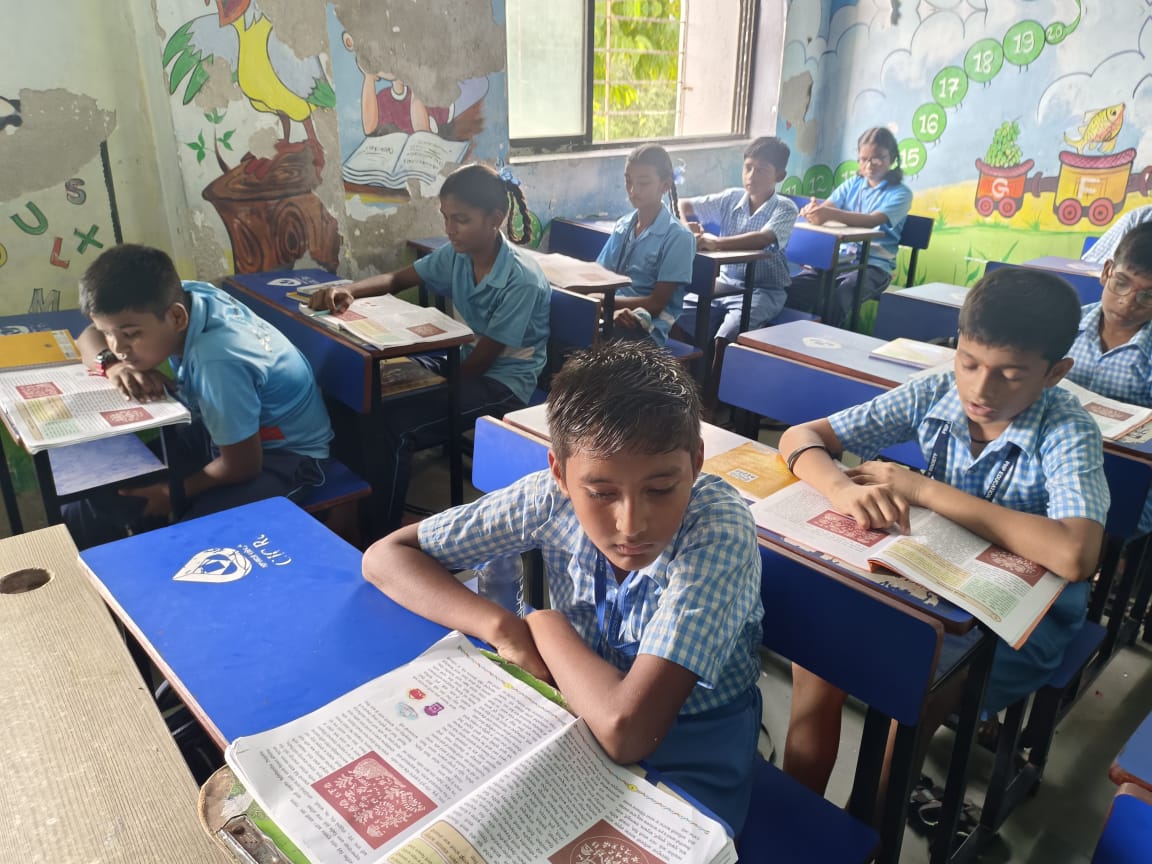
The initiative spans a wide range of school development and education support interventions that can be implemented within FY-end timelines. These include student mobility support such as bicycle distribution for girls; provision of academic kits and scholarships; digital learning enablement through tablets and computer installations; classroom and furniture upgrades; drinking water and sanitation improvements; and the development of sports and physical education infrastructure in rural schools.
CFTI brings significant on-ground implementation experience, having previously executed similar initiatives across multiple states. This includes the distribution of over 35,000 bicycles, award of more than 1,300 scholarships covering students from early education to postgraduate levels, and deployment of over 800 tablets and 100 computers to improve digital access. Infrastructure interventions have included upgrades to more than 90 classrooms, donation of over 1,200 benches across Maharashtra, Bihar, Vizag, and Pondicherry, installation of 34 RO water purifiers, integrated upgrades across 144 schools, and the development of sports facilities in select rural locations.
Commenting on the initiative, Amit Deshpande, Chief Operating Officer, Centre for Transforming India (CFTI), said,
“As the financial year draws to a close, CSR teams often face time and execution constraints. Having projects that are implementation-ready enables CSR funds to be deployed within the reporting cycle while addressing specific, on-the-ground needs of schools and students.”
Through an approach centred on execution readiness, monitoring, and transparent reporting, CFTI partners with corporates to deliver education projects within the financial year, with the objective of converting CSR allocations into clearly defined and measurable outcomes at the school and community level.
3, Feb 2026
St. Joseph’s School Celebrates 25 Glorious Years with Spectacular AgLumina Festival

Feb 3: St. Joseph’s School, Asmangadh Palace, Malakpet, Hyderabad, celebrated its Silver Jubilee Annual Cultural Festival, AgLumina — Illuminating Talent, Celebrating Excellence, at GSR Conventions, Hasthinapuram. The two-day festival stood as a fitting reflection of the institution’s legacy built over 25 years of dedicated service.
The programme commenced on Saturday, 31st January, 2026 with a welcome address by the Principal, Mrs. U. A. Sundari, who briefly outlined the significance of the Silver Jubilee celebrations and the school’s journey over the years. The Chief Guest for the day was Dr. K. S. Jawahar Reddy, IAS (Retd.), Chief Secretary (Retd.), Government of Andhra Pradesh, who addressed the gathering and appreciated the school’s consistent academic and co-curricular growth. The event was also graced by the presence of Shri M. Anil Kumar, IRS, Principal Chief Commissioner of Income Tax, AP & Telangana Region.
The celebrations continued on Sunday, 1 February 2026 with the blessings of Rev. Msgr. Yeruva Balashowreddy, Vicar General, Archdiocese of Hyderabad.
The Chief Guest for the day was Prof. Dr. V. Balakista Reddy, Chairman, Telangana Higher Education Council (TGCHE).
Mrs. Dhatri Reddy, IAS, CEO, Ratan Tata Innovation Hub, Government of Andhra Pradesh, and an alumna of St. Joseph’s School, attended as Guest of Honour.
The event gained further distinction through the gracious attendance of Shri T. Vijay Kumar Reddy, Indian Information Service (IIS), eminent civil servant and distinguished administrator, and U Alexander Reddy, Secretary, St. Anthony’s Education Society, across both days of the celebration. Parent representatives of the School Cabinet were also invited as the special guests on the occasion.

Students from various classes presented cultural performances spread across the two days. A special highlight of the programme was the dance drama by the students of Grade 9, “A Vision That Became a Legacy,” tracing the journey of the founder and the growth of the institution from its inception to its present standing. Gold medals were awarded to the school’s ICSE Board Examination 2025 toppers and class wise proficiency winners, acknowledging their scholastic achievements.
The Silver Jubilee Annual Cultural Festival, AgLumina, concluded on a high note, embodying the event’s motto of illuminating talent and celebrating excellence. As gold medals gleamed under the lights and applause echoed for the students’ stellar performances, the event not only honoured 25 years of transformative education but also inspired a new generation to carry forward this illustrious legacy with pride and passion.
2, Feb 2026
India’s New University Townships and NID Expansion Set to Bridge Education-Industry Gap
Fr. Nelson A. D’Silva, S.J., Acting Director – XLRI Delhi-NCR
The plan to develop five University Townships along India’s major industrial and logistics corridors is a transformative step toward bridging the gap between education and industry. These townships are not mere clusters of buildings; they are integrated ecosystems where universities, research hubs, and skill centers coexist with residential spaces.
By colocating academia and industry, we create a living laboratory where learning is informed by real-world industrial challenges. The introduction of a ‘challenge route’ to guide States is particularly innovative—it encourages the creation of high-performance hubs rather than just additional infrastructure. This initiative ensures that graduates are ready to step directly from campus into leadership roles in India’s emerging sectors.
Mr. Kanwal Jeet Jawa, President – DESDS (DJIME)
Placing University Townships adjacent to industrial and logistics hubs is a pragmatic approach to skill development. True mastery comes from learning in proximity to real-world operations, not in isolation. By integrating universities, skill centers, and research labs with industrial corridors, we establish a continuous pipeline of professionals attuned to India’s industry needs from day one.
The ‘challenge route’ is a forward-thinking measure, compelling States to focus on building sustainable ecosystems rather than just opening institutes. Students and mentors living and working near industrial hubs ensures a workforce that is genuinely industry-ready, transforming India from a nation of job seekers into a nation of skilled practitioners and innovators.
Mr. Avik Chattopadhyay, Chairperson, XADM & Founder, INDEA
The establishment of a new NID in Eastern India is a landmark move toward democratizing access to world-class design education. For too long, top-tier design opportunities were limited by geography; this initiative invites talent from every corner of the country to contribute to a nationwide creative renaissance.
Beyond addressing regional imbalances, this initiative fuels India’s growing demand for visual content—from digital media to immersive experiences. By linking education directly to enterprise via the new standing committee, we shift from producing mere stylists to nurturing problem solvers capable of driving Atmanirbhar innovation. This is about cultivating design as a national capability—transforming students into founders, creators, and value generators for tomorrow.
Pathikrit Dasgupta , Co-Founder,SabPaisa
By prioritizing AI and digital innovation, Finance Minister Nirmala Sitharaman has outlined a roadmap for the next phase of India’s fintech revolution. At SabPaisa, we interpret this mandate as a call to action to make financial technologies more accessible than ever. We are committed to translating this national vision into practical solutions—building AI-ready, partner-first platforms that remove operational bottlenecks and drive tangible business value. This is a growth-oriented budget, and it fuels our resolve to empower Indian enterprises.
2, Feb 2026
Budget 2026 Strengthens Education with Digital Access, Research, and AI Focus
Mr. Shri Mahavir Goel, Chairman, Venkateshwar International School
“The Budget adopts a system-level approach to strengthening the education sector. It prioritises stronger school foundations through improved digital access, regional-language learning, and greater exposure to science and innovation. In higher education, the focus shifts towards advanced research, artificial intelligence, medical and professional training, and closer engagement with industry. By bringing schools, colleges and careers into closer alignment, the Budget positions education as a practical, outcome-driven system equipped to support India’s evolving economic and workforce needs.”
2, Feb 2026
Education & AI Take Center Stage: Leaders Highlight Budget 2026 Focus on Skills, Upskilling, and Future-Ready Workforce
Mr. Ajit Chauhan, Chairman, Amity University Online
“The rise in education spending to ₹1,39,289 crore in Budget 2026–27, an 8.27% increase over last year, signals a strong national resolve to build future-ready human capital through sustained investment in learning.
The creation of the high-powered Education to Employment and Enterprise Standing Committee is a timely step, especially with its focus on the services sector as a growth engine for Viksit Bharat. By assessing how emerging technologies like AI are reshaping jobs and skill requirements, it can keep curricula and career pathways aligned with real market demand and help institutions respond faster. The priority now is outcome-led implementation and wider, high-quality online participation so future-ready skills scale beyond a few campuses.
These proposed measures will help make India’s talent pipeline a global growth engine, powering our country’s next phase of productivity, innovation, and competitiveness.”
“India’s approach to AI is becoming more grounded and outcome-focused. By positioning AI and emerging technologies as growth multipliers rather than a prestige race, the focus shifts to human-AI collaboration. Further, the proposal to set up a committee to review AI’s impact on the services sector with the ambition of capturing 10% of global services exports by 2047 highlights the scale of opportunity ahead and makes one thing clear: large-scale upskilling is a non-negotiable so the workforce can use AI confidently, ethically, and productively. Regulation will matter, but real value will come from enabling talent to apply AI effectively in everyday work.”
1, Feb 2026
Budget 2026 Focuses on Future Skills, Education, and Innovation-Driven Ecosystems
“Union Budget 2026 goes beyond allocations to architect ecosystems – linking education, healthcare, creativity, and industry at scale. From university townships and regional medical hubs to content creator labs and design institutes, the focus is clearly on future skills and employability. For brands and institutions, this marks a shift from transactional communication to purpose-led narratives rooted in impact and innovation. As policy enables new talent pipelines and digital-first learning, strategic communication will be critical in building credibility, attracting stakeholders, and translating policy vision into measurable public trust and growth.”
31, Jan 2026
Wipro earthian Awards 2025 Felicitate Excellence in Sustainability Education
BENGALURU, India, Jan 31: Wipro Limited today hosted the 15th edition of the Wipro earthian Awards 2025 at Azim Premji University, Bengaluru. The annual program promotes integrated sustainability education and recognizes schools and colleges across India that demonstrate meaningful and enduring engagement with sustainable practices and principles.
The 2025 Wipro earthian program saw over 2,000 submissions, with an independent jury selecting 25 winning teams. The projects showcased fresh insight into biodiversity, waste, and water, combining hands-on activities with reflective written work.
Anurag Behar, Chief Executive Officer, Azim Premji Foundation, and Narayan P. S., Global Head of Sustainability and Societal Initiatives, Wipro Limited, and Managing Trustee, Wipro Foundation, presented certificates and cash prizes to the winning teams.
“The strength of the Wipro earthian program lies in grounding sustainability in lived reality, helping students understand water stress through nearby lakes and rivers, biodiversity through neighborhood species, and waste through everyday community practices,” said Narayan P.S. “Across regions and schools, students have moved well beyond awareness to sustained engagement, approaching real environmental challenges with curiosity, rigor, and empathy. Their work reflects a deep understanding of sustainability as a shared responsibility. At a time when global crises can feel distant or overwhelming, it reinforces an essential principle that meaningful care for the planet begins at home.”
This year, 24 sustainability educators from 14 regional non-governmental organizations (NGOs), part of the Wipro Sustainability Educators Network (SEN), collaborated closely with local communities to lead activities such as nature camps, library sessions, and winter and summer sustainability schools. In addition, over 100 schools were recognized by the Wipro Foundation at events conducted by the NGOs, enabling deep, localized learning and building student awareness of real-world environmental challenges.
Wipro earthian also supports sustainability in higher education through the ‘Ideas to Impact (i2I)’ challenge, run in collaboration with IIT Madras since 2023. The contest encourages students to validate and develop eco-innovative ideas into workable prototypes that deepen understanding and promote action toward ecological sustainability. Since launch, i2I has seen national participation of 2,700 entries from over 1,300 colleges, with 10 teams being recognized this year for innovations in Energy, Building Materials, and Water.
Since its inception in 2011, Wipro earthian has engaged with more than 51,000 schools, 210,000 students, and 41,000 teachers. Its impact has grown through collaborations with partners such as CEE (Centre for Environment Education), CPREEC (C.P.R. Environmental Education Centre), Wild Ecologues, IIT Madras, IIM Bangalore, state governments, and educators in the Sustainability Educators Network.
31, Jan 2026
EduConclave 3.0 Highlights Inclusive STEM Education for the Next Generation
Pune, Jan 31: Pune Knowledge Cluster, under the Office of the Principal Scientific Adviser to the Government of India, in collaboration with Salaam Bombay Foundation, organised EduConclave 3.0 on January 30, 2026, at Savitribai Phule Pune University.
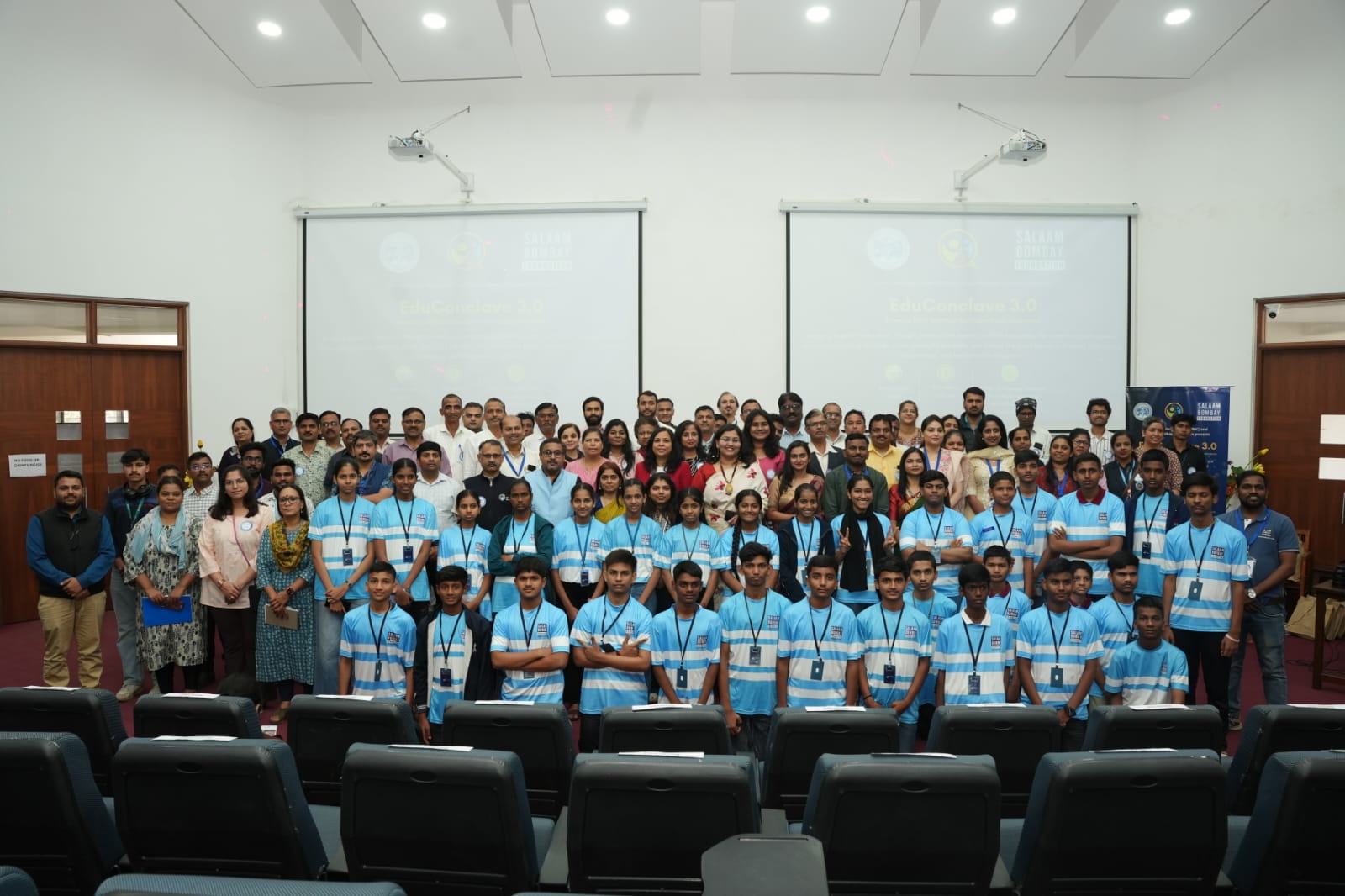
The two-day conclave brought together educators, policymakers and STEM practitioners to explore new and practical approaches to STEM education in India. The programme featured hands-on workshops on Artificial Intelligence and Zero-Cost Game-Based Learning, a panel discussion on building future-ready classrooms, and a STEM showcase highlighting emerging education technologies.
A key highlight of EduConclave 3.0 was TechVision, a student-led technology exhibition where students from government and government-aided schools presented solutions to real-world challenges. More than 750 students from over 25 schools across Mumbai, Pune and Nashik participated, developing over 100 projects across robotics, artificial intelligence and other new-age technologies. The top 14 projects were showcased at the conclave, which was attended by over 1,000 students from 19 government schools in Pune.
Among the notable innovations was SpoilAlert, developed by students Ayush Bhosale and Shreyash Bile. The handheld food safety scanner detects whether food is fresh or spoiled by sensing spoilage gases and changes in colour and moisture, with results displayed instantly on a screen. Designed as a low-cost, non-destructive device, it aims to reduce food waste and help prevent foodborne illnesses.
In the agriculture category, ShetiSuraksha, an autonomous farming robot created by Arjun Vishwasroa and Soham Hajare, attracted attention for its practical application. The robot monitors plant and soil conditions, waters only dry areas, detects rainfall, deters pests, and sends real-time updates to the farmer’s phone. The solution is designed to save water and labour while supporting healthier crops and more efficient farm management.
Other innovations include: SalineGuard Pro (saline monitoring system that silently tracks fluid levels and alerts nurses in time – enhancing patient safety without disturbing hospital calm), NextGen Cart (a smart shopping cart that scans barcodes, verifies item weight, and shows real-time billing on your phone – making checkout faster, fairer, and hassle-free), Poll Wizard (digital voting system that ensures secure, duplicate-free polling with instant results and easy Excel-based data management), FallWatch (bike-mounted fall detection system that senses accidents and instantly shares live location with emergency contacts for faster lifesaving response), among others.
Dr. Priya Nagaraj, Interim-CEO, Pune Knowledge Cluster (PKC) said,
“We are very happy to be hosting the third year of EduConclave, which is our annual education conference. This year’s focus is on integrating digital pedagogies into school teaching and learning practices. We are happy to see that we have more than 70 participants, and we have a very large student-led exhibition as part of EduConclave this year.
We hope to continue this legacy of having education and STEM education conferences in Pune, and we hope this becomes a flagship event for many educators and organizations working in STEM pedagogies to come, collaborate, network, and bring about meaningful change and impact in education.”
Commenting on the conclave, Mr. Gaurav Arora, Chief Growth Officer and Senior Vice President – skills@school & Sports, Salaam Bombay Foundation, said,
“Aligned with the vision of the National Education Policy 2020, EduConclave underscores the importance of experiential and inquiry-based STEM education in bridging learning gaps for students from resource-challenged backgrounds. By nurturing curiosity and confidence at the school level, our collaboration with Pune Knowledge Cluster aims to strengthen pathways to higher education and future careers in science and technology.”
EduConclave 3.0 concluded with a strong call to action to ensure equitable access to quality STEM education across regions and school systems. By placing students at the centre of innovation and learning, the conclave reaffirmed a shared commitment to building inclusive, future-ready education ecosystems that empower young minds to explore, innovate and lead.
30, Jan 2026
ITM University Raipur Legal Aid Clinic Hosts Drug Awareness and Health Workshop
ITM University, Raipur Legal Aid Clinic Organizes Drug Awareness and Health Guidance Workshop under NALSA Scheme
Raipur, Jan 30: The Legal Aid Clinic of ITM University, Raipur organized a workshop on Drug Awareness and Health Guidance under the National Legal Services Authority (NALSA) scheme. The objective of the workshop was to create awareness among students about the harmful effects of substance abuse and to encourage them to adopt a healthy and responsible lifestyle.
Dr. Lakshmi Murthy, Pro Vice Chancellor of ITM University, Raipur, graced the occasion as the Chief Guest. Addressing the students of Mother’s Pride School, she emphasized the importance of managing academic stress wisely during student life and staying away from substance abuse. Dr. Murthy highlighted that making informed and healthy choices at a young age plays a crucial role in shaping a successful future.
Speaking on the occasion, Dr. Jellis Subhan, Head of the Department, Faculty of Law, advised students to remain vigilant about the serious physical, mental, and social dangers associated with drug addiction and to consciously avoid such habits.
As part of the program, students of the Faculty of Law, ITM University presented an impactful street play focusing on drug awareness, which was well received by the audience. A short film titled “Dhuaan”, depicting the ill effects of drug abuse, was also screened for the students.
Dr. Lakshmi Murthy, Pro Vice Chancellor, ITM University, Raipur, said,
“Managing academic stress wisely and staying away from substance abuse are essential for students to build a healthy and successful future.”
Students and teachers from Mother’s Pride School, along with professors and students of ITM University, were present at the event. The program was conducted by Dr. Shivli Shrivastava, Assistant Professor, Faculty of Law, ITM University.
The workshop concluded with a strong message encouraging students to lead a drug-free life and to spread awareness in society about the harmful consequences of substance abuse.


