


11, Jul 2026
Rajasthan Records Highest Female Presence in Higher Education
Jaipur, July 11: Rajasthan has recorded the highest female participation rate in colleges while overall college admissions in the state have declined for the second consecutive year, reflecting a significant trend in women’s access to higher education.
The latest data highlights the growing presence of female students in higher education institutions across Rajasthan, with women accounting for a substantial share of college enrollments. The increase in female participation indicates improved awareness, accessibility, and opportunities for women pursuing higher studies.
However, the state has witnessed a decline in overall student admissions for the second year in a row, raising concerns among education stakeholders about factors affecting college enrollment. Experts have pointed to changing demographics, economic challenges, and shifting education preferences as possible reasons behind the trend.
Education officials said efforts are being made to encourage more students to pursue higher education through improved infrastructure, scholarship support, skill-based programmes, and greater access to quality institutions.
The rise in female participation is being viewed as a positive development, highlighting the progress made in promoting women’s education and empowerment. Authorities are focusing on addressing challenges linked to declining admissions while ensuring continued growth in higher education opportunities across the state.
- 0
- By Neel Achary

10, Jul 2026
Jharkhand to Conduct ‘Chunav Pathshala’ at All Polling Booths for Electoral Roll Verification
Ranchi, July 10: The Jharkhand government will organise ‘Chunav Pathshala’ at all polling booths across the state on July 14 to facilitate electoral roll verification and assist citizens in updating their voter details.
The initiative, aimed at strengthening the accuracy of electoral rolls, will provide voters an opportunity to verify their information, raise corrections, and seek assistance regarding voter registration-related processes.
Officials associated with the election administration have been directed to ensure effective coordination and public participation during the programme. Booth-level officers will be present at polling stations to guide citizens through the verification process and address their queries.
The ‘Chunav Pathshala’ initiative is part of ongoing efforts to improve voter services, increase awareness, and ensure that eligible citizens are properly included in the electoral database.
Authorities have appealed to voters to participate in the programme and verify their details to help maintain updated and error-free electoral rolls ahead of future elections.
10, Jul 2026
New Initiative Seeks to Empower India’s Next Generation of Scientists
New Delhi, July 10: RSI-India, supported by the Adani Group, has announced efforts to encourage scientific learning and nurture the next generation of Indian scientists through advanced educational opportunities and research exposure.
The initiative aims to identify and support talented students by providing them with access to mentorship, innovation platforms, and opportunities to engage with scientific research.
Through its programmes, RSI-India seeks to strengthen India’s science and technology ecosystem by encouraging curiosity, creativity, and problem-solving among young learners.
The initiative highlights the importance of developing scientific talent and creating a strong foundation for future innovations in areas critical to the country’s growth.
RSI-India’s efforts are expected to inspire more students to pursue careers in science, research, and technology while contributing to India’s vision of becoming a global hub for innovation.
10, Jul 2026
University of Sydney awarded Australia-India grant for landmark music partnership

Musicians from Sydney Conservatorium of Music with musicians from India’s Subramaniam Academy of Performing Arts at the 2024 Australia-India Youth Dialogue: l-r, Lu Liu (Sydney Con), Vladimir Gorbach (Sydney Con), Bindu Subramaniam (CEO of SaPa), Ambi Subramaniam (CCO of SaPa), Pirashanna Thevaraja
July 10: The University of Sydney has been awarded a 2026 Maitri Grant to support a landmark music partnership between Australia and India, creating new opportunities for students, educators and communities in both countries.
The $180,000 grant was awarded to the University’s Conservatoriu
Vice-Chancellor and President Professor Mark Scott said the partnership would help strengthen the University’s connection with communities across Sydney.
“One of the most exciting aspects of this partnership is its potential to connect the University’s expertise in music and education with communities across Sydney,” said Professor Scott.
“By building relationships with Indian-Australian
India-Australia partnership
The Sydney Conservatorium project is one of 41 initiatives funded through the 2026 Maitri Grants Program, which supports projects that strengthen cultural, educational and research links between Australia and India.
The partnership reflects the growing importance of education, research and cultural exchange in the Australia-India relationship, creating new opportunities for students, educators and communities in both countries.
Minister for Education Jason Clare said education was one of the most important bridges between Australia and India.
He said of the Maitri Grants and the wider university projects around Australia: “This is bringing a world-class Australian education closer to home for more young Indians and creating new opportunities for our researchers to work together.”
Student experience
A key focus of the project is enriching the student experience.
Through the three-year partnership, Sydney Conservatorium of Music students will have opportunities to travel to India to learn alongside musicians, educators and students at Bengaluru’s Subramaniam Academy of Performing Arts (SaPa), a leading centre for music education, performance and intercultural learning in India.
The project will also bring Indian musicians and educators to Sydney, creating new opportunities for students to engage with Indian musical traditions through workshops, performances and creative collaborations at the Conservatorium’s Macquarie Street campus and future teaching facilities in Parramatta.
Students in Sydney will also learn from artists and educators from Sydney’s Indian diaspora community through workshops, performances and collaborations bringing Indian musical traditions to the heart of Conservatorium life. The partnership is expected to support community engagement activities for many years to come, extending the Conservatorium’s cultural engagement into communities with deep and enduring connections to Indian music and culture.
“This project represents a wonderful opportunity to rethink what a conservatorium can be,” said Dr Alex Chilvers, one of the four grant recipients from Sydney Conservatorium of Music. “Australia’s musical culture is enriched by extraordinary traditions that have travelled here with migrant communities, yet those traditions are not always reflected in the core of higher music education.
“We’re looking forward to learning alongside our colleagues at SaPa and working closely with Indian-Australian musicians to explore new ways of teaching, creating and understanding music. We hope this is the beginning of a long-term relationship that benefits students, educators and communities in both countries.”
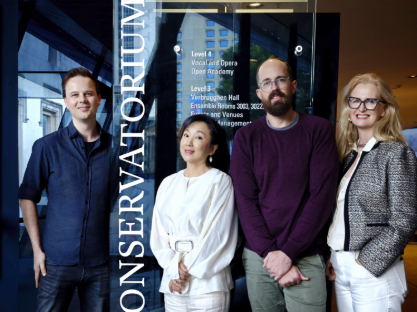
Sydney Conservatorium grant recipients, left to right: Dr Anthony Chmiel, Dr Lu Liu, Dr Alex Chilvers and Ms Kirsty McCahon. Photo: Grace Sui/University of Sydney
The project, A Partnership for Indian-Australian Music, Diaspora Empowerment, and Cultural Exchange, is led by Sydney Conservatorium academics Dr Alex Chilvers, Dr Lu Liu, Dr Anthony Chmiel and Ms Kirsty McCahon (International Partnerships and Events).
The project will support staff exchanges, curriculum development and new approaches to teaching music across cultures. Through the collaboration, educators will develop new curriculum resources, teaching assets and learning materials designed for conservatorium and music programs in both countries, creating a lasting educational legacy for students in Australia and India.
Professor Anna Reid, Dean and Head of School at the Sydney Conservatorium of Music, said the project builds on the Conservatorium’s commitment to international collaboration and intercultural learning.
“This partnership will open up extraordinary opportunities for our students to learn directly from musicians, educators and communities in both Australia and India,” Professor Reid said. “Music has always been a powerful way to build understanding across cultures, and we’re excited to create new opportunities for students to play together, learn from one another and engage deeply with Indian musical traditions. The experiences and relationships that grow from this partnership will enrich our Conservatorium community for years to come.”
Bindu Subramaniam, co-founder and CEO of the Subramaniam Academy of Performing Arts, welcomed the partnership.
“Our partnership with the Sydney Conservatorium of Music has the potential to bring knowledge and understanding of Indian music into mainstream higher education in Australia. It will create opportunities for students, artists and educators in both countries to learn from one another and deepen cultural understanding through music.”
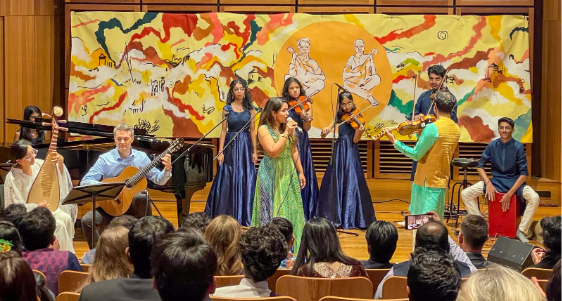
Left to right: Dr Lu Liu (Sydney Conservatorium of Music), Associate Professor Vladimir Gorbach (Sydney Conservatorium of Music), Bindu Subramaniam (CEO of SaPa), Ambi Subramaniam (CCO of SaPa), with musicians from SaPa Academy at Sydney Conservatorium of Music in 2024. Photo: Tim Dwyer
SaPa, headquartered in Bengaluru, India, teaches music to students of all ages and works with over 40,000 children annually as part of its in-schools program. The organisation is recognised for its innovative approach to integrating Indian and Western music traditions and fostering intercultural understanding through music education.
The Maitri Grants Program – Sanskrit for “friendship” – supports projects strengthening the Australia-India relationship through cultural, educational, research and business collaboration. The program is administered by the Australian Government’s Centre for Australia-India Relations.
10, Jul 2026
Assam Govt Flags Teacher Shortage and Low Student Enrolment in Assembly
Guwahati, July 10: The Assam government has informed the state Assembly that more than 60,000 teaching positions remain vacant across schools, while over 30,000 schools have an enrolment of around 30 students each.
The government said the figures highlight key challenges facing the state’s education sector, including teacher availability and declining student numbers in several schools.
Officials stated that efforts are being taken to address vacancies, improve the quality of education, and ensure better utilisation of school infrastructure. The government is also reviewing school-level requirements to strengthen teaching resources and academic facilities.
The issue was raised during the Assembly session, where legislators discussed the need for effective measures to improve school education and provide students with better learning opportunities.
The government reiterated its commitment to filling vacant posts and enhancing the overall education system across Assam.
8, Jul 2026
New Technology to Help Predict Landslide Risks in Himalayan Region
Mandi, July 8: Researchers at the Indian Institute of Technology Mandi (IIT Mandi) have developed an operational landslide early warning system to improve disaster preparedness in the Indian Himalayan region.
The newly developed system will help monitor landslide risks and provide timely alerts, allowing authorities and communities to take preventive action before major incidents occur.
The Himalayan region often faces landslide threats due to heavy rainfall, steep slopes and changing weather conditions. The new technology is expected to support better disaster management, protect lives and reduce damage to infrastructure.
The initiative reflects the growing role of science and technology in addressing natural disaster challenges. The system can help government agencies and local authorities make faster decisions during emergencies.
7, Jul 2026
Mizoram University Museum Gains National Recognition for Biodiversity Conservation Efforts
July 7: The Natural History Museum of Mizoram University has been awarded the Designated Repository status, recognising its contribution towards preserving and documenting the region’s rich biological diversity.
The recognition allows the museum to function as an authorised facility for the conservation, storage, and management of biological specimens collected during scientific research and biodiversity studies.
The new status is expected to strengthen research activities by providing scientists, researchers, and students with better access to valuable natural history collections. It will also support biodiversity documentation and conservation initiatives in Mizoram and the northeastern region.
Officials said the designation reflects the importance of preserving natural heritage and building scientific resources for future research and education.
The achievement marks a significant milestone for Mizoram University and highlights the growing role of academic institutions in advancing biodiversity conservation and environmental studies.
7, Jul 2026
ISB Welcomes the PGP Young Leaders Class of 2028 as the Second Cohort Begins
July 7: The Indian School of Business has welcomed 132 students to the Post Graduate Programme in Management for Young Leaders Class of 2026–28. Building on the success of its inaugural batch, the programme continues to attract exceptional young talent from across the country, bringing together high-potential graduates and early-career professionals who aspire to become future-ready business leaders. As part of its commitment to making world-class management education accessible, ISB has awarded tuition waivers to 24 percentage of the incoming class, including 17 full-tuition waivers and 14 half-tuition waivers.
The cohort, with an average age of 23 years, reflects a strong blend of academic excellence, professional exposure, and diversity. Women constitute 48% of the class, while students from engineering backgrounds account for 47% of the cohort, underscoring the programme’s appeal across disciplines. Students bring between zero and two years of work experience, with backgrounds spanning consulting, banking, healthcare, operations, technology, engineering, and entrepreneurship.
The PGP YL Class of 2026–28 has emerged from a highly selective admissions process and demonstrates strong academic credentials. The cohort reports an average CAT percentile of 99.09, an average GMAT Classic score of 725, an average GMAT Focus score of 684, and an average GRE score of 330. These achievements reinforce ISB’s commitment to attracting some of the brightest young minds from across India.
The incoming class also reflects a rich diversity of experiences and accomplishments beyond academics. The cohort includes national and state-level sportspersons, technology innovators, entrepreneurs, scholarship awardees, corporate professionals, and creative achievers. Students have represented India and their states in disciplines ranging from basketball, cricket, skating, and karate to technology competitions and entrepreneurial ventures, bringing unique perspectives and leadership potential to the classroom.
Speaking about the new cohort, Professor Pranav Jindal, Associate Dean – Admissions & Careers, ISB, said:
“We are delighted to welcome the PGP YL Class of 2026–28 to ISB. This cohort reflects the exceptional talent, ambition, and diversity that define the next generation of leaders. As business, technology, and society continue to evolve rapidly, it is imperative that young professionals develop the skills, mindset, and adaptability required to lead with impact. Through a rigorous curriculum, immersive learning experiences, global exposure, and close engagement with industry leaders, the PGP YL Programme aims to equip students with the capabilities needed to create meaningful value in an increasingly complex world.”
Designed specifically for recent graduates and young professionals with up to two years of experience, the 20-month PGP YL programme combines rigorous management education with technology, data analytics, leadership development, and global exposure. The programme has already demonstrated strong industry acceptance, with the inaugural cohort having completed their summer internships with companies
6, Jul 2026
Another Global Milestone for MAHE as Dr Judith Angelitta Noronha Earns Prestigious FAAN Fellowship
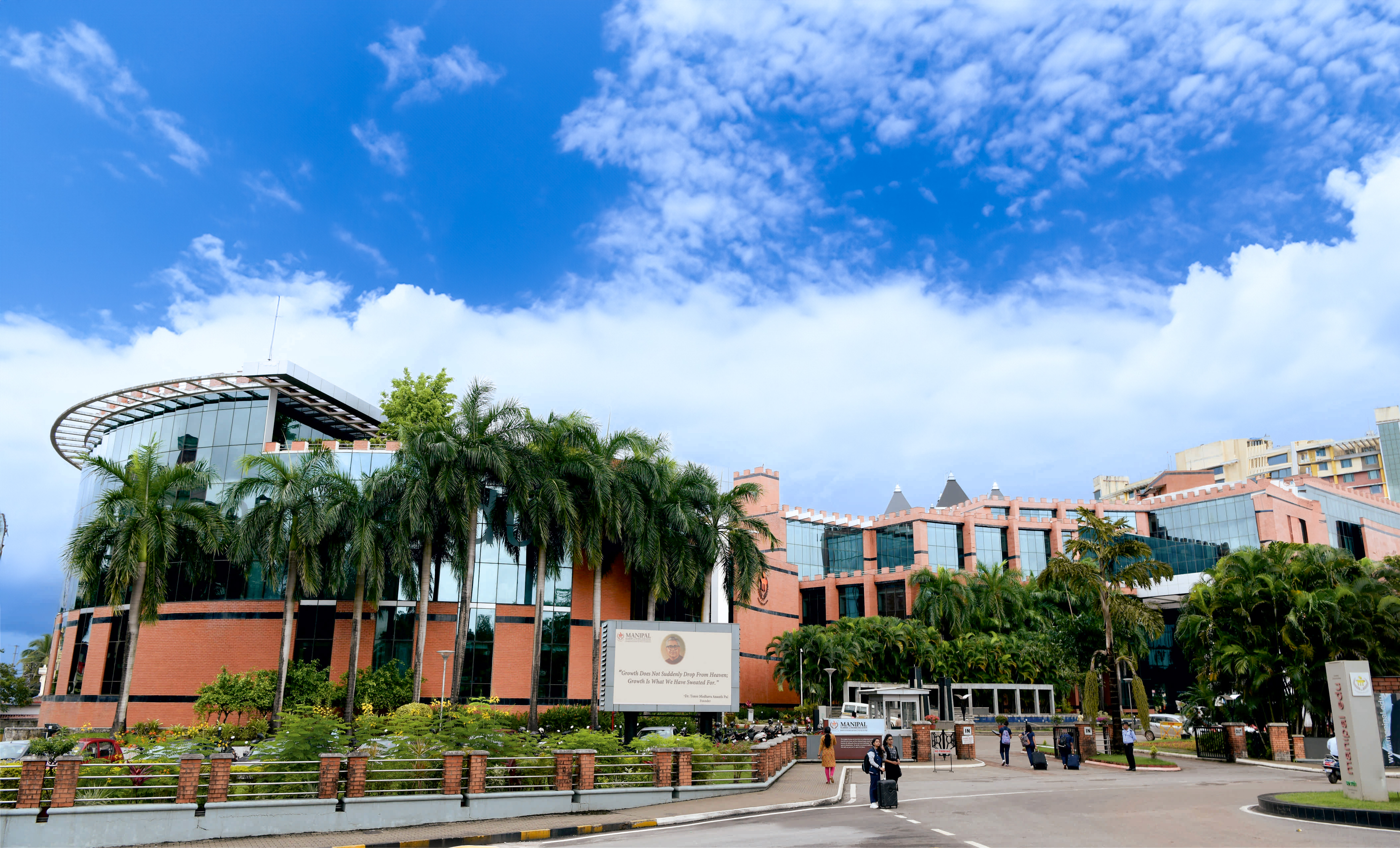
Manipal, July 06: Manipal Academy of Higher Education (MAHE), an Institution of Eminence Deemed to be University, congratulates Dr Judith Angelitta Noronha, Professor and Dean, Manipal College of Nursing (MCON), Manipal, who has been selected as a Fellow of the American Academy of Nursing (FAAN) as part of its distinguished Class of 2026 Fellows.
The American Academy of Nursing announced the 2026 Class of Fellows on June 25, 2026, recognising accomplished nursing leaders from across the world for their outstanding contributions to health outcomes through excellence in education, research, innovation, leadership, and health policy. Widely regarded as one of the highest distinctions in the nursing profession, the AAN Fellowship recognises individuals whose work has made a lasting impact on healthcare and the nursing profession globally.
The 2026 cohort comprises eminent nursing leaders representing 39 U.S. states, the District of Columbia, and 17 countries, reflecting a diverse and influential community of professionals dedicated to transforming healthcare through scholarship, evidence-based practice, policy, and innovation. Dr Noronha’s selection places her among this distinguished international network of nursing leaders.
Congratulating Dr Noronha on this achievement, Dr Sharath K. Rao, Vice Chancellor, MAHE, said, “Dr Judith Angelitta Noronha’s selection as a Fellow of the American Academy of Nursing is a matter of immense pride for MAHE and the Indian nursing fraternity. This prestigious international recognition acknowledges her outstanding contributions to nursing education, research, and leadership over several decades”.
Expressing her gratitude, Dr Judith Angelitta Noronha, Professor and Dean, Manipal College of Nursing, MAHE, said, “I am deeply honoured and humbled to be inducted as a Fellow of the American Academy of Nursing. This recognition is not only a personal milestone but also a testament to the collective efforts of my colleagues, students, and mentors who have been part of my academic and professional journey”.
The formal induction of the 2026 Class of Fellows will take place during the American Academy of Nursing’s Health Policy Conference in Washington, D.C., from October 8 to 10, 2026, with the induction ceremony on the final day of the conference.
6, Jul 2026
OP Jindal Global University Hosts Third India–Japan Higher Education Forum 2026 in Tokyo
Tokyo, July 6 (UDN): OP Jindal Global University successfully hosted the Third India–Japan Higher Education Forum 2026 in Tokyo, bringing together eminent academics, policymakers, and representatives from leading institutions of higher education from both countries.
The forum served as a platform to strengthen academic cooperation between India and Japan, with discussions centred on expanding joint research initiatives, enhancing student and faculty exchange programmes, and deepening institutional partnerships across diverse disciplines, including law, public policy, international relations, and social sciences.
Participants engaged in wide-ranging deliberations on the future of global higher education, with particular emphasis on innovation, sustainability, governance, and cross-border academic collaboration. The discussions also highlighted the growing importance of international academic engagement in addressing shared global challenges.
Speakers at the forum underscored the need for stronger India–Japan academic linkages to foster knowledge exchange, build research capacity, and promote cultural understanding between the two nations.
The event reaffirmed OP Jindal Global University’s commitment to advancing global academic partnerships and strengthening its role as a bridge between Indian and international higher education ecosystems.
Organisers noted that the forum is expected to pave the way for expanded institutional collaborations, joint academic programmes, and increased mobility opportunities for students and scholars in the coming years.


