


3, Jul 2026
“The Future Belongs to Those Who Stay Curious and Empathetic,” Says Epigamia CEO RiteshGauba at NMIMS School of Business Management Orientation in Mumbai
Mumbai, July 3, 2026: SVKM’s NarseeMonjee Institute of Management Studies (NMIMS), School of Business Management (SBM), welcomed students of the incoming MBA Batch of 2026–28 at the Mukesh Patel Auditorium during the Inauguration Ceremony of the Foundation program. This event marks the beginning of the academic journey for students enrolled in the MBA, the MBA (Human Resources)& MBA (Pharmaceutical Management) programs. The inauguration program introduced the new cohort toSBM’s academic ecosystem, industry-oriented learning approach, and leadership development framework.
Designed to facilitate a seamless transition into management education, the Foundation Programfamiliarise students with academic expectations, experiential learning, industry engagement initiatives, and student support systems.Ultimately, the program aims to equip students with the mindset, skills, and perspectives required to thrive in a rapidly evolving business landscape.
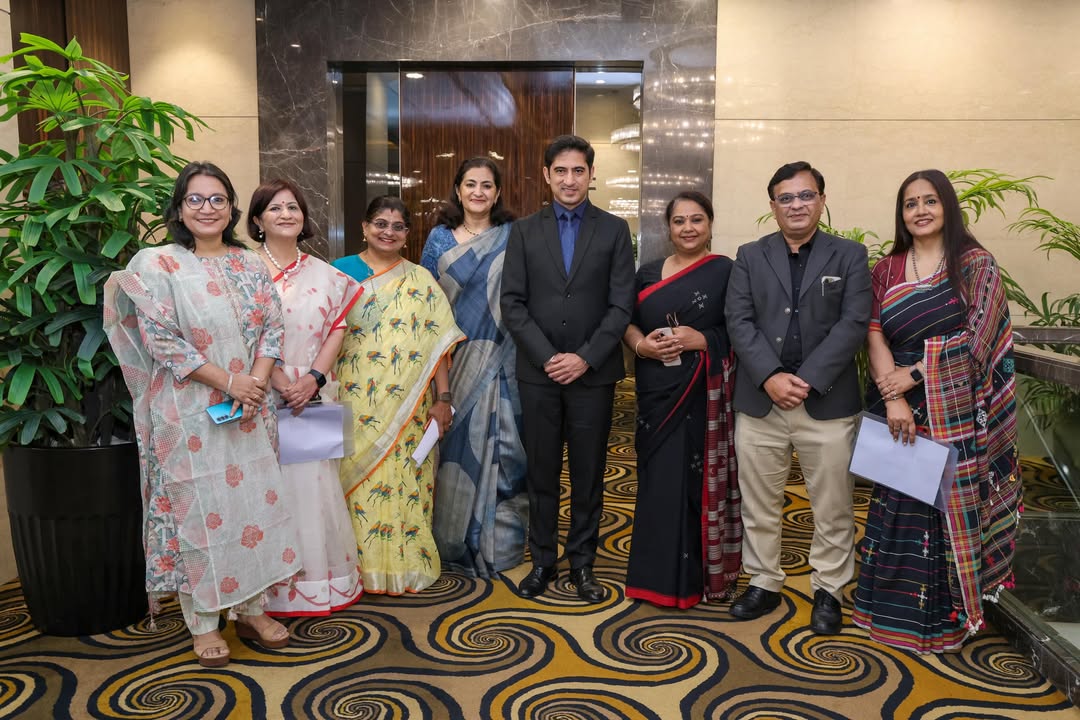
Chief Guest, Mr. Ritesh Gauba, Chief Executive Officer, Epigamia, and a distinguished SBM alumnus, addressed the incoming cohort by sharing insights from his two-decade career across leading global organisations. . Reflecting on the qualities that define successful leaders today, he encouraged students to embrace curiosity, adaptability, and empathy as they navigate their management careers.
Mr. Ritesh Gauba, said, “Success is not built by having all the answers; it is built by staying curious enough to ask better questions, courageous enough to challenge your own limits, and empathetic enough to understand the people around you. The world will reward those who step beyond their comfort zones, embrace continuous learning, and balance intelligence with humanity. Be curious, think beyond the obvious, and never lose the human touch because that is what truly sets leaders apart.”
Welcoming the new batch, SBM leadership emphasised the importance of embracing learning beyond the classroom and developing the resilience, adaptability, and ethical grounding required to succeed in an increasingly interconnected and technology-driven business environment.
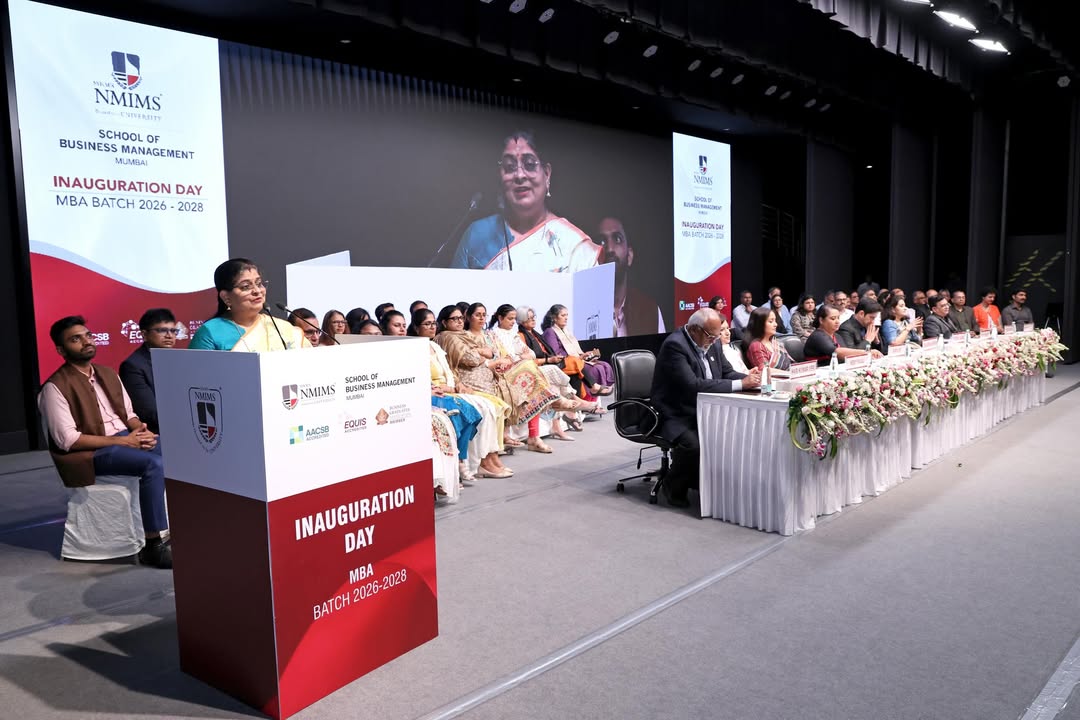
Dr. Meena Chintamaneni, Pro Vice Chancellor, NMIMS, said, “Greatness is not achieved in comfort; it is forged through guidance, sharpened by challenges, strengthened by learning from mistakes, and defined by the values we uphold. Trust your mentors, embrace every opportunity to grow, and remember that your true worth lies not in the degree you earn but in the integrity, competence, and character you build along the way. Wherever life takes you, leave a mark through your actions, because success is not just about reaching milestones; it is about becoming the best version of yourself and inspiring others through your journey.”
The event was graced by the presence of distinguished academic leaders from the School of Business Management, NMIMS, including Dr. Chandrima Sikdar, Dean of Academics and Learning Experience, Dr. Mayank Joshipura – Advancing Research &Innovationand Dr. Veena Vohra, Dean of Accreditation and Strategic Initiatives. Through their respective leadership roles, they continue to contribute significantly to advancing academic excellence, fostering innovation, and strengthening SBM’s commitment to quality education, impactful research, and strategic growth.
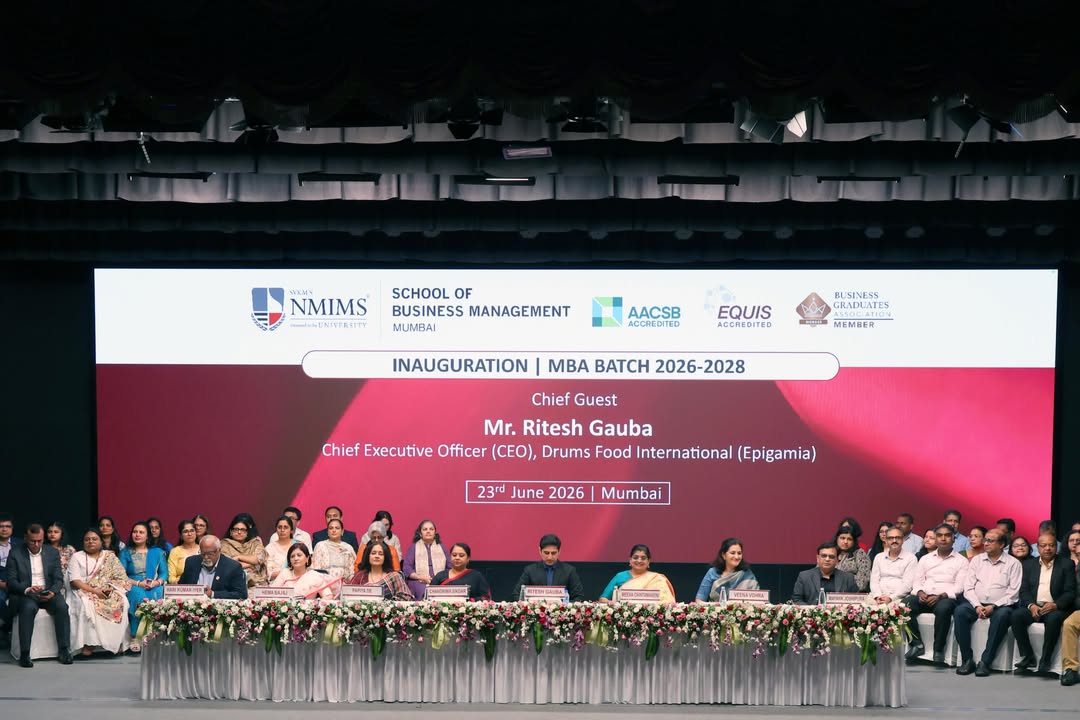
With a legacy of academic excellence and industry relevance, SBM NMIMS remains dedicated to shaping responsible leaders who can navigate complexity, drive innovation, and create sustainable value. The Foundation Programme serves as the first step in this journey, inspiring students to learn, lead, and grow with purpose.
- 0
- By Neel Achary

2, Jul 2026
Work-Study Dual Model: A Bridge to Fill Academics & Industry Gap
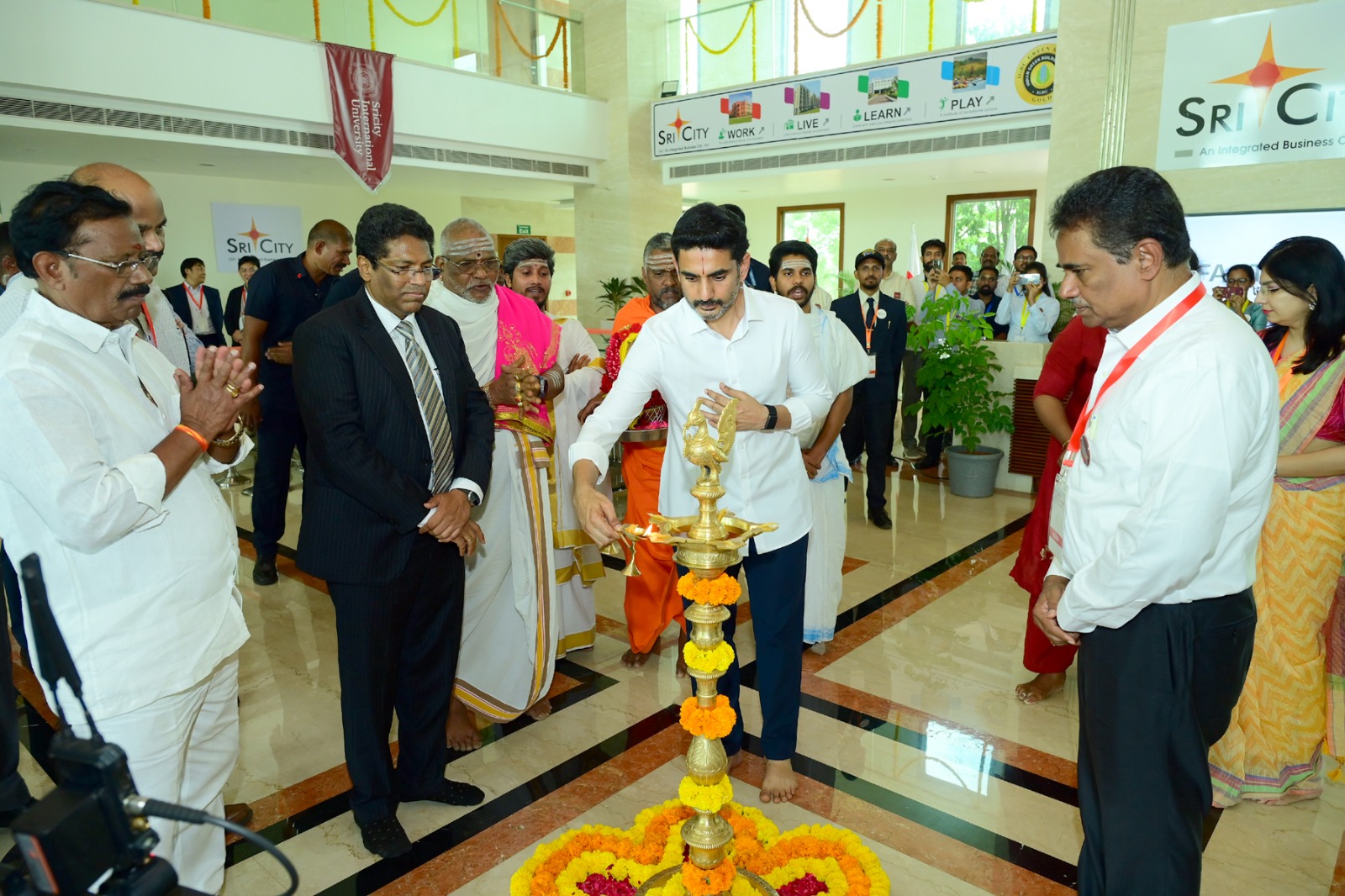
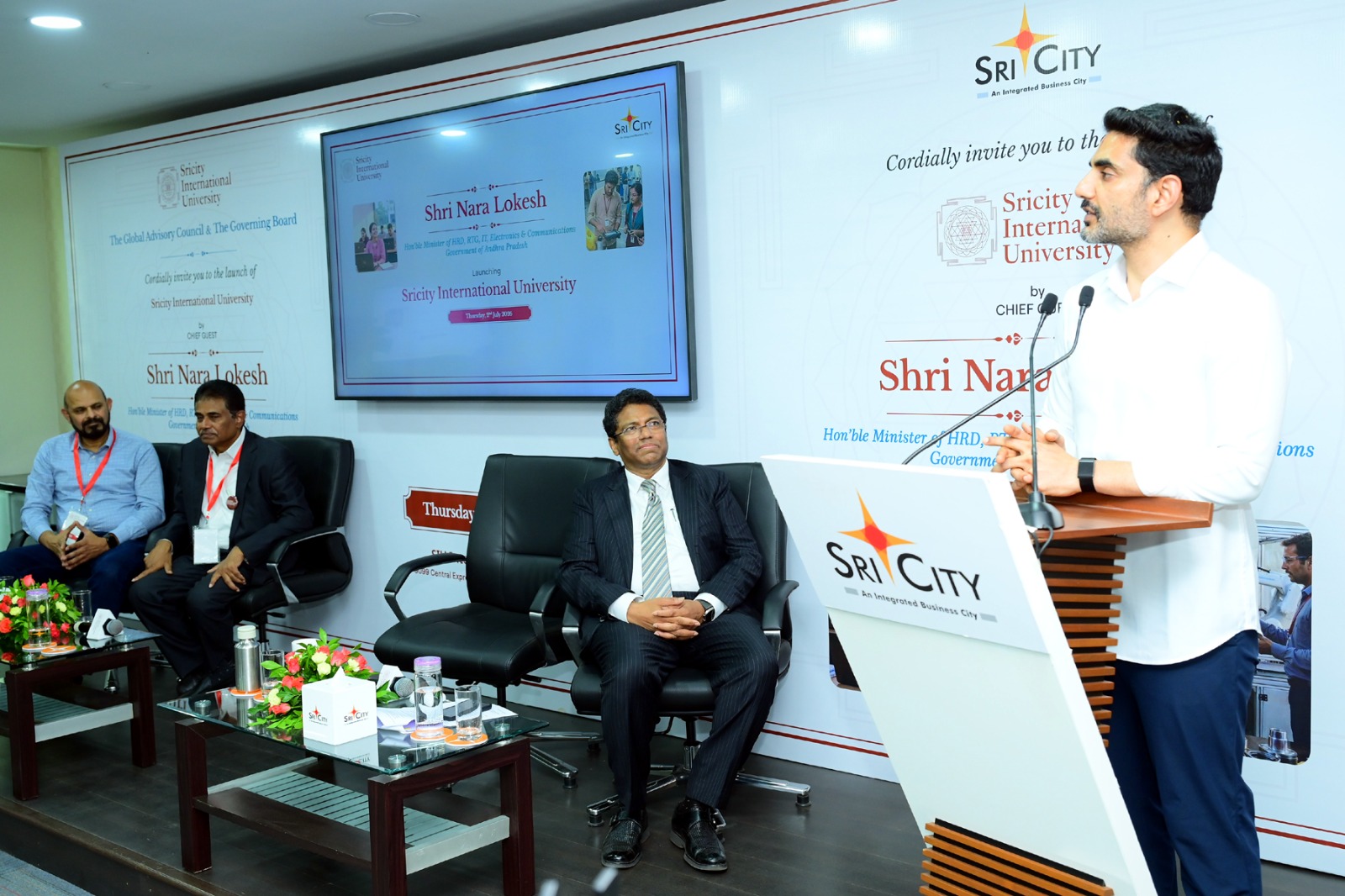
Sri City, Tirupati District, AP — July 02 — Sricity International University (SIU) was formally launched today at its Interim Campus by the Hon’ble Minister Shri Lokesh Nara – Minister for HRD, IT E&C and RTG, Government of Andhra Pradesh, in the presence of SIU’s Global Advisory Council, Governing Board, and Industry Partners.
SIU is pioneering a new education system of Work-Study Dual Model in India — designed from the ground up to ensure that every graduating student is employable with industry relevant skills.
The launch comes at a defining moment for Indian higher education. India produces more than nine million graduates every year, yet only about 42.6% are assessed as employable; more than half of those who do find work are in roles below their qualification, and over 80% of employers report serious skill gaps. SIU calls this the Bharat Employability and Jobs Challenge — and has been established to solve it..
In the Work-Study Dual Model, students spend roughly a third of their time learning on campus and the remainder working as interns with industry partners. While interning at Industry Partners, students are paid a minimum stipend of ₹10,000 monthly from the very first year. The Industry Partners are expected to increase the stipend amount as the student productivity improves with experience. At SIU, a four-year degree student graduates with about 2+ years of real work experience.
The curriculum is co-designed with industry partners and updated annually to keep pace with the rapidly evolving AI-driven industrial landscape, ensuring that students acquire the knowledge, skills, and competencies demanded by the future of work.
To promote Entrepreneurship, SIU has already set up an Incubation Center (Station-S) at its campus. Around 10 startups have commenced operations with the support of Station-S & Gnan Circle Ventures, a Cat-I Venture Capital Fund.
Andhra Pradesh leading the way on Employability Skills
“Our young people have the ability and the ambition; what they need is an education that connects directly to work… Andhra Pradesh is proud to lead the nation in solving this challenge.”—Shri Nara Lokesh -Hon’ble Minister for HRD, IT, E&C, and RTG, Government of Andhra Pradesh
An ecosystem that makes the model possible
What makes this model possible is the extraordinary ecosystem of Sri City, where more than 200+ companies from over 30 countries operate across a wide range of industries. Few places in the country — or the world — bring industry and education together so closely. Students at SIU will learn and work alongside leading global companies right where they study, and Andhra Pradesh is proud to be home to an institution that turns this advantage into real opportunity for our young people.
— Shri Nara Lokesh Hon’ble Minister for HRD, IT, E&C, and RTG, Government of Andhra Pradesh
Employable from day one
A four year degree student graduates with 2+ years of real work experience, earned through paid internships from the very first year — and combined with a curriculum designed together with the industry, that makes our students highly employable. Beyond industry aligned skills, we focus on building strong life skills and an entrepreneurial mindset, giving every student a firm foundation to build a career — or to create jobs for others.
— Srini Raju Chairman, Sricity Education Foundation & SIU Governing Board
Programmes and admissions
SIU is offering four undergraduate programmes for the 2026–27 academic year:
• B.Tech in Computer Science & Engineering— School of Technology & AI
• B.Tech in Advanced Manufacturing— School of Advanced Manufacturing
• BBA in Finance & Accounts— School of Business
• BBA in Digital Media & Communications— School of Nova Media
Admissions for 2026–27 are now open.Students can apply online at www.thesiu.org. Admissions enquiries: +91 8977763331 / +91 8977763332
Email:admissions@thesiu.org
1, Jul 2026
Shashi Tharoor, Prof Raj Kumar Address Japan Parliament
Tokyo, July 1: In a significant moment for India–Japan academic and diplomatic engagement, Prof Raj Kumar and Shashi Tharoor addressed Japan’s Parliament, highlighting the growing importance of international collaboration in education, research, and global policy discourse.
The engagement comes as O.P. Jindal Global University (JGU) deepens its academic and institutional ties with Japanese counterparts, aiming to expand cooperation in areas such as higher education exchange, legal studies, public policy, and global governance.
During the address, the speakers emphasized the role of universities in fostering cross-cultural understanding and strengthening people-to-people connections between India and Japan. They also underlined the importance of academic institutions in shaping dialogue on global challenges.
The initiative reflects JGU’s continued efforts to build strong international partnerships and enhance its global academic footprint through collaborations with leading institutions and policy forums worldwide.
The visit is expected to further open avenues for student exchanges, joint research programmes, and academic cooperation between India and Japan in the coming years.
1, Jul 2026
University of Greater Manchester Academic Centre launches new campus in Ras Al Khaimah
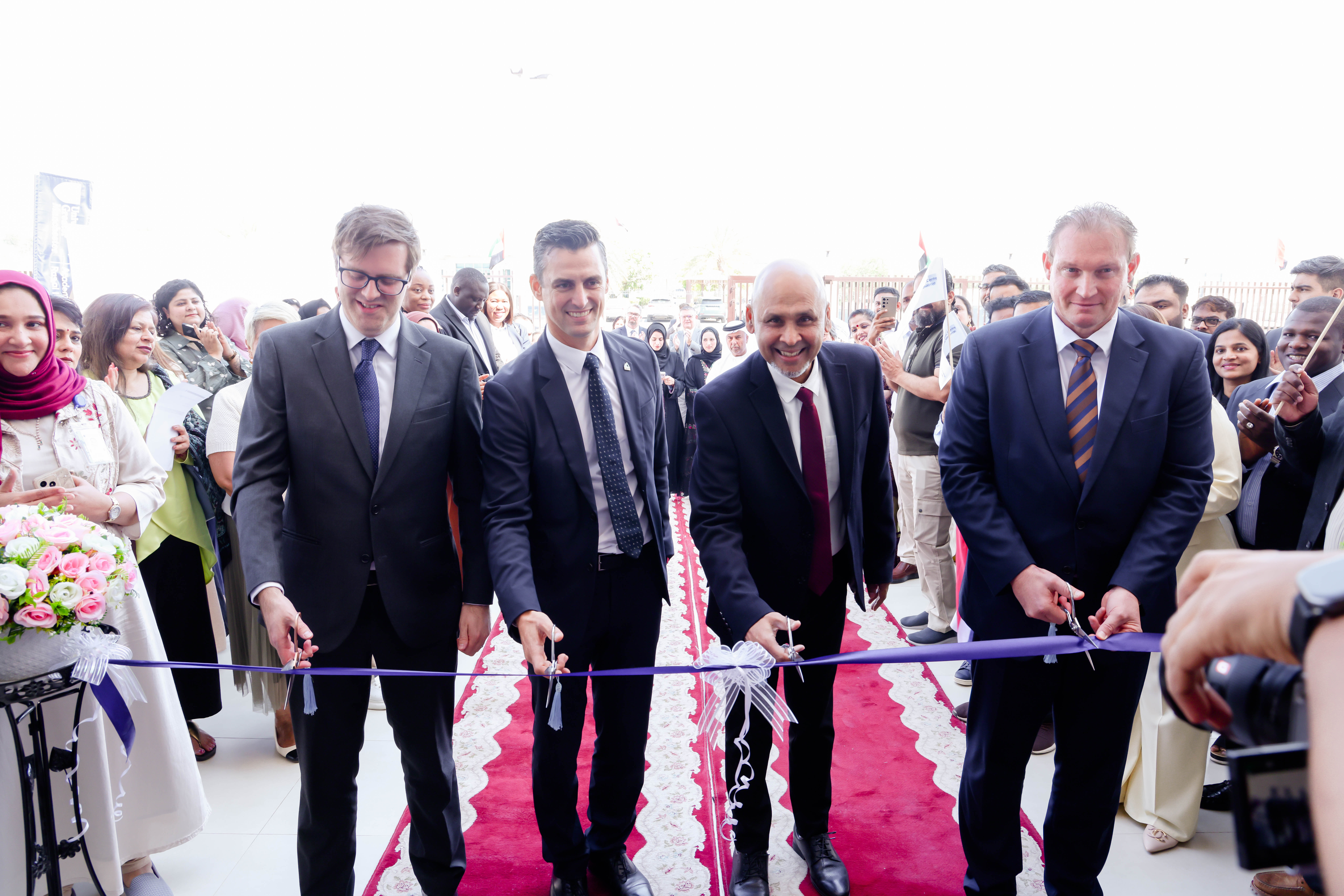
Ras Al Khaimah, July 01: The University of Greater Manchester Academic Centre Ras Al Khaimah officially opened its new campus in Sheikh Khalifa City, marking another significant milestone for British higher education in the Northern Emirates. It is one of the first international universities established in Ras Al Khaimah to operate from its own dedicated campus.
The new launch marks the university’s long-standing partnership with Ras Al Khaimah Economic Zone (RAKEZ). The University of Greater Manchester, earlier known as the University of Bolton Academic Centre – Ras Al Khaimah was established in 2008. The institution has grown alongside the emirate’s evolving higher education landscape, reflecting a shared commitment to expanding access to internationally recognised British education while supporting Ras Al Khaimah’s vision of developing knowledge, talent, and innovation.
The campus opening ceremony brought together education leaders, government representatives, and partners from the UAE and the UK to celebrate not only the opening of the new campus, but also nearly two decades of collaboration in advancing internationally recognised British higher education in Ras Al Khaimah.
Present at the event were Dr. Sudhir Kartha, Chairman of the Knowledgucate Group; Andrew Clark, Deputy Consul General of the British Embassy in Dubai; and representatives from the RAK Department of Knowledge and RAKEZ. The university’s UK-based executive leadership, including Acting Vice-Chancellor Dr. Greg Walker and Head of the Off-Campus Division Yusuf Giga joined the celebrations virtually.
Dr. Sudhir remarked, “Today marks a proud and historic milestone in our journey to expand access to world-class higher education in the Northern Emirates. This new campus reflects our commitment to creating a learning environment that brings internationally recognised qualifications closer to students in the UAE and the wider region. We are deeply grateful to His Highness Sheikh Saud bin Saqr Al Qasimi, UAE Supreme Council Member and Ruler of Ras Al Khaimah, to the Department of Knowledge, RAKEZ, our partners at the University of Greater Manchester, and everyone who has supported this vision. This inauguration is not just the opening of a campus — it is the beginning of new opportunities, stronger partnerships, and a brighter future for our students.” He also announced the development of phase II by next academic year, 2027 that will expand the opportunities for the academic community.
RAKEZ Group CEO Ramy Jallad commented, “We are proud to have been part of University of Greater Manchester’s journey since its establishment. Over the past 18 years, we have seen the institution grow from one of the emirate’s pioneering international higher education providers into a well-established academic centre that continues to expand its contribution to Ras Al Khaimah.”
He added, “This new campus represents far more than a physical expansion. It reflects the confidence that long-standing partners have in Ras Al Khaimah as a place to invest, innovate and grow. At RAKEZ, we remain committed to supporting institutions that strengthen the emirate’s education ecosystem, nurture future talent and enhance Ras Al Khaimah’s appeal as a destination to live, learn and build successful careers.”
The new campus features purpose-built academic facilities designed to support interactive lectures, practical workshops, research activities and personalised student engagement, creating a modern learning environment for students across a range of disciplines and levels of study. The new campus offers a broad portfolio of undergraduate and postgraduate programmes spanning business, accountancy, law, psychology, engineering, artificial intelligence, data analytics, cloud and network security and construction management. With the capacity to accommodate up to 1,750 students in its first phase, the campus combines modern learning facilities with industry-focused education, career guidance, internships, annual career fairs and strong employer engagement to help prepare graduates for successful careers in the UAE and beyond.
This expansion reinforces Ras Al Khaimah’s continued development as a destination for internationally recognised higher education, broadening opportunities for students to pursue British qualifications locally while supporting the emirate’s ambitions to develop a highly skilled workforce aligned with future economic grow.
30, Jun 2026
Nagaland University Scholar Represents India at UN Indigenous Youth Conference in Nepal
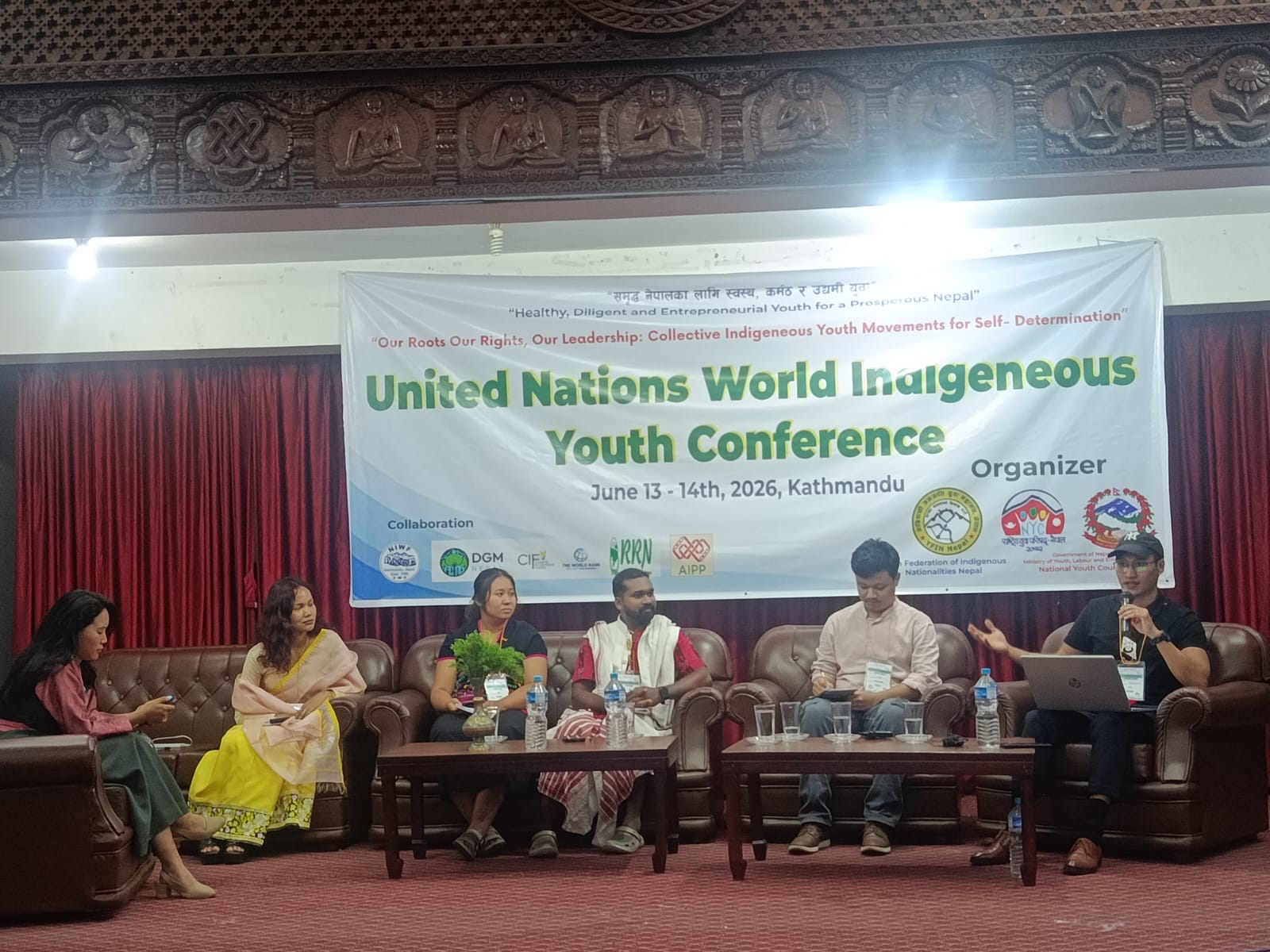
Scholar speaks on youth realities in international meet, strengthening indigenous network
LUMAMI, NAGALAND, June 30: Nagaland University research scholar Repakaba Tzudir from the Department of Sociology, Lumami has represented the university at the United Nations World Indigenous Youth Conference 2026 held in Kathmandu, Nepal.
The conference was co-organized by the Youth Federation of Indigenous Nationalities (YFIN), Nepal and the National Youth Council (NYC), Nepal under the theme, “Our Roots, Our Rights, Our Leadership: Collective Indigenous Movement for Self-Determination” bringing together nearly 150 Indigenous youth leaders, activists, academics and community representatives from across Asia.
Tzudir attended the conference as an International Delegate and Indigenous Scholar along with fellow participants from Bangladesh, Myanmar, Nepal and various parts of India. He was also a Panel speaker at the session “Indigenous Youth Movement in Asia”, where he shared his views on the realities faced by Naga youth, especially the challenges of unemployment and how immediate socio-economic concerns often overshadow broader Indigenous issues and aspirations.
Reflecting on the experience, Tzudir said, “The most memorable part of the conference was realising how deeply connected our experiences are, despite coming from different countries and cultures. Although each community has its own history and context, many of us spoke about similar concerns, protecting our identity, safeguarding our lands and cultures, and creating opportunities for young people.”He highlighted one conversation that left a lasting impression on him centred on how Indigenous youth are balancing the preservation of their traditions while adapting to a rapidly changing world. “It reminded me that our struggles are not isolated and that there is great strength in building solidarity and learning from one another across borders,” he said.According to Tzudir, a common challenge addressed during the conference was the tension between preserving Indigenous identity and responding to pressing economic realities.”Issues such as unemployment, migration, limited educational and livelihood opportunities, and the gradual loss of Indigenous languages and traditional knowledge were repeatedly discussed. In Nagaland, unemployment often becomes the immediate concern for many young people, making it difficult to actively engage with broader Indigenous issues and rights,” he added.At the same time, he said he was encouraged by the efforts of Indigenous youth organisations across Asia in creating spaces for leadership, advocacy, cultural revitalisation, and community participation. “One important lesson Nagaland can take from these experiences is that economic development and Indigenous identity should not be viewed as competing priorities. Young people need opportunities to build sustainable livelihoods while remaining connected to their communities, cultures, and values,” he said.He further added that by investing in youth leadership, strengthening community-based initiatives, and fostering regional collaborations will continue to shape the collective future of Indigenous voices.
The experience helped strengthen networks among Indigenous youth and deepened understanding of shared challenges across countries, reinforcing the scholar’s commitment to research, advocacy, and community engagement for Indigenous peoples.
The 2-day conference held on13th-14thJune, 2026 has offered a space for dialogue and exchange between Indigenous youth leaders, scholars, activists and community representatives from across Asia, building networks of solidarity and deepening understanding of Indigenous movements in the region. Participation in the conference was supported by the Indigenous Peoples of Asia Solidarity Fund (IPAS Fund) and the Youth Federation of Indigenous Nationalities (YFIN), Nepal, which provided travel and hospitality support.
29, Jun 2026
Ariel University Honors World Chess Legend Boris Gelfand, Israel Prize Laureate Prof. Yonina Eldar and War Hero Avigdor Kahalani
Academic Excellence, Social Impact and National Leadership: Ariel University Awards 2026 Honorary Doctorates to Efrat and Hanoch Daum, Avigdor Kahalani, Adi Altschuler, Prof. Yonina Eldar, Prof. Avraham Gover and Grandmaster Boris Gelfand
The seven recipients embody the spirit of entrepreneurship, leadership, and commitment to Israeli society.
Ariel University held its annual Honorary Doctorate ceremony this morning, Wednesday, on the university campus. The ceremony was attended by Ariel University President, Prof. Ehud Grossman; Rector, Prof. Albert Pinhasov; representatives of the Board of Trustees; members of the academic faculty; and public figures.
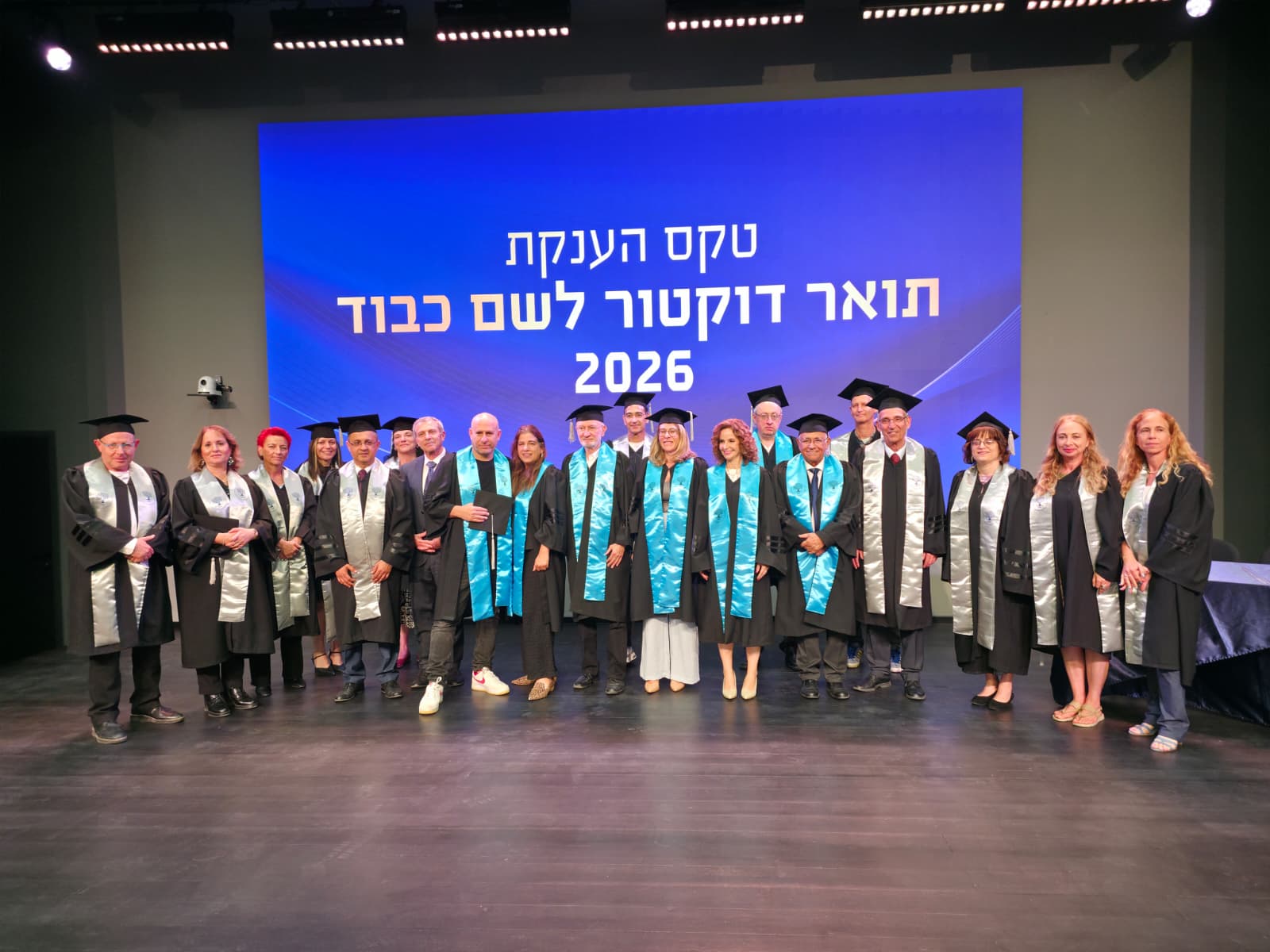
This year, Honorary Doctorates were awarded to seven prominent individuals from the fields of science, security, education, public service and culture. In recognition of outstanding achievements, values-based leadership, and long-standing contributions to the resilience of the State of Israel and the advancement of human knowledge.
Recipients of Ariel University’s 2026 Honorary Doctorates:
Prof. Yonina Eldar: One of the world’s leading researchers in the fields of signal processing, computer vision and artificial intelligence, and recipient of the Israel Prize in 2025. Prof. Eldar was recognized for her development of the field of sub-Nyquist sampling, a scientific breakthrough with applications in medical imaging, radar systems and smart sensors, and for mentoring and inspiring the next generation of Israeli scientists and researchers.
Adi Altschuler: A leading social entrepreneur and changemaker.
The degree was awarded to her for founding and leading groundbreaking national and international initiatives, including the Krembo Wings youth movement, the civic commemoration initiative Zikaron BaSalon, and the Inclu network of inclusive schools, which have helped promote the values of inclusion, equality and mutual responsibility.
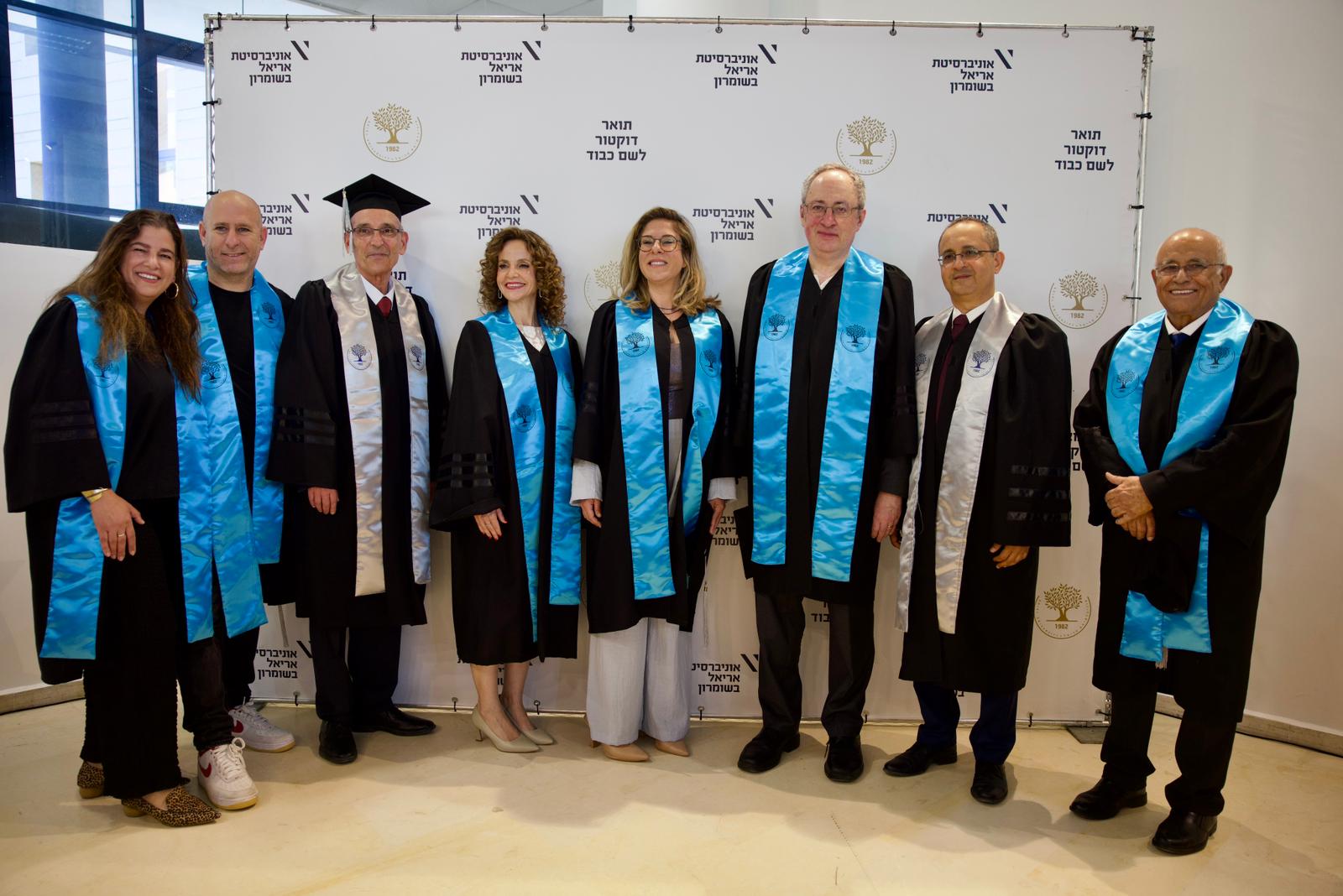
Prof. Avraham Gover: An internationally renowned researcher and physicist in the field of applied physics. The degree was awarded to him for decades of groundbreaking research in laser, electron and radiation technologies, combining basic science with advanced engineering developments that have industrial and defence applications, and positioning Israel at the forefront of global research in his field.
Grandmaster Boris Gelfand: One of the world’s leading chess players, who has represented the State of Israel on the international stage for more than three decades, including his historic challenge for the title of World Chess Champion in 2012. The degree was awarded to him for his extraordinary achievements, which placed Israel at the top of the global chess world making him a symbol of excellence, strategic thinking, and perseverance.
Efrat and Hanoch Daum: Efrat is a social entrepreneur, and Hanoch is a journalist, satirist and bestselling author whose books have dealt extensively with Israeli identity. The degree was awarded to them in recognition of their contribution to strengthening social cohesion and their wide-ranging civic activity, led by the national emergency initiative “Embracing Reservists,” which supported thousands of reservist families and businesses impacted by the war.
Brig. Gen. (Res.) Avigdor Kahalani: One of the outstanding heroes of the State of Israel, recipient of the Medal of Valor and the Medal of Distinguished Service. The degree was awarded to him for his many years of contribution to the security of the state, his exemplary leadership on the battlefield, and his public service as Minister of Internal Security, Chairman of the Association for the Wellbeing of Israel’s Soldiers, and as an author and lecturer on leadership and national responsibility.
Hanoch Daum, who spoke on behalf of the Honorary Doctorate recipients, first turned to his mother, who was seated in the audience, and apologized to her for not having a matriculation certificate. “At least now I am a doctor,” he said with a smile. He then thanked Ariel University for the recognition and addressed the President of the University, saying that he was not surprised by the impressive figures regarding the high proportion of reservists among Ariel University students. He added: “I believe Ariel University is cultivating the next generation of leadership for the State of Israel.”
Ariel University President, Prof. Ehud Grossman, and Rector, Prof. Albert Pinhasov, congratulated the recipients and emphasized their extraordinary contributions.
President of Ariel University, Prof. Ehud Grossman:
“This year’s recipients represent excellence across a range of fields: science, security, society and culture. Each of them has shown that personal achievement gains its greatest significance when it serves society, the State of Israel, and the advancement of humanity. In their own way, this year’s recipients have shaped reality, expanded the boundaries of what is possible, and left a significant mark on Israeli society and on their respective fields.”
Rector of Ariel University, Prof. Albert Pinhasov:
“When looking at this year’s recipients of our Honorary Doctorates, it is impossible not to feel a deep sense of pride. These are individuals whose achievements continue to drive Israel’s growth, innovation, and progress. For academia, the privilege of honoring them is also an opportunity to present the next generation with a model of excellence, leadership and commitment to society.”
27, Jun 2026
Odisha MSME Stakeholders Deliberate on Strengthening Enterprise Ecosystem at KIIT-TBI
Bhubaneswar: Industry leaders, entrepreneurs, policymakers, and ecosystem enablers came together at the Odisha MSME & Enterprise Stakeholder Connect, held at KIIT Technology Business Incubator (KIIT-TBI). The event was jointly organised by BCKIC and the Pernod Ricard Foundation under the Enterprise Odisha initiative to promote entrepreneurship and strengthen the state’s MSME ecosystem.
A key highlight of the programme was the panel discussion on “Understanding the Enterprise Ecosystem in Odisha,” which brought together experts and stakeholders to explore the current landscape of micro, small and medium enterprises (MSMEs) in the state. The discussion focused on identifying growth opportunities, addressing existing challenges, and developing collaborative strategies to foster innovation and sustainable enterprise development.
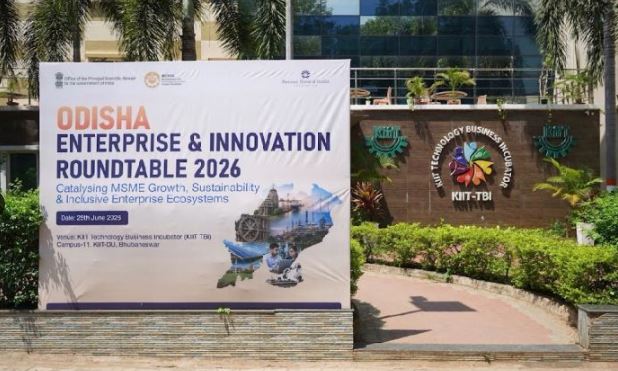
Panelists shared valuable insights on creating a more supportive environment for entrepreneurs through stronger institutional partnerships, access to resources, capacity building, and policy support. The session also underscored the importance of nurturing startups and empowering local enterprises to contribute to Odisha’s economic growth.
The stakeholder connect witnessed active participation from representatives of industry, academia, incubation centres, development organisations, and aspiring entrepreneurs. The gathering reflected a shared commitment to strengthening Odisha’s enterprise ecosystem through collaboration and collective action.
Participants appreciated the opportunity to exchange ideas, build meaningful connections, and contribute to discussions aimed at enhancing the state’s entrepreneurial landscape. The event concluded with a renewed focus on fostering innovation, supporting MSMEs, and accelerating inclusive economic development across Odisha.
27, Jun 2026
AI Embedded Across Curriculum as Management Education Adapts to Changing Workplace Demands
New curriculum integrates AI, experiential learning, industry projects, and emerging business practices across Marketing, Finance, Analytics, and HR
BENGALURU, June 27 — As Artificial Intelligence reshapes industries and redefines workplace expectations, management education is undergoing a significant transformation. Reflecting this shift, the International School of Management Excellence (ISME), Bengaluru, convened its Annual Board of Studies (BoS) meeting, bringing together 19 senior industry professionals and 23 faculty members for a comprehensive redesign of its Post Graduate Diploma in Management (PGDM) curriculum, embedding AI across all specialisations while strengthening industry integration, experiential learning and real-world business exposure.
As part of the redesign, ISME has introduced two new courses, AI for Management and Indian Knowledge System. The programme also places greater emphasis on practical learning through increased internship exposure, live projects and industry engagement. Summer internship credits have been increased from 3 to 6, every term will include a field project, and students will continue to participate in the institution’s Industry Trajectory Program, which enables them to work with organisations on real business challenges while pursuing their studies.
Dr. Nitin Garg, Founder & Director, ISME Bangalore, said, “The revised curriculum has been developed to align management education with the realities of a rapidly evolving business landscape where employers increasingly seek professionals who can combine technological fluency, analytical thinking and human decision-making. Rather than treating AI as a niche specialisation, the new framework integrates AI concepts, tools and applications throughout the learning journey, ensuring students understand how technology influences decision-making across business functions.”
Dr. Shampa Nandi, Convener of BOS, mentioned, “The Board of Studies for the PGDM programme goes well beyond a once-a-year compliance formality. BOS members contribute meaningfully to the programme’s academic quality by reviewing session plans for content currency, assessing select student assignments and projects, and engaging as mentors and guide for students across functional specialisations.”
The curriculum has been redesigned to reflect emerging industry trends and employer expectations in all functional domains. The Marketing curriculum now incorporates areas such as quick commerce, direct-to-consumer business models, Omni channel strategy, AI-driven advertising, prompt engineering and attribution models, ensuring students gain exposure to the tools and practices shaping modern marketing. The Finance curriculum moves beyond traditional transaction-focused learning to emphasise financial analysis, business decision-making and AI-enabled financial modelling. Embedded NISM certifications and contemporary case studies will help students connect financial concepts with real business scenarios.
In Business Analytics, the curriculum adopts a business-first approach that makes analytics more accessible and relevant for management students. New components include AI governance, DPDP compliance, analytics storytelling, Agentic AI and MLOps, enabling students to understand how data and technology can drive business outcomes.
The Human Resources curriculum has been strengthened with greater emphasis on workplace application and organisational effectiveness. Students will gain exposure to Labour Codes, Human Capital Management platforms, competency modelling, change management and AI-driven talent management practices, reflecting the evolving role of HR in modern organisations.
The revised curriculum was shaped through extensive consultation with industry leaders and academic experts. Recommendations were finalised by Dean Dr. Rony G Kurien and Dr. Shampa Nandi, Assistant Dean & Principal (PG), Prof. Sanjit Ghosh, Co-Convener and Dr. Rajni Pathak, Program Coordinator. Along with 19 senior industry professionals from organisations including JP Morgan & Chase, Coforge, Grant Thornton, Reliance Retail, Reliance JioMart, Godrej, Biocon, Acer, Aon and IISc, alongside faculty members, to review workforce trends and future skill requirements.
With this transformation, ISME aims to bridge the gap between classroom learning and industry expectations while ensuring that graduates are equipped with the knowledge, skills and adaptability needed to thrive in an increasingly technology-driven business environment.
25, Jun 2026
Applications Open for National Teachers’ Awards 2026 Till July 10
June 25: The Ministry of Education has announced that online applications for the National Teachers’ Awards 2026 are now open and will remain available until July 10.
The awards aim to recognize and honor outstanding contributions by teachers across the country who have demonstrated excellence in teaching, innovation in education, and commitment to student development.
Eligible teachers from schools, colleges, and other educational institutions can submit their applications through the official online portal within the specified deadline. The selection process will evaluate candidates based on their teaching methods, innovation in pedagogy, community engagement, and overall impact on students.
The initiative seeks to encourage excellence in the teaching profession and highlight the critical role of educators in shaping the nation’s future. It also aims to promote innovative practices and inspire educators to adopt modern and effective teaching techniques.
Officials have urged eligible candidates to apply well before the deadline to avoid last-minute issues and ensure smooth submission of applications.
The National Teachers’ Awards continue to serve as one of the highest national recognitions for educators, celebrating their dedication and contribution to the field of education.
25, Jun 2026
MAHE Ranked Global No. 1 for SDG 5 in THE Impact Rankings 2026
June 25: The Manipal Academy of Higher Education (MAHE) has achieved outstanding global recognition in the Times Higher Education (THE) Impact Rankings 2026, securing the World No. 1 position for Sustainable Development Goal (SDG) 5: Gender Equality.
This remarkable achievement highlights MAHE’s continued commitment to promoting inclusivity, gender equity, and empowerment of women across all levels of its academic and institutional ecosystem. The ranking reflects the university’s strong performance in implementing policies, initiatives, and practices that support equal opportunities and foster a safe, inclusive, and supportive environment.
According to the THE Impact Rankings assessment, SDG 5 evaluates institutions based on their contribution to gender equality through teaching, research, leadership representation, institutional policies, and community engagement. MAHE’s top global position underscores its leadership in advancing these critical parameters on an international scale.
University officials attributed this milestone to sustained efforts in strengthening diversity-focused policies, enhancing participation of women in education and leadership, and integrating gender equality principles into academic and administrative frameworks. The recognition also reflects MAHE’s broader vision of aligning higher education with the United Nations Sustainable Development Goals (SDGs).
Experts note that this achievement further strengthens MAHE’s global academic reputation and reinforces India’s growing presence in international sustainability-focused university rankings. It also positions the institution as a leading contributor to global conversations on equality, inclusion, and sustainable development in higher education.
MAHE’s success in the THE Impact Rankings 2026 demonstrates its ongoing commitment to academic excellence combined with social responsibility, innovation, and global impact.


