


26, May 2026
International Women’s Health Day: Prioritizing Health, Empowering Futures
May 28 – International Women’s Health Day is a global reminder of the importance of prioritizing women’s health, well-being, and access to quality healthcare services. The day highlights the need to address health challenges faced by women across all stages of life while promoting awareness, prevention, and equitable healthcare opportunities.
Women play a vital role in families, workplaces, and communities, yet health concerns such as inadequate preventive care, delayed diagnosis, poor nutrition, mental stress, and limited access to healthcare continue to affect millions worldwide. International Women’s Health Day serves as a platform to encourage conversations and actions that improve women’s overall health and quality of life.
Why Women’s Health Matters
A healthy woman contributes not only to her own well-being but also to the strength of her family and society. Women’s health extends beyond physical fitness—it includes mental wellness, reproductive health, nutrition, emotional balance, and preventive healthcare.
Investing in women’s health means investing in stronger communities, healthier families, and a more productive society.

Key Focus Areas of Women’s Health
Prevention
Preventive healthcare is one of the most effective ways to reduce health risks. Regular health check-ups, screenings, vaccinations, and awareness about symptoms can help in early detection of diseases and improve treatment outcomes.
Screening
Routine screening for conditions such as breast cancer, cervical cancer, diabetes, heart disease, and osteoporosis can save lives through early diagnosis and timely intervention.
Nutrition
Balanced nutrition is essential for women’s health at every age. Proper intake of vitamins, minerals, protein, and hydration supports immunity, hormonal balance, bone health, and overall energy levels.
Physical Activity
Regular exercise helps maintain heart health, manage weight, reduce stress, strengthen muscles, and improve mental well-being. Active lifestyles contribute to long-term health and resilience.
Mental Health
Stress, anxiety, depression, and emotional burnout affect women significantly due to multiple responsibilities in personal and professional life. Mental health support, counseling, and self-care should be prioritized.
Building a Healthier Future for Women
Healthcare systems, governments, workplaces, and families all have a role in ensuring women receive the support and care they deserve. Creating awareness, improving access to healthcare, promoting healthy lifestyles, and encouraging regular screenings can make a significant difference.
International Women’s Health Day is not just about awareness—it is about action. It is a call to empower women with knowledge, healthcare resources, and supportive environments so they can lead healthier and happier lives.
As we observe this important day, let us celebrate the strength, resilience, and contributions of women everywhere and reaffirm our commitment to building a world where women’s health remains a priority, because healthy women create a healthier future for all.
- 0
- By Neel Achary

24, May 2026
India Issues Fresh Ebola Advisory After WHO Global Health Emergency Warning
New Delhi, May 24 (BNP): India has issued a fresh health and travel advisory following the World Health Organization declaration of a Public Health Emergency of International Concern (PHEIC) over the ongoing Ebola outbreak affecting parts of Africa. The advisory comes amid growing concerns over the spread of the Bundibugyo strain of the Ebola virus in the Democratic Republic of the Congo and Uganda.

Representational image
According to the advisory issued by India’s Ministry of Health and Family Welfare, citizens have been urged to avoid non-essential travel to the Democratic Republic of the Congo, Uganda, and South Sudan as a precautionary measure. Health authorities have also advised travellers arriving from or transiting through Ebola-affected regions to immediately report symptoms and seek medical attention if required.
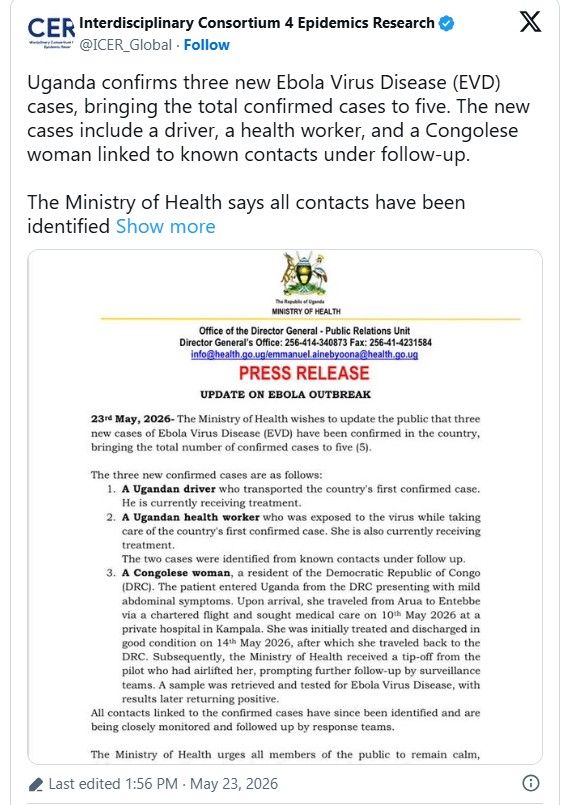
The WHO recently declared the Ebola outbreak a global public health emergency after a rapid rise in suspected and confirmed infections in affected regions. The outbreak, linked to the rare Bundibugyo strain, has raised concerns due to the absence of an approved vaccine or targeted treatment for the virus. Health officials, however, have stressed that Ebola spreads through direct contact with infected bodily fluids and is not transmitted as easily as airborne diseases.
Indian health authorities said surveillance and preparedness measures are being strengthened to prevent any possible import of cases, while urging the public to remain cautious but avoid panic. Experts have emphasised that early detection, reporting of symptoms, and timely medical intervention remain critical to containing the spread of the disease.
22, May 2026
Graphene quantum dots show promise in targeting Parkinson’s-related protein clumping
TSUKUBA, Japan, May 22 – The buildup of a protein called 𝛂-synuclein (ASN) into toxic clumps is a hallmark of synucleinopathies, a group of neurodegenerative diseases that includes Parkinson’s and multiple system atrophy (MSA).
These aggregates are associated with cellular dysfunction and lead to progressive neuronal loss. Because current treatments only manage symptoms rather than stopping the underlying protein clumping, scientists are exploring new strategies, including nanomaterials that can prevent these aggregates from forming or help clear them from the brain.
A multinational research team led by Professor Małgorzata Kujawska at the Poznań University of Medical Sciences in Poznań, Poland, has found that graphene quantum dots (GQDs)—nanoscale carbon particles—can counteract this clumping process.
In a study published in the journal Science and Technology of Advanced Materials (STAM), the researchers detailed how these dots interact with ASN to prevent it from forming the long, toxic fibers that characterize the disease.
“This study points to a promising new direction for strategies against neurodegenerative diseases,” says Professor Kujawska. “While clinical use of GQDs remains a long way off, these findings strengthen the case for further research.”
The study used a multi-stage approach, testing the GQDs in cell-free environments, neuronal cultures, and animal models of MSA. The researchers found that when GQDs were administered intranasally in mice, the particles significantly reduced the presence of toxic protein aggregates. Furthermore, the treatment appeared to activate autophagy, a biological recycling process that helps cells break down and remove damaged proteins.
At concentrations relevant to its biological effects, the GQD showed a favorable safety profile, although some changes in cellular stress and immune responses were observed at higher doses. This is an important consideration, as many nanomaterials face hurdles in medical applications due to concerns over long-term biocompatibility.
While the results are promising, challenges remain, such as preventing quantum dots from clumping in liquid suspensions. “GQDs may serve as a useful research tool,” says Professor Kujawska. “What we learn as we optimize their properties and conduct a comprehensive safety evaluation could help design more effective nanomaterial-based strategies not just for synucleinopathies, but also for other conditions characterized by the buildup of toxic proteins.”
22, May 2026
On International Tea Day, Veslim Tea highlights wellness, energy and weight management benefits
Bengaluru , May 22 : In today’s fast-paced lifestyles, wellness is increasingly about prevention and daily care rather than reactive treatment. With growing awareness around holistic health, many consumers are turning to tea-inspired wellness solutions that combine traditional knowledge with modern scientific understanding. It improves metabolism, supports weight management and keeps you energetic. It has become an important part of everyday health routines, especially as lifestyle-related conditions become more common.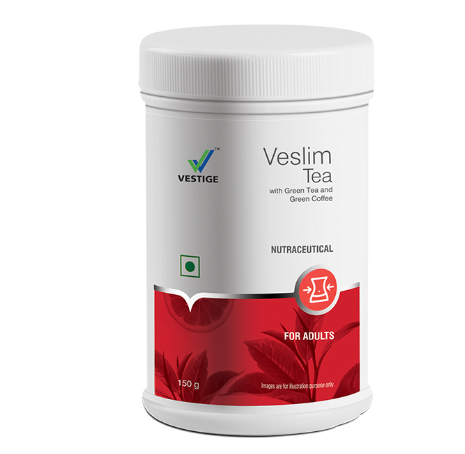
Designed with this philosophy in mind, Veslim Tea is developed as a healthy alternative against carbonated and other aerated bever Note. docxages that helps in keeping the body energetic and aids in weight management.
Vestige Marketing is a trusted name in wellness and nutrition, committed to delivering high-quality, research-backed products that support everyday health and well-being. Vestige combines traditional wisdom with modern science to create wellness solutions that are accessible, effective, and aligned with contemporary lifestyle needs.
Veslim Tea by Vestige
Veslim Tea is a low-calorie drink which is a suggested healthier alternative to tea, coffee, aerated or sweetened beverages. It is enriched with green tea, green coffee beans and Garcinia cambogia extracts with a delicious honey lemon flavour that refreshes and revitalises the body instantly. The tea works by providing a low-calorie, refreshing beverage that supports metabolism and helps keep the body energetic while offering a healthier alternative to carbonated and sweetened drinks.
The formulation contains green tea, green coffee beans and Garcinia cambogia extracts with a delicious honey lemon flavour. These ingredients work together to refresh and revitalise the body instantly, improve metabolism, and aid in weight management.
Key Benefits
- Low-calorie drink and healthier alternative to tea, coffee, aerated or sweetened beverages
- Enriched with green tea, green coffee beans and Garcinia cambogia extracts
- Delicious honey lemon flavour that refreshes and revitalises the body instantly
- Helps in improving metabolism
- Helps in burning of fat
- Helps in keeping the body energetic
- Aids in weight management
- A healthy alternative against carbonated and other aerated beverages
Indications
- Weight management
- Metabolism support
- Healthy alternative to carbonated and aerated beverages
22, May 2026
India’s First CAR T-Cell Therapy Shows Durable Results: Two-Year Remission Achieved in Blood Cancer Patients
Bengaluru, May 22: In a major milestone in Indian oncology care, Immuneel Therapeutics’ Made-In-India CAR T-cell therapy has delivered the country’s first known long-term remission in patients with aggressive blood cancers. Seven patients treated in 2022 have now surpassed two years of progression-free survival (PFS), a first for any made-in-India CAR T-cell therapy. This achievement reinforces the durability of Immuneel’s approach and its potential to transform outcomes for patients with aggressive blood cancers.
The CAR T-cell therapy, known as Varnimcabtagene autoleucel (IMN-003A), under Immuneel’s IMAGINE Phase 2 clinical trial, aimed at treating adult patients with relapsed or refractory CD19-positive B-cell Non-Hodgkin Lymphoma (B-NHL) which is among the most aggressive forms of blood cancer, and many patients do not respond to standard therapies. In India, access to next-generation treatments like CAR T-cell therapy has been limited by cost and infrastructure, until now.
The encouraging results of the therapy recorded an 83% overall response rate (ORR) at Day 90 and a 50% ORR at Day 365, with a complete response rate of 83%, placing it among the highest reported outcomes in Indian clinical benchmarks for CAR T-cell therapies. The therapy has now been administered to more than 100 patients in India, marking Immuneel’s successful scale-up in delivering this complex therapy with consistent outcomes and a favorable safety profile. The data is backed up by 22+ presentations and publications at global platform along with original article publication in Blood-Immunology & Cellular Therapy.
Ms. Kiran Mazumdar-Shaw, Board Director & Co-Founder, Immuneel Therapeutics said, “Immuneel was founded with a clear mission to make advanced, life-saving cancer therapies accessible and affordable for patients in India. Seeing our Made-in-India CAR T therapy deliver durable remission outcomes across more than 100 patients; with several patients remaining in remission beyond two years, is a powerful validation of that mission. These encouraging long-term real-world outcomes demonstrate that innovation rooted in India can meet global benchmarks while addressing local healthcare needs at scale. As the clinical evidence continues to mature, Immuneel remains committed to strengthening India’s position in next-generation, transformative cancer therapies.”
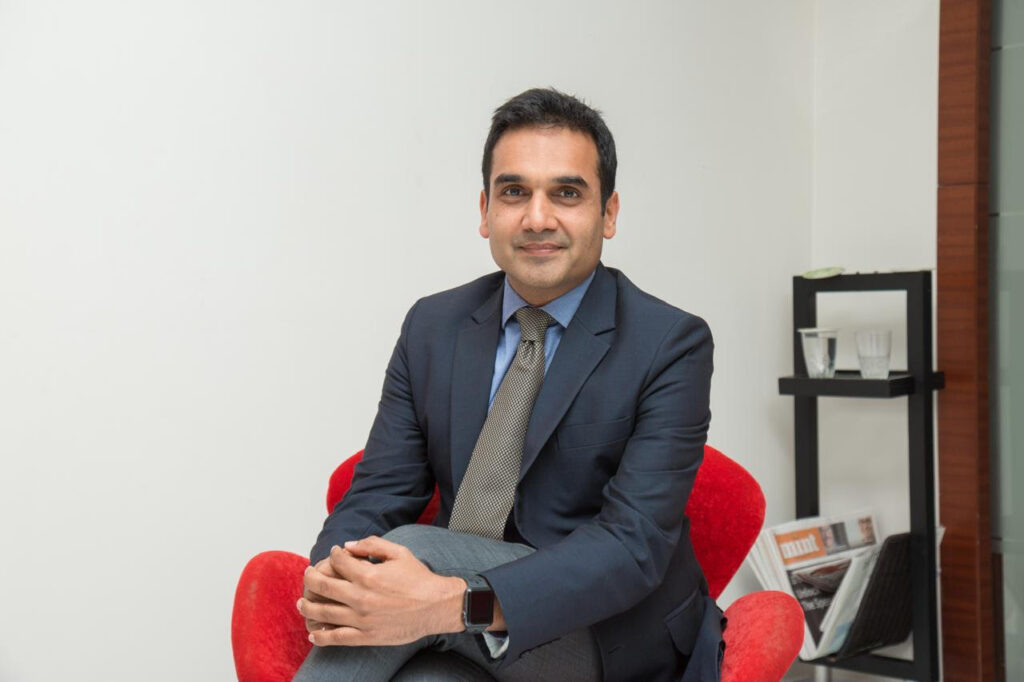
Mr. Amit Mookim, Board Director & CEO, Immuneel Therapeutics, added, “This achievement is not just a clinical validation, but a strategic proof point of what’s possible when world-class science is built for India and beyond, in India. Crossing the two-year progression-free survival mark with multiple patients demonstrates that India can lead in delivering durable, next-generation therapies. At Immuneel, our focus remains on scaling access, deepening impact, and continuing to redefine what cancer care can look like for patients and families in India and beyond India.”
Globally, CAR T therapies are considered revolutionary but are often expensive and logistically challenging. Immuneel’s effort marks a turning point in making these advanced treatments accessible to Indian patients, particularly those who have exhausted other options.
Key Clinical Highlights:
• India’s Longest-Known CAR T Therapy Survivors: Seven patients enrolled in the Phase 2 IMAGINE trial have crossed the two-year PFS milestone, a first for any CAR T therapy in India, underscoring durable remission and the potential for improved long-term survival
• Strong and Sustained Response Rates: IMN-003A (clinical trial) showed an 83% ORR at Day 90, a 50% ORR at Day 365, and a Complete Response rate of 83%, setting new standards in treatment for relapsed/refractory CD19+ B-NHL
• 1000-Patients Milestone: Therapy has been successfully administered to more than 100 patients post commercialization across leading Indian hospitals, demonstrating consistent clinical outcomes, favorable safety profile, and Immuneel’s ability to scale complex cell therapy delivery nationally
• Backed by DBT-BIRAC Grant: The IMAGINE Phase 2 trial was supported by BIRAC (Biotechnology Industry Research Assistance Council) under the Department of Biotechnology’s BIPP scheme, underscoring national recognition of its scientific merit
21, May 2026
SimonMed leads largest global study of AI in X-ray, analyzing 258,373 exams across 26 countries
SCOTTSDALE, AZ. May 21, 2026 — A landmark, peer-reviewed global study representing the largest published evaluation of artificial intelligence in X-ray imaging has been published in Radiography, analyzing 258,373 X-rays from 100 medical centers across 26 countries and five continents. The study was led by Dr. Sean Raj, Chief Medical Officer and Chief Innovation Officer at SimonMed, who served as senior author.
SimonMed, one of the largest outpatient imaging providers in the United States, contributed U.S. clinical data and played a central role in the study’s design, execution, and analysis, reinforcing its leadership in the clinical validation of artificial intelligence in radiology.
The study evaluated all four components of the Rayvolve® AI Suite as a unified clinical platform under real-world conditions, with no exclusions based on image quality or acquisition protocol. The system demonstrated high diagnostic performance across multiple use cases, including musculoskeletal trauma, chest imaging, automated measurements, and bone age assessment. AZtrauma achieved an AUC of 98.3% (sensitivity: 97.4%, specificity: 96.4%) across 195,706 musculoskeletal examinations. AZchest demonstrated an AUC of 97.8% (sensitivity: 96.7%, specificity: 87.9%) across 61,418 chest radiographs covering six pathology categories. AZmeasure and AZboneage delivered measurement precision within 1.83 degrees for angles, 1.1 mm for lengths, and a bone age estimation error of approximately six months.
Performance remained consistent across pathologies, anatomies, patient demographics, and global care settings, with all 258,373 images processed without a single technical failure, highlighting both the robustness and scalability of AI in real-world clinical environments.
SimonMed’s contribution to the study builds on a partnership that has deepened since 2023, when SimonMed selected AZmed as its AI partner for X-ray diagnostics following an independent evaluation across its outpatient network. That initial deployment demonstrated a 6x reduction in turnaround time for fracture cases and 98.5% sensitivity across SimonMed centers. SimonMed subsequently provided the clinical data that supported AZmed’s 2024 FDA 510(k) clearance for pediatric fracture detection. The inclusion of SimonMed’s U.S. imaging data in this 26-country study extends the collaboration from operational deployment and regulatory contribution to large-scale, independently published clinical evidence.
“Validating a complete AI suite at this scale, across 100 centers in 26 countries, establishes a new standard for clinical evidence in radiology AI,” said Julien Vidal, CEO of AZmed. “SimonMed’s contribution at every stage of this journey, from early U.S. deployment through FDA clearance and now the largest published X-ray AI study, reflects the kind of clinical partnership that advances the entire field.”
“This study represents a defining moment for AI in medical imaging,” said Dr. Sean Raj, Chief Medical Officer and Chief Innovation Officer at SimonMed. “We are proud to have led a global effort that not only validates AI performance at an unprecedented scale, but also reinforces the importance of rigorous, real-world clinical evidence. We are committed to continue our founding mission – to deliver high quality, accessible care at scale while measurably improving diagnostic quality for our radiologists and the patients they serve.”
The study is available in Radiography.
21, May 2026
The Growing Role of Water Testing Labs in Ensuring Safe and Sustainable Water Quality
With increasing concerns over water pollution, industrial contamination, and public health risks, the role of water testing laboratories has become more important than ever. Water quality testing helps identify harmful contaminants, assess safety standards, and ensure that water is suitable for drinking, industrial use, agriculture, and environmental applications. As urbanization and industrial activities continue to expand, regular water monitoring has become a crucial step in protecting both human health and natural ecosystems.
Choosing the best water testing lab is essential for accurate analysis and reliable results. Professional laboratories use advanced scientific techniques to test critical parameters such as pH, turbidity, heavy metals, microbial contamination, total dissolved solids (TDS), and chemical pollutants. These services help industries, households, and regulatory bodies make informed decisions about water safety while ensuring compliance with environmental and public health standards.
Water testing laboratories play a vital role in detecting contaminants at an early stage, preventing potential health hazards before they escalate. Contaminated water can contain harmful substances such as lead, arsenic, pesticides, bacteria, viruses, and industrial chemicals that may lead to serious diseases and long-term health complications. Through routine testing and laboratory-based analysis, these risks can be identified and controlled effectively.
In industrial sectors, water testing labs support quality control, wastewater treatment monitoring, and regulatory compliance. Industries rely on laboratory analysis to maintain process efficiency, prevent environmental pollution, and meet discharge standards set by authorities. Similarly, municipal bodies use water testing services to ensure safe drinking water distribution and maintain public sanitation systems.
Modern water testing laboratories also use advanced technologies such as ICP-MS, GC-MS, microbiological analysis, and real-time monitoring systems to provide highly accurate and timely results. These scientific methods improve contamination detection and help create data-driven water management strategies.
As water quality challenges continue to grow worldwide, water testing laboratories remain a critical pillar of public health, environmental protection, and sustainable resource management. Their role in ensuring safe water access, preventing contamination, and supporting regulatory compliance makes them indispensable in building a healthier and more sustainable future.
21, May 2026
WellSpan Health Reports 66% Reduction in Workplace Violence Following Systemwide Safety Initiative with Canopy
PALO ALTO, CA. May 21 – Canopy, a connected safety platform for hospitals and health systems focused on protecting nurses and staff, announced a new case study today with Pennsylvania health system WellSpan Health, showing measurable shifts after rolling out a systemwide workplace violence prevention strategy supported by Canopy’s technology.
According to the joint case study, WellSpan Health saw a 66% reduction in workplace violence-related DART (Days Away, Restricted or Transferred) injuries within a year of implementation. The initiative centralized public safety operations and emergency response protocols into a unified system, supported by wearable and RTLS technology that allows staff to quickly signal for help during escalating situations.
“One of WellSpan’s organizational goals is zero harm, not just in workplace violence but across all injuries,” said Bill White, Vice President of Public Safety at WellSpan Health. “We have an obligation to provide a safe environment for anyone who enters our facilities,” White noted that before Canopy, alerts were often delayed, and staff didn’t have a dependable way to quickly signal for help. “That’s changed with Canopy,” he said. “Our team members now have immediate access to support at the push of a button, which helps us respond faster and makes them feel more supported in real time.”
WellSpan identified several operational gaps across its growing network of hospitals and care sites before launching the initiative. Emergency alerts varied by location, and staff often had to locate a phone or secondary device before requesting security support, which slowed response during critical moments. After implementing Canopy, WellSpan rolled out instant notifications, integrated the DASA (Dynamic Appraisal of Situational Aggression) framework, and enhanced data validation tools to improve response times and increase staff visibility during incidents.
Workplace violence in hospitals continues to be one of healthcare’s fastest-growing operational and workforce challenges. The WellSpan and Canopy report was released during National Nurses Month, highlighting this ongoing, yet underrecognized issue throughout U.S. health systems. WellSpan leaders noted that the initiative was designed to reduce physical incidents while also shifting the organization toward a more proactive safety model across departments and campuses.
“Healthcare organizations everywhere are looking for better ways to support and protect frontline staff,” said Shan Sinha, CEO of Canopy Works. “The kind of impact Canopy and WellSpan have achieved together is exactly what Canopy strives for: creating environments where staff can get help quickly, feel supported in high-stress situations, and focus on delivering care safely. We’re proud to partner with WellSpan in building a stronger culture of safety for healthcare workers every day.”
Healthcare workforce safety has become an increasingly important area of focus nationally as organizations seek new approaches to meet evolving expectations around workforce well-being and retention in clinical environments. Industry analysts and healthcare leaders have pointed to workplace safety as a key component of long-term workforce sustainability.
Canopy is creating a standardized process for emergency response and safety across its expanding network. With WellSpan as a strong example of success, Canopy continues to support healthcare organizations in building safer environments for nurses, staff, patients, and visitors.
21, May 2026
The Silent Cost of Postponing Oral Hygiene – Oral Health Analysis by Leading Health Expert Dr. Sonia Datta

Kolkata | May 21: While many individuals wait for an acute toothache to signal a problem, dental experts are highlighting a growing concern regarding the “silent” progression of oral health issues. Most dental complications, from cavities to gum disease, begin without immediate pain or visible symptoms, leading to a dangerous cycle of postponement. This delay often allows minor issues to transform into significant long-term damage before a patient even realizes a problem exists.
The hidden progression of neglect begins when hygiene is overlooked, allowing plaque to harden into tartar within a matter of days. Once tartar forms, it cannot be removed by standard brushing, creating a foundation for chronic inflammation, enamel erosion, and eventual tooth loss. Dentists point out that the biggest mistake is equating the absence of pain with the absence of a disease. By the time discomfort finally manifests, the condition has often advanced to a stage that requires complex, invasive, and costly intervention rather than simple preventive maintenance.
In response to these risks, there is a renewed focus on preventive care that integrates time-tested natural solutions with modern science. Ayurvedic ingredients such as clove and neem have long been recognized for their potent antibacterial and anti-inflammatory properties, which help control harmful bacteria and soothe gum tissue. Dabur Red Paste incorporates these traditional botanicals into a clinically tested daily formulation that carries the IDA Seal of Acceptance, providing a scientifically backed tool to combat plaque and prevent the onset of serious dental conditions.
Maintaining long-term oral health requires a shift from reactive treatment to proactive habits. Consistent brushing twice daily with a validated toothpaste like Dabur Red Paste, combined with daily flossing and reduced sugar intake, forms a critical defense against acid exposure and bacterial buildup. When these daily habits are supported by regular professional check-ups, oral diseases can be identified and managed in their earliest stages. Choosing a proactive regimen is the most effective way to protect one’s smile and avoid the inevitable physical and financial costs of dental neglect –Oral Health Analysis by Leading Health Expert Dr. Sonia Datta.
18, May 2026
SimonMed Launches Shield Program to Support Preventive Whole-Body MRI Access for Military, Veterans, and First Responders
SCOTTSDALE, AZ – May 18, 2026 – SimonMed, one of the largest outpatient imaging providers in the United States, today announced the launch of the SimonMed Shield Program, a permanent nationwide initiative designed to help military personnel, veterans, and first responders access proactive whole-body MRI screening at a reduced cost. Through the program, eligible individuals will receive 20% off any SimonMed Longevity whole-body MRI.
The SimonMed Shield Program is designed to help those who serve take a more proactive approach to their health through advanced, radiation-free imaging that can be designed to help identify potential health issues earlier and establish a meaningful clinical baseline.
Military personnel and first responders often work in physically and emotionally demanding environments where prioritizing personal health can take a back seat to service.
“Many veterans and first responders spend years focused on protecting others while putting their own health second,” said Dr. Sean Raj, Chief Medical Officer and Chief Innovation Officer at SimonMed. “The Shield Program is one way we can support them in taking a more proactive approach to their own health through advanced imaging designed to help identify potential concerns earlier.”
Beginning on Armed Forces Day, eligible patients can access the ongoing program benefit at SimonMed locations nationwide. No referral is required, HSA and FSA funds may be used and each whole-body MRI includes a 1:1 virtual clinical consultation to review findings and next steps. If additional evaluation is recommended, patients may also have access to follow-up imaging services across SimonMed’s nationwide network, including advanced MRI, CT, cardiac, women’s imaging, and bone health services—supporting a more seamless care journey. The Shield Program is available to veterans, active-duty military, reserve, and National Guard members, police officers, firefighters, EMTs, and paramedics.
SimonMed’s Longevity whole-body MRI evaluates 13+ organs and systems in a single, radiation-free exam, including the brain, spine, chest, abdomen, and pelvic organs. The scan may help identify potential abnormalities associated with conditions such as certain cancers, fatty liver disease, aneurysms, and musculoskeletal or spinal degeneration—often before symptoms appear.
The Shield Program reflects SimonMed’s broader commitment to expanding access to preventive imaging and supporting the long-term health of those who dedicate their lives to protecting and serving others. Eligible individuals can learn more or schedule an appointment at SimonMed.com/Shield.


