


14, Apr 2026
The End of Knee Replacement? Regenerative Medicine Offers New Promise
Punjab , 14 April 2026 :
In homes across India, knee pain is often accepted as an inevitable part of ageing. It begins quietly—difficulty climbing stairs, discomfort while sitting or standing—but gradually starts limiting mobility and independence. For decades, the treatment pathway has remained largely unchanged: when medicines, physiotherapy, and injections fail, knee replacement becomes the next step. But what if that approach needs rethinking?
Dr. N.K. Aggarwal, a veteran orthopaedic surgeon with over 50 years of experience and among the early pioneers of knee replacement surgery in India, once firmly believed in that solution. Having trained and worked at leading centres in India, the UK, Europe, and the United States, and served as Professor and Head of Orthopaedics at Christian Medical College, Ludhiana, he has performed thousands of procedures over his career. His patients often regained mobility. Yet, over time, a concern began to take shape.
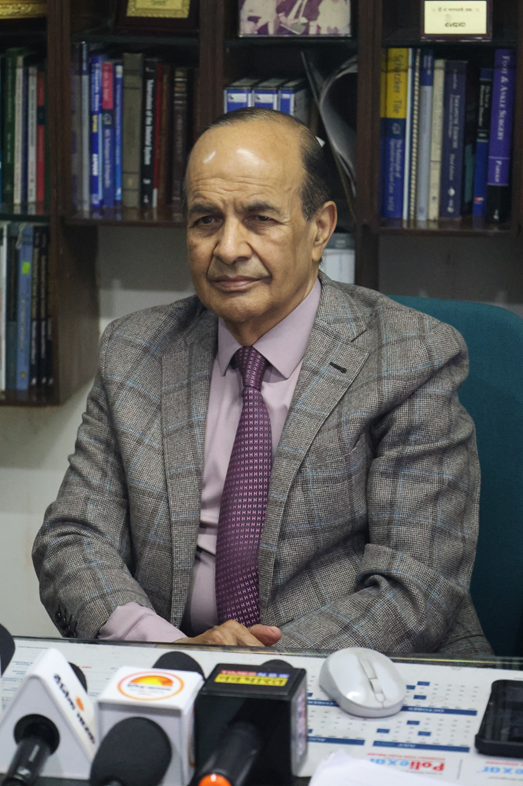
After 15–20 years of performing knee replacements, Dr. Aggarwal observed a pattern that many surgeons worldwide were also beginning to acknowledge. Even when surgeries were technically successful—with complication rates below 5%—nearly 20–25% of patients remained dissatisfied. Pain persisted, stiffness lingered, and mobility did not fully return to expectations. Technological advancements such as robotics and computer navigation improved surgical precision, but they did not significantly improve patient satisfaction. The question became difficult to ignore: were surgeons addressing the disease itself, or only its most visible outcome?
A Personal Turning Point
The shift in perspective was not driven by research alone, but by personal experience. Around a decade ago, Dr. Aggarwal’s wife, herself a doctor, began suffering from severe knee pain. Her condition worsened to the point where walking became difficult, and travel required the use of a wheelchair. Like many patients, she was advised knee replacement by leading specialists.
However, Dr. Aggarwal hesitated. His years of clinical experience had shown him that even a technically successful surgery did not always guarantee a satisfactory outcome. This moment prompted him to look beyond conventional solutions and re-examine the underlying causes of knee pain.
A deeper exploration of global research led to a crucial insight: knee osteoarthritis is not merely a result of mechanical wear and tear. Increasingly, it is understood as part of a chronic, low-grade inflammatory process associated with ageing—often referred to as “inflammaging.” This gradual inflammation affects not just the cartilage, but also ligaments, muscles, and surrounding tissues.
In this context, knee pain is not just a localised joint issue, but a manifestation of a broader systemic condition. Treating only the joint, therefore, may not address the root cause of the problem.
The Shift to Regeneration & Birth of the Ludhiana Protocol
Building on this understanding, Dr. Aggarwal began integrating a range of established, non-surgical treatments that had previously been used in isolation. These included joint lavage (cleaning of the joint), lubrication therapies, platelet-rich plasma (PRP) and growth factor-based treatments derived from the patient’s own blood, as well as orthobiologic interventions using fat or bone marrow.
Alongside these, he incorporated systemic measures aimed at reducing overall inflammation through medication, supplements, and lifestyle modifications.
This integrated approach, known as the Ludhiana Protocol, focuses on reducing inflammation, improving the joint environment, and supporting the body’s natural healing processes—shifting the emphasis from replacement to regeneration.
His wife was among the first to undergo this treatment and experienced significant improvement over time. Encouraged by these results, Dr. Aggarwal extended the approach to other patients. Since then, hundreds have been treated, with over 95% reporting improvement in pain and mobility. Many who had been advised knee replacement are now managing without surgery.
The procedure itself is minimally invasive. It typically does not require hospital admission, major anaesthesia, or prolonged bed rest. Patients are often able to walk in and walk out on the same day.
Not a Miracle, But a Realistic Path Forward
While the results are promising, Dr. Aggarwal emphasises that regenerative treatment is not a universal substitute for surgery. In advanced cases, particularly where the knee is severely deformed, replacement may still be necessary. However, in early to moderate stages, timely intervention can help delay or even avoid surgery.
Improvement is gradual rather than immediate—patients may notice changes within weeks, with more significant benefits developing over two to three months.
A Growing Public Health Concern
Knee osteoarthritis is a significant and growing health concern in India. Studies indicate a high prevalence among individuals aged 60 and above, with women more commonly affected. Sedentary lifestyles, obesity, and longer life expectancy are contributing to an increasing number of cases, even among younger populations.
In this context, approaches that focus on early intervention and preservation of natural joints may play an important role in reducing long-term burden.
Dr. Aggarwal’s journey reflects a broader transition in orthopaedic care—from replacing damaged joints to understanding and treating the underlying disease.
Now based at the N.K. Aggarwal Joints & Spine Centre in Ludhiana, he continues to advocate for early diagnosis and informed decision-making. As he puts it, “We cannot stop ageing, but we can control its painful effects on the knees. The earlier we begin treatment, the better the chances of preserving the natural joint.”
He still performs knee replacement, when necessary, but considers it a last resort rather than the first line of treatment.
For patients, the message is clear: knee pain should not be ignored, nor should surgery be the only option considered. With evolving medical understanding, a more balanced and patient-centric approach is now emerging—one that prioritises preservation, function, and long-term quality of life.

- 0
- By Neel Achary

14, Apr 2026
India Extends Health Support to Afghanistan with BCG Vaccine Shipment
Apr 14 (BNP): India has sent a large consignment of BCG vaccines to Afghanistan, reinforcing its support for public health and child immunisation programmes in the neighbouring country.
The shipment, weighing around 13 tonnes, is aimed at strengthening vaccination coverage for children and supporting efforts to prevent tuberculosis-related health risks in early childhood.
The initiative reflects India’s continued humanitarian assistance to Afghanistan, particularly in the healthcare sector, where vaccine access and child immunisation remain critical challenges.
BCG vaccines are widely used as part of national immunisation programmes to protect infants and young children against tuberculosis, a disease that continues to pose public health concerns in several regions.
The latest supply is expected to help Afghan health authorities expand immunisation outreach and improve vaccine availability in vulnerable communities.
The move further underscores India’s role in providing medical support and essential supplies to countries in need, especially in the broader South Asian region.
14, Apr 2026
India Pharma 2026 Highlights Shift Towards Innovation in Pharmaceutical Sector
Apr 14 (BNP): The 9th edition of India Pharma 2026 began in New Delhi, bringing together policymakers, industry leaders, and global stakeholders to discuss the future of India’s pharmaceutical industry.
The two-day conference, organised by the Department of Pharmaceuticals under the Ministry of Chemicals and Fertilizers in collaboration with FICCI and the Indian Pharmaceutical Alliance, focuses on strengthening innovation, research, self-reliance, and India’s global competitiveness in healthcare.
Addressing the inaugural session, Union Minister J. P. Nadda said India’s pharmaceutical sector is undergoing a major transformation from being the “pharmacy of the world” to an innovation-driven hub. He highlighted government efforts to boost research and development, biologics, biosimilars, and advanced therapies, along with initiatives such as the Biopharma Shakti programme, the PRIP scheme, Production Linked Incentive (PLI) schemes, and bulk drug parks.
Minister of State Anupriya Patel said India is steadily evolving from a generics-led industry to a biopharma innovation hub. She noted that the country currently supplies around 20 per cent of global generic medicines and meets nearly 70 per cent of global vaccine demand, while expanding its focus on high-value segments like biologics and biosimilars.
Officials including Manoj Joshi and Punya Salila Srivastava emphasized the need to strengthen research infrastructure, accelerate innovation, and improve regulatory processes to support long-term sector growth.
Industry leaders also pointed to India’s strong manufacturing ecosystem, which includes thousands of pharmaceutical companies and a large number of internationally compliant facilities, reinforcing the country’s position in global supply chains.
The conference will continue over two days with discussions on artificial intelligence in drug discovery, policy frameworks, and strategies to enhance India’s role as a global leader in life sciences.
10, Apr 2026
PFRDA Integrates Healthcare Benefits with NPS Through Swasthya Initiative
The Pension Fund Regulatory and Development Authority (PFRDA) has introduced a new healthcare-linked facility under ‘NPS Swasthya’, aimed at combining retirement savings with medical support for subscribers.
Under this initiative, eligible National Pension System (NPS) subscribers can now use a portion of their pension corpus to meet hospitalisation and in-patient treatment expenses, while the remaining funds continue to grow through market-linked investments.
Subscribers are allowed to access up to 25% of their “Net Eligible Balance” for medical emergencies. This marks a shift from the traditional NPS structure, where funds remain locked until retirement, offering greater flexibility during healthcare needs.
The programme has been developed through a partnership involving the pension regulator and multiple stakeholders, including pension funds and health insurance players. It is powered by Medi Assist’s digital “Maven” platform, which is integrated with the Central Recordkeeping Agency system for seamless processing.
The initiative also provides access to a wide hospital network across India, enabling cashless treatment facilities for subscribers in more than 1,500 cities, along with support for outpatient care services.
Officials said the move aims to strengthen India’s social security system by linking retirement planning with healthcare protection, ensuring financial support during medical emergencies without disrupting long-term savings.
10, Apr 2026
World Homoeopathy Day 2026: India Emphasises Homoeopathy for Sustainable Health
New Delhi, Apr 10 (BNP): World Homoeopathy Day is being observed on April 10, commemorating the birth anniversary of Dr. Samuel Hahnemann, the German physician who founded homoeopathy in the late 18th century. This year’s theme, “Homoeopathy for Sustainable Health,” highlights the growing focus on holistic and long-term wellness through alternative systems of medicine.
Homoeopathy, derived from the Greek words “homoios” (similar) and “pathos” (suffering), is based on the principle of treating illness with highly diluted substances that produce symptoms similar to the disease in healthy individuals. The system was formalised by Hahnemann in 1796 and continues to be guided by his foundational work, Organon of Medicine.

Pic Credit: https://x.com/PMOIndia
Two core principles define homoeopathy: “like cures like,” which suggests that substances causing symptoms in a healthy person may help treat similar symptoms in a patient; and the “law of minimum dose,” which advocates the use of highly diluted remedies to stimulate the body’s natural healing process while reducing side effects.
Homoeopathic medicines are typically prepared from natural sources such as plants, minerals, and animal products through processes of dilution and succussion. They are administered in various forms, including tablets, globules, and liquid preparations. A key feature of the system is its individualised treatment approach, where therapy is tailored to a patient’s overall physical and mental condition rather than focusing solely on the disease.
India remains one of the largest centres for homoeopathy in the world. According to official data, the country has around 3.45 lakh registered homoeopathy doctors, 8,593 dispensaries, 277 educational institutions, and 34 research centres, reflecting its strong institutional base.
Homoeopathy was introduced in India in 1810, when German missionaries first brought its medicines to the country. Over time, it has become an integral part of India’s pluralistic healthcare system, supported by a growing workforce and expanding public acceptance.
Officials and experts note that the system continues to evolve through research and education, with increasing emphasis on evidence-based practice and integration into broader healthcare goals. The observance of World Homoeopathy Day also serves to promote awareness about its role in preventive care and sustainable health systems.
9, Apr 2026
‘Poshan Pakhwada 2026’ to Boost Early Childhood Brain Development
New Delhi, Apr 9 (BNP): The government has announced that the 2026 edition of Poshan Pakhwada will focus on enhancing brain development in children during the crucial first six years of life.
This initiative aims to raise awareness about nutrition, cognitive stimulation, and overall early childhood development, recognizing that the initial years are critical for lifelong learning, health, and productivity. By emphasizing proper nutrition, responsive caregiving, and early learning, the program seeks to ensure that children reach their full developmental potential.
Officials highlighted that Poshan Pakhwada will involve community outreach, awareness campaigns, and collaboration with health workers, schools, and local organizations to educate parents and caregivers on practices that promote brain growth. Special attention will be given to preventing malnutrition, micronutrient deficiencies, and other factors that can hinder cognitive development.
Experts note that investing in the first six years of life not only strengthens individual outcomes but also contributes to broader societal benefits, including improved education, health, and economic productivity. The initiative is part of India’s ongoing efforts to create a healthier, smarter, and more resilient generation.
8, Apr 2026
From Metro Hubs to Every Home: India’s Healthcare Transformation
Apr 8: For decades, seeking world-class medical care in India often meant traveling to New Delhi — a journey that was not just expensive, but emotionally and physically draining for millions of families. Today, that reality is steadily changing.
Across the country, from smaller cities to remote regions, quality healthcare is becoming more accessible than ever before. What was once concentrated in a few urban hubs is now spreading into a more connected, nationwide system — bringing hope closer to people’s homes.
At the heart of this transformation are the people who make healthcare possible: doctors.
Over the past decade, India has made a significant push to strengthen its medical workforce. The number of MBBS seats has more than doubled — rising from about 50,000 in 2014 to nearly 1.2 lakh today. Postgraduate seats have also seen a sharp increase, growing from around 30,000 to about 80,000.
Behind these numbers lies a larger story — one of opportunity and preparedness. With more medical colleges opening and more students entering the profession, India is building a stronger pipeline of trained healthcare professionals. This means that patients in smaller towns no longer have to depend solely on distant metro cities for specialized care.
For families, this shift is deeply personal. It means fewer long journeys in times of crisis, quicker access to treatment, and the comfort of being cared for closer to home.
India’s healthcare journey is far from complete, but the direction is clear: a future where quality medical care is not defined by geography, but guaranteed as a right — wherever you live.
7, Apr 2026
Setting Standards of Care for Brain Injuries in First Responders
COLUMBUS, Ohio, Apr 07: Management of sports-related concussions has come a long way in the past 25 years: Once considered a minor problem involving minimal time out of the game, a severe knock to the head is now assessed as a potential traumatic brain injury and, if confirmed, requires a structured recovery and an average wait of 13 days before play resumes.
Many of the academic experts who have advanced the science behind concussions in student-athletes – and, in collaboration with the Department of Defense, in soldiers as well – are now focused on addressing these head injuries in a population that’s similar, but different: first responders.
The considerations are many, spanning from a first responder’s potential sports or military injuries in a previous life to the factors that signal when it’s safe to return to duty after a strike to the head. Getting a clinical diagnosis is key to putting an injured first responder on the proper trajectory of recovery – not just working safely, but also maintaining a satisfying quality of life, experts agree.
Researchers will soon publish the first evidence-based guidelines for traumatic brain injury (TBI) recognition and management and return to duty in first responders – a group encompassing law enforcement officers, corrections personnel, firefighters and emergency medical technicians (EMTs).
The authors will be the nearly 60 experts who convened at The Ohio State University in late March to pursue consensus on protocols surrounding six frameworks: workplace policies, injury prevention measures, challenges of recognizing injuries, diagnosis and treatment of the injury, mental health monitoring, and steps needed to get a concussed first responder back to work.
“This is a critical step in improving the care and support for our first responders who risk so much for us every day,” said Jaclyn Caccese, associate professor in the School of Health and Rehabilitation Sciences (HRS) at The Ohio State University.
Caccese co-hosted the 1st International Conference on TBI in First Responders with James Oñate, interim director of HRS, interim vice dean for health and rehabilitation sciences in the College of Medicine, and a professor in the HRS Division of Athletic Training.
One universally accepted fact drove the work: Brain health in first responders is a matter of public safety – for the injured personnel, their colleagues, their families and the public they are sworn to protect.
After working together for several months in six workgroups, the scholars, clinicians and first responders met March 26-27 to share what they’ve learned and vote on a series of recommended guidelines. The final recommendations and consensus statement will be published early next year in the Journal of Head Trauma Rehabilitation.
While head injury data on first responders is minimal, a meta-analysis of studies to date suggests that about 60% of law enforcement and corrections officers have suffered at least one traumatic brain injury in their lifetime, and 17% have experienced a TBI on the job. Among firefighters, lifetime TBI prevalence ranges from 62% to 77%. There have been no studies of head injuries in EMTs.
Though what has been learned by studying sports and military concussions has given these teams a head start, most workgroups indicated that the need for more research specific to the first responder workforce is apparent.
“We’ve lumped first responders together. We’re going to stop doing that,” Oñate said. “This is the beginning, and we’re starting with many things we’ve advanced already. We’re not starting from scratch.”
In a first-of-its-kind survey of Ohio law enforcement officers in 2024, Caccese, Oñate and colleagues reported that 74% of officers had a lifetime history of one or more head injuries, and 30% had a head injury that happened on the job. Further analysis showed post-traumatic stress disorder and depressive symptoms were higher in those who had experienced one or more head injuries.
At the conference, each of the six workgroups brought forward four to five recommendations for a vote. Consensus was reached on all but two, though many will undergo refinements before publication.
Overarching themes included standardizing methods of recognizing and treating TBIs and assessing return-to-duty readiness; ensuring no punitive actions are taken against an injured and recovering first responder; protecting the head as much as possible during training intended to expose new personnel to risks linked to blasts and being hit at work; and educating agencies, first responders, families and health care providers about TBI risks, prevalence and potential lasting effects when they’re not managed well.
“Almost every workgroup talked about the importance of education,” Caccese said.
The educational component is critical because this effort is still very new. Many agencies are unaware that an international effort is afoot to address TBI in first responders. In addition to publishing the conference outcomes in a scientific journal, the group plans to present at academic and first responder-specific conferences and approach publications targeted to first responder agencies.
Conference attendees acknowledged TBI in this workforce is a delicate subject for so many reasons, not the least of which is the stigma linked to injuries that affect performance in a profession characterized by a mission-first mindset that leads to underreporting. First responders served on every workgroup alongside the academic researchers to help keep suggestions realistic for the workplace cultures and practices that are being asked to change.
The conference featured a panel discussion with three law enforcement officers who had received a head injury on the job. They described symptoms including double vision, dizziness, chronic migraines, short-term memory loss, speech problems and temporary paralysis, as well as complications navigating recovery – with one eventually losing her job as a result of her occupational injury.
Hearing from these officers “helps give us context about the stakes to come up with recommendations for first responders to return to full capacity,” said Nathan Edwards, a research scientist in Ohio State’s Human Performance Collaborative.
Improving care for first responders isn’t stopping with the brain: Researchers are investigating musculoskeletal issues, physical performance and heart health in the first responder population as well, Oñate said.
“It’s on us to get the level of evidence much higher,” he said. “It’s also on us to communicate with the first responder community to look at what impacts they’re looking for and what they need to have happen.”
This work was supported by the Assistant Secretary of Defense for Health Affairs endorsed by the Department of Defense, through the Traumatic Brain Injury and Psychological Health Research Program. The conference was also supported by HRS and Ohio State’s Center for Brain Injury Recovery & Discovery.
6, Apr 2026
AIIMS Delhi Introduces Virtual Reality Facility to Enhance Medical Training
All India Institute of Medical Sciences Delhi has introduced a state-of-the-art virtual reality (VR) training centre aimed at enhancing medical education and clinical training for students.
The new facility uses immersive VR technology to simulate real-life medical scenarios, allowing students to practice procedures and decision-making in a controlled, risk-free environment. This approach is expected to strengthen practical skills and improve confidence before handling actual patients.
According to institute officials, the initiative is part of a broader effort to integrate advanced technology into medical training and keep pace with global standards in healthcare education. The VR centre will support learning across multiple disciplines, offering interactive modules tailored to various medical specialties.
The launch marks a significant step toward modernizing medical education in India, providing students with innovative tools to gain hands-on experience and improve patient care outcomes.
6, Apr 2026
Former Vice President Venkaiah Naidu to Inaugurate 10th Edition of CAHOCON 2026 in Chennai
Chennai, Apr 06: Shri M. Venkaiah Naidu, former Vice President of India, is set to inaugurate the 10th edition of CAHOCON 2026, India’s premier healthcare quality conference organized by the Consortium of Accredited Healthcare Organizations (CAHO), scheduled to be held in Chennai from April 10 to 12, 2026.
Dr. Sangita Reddy, Joint Managing Director of Apollo Hospitals Group, will be the Guest of Honour at the inaugural session. Dr. C. Sylendra Babu, IPS (Retd.), former Director General of Police and Head of Police Force, Tamil Nadu, will be the Guest of Honour at the Graduation Ceremony. The event is expected to bring together around 2,500 healthcare leaders, clinicians, administrators, and policymakers, including over 200 international delegates, to deliberate on advancements in patient safety, healthcare quality, accreditation, and digital transformation. Ms. Mallika Srinivasan, Chairman & MD, TAFE will be the Chief Guest and Mr. Sunil Kumar Barnwal IAS, Additional Secretary and CEO, National Health Authority, Government of India will be the Guest of Honour at the valedictory ceremony.
Other dignitaries participating in CAHOCON 2026 include Dr. Vijay Agarwal, President; Dr. Lallu Joseph, Secretary General, Consortium of Accredited Healthcare Organizations, and AGS & Quality Manager at Christian Medical College Vellore; Dr. Nalla G Palaniswami, Organizing Chairperson CAHOCON 2026, and Chairman of Kovai Medical Centre and Hospital; Dr. S. Manivannan, Organizing Co-Chairperson, and Founder & Managing Director of Kauvery Group of Hospitals; Dr. Sathish Devadoss, Organizing Secretary, and Vice Chairman of Devadoss Multispecialty Hospitals; and Dr. Ilankumaran Kaliamoorthy, Academic Committee Member, CAHOCON 2026, and CEO of Apollo Hospitals Chennai.
Guided by the theme ‘Tech, Touch, Trust- The new Healthcare code.’, CAHOCON 2026 will emphasize the human connection, reliability, and innovation at the heart of advancing healthcare quality and patient safety. The main conference will feature high-impact scientific sessions, panel discussions, innovation showcases, and interactive networking opportunities, along with poster presentations by researchers and clinicians that highlight innovative projects and foster knowledge exchange.
Alongside the conference, CAHOCON 2026 will host a comprehensive healthcare exhibition with over 200 stalls, showcasing cutting-edge products and services from leading medical equipment manufacturers, digital health companies, pharmaceutical firms, and service providers. The conference will also feature four breakout houses, designed to facilitate smaller group discussions, interactive workshops, and focused learning sessions.
Recognized by the International Society for Quality in Health Care (ISQua) as the first ISQua Regional Conference for South Asia, CAHOCON 2026 will witness addresses by 20 ISQua experts. The conference will honour excellence in healthcare quality and patient safety through the prestigious CAHO Awards, celebrating institutions and professionals who have made outstanding contributions to advancing healthcare standards.
A key highlight of CAHOCON 2026 is the pre-conference workshops. Over 40 such workshops will be organized on April 10 engaging 32 leading hospitals from Chennai, providing hands-on training and practical insights into quality improvement and patient safety for the participants.
Over the past decade, CAHO has evolved into a powerful national movement dedicated to strengthening healthcare quality and patient safety across India. Through continuous training, accreditation support, knowledge-sharing platforms and collaborative initiatives, the organization is working to build a culture where quality and safety are embedded in every aspect of healthcare delivery.
CAHOCON is one of the most influential platforms for advancing healthcare quality and patient safety in India. This collaborative forum aims to strengthen a culture of continuous improvement in healthcare systems and ensure that patients across the country benefit from safer and higher-quality care.


