


4, Apr 2026
New Reform Bill to Simplify Rules and Support Growth in Healthcare Sector
New Delhi: The Jan Vishwas Bill is expected to bring significant relief to India’s healthcare ecosystem by reducing regulatory pressure and encouraging smoother operations across the sector, according to the Ministry.
The Bill focuses on decriminalising minor offences and replacing them with civil penalties, a move that could greatly benefit hospitals, diagnostic centres, pharmaceutical firms, and medical device companies. Instead of facing criminal action for procedural lapses, healthcare providers will now be subject to warnings, improvement notices, or monetary penalties—making compliance less intimidating and more practical.

Pic Credit: Pexel
For the health sector, this shift is particularly important. Medical institutions often deal with complex regulations, and even small documentation errors could earlier lead to severe legal consequences. By removing the fear of criminal prosecution for such minor issues, the Bill allows healthcare professionals to focus more on patient care rather than legal risks.
The reform is also expected to boost investment and innovation. A more predictable and business-friendly regulatory environment can attract new players in areas like pharmaceuticals, medical technology, and health services. This could improve infrastructure, expand access to care, and support the growth of India’s healthcare industry.
Additionally, faster and more transparent compliance processes may improve service delivery. With fewer legal hurdles, approvals and operations can become more efficient, ultimately benefiting patients through better access and reduced delays.
Officials believe that the Bill will not only enhance ease of doing business but also strengthen the overall healthcare system by making it more responsive, efficient, and growth-oriented.

- 0
- By Neel Achary

4, Apr 2026
AACI Statement on Fiscal Year 2027 Budget Proposal
The Association of American Cancer Institutes (AACI) is disappointed in the Fiscal Year 2027 (FY 27) budget proposal released by President Donald J. Trump. Under the proposed budget, funding for the National Institutes of Health (NIH) would be cut by $5.787 billion, reducing the agency’s overall budget to $41.429 billion – 12.3 percent below the FY 26 total.
For decades, the NIH has funded breakthroughs that have led to effective treatments for cancers that were once fatal. Advances in immunotherapies and precision medicine have expanded the possibilities of customized cancer treatment. Early detection tools help diagnose cancer when it’s most treatable – and most affordable to treat. When funding is cut, promising science is shelved, clinical trials are halted, and patients lose access to the treatments that could save or extend their lives.
Further cuts to NIH funding would hinder the agency’s effectiveness and contradict the stated goals of its leadership. Dr. Jay Bhattacharya, who began his tenure as NIH director just over one year ago, has repeatedly stressed the importance of engendering trust and restoring confidence in scientific research among the American people. Stable, predictable funding increases bolster the research infrastructure that is essential to building trust and accelerating progress against cancer and other devastating diseases.
AACI deeply appreciates the ongoing efforts of members of Congress—on both sides of the aisle—who have demonstrated their commitment to protecting funding for the NIH. We urge Congress to continue its longstanding bipartisan support of biomedical research and reject the FY 27 budget proposal. AACI is eager to collaborate with our champions in Congress, NIH leadership, and the Trump administration to ensure that scientists can conduct lifesaving research without disruption and that the NIH will remain a world leader in biomedical research.
4, Apr 2026
Canopy Surpasses 350,000 Lives Protected; Expands Clinical Strategy Team to Accelerate Pre-Escalation Intervention
SAN FRANCISCO, CA – Apr 1 – Canopy, the category leader in connected safety platforms for U.S. health systems, announced that it now protects more than 350,000 lives nationwide and has expanded itsClinical Strategy Team to further the shift from reactive incident response to proactive, pre-escalation prevention with rich clinical focus and experience.
As workplace violence, nurse burnout, and staff turnover continue to strain hospital margins, Canopy is investing in deep clinical expertise to provide health systems with the strategies and tools needed for safer daily operations. The expansion includes the addition of Dr. Ryan Oglesby, PhD, MHA, RN, CEN, CFRN, NEA-BC, 2025 National Emergency Nurses Association (ENA) and this year’s Past President, as a Clinical Strategy Director. He joins current Clinical Strategy Director Jeanne Venella, DNP, MS, CEN, CPEN, a nationally recognized expert in clinical operations and patient safety. Together, they strengthen Canopy’s ability to partner directly with executive and nurse leaders on large-scale safety initiatives.
“At Canopy, we’re turning the commitment to nurse safety into real-world, real-time activation so that bedside caregivers can get help the moment they need it,” said Ryan Oglesby, Clinical Strategy Director. “By growing this clinical strategy team, we are bridging the gap between frontline caregivers and hospital leadership to ensure the protections necessary to keep clinicians focused on taking care of patients.”
The company’s rapid growth, fueled by its expanding team and recent Series B funding, reflects rising demand from health system leaders who recognize that safety is a critical driver of patient outcomes. Workplace violence drives turnover, increases labor costs, and disrupts productivity. To address these challenges, Canopy is accelerating the evolution of its Connected Safety Platform.
Over the past six months, Canopy has introduced enhanced mobile responder capabilities across Android and iOS, as well as integrations with Epic, Vocera, and TigerConnect, providing security and clinical teams with immediate, high-fidelity location data. Coupled with advanced reporting and real-time analytics, these updates empower leadership to identify high-risk areas and optimize response protocols.
In their recent Healthcare Safety Report, which surveyed over 1,000 healthcare workers and leaders, Canopy found that nearly 85% of respondents have experienced at least one workplace violence event in their careers. The report also highlighted a direct link to turnover, with over one-third of workers considering leaving their positions due to safety issues.
“Our mission is to safeguard healthcare workers wherever they occur across the campus—from the parking garage to the exam room,” said Jeanne Venella, Clinical Strategy Director. “As hospitals move beyond simply reacting to incidents, we are providing the infrastructure for a prevention-first model that strengthens both staff well-being and overall operations.” At the last ENA conference I attended, a nurse approached me in our exhibit hall and stated, “My Canopy button saved my life last week!” Emergency Department Nurse at TJU.
Canopy’s platform is actively trusted by leading organizations, including the University of Michigan Health-Sparrow and ECU Health. The company will continue expanding its Clinical Strategy Team as part of its long-term commitment to helping health systems protect their people and performance.
“We knew we couldn’t eliminate workplace violence entirely, but we could certainly prevent the harm coming to our team members. We wanted them to feel empowered, not monitored. Once we rolled [Canopy’s platform] out, you could feel the shift—they finally felt safer.” Chris Nemets, Regional CNIO, University of Michigan Health, states about incorporating Canopy into Michigan Health’s system.
3, Apr 2026
India’s Bioeconomy Enters High-Growth Phase, Eyes $200 Billion Milestone

Pic Credit: Pexel
India’s bioeconomy is fast emerging as one of the country’s most dynamic growth engines, steadily approaching the $200 billion mark. Fueled by innovation, research, and a thriving startup ecosystem, the sector is redefining how science contributes to economic progress and everyday life.
From Niche to Mainstream
Once limited to specialized research and pharmaceuticals, the bioeconomy has expanded into a wide spectrum of industries, including healthcare, agriculture, biofuels, and environmental solutions. This transformation reflects India’s ability to combine scientific expertise with real-world applications, creating solutions that are both scalable and impactful.
Innovation Driving the Momentum
At the heart of this growth lies a strong push for innovation. Startups, research institutions, and established companies are working together to develop next-generation technologies in areas such as biotechnology, genomics, and sustainable agriculture.
Supportive government policies and increased funding have further accelerated this momentum, enabling new ideas to move from laboratories to markets more quickly than ever before.
Beyond Growth: A Broader Impact
The rise of the bioeconomy is not just an economic story—it is also about addressing critical challenges. From improving healthcare access to developing climate-resilient crops and clean energy alternatives, the sector is playing a key role in shaping a more sustainable future.
It is also creating skilled jobs, attracting global investments, and strengthening India’s position as a hub for affordable and innovative solutions.
Looking Ahead
As the bioeconomy edges closer to the $200 billion milestone, the focus is shifting toward scaling innovation and deepening collaboration between industry and academia. Strengthening infrastructure and nurturing talent will be crucial to sustaining this growth.
With strong foundations and growing global relevance, India’s bioeconomy is entering a new phase—one defined by innovation, resilience, and the potential to make a lasting impact on both the economy and society.
3, Apr 2026
Childhood cancer is a substantial contributor to global childhood mortality and global cancer burden
Seattle, Apr 03: A new study published in The Lancet highlights that childhood cancer remains the eighth-leading cause of death among children globally, with outcomes heavily influenced by access to healthcare resources.
The findings, part of the Global Burden of Disease (GBD) 2023 study, were led by researchers from the Institute for Health Metrics and Evaluation (IHME) at the University of Washington School of Medicine and St. Jude Children’s Research Hospital. The study estimates that in 2023, there were approximately 377,000 new cases of childhood cancer worldwide, resulting in 144,000 deaths.
While global childhood cancer mortality has declined by 27% since 1990, the burden remains disproportionately high in low- and middle-income countries (LMICs). These regions accounted for 85% of new cases, 94% of deaths, and 94% of disability-adjusted life years (DALYs) in 2023, underscoring stark global inequities.
“While outcomes for many childhood cancers have improved in high-income countries, these gains have not been equitably shared,” said Lisa Force, lead author from IHME. “Delays in diagnosis, limited access to treatment, and systemic healthcare challenges continue to drive disparities in LMICs.”
Urgent Need for Investment in Cancer Care Systems
The study emphasizes that improving survival rates will require significant investment in cancer control systems, particularly in LMICs. Key priorities include:
- Strengthening referral systems for early diagnosis
- Expanding access to chemotherapy, surgery, and radiotherapy
- Enhancing workforce training
- Improving cancer registries and surveillance systems
Regions such as the WHO African and Western Pacific regions reported the highest number of cases, with the WHO African Region experiencing the greatest mortality rates. Notably, deaths in the African region have increased by nearly 56% since 1990.
Most Common Childhood Cancers
The study identified the most burdensome childhood cancers globally as:
- Leukemia
- Brain and central nervous system cancers
- Non-Hodgkin lymphoma
Nearly half of all childhood cancer deaths in 2023 were linked to six key cancers identified under the World Health Organization’s Global Initiative for Childhood Cancer (GICC).
Global Efforts to Improve Survival Rates
World Health Organization (WHO), in partnership with St. Jude Children’s Research Hospital, continues to advance global initiatives aimed at improving childhood cancer survival rates to at least 60% by 2030.
“These data provide a critical tool to monitor progress and evaluate the global effort to reduce childhood cancer deaths,” said Nickhill Bhakta, senior author and director at St. Jude Global. “Our mission is to ensure equitable access to life-saving care for children worldwide.”
The study underscores the urgent need for coordinated global action to address disparities in childhood cancer outcomes and ensure that advancements in treatment benefit children everywhere, regardless of geography or economic status.
1, Apr 2026
Autism Awareness Day: Dr. Ketan Patel Stresses Diet & Exercise Benefits
Apr 1: On the eve of World Autism Awareness Day (April 2,2026) Dr Ketan Patel of Specialty Homeopathy said that 80 percent of autism cases can be cured through diet and exercise and in 20 percent of children, medicines are also required along with diet due to metabolic and genetic reasons.
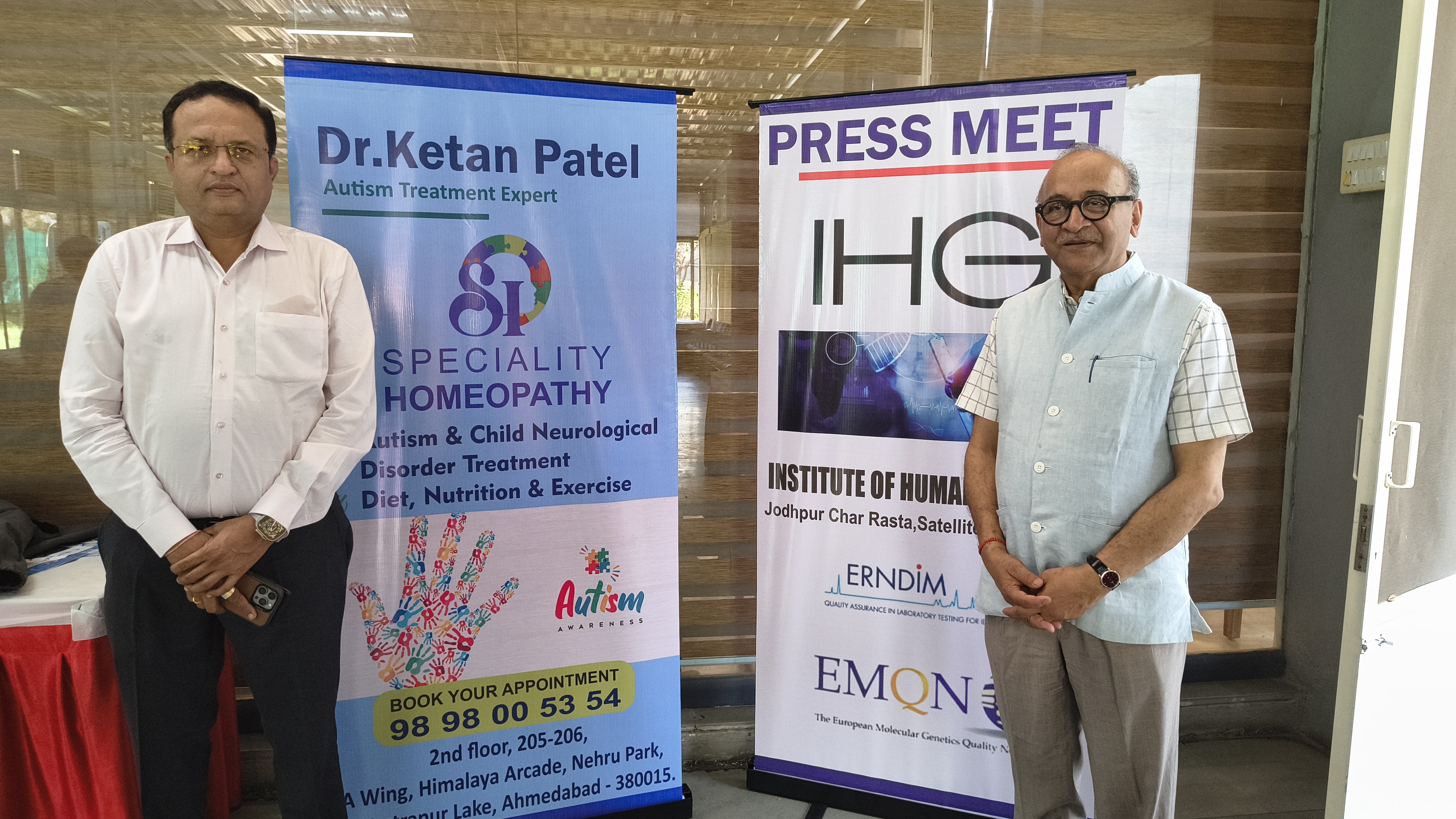
Homeopathy has proven to be very effective in treating in such genetic, metabolic & mitochondrial autism (Syndromic AUTISM). Genetic effects can be largely eliminated or controlled through homeopathic medicines.
Dr Ketan Patel said that the effects of genes affecting sodium channel, potassium channel, aqua channel, epileptic, Encephalopathy, intellectual and other protein disruption can be eliminated up to 90 percent with homeopathic medicines along with diet and exercise. The research of these experts has found that only 10 percent of genes cannot be improved.
Dr Ketan Patel further said that “The protocols for autism treatment of Western countries do not show the effect of treatment in a certain time. There is a shortage of doctors trained to treat autism in India. Therefore, it is necessary for us to improve the protocols of Western countries and formulate our own new protocols. Indian doctors are far ahead in the treatment of autism, compared to Western countries. Therefore, it is necessary for us to implement a new protocol with diet, exercise and individual treatment plan in the treatment of autism.”
Dr Jayesh Sheth said that autism is a type of disease in which children are not mentally retarded, but due to some obstruction or disturbance in the wiring of neurons in their brain, their ability to speak and think is affected. Such a gene problem is found in 50 percent of autism cases. The earlier such children are diagnosed, the more effective the treatment and guidance is.
Dr Patel and Dr Sheth further said that currently, doctors are providing up to Rs. 5,00,000 annually for the treatment, genetic testing and related therapy of more than 100 needy children suffering from autism. In the coming time, doctors from all branches like Allopathic, Homeopathic, Ayurvedic, who are doing treatment and research in the field of autism in Gujarat, are committed to jointly work with the therapists and bring about rapid treatment and improvement.
1 in every 36 children born worldwide is affected by autism. This figure is considered extremely alarming, as the number of children suffering from autism is higher than the percentage of children suffering from life-threatening diseases such as cancer, diabetes and HIV worldwide.
What is autism?
It is a disease affecting the neurological, endocrinal, and gastrointestinal systems, diagnosed in children between the ages of 18 and 24 months and its symptoms are as follows.
– The child does not speak on time or does not speak at all cannot use sentences after speaking a few words.
– Does not make eye contact with family members such as mother, father, brother, sister.
– Does not play with children of the same age group when they are playing and prefers to go away and play alone.
– Laughs and cries for no reason.
– Plays with a toy, object or piece of clothing for a long time, sleeps with it.
– Wiggles fingers, jumps, keeps moving around in one place.
– Holds hands over ears in fear of the sound of mixers, vacuum cleaners, firecrackers.
– Throws things and screams.
– Hurts body with teeth, hits head against wall.
It is advisable that if two or more of the above symptoms are observed in a child take your child to a doctor to get diagnosed with autism and get proper treatment. The earlier your child is diagnosed with autism or a similar condition, the greater the child’s chances of recovering from these symptoms.
– Scientists, doctors, universities, pharmaceutical and diagnostic companies around the world are working to diagnose autism more quickly.
In order to make people aware of this disease, the World Health Organization (WHO) has declared April 2 as World Autism Awareness Day every year and the entire month of April as Autism Awareness Month to spread awareness and information about autism. During this month, famous places around the world are decorated with blue lights. Such as Sydney Opera – Australia, Burj Khalifa – Dubai, Leaning Tower – Italy, London Bridge – UK, Pyramids of Giza – Egypt, Eiffel Tower – France (Paris) are decorated with blue lights.
Diagnosis of autism
This disease, which is seen in children from the age of 18 months to 30 months, cannot be detected by any single test or other medical report such as CT SCAN, MRI SCAN, PET SCAN or EEG so apart from the above report the diagnosis can be made in the following two stages.
In the first stage, to know whether the physical and mental development of the children is happening according to their age or not, the child’s learning ability, his way of speaking, words and sentences along with his facial expressions are studied and recorded and the development rate of the children (Physical & Mental Development) is kept in mind at a certain time interval such as 12 months, 18 months or 24 months i.e. at the age of 2 years. In this above study, the diagnosis is made on the basis of the answers of scientifically prepared questionnaires to the child’s parents, his doctors and the child’s caregivers.
The second stage is diagnosed by doctors who specialize in this disease such as a Developmental Paediatrician, Child Neurologist, Child Psychiatrist/Psychologist (specialist in child neurology and behavioural disorders), and DAN (Defeat Autism Now) doctors.
Causes of autism spectrum disorder
Doctors and scientists around the world are trying to find out the causes of this disease but have not been able to come up with a specific cause. However based on the medical history records of old cases/new cases and the similarities and differences in them, they have come to the following conclusions.
– Chronic infection in the mother’s body that affects the mental development of the child during pregnancy, such as Torch Infection.
– Hormonal imbalance due to the endocrine gland in the mother, thyroid deficiency.
– Pollution in the atmosphere, pollution in drinking water
Genetic disorder
– Tuberculosis disease in family members
– Epilepsy & Seizure Disorder
– Serotonin and neurotransmitter related disease
Many children develop autism after receiving the MMR vaccine, and doctors around the world have differing opinions on the matter. According to the CDC USA (CDC – Centre for Disease Control & Prevention), 1 in 31 children born worldwide are affected by autism, and this figure is considered alarming, as it is more than the combined incidence of cancer, diabetes, and HIV.
Treatment
Both Doctors have 35 Years of experience: Dr Ketan Patel is in Treatment Part And Dr Jayesh Sheth In Genetic Metabolic & Mitochondrial Diagnostic Part
31, Mar 2026
Lifestyle also influences the severity of endometriosis symptoms
|
According to a recent review by researchers at Semmelweis University, published in the journal Nutrients, lifestyle and dietary changes may help people living with endometriosis. The study analyzed more than 100 international papers and found that factors such as a healthy diet, regular physical activity, stress management, good sleep and adequate micronutrient intake can help reduce pain and improve quality of life. The Semmelweis University research team reviewed international studies to better understand the role of lifestyle factors in managing endometriosis. Endometriosis is a chronic, estrogen-dependent inflammatory disease affecting around 10% of women of reproductive age. It is characterized by tissue similar to the uterine lining growing outside the uterus. These lesions respond to the menstrual cycle and can cause pain, inflammation and bleeding, often leading to severe menstrual pain, chronic pelvic symptoms, fatigue and infertility. Diagnosis is often delayed, and symptoms can significantly affect quality of life over time. One of the key findings is that regular physical activity – at least 150 minutes per week, according to general recommendations, three times a week – can have several benefits. Exercise can influence hormone balance and the way the body processes pain. Clinical studies show that activities such as yoga, stretching and strengthening exercises, cardio workouts and resistance training, as well as relaxation techniques like progressive muscle relaxation, can help reduce endometriosis-related pain and improve quality of life. “Physical activity and other lifestyle factors do not replace medical treatment, but they can support it,” said Dóra Boroncsok, PhD candidate at Semmelweis University and first author of the study. The researchers also highlight the benefits of a Mediterranean-style diet, which is high in vegetables, fruits, whole grains, fish and olive oil, while limiting red and processed meat. This type of diet has been linked to reduced pain and improvements in some digestive symptoms. By contrast, pro-inflammatory diets, particularly those high in red meat, may increase the risk of the disease. The review also looks at the possible role of several micronutrients and dietary supplements – including vitamins C, D and E, omega-3 fatty acids, magnesium, zinc and certain antioxidant compounds – while noting that further clinical research is needed to confirm their benefits. “A key message is that patients can actively contribute to improving their condition. Everyday choices – from physical activity to diet and stress management – can reduce symptoms. Lifestyle change is not a cure, but it offers a real opportunity for women to take an active role in their own health,” added Dr Gábor Sobel, associate professor at the Department of Obstetrics and Gynecology at Semmelweis University and senior author of the study. The publication also introduces a new dietary approach currently under investigation, known as the fasting-mimicking diet (FMD). This is a short, typically five-day, plant-based, low-calorie program designed to trigger effects similar to fasting without requiring complete food restriction. In clinical studies of other chronic inflammatory and metabolic conditions – such as type 2 diabetes and cardiovascular risk – FMD has been shown to reduce inflammation, support hormonal and metabolic balance, and activate cellular repair processes. Based on its biological effects, FMD appears promising, but it has not yet been studied in gynecological diseases. The Semmelweis University research team has therefore developed a clinical trial protocol, which will be the first study worldwide to investigate FMD in gynecological conditions, including endometriosis. |
31, Mar 2026
Harnessing AI to Revolutionize Organ Transplants in India
Bhubaneswar, March 31: Emphasizing the transformative potential of artificial intelligence (AI) in healthcare, Subhasish Panda, Additional Secretary to the Prime Minister’s Office, highlighted how AI could significantly enhance organ transplantation in India. Speaking at a workshop-cum-regional Continuing Medical Education (CME) programme on “Organ Transplantation and Artificial Intelligence in Healthcare,” he said AI can integrate large datasets to support smarter, faster, and more informed clinical decisions.
“AI has the ability to revolutionize the organ transplantation ecosystem,” Panda noted. “It can streamline donor-recipient matching using genetic, clinical, and laboratory data, track organ availability in real time, optimize transport logistics for timely delivery, and assist clinicians through predictive analytics and intelligent dashboards.”
India currently ranks third globally in organ transplantation, with approximately 20,000 procedures performed in the past year. However, Panda expressed concern that 82 percent of donations come from living donors, with women representing the majority. He also highlighted that most transplants are conducted in the private sector, which affects affordability, and stressed the need for greater public awareness and increased participation from government healthcare institutions.
The programme was organized by AIIMS-Bhubaneswar, in collaboration with the National Academy of Medical Sciences (NAMS). It brought together more than 300 doctors from Odisha, West Bengal, Bihar, and Jharkhand to discuss innovations in transplantation and the role of AI in improving patient outcomes.
Panda’s remarks underscored the importance of combining technology, awareness, and policy support to make organ transplantation more efficient, accessible, and equitable across India.
31, Mar 2026
Odisha Governor Urges Stronger Awareness and Early Detection to Fight Cancer
On Monday, Odisha Governor Hari Babu Kambhampati urged everyone to come together to fight the rising number of cancer cases in the state. Speaking at the “Cancer-Free Odisha” Awareness Conclave and the Mahanayak–2026 Awards, he said cancer is not just a medical problem—it affects families and communities across Odisha.
The Governor pointed out that lifestyle changes, tobacco use, environmental factors, and late diagnosis are contributing to the steady rise in cancer cases. He stressed that prevention is better than cure. By spreading awareness about healthy diets, physical activity, and avoiding tobacco, many cancer cases could be prevented.
He also emphasized the importance of early detection. Strong primary healthcare and wider screening, especially in rural areas, can help identify cancer early, improve survival rates, and reduce the emotional and financial burden on families.
Governor Kambhampati called for collaboration between the government, private sector, and civil society to ensure cancer care reaches every corner of the state. He also congratulated the Mahanayak–2026 awardees for their contributions and encouraged continued efforts to create a cancer-aware Odisha.
The event was attended by dignitaries including Korei MLA Akash Dasnayak and former Balasore MP Rabindra Kumar Jena, while the welcome address was delivered by Asim Odisha Foundation Trust Chairperson Asima Das.
The conclave made it clear that tackling cancer in Odisha will require awareness, early detection, and the support of the entire community.
30, Mar 2026
India Pharma 2026 Highlights Move from Volume to Innovation Led Growth
New Delhi: The upcoming India Pharma 2026 is set to spotlight India’s transition from volume-driven production to an innovation-led growth model in the pharmaceutical sector.
Industry leaders and policymakers are expected to use the platform to highlight the need for stronger research and development, advanced manufacturing, and greater global competitiveness. The focus is shifting from producing large quantities of generic medicines to developing high-value drugs, novel therapies, and cutting-edge technologies.
Experts believe this transition is crucial for India to strengthen its position in the global pharmaceutical landscape. While the country has long been known as a major supplier of affordable medicines, the next phase of growth will depend on investments in innovation, quality, and intellectual property.
The event will also provide an opportunity to discuss regulatory reforms, collaborations between industry and academia, and strategies to boost exports. Participants are likely to explore how emerging technologies and digital solutions can further enhance efficiency and innovation in the sector.
With growing global demand for advanced healthcare solutions, India Pharma 2026 is expected to serve as a key platform to shape the future direction of India’s pharmaceutical industry.


