


19, Mar 2026
Gujarat Detects Over 3,000 Pre Cancer Oral Cancer Cases in 2025 Screening Drive
Gujarat has identified more than 3,000 pre-cancerous oral cancer cases in 2025 through an expanded statewide screening programme, according to health officials.
The initiative, carried out across government hospitals, health centres, and mobile camps, focuses on early detection among high-risk groups, particularly tobacco users. Most of the cases detected were in the early stages, allowing for timely treatment and counselling.
Health authorities said the drive highlights the importance of preventive healthcare and increased awareness of oral cancer symptoms such as persistent mouth sores, unusual patches, and difficulty in chewing.
Officials added that outreach efforts in rural and semi-urban areas have helped improve early diagnosis and reduce the risk of late-stage complications.

- 0
- By Neel Achary

19, Mar 2026
National Workshop on One Health in Nagpur Focuses on Pandemic Preparedness, Coordination
New Delhi/Nagpur, March 19: A two-day national workshop on “Operational Frameworks for One Health: National Vision and State Action” was held in Nagpur to strengthen coordination across sectors for improved disease surveillance and pandemic preparedness.
The workshop was organised by the National Institute of One Health (NIOH), Nagpur, under the Department of Health Research, in collaboration with the ICMR-Regional Medical Research Centre, Bhubaneswar.
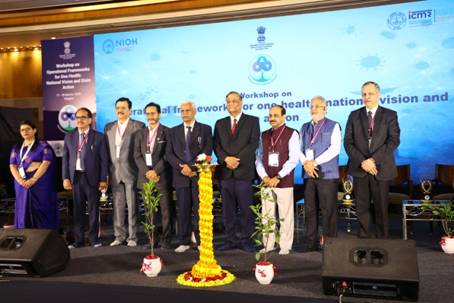
The event aimed to translate the National One Health Mission into actionable strategies at the state and local levels, with a focus on integrating human, animal, and environmental health systems.
Delivering the keynote address, Principal Scientific Advisor Ajay Sood stressed the need for integrated and interoperable surveillance systems.
He said early warning mechanisms depend on seamless data sharing across human health, veterinary, wildlife, and environmental sectors, adding that states like Maharashtra could serve as models for structured implementation of the One Health approach.
Department of Health Research Secretary Rajiv Bahl highlighted the importance of inter-sectoral coordination in tackling zoonotic diseases and strengthening national health security.
He said the One Health Mission reflects a whole-of-government approach, given the complex interactions between humans, animals, and ecosystems that can lead to emerging health threats. He also emphasised the need to strengthen outbreak response mechanisms at the state and district levels.
The workshop included technical sessions and panel discussions on operationalising the One Health framework, with a focus on zoonotic diseases and spillover risks.
Discussions on the second day centred on biothreat preparedness, development of medical countermeasures, and investigation of wildlife-related outbreaks.
The inaugural session was attended by senior officials and experts from health, veterinary, and research institutions, including representatives from AIIMS Nagpur, NCDC, and Maharashtra Animal and Fishery Sciences University.
The workshop forms part of ongoing efforts to strengthen India’s preparedness against emerging and re-emerging diseases through coordinated policy and scientific action.
19, Mar 2026
Kerala Scales Up Ayush Network with Rs.285 Crore Funding and 700 Wellness Centres

Kerala is expanding its Ayush healthcare ecosystem with central assistance of over ₹285 crore in the last four years, alongside the operationalisation of 700 Ayush wellness centres, strengthening its position as a key hub for traditional medicine and wellness services.
Data presented in Parliament shows that funding under the National Ayush Mission (NAM) to Kerala has risen steadily, peaking at ₹110.37 crore in 2024–25, before moderating to ₹51.38 crore in 2025–26. The total allocation between 2022–23 and 2025–26 stands at ₹285.65 crore.
Expanding Wellness Infrastructure
A major component of the expansion is the upgrade of 700 dispensaries into Ayushman Arogya Mandirs. All centres are now operational, delivering integrated healthcare services that include Ayurveda, Yoga, and other Ayush systems.
This large-scale rollout strengthens Kerala’s already established reputation in Ayurveda and wellness tourism, while also expanding access to preventive and primary healthcare at the community level.
Healthcare Meets Wellness Economy
Kerala’s push comes at a time when demand for alternative medicine and preventive healthcare is rising, both domestically and globally. The state is well-positioned to leverage this trend, given its strong base in Ayurveda, trained practitioners, and established wellness infrastructure.
The integration of Ayush services into public healthcare through these centres also signals a shift toward cost-effective, preventive care models, which can reduce long-term healthcare expenditure.
Boost to Medical Value Travel
The promotion of Medical Value Travel (MVT) is emerging as a key economic driver. The Ministry of Ayush recently held a South Zone MVT Summit in Chennai, with participation from Kerala and other southern states, aimed at positioning India as a global destination for traditional medicine and wellness therapies.
Kerala, in particular, stands to benefit due to its global brand recognition in Ayurveda-based treatments and wellness retreats.
Policy and Funding Trends
While public health remains a state subject, central funding through NAM continues to play a catalytic role in infrastructure development and capacity expansion. The funding pattern indicates both strong central support and the state’s active participation through State Annual Action Plans.
Opportunities and Challenges
The expansion opens up opportunities across multiple segments, including wellness tourism, herbal product markets, training institutions, and tele-health services.
However, scaling up services while maintaining quality, standardisation, and global credibility will be critical, especially as Kerala targets international patients under medical value travel initiatives.
Outlook
With a combination of public investment, infrastructure expansion, and global demand for wellness services, Kerala is positioning itself at the intersection of healthcare and tourism.
If supported by quality assurance and international outreach, the state’s Ayush ecosystem could evolve into a significant contributor to both public health outcomes and the regional economy.
19, Mar 2026
Ayush Services Expand in Rural Odisha with Focus on Outreach, Training and Tele-Consultation

Ayush healthcare services are witnessing steady expansion in rural and tribal areas of Odisha, supported by increased deployment of doctors, outreach programmes, and digital health initiatives, according to official data presented in Parliament.
The state currently has 584 Ayurvedic Medical Officers, 525 Homoeopathic Medical Officers, and 2 Unani Medical Officers posted across government dispensaries, strengthening primary healthcare delivery in underserved regions.
Strengthening Rural Healthcare Delivery
The expansion reflects a broader push to integrate traditional systems of medicine into public healthcare, particularly in areas where access to conventional medical infrastructure remains limited.
Public health being a state subject, Odisha has taken the lead in scaling awareness, training, and service delivery. At the same time, central support under the National Ayush Mission (NAM) is enabling infrastructure development, capacity building, and outreach programmes.
Investment in Training and Capacity Building
The state has rolled out induction and refresher training programmes for Ayush practitioners, including those serving as Community Health Officers at 422 Ayushman Arogya Mandir centres.
This focus on workforce development is critical for standardising care quality and expanding the role of Ayush practitioners in preventive and primary healthcare services.
Expanding Outreach and Preventive Care
Odisha has increased awareness through large-scale health campaigns and camps, including integrated Ayush camps, geriatric care initiatives, and screening programmes for musculoskeletal disorders.
These efforts are aligned with a preventive healthcare model, which is gaining policy traction as a cost-effective way to manage long-term health burdens, particularly in ageing populations.
Digital Push with Tele-AYUSH
A notable development is the rollout of tele-consultation services under the e-Sanjeevani platform. The model connects 50 Ayushman Arogya Mandir centres as spokes with major institutions such as Dr. Abhin Chandra Homoeopathic Medical College in Bhubaneswar and Gopabandhu Ayurveda Mahavidyalaya in Puri acting as hubs.
This hub-and-spoke approach is expected to improve access to specialist consultations in remote areas while reducing the need for physical travel.
Emerging Healthcare Ecosystem
The state’s network of 422 Ayushman Arogya Mandirs is playing a central role in delivering holistic healthcare services, including preventive, promotive, curative, and rehabilitative care. Activities such as yoga sessions, medicinal plant distribution, and health awareness campaigns are also being integrated into service delivery.
Policy and Market Implications
The expansion of Ayush services reflects growing institutional support for alternative medicine systems within India’s healthcare framework. For the broader healthcare ecosystem, this could open opportunities in areas such as herbal medicine, wellness services, tele-health platforms, and training infrastructure.
Outlook
As demand for affordable and preventive healthcare rises, Odisha’s model of integrating Ayush services with digital platforms and community outreach could serve as a template for other states.
The long-term impact will depend on service quality, patient trust, and the ability to scale infrastructure while maintaining standards.
18, Mar 2026
Centre Launches Nationwide Free HPV Vaccination Campaign for 1.2 Crore Girls
New Delhi, March 18, 2026:
The Government of India has launched a nationwide free Human Papillomavirus (HPV) vaccination campaign targeting around 1.2 crore girls aged 14 years across all 36 states and union territories, as part of its efforts to reduce the burden of cervical cancer in the country.
The campaign began on February 28, 2026, with the single-dose Gardasil-4 vaccine being administered free of cost at government healthcare facilities across the country. These include Ayushman Arogya Mandirs, Primary Health Centres (PHCs), Community Health Centres (CHCs), Sub-District Hospitals (SDHs), District Hospitals (DHs), and Government Medical Colleges (GMCs), covering both urban and rural areas, including underserved regions.
The vaccination drive is scheduled to run for three months, after which the HPV vaccine will continue to be provided through routine immunisation sessions at government health facilities.
Health authorities have put in place safety measures to ensure smooth implementation of the campaign. Vaccination is being conducted in the presence of medical officers, and all vaccination sites are linked to 24×7 Adverse Events Following Immunization (AEFI) management centres to provide immediate medical support in the event of any adverse reaction.
The government has clarified that HPV vaccination is voluntary, and parental consent is mandatory before the vaccine is administered to eligible beneficiaries. Operational guidelines for implementing the campaign have already been shared with all states and union territories.
The vaccination initiative forms part of a broader national strategy to combat Cervical Cancer, which includes screening, early diagnosis, and timely treatment. Health experts have highlighted that HPV vaccination—supported by strong global evidence—can significantly reduce the incidence of cervical cancer among women.
Details regarding the efficacy and safety profile of approved HPV vaccines are available in the Summary of Product Characteristics (SmPC) published on the website of the Central Drugs Standard Control Organization (CDSCO).
This information was provided by Anupriya Patel, Union Minister of State for Ministry of Health and Family Welfare, in a written reply in the Rajya Sabha on March 17.
17, Mar 2026
Centre Approves 203 Integrated Ayush Hospitals and 383 Dispensaries Under National Ayush Mission
New Delhi, March 17: The Government of India has approved the establishment of 203 Integrated Ayush Hospitals (IAHs) and 383 new Ayush dispensaries across various states and Union Territories under the National Ayush Mission (NAM) to strengthen traditional healthcare infrastructure in the country.
Launched in 2014–15, the centrally sponsored scheme is being implemented through state and Union Territory governments with the aim of promoting and developing Ayush systems of medicine, including Ayurveda, Yoga, Naturopathy, Unani, Siddha, and Homoeopathy. The mission provides financial assistance for setting up 50-, 30-, and 10-bedded Integrated Ayush Hospitals, along with Ayush dispensaries based on proposals submitted by states through their State Annual Action Plans (SAAPs).
According to the Ministry of Ayush, the approvals have been granted to expand access to traditional healthcare services in different parts of the country. The projects are part of the Centre’s broader efforts to integrate Ayush systems into the public health framework and improve healthcare delivery, particularly in underserved regions.
Among the states, Rajasthan has received the highest number of approvals for Integrated Ayush Hospitals with 33 units, followed by Uttar Pradesh with 25, Maharashtra with 14, and Madhya Pradesh with 13 hospitals. Other states such as Kerala, Chhattisgarh, and Manipur have also been sanctioned multiple facilities to strengthen Ayush-based healthcare infrastructure.
Several northeastern states have also received approvals under the scheme, including Arunachal Pradesh, Assam, Manipur, Meghalaya, Mizoram, and Nagaland, reflecting the government’s focus on expanding traditional medicine services in the region. Union Territories such as Andaman & Nicobar Islands, Chandigarh, Lakshadweep, and Puducherry have also been included in the plan.
In addition to hospitals, 383 new Ayush dispensaries have been approved nationwide. Uttar Pradesh accounts for the largest share with 250 dispensaries, followed by Assam with 100 units. Other states including Jammu & Kashmir, Manipur, Meghalaya, Tamil Nadu, and Maharashtra have also been allotted dispensaries under the programme.
To support the implementation of these initiatives, the Centre has released ₹424.24 crore as grant-in-aid to states and Union Territories during the current financial year as part of the central share under the mission. The funds are intended for carrying out approved activities under the respective State Annual Action Plans.
The information was shared by **Prataprao Jadhav, Minister of State (Independent Charge) for the Ministry of Ayush, in a written reply to a question in the Lok Sabha on March 13, 2026.
The expansion of Ayush hospitals and dispensaries is expected to enhance access to traditional healthcare services and strengthen the integration of Ayush systems within India’s broader public health network.
17, Mar 2026
Hungarian Study Offers New Insights into the Causes of Smartphone Addiction
According to research from Semmelweis University, problematic smartphone use is not caused by personality alone, but by weak self-control and a strong fear of missing out on social events (FoMO). The study published in Acta Psychologica also highlights that excessive phone use not only causes psychological difficulties, but can also lead to long-term physical consequences: Poor posture may impair balance, slow reaction time, and make it harder to concentrate.
Researchers at Semmelweis University investigated how smartphone use relates to mental and physical health, as well as cognitive functions, among students aged 18 to 35. In the online questionnaires, participants reported whether they had ever missed a planned task because of their phone use, and whether their phone was on their mind even when they weren’t using it. Participants were also asked about their daily active smartphone use and the types of activities they used their phones for.
The participants’ personality traits and mental state were also examined. One questionnaire measured neuroticism, meaning a tendency to experience negative emotions such as anxiety, low mood, fear, and anger. Another assessed self-control, and a third measured FoMO, the fear of missing out on events and peers’ activities.
Based on usage patterns, the researchers identified three groups. “Purely social” users relied on their phones mainly to communicate with friends and acquaintances, build social connections, and for social purposes. “Moderately process-oriented” users spent less than four to five hours a day on their phones for social purposes, news, entertainment, and passive scrolling, but spent less than four to five hours a day on their devices. About one third of participants were classified as “strong process-oriented” users, spending four to five hours or more per day on their phones, mainly for content consumption rather than social communication.
“Our main finding is that personality alone—such as a high level of neuroticism—does not make someone addicted to their phone. People who are more prone to negative emotions like anxiety, depression, or stress do not automatically become addicted. What really matters is how well they can control their behavior, emotions, and impulses, and how strongly they fear missing out,” said Dr. Johanna Takács, senior research fellow at the Faculty of Health Sciences at Semmelweis University and lead researcher of the study.
The study shows that the main problem is not the amount of time spent on phones, but how they are used. Passive scrolling on social media—such as watching short videos or browsing feeds—constantly exposes the brain to fast stimuli. This overloads attention, reduces concentration, and can cause mental fatigue over time.
Cognitive tests showed that “strong process-oriented” users performed worse on attention and memory tasks than expected for their age. They also slept worse, felt a stronger need for constant new stimulation and had more difficulty controlling their impulses when they wanted to check or do something immediately.
The study found that the duration of phone use was mainly associated with physical effects.
“When people hold their phones at waist or chest level and look down at them, the head moves forward, creating a forward head posture, also known as ‘text neck.’ This puts extra strain on the neck and can cause pain or early wear of the neck joints.
The neck contains sensors that tell the brain how the head is positioned. If a forward head posture is maintained for long periods, these signals can change and lead to balance problems. These effects are not limited to phone use but can also influence everyday movements,” said Beáta Seregély, assistant lecturer and expert responsible for the physical measurements in the study.
The researchers stress that the goal is not to ban phones or punish young people for using them. Instead, the focus should be on helping them use their phones more consciously. Simple steps can help, such as limiting notifications—especially from social media and messaging apps—setting time limits for social media, avoiding phone use before bedtime, and promoting more physical activity and maintaining good posture.
For mental prevention, it is especially important to help young people develop better self-control and feel less afraid of missing out on social events. This can be supported through behavioral training and psychological help. When self-control increases and fear of missing out decreases, personality-related vulnerability is no longer a major risk, and even more sensitive, anxious, or stress-prone individuals are much less likely to become addicted to their phones.
17, Mar 2026
Spring travel: physicians urge travelers to understand their DVT risks on trips longer than four hours
Expert tips for recognizing symptoms and reducing blood clot risk during extended sitting
GREENBELT, Md. — With spring travel ramping up, Center for Vein Restoration (CVR) is reminding the public that anyone traveling more than four hours by air, car, bus or train can be at risk for potentially deadly blood clots, particularly people with additional risk factors.
The CDC notes that venous thromboembolism (VTE), which includes DVT and pulmonary embolism (PE), may affect as many as 900,000 people each year in the U.S. DVT is a serious medical condition where a blood clot (thrombus) forms in a deep vein, most commonly in the legs or pelvis. A PE occurs when a blood clot gets stuck in an artery in the lung, blocking blood flow to part of the lung.
“Sitting for extended periods of time slows the blood flow out of the legs,” said Laura Kelsey, MD, lead vein physician at CVR vein clinics in Grand Rapids and Muskegon, Michigan. “For patients with additional risk factors, travel can be the tipping point for a potentially dangerous blood clot. Talk to your clinician before your next trip, not after.”
Who should be extra cautious?
CDC-identified risk factors include prior blood clots, family history, known clotting disorders, recent surgery or hospitalization, pregnancy, estrogen-containing birth control or hormone replacement therapy, cancer or cancer treatment, older age and obesity.
What to watch for after travel
Seek immediate medical care for any of the following:
- DVT symptoms can include leg swelling, pain or tenderness, warmth and redness or discoloration.
- PE symptoms can include difficulty breathing, chest pain, irregular heartbeat, coughing up blood, lightheadedness or fainting.
Simple movement reminders for long trips
The CDC encourages travelers to move their legs frequently and walk around every one to two hours when possible, know symptoms and discuss prevention with a clinician if at risk.
16, Mar 2026
This Tiny Cellular Portal Could Open Vast Possibilities for Medicine
Inside each of your cells, there lies the nucleus, its master command center. Protected inside each nucleus are your chromosomes, containing all the genetic instructions for making proteins. To keep the body operating smoothly, proteins, RNA molecules, and molecular signals must constantly flow in and out of this cellular HQ, mediating which genetic instructions are used when.
Nearly all of that two-way traffic passes through the same gateway: the nuclear pore complex.
The nuclear pore complex, or NPC, is far more complex than a simple doorway. Hundreds of individual proteins come together to form the NPC, which acts as an active player in controlling how genetic information is used. When it doesn’t function right, some cellular messages don’t make it to their final destinations. The consequences can range from cancer to neurodegeneration to life-threatening viral infections.
Michael Rout, the George and Ruby deStevens Professor and head of the Laboratory of Cellular and Structural Biology at Rockefeller University, has spent his career parsing the inner workings of the NPC. We spoke with him about what makes this molecular machine so remarkable and how this work could open a new frontier in medicine.
You’ve been studying the nuclear pore complex for several decades. How has the field’s thinking about the importance of the NPC changed in that time?
When I started, the prevailing view was that the NPC was like a Swiss watch—an enormously complex, precisely tuned machine where if you damaged any part of it, the whole thing would simply shut down. But when we actually started taking it apart, we found the opposite was true. You could delete the genes for many of its components and cells kept growing. It turned out to be tremendously redundant and resilient. That changed our thinking completely. We now know that the NPC can tolerate partial disruption and keep functioning.
The downside of that resiliency is that diseases can exploit it. Hundreds of diseases—cancers, neurological disorders, viral infections—are now known to be associated with defects in nuclear transport or the NPC itself.
At the same time, it has emerged that the NPC is really a nexus for a lot of crucial processes. It doesn’t just passively sit there and allow nuclear transport, but rather acts as an organizer for this whole assembly line that’s in place to keep our cells alive. This infinitesimal portal is what maintains communication between the genetic material in the nucleus and the entire rest of an organism.
How do you study something this small and complex?
It requires the ability to make sense of a staggering amount of data. The approach we’ve taken is to gather and combine as much information as possible about the NPC, using many different complementary methods, and integrating all of that into a single, comprehensive picture. Early on, that meant isolating the NPC and using mass spectrometry to identify every protein it’s made of. From there, we could start asking where each piece sits within the structure.
Over the years the technology available to do this work has become extraordinary. With cryo-electron microscopy, we can now flash-freeze the NPC and visualize it at near-atomic resolution, which was simply unthinkable when I started. More recently, we’ve been able to watch the NPC in action in real time, at millisecond resolution. When we get all this data, we put it together into computational models that let us simulate how the whole system behaves.
Your lab proposed a model called the “virtual gate” to explain how the NPC controls what passes through. What does that mean in plain terms?
For a long time, people assumed the NPC must work like a physical gate, either dilating and contracting like an iris, or using motor proteins to actively pull cargo through. When we identified all the NPC’s components and found no motor proteins, we had to fundamentally reevaluate the science—nature was making it made clear that our previous ideas were wrong. What we found instead was that the central channel is packed with flexible, constantly moving protein chains—so dense and so mobile that they create a barrier without being a physical wall.
We called it a virtual gate because whether it’s open or closed depends entirely on whether you can bind to those protein chains. If you’re carrying the right molecular signal, you get through. If not, you’re excluded. It’s like a crowded dance floor where only those with the right partner can move.
What we’ve discovered more recently is that transport factors don’t just pass through. They continuously reshape those protein chains, making the barrier even more dynamic than we first thought.
How is the NPC linked to disease?
Many diseases gain a foothold by disrupting the flow of molecular messages in and out of the nucleus. What’s really interesting is that different cancers and viruses keep targeting the same small subset of NPC components to do it.
Pretty much every virus that’s been sufficiently studied seems to have evolved to target the NPC of human cells very early in infection. The viruses hijack the transport machinery so that the cell’s innate immune response can’t kick into action and produce new proteins to fight the viruses.
With cancer, the picture is similar. Normally, cells produce proteins that can trigger the cells to self-destruct if they begin growing too quickly and aggressively. Often, cancer cells subvert this by ramping up nuclear export, hustling those protective proteins out of the nucleus before they can act. Selinexor, an FDA-approved drug for certain blood cancers, works by blocking that excess export through the NPC, keeping those protective proteins inside the nucleus where they can do their job. Because we now know that the NPC can be targeted therapeutically, this could represent a major untapped area for future medicine in multiple diseases.
You’ve been building increasingly detailed computational models of how the NPC works. For a while now, scientists have dreamed of creating a virtual model of an entire cell, which could dramatically accelerate all kinds of discoveries. Do you see your work contributing to that larger quest?
Because the NPC sits at the crossroads of so many cellular systems, a complete enough model of it could let us begin to simulate how all those systems work together. That’s the dream of the virtual cell: a computational model of a living cell detailed enough that you could test, for example, how a disease mutation changes the flow of molecules in and out of the nucleus, or screen potential drugs without ever stepping into a wet lab. We’re not there yet, but the NPC is a remarkable place to start because so much has to pass through it. Understanding this one machine in full detail gets you surprisingly far toward understanding the whole cell.
What’s the biggest open question you’re still trying to answer?
We still don’t fully understand the details of how the virtual gate actually works at the molecular level. The protein chains that fill the channel aren’t the same all over; there appear to be different zones with different behaviors, possibly even separate lanes for different types of cargo. Figuring out that internal organization is where a lot of our energy is focused right now. I think getting that worked out could be the key to being able to control the flow of traffic through the NPC for therapeutic purposes.
I think this field is a perfect example of how studying the fundamental machinery that keeps our cells running yields discoveries that can offer powerful new insights into human disease.
16, Mar 2026
Nit Happens, A New Clinically Proven Non-Toxic Lice Treatment Now Available at Walgreens

The gentle and highly effective lice treatment is available at 6,000 Walgreens locations in the United States
DALLAS, TX (Mar16)- Cartwheel, a healthcare brand developed by moms for moms, is today announcing the availability of its inaugural consumer product, Nit Happens, at 6,000 Walgreens locations in the United States. The over-the-counter lice treatment uses only non-toxic, naturally-derived ingredients to eliminate lice and nits, avoiding the pesticides and synthetic ingredients found in many traditional treatments.
“We’re thrilled to launch Nit Happens in Walgreens stores nationwide, making it easier for families across the country to access a safer lice treatment that takes some of the stress out of what can be a chaotic experience,” said Joanna Shu, CEO of Cartwheel. “As a mom of three kids who have all had lice at some point, I experienced firsthand how difficult lice are to treat and how many products rely on harsh pharmaceutical ingredients. Parents shouldn’t have to choose between safety and effectiveness. We’re giving them both, plus a splash of humor to lighten the load.”
Unlike harsh chemical formulas, Nit Happens works through physical disruption and dehydration. Its gel combines coconut oil, mild cosmetic abrasives, and limonene derived from orange peels to kill lice and nits when combined with gentle brushing.
The results are clinically proven. A clinical study reported a 95.8% efficacy rate when the label instructions were followed. With treatment-resistant lice becoming more prevalent, these results point to a strong alternative for families who need reliable outcomes without harsh chemical exposure.
An estimated 6 to 12 million children in the U.S. get head lice each year, and misdiagnosis is extremely common. Parents often confuse dandruff, sand, debris, and scalp conditions with lice, leading to unnecessary stress and unnecessary treatment. Cartwheel is positioning Nit Happens as part of a larger effort to improve education and awareness around lice. The company is currently developing a new smartphone application to help parents better determine if their child actually has lice using guided check steps.
The Nit Happens OTC Lice Treatment Kit includes:
-
4 oz treatment gel (two full applications)
-
1 oz post-treatment shampoo
-
Metal lice comb
-
Applicator brush
-
Gloves
Nit Happens will also soon be available for purchase on the TikTok Shop and Amazon.


