


8, Feb 2024
Max Hospital Saket, Launches Exclusive Cancer Care OPD Services in Bhiwani
North India’s leading healthcare provider, Max Super Speciality Hospital Saket today announced the launch of its exclusive Oncology OPD Services in partnership with the city-based Bhardwaj Hospital.
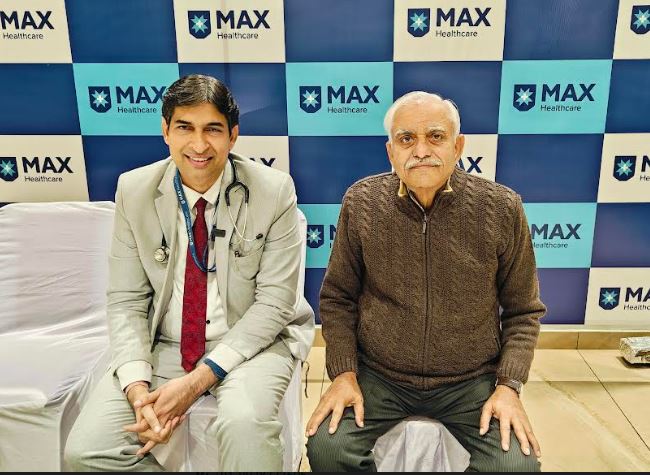
The OPD services were launched in the presence of Dr. Nagender Sharma, Principal Consultant, Medical Oncology and Dr Debashish Chaudhary, Principal Consultant, Surgical Oncology from Max Super Speciality Hospital,Saket who will be available for primary consultations at Bhardwaj Hospital, Agrasen Chowk, M.C Colony, Bhiwani.
Dr. Nagender Sharma will be available on the 1st & 3rd Wednesday of every month, and Dr Debashish Chaudhary will be available on the 2nd & 4th Thursday of every month. The timing of the OPDS for both doctors will be between 12 pm to 3 pm.
During the launch, Dr. Nagender Sharma, Principal Consultant, Medical Oncology, Max Super Speciality Hospital, Saket emphasized the importance of a comprehensive approach to cancer care which has evolved significantly and said “Cancer treatment has evolved significantly, and Max Hospital Saket continues to be at the forefront of this innovation and excellence. The landscape of cancer treatment has seen remarkable advancements. We are now able to provide personalized and targeted therapies that are more effective and less invasive, ultimately leading to better outcomes for our patients. The launch of these OPD Services in Bhiwani will be a value addition to the people in terms of quick access to the best-in-class services and expert opinion without the hassle of travelling to other cities for primary consultations or follow-ups.”
Dr Debashish Chaudhary, Principal Consultant, Surgical Oncology from Max Super Speciality Hospital Saket said“Our endeavour is to raise awareness about cancer and provide a holistic and supportive environment for such patients in their journey. With the advancement of technology, minimal access to cancer surgeries has also become commonplace. Experts can adequately resect difficult tumours including colon cancers, stomach cancer, including liver metastases which suggest a late-stage disease, with minimal incisions or even laparoscopically, in certain cases. Minimally invasive surgeries, have numerous advantages for patients in comparison to traditional surgeries including minimal scars, faster recovery, reduced pain, shorter duration of hospital stays, and lesser post-surgery complications.”
- 0
- By Rabindra

8, Feb 2024
Stride for a Cause: Manipal Marathon’s 6th Edition Takes on Hospice Palliative Care
Manipal; 8th February 2024: Manipal Academy of Higher Education (MAHE) in collaboration with the Udupi District Amateur Athletic Association (UDAAA) is organising its annual running event, The Manipal Marathon. Marathon stands as the largest student-organized marathon in the country that takes place in Manipal of Udupi District.
With approximately 15,000 participants, the Manipal Marathon offers a grand carnival celebration after the run and offers substantial prize money to its winners. The race routes guide runners through the stunning landscapes of Manipal and the Udupi coastline, boasting international certification from the IAAF AIMS. The various categories, being full marathon (42.195k), half marathon (21.098k), 10k, 5k and 3k have been carefully devised to fit into every runner’s capability, be it a beginner or a professional. Last category for 3 KM run also called as 3K Fun Run will have on spot registrations and will be free of cost. Following the completion of the Manipal Marathon, participants are treated to a magnificent carnival celebration, in addition to significant monetary rewards for the winners. We are awarding upto twenty one lakhs prize money.
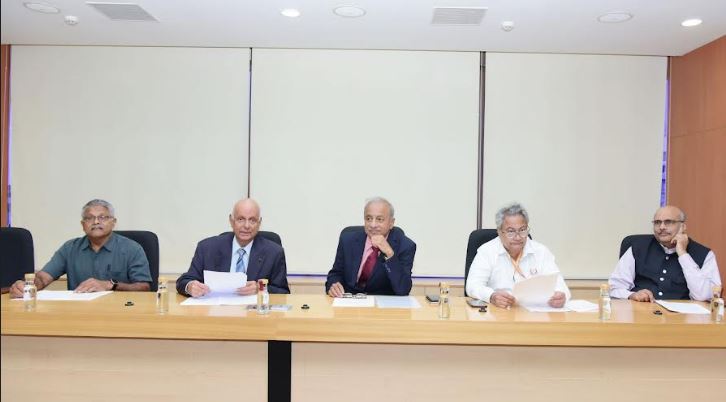
Ahead of the event which is scheduled for 11th of February, MAHE hosted a press conference addressing the media on the upcoming marathon and spoke about the idea behind organising one of the largest marathons in the country. The event will aim to raise awareness for “Hospice” palliative care, carrying the tagline “We are with you all the way”. Along with a thrilling race, marathon will provide with an opportunity to support and learn about an essential cause in the field of healthcare.
Speaking at the conference, Lt Gen (Dr.) M D Venkatesh – Vice Chancellor, MAHE, said, ” The Manipal Marathon is not just a race; it’s a celebration of excellence, a showcase of global participation. I am thrilled to witness the culmination of athletic prowess, global unity, and social responsibility at the Manipal Marathon 2024 Our University has always been at the forefront of fostering not just academic excellence but holistic development. I am incredibly thrilled to see our campus community coming together as we prepare ready for this event to pursue a healthier lifestyle and a deeper feeling of unity. I express my gratitude & appreciation to everyone involved in organising this mega marathon “
Dr. Sharath Rao, Pro Vice Chancellor (Health Sciences), MAHE, Manipal, said, “We see a potent convergence of enthusiasm, tenacity, and team spirit as we prepare to host the 6th edition of Manipal Marathon. As it is a student led drive this underscores our commitment to fostering well-rounded individuals who are not only academically adept but also socially conscious. The marathon’s dedication to raising awareness for ‘Hospice’ palliative care aligns with our ethos of contributing meaningfully to societal well-being.
Dr. HS Ballal, Pro – Chancellor of MAHE, said, “I’m overjoyed to see the anticipation for our impending marathon growing. With each stride, we are building our University family’s unity and friendship in addition to our physical conditioning. I urge everyone taking part to embrace the marathon’s spirit, relish the experience, and allow it serve as motivation to live better, more active lifestyles”.
Along with global participants, marathon will see participation of over 200 visually impaired individuals from Samarthanam Trust and 150 physically challenged people from all across karnataka.
Manipal Academy of Higher Education also presented a cheque of INR Five Lakhs to Udupi Press club in order to support medical treatment/ health checkups for the journalists.
8, Feb 2024
Amrita Hospital Faridabad Ties Up with IIT Hyderabad
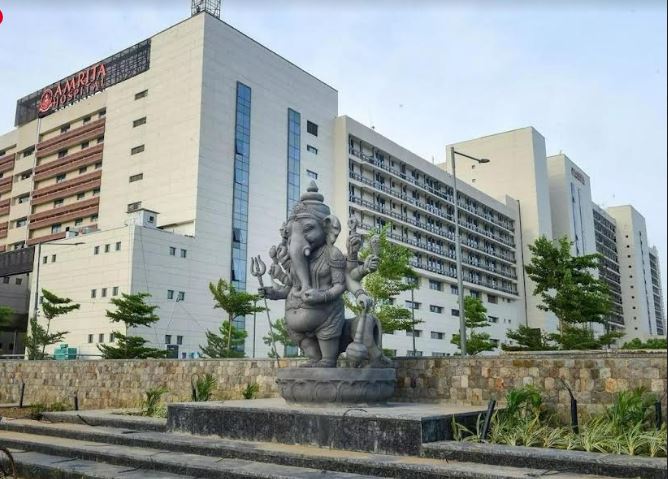
FARIDABAD/MUMBAI, February 08, 2024: Dr. Bhaskar Viswanathan, HoD, Department of Radiation Oncology, Amrita Hospital, Faridabad, has been recently selected for a research grant, meant to develop an indigenous robotic ultrasound for tumor motion and radiation hyperthermia for cancer treatment. The technology would be developed in association with Dr. Avinash Eranki, Assistant Professor, Department of Biomedical Engineering at the Medical Ultrasound Research Laboratory of Indian Institute of Technology – Hyderabad, Eranki Labs Private Limited, and Amrita Centre for Advanced Robotics.
Dr. Bhaskar Viswanathan, Head of Radiation Oncology Department at Amrita Hospital, Faridabad said, “It is a matter of immense pleasure and pride for us that we have been selected for this grant to indigenously develop robot-assisted ultrasound system for image-guided therapies and hyperthermia for cancer patients. It is a non-invasive technique that uses focused ultrasound waves and has a huge potential in cancer treatment like tumor ablation, mild hyperthermia for radiotherapy and chemotherapy, and motion management during radiation delivery.”
“This cutting-edge technology will allow precise localization of lesions, enabling targeted and effective delivery of therapeutic radiation and avoiding damage to the surrounding tissue and organs. Robotic ultrasound plays an important role in guiding the delivery of hyperthermia by accurately locating the tumor and monitoring its motion during treatment. Real-time tracking can be crucial in ensuring that hyperthermia is delivered precisely to the intended target,” the doctor said.
He explained that tumors in the body can move due to factors like breathing and organ motion. Tracking this motion is crucial for accurately delivering radiation therapy. Robotic ultrasound systems can be used to track the movement of tumors in real-time. They use robotic arms equipped with ultrasound transducers to continuously monitor the tumor position during treatment, thus improving targeting accuracy.
Hyperthermia involves raising the temperature of the tumor region to make cancer cells more sensitive to radiation. It also improves blood flow to the tumor, enhancing the delivery of oxygen and chemotherapy. Combining hyperthermia with radiation therapy can significantly enhance the therapeutic effects and theoretically allow for theoretic lower radiation doses, minimizing damage to surrounding healthy tissue.
Dr. Avinash Eranki, Assistant Professor, Department of Biomedical Engineering, and CEO of Eranki Labs Pvt. Ltd. said, “The need for spatially precise and efficacious delivery of radiation and ultrasound energy is possibly key to improved outcomes in patients with debilitating cancer disease.”
“The collaboration with IIT Hyderabad and Eranki Labs Private Limited enhances the project’s scope, leveraging the expertise of both medical and engineering domains. This interdisciplinary partnership is crucial for advancing technology in cancer care, emphasizing a holistic approach to treatment innovation. We expect to complete the project in 3 years, the grant for which was provided to us by the Indian Council of Medical Research (ICMR),” added Dr. Viswanathan.
8, Feb 2024
Large Indian Genome wide study identifies key genes for Parkinson disease…
Hyderabad, February 08, 2024: A new study conducted by MedGenome, a leading global genomics company in South Asia, together with Parkinson’s Research Alliance of India (PRAI) found that rare genetic variations along with common variants derived through polygenic risk score (PRS) can detect Young Onset of Parkinson’s Disease (YOPD). A pilot study was published through this collaboration in the 2022 July edition of the Advanced Biology journal with 100 whole genome of Parkinson’s Disease patients [1]. The new study validated the existing knowledge along with new findings on the genetics of Parkinson’s disease which got published in the prestigious journal, Movement Disorders.
This is a first-of-a-kind study conducted in India aimed to initiate a population-based genetic analysis of Young Onset Parkinson’s disease (YOPD) in Indian population. The Genetics of PAN-India Young Onset Parkinson Disease (GOPI-YOPD), a multicentre Pan India project- recruited 1000 patients through a network of 10 specialty Movement Disorder Centers/Neurology clinics across India.
The research paper investigates genetic variations associated with young-onset Parkinson’s disease (YOPD) in the Indian population. The study validates existing findings from European populations and identifies major genetic mutations in genes such as PRKN (13%), GBA, PINK1, and LRRK2 with a notable discovery of rare South Asia-specific mutation in the GBA gene, including p.Ser164Arg, confirmed through experimental research. This mutation is not seen in other populations. The study aggregates the common genetic variations into a polygenic risk score (PD-PRS), introducing a genetic screening test for assessing the risk of developing Parkinson’s disease. This comprehensive analysis of rare and common genetic variations in YOPD in the Indian population enhances the understanding of the genetic basis of Parkinson’s disease and introduces a novel genetic screening approach to assess disease risk. This opens door for a first-ever genetic screening in India for Parkinson’s Disease in high-risk individuals and affected families. The results can be evaluated by clinicians and geneticists to guide patients in early intervention, disease risk mitigation, and better treatment strategies.
The genomic analysis for the study was done at MedGenome Labs using MedGenome’s SARGAM array (South Asian Research Genotyping Array for Medicine), which has curated content from a proprietary database of 2.5 million variants unique to the South Asian population which is not available in any publicly available genetic database.
Prof Rupam Borgohain, Secretary of Parkinson’s Research Alliance of India (PRAI) and Chairman, PDMDRC, Citi Neuro Centre, Hyderabad said, “Parkinson’s disease is a common neurological disorder causing tremors, slowness of movements, stiffness and walking difficulties in most. It is caused by a complex interaction between external environmental and familial or genetic factors. Based on the initiative of Dr Prashanth LK, Specialist in Movement disorders, Parkinsons disease and Movement disorders clinic, Bengaluru, a first of its kind- India wide registry of Young Onset Parkinson’s Disease (disease starting at age less than 50 years) was started by PRAI and resulted in insights into clinical and genetic aspects of Indian patients. Parkinson’s disease with onset less than 20 years (juvenile PD), 20-40 years (young onset PD) and 40-50 years (early onset PD) have different clinical features. The role of genetic factors seems to be higher in these patients compared to older age and this collaborative project of PRAI with MedGenome has identified unique genetic fingerprints in Indian patients.”
Dr Vedam Ramprasad, CEO, MedGenome said, “MedGenome has always been at the forefront of equipping clinicians and patients with the latest and most innovative tools in healthcare by leveraging the power of genomics. With the increased focus on personalised medicine, using risk screening tools such as Polygenic Risk Score (PRS) will enable us to predict an individual’s genetic liability to rare and inherited diseases much in advance before the symptoms start appearing. With these findings, we aim to offer a prognostic value to clinicians while catering to the need of a systematic genetic evaluations for timely prevention and management of several diseases.”
Parkinson’s disease is the second most common neurodegenerative disorder in adults in the age bracket of 60 years and above. The Global Burden of Disease Study (2018) states that the burden of Parkinson’s disease has doubled across the globe over the past two decades. India accounts for approximately 10% of the global burden, which translates to nearly 0.58 million patients living with the disease.
8, Feb 2024
Rapido offers free eye check-ups for its 3 lakhs+ registered Captains in Chennai
Chennai, 08 February 2024: Rapido, a leading aggregator platform which provides bike taxi, auto, and cab services has announced the launch of “Drive Safe India” campaign partnering with Shell Fleet Solutions to promote road safety by ensuring good eye care of its captains. As part of the campaign, Rapido is offering free eye-check-ups and free spectacles to its 3 lakhs + registered bike taxi, auto and cab captains operating at its city office in Guindy, Chennai.
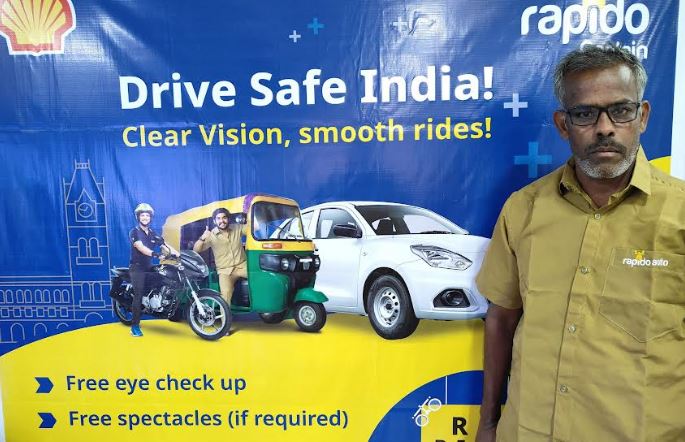
So far, Rapido is expecting around 45,000+ captains to register for this one month-long campaign that was launched on 19th January 2024. By partaking in these eye examinations, Rapido captains can proactively identify potential vision impairments, paving the way for timely intervention. Good eye health is essential for driving, especially for reading road signs accurately. By providing free eye check-ups, Rapido ensures that its captains can address any underlying vision issues that may hinder them from safe driving practices.
Speaking about the initiative, Pavan Guntupalli, co-founder of Rapido said ‘At Rapido, we prioritise the safety and well-being of our captains and riders. Captains with poor vision may fail to comply with the traffic regulations. To avoid any such scenarios and keeping in mind the safety of our Rapido captains, passengers, and other commuters on the road, we are organising this campaign to provide free eye-check ups and free spectacles. This initiative will help to reduce the risk of accidents that stems from visual impairments and provide a safe riding experience for both the passengers and captains throughout the journey.”
Recognising the pivotal role captains play in the success of Rapido, the company has undertaken this comprehensive healthcare campaign in Chennai to ensure the overall wellness. The campaign aligns with Rapido’s commitment to fostering a culture of care and responsibility towards its captains. By offering free eye check-ups, the company aims to proactively address any vision-related issues that captains may face.
7, Feb 2024
82°E enters Body Care, unveils new campaign
Mumbai,7th February 2024
82°E, a self-care brand co-founded by Deepika Padukone and Jigar Shah, has announced its entry into the Body Care category with a range of body care products including Body Cleansers, Milk, and Lotion.

The launch campaign has been conceived, created, and executed by 82°E’s Agency on Record, Tilt Brand Solutions – a part of Quotient Ventures.
This launch campaign – Art of Leisure (Clip 1, Clip 2, Instagram), emphasizes how body care can become a nourishing, holistic practice for the mind and skin. The communication invites consumers to practice their favorite acts of leisure, an important aspect of self-care — joyfully and without guilt.
82°E’s entry into body care follows several successful product launches in skincare. The launch campaign further extends the brand’s point of view that skincare needs to be simplified.
Launched in November 2022, 82°E is on a mission to make the practice of self-care a simple, joyful and effective part of one’s everyday life. Over the past year, 82°E has built a strong foothold in the skincare category by focusing on simple yet high-performance routines for different skin types while driving the message of overall self-care—an extension of the co-founders’ commitment to well-being, emphasizing the simplification of skincare, as its core proposition.

Speaking about the campaign, Keerthana Ramakrishnan, Chief Marketing Officer, 82°E said, “While Body Care is an extension of our skincare category, it offers a fresh new experience to our consumers. It was crucial that we communicated our intention of self-care through the campaign thought of Art of Leisure to our consumers, in an impactful manner. We wanted them to come on the journey with us; to take their self-care a step further with this new launch.”
For the brand, this campaign marks a crucial milestone of going above the line for the first time, with the aim of increasing reach in key markets across the country.

Speaking of the partnership, T Gangadhar, Group Chief Executive Officer, Quotient Ventures said, “We are thrilled to be partnering with 82°E to build a brand that is synonymous with self-care. The body care launch campaign is the first such initiative to that end. We are confident that, together, we can create a brand narrative that will deeply resonate with people and inspire them to prioritize their own wellbeing.”
7, Feb 2024
AIC T-Hub selects 20 startups to Drive Healthcare Innovation in India

India, 7th Feb 2024: T-Hub, India’s leading startup incubator has today announced the launch of the new cohort of the AIC T-Hub Healthcare program, aimed at fostering technological advancements and innovations within the healthcare sector across India. The program will host 20 startups carefully selected for their groundbreaking solutions in the healthcare ecosystem.
The selected startups in the upcoming cohort will be addressing critical challenges in Digital Health, Wearables, and Hospital Systems. The program’s structure involves a 12-week intensive curriculum with mentorship from healthcare thought leaders, doctors, and industry experts. The program offers a range of benefits to startups, including support for product development, assistance with commercialization plans, market understanding, business plan refinement, and access to resources essential for growth. The program also provides access to a prototyping lab equipped with healthcare sensors.
Startups were shortlisted based on criteria such as MVP, founder experience, and business model viability. Amongst the selected startups are- EXSEGEN GENOMICS RESEARCH PRIVATE LIMITED, Pratibha Healthkon Private Limited, RudrastraApptech Pvt Ltd, Medstown, Diagnosis, MolVerse Pvt Ltd – Accelerating Molecular Discoveries, MicroHeal Wellness Pvt Ltd, MEDICOINNOVEX TECHNOLOGIES LLP, ASPIRE HEALTH AND MEDICARE PVT. LTD, Swarupa Narsimha Healthcare (OPC) Pvt Ltd, Cliniv Health Tech, SC Health care Logistics Pvt Ltd, Incra Soft Private Limited, LIV Emergency Healthcare, Terrablue, Medaid, Aarogya ID, NEORDENT HEALTHCARE SOLUTIONS PVT LTD
Mahankali Srinivas Rao (MSR), CEO, T-Hub, said, ” With the launch of our fourth AIC T-Hub Healthcare cohort, we are taking another significant step towards advancing healthcare innovation in India. The startups selected for this program represent the future of healthcare technology. We are committed to providing them with a robust ecosystem, expert mentorship, and the necessary resources to drive their growth and impact. Together with AIC T-Hub, we look forward to witnessing groundbreaking solutions that will shape the landscape of healthcare in our country”.
Rajesh Adla, CEO, AIC T-Hub Foundation, said, ” This cohort marks a pivotal moment for healthcare innovation in India. Our startups have an unprecedented opportunity to redefine the healthcare landscape, and the AIC T-Hub Healthcare program is the catalyst for that transformation. We aim to not only support these startups but to empower them to think beyond boundaries. Together with T-Hub, we are creating a platform where innovation meets impact, ultimately contributing to India’s emergence as a global healthcare hub”.
Throughout the program, AIC T-Hub will also support selected startups with investment opportunities, grants, customer pilots with hospitals, clinical validation, and access to a prototyping lab with healthcare sensors. Over the past three cohorts, the AIC T-Hub Healthcare program has played a pivotal role in supporting 45 startups, enabling them to secure approximately 10 Crores in investments and facilitating 21 market pilots with various hospitals. The program’s impact is underscored by the success stories of startups achieving USFDA approvals and raising multiple rounds of funds.
Looking ahead, AIC T-Hub plans to initiate partnership joint programs with hospitals, further solidifying its commitment to shaping the growth and innovation of the healthcare industry in India. To date, the AIC T-Hub Healthcare program has impacted 60 mentors, collaborated with 30 hospitals and completed four successful cohorts.
6, Feb 2024
51st Annual National Conference of Indian Association of Preventive and Social Medicine…
Mangalore; 06/02/2024: Dr Rekha T, Head of the Department of Community Medicine and the organizing chairperson informed that the Department of Community Medicine at Kasturba Medical College, Mangalore will be organizing the 51st Annual National Conference of the Indian Association of Preventive and Social Medicine (IAPSMCON-2024) from 8th February 2024 to 10th February 2024 at Dr T M A Pai International Convention Center, Mangalore, with 2 days of pre-conference workshops on 6th and 7th February 2024.
This is the first time Mangalore is hosting this prestigious conference.
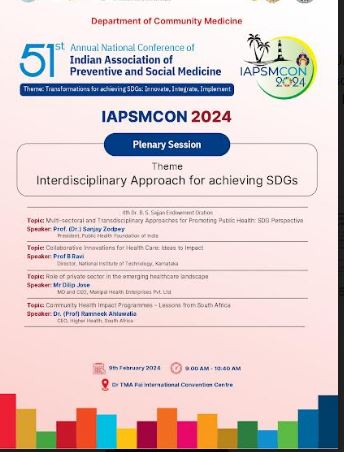
Dean of Kasturba Medical College, Mangalore, Dr. B Unnikrishnan shared the importance of the conference theme “Transformations for achieving SDGs: Innovate, Integrate, implement”. Dr B Unnikrishnan mentioned that Sustainable Development Goals (SDGs) are a set of 17 global goals established by the United Nations in 2015, with the aim of addressing various social, economic, and environmental challenges by the year 2030. However, the progress towards achieving these Sustainable Development Goals (SDGs) has been uneven, and various challenges have contributed to the slow pace of advancement. The theme encapsulates a strategic approach to accelerate progress towards the Sustainable Development Goals (SDGs) by emphasizing three key elements: innovation, integration, and implementation. This threefold approach emphasizes the need for continuous innovation, integration of sustainable practices into various aspects of society, and effective implementation of strategies to realize the SDGs. By adopting this transformative mindset, stakeholders can work collaboratively to overcome challenges, capitalize on opportunities, and make meaningful progress towards a more sustainable and equitable future by 2030. He also announced that this conference is organized to commemorate the 125th Birth Anniversary of Dr.T.M.A Pai.
Dr B Unnikrishnan informed that Dr R Balasubramaniam, Member – Human Resources, Capacity Building Commission of India, Government of India, will be the chief guest for the inaugural ceremony, which is scheduled on 8th February 2024, at 5:30 PM. He will also deliver the prestigious Dr. T.M.A. Pai oration during the conference.
Dr Ramesh Holla, organizing secretary stated that the conference will be attended by over 1200 delegates from across the country and abroad, and feature keynote presentations, panel discussions, and workshops from prominent National and International Organizations including ICMR, WHO, and UNICEF. Dr Holla stated that the conference will feature over 700 scientific presentations, 75+ plenary sessions, and a dynamic pre-conference program comprising 20 + workshops and 70+ facilitators.
In a bid to promote a healthy and drug-free lifestyle, a walkathon under the theme, ” Say Hi to Life, No to Drugs” has been organized as a special event, in the 51st Annual National Conference of Indian Association of Preventive and Social Medicine (IAPSMCON 2024) on 9th February at 6:30 AM. The walkathon will commence from KMC Hospital, Ambedkar Circle and conclude at Dr T M A Pai International Convention Center. Nearly 400 registered delegates will be participating in this event.
6, Feb 2024
Mumbai Surgeon Successfully Removes Five Brain Tumors in single surgery
Mumbai, 6th February 2024 – Preeti, a courageous 40-year-old woman, has defied the odds and embraced hope in the face of recurrent brain tumors. Her remarkable story of resilience unfolded during a recent medical intervention led by Dr. Mazda Turel, a renowned neurosurgeon at Wockhardt Hospitals, Mumbai Central.
In 2006, Preeti underwent her first surgery for a benign meningioma, only to find it return a year later. Undeterred, she faced a second surgery in 2007 and, after two years of respite, another recurrence. Despite the challenges, Preeti’s positive spirit prevailed as she underwent a third operation and radiation therapy in 2009. Over the next decade, she built a family, but in 2019, a new and complex challenge emerged.
Her fourth surgery became imperative, marking the beginning of an arduous journey compounded by the global pandemic, which disrupted regular medical check-ups. Preeti’s unwavering determination led her to Dr. Mazda Turel, seeking a fresh perspective after her previous surgeon retired.
Upon examination, Dr. Mazda Turel discovered not one but five tumors in various locations across the left hemisphere of Preeti’s brain. The largest, a 6 cm mass, pressed against the motor strip, causing debilitating weakness in her limbs. Dr. Mazda Turel decided on an unprecedented approach – the removal of all five tumors, followed by genetic studies and a personalized treatment plan.
In a groundbreaking surgical procedure, Dr. Mazda Turel skillfully removed the tumors, showcasing surgical prowess and dedication. Preeti’s recovery was initially promising, with renewed strength evident immediately after the surgery.

Dr Mazda Turel, Brain and Spine Surgeon at Wockhardt Hospitals, Mumbai Central– “This challenging case exemplifies the resilience of the human spirit in the face of adversity. The successful removal of five brain tumors in a single surgery at Wockhardt Hospitals underscores our commitment to pushing the boundaries of neurosurgical care. We remain dedicated to understanding the complexities of such cases, utilizing cutting-edge techniques, and providing personalized treatments to enhance our patients’ quality of life.”
Despite the setback, Preeti remains resilient, embodying strength and hope. Dr. Mazda Turel is determined to explore further treatment options, leveraging genetic studies and innovative therapies to address the root cause of the recurrent tumors.
Preeti’s journey is a testament to the challenges faced by patients dealing with complex medical conditions. The medical team, guided by Dr. Mazda Turel, remains committed to supporting Preeti on her path to recovery and contributing to advancements in neurosurgical care.
6, Feb 2024
Redcliffe Labs’ first campaign for Cervical Cancer Prevention Awareness…
India, February 06th, 2024: In a dedicated effort to champion women’s health, Redcliffe Labs, a leading omnichannel diagnostics provider in India, launched a need-of-the-hour wellness campaign, ‘Be Your Own Sheroes- Learn, Prevent, Screen’ during Cervical Cancer Month. The month-long campaign, initiated in January 2024, was committed to illuminating the importance of early detection and preventive measures against cervical cancer. The initiative was conducted on a pan-Indian scale and strives to empower women to manage their health proactively. It aimed to build a healthier and more informed Bharat, where each woman is the hero of her health and well-being. The campaign has reached over 5 Million people in 220+ cities across India with over 75% engagement rate, creating a long-lasting impact on the importance of early detection and preventive measures against cervical cancer.

In the last week of October 2023, when more than 35 senior doctors and researchers were present, there was a significant discussion on the rising health concern in India- Cervical Cancer as the number of cases increased. Every year, over 123907 women are diagnosed with cervical cancer, and for 77348, it proves to be fatal. In India, cervical cancer is the second leading cause of cancer deaths among women.The country accounts for 25% of deaths across the globe due to cervical cancer, primarily due to a lack of effective screening and access to timely treatment. January is globally dedicated to raising cervical cancer awareness, and Redcliffe Labs took the initiative to amplify awareness in India.
The campaign was designed to equip women with knowledge about the risk factors, symptoms, and screening options like HPV and pap smear tests available for cervical cancer, fostering a proactive approach to their well-being. Moreover, getting health checkups for cervical cancer is very feasible and cost-effective as it is required once in three years. Also, Finance Minister Nirmala Sitharaman on February 1 announced the government’s plans to focus on vaccination against cervical cancer for girls aged 9 to 14 as part of her Interim Budget 2024.
Dr Sohini Sengupta, Medical Laboratory Director at Redcliffe Labs, says, “Since 88% of working women in India are not vaccinated against cervical cancer, the need for our ‘Be Your Own Sheroes’ campaign becomes even more evident. Also, the survival rate in stage I cervical cancer can increase by up to 90% with a timely diagnosis and the right treatment at the right time. This highlights the profound impact of early detection and preventive measures. Our mission with the campaign is to increase awareness among women about the importance of regular screenings and vaccinations, empowering them to take proactive steps in their health journey. By doing so, we aim to foster a future where cervical cancer is not only treatable but preventable, creating a healthier and more informed Bharat.”
As part of the campaign, Redcliffe Labs actively engaged with individuals to raise awareness among women about the importance of regular screenings and vaccinations for prevention. A combination of online campaigns across social media channels and on-the-ground health camps is being implemented. They have been conducting webinars and live sessions with experienced oncologists and gynecologists across digital media platforms, as well as hosting offline awareness camps across India. Through the campaign, Redcliffe Labs successfully bridged the information gap, ensuring that women are equipped with the knowledge to make informed decisions about their health and continue to do so for a Healthier Bharat.