


2, Jul 2026
Govt-Industry Meet Focuses on Global Growth of AYUSH Sector
New Delhi, July 2: The Government of India and key industry stakeholders held discussions to outline a roadmap for strengthening India’s global leadership in the AYUSH sector, focusing on Ayurveda, Yoga, Unani, Siddha, and Homoeopathy systems of medicine.
The meeting highlighted the need to enhance research, innovation, quality standards, and global outreach to promote AYUSH products and services in international markets. Officials and industry representatives discussed ways to improve regulatory frameworks, boost exports, and encourage investment in traditional medicine systems.
Participants emphasized the growing global acceptance of holistic healthcare practices and the importance of positioning India as a leading hub for traditional medicine and wellness solutions.
The discussions also focused on strengthening collaboration between government bodies, research institutions, and industry players to support scientific validation and international recognition of AYUSH practices.
Officials stated that the roadmap aims to expand global market access while ensuring quality, safety, and credibility of AYUSH products and services.
- 0
- By Neel Achary

2, Jul 2026
MANAS Helpline Records Nearly 1 Million Connection Attempts in India
New Delhi, July 2: India’s MANAS mental health helpline has recorded close to one million connection attempts, reflecting increasing awareness and engagement with mental health support services.
The platform provides counselling and guidance to individuals experiencing stress, anxiety, and other mental health concerns. The high usage indicates a growing willingness among people to seek professional help and support.
Officials said the response highlights a positive shift in attitudes toward mental health and the importance of timely intervention. Efforts are underway to further strengthen the system and improve accessibility for users across the country.
The initiative continues to play a key role in expanding mental health awareness and support networks in India.
2, Jul 2026
South Korea Pharma Exports Surpass Dollar 10 Billion in 2025
Seoul, July 2: South Korea’s pharmaceutical exports have surpassed $10 billion for the first time in 2025, marking a major milestone for the country’s healthcare and biotechnology sector.
The strong performance has been driven by rising global demand for biosimilars, vaccines, and advanced drug formulations developed by South Korean companies. Industry experts say increased overseas approvals and expanded production capacity have also contributed to the growth.
Officials and analysts view this achievement as a sign of South Korea’s growing competitiveness in the global pharmaceutical market, with expectations of continued expansion in the coming years.
1, Jul 2026
Mapping the Risk Factors for Mother-Infant Bonding Disorder
University of Toyama researchers find three factors that predict mother-to-infant bonding difficulties in the absence of postnatal depression
July 1: Mother-to-infant bonding difficulties (MIBD) are commonly associated with postnatal depression. MIBD has been linked to developmental delays and child abuse. Researchers found that about half of MIBD cases in Japan involve mothers who did not experience postpartum depression. Difficulty holding a fussy baby, lack of happiness about pregnancy, and low social support predict an increased risk of MIBD. Clinicians observing these signs should intervene to ensure maternal and child well-being.
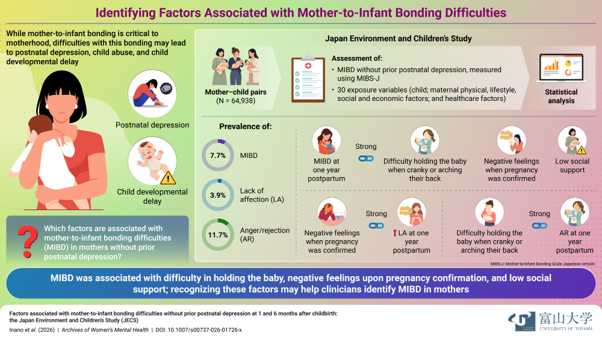
A strong emotional bond between a mother and her child is vital during early infancy. However, some mothers experience indifference, aloofness, or anger when interacting with their infants, a phenomenon called mother-to-infant bonding difficulties (MIBD). MIBD has been linked to inappropriate child-rearing and developmental delays in children. Therefore, it becomes crucial for medical professionals to intervene and help mothers bond better with their infants.
Researchers have long known that postnatal depression is a strong predictor of MIBD. However, mothers without postnatal depression make up a very large proportion of mother-child pairs affected by MIBD. “The prevalence of MIBD is reported to be 11%–12%, but to our knowledge, there are relatively few reports on the prevalence of MIBD without postnatal depression,” says Ms. Hitomi Inano from the Department of Nursing Sciences, Graduate School of Medicine and Pharmaceutical Sciences, University of Toyama, Japan. “It is highly likely that maternal bonding difficulties are involved in the steadily increasing incidence of child abuse and developmental disorders in recent years,” she adds.
Ms. Inano led a study on MIBD in mothers without postnatal depression. This study was supported by Dr. Akiko Tsuchida, Dr. Hidekuni Inadera, and Professor Tomomi Hasegawa from the Faculty of Medicine at the University of Toyama, as well as Dr. Kenta Matsumura from the Aomori University of Health and Welfare. Using data from the Japan Environment and Children’s Study (JECS), the researchers studied the overall prevalence of MIBD and factors associated with increased MIBD risk. Their findings were made available online on June 3, 2026, in Volume 29 of the journal Archives of Women’s Mental Health.
The research team found that MIBD was present in 11.6% of all mother-child pairs in the JECS dataset, which was consistent with previous studies. While MIBD prevalence was only 7.7% in mother-child pairs where the mother did not have postnatal depression, this group still accounted for nearly half of all cases of MIBD in the dataset. Next, the team looked at the prevalence of the two components of MIBD, namely lack of affection (LA) and anger and rejection (AR). 38.2% of mothers gave at least one affirmative response to LA-related items, compared with 51.8% for AR-related items.
What aspects of pregnancy and postpartum increase the risk of MIBD? The team analyzed 30 variables across six dimensions: child factors, maternal physical factors, maternal lifestyle factors, maternal psychological factors, maternal social and economic factors, and healthcare or medical intervention factors. Of these, three variables showed the strongest associations with MIBD.
The strongest predictor was a mother reporting difficulty in holding her infant due to crying, fussiness, or back-arching at one month postpartum; these mothers were 3.45 times more likely to experience MIBD at one year postpartum. The second strongest predictor was a mother reporting any emotion other than happiness upon pregnancy confirmation—confusion, upset, or neutrality were associated with a 2.42-fold increase in MIBD risk. Conversely, mothers reporting high social support during their pregnancy had a 55% lower likelihood of experiencing MIBD.
Ms. Inano highlights the need for active monitoring and intervention. “Mothers with bonding difficulties who screen negative for postnatal depression are unlikely to be identified by healthcare professionals and are therefore often overlooked as potential recipients of support,” she says. Clinicians should strongly consider intervening if a mother reports difficulty in handling her baby when the baby is cranky or arching their back, even if the mother shows no signs of postnatal depression.
Ms. Inano hopes that these findings will lead to more mothers receiving timely support, thus ensuring their own well-being and the healthy development of their children.
30, Jun 2026
Identification of NovelBRCA2Mutations in Patients with Multiple Primary Lung Cancer
A genomic study links rare inherited BRCA2 mutations to primary lungadenocarcinomas
Although lung cancer is often linked to environmental exposures and acquired mutations, some patients develop multiple independent tumors, suggesting a potential role for inherited genetic susceptibility. While the contribution of germline pathogenic variants (GPVs) in several tumors is studied, their significance in lung cancer remains unknown. Now, researchers have explored the genetic basis of multiple primary lung cancers, offering insights into novel BRCA2 GPVs which could serve as targets for therapeutic strategies.
Lung cancer remains the leading cause of cancer-related deaths worldwide and is generally thought to arise from mutations acquired over a lifetime through environmental exposures. However, clinicians are increasingly encountering patients with not just one, but multiple tumors in their lungs. At Fujita Health University Hospital in Japan, 7.5% (53/699 cases)of lung cancer surgeries involved patients with synchronous or metachronous multiple lung lesions, far more than would be expected. Whether these additional tumors represented cancer spreading within the lungs or reflected an inherited predisposition to developing multiple independent cancers remains unclear.
To explore this, a team of researchers led by Professor Motoshi Suzuki from the Department of Molecular Oncology, Fujita Health University, Japan, along with a graduate student Dat Quoc Tran from the Department of Molecular Oncology, Fujita Health University, Japan, employed genomic sequencing techniques. They hypothesized that hidden genetic factors, rather than chance alone, might explain at least some of these cases. Their findings were published in Volume 34 Issue 6 of the journal Oncology Researchon May 21, 2026.
“Although germline pathogenic variants (GPVs) have transformed the understanding and management of some cancers, their role in lung adenocarcinoma(LUAD) has remained largely unexplored,” says Prof. Suzuki.
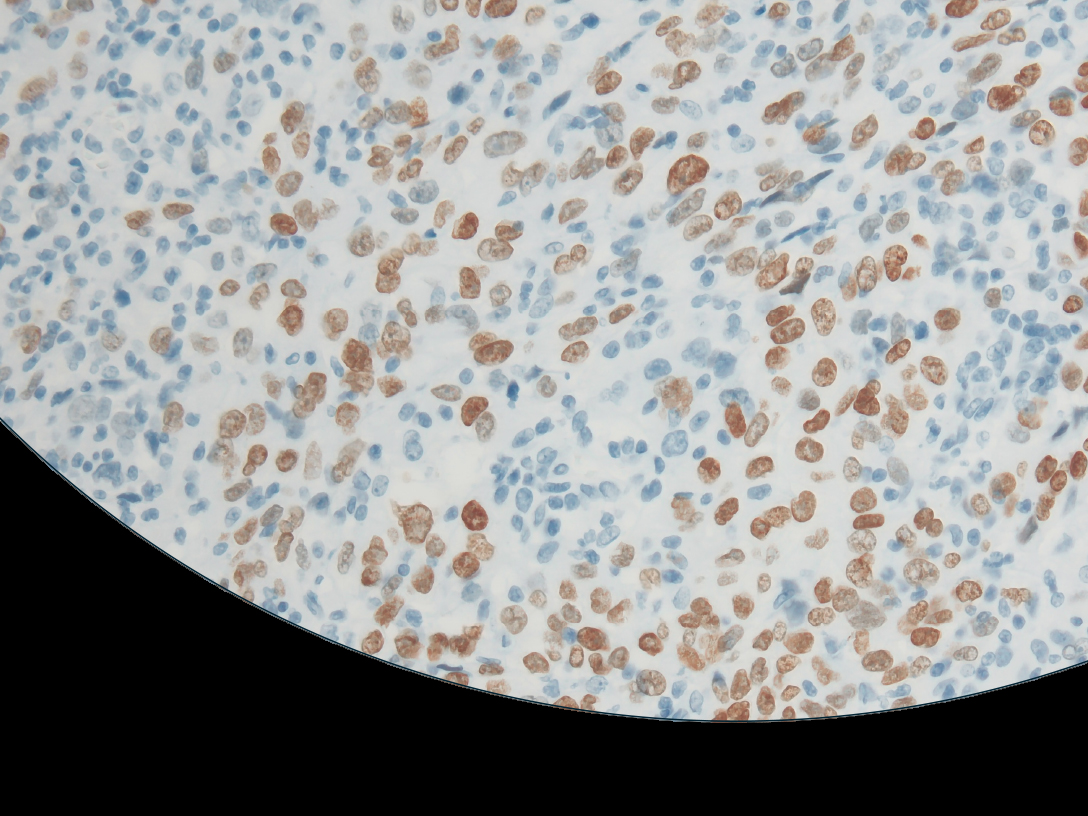
The researchers analyzed 26 LUADtumors from 11 patients with multiple lung cancers using targeted next-generation sequencing covering 143 cancer-related genes. By comparing mutation profiles across tumors and validating shared variants with Sanger sequencing, they distinguished inherited germline variants from tumor-acquired mutations. To determine whether similar alterations occurred more broadly, they also screened 125 tumors from an independent cohort of 123 patients withLUAD.
The results revealed that nine of the 11 patients had true multiple primary lung cancers, while one had intrapulmonary metastasis and one exhibited features of both conditions, underscoring the value of combining genomic profiling with conventional pathology for accurate diagnosis. More strikingly, the researchers identified two previously unreported truncating germline variants inBRCA2. One was detected across three independent tumors in a single patient, while the second was found in an unrelated patient who lacked the common driver mutations typically associated withLUAD. These findings suggest that inherited BRCA2 alterations may contribute to susceptibility to multiple primary lung cancers.
The study also points toward important clinical applications. Molecular profiling could help physicians distinguish multiple primary tumors from intrapulmonary metastases, enabling more accurate staging and treatment decisions. Furthermore, identifying inherited BRCA2 alterations raises the possibility that some patients may benefit from therapies already used for other BRCA-associated cancers. “We identified BRCA2 likely GPVs in patients with multiple primary LUAD. Thus, PARP inhibitors and other molecularly targeted approaches directed at BRCA2-related DNA repair deficiencies may eventually become viable treatment options for patients with these specific genetic backgrounds,”says Prof. Suzuki.
Overall, the study provides compelling evidence that inherited genetic susceptibility may contribute to the development of primaryLUAD. By uncovering two novel likely pathogenic BRCA2 variants and demonstrating the power of integrated genomic profiling, the research opens new avenues for precision diagnosis, targeted therapy, and future efforts to identify and manage patients at increased genetic risk.
30, Jun 2026
Nadda Praises PM Modi’s Push to Strengthen India’s Medical Education System
New Delhi, June 30: BJP National President JP Nadda has lauded Prime Minister Narendra Modi’s vision and leadership in strengthening India’s health sector and medical education ecosystem.
He said that under the Prime Minister’s leadership, the country has witnessed significant expansion in healthcare infrastructure, including an increase in medical colleges, medical seats, and improved access to quality healthcare services.
Nadda noted that ongoing reforms have helped modernise the medical education system, improve healthcare delivery, and address the shortage of trained medical professionals across the country.
He further stated that these initiatives are contributing to a stronger, more resilient health system capable of meeting the country’s growing healthcare needs.
The BJP reiterated its commitment to supporting continued reforms and development in the health and medical education sectors under the leadership of Prime Minister Narendra Modi.
30, Jun 2026
ActiveMind Daily Invites Families Across India to Become Founding Families Pilot for Adults over 50
Bengaluru, June 30: ActiveMind Daily, a doctor-led movement for brain wellness through prevention and good ageing, invites families across India to be a part of its Founding Families Pilot. This is an early access scheme mainly for adults aged 50 years and over.
The pilot is designed to inspire modest, meaningful everyday activities to support memory, contemplation, creativity, discussion and cognitive engagement. This program has been produced by a group of doctors. The programme’s main aim is to foster lifelong brain-healthy practices among older persons. This means habits like creating family relationships through everyday contact.
The Founding Families Pilot allows participants to experience ActiveMind Daily before it is available to the general public. Participants are invited to contribute valuable feedback to help shape and develop the programming.
Pilot participants will receive:
-
Complimentary participation in the Founding Families Pilot
-
Early access before the public launch
-
A special gift from the ActiveMind Daily team
-
Dedicated support throughout the pilot
-
An opportunity to help shape the programme through participant feedback
-
Recognition as a Founding Family
The pilot is accessible for families with a parent, grandparent or loved one 50 years of age or older. Participation is limited, and the ActiveMind Daily staff will contact the selected applicants individually after registration.
How to Participate:
Families wishing to sign up for the Founding Families Pilot may visit the following:
https://activeminddaily.in/#
30, Jun 2026
Simplify Genomics and SimonMed Announce Collaboration to Advance Preventive Healthcare Through Integrated Genomics and Imaging
Combining whole genome interpretation with large-scale whole-body MRI to enable a more comprehensive view of human health
San Diego, CA — June 30, 2026 — Simplify Genomics today announced a collaboration with SimonMed aimed at advancing a more integrated approach to preventive healthcare. By combining SimonMed’s national scale in whole-body MRI with Simplify’s Whole Genome Interpretation and Reporting Platform, the collaboration seeks to provide a more complete picture of human health— helping identify risk earlier, personalize care pathways, and support more proactive health decisions. Across both imaging and genomics, there is growing evidence that early indicators associated with disease may be identified well before they surface in traditional care pathways. Together, these modalities offer complementary perspectives: genomics can provide insight into underlying disease risk, while imaging can help identify existing structural or physiological changes.
Simplify Genomics has spent years developing and refining its clinical reporting platform as a CAP/CLIA-certified laboratory and has processed in excess of 50,000 whole genomes to date. The platform includes thousands of disease associations and a broad set of pharmacogenomic insights, designed to support clinical interpretation and integration within real-world care settings.
Paired with SimonMed’s leadership in accessible, AI-enhanced imaging at national scale—including a network of more than 175 imaging centers across the United States —the collaboration creates an opportunity to explore patterns and connections that may not be visible through any single modality alone, supporting earlier insight and helping to inform clinical decision-making.
“This collaboration reflects a shared vision for the future of healthcare—one that is more proactive, data-driven, and personalized,” said Travis Lacey, CEO of Simplify Genomics.
“We believe the future of healthcare lies in making advanced preventive insights more accessible and actionable,” said John Simon, CEO of SimonMed. “By combining imaging and genomics, we have an opportunity to help patients and providers better understand health risk earlier and with greater clarity.” The collaboration is progressing rapidly, with additional updates expected in the near future.
29, Jun 2026
JP Nadda launches WhatsApp-based Ayushman Sarathi chatbot, unified drug registry
June 29: Union Health Minister J.P. Nadda has launched the Ayushman Sarathi WhatsApp chatbot along with a Unified Drug Registry to make healthcare services more accessible and digitally connected.
The WhatsApp chatbot will help citizens easily access information about government health schemes, hospital services, eligibility, and other health-related queries in a simple and quick way.
The Unified Drug Registry will act as a central digital system to track medicines and improve their availability, monitoring, and regulation across the healthcare system.
Officials said the initiative aims to make healthcare services more transparent, efficient, and citizen-friendly by using widely accessible digital platforms.
29, Jun 2026
Govt invites proposals to cut import dependence in medical devices
June 29: The government has invited proposals from industry, startups, academic institutions, research organisations, and innovators to reduce India’s dependence on imported medical devices and strengthen the country’s domestic manufacturing ecosystem.
The initiative aims to identify practical solutions that can accelerate indigenous production, promote innovation, and address critical technology gaps in the medical devices sector. It seeks to encourage the development of high-quality, affordable medical equipment that can meet India’s growing healthcare needs while reducing reliance on overseas suppliers.
Officials said the proposals will help shape policies and support mechanisms to strengthen research and development, encourage investment in advanced manufacturing, and foster collaboration between industry, academia, and government. The move is also expected to improve supply chain resilience, enhance India’s competitiveness in the global medical devices market, and create new opportunities for startups and manufacturers.
The initiative forms part of the government’s broader vision of building a self-reliant healthcare ecosystem under the Atmanirbhar Bharat initiative, ensuring reliable access to critical medical technologies while positioning India as a global hub for medical device innovation and manufacturing.


