


3, Sep 2026
MoxiWorks Expands Global Footprint in India, Appoints Jyotsna Kher to Lead the Operation
MoxiWorks announces a strategic investment in Pune, India to expand talent and infrastructure.
PUNE, India, Sept. 3, 2026 /PRNewswire/ — MoxiWorks, the AI-powered real estate marketing platform, today announced the opening of its Pune, India office, led by Jyotsna Kher, who joins as Managing Director and VP of India Operations. Kher brings deep experience building and scaling high-performing technical organizations and will lead the office’s next phase of growth.

The strategic investment in MoxiWorks’ India operations reinforces the company’s mission to deliver best-in-class native AI software and exceptional customer experiences. The Pune office expands MoxiWorks’ capacity to execute on that mission while providing access to the technical talent and infrastructure needed to keep pace with the rapidly evolving real estate technology landscape.
“Our new Pune office is about building the capacity to better serve the markets where we operate,” said Eric Elfman, CEO of MoxiWorks. “This investment brings together the market expertise of our North American and Australian teams with a true technical powerhouse in India, strengthening our ability to deliver more to the real estate professionals who rely on us.”
Prior to MoxiWorks, Kher served as Vice President of Human Resources at Onit India, helping scale its India operations.
“I’ve chosen to join MoxiWorks because of their forward-thinking investment in a Global Capability Center in India,” Kher said. “Pune has an extraordinary pool of talent, and I’m excited to bring the right people together to help power products like RISE and support the real estate companies and affiliated agents who use MoxiWorks every day.”
The Pune office is fully owned and operated by MoxiWorks, with its own leadership team, and is not an outsourcing arrangement. MoxiWorks remains headquartered in North America. Pune expands the company’s existing technical capacity, adding talent and expertise to support continued innovation across its AI platform, including its flagship product RISE.
About MoxiWorks
MoxiWorks is the leading real estate AI marketing platform, with offices across North America, Canada, Australia, The United Kingdom, and India. The platform integrates presentations, email, CRM, advertising, and marketing into one connected system powered by native AI. Trusted by more than 3,000 brokerages and 400,000 agents, MoxiWorks helps real estate professionals find, win, and close more deals. Learn more at moxiworks.com.
Media Contact:
Kelly Mendonca
Marketing Communications Manager
kelly.mendonca@moxiworks.com

 View original content to download multimedia:https://www.prnewswire.com/in/news-releases/moxiworks-expands-global-footprint-in-india-appoints-jyotsna-kher-to-lead-the-operation-302867152.html

- 0
- By Sai Krishna

3, Sep 2026
The Royal Mint Boldly Goes Where No Coin Has Gone Before With New Star Trek 50p Coins
LLANTRISANT, Wales, Sept. 2, 2026 /PRNewswire/ — Six decades since Star Trek first beamed onto television screens across the world, The Royal Mint is unveiling two collectable 50p coins to celebrate the global phenomenon and its intergalactic legacy.
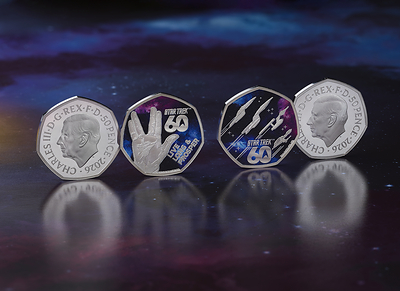
This marks the first time Star Trek has featured on UK 50p coins, following the success of the Mint’s previous sci-fi collectable coin series, first introduced in 2023. This previous collection saw close to 800,000 coins find their way into collections across 60 countries worldwide.
The first coin, available from 3 September, features the iconic Vulcan salute alongside the phrase “Live Long & Prosper” and “Star Trek 60,” marking the franchise’s landmark anniversary. The second coin, available in November, showcases four spacecraft spanning different eras of the franchise: U.S.S Voyager NCC-74656, the U.S.S Enterprise NCC-1701, Enterprise – NCC-1701-D and the Klingon Bird of Prey along with the phrase “Star Trek 60″.
A selection of the coins will also feature colour, echoing the franchise’s own television history. When Star Trek first aired in 1966, the cast’s vivid uniforms were deliberately designed to stand out on the new colour television sets just becoming available to audiences at the time. That same spirit of colour has now been beamed onto the coins themselves, with swirling blue and purple nebulas capturing the vast, uncharted reaches of space that Captain Kirk and the crew of the U.S.S Enterprise set out to explore, ensuring the coins stand out just as strikingly today as those iconic uniforms once did on screen.
Tim Mulhall, Head of Fandom at The Royal Mint, said: “It’s a privilege for The Royal Mint to boldly go, celebrating 60 years of Star Trek with a keepsake that’s out of this world. Both collectable 50p coins are designed for fans who’ve grown up with the franchise and want a piece of that history to treasure. It’s a collectable built to live long and prosper in any collection and is a fitting way to mark six decades of a franchise that continues to inspire fans across the Galaxy.”
Ruth Henriquez, Vice President of Products & Experiences, Paramount EMEA, said: “Star Trek has one of the most dedicated collector communities in the world, and these coins are a tribute to 60 years of the franchise. The Royal Mint carefully selects the brands it works with, and the affection generations of British fans have for Star Trek makes it a natural fit for this collaboration. Our partnership with The Royal Mint brings some of Star Trek’s most iconic symbols and spacecraft to fans through a unique collection created exclusively to mark this milestone anniversary, giving collectors a lasting keepsake to treasure for years to come.”
Since its first episode transmitted onto screens in September 1966, Star Trek has grown into one of the most influential franchises in pop culture history, spanning 12 series, totalling more than 950 episodes and 14 movies that took more than $2 billion at the box office. The Star Trek phenomenon continues today with 413,000 people currently learning Klingon on Duolingo and has eight asteroids and the first space orbiter named in its honour.
Fans can secure both coins from 9am on 3 September at www.royalmint.com, with prices starting from £19.95.

 View original content to download multimedia:https://www.prnewswire.co.uk/news-releases/the-royal-mint-boldly-goes-where-no-coin-has-gone-before-with-new-star-trek-50p-coins-302866247.html

2, Sep 2026
Shell completes acquisition of ARC Resources
CALGARY, AB, Sept. 2, 2026 /PRNewswire/ — Shell plc has completed the previously announced agreement (the “Arrangement Agreement”) to acquire ARC Resources Ltd. (“ARC”) (TSX: ARX), an energy company focused in British Columbia and Alberta, Canada, following receipt of all required shareholder, court and regulatory approvals. The acquisition accelerates Shell’s strategy by adding approximately 370 kboe/d immediately across liquids and gas, supporting a production compound annual growth rate (CAGR) of around 4% through to 2030 compared with 2025.

“Today we welcome ARC colleagues to Shell and look forward to building on their high-performance culture, operational excellence and technical expertise in Canada’s Montney basin,” said Shell’s Chief Executive Officer, Wael Sawan. “The acquisition increases Shell’s exposure to long-duration, low-cost liquids production. Through disciplined integration, we will build on the strengths of both organizations to unlock the value that underpins this transaction.”
In accordance with terms of the Arrangement Agreement, ARC’s shareholders will receive CAD $8.20 in cash and 0.40247 ordinary shares of Shell plc (each whole share, a “Shell Share”) for each ARC common share (each, an “ARC Share”).
Based on Shell’s closing share price of GBP £34.43 on September 2, 2026, and latest FX rates, this equates to an updated equity value of approximately US$13.9 billion. Shell will take on approximately US$2.5 billion in net debt and leases resulting in an enterprise value of approximately US$16.5 billion. The equity value of US$13.9 billion will be funded via US$3.3 billion in cash and US$10.6 billion in new Shell shares.
The transaction is expected to generate double-digit returns, bolster long-term cash flows and be accretive to free cash flow share from 2027 onwards.
Notes to editors
- As defined in the Arrangement Agreement, the effective date of the transaction is September 2, 2026 (the “Effective Date”).
- The process for delivery of Shell Shares in exchange for ARC Shares is anticipated to be completed several days following the Effective Date of the transaction.
- More information can be found at Information for shareholders | Shell Global
- The acquisition grows Shell’s producing interests in Canada and complements its existing LNG footprint and extensive downstream businesses including refining, chemicals, fuel retail, aviation, lubricants and low-carbon solutions.
- In connection with the Arrangement Agreement, Shell obtained an exemption order from the Alberta Securities Commission, as principal regulator on behalf of the securities regulatory authority or regulator in each of the provinces of Canada other than Ontario, and the Ontario Securities Commission, providing relief from the formal issuer bid requirements of National Instrument 62-104 Take-Over Bids and Issuer Bids in connection with purchases by Shell of the outstanding Shell Shares through marketplaces outside of Canada (the “Canadian Exemption”), which applies so long as the Shell Shares are not listed or posted for trading on any stock exchange or marketplace in Canada, and residents of Canada do not beneficially own more than 10% of the total number of issued and outstanding Shell Shares. The Canadian Exemption is also subject to the following conditions: the share buybacks under its issuer bid programs are carried out under applicable securities laws in the United Kingdom, the Netherlands and the European Union, as well as the trading rules of the applicable exchanges and markets; and the aggregate number of Shell Shares acquired by Shell within any period of 12 months does not exceed 10% of the outstanding Shell Shares, excluding treasury shares.
- Measurement of acquired assets and liabilities for accounting purposes will be subject to a purchase price allocation exercise following completion.
- Equity value and net debt do not sum to enterprise value due to rounding.
Cautionary Note
The companies in which Shell plc directly and indirectly owns investments are separate legal entities. In this news release “Shell”, “Shell Group” and “Group” are sometimes used for convenience to reference Shell plc and its subsidiaries in general. Likewise, the words “we”, “us” and “our” are also used to refer to Shell plc and its subsidiaries in general or to those who work for them. These terms are also used where no useful purpose is served by identifying the particular entity or entities. ”Subsidiaries”, “Shell subsidiaries” and “Shell companies” as used in this news release refer to entities over which Shell plc either directly or indirectly has control. The terms “joint venture”, “joint operations”, “joint arrangements”, and “associates” may also be used to refer to a commercial arrangement in which Shell has a direct or indirect ownership interest with one or more parties. The term “Shell interest” is used for convenience to indicate the direct and/or indirect ownership interest held by Shell in an entity or unincorporated joint arrangement, after exclusion of all third-party interest.
Forward-Looking statements
This news release contains forward-looking statements (within the meaning of the U.S. Private Securities Litigation Reform Act of 1995) concerning the financial condition, results of operations and businesses of Shell. All statements other than statements of historical fact are, or may be deemed to be, forward-looking statements. Forward-looking statements are statements of future expectations that are based on management’s current expectations and assumptions and involve known and unknown risks and uncertainties that could cause actual results, performance or events to differ materially from those expressed or implied in these statements. Forward-looking statements include, among other things, statements concerning the potential exposure of Shell to market risks and statements expressing management’s expectations, beliefs, estimates, forecasts, projections and assumptions. These forward-looking statements are identified by their use of terms and phrases such as “aim”; “ambition”; ”anticipate”; “aspire”, “aspiration”, ”believe”; “commit”; “commitment”; ”could”; “desire”; ”estimate”; ”expect”; ”goals”; ”intend”; ”may”; “milestones”; ”objectives”; ”outlook”; ”plan”; ”probably”; ”project”; ”risks”; “schedule”; ”seek”; ”should”; ”target”; “vision”; ”will”; “would” and similar terms and phrases. There are a number of factors that could affect the future operations of Shell and could cause those results to differ materially from those expressed in the forward-looking statements included in this news release, including (without limitation): (a) price fluctuations in crude oil and natural gas; (b) changes in demand for Shell’s products; (c) currency fluctuations; (d) drilling and production results; (e) reserves estimates; (f) loss of market share and industry competition; (g) environmental and physical risks, including climate change; (h) risks associated with the identification of suitable potential acquisition properties and targets, and successful negotiation and completion of such transactions; (i) the risk of doing business in developing countries and countries subject to international sanctions; (j) legislative, judicial, fiscal and regulatory developments including tariffs and regulatory measures addressing climate change; (k) economic and financial market conditions in various countries and regions; (l) political risks, including the risks of expropriation and renegotiation of the terms of contracts with governmental entities, delays or advancements in the approval of projects and delays in the reimbursement for shared costs; (m) risks associated with the impact of pandemics, regional conflicts, such as the Russia-Ukraine war and the conflict in the Middle East, and a significant cyber security, data privacy or IT incident; (n) the pace of the energy transition; and (o) changes in trading conditions. No assurance is provided that future dividend payments will match or exceed previous dividend payments. All forward-looking statements contained in this news release are expressly qualified in their entirety by the cautionary statements contained or referred to in this section. Readers should not place undue reliance on forward-looking statements. Additional risk factors that may affect future results are contained in Shell plc’s Form 20-F for the year ended December 31, 2025 (available at www.shell.com/investors/news-and-filings/sec-filings.html and www.sec.gov). These risk factors also expressly qualify all forward-looking statements contained in this news release and should be considered by the reader. Each forward-looking statement speaks only as of the date of this news release, September 2, 2026. Neither Shell plc nor any of its subsidiaries undertake any obligation to publicly update or revise any forward-looking statement as a result of new information, future events or other information. In light of these risks, results could differ materially from those stated, implied or inferred from the forward-looking statements contained in this news release.
Shell’s net carbon intensity
Also, in this news release we may refer to Shell’s “net carbon intensity” (NCI), which includes Shell’s carbon emissions from the production of our energy products, our suppliers’ carbon emissions in supplying energy for that production and our customers’ carbon emissions associated with their use of the energy products we sell. Shell’s NCI also includes the emissions associated with the production and use of energy products produced by others which Shell purchases for resale. Shell only controls its own emissions. The use of the terms Shell’s “net carbon intensity” or NCI is for convenience only and not intended to suggest these emissions are those of Shell plc or its subsidiaries.
Shell’s net-zero emissions target
Shell’s operating plan and outlook are forecasted for a three-year period and ten-year period, respectively, and are updated every year. They reflect the current economic environment and what we can reasonably expect to see over the next three and ten years. Accordingly, the outlook reflects our combined Scope 1 and 2 target, NCI target and our oil products ambition over the next ten years. However, Shell’s operating plan and outlook cannot reflect our 2050 net-zero emissions target, as this target is outside our planning period. Such future operating plans and outlooks could include changes to our portfolio, efficiency improvements and the use of carbon capture and storage and carbon credits. In the future, as society moves towards net-zero emissions, we expect Shell’s operating plans and outlooks to reflect this movement. However, if society is not net zero in 2050, as of today, there would be significant risk that Shell may not meet this target.
Forward-Looking non-GAAP measures
This news release may contain certain forward-looking non-GAAP measures such as free cash flow, net debt and enterprise value. We are unable to provide a reconciliation of these forward-looking non-GAAP measures to the most comparable GAAP financial measures because certain information needed to reconcile those non-GAAP measures to the most comparable GAAP financial measures is dependent on future events some of which are outside the control of Shell, such as oil and gas prices, interest rates and exchange rates. Moreover, estimating such GAAP measures with the required precision necessary to provide a meaningful reconciliation is extremely difficult and could not be accomplished without unreasonable effort. Non-GAAP measures in respect of future periods which cannot be reconciled to the most comparable GAAP financial measure are calculated in a manner which is consistent with the accounting policies applied in Shell plc’s consolidated financial statements.
The contents of websites referred to in this news release do not form part of this news release.
We may have used certain terms, such as resources, in this news release that the United States Securities and Exchange Commission (SEC) strictly prohibits us from including in our filings with the SEC. Investors are urged to consider closely the disclosure in our Form 20-F, File No 1-32575, available on the SEC website www.sec.gov.
 View original content to download multimedia:https://www.prnewswire.co.uk/news-releases/shell-completes-acquisition-of-arc-resources-302868187.html

2, Sep 2026
Bybit Names Sean Ballard as Head of Derivatives and Institutional Business Amid Continued Institutional Expansion
DUBAI, UAE, Sept. 2, 2026 /PRNewswire/ — Bybit, the world’s second-largest cryptocurrency exchange by trading volume, is pleased to announce the appointment of Sean Ballard as Head of Derivatives and Institutional Business. Ballard will play a central role in strengthening the exchange’s trading infrastructure, risk frameworks and institutional capabilities, with a broader remit spanning trading risk and exchange technology.
Ballard brings more than 25 years of experience in global financial markets, with deep expertise across derivatives, high-frequency trading, trading risk, market structure and exchange technology. He joins Bybit from Jump Trading, where he led the firm’s high-frequency futures trading business across the US, EMEA, and LATAM, managing significant investment portfolios and working closely with exchanges and regulators globally on market structure, trading performance and infrastructure developments.
While at Jump Trading, Ballard was a senior trader on the Jump Crypto team managing trading initiatives on centralized exchanges and also leading the strategic partnership initiatives to support ecosystem growth.
At Bybit, Ballard will focus on advancing the institutional trading experience through robust market infrastructure, disciplined risk management and scalable product development. His cross-market background across traditional finance and digital assets brings a distinctive perspective to the evolution of institutional trading and the infrastructure required to support the next generation of global digital asset markets.
The appointment builds on Bybit’s continued investment in its derivatives and institutional trading business as digital assets increasingly converge with global financial markets. Bybit Institutional has also expanded significantly over the past year, with additions of professional services including Bank Triparty arrangements, allowing institutions to manage counterparty risk through regulated custody while retaining full trading access, alongside a Market Maker Gateway that has cut round-trip latency for high-frequency and quant clients from 4ms to 1.5ms.
In the RWA (real-world asset) race, Bybit has also moved ahead of the curve with a diversity of tokenized real-world financial products through Bybit RWA Earn. Since July 2026, FUIDL by Finloop, an AAA-rated USD money market fund, has been available on Bybit as collateral for trading, unlocking access to Asia’s first end-to-end RWA ecosystem.
The appointment reinforces Bybit’s broader transformation into the New Financial Platform, a unified financial platform connecting crypto, traditional markets and real-world financial services.

#Bybit / #NewFinancialPlatform
About Bybit
Bybit is The New Financial Platform.
We believe every person should have access to every financial opportunity on earth. That’s why we’re building the first intelligent platform that connects anyone, anywhere to the world’s finance.
Trusted by more than 80 million users worldwide, Bybit brings together investing, trading, payments, and wealth-building in a single secure and intelligent ecosystem. Through the combination of AI-powered technology, deep global liquidity, robust security, and transparent operations, Bybit makes global finance more accessible, efficient, and empowering for everyone.
Built for everyone. Powered by intelligence. Open to the world.
Learn more at Bybit.com
For more details about Bybit, please visit Bybit Press
For media inquiries, please contact: media@bybit.com
For updates, please follow: Bybit’s Communities and Social Media
Discord | Facebook | Instagram | LinkedIn | Reddit | Telegram | TikTok | X | Youtube
 View original content to download multimedia:https://www.prnewswire.co.uk/news-releases/bybit-names-sean-ballard-as-head-of-derivatives-and-institutional-business-amid-continued-institutional-expansion-302867990.html

2, Sep 2026
FP Markets: Global bond market alarm bells are ringing
LIMASSOL, Cyprus, Sept. 2, 2026 /PRNewswire/ — Global government bond yields have been thrust into the limelight, reaching levels not seen in decades. Unquestionably, these are the most important interest rates in the world, serving as the bedrock of the financial system. Almost every financial asset – either directly or indirectly – is derived from government yields. And right now, that bedrock is shifting.

When government bond yields surge and clock multi-year highs, the world sits up and pays attention. It raises fresh questions not only about their impact on governments, businesses, and consumers, but also on other key asset classes, such as stocks and currencies.
This is not just a US story. The US 10-year Treasury yield has pushed above 4.8% – its highest level since late 2023 – while UK 10-year Gilt yields also reached levels not seen since 2008, and the 10-year Japanese JGB yield rose to its highest since 1996.
Underpinning rising yields is a combination of drivers, chief among them are persistent inflationary pressures fuelled by elevated energy prices; Brent crude is up more than 30% from July lows. Other factors include growing government budget deficits, rising ‘term premium’, and competition from technology companies issuing their own debt.
FP Markets Chief Market Analyst Aaron Hill commented: ‘I do not believe what we are witnessing is a one-off spike in the bond market. Instead, we may be observing a repricing of risk. Investors are demanding a higher return to hold longer-dated government debt as they are less confident inflation is under control and increasingly doubtful that fiscal deficits are sustainable at current levels. That has knock-on effects for everything’.
Markets are interconnected, meaning that a move higher in oil often impacts bonds and currencies, as well as gold. Investors at FP Markets can trade CFDs not only on government bonds, but on over 70 currency pairs, key stock indices, a range of commodities, and ETFs, all through world-class trading platforms.
About FP Markets:
FP Markets is a global, multi-regulated, award-winning broker established in Sydney, Australia in 2005. The broker offers 10,000+ CFD instruments across seven asset classes, available on industry-leading platforms including MetaTrader 4, MetaTrader 5, TradingView, and cTrader.
FP Markets’ regulatory presence includes the Australian Securities and Investments Commission (ASIC), the Financial Services Authority (FSA) in Seychelles, the Financial Sector Conduct Authority (FSCA) of South Africa, and the Capital Markets Authority (CMA) of Kenya.
For more information, visit www.fpmarkets.com
 View original content to download multimedia:https://www.prnewswire.co.uk/news-releases/fp-markets-global-bond-market-alarm-bells-are-ringing-302867893.html

2, Sep 2026
Helfie AI Appoints John Rego as Chief Financial Officer
Veteran CFO with more than $10 billion raised across six public and private companies joins Helfie AI to lead financial strategy
MELBOURNE, Australia, Sept. 2, 2026 /PRNewswire/ — Helfie AI (“Helfie”), an AI-powered preventative network transforming global healthcare by delivering personalised screening for all via mobile, today announced the appointment of John Rego as Chief Financial Officer.

John brings more than 25 years of senior leadership experience across a range of high-growth technology and communications companies and joins Helfie from Wide Open West (WOW), a US broadband provider (NYSE: WOW), where he served as CFO from 2020 until the company’s sale in 2026. Prior to WOW, he served as CFO of Telaria Inc. (NASDAQ: TLRA), an advertising technology company, and as CFO of Virgin Galactic and CFO of Vonage Holdings, Inc. (NYSE: VG). John has operated in businesses with global reach, raising over $10 billion in capital, and has closed more than two dozen M&A transactions.
George Tomeski, CEO, Helfie AI, said: “John’s track record speaks for itself. He has taken companies from startup to IPO, navigated major M&A transactions, built finance functions from the ground up, and operated at the highest levels of public market scrutiny. As Helfie enters its next phase of growth, John’s experience and discipline in the CFO seat gives us enormous confidence.”
John Rego, Chief Financial Officer, Helfie AI, said: “I am delighted to join Helfie AI at such an exciting phase of growth. Helfie AI is one of those rare businesses where the mission and the market opportunity are genuinely aligned. I am looking forward to leading the company in its mission to build a science-backed, AI-powered personalised preventative healthcare platform accessible to everyone in the world.”
NOTES TO EDITORS
ABOUT HELFIE
Helfie AI is a global human health platform designed for early detection, proactive prevention, and optimised wellbeing for 8 billion+ humans. The platform is science-backed and AI-powered, providing a suite of 30+ easy, instant, and affordable health checks. Delivered via smartphone, it combines powerful medical insights with data ownership, universal access, and freedom of choice for the individual. Helfie AI works with governments and businesses worldwide to make preventative health accessible to everyone.
More details at www.helfie.ai
 View original content to download multimedia:https://www.prnewswire.co.uk/news-releases/helfie-ai-appoints-john-rego-as-chief-financial-officer-302864803.html

2, Sep 2026
ST Engineering iDirect Demonstrates Multi-Waveform 5G NR-NTN User Equipment Pilot
INT3000 modem pilot marks next milestone in phased multi-waveform user equipment development
HERNDON, Va., Sept. 2, 2026 /PRNewswire/ — ST Engineering iDirect, a global leader in satellite communications, today demonstrated a pilot version of the INT3000, its multi-waveform 5G New Radio Non-Terrestrial Network (NR-NTN) User Equipment (UE) modem, at the European Space Agency (ESA) 5G NTN Forum. The INT3000 is being developed to support both 5G NR NTN and DVB-S2X/MRC waveforms in a single device, enabling operators to deploy native 5G NR-NTN services while also supporting DVB and hybrid network architectures during migration and modernization.

The INT3000 modem pilot provided the ESA 5G NTN community a look at ST Engineering iDirect’s progress in advancing 5G NR-NTN UE, with the demonstration conducted over a satellite simulator. On the network side, the pilot connected through the Intuition ground system, which implements native 5G NR-NTN gNodeB capabilities.
“This pilot demonstration is another important step in our multi-waveform, multi-orbit user equipment roadmap,” said Shravan Gaddam, Vice President, CTO Office, ST Engineering iDirect. “The industry is moving toward standards-based 5G NTN connectivity, but at the same time, operators must support existing satellite networks. Our vision for the INT3000 is to bring these worlds together in a single user equipment, providing a practical path for operators to evolve their networks while leveraging existing investments.”
The INT3000 modem pilot provides the foundation for extending ST Engineering iDirect’s satellite networking capabilities into the broader 5G ecosystem, bringing together the technology, ecosystem partnerships and product framework required to support future interoperability between satellite and terrestrial communications networks.
As part of its broader 5G NTN strategy, ST Engineering iDirect is also advancing 5G NR waveform innovations designed to reduce reliance on Global Navigation Satellite Systems (GNSS) and satellite position data for timing and synchronization. These enhancements are intended to improve resiliency and operational flexibility across multi-orbit satellite environments while supporting the continued evolution of 5G NTN technologies.
Built on the cloud-native, multi-orbit Intuition ground system, the developments in the INT3000 modem pilot support the industry’s evolution toward globally interoperable 5G NTN satellite connectivity and future 6G networks.
ST Engineering iDirect, a subsidiary of ST Engineering, is a global leader in satellite communications (satcom) providing technology and solutions that enable its customers to expand their business, differentiate their services and optimize their satcom networks. With over 40 years of delivering innovation focused on solving satellite’s most critical economic and technology challenges we are committed to shaping the future of how the world connects. The product portfolio, branded iDirect, represents the highest standards in performance, efficiency and reliability, making it possible for its customers to deliver the best satcom connectivity experience anywhere in the world. ST Engineering iDirect is a leader in key industries including mobility, broadcast and military/government. In 2007, iDirect Government was formed to better serve the U.S. government and defense communities. For more information visit www.idirect.net.

 View original content to download multimedia:https://www.prnewswire.co.uk/news-releases/st-engineering-idirect-demonstrates-multi-waveform-5g-nr-ntn-user-equipment-pilot-302867731.html

2, Sep 2026
EpiVax Launches AI-Enhanced Models for Immunogenicity Prediction
PROVIDENCE, R.I., Sept. 2, 2026 /PRNewswire/ — EpiVax, Inc. is pleased to announce the release of AI-enabled enhancements to ISPRI™, its proprietary in silico platform for assessing the immunogenicity risk of biotherapeutics. The release introduces an updated JanusMatrix™ model, a refined tolerance-adjusted immunogenicity score, and an enhanced anti-drug antibody (ADA) prediction model designed to provide deeper insight into immunogenicity risk.
For decades, EpiVax has pioneered computational immunology through the development of advanced in silico algorithms for evaluating biotherapeutic sequences. Foundational to this work are EpiMatrix® and JanusMatrix™, which evaluate T cell epitope content and human cross-conservation to characterize sequence-derived immunogenicity risk and immune tolerance. ISPRI™ brings these tools together with other extensively validated methods to assess immunogenicity risk across candidate and impurity sequences.
JanusMatrix™ 2.1
JanusMatrix™ 2.1 applies AI to improve the prediction of immune tolerance by weighting human epitope cross-conservation based on expression and prevalence data. The result is a more precise characterization of therapeutic epitopes and their tolerance profiles.
JanusMatrix-Adjusted EpiMatrix Score
Building on JanusMatrix 2.1, EpiVax has introduced a new immunogenicity score designed to align more closely with clinical immunogenicity outcomes. The JanusMatrix-Adjusted EpiMatrix (JAX) score incorporates JanusMatrix tolerance potential directly into EpiMatrix scores, providing insight into intrinsic effector epitope density and a more biologically-informed assessment of sequence-derived immunogenicity risk across therapeutic modalities.
ADA 2.2
EpiVax has also updated its ADA prediction model with the release of ADA 2.2. The enhanced model combines epitope-based measures with biophysical attributes and mode of action criteria to provide another assessment of antibody immunogenicity risk, trained specifically leveraging a diverse set of clinical monoclonal antibodies. ADA 2.2 demonstrates a stronger correlation between predicted and clinically observed immunogenicity, providing greater confidence in risk interpretation alongside the JAX score.
These newly available features further strengthen EpiVax’s best-in-class immunoinformatics capabilities, improving the relevance and predictive value of in silico immunogenicity risk assessments. The enhancements align closely with recent FDA initiatives advancing the adoption of human-relevant New Approach Methodologies (NAMs), while helping sponsors identify immune liabilities, protect asset value, and de-risk development programs.
About EpiVax
EpiVax partners with biologic developers to manage immunogenicity risk throughout the product lifecycle. Leveraging deep scientific expertise to apply industry-leading in silico analyses and in vitro approaches, insights from actionable data help our partners reduce uncertainty, mitigate risk, and use resources more efficiently while building regulatory-ready strategies for safer, more effective therapies.
Media Contact:
Sarah Moniz, Director of Business Development & Marketing
smoniz@epivax.com
 View original content to download multimedia:https://www.prnewswire.co.uk/news-releases/epivax-launches-ai-enhanced-models-for-immunogenicity-prediction-302867865.html

2, Sep 2026
Hexaware Appoints Vivek Jetley as CEO Designate to Lead its Next Phase of AI-Led Growth
Vivek will assume the role of CEO of Hexaware on October 28, 2026, with a focus on accelerating growth and scaling Hexaware’s AI-led services model globally
MUMBAI, India, Sept. 2, 2026 /PRNewswire/ — Hexaware Technologies (NSE: HEXT), an AI-first digital and IT services company, today announced the appointment of Vivek Jetley as CEO Designate. Vivek will join Hexaware and assume the role of CEO on October 28, 2026. The appointment comes at an important moment for Hexaware as the company enters its next phase of accelerated growth with AI reshaping enterprise technology services globally and creating new sources of client demand.

Srikrishna Ramakarthikeyan (“Keech”) will step down as CEO and as a member of the Board of Directors effective October 28, 2026. He has led Hexaware for 12 years and will remain with the Company as Senior Advisor to ensure a smooth leadership transition.
Vivek is a seasoned business leader with more than 25 years of experience at the intersection of AI and data, enterprise transformation and strategy. He has a proven track record of scaling global businesses, leading large P&Ls and creating new growth engines during periods of technology disruption from data and cloud to GenAI. He brings deep experience in management consulting, analytics and data and AI-led transformation, delivering measurable business outcomes for large global and Fortune 500 enterprise clients. He joins Hexaware from EXL, where he currently serves as President and leads their Insurance, Healthcare and Life Sciences businesses. Prior to this role, he was the President and head of EXL analytics, building and leading industry-leading advanced analytics, AI services and enterprise data management capabilities for clients across verticals. Vivek joined EXL in 2006 through the acquisition of Inductis, a specialized analytics consulting firm where he was a partner. During two decades at EXL, Vivek held various leadership roles with responsibility for corporate strategy, strategic partnerships, innovation and has led several acquisitions.
“On behalf of Hexaware’s Board of Directors, I would like to thank Keech for his contributions to the Company over the past 12 years. He leaves a strong foundation for its next phase of accelerated growth. I am excited to welcome Vivek to Hexaware and see him take the company forward,” said Larry Quinlan, Non Executive Chairman, Hexaware.
“Hexaware has built a strong business, defined by deep domain expertise, trusted client relationships and a growing set of AI capabilities. Vivek brings a proven ability to scale businesses, deepen enterprise relationships and build Data and AI-led growth platforms. As a major shareholder in Hexaware, Carlyle is excited to support Vivek as he steps into this role, and thanks Keech for his contributions to Hexaware over the past 12 years,” said Sandra Horbach, Hexaware Board Member and Chair of Americas Corporate Private Equity at Carlyle.
“I am honored and excited to join Hexaware at such an important moment for the company and our industry. I want to recognize Keech for his leadership and the strong foundation he has helped build at Hexaware. We are at a defining moment for IT services, as AI adoption fundamentally changes how services are delivered, how capabilities are built and how enterprises create value. I see a tremendous opportunity not only to help our clients navigate this transformation, but also to shape Hexaware into a leading AI-led services company that will help define the next generation of our industry. I am excited to lead Hexaware into its next phase of growth and partner with our talented leadership team, colleagues and clients around the world to accelerate the company’s AI-led transformation and create meaningful business outcomes at scale,” said Vivek Jetley.
“It has been a privilege to lead Hexaware and work alongside some of the most talented colleagues, clients and partners in the industry. I am proud of what we have achieved together and confident that the company is well positioned for continued success,” said Keech. “I look forward to supporting a smooth leadership transition in my role as Senior Advisor to the company.”
About Hexaware
Hexaware is a global technology and business process services company. Every day, Hexawarians wake up with a singular purpose; to create smiles through great people and technology. With offices across the world, we empower enterprises worldwide to realize digital transformation at scale and speed by partnering with them to build, transform, run, and optimize their technology and business processes. Learn more about Hexaware at https://hexaware.com.
For details, please contact:
Pratishtha Kaura
Pratishtha.Kaura@edelmansmithfield.com
+91 78383 50768
 View original content to download multimedia:https://www.prnewswire.com/in/news-releases/hexaware-appoints-vivek-jetley-as-ceo-designate-to-lead-its-next-phase-of-ai-led-growth-302867795.html

2, Sep 2026
2026 Yidan Prize recognizes changemakers redefining education and care at the intersection of health, nutrition, and economics
HONG KONG, Sept. 2, 2026 /PRNewswire/ — The Yidan Prize Foundation, a global philanthropic organization, announced the 2026 Yidan Prize laureates at a press conference in Hong Kong today, marking the prize’s tenth year of championing education changemakers worldwide. Chaired by OECD’s Director for Education and Skills, Andreas Schleicher, the independent Judging Committee has selected Professor Paul W. Glewwe as the 2026 Yidan Prize for Education Research Laureate for breaking barriers to learning by shaping effective policies and interventions through rigorous research, unleashing the potential of children in vulnerable communities and unlocking a healthier, more prosperous future. The Committee has also selected Professor Susan P. Walker, Professor Sally Grantham-McGregor, and Dr Susan M. Chang-Lopez as the 2026 Yidan Prize for Education Development Laureates for developing an evidence-based, early childhood model that transforms children’s development and life trajectories in low-resource, displaced, and indigenous communities.

Laureates of each prize will each receive HK$30 million (approximately US$3.8 million), comprising a cash award of HK$15 million and an unrestricted project fund of HK$15 million to advance their work and expand their reach. Since 2017, the Yidan Prize Foundation has awarded a total of HK$600 million (approximately US$77 million) to 25 laureates, supporting their work in nearly 60 countries and regions.
“The work and collective impact of our laureates over the past decade have made the Yidan Prize a lighthouse to illuminate pathways forward in global education. Every laureate strengthens this commitment, brings transformative ideas, and expands the ways in which we shape the future of education,” said Dr Charles CHEN Yidan, Founder of the Yidan Prize.
The Yidan Prize recognizes changemakers whose work is future-oriented, innovative, transformative, and sustainable. Nominations for the 2027 Yidan Prize will open from 27 October 2026 until 2 March 2027.
Spotlighting what works and breaking down barriers to children’s learning at scale
Paul W. Glewwe, Regents Professor in the Department of Applied Economics at the University of Minnesota, is awarded the 2026 Yidan Prize for Education Research for demonstrating how socioeconomic, health, and nutrition factors beyond traditional inputs in school settings shape children’s learning outcomes. He was instrumental in introducing literacy, numeracy, and abstract reasoning indicators of both children and parents into the World Bank’s household surveys, enabling policymakers to better understand the connection between poverty, inequality, and education. He also pioneered the use of randomized controlled trials (RCTs) to evaluate the effectiveness of education programs and policies, helping governments and development organizations direct resources toward approaches proven to improve learning. In addition, he was among the first economists to incorporate social-emotional skills into economic analyses of education and development. His innovative research across more than 15 developing countries has shaped education policy and practice around the world.
Dr Elizabeth M. King, Head, Judging Panel, Yidan Prize for Education Research, highlighted the significance of Paul’s work. She said, “Transforming education systems and outcomes happens when uncompromising scientific rigor is coupled with a fierce commitment to make a difference in people’s lives. For nearly 40 years, Paul Glewwe has provided that rigor. He has given governments the evidence they need to spend wisely, teachers the tools they need to instruct effectively, and millions of vulnerable children the opportunity to learn, thrive, and escape the trap of intergenerational poverty.”
Supporting parents and caregivers in the most critical years of children’s development
Professor Susan P. Walker, Professor Sally Grantham-McGregor, and Dr Susan M. Chang-Lopez are recognized by the 2026 Yidan Prize for Education Development for their evidence-based early childhood intervention Reach Up. They are Emeritus Professor of Nutrition of the Caribbean Institute for Health Research at The University of the West Indies; Emeritus Professor of International Child Health and Development at University College London; and Senior Lecturer of the Caribbean Institute for Health Research at The University of the West Indies, respectively. Beginning their research careers in health and nutrition, they discovered the critical role of early stimulation and quality interaction in children’s development and life trajectories. Building on this evidence, they developed practical solutions to expand caregivers’ capacity to provide stimulation from age 0 to 4. Using low-cost, culturally adaptable activities rooted in everyday routines, Reach Up supports caregivers in building their knowledge, skills, and confidence to talk, play, and respond in ways that nurture children’s cognitive development. Today, the program is implemented in over 21 countries across the Caribbean, Latin America, Asia, Africa, and the Middle East through existing health, social protection, education, and humanitarian systems. Reach Up’s curriculum and materials are available for free and are continuously evaluated and adapted to improve the program’s effectiveness.
Dorothy K. Gordon, Head, Judging Panel, Yidan Prize for Education Development, applauded the laureates’ contribution to early childhood education. She said, “Reach Up equips children with better chances for an equal start in learning, education, and life. The laureates have demonstrated how lasting change can be achieved through a combination of evidence, partnership, and local leadership. The immense global impact of their work is linked to the quality and rigor of their pathbreaking multi-disciplinary research combined with a toolbox of well-designed interventions.”
Shaping the future of learning at the 2026 Yidan Prize Summit
The 2026 laureates will join three days of stimulating conversations at the Yidan Prize Summit in Hong Kong from 3 to 5 December 2026. Building on last year’s discussion on the future of education at a crossroads, the 2026 Yidan Prize Summit will spotlight a shift underway: seeing education not just as a place, but as a driving force for flourishing ecosystems grounded in human connection, creation, and deep learning in the age of AI. The 2026 Yidan Prize Awards Ceremony will take place on the final day, where the 2026 laureates will receive their prizes.
Note to editors
Download images of the 2026 Yidan Prize laureates and Yidan Prize judges here.
Read the full citation from Dr Elizabeth M. King, head of the Yidan Prize for Education Research judging panel.
Read the full citation from Dorothy K. Gordon, head of the Yidan Prize for Education Development judging panel.
About the Yidan Prize Foundation
The Yidan Prize is the world’s highest accolade in education, spotlighting innovators whose research and development work is transforming lives and societies. The Prize comprises two awards: the Yidan Prize for Education Research and the Yidan Prize for Education Development. Each award includes a gold medal, a total sum of HK$30 million — half of which is a cash award of HK$15 million, and another half is an unrestricted project fund of HK$15 million to help laureates advance their missions.
Established in 2016, the Yidan Prize Foundation works toward a better world through education. Anchored around its laureates, the foundation brings together a global community of changemakers — researchers, practitioners, policymakers, and philanthropists — who learn from one another, champion shared standards of excellence, help shape the field’s agenda, and accelerate change at scale.
For more information, visit yidanprize.org or contact media@yidanprize.org.
Find us @yidanprize on Facebook, Instagram, X, and LinkedIn.


 View original content to download multimedia:https://www.prnewswire.co.uk/news-releases/2026-yidan-prize-recognizes-changemakers-redefining-education-and-care-at-the-intersection-of-health-nutrition-and-economics-302867751.html



