


1, Sep 2026
Shell to more than double US company-owned convenience retail sites with acquisition of Tri Star Energy
HOUSTON, Sept. 1, 2026 /PRNewswire/ — Equilon Enterprises LLC, doing business as Shell Oil Products US (Shell), has signed an agreement to increase its equity from 33% to 100% in Tri Star Energy, LLC, a convenience store operator and fuel distributor operating across the southeastern United States and anchored in the Nashville market. The acquisition makes Shell the full owner of an additional 320 fuel and convenience retail sites in Tennessee and surrounding states, as well as supply agreements with 552 more dealer-owned locations.

“Tri Star has built a strong business with high-quality assets, a dedicated team and a loyal customer base. The transaction is fully aligned with our growth strategy to focus capital on businesses in which we have distinctive advantages and can create long-term shareholder value,” said Machteld de Haan, President of Downstream, Renewables and Energy Solutions, Shell plc.
Shell already has the largest branded fuel network in the US, with approximately 12,000 primarily wholesaler- and dealer-owned fuel and convenience retail sites across 49 states serving more than 7 million customers daily. This acquisition significantly strengthens its company-owned presence in the US.
The investment is in line with Shell’s strategy to reallocate capital from lower-return areas to businesses and markets where the company has proven it can deliver strong performance and has clear competitive advantages, as announced at its Capital Markets Day in 2025. Shell stated that 80% of its growth cash capex in the Mobility & Convenience business will be spent in 10 key markets, such as the US, where it generates the majority of its cash flow.
The deal is expected to be completed by the end of 2026, subject to regulatory clearance and the satisfaction of closing conditions.
Notes to editors
- Shell is acquiring the remaining interest in Tri Star Energy from The Parman Corporation, Kimbro Oil Company, and their subsidiaries.
- Once the acquisition is complete, Tri Star Energy will be operated by Texas Petroleum Group, LLC, a wholly owned subsidiary of Shell Mobility & Convenience US LLC (SMC). SMC’s portfolio will consist of nearly 550 company-owned convenience retail sites and supply agreements with approximately 650 dealer-owned sites across the southern US.
- The acquisition is projected to generate an internal rate of return above the hurdle rate set for Shell’s marketing business.
- With a long history in the US, Shell is delivering secure energy supplies and meeting the evolving needs of customers today and into the future.
- Globally, Shell and its affiliates serve around 29 million customers per day at Shell-branded mobility sites, who visit for quality fuels, electric vehicle charging, and convenience and non-fuel products and services.
Cautionary Note
The companies in which Shell plc directly and indirectly owns investments are separate legal entities. In this press release “Shell”, “Shell Group” and “Group” are sometimes used for convenience to reference Shell plc and its subsidiaries in general. Likewise, the words “we”, “us” and “our” are also used to refer to Shell plc and its subsidiaries in general or to those who work for them. These terms are also used where no useful purpose is served by identifying the particular entity or entities. ”Subsidiaries”, “Shell subsidiaries” and “Shell companies” as used in this press release refer to entities over which Shell plc either directly or indirectly has control. The terms “joint venture”, “joint operations”, “joint arrangements”, and “associates” may also be used to refer to a commercial arrangement in which Shell has a direct or indirect ownership interest with one or more parties. The term “Shell interest” is used for convenience to indicate the direct and/or indirect ownership interest held by Shell in an entity or unincorporated joint arrangement, after exclusion of all third-party interest.
Forward-Looking statements
This press release contains forward-looking statements (within the meaning of the U.S. Private Securities Litigation Reform Act of 1995) concerning the financial condition, results of operations and businesses of Shell. All statements other than statements of historical fact are, or may be deemed to be, forward-looking statements. Forward-looking statements are statements of future expectations that are based on management’s current expectations and assumptions and involve known and unknown risks and uncertainties that could cause actual results, performance or events to differ materially from those expressed or implied in these statements. Forward-looking statements include, among other things, statements concerning the potential exposure of Shell to market risks and statements expressing management’s expectations, beliefs, estimates, forecasts, projections and assumptions. These forward-looking statements are identified by their use of terms and phrases such as “aim”; “ambition”; ”anticipate”; “aspire”, “aspiration”, ”believe”; “commit”; “commitment”; ”could”; “desire”; ”estimate”; ”expect”; ”goals”; ”intend”; ”may”; “milestones”; ”objectives”; ”outlook”; ”plan”; ”probably”; ”project”; ”risks”; “schedule”; ”seek”; ”should”; ”target”; “vision”; ”will”; “would” and similar terms and phrases. There are a number of factors that could affect the future operations of Shell and could cause those results to differ materially from those expressed in the forward-looking statements included in this press release, including (without limitation): (a) price fluctuations in crude oil and natural gas; (b) changes in demand for Shell’s products; (c) currency fluctuations; (d) drilling and production results; (e) reserves estimates; (f) loss of market share and industry competition; (g) environmental and physical risks, including climate change; (h) risks associated with the identification of suitable potential acquisition properties and targets, and successful negotiation and completion of such transactions; (i) the risk of doing business in developing countries and countries subject to international sanctions; (j) legislative, judicial, fiscal and regulatory developments including tariffs and regulatory measures addressing climate change; (k) economic and financial market conditions in various countries and regions; (l) political risks, including the risks of expropriation and renegotiation of the terms of contracts with governmental entities, delays or advancements in the approval of projects and delays in the reimbursement for shared costs; (m) risks associated with the impact of pandemics, regional conflicts, such as the Russia-Ukraine war and the conflict in the Middle East, and a significant cyber security, data privacy or IT incident; (n) the pace of the energy transition; and (o) changes in trading conditions. No assurance is provided that future dividend payments will match or exceed previous dividend payments. All forward-looking statements contained in this press release are expressly qualified in their entirety by the cautionary statements contained or referred to in this section. Readers should not place undue reliance on forward-looking statements. Additional risk factors that may affect future results are contained in Shell plc’s Form 20-F for the year ended December 31, 2025 (available at www.shell.com/investors/news-and-filings/sec-filings.html and www.sec.gov). These risk factors also expressly qualify all forward-looking statements contained in this press release and should be considered by the reader. Each forward-looking statement speaks only as of the date of this press release, September 1, 2026. Neither Shell plc nor any of its subsidiaries undertake any obligation to publicly update or revise any forward-looking statement as a result of new information, future events or other information. In light of these risks, results could differ materially from those stated, implied or inferred from the forward-looking statements contained in this press release.
Shell’s net carbon intensity
Also, in this press release we may refer to Shell’s “net carbon intensity” (NCI), which includes Shell’s carbon emissions from the production of our energy products, our suppliers’ carbon emissions in supplying energy for that production and our customers’ carbon emissions associated with their use of the energy products we sell. Shell’s NCI also includes the emissions associated with the production and use of energy products produced by others which Shell purchases for resale. Shell only controls its own emissions. The use of the terms Shell’s “net carbon intensity” or NCI is for convenience only and not intended to suggest these emissions are those of Shell plc or its subsidiaries.
Shell’s net-zero emissions target
Shell’s operating plan and outlook are forecasted for a three-year period and ten-year period, respectively, and are updated every year. They reflect the current economic environment and what we can reasonably expect to see over the next three and ten years. Accordingly, the outlook reflects our combined Scope 1 and 2 target, NCI target and our oil products ambition over the next ten years. However, Shell’s operating plan and outlook cannot reflect our 2050 net-zero emissions target, as this target is outside our planning period. Such future operating plans and outlooks could include changes to our portfolio, efficiency improvements and the use of carbon capture and storage and carbon credits. In the future, as society moves towards net-zero emissions, we expect Shell’s operating plans and outlooks to reflect this movement. However, if society is not net zero in 2050, as of today, there would be significant risk that Shell may not meet this target.
Forward-Looking non-GAAP measures
This press release may contain certain forward-looking non-GAAP measures such as free cash flow and underlying operating expenses. We are unable to provide a reconciliation of these forward-looking non-GAAP measures to the most comparable GAAP financial measures because certain information needed to reconcile those non-GAAP measures to the most comparable GAAP financial measures is dependent on future events some of which are outside the control of Shell, such as oil and gas prices, interest rates and exchange rates. Moreover, estimating such GAAP measures with the required precision necessary to provide a meaningful reconciliation is extremely difficult and could not be accomplished without unreasonable effort. Non-GAAP measures in respect of future periods which cannot be reconciled to the most comparable GAAP financial measure are calculated in a manner which is consistent with the accounting policies applied in Shell plc’s consolidated financial statements.
The contents of websites referred to in this press release do not form part of this press release.
We may have used certain terms, such as resources, in this press release that the United States Securities and Exchange Commission (SEC) strictly prohibits us from including in our filings with the SEC. Investors are urged to consider closely the disclosure in our Form 20-F, File No 1-32575, available on the SEC website www.sec.gov.
 View original content to download multimedia:https://www.prnewswire.co.uk/news-releases/shell-to-more-than-double-us-company-owned-convenience-retail-sites-with-acquisition-of-tri-star-energy-302866228.html

- 0
- By Sai Krishna

1, Sep 2026
Beyond MBA Entrance Exams: How ICFAI Business School’s Case-Based Learning Prepares Students for Real-World Business Challenges
HYDERABAD, India, Sept. 1, 2026 /PRNewswire/ — ICMR India, also known as the IBS Center for Management Research (IBS Case Research Center), is an academic and professional institution focused on developing high-quality management case studies, business research, and practice-oriented learning resources. The center supports universities, faculty members, and corporate trainers by providing relevant, research-driven, and industry-focused management knowledge designed to strengthen practical learning and decision-making skills.
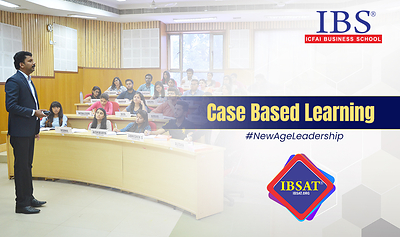
The IBS Case Research Center (IBS CRC) is ranked 3rd globally, alongside institutions such as Harvard Business Publishing and INSEAD. The IBS CRC produces management cases that have a significant impact on management education and are used by institutions around the world.
A top MBA entrance exam is often evaluated by percentile in India when MBA aspirants talk about premier management institutions and their entrance tests. However, a business school’s true value lies in how well it prepares students for the real world. ICFAI Business School (IBS) stands out by going beyond routine entrance test preparation, with its management curriculum built around world-class case-based learning.
These cases are not merely archived; they are an integral part of the 2-year full-time MBA and PGPM curricula across all 9 IBS campuses. This shared ecosystem gives every student direct exposure to real-world business situations similar to those discussed at leading global institutions.
How Case-Based Learning Technically and Practically Sharpens Executive Capabilities
Case-based teaching helps bridge the gap between management theory and real-world decision-making. By working on complex and often unstructured business situations, students learn to analyse incomplete data, identify key business problems and arrive at solutions while working within constraints. Rather than simply absorbing information, students take part in classroom debates and group discussions where they have to present, explain and defend their ideas while responding to questions and views from their peers.
This process develops critical thinking, quantitative analysis, data interpretation and strategic thinking, while also strengthening skills such as active listening, persuasive communication and decision-making under pressure — qualities that are essential when dealing with real-world business challenges.
For a closer look at how case-based learning helps build practical leadership skills, watch these videos from respective IBS campuses, highlighting how ICFAI uses real-world business situations in its curriculum to develop analytical and decision-making abilities:
https://ibsindia.org/StudentTestimonials/CaseStudies.html
Details about the IBSAT 2026 Admissions (MBA / PGPM 2027–2029):
Aspirants evaluating management programmes can consider applying for IBSAT 2026 by ICFAI Business School, an MBA Entrance Exam that offers a streamlined pathway into one of India’s leading business school networks:
- Single Application for 9 Campuses: A single application fee (Rs 1,800) covers consideration across all 9 IBS campuses, including IBS Hyderabad, IBS Bengaluru, IBS Mumbai and IBS Pune.
- Multiple Entrance Pathways: Aspirants can apply through the home-proctored IBSAT 2026 exam or submit valid scores from national tests such as CAT, XAT, NMAT by GMAC™, or GMAT™.
- Merit-Based Scholarships: IBS has allocated 500 merit scholarships worth Rs 10 Crores (Rs 2 Lakhs per student) for top performers in IBSAT 2026 as well as high scorers in CAT, XAT, NMAT and GMAT.
- National Mock Test Series: Candidates can benchmark their performance through National Mock Tests offering cash prizes worth up to Rs 2 Lakhs.
- Comprehensive Selection Process: Admissions assess the overall profile through Micro Presentations and Personal Interviews rather than relying solely on test cut-offs.
- Proven Career Placement Track Record: Supported by a network of over 79,000 alumni, IBS campuses consistently achieve over 90% placement rates, with top compensation packages reaching up to Rs 40 LPA.
ICFAI Business School’s case-based teaching methodology, when combined with an understanding of market trends, helps students prepare for the future and stay updated with changes in the business world. It encourages them to keep learning, stay ahead and understand what is happening in the corporate world.
For more information, visit https://ibsindia.org/.
Contact us:
IBS Admission Office
Plot No. 65, Nagarjuna Hills
Punjagutta, Hyderabad – 500082
Telangana
Ph: 040 – 23440963 (5 lines)
Toll Free: 1800 425 55 66 77
E-mail: ibsat@ibsindia.org
 View original content to download multimedia:https://www.prnewswire.com/in/news-releases/beyond-mba-entrance-exams-how-icfai-business-schools-case-based-learning-prepares-students-for-real-world-business-challenges-302866496.html

1, Sep 2026
ANTARHRIDAY CONNECT – Connecting 500+ Youth with the Soul of Hindustani Classical Music
Kurukshetra & Karnal | September 2026
AntarHriday Connect Global Foundation, in collaboration with State Bank of India (SBI), in support of Kurukshetra University and KVA DAV College for Women, Karnal, with Shreyas Web Media Solutions as Media Partner, successfully concluded its two-city Performance-cum-Workshop Series on Hindustani Classical Music, conducted by renowned Sitar Maestro Pt. Subrata Dey. The initiative was conducted under the guidance of its Chief Patron, Shri Harsh Vardhan Shringla, Hon’ble Member of Parliament.
The two housefull programmes were witnessed by 500+ students, combined with live performances, learning and interaction with accomplished artists.

The initiative also provided six emerging Classical musicians with opportunities for individual, collaborative and ensemble performances—Sahil Sodhi, Pankaj Kumar, Madhav and Illyas Khan with the Madhav group at Kurukshetra; and Shri Shantam with Ms. Ritu on Tanpura at Karnal. Pt. Siddharth Chatterjee on Tabla accompanied Pt. Subrata Dey at both venues, while Guru Rajender Ji accompanied Shri Shantam on Harmonium at Karnal. Their performances were highly appreciated by the audiences.
At Kurukshetra, Shri Rajeev Kumar Bansal, Chief Manager, SBI, Kurukshetra University Branch, was the Guest of Honour, alongside Lt. (Dr.) Virendra Pal Singh, Hon’ble Registrar, Kurukshetra University who graced the occasion as the Chief Guest and Shri Mahesh Joshi, Hon’ble Vice President, Haryana Arts Council was the Special Guest. Along with distinguished guests the event was attended by eminent musicians and faculty members.
At Karnal, Shri Sudhir Mor, Regional Manager & Head, Karnal, SBI, was the Chief Guest, alongside the Principal, KVA DAV College for Women, Karnal, and other distinguished dignitaries.
1, Sep 2026
The Royal Canadian Mint commemorates the 150th anniversary of the Library of Parliament on pure gold and silver collector coins
OTTAWA, ON, Sept. 1, 2026 /PRNewswire/ — A national symbol of knowledge, democracy, and continuity that has graced Ottawa’s Parliament Hill for 150 years is being celebrated on an outstanding new gold and silver collector coins from the Royal Canadian Mint. The only survivor of the 1916 fire that devastated the original centre block is immortalized on a pure gold coin showing a meticulous engraving of its soaring domed interior, which houses a towering statue of Queen Victoria. Its silver sibling features an ultra high-relief engraving of the library’s neo-gothic exterior, framed by coloured fall foliage. These and many other finely crafted collectibles, are available for purchase as of today.

Designed by Canadian artist John Mantha, the reverse of the 2026 $200 Pure Gold Coin – 150th Anniversary of the Library of Parliament features a stylized rendering of the Library of Parliament’s richly ornamented interior. Crowned by a lantern dome, the vaulted ceiling and clerestory are viewed from the base of the Queen Victoria statue, emphasizing the dome’s impressive height, while the circular room’s walls are lined with wood panels, pillars and bookcases.
The reverse design of the 2026 $20 Fine Silver Coin – 150th Anniversary of the Library of Parliament is the work of Canadian artist Tony Bianco. His design consists of a view of the Library of Parliament, located at the rear of the Centre Block building on Parliament Hill in Ottawa, Ontario. The historic octagonal stone building is highlighted by its Ultra High Relief engraving which draws attention to its ornate High Victorian Gothic Revival architecture. Selective colour also adds a profusion of fall colours to the scene, highlighting the tree-covered bluff from which the Library of Parliament rises from the Ottawa River. Above the scroll banner, an open book displays the dates ‘1876’ and ‘2026,’ highlighting the Library’s 150th anniversary.
The obverse of both these coins feature the effigy of His Majesty King Charles III by Canadian artist Steven Rosati.
The Mint is launching several new collector coins in addition to these historic keepsakes, namely:
- The 2026 $20 Fine Silver Coin – 75th Anniversary of the National Ballet of Canada;
- The 2026 $20 Fine Silver Coin – Nature’s Delight The Spider;
- The 2026 $20 Fine Silver Coin – The Eagle;
- The 2026 $200 Pure Gold and $50 Fine Silver Coins – Allegories of Peace and Freedom;
- The 2026 $50 Fine Silver Coin – Triumphant Dragon;
- The 2026 10g 9999 Gold Bar in Proudly Canadian packaging;
- The 2027 Fine Silver Fractional Set – Autumn Leaves;
- The 2026 50-Cent Lenticular Coin – Whimsical Winter; and,
- The 2026 Holiday Gift Set.
Mintages, pricing and full background information on each product can be found on the “Shop” tab of www.mint.ca. These products can be ordered as of today by directly contacting the Royal Canadian Mint at 1-800-267-1871 in Canada, 1-800-268-6468 in the US, or at www.mint.ca. They are also available at the Royal Canadian Mint’s boutiques in Ottawa and Winnipeg, at participating Canada Post outlets, and through the Mint’s global network of dealers and distributors.
Images of the gold and silver collector coins commemorating the 150th anniversary of the Library of Parliament can be found here.
About the Royal Canadian Mint
The Royal Canadian Mint is the Crown corporation responsible for the minting and distribution of Canada’s circulation coins. The Mint is one of the largest and most versatile mints in the world, producing award-winning collector coins, market-leading bullion products, as well as Canada’s prestigious military and civilian honours. As an established London and COMEX Good Delivery refiner, the Mint also offers a full spectrum of best-in-class gold and silver refining services. As an organization that strives to take better care of the environment, to cultivate safe and inclusive workplaces and to make a positive impact on the communities where it operates, the Mint integrates environmental, social and governance practices in every aspect of its operations.
For more information on the Mint, its products and services, visit www.mint.ca. Follow the Mint on LinkedIn, Facebook and Instagram.
 View original content to download multimedia:https://www.prnewswire.co.uk/news-releases/the-royal-canadian-mint-commemorates-the-150th-anniversary-of-the-library-of-parliament-on-pure-gold-and-silver-collector-coins-302866218.html

1, Sep 2026
Richardson Introduces AI Roleplay Built on Hyperbound to Strengthen Seller Readiness
PHILADELPHIA, Sept. 1, 2026 /PRNewswire/ — Richardson Sales Performance, a global leader in sales training and performance improvement, today announced AI Roleplay Built on Hyperbound in Accelerate Prism, giving sellers realistic, AI-powered opportunities to practice critical sales conversations and strengthen readiness before putting new skills to the test with customers.

Sales organizations invest heavily in building seller capability, but sellers often have too few opportunities to apply new skills before they are expected to use them in high-stakes customer conversations. AI Roleplay addresses this gap by bringing realistic, real-time practice directly into the Accelerate Prism learning journey, helping sellers build confidence, sharpen execution, and turn newly learned skills into repeatable behaviors.
Enablement teams can quickly customize scenarios around their organization’s buyers, offerings, and common sales challenges, then deploy relevant practice consistently across roles, regions, and teams. Sellers can rehearse conversations in a realistic environment and receive immediate, actionable feedback grounded in Richardson’s Consultative Selling and Challenger methodologies, connecting every practice experience to the behaviors required for stronger customer conversations.
“Knowing what to do and being ready to do it in a customer conversation are two very different things,” said Kate Lewis, Chief Product Officer of Richardson. “AI Roleplay gives sellers a place to practice, make adjustments, and build confidence before the stakes are real. By embedding that practice within Accelerate Prism, organizations can create a much stronger connection between what sellers learn and how they ultimately perform with customers.”
AI Roleplay sits within the broader Accelerate Prism learning journey, so practice does not happen in isolation. Each experience reinforces the skills and behaviors introduced through customized learning and gives sellers repeated opportunities to apply them in situations that reflect the conversations they face in the field. Practice becomes part of an ongoing cycle of learning, application, feedback, and coaching designed to build durable behavior change.
AI Roleplay is powered by Hyperbound’s leading AI technology and integrated with Richardson’s methodology, learning experiences, and performance approach. This combination gives organizations the flexibility to create realistic practice environments while maintaining a consistent standard for how effective selling behaviors are reinforced and evaluated.
“Practice is one of the most important and historically hardest to scale elements of building sales capability and effectiveness,” said Erin Smith, Chief Revenue Officer of Richardson. “By bringing AI-powered roleplay into Accelerate Prism, we can give every seller more opportunities to practice the conversations that matter, receive feedback tied to proven selling behaviors, and arrive at the customer conversation better prepared to execute.”
For enablement leaders, AI Roleplay provides a scalable way to reinforce priority behaviors across the organization without relying solely on instructor-led practice or manager availability. Teams can tailor scenarios to specific business priorities and seller needs, while managers gain greater clarity into where sellers need additional coaching and reinforcement.
Within Accelerate Prism, those practice experiences can also become part of a more personalized development journey. By connecting realistic AI-powered practice with targeted learning and coaching, organizations can address individual skill gaps, reinforce the behaviors most important to performance, and help managers focus coaching where it can have the greatest impact.
This provides a more scalable approach to seller readiness—one designed to reduce the risk that capability gaps surface for the first time in critical customer interactions and undermine execution, customer trust, pipeline progression, and revenue performance.
For more information, visit www.richardson.com.
About Richardson
Richardson is a global sales training and performance improvement company that helps organizations build confident sales teams and win more business in an increasingly complex buying environment. As buying groups expand, decision-making slows, and AI reshapes how sales teams work, Richardson helps sellers combine consultative skills, disruptive insights, and disciplined execution to move deals forward. Through proven methodologies, expert facilitation, customized learning, AI-enabled reinforcement, and performance analytics, Richardson helps organizations develop the behaviors that improve customer conversations, strengthen pipeline progression, and drive measurable revenue outcomes. The world’s leading sales organizations rely on Richardson to build sales teams that compel buyers to act.
Media Inquiries: Andrea Grodnitzky, andrea.grodnitzky@richardson.com
 View original content to download multimedia:https://www.prnewswire.co.uk/news-releases/richardson-introduces-ai-roleplay-built-on-hyperbound-to-strengthen-seller-readiness-302861357.html

1, Sep 2026
TUMI REVEALS FALL/WINTER 2026 COLLECTION WITH CAMPAIGN FOLLOWING LANDO NORRIS’ PATH TO NEW PEAKS
This season introduces alpine green, dynamic camouflage, and earthy neutrals — capturing the spirit of the ascent.
NEW YORK, Sept. 1, 2026 /PRNewswire/ — TUMI, the international travel, lifestyle, and accessories brand, today launches its Fall/Winter 2026 seasonal campaign and collection, inspired by the rugged terrain of an alpine terrain. The season is grounded by TUMI’s bestselling silhouettes in elemental hues, while new collection TUMI Axis introduces everyday bags for the modern minimalist. The campaign follows two travelers — long-standing TUMI Global Brand Ambassador and McLaren Mastercard Formula 1 Driver Lando Norris and a travel partner— embodying TUMI’s core belief that the pursuit never stops and there is always a new peak to reach.

Directed by Valentin Florian and photographed by Theo Gosselin, Fall/Winter 2026 immediately establishes a sense of place in the striking highlands of Scotland. Here, rugged terrain meets quiet elegance, mirroring the season’s elemental aesthetic.
“There is always another peak to reach, another goal to chase.” Said Lando Norris, “that drive is something TUMI and I share and I feel it in every TUMI bag I carry.”
The latest generation of TUMI Alpha, launched this past spring, evolves with fresh takes on beloved silhouettes rooted in an atmospheric color palette. The season is carried by iconic collections in key colors: Deep Pine across 19 Degree, 19 Degree Front Access, Harrison, and Alpha. Alpine Green and Rosewood add depth to Voyageur Nylon and Leather while a dynamic camouflage print is available in Alpha’s expanded silhouette range. Alpha Bravo, Olas, Adatto, and accessory collections Belden and Nassau are further grounded in earthy neutrals.
Harrison’s signature minimalism finds new visual interest with the addition of woven leather details on key silhouettes and tactical embossed leather in a rich cognac, reinventing minimalism for the modern traveler. The collection expands this season with new color and material stories, from the warmth of Cognac Bombe to the refined texture of Taupe/Black Woven, alongside new smaller carry silhouettes that bring Harrison into everyday life.
Also debuting this season, TUMI Axis introduces a minimalist, streamlined collection built for modern everyday performance. Clean in design and lightweight in construction, Axis brings an everything-in-place organization system to four versatile silhouettes — available in Black, Navy, Cement, and Black Reflective.
Carrying forward TUMI’s women’s offering, Voyageur Leather, the newly introduced Made in Italy Adatto Tote, and new silhouettes across Olas and Agent provide the modern woman with styles crafted for her own ascent. Each piece is designed for the woman who reaches her own peaks perfect for any journey. on her own terms.
“This season is inspired by the quiet confidence of the Alps,” said Victor Sanz, TUMI Creative Director. “Rather than chasing excess, we wanted to explore the idea of elevation through thoughtful design. The collection reflects a sense of calm, precision, and purpose, where every detail has intention and every product is engineered to perform beautifully. It’s a reminder that true luxury isn’t about being louder, it’s about being better. We wanted to translate this feeling through this fall collection.”
More than a seasonal campaign, Fall/Winter 2026 is a global brand moment. Across key markets, TUMI will bring its alpine world to life through immersive experiences, activations, and content that blur the line between aspiration and function. At TUMI, performance and luxury have never been mutually exclusive. They are the standard. This season, that standard reaches new heights.
PRODUCT HIGHLIGHTS
19 Degree Collection
An alpine-inspired polycarbonate collection that brings a sense of escape to modern travel. Each piece balances sculptural design with lightweight durability — maintaining TUMI’s focus on performance, function, and effortless movement.
Available On: Expandable Carry-On, Large Carry-On, Large Expandable Checked, Front Access Expandable Carry-On, Large Front Access Expandable Carry-On, Medium Front Access Expandable Checked, and Large Front Access Expandable Checked
Colors: Pine and Salt
Voyageur Q Tote
A versatile everyday tote designed to move seamlessly between travel and daily life. Now crafted in supple leather with refined hardware, the Q-Tote elevates its everyday appeal — pairing premium materials with practical organization and an effortless silhouette suited for work, weekends, and on-the-go travel.
Colors: Black/Gunmetal, Black/Gold, Rosewood, Sienna
TUMI Alpha Collection
The latest generation of Alpha, launched this past spring, arrives in an atmospheric Fall/Winter palette of Deep Pine, Forest Camo, and Grey Reflective across key silhouettes: the Dual Access Carry-On, Double Expansion Duffel, and TUMI Brief Pack™.
Colors: Deep Pine, Forest Camo, Grey Reflective
TUMI Harrison Collection
Harrison expands for Fall 2026 with new materials, colorways, and silhouettes for the modern minimalist. Cognac Bombe joins permanently, while Taupe/Black Woven brings European-inspired woven construction to the collection’s clean, architectural lines. Two new silhouettes — the Macri Small Crossbody and Thatcher Sling Backpack — expand the ways Harrison can be worn.
Colors: Cognac Bombe, Taupe/Black Woven, Deep Pine Bombe, Ink/Suede
About TUMI
Since 1975, TUMI has been creating world-class business, travel, and performance luxury essentials, designed to upgrade, uncomplicate and beautify all aspects of life on the move. Blending flawless functionality with a spirit of ingenuity, we’re committed to empowering journeys as a lifelong partner to movers and makers in pursuit of their passions. For more about TUMI, visit TUMI.com and follow on Instagram, TikTok, Facebook, and YouTube.
TUMI and TUMI logo are registered trademarks of Tumi, Inc. © 2026 Tumi, Inc.
TUMI Media Contacts
TUMI PR | pr@tumi.com
Karla Otto for TUMI | tumi@karlaotto.com


 View original content to download multimedia:https://www.prnewswire.co.uk/news-releases/tumi-reveals-fallwinter-2026-collection-with-campaign-following-lando-norris-path-to-new-peaks-302845947.html

1, Sep 2026
Bull Moose Tube Company Completes Acquisition of Hanna Steel Corporation
Transaction expands Bull Moose Tube’s manufacturing footprint and strengthens its ability to serve customers across key end markets
CHESTERFIELD, Mo., Sept. 1, 2026 /PRNewswire/ — Bull Moose Tube Company (“Bull Moose”), a leading manufacturer of steel pipe and tubing products, today announced the successful completion of its acquisition of Hanna Steel Corporation (“Hanna”), a leading producer of structural and mechanical steel tubing with operations in Alabama and Illinois, a coil-coating facility in Alabama, and Hanna Truck Line, Inc. Hanna Steel will now operate as a division of Bull Moose Tube Company.
“We are pleased to officially welcome Hanna Steel to the Bull Moose family,” said John Krupinski, Chief Executive Officer of Bull Moose Tube Company. “I would like to thank everyone who helped make this transaction possible. We look forward to this next chapter together.”
Jill Cunningham, Vice Chair of Hanna Steel Corporation, added, “On behalf of the Hanna family, I would like to thank our employees, customers, suppliers, and advisors for their support throughout this process. We are proud of what Hanna has accomplished, and confident Bull Moose Tube is the right long-term home for our business and our people.”
Chairman of Bull Moose Tube Company, the Hon. Ambar Paul, said, “My father, The Rt. Hon. Lord Swraj Paul, built our businesses on integrity, partnership, and long-term stewardship. We are honored to welcome Hanna Steel to the Bull Moose family and look forward to continuing its proud tradition of serving customers and communities.”
Brown Gibbons Lang & Company (BGL) served as exclusive financial advisor to Bull Moose Tube Company, and Spencer Fane LLP acted as legal counsel.
Jefferies LLC served as exclusive financial advisor to Hanna Steel Corporation, and Bradley Arant Boult Cummings LLP acted as legal counsel.
About Bull Moose Tube Company
Bull Moose Tube Company is part of the Caparo Bull Moose Group of Companies. The company operates manufacturing facilities across the United States and offers one of the largest ranges of welded steel tubing in North America. Bull Moose Tube products serve a wide variety of applications including commercial construction, infrastructure, fire protection, heavy equipment, transportation, and engineered products.
About Hanna Steel Corporation
Hanna Steel Corporation is headquartered in Hoover, Alabama, with tubing operations in Tuscaloosa, Alabama, and Pekin, Illinois. The company also operates a coil-coating facility in Fairfield, Alabama, and Hanna Truck Line, its in-house transportation business.
CONTACT:
marketing@bullmooseindustries.com
 View original content:https://www.prnewswire.co.uk/news-releases/bull-moose-tube-company-completes-acquisition-of-hanna-steel-corporation-302865322.html

1, Sep 2026
Russell Reynolds Associates launches The Leadership Lab to help organizations make better leadership decisions
New capability combines leadership science, proprietary data, advanced analytics, AI, and human expertise to strengthen decisions about leaders, teams, and organizational performance
NEW YORK, Sept. 1, 2026 /PRNewswire/ — Russell Reynolds Associates (RRA), a global leadership advisory firm, today announced the launch of The Leadership Lab, an integrated research and innovation capability designed to help organizations predict leadership performance and bring greater analytical rigor and clarity to their most complex leadership decisions.

The Leadership Lab combines RRA’s experience advising boards, CEOs, and senior leaders with leadership science, advanced analytics, AI, applied research, and proprietary leadership data.
It will turn research and data into practical insights, intellectual property, analytical models, diagnostics, and evidence-based solutions that can be applied directly to client challenges.
The Leadership Lab will work alongside RRA consultants and client teams to strengthen executive and team assessment, benchmark leadership capabilities and performance, and deliver custom research and analytics projects tailored to complex leadership and organizational challenges.
Dr. Tomas Chamorro-Premuzic, Chief Science Officer at RRA, said: “Organizations have access to more leadership data than ever before, but the real challenge is knowing how to interpret it and act on it. The Leadership Lab brings together science, data, technology, and deep leadership expertise to help clients move from complex questions to better-informed decisions and practical action.”
The Leadership Lab brings together leadership advisors, researchers, behavioral scientists, data scientists, and analytics specialists, supported by an Academic Advisory Board comprising leading scholars and experts, including:
- Amy C. Edmondson, Novartis Professor of Leadership and Management, Harvard Business School
- Isabel Fernandez-Mateo, Adecco Professor of Strategy and Entrepreneurship and Professor of Strategy and Entrepreneurship, London Business School
- Emma Harrington, Professor of Economics at the University of Virginia
- Sunny Lee, Associate Professor, UCL School of Management
- Paul McCarthy, Industry Fellow, School of Computer Science Data Science Institute, University of Technology Sydney
“The Leadership Lab is designed to connect rigorous research with the decisions clients need to make in the real world,” said Gabrielle Lieberman, Director of The Leadership Lab at RRA. “By bringing together researchers, behavioral scientists, data specialists, leadership advisors, and external academics, we can look at complex challenges from multiple perspectives while staying focused on practical client impact.”
To learn more about the Leadership Lab, visit: https://www.russellreynolds.com/en/capabilities/how-do-i-boost-the-performance-of-leaders-and-teams/predict-leadership-performance
About Russell Reynolds Associates
Russell Reynolds Associates is a global leadership advisory firm. Our 500+ consultants in 47 offices work with public, private, and nonprofit organizations across all industries and regions. We help our clients build teams of transformational leaders who can meet today’s challenges and anticipate the digital, economic, sustainability, and political trends that are reshaping the global business environment. From helping boards with their structure, culture, and effectiveness to identifying, assessing and defining the best leadership for organizations, our teams bring their decades of expertise to help clients address their most complex leadership issues. We exist to improve the way the world is led. Find out more at www.russellreynolds.com.
Media contact
Amy Scissons
Chief Marketing Officer
amy.scissons@russellreynolds.com
 View original content to download multimedia:https://www.prnewswire.co.uk/news-releases/russell-reynolds-associates-launches-the-leadership-lab-to-help-organizations-make-better-leadership-decisions-302865655.html

1, Sep 2026
Super MOXI® by Sciton Ushers in a New Era of Head-to-Toe Skin Revitalization
PALO ALTO, Calif., Sept. 1, 2026 /PRNewswire/ — Sciton Inc., a pioneer and leader in medical and aesthetic laser and light-based technologies, today announced the launch of Super MOXI® with High Density (HD) Delivery™, a major evolution of its award-winning MOXI® laser that brings new speed, versatility, and possibilities to one of Sciton’s most trusted treatments.

Super MOXI expands what’s possible with MOXI. Harnessing the power of twin beams for treatments up to twice as fast and a more powerful 16W diode to efficiently treat larger areas, Super MOXI with HD Delivery opens the door to head-to-toe skin revitalization. Available on the portable mJOULE™ and highly versatile JOULE X® platforms, it delivers expanded treatment settings and new ScitonStaX™ combinations, giving providers more ways to treat, customize, and grow.
Expanded settings support patients from prevention and maintenance to advanced skin revitalization and skin-quality correction. Quick Start presets provide a starting point, while customizable energy and density settings give providers greater clinical control based on patient goals, treatment area, and desired intensity.
New ScitonStaX combinations pair Super MOXI with BBL® HEROic™, ClearSilk®, and ProFractional™, or incorporate it into treatment plans following corrective treatments such as Contour TRL™.
“As demand for face and body treatments continues to grow, providers need technology that can keep pace,” said Robb Brindley, Sciton’s Executive Vice President of Sales & Marketing. “Super MOXI delivers the speed, power, and flexibility to meet that demand while building on a treatment providers already know and trust. It’s how we approach innovation at Sciton: listening to our customers, anticipating what’s next, and ensuring our technology evolves with the needs of today’s practices.”
For providers, that versatility translates directly to the treatment room.
“Sciton’s breakthrough HD Delivery system leverages a twin-beam architecture to optimize high-density energy deposition, dramatically reducing treatment durations,” said Sherrif F. Ibrahim, MD, PhD, a board-certified dermatologist in Rochester, New York. “This rapid energy throughput allows us to effortlessly target broad anatomical sites, from the face and neck to the chest, hands, arms, and back. Speed paired with unprecedented versatility allows providers to fine-tune protocols ranging from gentle, low-energy treatments for early intervention to more advanced correction and overall skin-quality improvement. Now equipped with Super MOXI, BBL HEROic, and HALO® TRIBRID™, Sciton platforms offer high-velocity, full-body clinical transformations that were previously unimaginable.”
To learn more, visit supermoxi.com.
About Sciton
Sciton, Inc., headquartered in Palo Alto, California, is a forward-thinking, employee-owned medical device company founded in 1997 by industry visionaries James Hobart, PhD, and Daniel K. Negus, PhD. Renowned for delivering high-quality laser and light solutions, Sciton’s product portfolio spans a broad range of medical and aesthetic applications, including women’s health, skin revitalization, resurfacing, phototherapy, vascular and pigmented lesions, scar revision, acne treatment, and hair reduction. With robust direct operations in the United States, Canada, the United Kingdom, Switzerland, Germany, Australia, Japan, Korea, Ireland, the Netherlands, France, and Chile, and a strategic distribution network in more than 45 countries, Sciton’s global impact continues to expand, setting new standards in medical and aesthetic excellence.
 View original content to download multimedia:https://www.prnewswire.co.uk/news-releases/super-moxi-by-sciton-ushers-in-a-new-era-of-head-to-toe-skin-revitalization-302865813.html

1, Sep 2026
QC Ware and IonQ Demonstrate High-Precision Hybrid Quantum Workflow for Drug Discovery
Joint test on IonQ Forte hardware lands within 4% of benchmark, clearing the chemical-accuracy bar for enzyme active-site modeling via Amazon Braket
PALO ALTO, Calif., Sept. 1, 2026 /PRNewswire/ — QC Ware today announced a technology demonstration of a hybrid quantum-classical chemistry workflow using its Promethium® platform and IonQ’s Forte trapped-ion quantum computer via Amazon Braket.

The demonstration modeled the heme active site of cytochrome P450nor, a nitric oxide reductase in the cytochrome P450 superfamily — the same superfamily whose monooxygenase members carry out most human drug metabolism. By pairing GPU-accelerated classical pre-processing in Promethium with quantum measurements on IonQ Forte, the workflow calculated electrostatic interaction energy within 0.5 kcal/mol (~4%) of classical benchmarks. This falls well inside the 1 kcal/mol threshold for chemical accuracy and delivers more than double the accuracy of the standard classical mean-field method. For the biopharma industry, more accurately calculating electrostatic interaction energy, a major factor in how tightly a drug candidate binds to its target, at complex metal centers such as the iron site in P450nor, could improve candidate ranking and help identify metabolic risks earlier in the drug-discovery process.
“Running the same hybrid workflow on IonQ’s trapped-ion architecture, following our recent demonstration on other quantum hardware, shows that Promethium’s approach to combining classical and quantum computing is not tied to a single type of quantum hardware,” said Dr. Kin-Joe Sham, Co-Founder and COO at QC Ware. “We believe this hardware-agnostic approach gives researchers flexibility as quantum computing continues to mature.”
“Every month spent advancing a drug candidate on flawed metabolic data is wasted time and mounting risk,” said Scott Millard, Chief Business Officer at IonQ. “QC Ware and IonQ have shown that hybrid quantum-classical workflows can predict certain binding behavior accurately enough for discovery teams to confidently rank candidates and catch toxicity risks early. We believe that’s real quantum impact on real health outcomes. I can’t wait to see what this partnership delivers.”
Technical Highlights:
- Promethium Preprocessing: Promethium built and preprocessed a complex 115-atom model of the P450nor active site containing over 1,000 molecular orbitals. It automatically isolated the strongly correlated region down to a 4-orbital active space mapped onto 8 qubits, which IonQ Forte measured in a single basis before returning results for Promethium to compute final interaction energies classically.
- Hardware Architecture: IonQ Forte’s all-to-all qubit connectivity enabled complex two-qubit entangling gates to execute as designed without the routing overhead or additional error typical of limited-connectivity architectures.
- Biopharma Impact: Accurately predicting binding energy at iron sites in enzymes like P450nor could enable pharmaceutical researchers to better rank drug candidates and identify metabolic risks earlier in the R&D pipeline.
Supported in part by Amazon Web Services (AWS) cloud compute credits, the demonstration highlights how QC Ware’s cloud-native Promethium® platform can potentially allow classical GPU clusters to seamlessly connect with cloud quantum computing resources on Amazon Braket.
Available today, Promethium’s GPU-native architecture enables researchers to apply quantum chemistry across larger molecular systems and more compounds than has traditionally been practical. For selected workloads, Promethium runs demanding calculations up to 20× faster than conventional CPU-based DFT platforms, helping researchers generate molecular-level insights in hours instead of weeks and accelerating decision-making across drug discovery, catalysis, and materials science.
Media contact: kj.sham@qcware.com
About QC Ware
QC Ware is a quantum computing software company. We are developing applications that unlock the power of quantum computing for drug discovery, material design and other industry verticals. Our Promethium platform provides GPU-accelerated quantum chemistry for molecular modeling and drug discovery, helping customers to make better discovery decisions today while exploring the hybrid quantum-classical workflows of tomorrow. QC Ware also organizes and hosts Q2B quantum computing conferences in Japan, Europe and the United States.
About IonQ
IonQ, Inc. [NYSE: IONQ] is the world’s leading quantum platform and foundry – delivering integrated quantum solutions across computing, networking, sensing, and security. IonQ’s newest generation of quantum computers, the IonQ Tempo, is the latest in a line of cutting-edge systems. Earlier systems have helped customers and partners including Amazon Web Services, AstraZeneca, and NVIDIA achieve a 20x performance increase over previous quantum solutions and accelerate innovation in drug discovery, materials science, financial modeling, logistics, cybersecurity, and defense. In 2025, the company achieved 99.99% two-qubit gate fidelity, setting a world record in quantum computing performance.
Headquartered in College Park, Maryland, IonQ has operations across North America, Latin America, EMEA, and APAC. Our quantum computing services have been available through all major cloud providers since 2021, while we also meet the needs of networking and sensing customers across land, sea, air, and space. IonQ is making quantum platforms more accessible and impactful than ever before. Learn more at IonQ.com.
Forward-Looking Statements
This press release includes forward-looking statements relating to QC Ware’s expectations, hopes, beliefs, intentions or strategies regarding the future. Forward-looking statements may be identified by the use of words such as “anticipate,” “believe,” “continue,” “could,” “estimate,” “expect,” “forecast,” “intend,” “may,” “plan,” “potential,” “project,” “seek,” “should,” “will,” “would” and similar expressions that predict or indicate future events or trends or that are not statements of historical matters, but the absence of these words does not mean that a statement is not forward-looking. These forward-looking statements include, but are not limited to, statements regarding the impact of hybrid quantum-classical chemistry workflows on the drug discovery process and the potential for Promethium to drive such impact. These statements are based on various assumptions and on the current expectations of QC Ware’s management and are not predictions of actual performance. These forward-looking statements are subject to a number of risks and uncertainties, including changes in business, market, financial, political and legal conditions; the rapid evolution of quantum computing and flaws or errors in Promethium or flaws in or misuse of quantum computing in general; and risks related to working with quantum hardware providers.
 View original content to download multimedia:https://www.prnewswire.co.uk/news-releases/qc-ware-and-ionq-demonstrate-high-precision-hybrid-quantum-workflow-for-drug-discovery-302866098.html



