


12, Aug 2026
Chandigarh University’s Architecture Students Secure 217 Placements in Leading Architecture Firms
Architecture Students Placed in Leading Firms Shapoorji Pallonji, Mahindra & Mahindra, Stonex & Tata Consulting Engineers; Students Secure Package of ₹12 LPA
University students launch 5 Entrepreneurial architect Ventures
CHANDIGARH, India, Aug. 12, 2026 /PRNewswire/ — The rapidly evolving architecture, construction, infrastructure and design sectors have given rise to the demand for specially trained professionals who can combine their design thinking with technical competence, practical exposure and industry readiness.
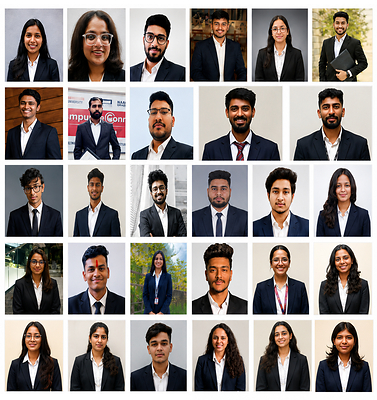
Aligned with the evolving needs of the architecture and built-environment sector, the University Institute of Architecture (UIA) at Chandigarh University has integrated industry exposure and experiential learning into its Bachelor of Architecture programme with 217 students securing placements over the last four years.
The placement performance of students of Architecture at Chandigarh University has remained consistently strong with 52 students placed from the 2023 batch, 49 from the 2024 batch, 56 from the 2025 batch and 60 from the 2026 batch, reflecting a steady rise in the number of graduates entering professional careers. The department has also recorded a highest annual package of ₹12 lakh, showcasing the professional competence and industry acceptance of its graduates.
The UIA students have secured opportunities with leading organisations across architecture, infrastructure, construction, design, real estate and allied sectors, including Tata Consulting Engineers, Shapoorji Pallonji, Mahindra & Mahindra, Stonex, FivD, Intec Infra, Damsun India, The Wave Group, Confluence Consultancy Services, Sanrachna Builders, CtrlS Group of Companies and Gauri Khan Design, among others.
Among the most notable placement achievements, Satyabrata Mohanty, one of the students at UIA, Chandigarh University secured a position as Junior Architect with CtrlS Group of Companies with an annual package of ₹12 lakh, emerging as one of the highest paid UIA graduates. Riya Thakur secured a job offer from Stonex at an annual package of ₹9 lakh while Gantavya joined Intec Infra at ₹7.20 lakh per annum. Shriyanshi Tiwari secured an opportunity with FivD, while several other graduates have obtained positions with leading architecture, infrastructure and design organisations.
The department’s placement engagement with industry has included Tata Consulting Engineers in 2023; Sanrachna Builders and Cargaison Express in 2024 and India Eye Institute (MAQ Software), Mahindra & Mahindra, Sanrachna Builders, Confluence Consultancy Services, Cosmo Sunshield, Arkance, Damsun India, Homevista Decor and Furnishing (HomeLane) and Stonex India in 2025. The 2026 placement cycle further saw participation from DLF, Value Drive Technology, The Wave Group, Cosmo Sunshield, Studiokon Venture, Gold Plus Glass Industry, FivD, Stonex, UltraTech and Intec Infra. UIA graduates are working as architects, senior architects, project architects, designer architects and junior architects across cities including Delhi, Gurugram, Mumbai, Pune, Bengaluru, Ludhiana, Chandigarh and Mohali among others.
Graduates have also moved into leadership and multidisciplinary roles, with Shubham Popli serving as CEO of ARC 18 and several alumni establishing their own professional ventures. Berisha Peral is working as Senior Architect with Tata Consulting Engineers in Bengaluru at a current package of ₹7 lakh while Arshi Nigam, also associated with Tata Consulting Engineers, is working as Senior Architect in Ludhiana at ₹7 lakh. Gunjan is working as Designer Architect with Spacewood in Delhi at ₹9 lakh, while Vedant Tandon is serving as Project Architect with Shapoorji Pallonji in Pune at ₹7 lakh. Shreyash Sachdeva has progressed to the position of Senior Architect at Gauri Khan Design in Mumbai with a current package of ₹12 lakh. UIA’s placement outcomes are complemented by a strong emphasis on mandatory professional internship, with the 24-week internship providing students an opportunity to gain hands-on exposure to professional architectural practice, government organisations and multidisciplinary consultancies. A total of 99 students completed their internships in 2025 and 2026.
Among other notable student achievements, Khushi Garg, one of the students received Best Thesis Award at the Zonal NASA Competition for her thesis ‘Subhuti – Rehabilitation Center for Women in the serene realm of Vrindavan’, emerging as the winner amidst entries from more than 40 architecture institutions.
Another notable student project, Deepti Goel’s ‘Azure Ramganga Promenade’, was presented to the Mayor of Bareilly where it received wide appreciation and was subsequently referred to the Tourism Department for consideration. The project was also featured in the Ethos Empowers Thesis Feature 2026.
Biswajit Das, recipient of the Indian Institute of Architects (IIA) Medal 2025 for Best Outgoing Student, has established himself as the Co-founder of ARKASA – Space Architecture Design Research Labs and serves as an ISRO Space Tutor.
Beyond conventional architectural sector, Chandigarh University students have also entered government service with Jaspreet Singh, Anurag Kumar and Mohit Kapoor joining the Indian Army, with Mohit Kapoor serving as a Lieutenant and Jaspreet Singh serving as a Captain.
The entrepreneurial achievements of students of Architecture department of Chandigarh University further strengthen the institute’s emphasis on independent professional practice and innovation. The graduates from UIA department including Kalava, Biswajit, Arkajit, Anurag and Rahul Garg have established or are associated with professional ventures such as Terra Space Studio, ARKASA (Space Architecture), The Form & Void Studio, The Vastushilpa and Dwarabyra.
The institute continues to strengthen academic and professional engagement through collaborations with leading organisations and professional bodies including the Indian Green Building Council (IGBC), ASHRAE, Indian Institute of Architects (IIA), Punjab Energy Development Agency (PEDA), Arkance, NPC India and Architectural Preservation Studio, New York. These collaborations provide students and faculty opportunities for professional development, research, industry interaction, exposure to emerging practices and international academic engagement.
The combination of sustained placement performance, structured professional internships, industry-led recruitment, design achievements, entrepreneurial initiatives and professional collaborations has strengthened the University Institute of Architecture’s focus on preparing graduates for the evolving demands of the architecture and built-environment sector. With graduates progressing across architecture firms, infrastructure companies, corporate organizations, government services and independent design practices, UIA continues to expand the career opportunities available to its students.
About Chandigarh University
Chandigarh University is a NAAC A+ Grade University and QS World Ranked University. This autonomous educational institution is approved by UGC and is located near Chandigarh in the state of Punjab. It is the youngest university in India and the only private university in Punjab to be honoured with A+ Grade by NAAC (National Assessment and Accreditation Council). CU offers more than 109 UG and PG programs in the field of engineering, management, pharmacy, law, architecture, journalism, animation, hotel management, commerce, and others. It has been awarded as The University with Best Placements by WCRC.
Website address: https://www.cuchd.in/
 View original content to download multimedia:https://www.prnewswire.com/in/news-releases/chandigarh-universitys-architecture-students-secure-217-placements-in-leading-architecture-firms-302849573.html

- 0
- By Sai Krishna

12, Aug 2026
Mana Unveils The Right Life’s Forest Province with ₹3,101 Crore GDV, Strengthening Its Nature-Led Luxury Portfolio in Bengaluru
~A thoughtfully designed 10-acre residential province centred around a 1+acre urban forest, blending community living, green spaces, and contemporary high-rise design~
BENGALURU, India, Aug. 12, 2026 /PRNewswire/ — As homebuyers increasingly seek residences that go beyond conventional apartment living, there is a growing preference for integrated townships that offer a balanced lifestyle combining nature, community, safety, and long-term value. In Bengaluru, this shift is driving demand for developments that seamlessly integrate green spaces, social infrastructure, and modern conveniences within a single, cohesive ecosystem.

Aligned with this evolving aspiration, Mana Skanda has launched Forest Province, a premium 10-acre residential enclave within The Right Life, a large master-planned township. With an estimated Gross Development Value (GDV) of ₹3,101 crore, the project will comprise approximately 1,052 Units with a total saleable area of around 2,434,025 sq. ft. Envisioned as a private and serene province within a vibrant urban ecosystem, Forest Province brings together nature-led planning, high-rise living and community-focused design.
An Integrated Address Within a Larger Ecosystem
Strategically positioned within a 100+ acre integrated development, Forest Province offers residents the advantage of living within a well-connected and self-sustained environment. Located close to the township’s grand entrance and upcoming office developments, the enclave ensures enhanced live-work convenience while maintaining a sense of exclusivity and privacy.
East Bengaluru’s Next Phase of Residential Evolution
Once driven primarily by IT-led growth, East Bengaluru has transformed into a well-rounded residential corridor supported by strong social infrastructure, educational institutions, healthcare facilities, and retail destinations. This evolution continues to attract homebuyers seeking integrated communities that offer both connectivity and a high quality of life.
Commenting on the launch, D. Kishore Reddy, CMD, Mana Projects, said: “Forest Province is envisioned as a space where residents can reconnect with nature without stepping away from the city. With the central forest, pedestrian-first design, and thoughtfully planned community spaces, the development reflects our belief that modern luxury lies in creating environments that are calm, connected, and designed for long-term well-being.”
A Forest-Led Living Experience
At the heart of Forest Province lies a 1+ acre ground-level forest—an expansive green zone equivalent to nearly 15 tennis courts—designed as a living ecological core. With over 1,000 trees, shrubs, and plants, the forest is curated to reflect natural biodiversity, creating a dense, evolving habitat that enhances air quality, visual appeal, and overall well-being. Inspired by the Miyawaki forest approach, the dense green cover also helps create a cooler, quieter microclimate while bringing nature closer to everyday living. This nature-first approach extends across the development through landscaped zones and open spaces, creating a seamless connection between residents and their surroundings.
High-Rise Living, Reimagined for Space and Light
Forest Province features eight residential towers rising up to 33 floors, with just four residences per floor, ensuring privacy and exclusivity. The homes comprise large-format 3, 3.5 & 4BHK configurations ranging from approximately 1,700 to 2,800 sq. ft., designed to maximise space, natural light, and ventilation. Contemporary layouts, larger windows, and refined interiors offer a living experience that balances comfort with functionality.
A key highlight of the development is its vehicle-free podium design, which prioritises safety, walkability, and cleaner living environments. Vehicular movement is directed to basement levels through dedicated ramps, allowing the podium to remain free of traffic, creating quieter and more community-friendly spaces. Carefully planned circulation ensures smooth movement for both pedestrians and vehicles.
A Multi-Layered Club and Lifestyle Offering
Spanning over 46,000 sq. ft., the development offers three distinct clubhouses designed to cater to diverse lifestyle needs:
- Club One: A ground-level clubhouse integrating indoor recreation, swimming pool access, and direct connection to the central forest
- Sky Club: An elevated lifestyle space offering panoramic views, thoughtfully divided into:
- Sun Club: Fitness, co-working, and wellness spaces including gym, yoga areas, and library
- Moon Club: Social and leisure experiences including spa, party zones, performance spaces, and lounges
Together, these spaces create a comprehensive ecosystem for fitness, recreation, work, and social interaction.
A Community-Centric, Future-Ready Living Experience
Forest Province is designed to foster an active and socially engaging lifestyle, with outdoor amenities such as sports courts, fitness zones, children’s play areas, and landscaped spaces that extend living beyond individual homes. As a private enclave within a larger township, it offers a balance of exclusivity and connectivity, bringing together nature, design, and everyday convenience in a calm, well-connected urban setting. Thoughtfully planned spaces encourage everyday interactions while also offering areas for relaxation and quiet reflection, creating a holistic living experience.
About Mana Projects:
Founded in 2000 by Mr. D. Kishore Reddy, Mana Projects has been crafting thoughtfully designed living experiences across Bengaluru for over 26 years. Guided by the philosophy of “The Art of Living Brilliantly,” Mana Projects believes a home is where architecture meets intuition, balancing proportion, natural light and timeless design. With a strong presence across key growth corridors, the brand focuses on creating future-ready communities that elevate everyday living through thoughtful planning, quality construction and enduring elegance.
 View original content to download multimedia:https://www.prnewswire.com/in/news-releases/mana-unveils-the-right-lifes-forest-province-with-3-101-crore-gdv-strengthening-its-nature-led-luxury-portfolio-in-bengaluru-302849523.html

12, Aug 2026
nubia Neo 5 Max with 7.5-Inch Display Lands as a New PadPhone Category
SHENZHEN, China, Aug. 12, 2026 /PRNewswire/ — nubia, a highly personalized and lifestyle smartphone brand committed to bringing pro-level gaming to everyone, announced the global rollout of nubia Neo 5 Max, introducing a new PadPhone category that combines the expansive viewing experience of a compact tablet with the portable control of a gaming console. Built around a segment-leading 7.5-inch display, nubia Neo 5 Max brings together pad-level immersion, console-level control, immersive audio-visual feedback and AI-powered gaming assistance in one versatile device for gaming, entertainment and everyday productivity.

“As games become more immersive and young players spend more of their digital lives on mobile devices, the gaming smartphone needs to evolve into a true personal hub,” said Bai Keke, Vice President of ZTE. “At nubia, we are committed to making flagship-level gaming technologies accessible to a broader audience. nubia Neo 5 Max brings the PadPhone concept to life by integrating industry-leading control engineering, a pioneering thermal architecture and flagship-level tuning, where players can play harder, watch bigger and do more wherever they are.”
All-in-One Hub with 7.5-inch Display Leads the New Way for Gaming and Living
nubia Neo 5 Max brings the PadPhone concept with its segment-leading 7.5-inch 1.5K display, delivering 27% more visible area than nubia Neo 5 5G. Featuring an 18.7:9 golden aspect ratio for a more focused gaming experience, the device enlarges enemy outlines by 40% in FPS games. It carries SGS-certified hardware-level eye-care certification for full-scene low blue light and true DC dimming, combined with self-developed eye-caring software functions and smart eye-use reminders, keeping players comfortable every round.
Multiple adaptive modes unlock full potentials of the expansive 7.5-inch display, transforming it into a versatile all-in-one hub. Landscape Mode with protective case stand converts it into a personal mini-TV. E-Ink Mode delivers ink-screen-like visuals for eye-comfort reading, while Controller and Streaming Modes provide responsive, low-latency AAA game casting. For ultimate efficiency, Floating Window and Split-Screen Modes enable seamless multitasking.
Console-Level Control Meets Full-Sensory Immersion
nubia Neo 5 Max features Neo Triggers 5.0 with a 990Hz sampling rate and 4.7ms hardware response latency for fast execution across aiming, firing, moving, and skill activation in a flexible four-finger mode. Designed around C-grip holding style, its 7.5-inch golden control ratio expands the touch area by 27% and widens key spacing by 21% over conventional layouts. Magic Touch 3.0 filters accidental inputs from wet or oily fingers, while a high-precision gyroscope sharpens rotational control, and the 360° Game Antenna ensures stable connectivity.
Dual real symmetrical speakers deliver 300% louder volume accompanied by an anti-obstruction audio design. Powered by Dolby Atmos immersive audio, nubia Neo 5 Max delivers a richer sound experience with incredible depth, clarity, and details that connects users more deeply with their favorite games, movies, music, and more. Z-axis linear motor and RGB Eagle Eye lighting complete the gaming experience by providing haptic feedback for in-game actions and dynamic RGB lighting effects.
30,000mm²+ Cooling System and 7,100mAh Dual-Cell Battery for Marathon Gaming
nubia Neo 5 Max pairs a MediaTek Dimensity 7100 6nm chipset, LPDDR5X memory and UFS 2.2 storage with the NeoTurbo Engine for robust performance, steady frame rates and power efficiency. This model is built with a pioneering 30,000mm²+ cooling system that improves heat-dissipation efficiency by 140% through a dual-layer capillary vapor chamber that expands vapor-liquid circulation pathways and a 3D stamped VC panel for faster heat dissipation. AI Game Space 5.0 provides quick access to gaming tools and intelligent assistance. AI Copilot Demi 2.0 acts as a gaming coach and companion, offering real-time guidance, battle updates and game-related support for players.
A 7,100mAh super dual-cell battery distributes power more efficiently, helping reduce heat and support long-term battery reliability during demanding use. While gaming, Bypass Charging powers the device directly without heating the battery. Even at 5% battery, 5% Extreme Mode keeps players gaming for up to 22.9 minutes.
nubia Neo 5 Max is available first in Southeast Asia as part of its global rollout, coming in Shadow Black, Titanium Gold, and Cyber Silver, offering configurations of 20GB (8GB + 12GB) RAM with 256GB storage or 512GB storage.
MEDIA INQUIRIES:
ZTE Corporation
Communications
Email: ZTE.press.release@zte.com.cn

 View original content to download multimedia:https://www.prnewswire.co.uk/news-releases/nubia-neo-5-max-with-7-5-inch-display-lands-as-a-new-padphone-category-302849544.html

12, Aug 2026
Compunnel Doubles Down on its Digital Business to Lead the Enterprise AI Shift
The AI-native digital engineering business unifies four engineering disciplines under its AI-OS™ framework to help enterprises move from AI pilots to measurable, at-scale business value.
NOIDA, India, Aug. 12, 2026 /PRNewswire/ — Compunnel today announced the restructuring of Compunnel Digital, its digital engineering business, repositioned as an AI-native engineering partner for global enterprises. The repositioning consolidates four engineering disciplines – Applied AI Engineering, Data Platforms & Intelligence, Cloud & Platform Engineering, and Autonomous Quality Engineering – under AI-OS™, the company’s integrated enterprise delivery framework, to help clients move from fragmented AI pilots to industrialized, measurable business value.

The business will deliver this through what it terms an AI-to-Value Factory: a delivery model in which intelligence is engineered, governed, scaled, and continuously measured, rather than deployed as isolated experiments. The approach embeds AI into the software lifecycle by design and scopes every engagement against defined business outcomes.
Market context
Enterprises across sectors are shifting investment from proofs of concept to production-grade AI that must operate under real compliance, resilience, and cost requirements. Compunnel Digital’s repositioning targets that shift, moving clients from digital transformation toward intelligent engineering – where AI, data, automation, platforms, and governance are delivered as one operating capability.
Industry relevance
The repositioning maps to sector-specific outcomes across the industries Compunnel Digital serves:
- Healthcare & Life Sciences: improving compliance, clinical operations, connected health, and patient outcomes.
- Banking & Financial Services: strengthening trust, risk management, resilience, and intelligent operations.
- Consumer (Retail, CPG, EdTech): personalizing experiences, improving loyalty, and unlocking commerce intelligence.
- Manufacturing: improving quality, uptime, productivity, and operational control.
Executive commentary
“Let’s be honest about where enterprise AI is today: most of it is theater, pilots that dazzle in a demo and quietly die before production,” said Sourabh Chongdar, Business Unit Head, Compunnel Digital. “The next decade won’t be won by the companies running the most pilots. It will be won by the few who can industrialize AI – engineered together with the data, cloud, quality, and security to make it hold at scale, and to make it something a CFO can actually measure. That’s the entire reason we rebuilt Compunnel this way: to deliver intelligence as one accountable system, not multiple disconnected projects.”
“Compunnel Digital is central to our growth strategy,” said Rakesh Shah, President and Chief Financial Officer, Compunnel Inc. “This market will be won by firms that prove value, not describe it, and that is the standard we are building the business to meet: transformation at scale, with returns clients can measure.”
About Compunnel
Founded in 1994, Compunnel is a digital engineering, workforce solutions and AI services company serving global enterprises across Banking & Financial Services, Insurance, Healthcare, Life Sciences, MedTech, Retail, EdTech, and Manufacturing. The company specializes in Applied AI Engineering, Data Platforms & Intelligence, Cybersecurity, Cloud & Platform Engineering, Autonomous Quality Engineering – delivered through AI-OS™, its integrated enterprise delivery framework. With over three decades of experience in complex, compliance-driven transformation programs, Compunnel’s approach embeds AI into the software lifecycle by design. 23% of Fortune 500 companies work with Compunnel, with a 98% client retention rate. For more information, visit https://digital.compunnel.com/
Media Contact
marketingcomms@compunnel.com
Compunnel Digital on LinkedIn
 View original content to download multimedia:https://www.prnewswire.com/in/news-releases/compunnel-doubles-down-on-its-digital-business-to-lead-the-enterprise-ai-shift-302849478.html

12, Aug 2026
IndiaFirst Life launches GOLD Term Plan, Where Protection Goes Beyond Life Cover
MUMBAI, India, Aug. 12, 2026 /PRNewswire/ — IndiaFirst Life Insurance Company Limited (IndiaFirst Life), today announced the launch of the IndiaFirst Life GOLD Term Plan, a holistic protection solution that brings together life cover, wellness benefits, and family-focused features in a single offering.
As awareness of financial protection continues to increase, term insurance penetration in India remains relatively low, highlighting a significant opportunity to strengthen financial security for more families. At the same time, customers are increasingly looking beyond basic life cover and seeking solutions that offer greater flexibility, wellness support and long-term value. The IndiaFirst Life GOLD Term Plan has been designed to address these evolving expectations while making protection more relevant across different stages of life.
Commenting on the launch, Varun Gupta, Chief Distribution Officer – Bancassurance, IndiaFirst Life, said, “Protection should not be limited to a financial payout when something goes wrong. It should evolve with customers and create value throughout their journey. The IndiaFirst Life GOLD Term Plan reflects this thinking by combining protection, wellness and flexibility in a single offering. At its heart is a simple belief—do right by the customer, stay true to their needs, and deliver value consistently.”
Sumeet Sahni, Chief Distribution Officer – Agency & Alliances, IndiaFirst Life, said, “Awareness around the importance of financial protection has grown significantly, yet term insurance adoption remains lower than it should be. Customers increasingly expect solutions that go beyond basic life cover and offer greater flexibility and tangible value. The IndiaFirst Life GOLD Term Plan addresses this need by combining protection, wellness and family-focused benefits, helping customers secure their future and navigate life’s responsibilities with greater confidence.”
The IndiaFirst Life GOLD Term Plan is designed for individuals and families seeking protection that goes beyond traditional life cover. By combining financial security, wellness support and family-focused benefits, the plan offers a more holistic approach to protection. The launch further strengthens IndiaFirst Life’s portfolio of customer-centric solutions that help customers navigate life’s responsibilities while securing their future and creating long-term value.
About IndiaFirst Life Insurance Company Limited
Headquartered in Mumbai, IndiaFirst Life Insurance Company Limited (IndiaFirst Life), with a paid-up share capital of INR 754 crores, is one of the country’s youngest life insurance companies. Its current shareholders include Bank of Baroda, Union Bank of India, and Carmel Point Investments India Private Limited, which hold 65%, 09%, and 26% stakes in the company. Carmel Point Investments India Pvt Ltd. is incorporated by Carmel Point Investment Ltd, a body corporate incorporated under the laws of Mauritius and owned by private equity funds managed by Warburg Pincus LLC, New York, United States. The company’s key differentiator is its simple, easy-to-understand products that are fairly priced and efficiently serviced. For details, please visit https://www.indiafirstlife.com/.
 View original content:https://www.prnewswire.com/in/news-releases/indiafirst-life-launches-gold-term-plan-where-protection-goes-beyond-life-cover-302849482.html

12, Aug 2026
AMGEN TO OPEN NEW SCIENCE & INNOVATION CENTER IN GENOME VALLEY, HYDERABAD
New Site Will Support Global Research and Development Capabilities and Advance Scientific Research
HYDERABAD, India, Aug. 12, 2026 /PRNewswire/ — Amgen (NASDAQ: AMGN) today announced plans to open a new Science and Innovation Center at Genome Valley in Hyderabad. The center will join Amgen’s global Research and Development network, which consists of seven research laboratories, further expanding the company’s research and scientific capabilities.
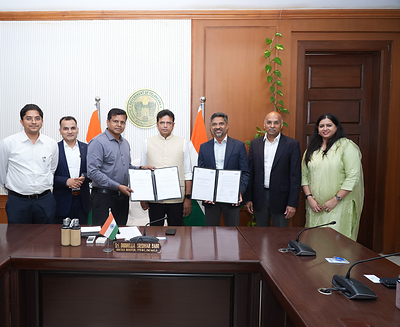
The new site reflects Amgen’s continued focus on fighting the world’s toughest diseases by harnessing the best of biology and technology. By integrating advanced scientific capabilities with data and digital innovation, the company aims to accelerate the discovery and development of innovative medicines for patients worldwide.
“The new center in Genome Valley expands the way we integrate experimental science with data and technology across our global research capabilities and complements our strong U.S.-based Research and Development footprint,” said Jay Bradner, M.D., executive vice president of Research and Development, Artificial Intelligence and Data at Amgen. “By connecting these capabilities, we can learn faster and translate those insights into innovative medicines for patients.”
“Hyderabad has built one of the world’s strongest life sciences ecosystems, with deep capabilities in pharmaceuticals and vaccines. The next chapter is about taking that strength into discovery and innovation. Amgen’s decision to establish its Science and Innovation Center in Genome Valley reflects Hyderabad’s growing role as a global hub for high-value research, bringing together scientific talent, technology and industry at scale. Our ambition is to make Hyderabad a place where the next generation of medicines and therapies can be discovered, developed and taken to the world,” said Shri D. Sridhar Babu, Hon’ble Minister for Information Technology, Electronics & Communications, Industries & Commerce, and Legislative Affairs, Government of Telangana.
The center is expected to be operational in 2027, and will bring together scientists and technologists across discovery chemistry, drug metabolism & pharmacokinetics and precision medicine, working closely with Amgen’s research sites around the world. This approach is designed to enhance how medicines are discovered and developed, improving speed, precision, and efficiency.
“This new center reflects Amgen’s commitment to advancing scientific excellence, and India will be an important part of our global R&D network,” said Som Chattopadhyay, senior vice president of Global Business Solutions and national executive at Amgen. “By expanding Amgen’s global research capabilities through its Hyderabad site, we are enabling deep scientific collaboration and look forward to participating in the local innovation ecosystem.”
Genome Valley offers strong scientific expertise and infrastructure, and the new facility will complement Amgen’s existing technology and innovation site in Hyderabad. Together, these sites will enable closer integration of wet-laboratory science with innovative technology, advancing how the company develops medicines.
“Hyderabad’s strong life sciences ecosystem and deep STEM expertise enable us to apply advanced technologies at scale,” said Naveen Gullapalli, managing director, Amgen India. “Our new center at Genome Valley will help integrate biotechnology and digital innovation to serve more patients globally.”
About Amgen
Amgen discovers, develops, manufactures, and delivers innovative medicines to fight some of the world’s toughest diseases. Harnessing the best of biology and technology, Amgen reaches millions of patients with its medicines.
More than 45 years ago, Amgen helped establish the biotechnology industry at its U.S. headquarters in Thousand Oaks, California, and it remains at the cutting edge of innovation, using technology and human genetic data to push beyond what is known today. Amgen is advancing a broad and deep pipeline and portfolio of medicines to treat cancer, heart disease, inflammatory conditions, rare diseases and obesity-related conditions.
Amgen has been consistently recognized for innovation and workplace culture, including honors from Fast Company and Forbes. Amgen is one of the 30 companies that comprise the Dow Jones Industrial Average®, and it is also part of the Nasdaq-100 Index®, which includes the largest and most innovative non-financial companies listed on the Nasdaq Stock Market based on market capitalization.
For more information, visit Amgen.com and follow Amgen on X, LinkedIn, Instagram, YouTube, Facebook, TikTok and Threads.

 View original content to download multimedia:https://www.prnewswire.com/in/news-releases/amgen-to-open-new-science–innovation-center-in-genome-valley-hyderabad-302849508.html

12, Aug 2026
Indian Music Industry Faces ₹350 Crore Annual Sync Revenue Loss
Unlicensed Commercial Use Continues to Go Undetected Across Social Platforms
ContentLens Estimates Global Loss at USD 1 Billion Annually
MUMBAI, India, Aug. 12, 2026 /PRNewswire/ — Millions of reels are created every single day across social media platforms in India. The scale of unlicensed commercial use of copyrighted music is staggering. Based on revenue-at-risk assessments conducted with leading labels on the platform, the Indian music industry is estimated to be losing upwards of ₹350 crore annually to unlicensed commercial use of its catalogues. And the labels knew this sync revenue loss was happening.
A year ago, ContentLens gave India’s music labels something they had never had: evidence of who is using their tracks across social media and streaming platforms, complete with timestamps and financial profiling of the infringing entity. The platform’s patent-applied IP Detection Engine goes beyond standard audio matching and manual search methods. It also catches slowed versions, remixes, and unauthorised cover tracks and these manipulations routinely slip through conventional mechanism. Four of India’s leading labels and one international major have been on the platform building their detection capability and recovering their lost sync revenues. Now, ContentLens is closing the loop with a fully managed Enforcement Service i.e. the only platform in the market that takes a music rights violation from identification all the way through to settlement, entirely on the label’s behalf. Two labels have already joined ContentLens for this 360-degree detection-to-settlement enforcement.
One large label’s own internal assessment estimated its annual sync revenue at risk at ₹18 crore from social media infringements alone. Extrapolated across India’s music industry using the revenue market share logic, the total exposure runs upwards of ₹350 crore (approximately USD 40 million) every year.
Globally, the problem is far larger. The recorded music industry is valued at USD 31 billion. Applying conservative market share and licensing-awareness adjustments, ContentLens estimates the global sync revenue loss from unlicensed social media usage at approximately USD 1 billion annually, a largely invisible leak that no label, anywhere, has had the tools to address until now.
In their own words:
“Detection without enforcement is just a filing cabinet. We spent the last year proving our technology works at scale. Across the top 100 songs a label gives us, we detect 80-100 infringing videos every month, 98% of them clearly unlicensed. Today we are closing the loop i.e. from formal notices to negotiations and settlements, entirely managed by ContentLens on the label’s behalf. Zero burden on the label’s team. The music industry finally has a platform that does not just watch. It acts.”
– Rohan Sahu, Founder & CEO, ContentLens
“Every label head I speak to knows their music is being used without permission. Nobody had a way to prove it, quantify it, or act on it. ContentLens has spent the last year doing exactly that with five leading labels. The data points speak for themselves: ₹350 crore in India, USD 1 billion globally – sync revenue that the industry has been leaving on the table, year after year. Every label can run that math against their own market share and see exactly what they stand to earn.”
– Hari Nair, Strategic Advisor, ContentLens & Former CEO, Tips Music Limited
Your music is already being used. The only question is whether you are going to get paid for it.
About ContentLens
ContentLens (contentlens.ai) is an AI-powered intellectual property protection platform built for the generative AI era, operating across music IP protection, celebrity likeness and deepfake detection, content provenance (C2PA) and watermarking, and counterfeit detection. Headquartered in Bangalore and backed by the NVIDIA Inception Program and Microsoft for Startups Founders Hub, ContentLens serves music labels, celebrity talent, sports organisations, and enterprise brands seeking to protect their IP at scale.
 View original content:https://www.prnewswire.com/in/news-releases/indian-music-industry-faces-350-crore-annual-sync-revenue-loss-302849513.html

12, Aug 2026
BASF Agricultural Solutions invests in new Climate Center at its headquarters to strengthen research capabilities
- State-of-the-art research facility at Limburgerhof site responds to increasing regulatory and research demands
- Purpose-built facility will enable controlled, reproducible ecotoxicology studies to support the registration of crop protection products worldwide
- Investment supports company’s innovation strategy
LIMBURGERHOF, Germany, Aug. 12, 2026 /PRNewswire/ — BASF Agricultural Solutions is investing a low double-digit million-euro amount in a new Climate Center at its headquarters in Limburgerhof, Germany. The purpose-built facility will strengthen the company’s research and regulatory capabilities and support the generation of scientific data required for the registration of crop protection products worldwide.
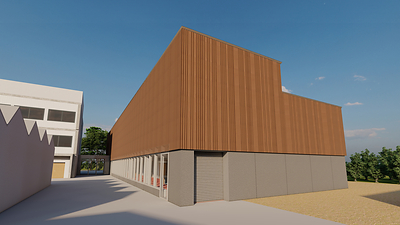
Construction of the Climate Center has already started and is scheduled to be completed in the first half of 2027. Once operational, the facility will house state-of-the-art climate chambers designed to provide precisely controlled environmental conditions for scientific studies. The investment responds to increasing regulatory requirements and rising demand for high-quality, Good Laboratory Practice (GLP)-compliant ecotoxicology studies.
“The new Climate Center is much more than a research facility. It is a strategic investment that supports our ambition to combine world-class research with enhanced regulatory capabilities,” said Melanie Bausen-Wiens, Member of the Management Board of BASF Agricultural Solutions in charge of Technology. “This will enable us to bring innovative solutions to the farmers more efficiently, responsibly and in line with evolving regulatory requirements.”
The new Climate Center will provide highly controlled conditions for ecotoxicology studies. By precisely regulating factors such as temperature, humidity and light, the facility will enable reproducible and scientifically robust studies while enhancing planning reliability, data quality and capacity for a growing volume of studies.
Some of the climate chambers will be dedicated to insecticide research activities. Controlled environmental conditions are essential for producing insect populations used in early-stage screening and discovery programs, helping to advance future crop protection innovations.
The investment underscores BASF Agricultural Solutions’ long-term commitment to the Agricultural Center in Limburgerhof as one of its key global hubs for agricultural innovation. Expanding the site’s infrastructure will further strengthen its scientific capabilities, its competitiveness, as well as attract future talent.
About BASF Agricultural Solutions
Everything we do, we do for the love of farming. Farming is fundamental to provide sufficient and affordable food for a rapidly growing population, while reducing environmental impacts. That’s why we are working with partners and experts to integrate sustainability criteria into all business decisions. With €990 million in 2025, we invest in a strong R&D pipeline, and our solutions are purpose-designed for different crop systems. Connecting seeds and traits, crop protection products, digital tools and sustainability approaches, to help deliver the best possible outcomes for farmers, growers and stakeholders along the value chain. In 2025, our business generated sales of €9.6 billion. For more information, please visit www.agriculture.basf.com or our social media channels.
About BASF
At BASF, we create chemistry for a sustainable future. Our ambition: We want to be the preferred chemical company to enable our customers’ green transformation. We combine economic success with environmental protection and social responsibility. Around 95,000 employees in the BASF Group contribute to the success of our customers in nearly all sectors and almost every country in the world. Our portfolio comprises, as core businesses, the segments Chemicals, Materials, Industrial Solutions, and Nutrition & Care; our standalone businesses are bundled in the segments Surface Technologies and Agricultural Solutions. BASF generated sales of around €60 billion in 2025. BASF shares are traded on the stock exchange in Frankfurt (BAS) and as American Depositary Receipts (BASFY) in the United States. Further information at www.basf.com.

 View original content to download multimedia:https://www.prnewswire.co.uk/news-releases/basf-agricultural-solutions-invests-in-new-climate-center-at-its-headquarters-to-strengthen-research-capabilities-302849378.html

12, Aug 2026
Introducing Oticon Reveal™ – the world’s first hearing aid powered by Dual AI
From only words to a richer world of sound
SMØRUM, Denmark, Aug. 12, 2026 /PRNewswire/ — Today, Oticon launches Oticon Reveal™, the world’s first hearing aid powered by Dual AI, delivering crystal-clear speech and meaningful sounds in optimal balance, bringing hearing aid users closer to a natural hearing experience.

Built on Oticon’s latest BrainHearing™ insights, Oticon Reveal features a groundbreaking Dual AI system comprising two dedicated AI systems working together in real time: one with industry-leading access to speech,1, 2 while the other preserves meaningful contextual sounds.3 The new Speech AI provides crystal-clear speech by continuously identifying and enhancing speech from people around the user, while Context AI recognises and balances surrounding contextual sounds. As a result, Oticon Reveal delivers a 60% stronger brain response,4 thanks to the world’s best combination of fastest and most precise AI sound processing.5
What makes Oticon Reveal truly unique is that its Dual AI system is always on, all day, across all listening environments in real time, without compromising battery life, comfort, size, or discretion. Until now, the majority of the hearing aid industry has prioritised speech by utilising aggressive AI noise reduction. This one-sided, speech-only AI approach not only goes against how the brain makes sense of sound, but also what users need and want.
“We’ve been leading the development of AI and innovation in hearing care for years. With our new Dual AI system, we’re again setting a benchmark in the industry by taking a decisive step forward in how technology supports the brain in making sense of sound,” says Anja Nagel L’harraki, Senior Vice President, Global Marketing at Oticon.
Oticon Reveal is powered by the new Reveal AI™ platform and also introduces a new connectivity platform offering enhanced signal strength, and our best-ever streaming stability and range for hands-free calls and audio streaming.6 The platform supports Bluetooth® LE Audio and Auracast™ broadcast technology, delivering a seamless and reliable listening experience with power that lasts all day.7
For more information visit Oticon.global.
References
- Denker (2026).
- Compared to top 3 competitors.
- Man & With (2026).
- Zapata-Rodríguez et al. (2026).
- Internal documentation comparing Oticon Reveal to competitors.
- Brændgaard & Wassard (2026).
- Rechargeable battery performance varies based on usage.
 View original content to download multimedia:https://www.prnewswire.co.uk/news-releases/introducing-oticon-reveal–the-worlds-first-hearing-aid-powered-by-dual-ai-302848476.html

12, Aug 2026
Sentosa Development Corporation’s bold vision for Greater Sentosa: Plans for new icons, reimagined beaches and game-changing attractions envisioned to redefine how Singaporeans play, relax, and bond
- Greater Sentosa Master Plan (GSMP) will bring Brani under Sentosa’s fold, unlocking new spaces for next-generation experiences, attractions and hotels.
- New iconic landmarks including Imbiah Canopy, Imbiah Lookout Walk and Sensorium intended to strengthen Sentosa’s appeal as Singapore’s island playground and sanctuary in a global city.
- Sentosa’s beaches and coastline will be reimagined with a unique islet-hopping experience and new beach club concepts centred around sunrise and sunset views, incorporating coastal protection measures.
- Enhanced land, air, sea and waterfront links, including the envisioned Island Heart Transport Hub and new People Mover System, will improve access to and within Greater Sentosa.
- Roving ‘Your Island. Reimagined.’ Greater Sentosa exhibition invites Singaporeans to experience and help shape the future of Greater Sentosa.
SINGAPORE, Aug. 12, 2026 /PRNewswire/ — Sentosa Development Corporation (SDC) today unveiled the next chapter of the Greater Sentosa Master Plan (GSMP), a bold, long-term transformation that will integrate Sentosa with Brani and progressively expand Singapore’s island playground and sanctuary over the next two decades. This vision, along with landmark concepts, were shared for the first time at the opening of the Your Island. Reimagined. exhibition at VivoCity, inviting Singaporeans to experience and help shape the next chapter of an island that has been part of the nation’s shared memories for more than five decades.
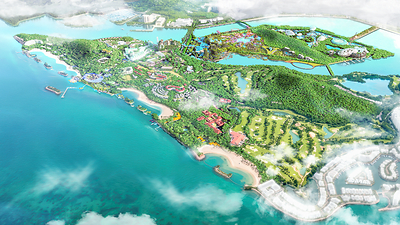
Comprising Sentosa and the 120-hectare Brani, Greater Sentosa is expected to unlock new spaces for hotels, attractions and experiences while retaining the island’s charm and natural elements. When completed, Greater Sentosa is projected to attract twice as many visitors as it does today[1].
“For more than five decades, Sentosa has welcomed generations of Singaporeans and visitors from around the world, growing into a place that holds precious memories for many and well-loved by all. It is, in many ways, a global Singapore brand,” said Thien Kwee Eng, Chief Executive Officer of Sentosa Development Corporation. “The GSMP is the greatest transformation in our history. We will stay true to the soul and identity of this island, while shaping the next generation of world-class experiences. Before any of it is built, we wanted to share this vision openly, invite Singaporeans to step inside it and shape it together.”
Anchored on the vision of Sentosa as Singapore’s “Island Playground and Sanctuary in a Global City”, the GSMP intends to bring together new iconic landmarks, reimagined beaches and coastlines, nature-centric growth, and enhanced connectivity to create more compelling reasons for Singaporeans and visitors to return across different times of the day and seasons of life.
This builds on SDC’s longstanding mandate to develop, manage and promote Sentosa as a leisure island destination for Singaporeans and visitors. Over the decades, Sentosa has grown into a well-loved playground, known for its beaches, attractions, resorts and lifestyle experiences, while remaining a nature-centric island at its heart. With the GSMP, SDC looks to enhance Singapore’s destination appeal and deepen the island’s sanctuary qualities by strengthening its nature, heritage, coastal and green spaces, so that Sentosa continues to be a place where visitors can play, gather, slow down and reconnect.
A bold, long-term transformation for a world-class island destination
The transformation will be implemented progressively, with developments expected to come on board from the early 2030s. This phased approach will allow SDC to unlock new visitor experiences across Greater Sentosa while continuing to evolve the island in line with changing leisure, lifestyle and tourism needs.
A key part of this pipeline is Brani West, intended to be one of the largest sites for attractions development under the GSMP. Engagements with potential partners are underway, supporting the broader ambition to introduce novel and refreshed experiences that strengthen Greater Sentosa’s appeal to both Singaporeans and international visitors.
New iconic landmarks to reinforce Sentosa’s destination appeal
With the GSMP, Sentosa’s destination appeal will be reinforced through new iconic landmarks that bring together play, nature, leisure and discovery. These include the Imbiah Canopy, a beacon and vantage point atop Mount Imbiah, that will house attractions, food and beverage, retail options, sheltered event spaces. A tree-top skywalk is planned to connect new nature-based experiences and trails, providing a comfortable walking experience to Siloso Beach.
This will be complemented by the planned Imbiah Lookout Walk, a sheltered elevated forest canopy walk that will connect Sensoryscape to Imbiah Lookout and provide access to surrounding Sentosa walking trails. New nature-based attractions will also encourage visitors to explore the secondary forests and heritage buildings at Mount Imbiah, with expanded nature and heritage trails planned in later phases to eventually connect to Southern Ridges on the mainland. Together with future plans to link forests across Brani, Serapong and Imbiah into a
continuous green network, Greater Sentosa’s ecological connectivity will be further strengthened, allowing guests to immerse in nature for restoration and well-being.
Along the beachfront, the Sensorium is envisioned as a new icon that will host a range of lifestyle and indoor attractions, including a multi-purpose venue for events and festival activations. Designed with green spaces to enhance thermal comfort and elevate the guest experience, the space will also reflect SDC’s commitment to sustainability.
Guests can also look forward to discovering more upcoming experiences at Resorts World Sentosa. These include the landmark Waterfront Lifestyle Development, scheduled for completion in 2030; and immersive SUPER NINTENDO WORLDTM at Universal Studios Singapore.
Reimagined beaches and coastlines for new lifestyle experiences
Siloso, Palawan and Tanjong Beach will be rejuvenated alongside the introduction of coastal protection measures, creating new lifestyle developments and multi-use, day-to-night spaces for play, relaxation and community gatherings.
New experiences that play up Sentosa’s natural assets are also being explored, including coastal activities, beach clubs and a floating boardwalk connecting islets. An islet-hopping experience across the 3km stretch of Sentosa’s golden beaches will allow guests to explore islets across Sentosa’s beaches and discover the island’s waters and natural elements up close.
Concepts under study include beach club experiences positioned around scenic sunrise and sunset views, as well as treetop dining, turning the island’s well-loved beachfronts into more vibrant and flexible spaces for different occasions across the day and night.
Enhanced connectivity to and within Greater Sentosa
Connectivity to and within Greater Sentosa is expected to be transformed through enhanced links by land, air, sea and waterfront. The Island Heart Transport Hub is envisioned as a major gateway and key arrival point to Sentosa, linking Sentosa and Brani while providing a seamless way for Singaporeans and visitors to arrive, gather and continue their journey across the island.
A new People Mover System is intended to replace the existing Sentosa Express and provide a more seamless connection from the mainland to Island Heart and across the island, with increased carrying capacity to cater to anticipated growth in visitorship. Together with the Singapore Cable Car, water taxi connections under exploration, and additional waterfront links being studied, the journey to and around Greater Sentosa will become an experience itself for guests.
Balancing growth with sustainability and nature-centric planning
As Greater Sentosa grows, the GSMP will deepen Sentosa’s identity as a nature-centric destination by embedding sustainability, climate resilience, thermal comfort and ecological considerations into its long-term planning. Building on efforts such as Cooling Sentosa, future developments will take a more integrated approach, weaving together greenery, movement routes, green infrastructure and guest experiences to enhance thermal comfort, strengthen ecological connectivity and ensure new experiences are sensitively introduced within Sentosa’s natural setting.
Sensoryscape, the first completed milestone of the GSMP, offers an early example of this approach. Beyond serving as a 350m green connector between Resorts World Sentosa and the island’s beaches, it combines immersive gardens, universal design, all-weather and shaded features, digital experiences and ecological enhancements, including native plantings and a butterfly corridor, to show how infrastructure can support thermal comfort, create richer, more accessible and inclusive guest experiences, and strengthen biodiversity and visitor flow.
This integrated planning approach will guide future developments under the GSMP, with environmental studies and nature group engagements, both completed and planned, informing climate-resilient design, ecological connectivity and the sensitive integration of new experiences with Sentosa’s ridgelines, greenery, coastlines and heritage. Coastal protection measures will help build resilience against erosion and sea level rise while creating opportunities for new waterfront experiences, including coastal trails and an islet-hopping experience.
Public exhibition invites Singaporeans to experience and shape the future
The ‘Your Island. Reimagined.‘ Greater Sentosa exhibition brings the GSMP vision to life through interactive and immersive exhibits that invite visitors to co-create their vision for Greater Sentosa. Through quizzes, shared aspirations and an AI-enabled immersive experience, visitors can personalise a reimagined Greater Sentosa based on their inputs and the ongoing master plan study, exploring possibilities for future shorelines, beaches, ridgelines, waterfronts and purpose-of-visit attractions.
The exhibition features seven immersive zones that help visitors reconnect with Sentosa’s past, rediscover what it offers today and reimagine what it can become. These include zones on the island’s heritage, today’s offerings, future journeys, Island Heart, the ridgeline, expanded beaches and the living vision for Greater Sentosa.
After its flagship run at VivoCity from 3–5 July, the exhibition will travel to Our Tampines Hub from 22–27 July, Jurong Point from 19–23 August and Waterway Point in Punggol from 23–27 September, before returning to Sentosa in October. Admission is free at all locations, with exhibit-exclusive promotions for iconic Sentosa attractions and dining vouchers available for visitors.
For more information, visit https://www.sentosa.com.sg/greatersentosa.
High-resolution images can be downloaded from here. Photos are to be credited to Sentosa Development Corporation.
All visuals associated with the Greater Sentosa Master Plan are artist’s impressions for illustration purposes only and are subject to change.
END
About Sentosa
Sentosa, where discovery never ends, is Asia’s leading leisure destination and Singapore’s premier island resort getaway, located within 15 minutes from the central business and shopping districts. The island resort is managed by Sentosa Development Corporation, which works with various stakeholders in overseeing property investments, attractions development, and operation of the various leisure offerings and management of the residential precinct on the island.
The 500-hectare island resort is home to an exciting array of themed attractions, award-winning spa retreats, lush rainforests, golden sandy beaches, resort accommodations, world-renowned golf courses, a deep-water yachting marina and luxurious residences – making Sentosa a vibrant island resort for business and leisure. Sentosa is also home to Singapore’s first integrated resort, Resorts World Sentosa, which operates Southeast Asia’s first Universal Studios theme park.
Situated on the eastern end of Sentosa Island is Sentosa Cove, an exclusive waterfront residential enclave bustling with more than 2,000 homes, quayside restaurants, retail and specialty shops. The island is also proud to be home to Sentosa Golf Club and its two acclaimed golf courses, The Serapong and The Tanjong. Sentosa Golf Club has hosted a number of high-profile professional and amateur tournaments, including the Singapore Open and HSBC Women’s World Championship, welcoming international star players and world-class golf professionals from across the world.
Welcoming a growing number of local and international guests every year, Sentosa is an integral part of Singapore’s goal to be a global destination to work, live and play. For more information, please visit: www.sentosa.com.sg.
- Facebook: SentosaOfficial
- Instagram: @sentosa_island
- Tiktok: @sentosa_island
- Telegram: @sentosaisland
#discoversentosa #sentosaisland #wherediscoveryneverends
About Sentosa Development Corporation
Sentosa Development Corporation (SDC) was established on 1 September 1972 as a Statutory Board under the Ministry of Trade and Industry. As a master planner, its charter since inception has been to oversee the development, management, marketing and promotion of the island of Sentosa as a resort destination for locals and tourists.
SDC wholly owns its subsidiaries Sentosa Cove Resort Management Pte Ltd and Sentosa Golf Club. SDC also owns the Singapore Cable Car Sky Network, managed by Mount Faber Leisure Group Pte Ltd, a wholly owned subsidiary which operates as an autonomous commercial arm.
As a testament to its commitment to sustainability, SDC has been conferred the Global Sustainable Tourism Council – For Destinations (GSTC-D) certificate, making Sentosa the first island destination in Asia to receive this accolade.
ANNEX A: THE NEXT CHAPTER OF THE GREATER SENTOSA MASTER PLAN AT A GLANCE
The Greater Sentosa Master Plan (GSMP) is a bold, long-term transformation that will integrate Sentosa with Brani and progressively expand Singapore’s island playground and sanctuary over the next two decades. Spanning Sentosa and the 120-hectare Brani, Greater Sentosa is expected to unlock new spaces for hotels, attractions, lifestyle experiences, nature-based offerings and public engagement, with developments expected to come on board progressively from the early 2030s.
|
At a glance |
Key details |
|
Vision |
To shape Sentosa as Singapore’s island playground and sanctuary in a global city, with more compelling reasons to visit across different times of the day, seasons of life and future generations. |
|
Scale |
Greater Sentosa comprises Sentosa and the 120-hectare Brani, with developments expected to come on board progressively from the early 2030s. |
|
Visitor potential |
When completed, Greater Sentosa is projected to attract twice as many visitors as Sentosa does today. |
Key highlights
- New icons and attractions: Imbiah Canopy will form a new beacon and vantage point atop Mount Imbiah, with attractions, food and beverage, retail and sheltered event spaces, while Imbiah Lookout Walk will provide a sheltered elevated forest canopy connection from Sensoryscape to Imbiah Lookout and surrounding trails. Sensorium is envisioned as a new beachfront icon for lifestyle experiences, indoor attractions, events and festival activations, while Brani West is intended to be one of the largest sites for attractions development under the GSMP.
- Reimagined beaches and coastlines: Siloso, Palawan and Tanjong Beach will be rejuvenated alongside coastal protection measures, with new lifestyle developments, multi-use day-to-night spaces, beach club concepts centred around sunrise and sunset views, treetop dining and a floating boardwalk connecting islets.
- Nature-centric growth: Future development will be guided by an integrated planning approach that embeds sustainability, climate resilience, thermal comfort, guest experience, accessibility and ecological considerations into long-term planning. Building on efforts such as Cooling Sentosa, this approach will weave together shade, greenery, movement routes, green infrastructure and guest experiences to enhance thermal comfort, strengthen ecological connectivity and ensure new experiences are sensitively introduced within Sentosa’s natural setting, with Sensoryscape as an early example.
- Enhanced connectivity: Enhanced links by land, air, sea and waterfront will improve access to and within Greater Sentosa, including the envisioned Island Heart Transport Hub as a major gateway, a new People Mover System to replace the existing Sentosa Express, the Singapore Cable Car, water taxi connections under exploration and additional waterfront links being studied.
- Climate resilience and ecology: Environmental studies and nature group engagements, both completed and planned, will inform climate-resilient design, ecological connectivity and the sensitive integration of new experiences with Sentosa’s ridgelines, greenery, coastlines and heritage, while coastal protection measures will help build resilience against erosion and sea level rise.
Public engagement
Your Island. Reimagined. brings the GSMP vision to life through seven interactive and immersive zones that invite Singaporeans to experience and help shape the future of Greater Sentosa, from heritage and today’s offerings to future journeys, Island Heart, the ridgeline, expanded beaches and the living vision. The free roving exhibition opens at VivoCity from 3–5 July, before travelling to Our Tampines Hub, Jurong Point and Waterway Point, and returning to Sentosa in October.
|
[1] Sentosa received more than 16 million visitors between April 2024 and March 2025. |

 View original content to download multimedia:https://www.prnewswire.com/in/news-releases/sentosa-development-corporations-bold-vision-for-greater-sentosa-plans-for-new-icons-reimagined-beaches-and-game-changing-attractions-envisioned-to-redefine-how-singaporeans-play-relax-and-bond-302849376.html



