


20, Jul 2026
President Murmu Pays Tribute to Moldova’s Historic Icon ‘Stephen the Great’ During Landmark Visit

Pic Credit: https://x.com/rashtrapatibhvn
July 20: President Droupadi Murmu paid homage at the iconic ‘Stephen the Great’ monument in Moldova, as part of her historic visit to the European nation.
The President laid floral tributes at the monument honouring Stephen the Great, a celebrated ruler and national figure of Moldova, acknowledging the country’s rich history and cultural legacy.
The visit marks the first-ever visit by an Indian President to Moldova, underlining the growing significance of India-Moldova relations and the shared commitment to strengthening bilateral cooperation.
During her visit, President Murmu is expected to engage with Moldovan leadership to explore new opportunities in areas such as trade, investment, education, technology, culture, and other sectors of mutual interest.
The tribute ceremony reflected India’s respect for Moldova’s heritage and further highlighted the importance of cultural understanding in building stronger diplomatic ties between the two nations.
The landmark visit is expected to provide fresh momentum to India-Moldova cooperation and create new avenues for collaboration in the future.
- 0
- By Neel Achary

20, Jul 2026
Nathan Smith Named ICC Men’s Player of the Month for June 2026
July 20: New Zealand all-rounder Nathan Smith has been honoured with the ICC Men’s Player of the Month award for June 2026 following his outstanding performances on the international cricket stage.
Smith impressed with his consistent contributions with both bat and ball, playing a key role in New Zealand’s recent success. His match-winning efforts and all-round abilities earned him recognition among the top performers in world cricket.
The International Cricket Council (ICC) recognised Smith’s exceptional form, highlighting his impact during crucial matches and his ability to deliver under pressure.
The award marks another milestone in Smith’s growing international career and reflects his emergence as one of New Zealand’s most promising cricket talents.
Smith expressed his gratitude for the recognition and credited his teammates, coaches, and support staff for their encouragement and contribution to his success.
The ICC Men’s Player of the Month award celebrates outstanding individual performances and recognises cricketers who make a significant impact during each month of international competition.
20, Jul 2026
India’s Money Makeover: RBI Moves Closer to Introducing High-Security Plastic Banknotes
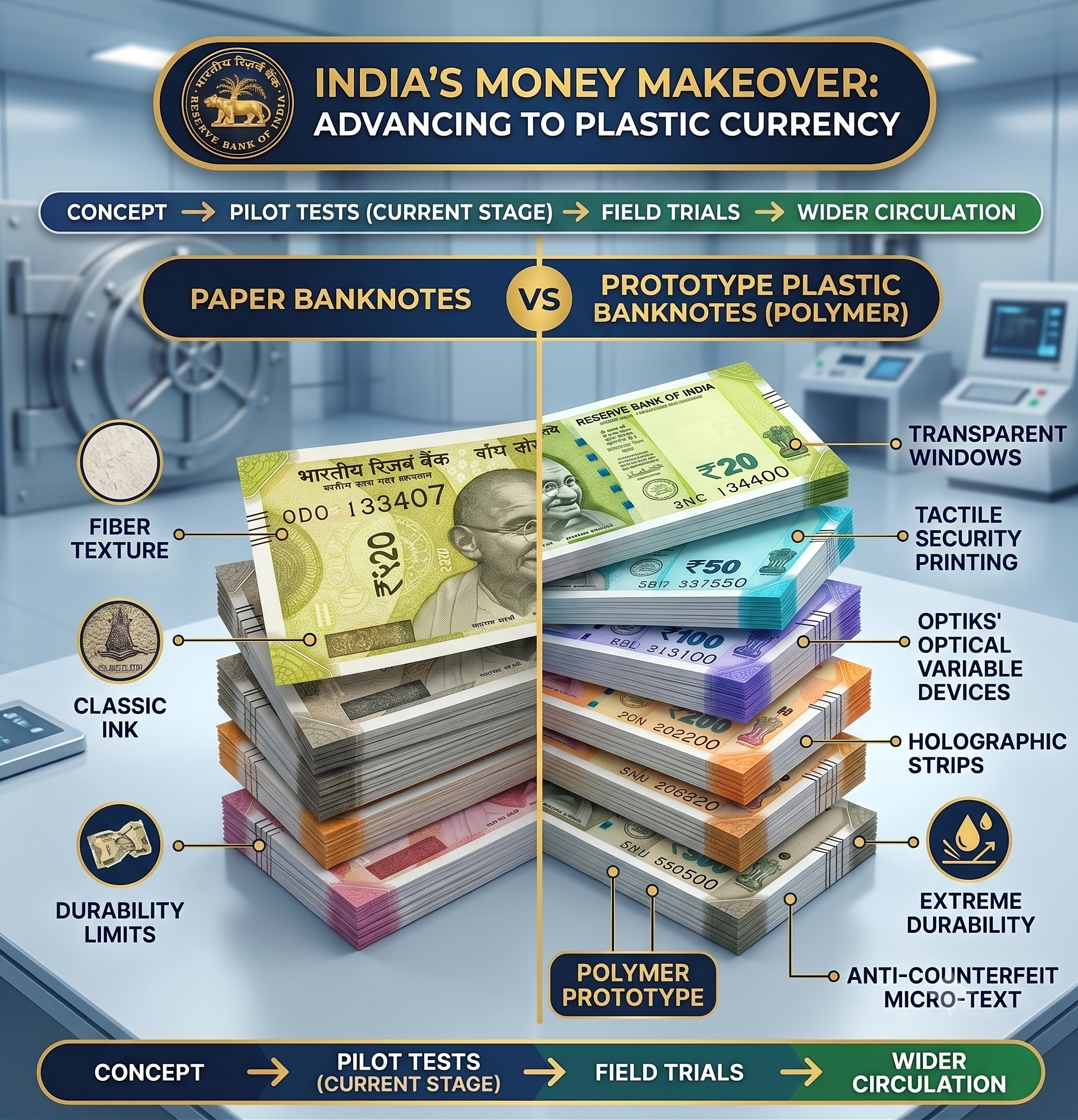
India’s currency system could soon witness one of its biggest transformations in decades as the Reserve Bank of India (RBI) takes significant steps towards introducing polymer-based banknotes, popularly known as plastic notes.
The move aims to replace traditional paper-based currency with a more durable, secure, and technology-driven alternative. The initiative gained momentum after the Bharatiya Reserve Bank Note Mudran Private Limited (BRBNMPL), a subsidiary involved in currency printing, invited global technology partners to help establish a polymer substrate manufacturing facility in India.
The development marks a major step towards building a domestic ecosystem for producing the specialised material required for polymer banknotes.
A New Era for Indian Currency
Most Indian banknotes currently use cotton-based paper embedded with multiple security features. Polymer notes, made from a specialised plastic film, offer greater durability and can withstand daily wear and tear more effectively.
Reports suggest that the initial phase may focus on lower denomination notes, including ₹10 and ₹20, with field trials planned to evaluate their performance under Indian conditions. However, the RBI has not yet announced an official launch date or final rollout plan.
Why Polymer Notes Could Change the Way India Uses Cash
The proposed polymer currency comes with several advantages:
Longer Life: Unlike paper notes, polymer notes are more resistant to tearing and damage, allowing them to remain in circulation for a longer period.
Water and Dirt Resistant: Their plastic-based material prevents damage caused by moisture, stains, and frequent handling.
Advanced Security Features: Polymer notes can include sophisticated anti-counterfeiting technologies such as transparent windows, optical elements, and advanced security markings.
Cost Savings Over Time: Although manufacturing costs may initially be higher, the extended lifespan of polymer notes can reduce the need for frequent replacement.
RBI Focuses on Domestic Production
Through the Expression of Interest (EOI), BRBNMPL is looking for companies with expertise in manufacturing security-grade polymer substrates. The objective is not only to source technology but also to develop India’s own manufacturing capability for currency materials.
The process includes strict security guidelines to ensure that the production of currency-grade materials meets national security requirements.
Learning From Global Examples
Countries such as Australia, Canada, New Zealand, and the United Kingdom have already adopted polymer banknotes due to their durability and enhanced security features.
More than 60 countries worldwide currently use polymer currency, making it an established technology in the global financial system.
No Demonetisation-Like Move
The possible introduction of polymer notes should not be confused with demonetisation. Existing paper currency will continue to remain legal tender, and old notes will circulate alongside the new polymer notes if the RBI proceeds with the rollout.
The transition, if approved, will be gradual and based on the outcome of trials and assessments.
India’s Next Step Towards Smarter Currency
The RBI’s move reflects a broader effort to modernise India’s currency infrastructure by combining durability, security, and technology. If successfully implemented, polymer banknotes could redefine everyday cash usage in India and mark a new chapter in the country’s financial journey.
20, Jul 2026
Indian Women’s Hockey Team Gears Up for FIH World Cup 2026 Challenge
New Delhi, July 20: The Indian women’s hockey team is preparing for its journey towards the FIH Women’s Hockey World Cup 2026, with the squad focused on delivering a strong performance on the global stage.
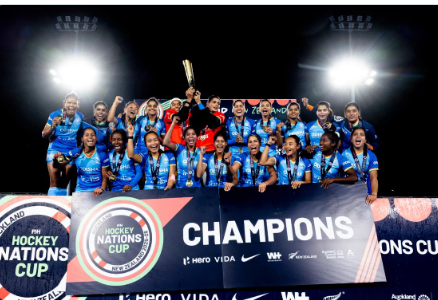
Pic Credit: https://x.com/narendramodi
The team’s qualification campaign has reflected its determination, consistency, and growing strength in international hockey. With a mix of experienced players and emerging talents, India aims to compete against the world’s best teams in the prestigious tournament.
The players and coaching staff have been working on improving tactical execution, fitness levels, and match strategies ahead of the World Cup challenge.
The FIH Women’s Hockey World Cup 2026 will provide India with an opportunity to showcase its progress and build on recent achievements in international competitions.
With strong preparation and renewed confidence, the Indian women’s hockey team is looking to make a memorable impact at the global event.
20, Jul 2026
PV Sindhu Creates History with Japan Open Triumph
Tokyo, July 20: Indian badminton star PV Sindhu scripted history by winning the Japan Open title after defeating local favourite and three-time world champion Akane Yamaguchi in straight games.
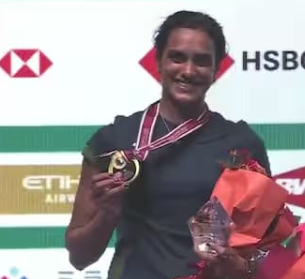
Sindhu secured a convincing 21-17, 21-17 victory over Yamaguchi to claim the championship, ending a two-year wait for an international title. The win also marked her first victory over Yamaguchi in four years.
With this achievement, Sindhu became the first Indian player to defeat the three-time world champion Yamaguchi at the tournament, adding another milestone to her illustrious career.
The victory highlights Sindhu’s continued dominance and determination on the international badminton stage, further strengthening India’s presence in global badminton.
The Japan Open title marks a significant comeback for the Olympic medallist and reflects her strong form and competitive spirit.
20, Jul 2026
India Names Strong Squad for ISSF World Cup in Hangzhou
New Delhi, July 20: India has announced a formidable shooting contingent for the upcoming ISSF World Cup in Hangzhou, reflecting the country’s continued focus on excellence in international shooting competitions.
The squad features a blend of experienced campaigners and promising young shooters who will compete across rifle, pistol, and shotgun events. The team selection underscores India’s commitment to building on its recent successes on the global shooting stage.
The ISSF World Cup will provide Indian shooters with an important platform to test their skills against top international competitors while gaining valuable experience ahead of future major championships.
Officials expressed confidence in the team’s preparations and highlighted the athletes’ consistent performances as a key factor in their selection.
India’s participation in the tournament is expected to further strengthen its standing in world shooting and reinforce the country’s growing reputation as a global force in the sport.
20, Jul 2026
Uttarakhand’s Frozen Food Export Gets Global Boost with First French Fries Shipment to Iraq
New Delhi, July 20: Uttarakhand has marked a significant milestone in its agricultural export journey with the first shipment of frozen French fries from the state reaching Iraq, with support from the Agricultural and Processed Food Products Export Development Authority (APEDA).
The export highlights the growing potential of India’s processed food sector and reflects efforts to connect local producers with international markets. The move is expected to create new opportunities for potato growers, food processors, and exporters in Uttarakhand.
APEDA has been actively supporting the promotion of value-added agricultural products by facilitating market access, strengthening export networks, and encouraging Indian food products in global markets.
The successful consignment demonstrates the rising demand for Indian processed food products worldwide and is expected to encourage further expansion of agricultural exports from the state.
The initiative represents a step forward in strengthening India’s position in the global food supply chain while supporting growth in the country’s agro-processing sector.
20, Jul 2026
India Clears QDENGA Dengue Vaccine, Expanding Protection for People Aged 4-60 Years
New Delhi, July 20: India has approved QDENGA, the country’s first dengue vaccine, for people aged 4 to 60 years, marking an important step towards strengthening dengue prevention and healthcare efforts.
The approval introduces a new preventive measure against dengue, a mosquito-borne disease that continues to pose a public health challenge in several parts of the country. The vaccine is expected to support efforts to reduce the impact of dengue infections among eligible age groups.
Health experts said vaccination, along with existing preventive measures such as mosquito control, maintaining hygiene, and early detection of symptoms, will be important in managing the spread of dengue.
The availability of QDENGA is expected to provide an additional layer of protection for communities and support India’s broader efforts to improve public health preparedness against mosquito-borne diseases.
The approval marks a significant milestone in dengue prevention and highlights continued progress in strengthening healthcare solutions in India.
20, Jul 2026
Consumer Market Maintains Investment Momentum with Dollar 981 Million Deals
New Delhi, July 20, 2026: Consumer sector deal activity remained resilient in the second quarter of 2026, with transaction values reaching $981 million, according to a recent report.
The report highlighted continued investor interest in the consumer segment, supported by changing consumption patterns, business expansion opportunities, and growth potential across various categories.
Despite evolving market conditions, the sector maintained steady momentum as companies focused on strengthening their market presence, expanding operations, and attracting strategic investments.
Industry experts said the sustained deal activity reflects confidence in India’s consumer market and its long-term growth prospects. The sector continues to remain an important area for investors due to rising demand and increasing consumer opportunities.
The report noted that ongoing investment trends are expected to support innovation, expansion, and growth across the consumer industry in the coming periods.
20, Jul 2026
President Murmu Begins Historic First Visit to Moldova, Strengthening Bilateral Ties
New Delhi, July 20: President Droupadi Murmu has arrived in Moldova on a historic visit, marking the first-ever visit by an Indian President to the European nation.
The landmark visit is aimed at strengthening diplomatic relations between India and Moldova and exploring new opportunities for cooperation in areas of mutual interest. The visit reflects India’s continued efforts to expand engagement with European partners.
During the visit, discussions are expected to focus on enhancing cooperation in areas such as trade, investment, education, culture, and people-to-people connections.
The historic presidential visit is seen as an important milestone in India-Moldova relations and is expected to further deepen bilateral understanding and collaboration between the two countries.
The visit highlights India’s commitment to strengthening global partnerships and building closer ties with nations across regions.


