


7, Jul 2026
Jharkhand Exports Amrapali Mangoes to Dubai, Opening Global Markets for Tribal Farmers
Ranchi, July 7: Jharkhand has achieved a major milestone in agricultural exports with the shipment of Amrapali mangoes from the state’s tribal belt to Dubai, reinforcing efforts to expand the global reach of locally grown horticultural produce.
The export marks a significant step towards integrating tribal farmers into international markets, providing them with access to better prices and new business opportunities. It also highlights the increasing recognition of Jharkhand’s high-quality mangoes in overseas markets.
The initiative has been facilitated through coordinated efforts to strengthen the agricultural value chain, improve post-harvest handling, maintain international quality standards, and streamline export logistics.
Officials said the successful consignment reflects the growing export potential of produce cultivated in the state’s tribal regions. The development is expected to encourage more farmers to adopt quality-driven and export-oriented farming practices while enhancing their income prospects.
The export of Amrapali mangoes to Dubai is part of the government’s broader strategy to promote agricultural exports, empower tribal farming communities, and position India’s premium horticultural products in global markets.
- 0
- By Neel Achary

7, Jul 2026
PM-SETU: Centre Clears INR 1,238 Crore Plan to Upgrade ITIs Nationwide
New Delhi, July 7: The Central Government has approved an investment of ₹1,238 crore under the PM-SETU programme to modernise Industrial Training Institutes (ITIs) and strengthen the country’s skill development ecosystem.
The initiative aims to transform selected ITIs into advanced training centres by upgrading infrastructure, introducing modern equipment, and improving training facilities in line with the evolving needs of industries.
The nationwide rollout of PM-SETU is expected to enhance the quality of vocational education, improve access to industry-relevant skills, and create better employment opportunities for young people. The programme will focus on developing a skilled workforce equipped to meet the demands of emerging sectors and new-age technologies.
Officials said the initiative will help bridge the gap between technical training and industry requirements by promoting practical learning, modern teaching methods, and stronger industry linkages.
The government’s investment in ITI modernisation is part of its broader effort to build a future-ready workforce, support entrepreneurship, and strengthen India’s position as a global hub for skilled talent.
7, Jul 2026
GIFT City, Vietnam’s Da Nang Financial Hub Join Hands to Drive Investment and Financial Cooperation
July 7: Gujarat International Finance Tec-City (GIFT City) has signed a Memorandum of Understanding (MoU) with Vietnam’s Da Nang financial hub to enhance investment opportunities, strengthen financial cooperation, and foster collaboration between the two emerging financial centres.
The strategic partnership aims to create a platform for knowledge exchange, promote cross-border investments, and encourage cooperation in key areas including financial services, fintech, innovation, and sustainable economic development.
The MoU is expected to support businesses and investors from both regions by facilitating greater connectivity, sharing best practices, and exploring new avenues for growth. The collaboration will also contribute to strengthening economic relations between India and Vietnam.
As India’s leading international financial services hub, GIFT City continues to expand its global partnerships to attract investments and promote innovation in the financial sector. The collaboration with Da Nang marks another step towards building stronger links with international financial ecosystems.
Officials highlighted that the partnership will help unlock new opportunities for investors, encourage financial innovation, and support the development of globally connected financial centres in the region.
The agreement reflects the growing cooperation between India and Vietnam and their shared vision of creating a more integrated and investment-friendly financial environment.
7, Jul 2026
116-Year-Old Devotee Inspires Millions by Climbing 3,550 Steps to Tirumala Temple
Tirupati, July 7 (UDN): In an inspiring display of devotion and resilience, 116-year-old Navaneethamma completed the arduous pilgrimage to Tirumala by trekking the 9-km Alipiri footpath and climbing 3,550 steps, capturing the admiration of devotees across the country.
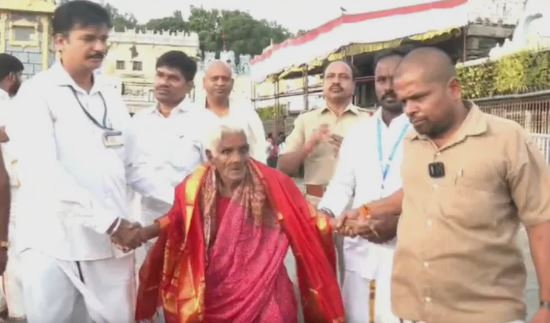
Accompanied by her family, the centenarian successfully completed the uphill journey to the sacred Sri Venkateswara Temple, demonstrating extraordinary determination despite her advanced age. Her remarkable feat has become a powerful example of faith transcending physical limitations.
Deeply moved by her dedication, the Tirumala Tirupati Devasthanams (TTD) arranged a special VIP Break Darshan, enabling Navaneethamma and her family to offer prayers to Lord Venkateswara with ease. The TTD administration also felicitated her with a traditional silk shawl and presented her with sacred prasadam in recognition of her inspiring pilgrimage.
Temple authorities described her journey as a testament to unwavering spiritual commitment and noted that her determination had inspired pilgrims of all ages. Her story has since gained widespread attention on social media, where thousands have hailed her courage, endurance and steadfast devotion.
The inspiring pilgrimage also received appreciation from Andhra Pradesh Chief Minister N. Chandrababu Naidu, who commended Navaneethamma’s resilience and described her accomplishment as a shining example of the strength of human spirit and faith.
As one of the oldest devotees to undertake the traditional Tirumala trek, Navaneethamma’s extraordinary journey has touched millions, reinforcing the timeless belief that devotion, perseverance and inner strength know no age.
7, Jul 2026
Indonesia Honours PM Modi with Highest Civilian and Military Award ‘Bintang Adipurna’
Jakarta, July 7: Indonesian President Prabowo Subianto has announced the conferment of the country’s highest honour, the ‘Bintang Adipurna of the Republic of Indonesia’, on Prime Minister Narendra Modi, recognising his contribution to strengthening bilateral relations and global cooperation.
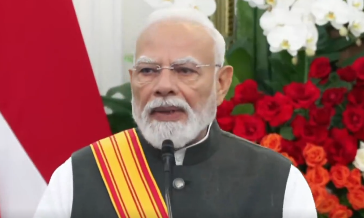
Pic Credit: https://x.com/narendramodi
Instituted in 1959, the Bintang Adipurna is Indonesia’s highest civilian and military distinction, awarded for exceptional service and achievements. The honour adds to the growing list of international recognitions received by Prime Minister Modi during his tenure.
The award was announced during Prime Minister Modi’s visit to Indonesia, where he held bilateral discussions with President Prabowo Subianto to further strengthen the Comprehensive Strategic Partnership between the two nations.
The talks focused on expanding cooperation in key areas, including trade, energy, maritime security, defence, and strategic partnerships. Both leaders expressed commitment to deepening ties and enhancing collaboration for mutual growth.
Prime Minister Modi received a warm welcome in Jakarta, where he was personally received by President Subianto. The visit also included discussions on strengthening cultural connections between India and Indonesia, including a planned visit to the historic Prambanan Temple complex in Yogyakarta.
The latest honour reflects the growing diplomatic engagement between India and Indonesia and highlights the importance of the partnership between the two countries across economic, strategic, and cultural sectors.
Indonesia is the first stop of Prime Minister Modi’s three-nation tour, which also includes visits to Australia and New Zealand for high-level engagements.
7, Jul 2026
Amit Shah Launches Delhi’s 70 Lakh Tree Plantation Drive to Boost Green Cover
New Delhi, July 7: Union Home Minister Amit Shah has launched Delhi’s ambitious 70 lakh tree plantation campaign, aimed at increasing green cover and improving the city’s environmental conditions.
The large-scale plantation drive seeks to promote ecological conservation, reduce pollution levels, and enhance urban greenery across the national capital. The initiative will involve participation from government departments, local bodies, institutions, and citizens to ensure wider community involvement.
Addressing the launch event, Shah highlighted the importance of environmental protection and collective efforts in tackling challenges such as air pollution and climate change. He emphasised the need for sustained plantation and maintenance efforts to create a healthier environment for future generations.
The campaign is part of broader measures to strengthen Delhi’s green infrastructure and encourage public participation in environmental conservation.
Officials said the success of the initiative will depend not only on planting trees but also on ensuring their long-term care and survival through coordinated efforts among various stakeholders.
7, Jul 2026
Sambalpur University Researchers Develop Promising Herbal Anti-Cancer Formulation from Gandhamardan Medicinal Plants
Bhubaneswar, July 7 (UDN): Researchers at Sambalpur University have reported a significant breakthrough in cancer research after developing a polyherbal anti-cancer formulation derived from medicinal plants found in Odisha’s Gandhamardan Hills. The formulation has demonstrated encouraging results in pre-clinical animal studies, paving the way for the next phase of human clinical trials.
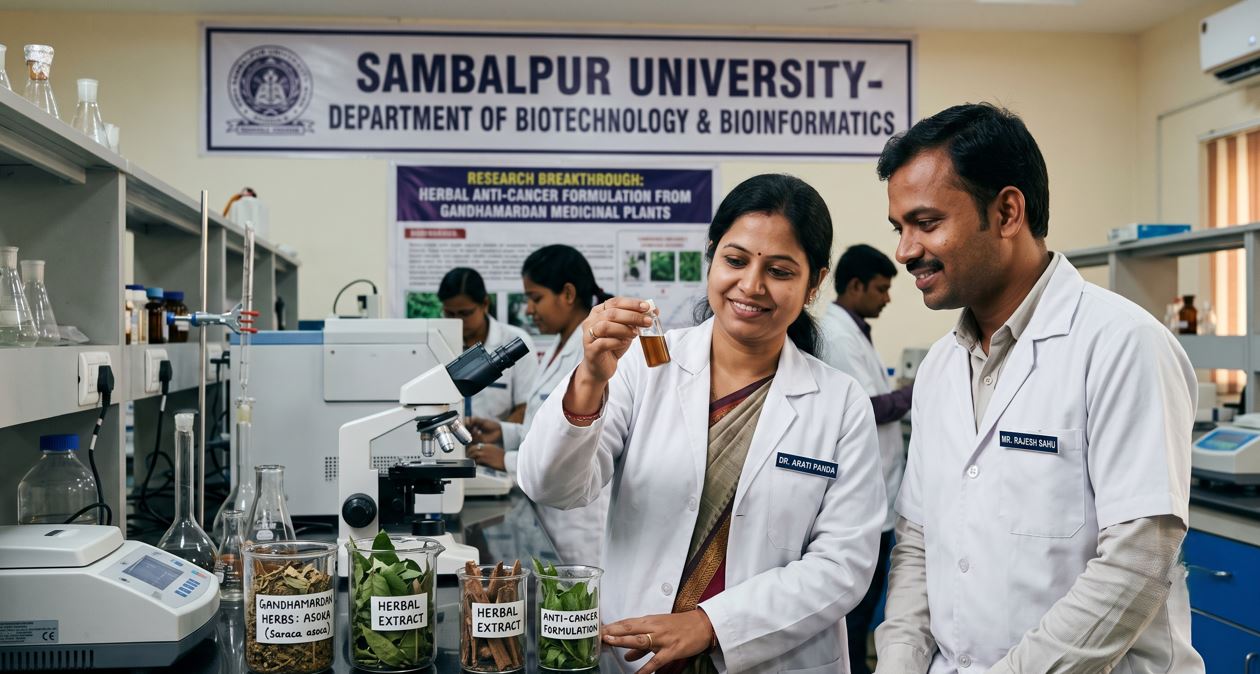
Representational image
The research, undertaken by the Department of Biotechnology and Bioinformatics in collaboration with the University’s Research Centre of Excellence, began in 2019 with an extensive scientific investigation into the medicinal properties of plants traditionally used in Ayurvedic and indigenous healthcare systems. Nearly 50 medicinal plant species native to the Gandhamardan hills were screened before researchers shortlisted five plants with the most promising anti-cancer properties to develop the formulation.
According to the research team, laboratory experiments and animal studies yielded highly encouraging outcomes. In pre-clinical trials, laboratory mice with experimentally induced tumours were treated with the herbal formulation for around 35 days, resulting in the complete disappearance of the tumours. Researchers also observed that, unlike conventional chemotherapy, the formulation did not produce any significant adverse effects during the study.
Head of the Department of Biotechnology and Bioinformatics, Prof. Pradeep Nayak, said the successful pre-clinical findings have laid the foundation for human clinical evaluation.
“An MoU has been signed with the Central Council for Research in Ayurvedic Sciences (CCRAS). The formulation will now undergo clinical trials on cancer patients. If the outcomes are successful, it could mark a major advancement in cancer treatment,” he said.
The upcoming clinical studies are expected to be conducted jointly with the Central Council for Research in Ayurvedic Sciences (CCRAS) under the Ministry of AYUSH and the All India Institute of Medical Sciences (AIIMS), Bhubaneswar. Researchers stressed that the formulation’s safety and therapeutic effectiveness can only be scientifically established after rigorous human clinical trials.
The project was carried out using advanced laboratory facilities at Sambalpur University with active participation from doctoral scholars and research scientists. Cancer cell lines required for the study were sourced from the National Centre for Cell Science (NCCS), Pune, enabling detailed laboratory investigations into the formulation’s anti-cancer activity.
Explaining the research methodology, PhD scholar Isara Nayak said the team selected the final five medicinal plants after evaluating their ability to destroy cancer cells while preserving healthy cells. Another researcher, Sekh Abdul, noted that multiple cancer cell samples obtained from NCCS have supported further laboratory validation of the formulation.
Researchers believe the herbal formulation has the potential to address one of the major limitations of existing cancer therapies. Unlike chemotherapy and radiation, which often damage healthy tissues along with cancer cells, the new formulation is expected to selectively target cancerous cells while minimising harmful side effects. However, they cautioned that these findings must be confirmed through comprehensive clinical studies.
If the forthcoming human trials prove successful, the polyherbal formulation could emerge as an affordable and effective complementary option for cancer treatment, while highlighting the immense medicinal value of the biodiversity-rich Gandhamardan Hills and the growing contribution of Odisha’s scientific community to healthcare innovation.
7, Jul 2026
KIIT Founder Dr. Achyuta Samanta Honoured with Prestigious AAPI Award in the US
Bhubaneswar, July 7 (UDN): Eminent educationist and social reformer Dr. Achyuta Samanta, founder of KIIT, KIMS and KISS, has been conferred the prestigious AAPI Award 2026 by the American Association of Physicians of Indian Origin (AAPI) in recognition of his outstanding contributions to social service, humanitarian initiatives and strengthening India–US relations.

The award was presented during AAPICON 2026, the 44th Annual Convention and Congress of AAPI, held in Tampa, Florida, from July 2 to 5. The honour was bestowed by AAPI President Dr. Amit Chakrabarty in the presence of nearly 3,000 physicians and healthcare professionals from across the United States.
One of the largest and most influential organisations of physicians of Indian origin, AAPI represents more than 120,000 Indian-origin doctors in the United States. The association recognised Dr. Samanta for his visionary leadership in expanding access to education and healthcare, his philanthropic initiatives for underprivileged communities and his continued efforts to strengthen collaboration between India and the United States.
According to the organisers, the award also acknowledged Dr. Samanta’s valuable support to the Global Health Summit 2026 and his sustained commitment to humanitarian causes through institutions such as the Kalinga Institute of Industrial Technology (KIIT), Kalinga Institute of Medical Sciences (KIMS) and the Kalinga Institute of Social Sciences (KISS).
Addressing the gathering after receiving the honour, Dr. Samanta urged members of AAPI to contribute to India’s healthcare sector by volunteering their expertise. He appealed to Indian-origin physicians to devote a few days each month to providing medical consultation and healthcare services in India, particularly in underserved regions.
Responding positively to the proposal, AAPI leaders expressed their willingness to encourage member physicians to participate in such initiatives, with many indicating their readiness to spend between one and two weeks annually offering voluntary medical services in India.
The latest recognition adds to Dr. Samanta’s long list of national and international honours and highlights the global impact of his work in education, healthcare, social empowerment and community development.
7, Jul 2026
Spain Knock Portugal Out of FIFA World Cup 2026 as Ronaldo’s Campaign Ends in Round of 16
July 7, 2026: Spain advanced to the quarter-finals of the FIFA World Cup 2026 after securing a dramatic 1-0 victory over Portugal in the Round of 16, bringing an end to Cristiano Ronaldo’s campaign in the tournament.
The closely contested encounter saw both teams battle for control, with neither side able to break the deadlock during regular time. Spain finally found the breakthrough in the 91st minute when substitute Mikel Merino scored a late winner to seal victory and send Portugal out of the competition.
Despite Portugal’s efforts to find an equaliser, Spain’s defence held firm in the closing moments to secure a place in the quarter-finals. The defeat marked a disappointing exit for Ronaldo-led Portugal in front of a packed crowd in Dallas.
The match also added another chapter to Cristiano Ronaldo’s celebrated international career, as Portugal’s World Cup journey came to an end after a hard-fought knockout clash.
Spain will now move forward with renewed confidence as they continue their pursuit of the World Cup title, while Portugal bow out after a determined campaign on the global stage.
7, Jul 2026
Monsoon Shortfall Impacts Kharif Sowing and Water Storage Across India
New Delhi, July 7: Kharif crop sowing across India continues to lag behind last year’s pace as a significant monsoon rainfall deficit affects more than half the country, according to a report by Dolat Capital. Despite a gradual improvement in rainfall over recent weeks, prolonged dry conditions during June have delayed agricultural activities and intensified moisture stress in key farming regions.
The report states that around 52 per cent of the country remains rainfall-deficient, with cumulative seasonal rainfall standing 38 per cent below normal. Central India has recorded the highest rainfall deficit at 45 per cent, followed by East and Northeast India at 40 per cent below normal, resulting in weak soil moisture and limited reservoir replenishment.
Total kharif sowing has reached 350.9 lakh hectares, which is 92 lakh hectares lower than the corresponding period last year. While the comparison is influenced by last year’s early monsoon onset, the acreage remains 22.5 lakh hectares below the five-year average. The shortfall is primarily concentrated in rice, oilseeds, and cotton, whereas pulses and coarse cereals have surpassed their normal sowing levels.
Rice cultivation remains below normal due to inadequate rainfall across eastern paddy-growing regions, delaying transplantation. Oilseed and cotton sowing have also recorded substantial deficits, reflecting the impact of insufficient rainfall and poor soil moisture conditions.
Water availability continues to remain a concern, with live reservoir storage across the country at only 26 per cent of total capacity. Eastern India is facing the most severe water stress, with reservoirs operating at just 19.4 per cent capacity, significantly below normal levels.
The report, however, offers cautious optimism, noting that the monsoon trough is expected to shift towards its normal position, supported by the formation of a low-pressure system over the Bay of Bengal. If the anticipated rainfall materialises over Central India and Maharashtra, it could improve reservoir inflows, replenish soil moisture, and accelerate kharif sowing during the second half of July.


