


25, Mar 2026
Devotees Flock to Temples Across India on Seventh Day of Chaitra Navratri
Temples across India witnessed a large influx of devotees on the seventh day of Chaitra Navratri, as worshippers gathered to offer prayers and seek blessings of Goddess Durga.
Devotees observed the day with traditional rituals, fasting, and special pujas dedicated to Goddess Kaalratri, the form worshipped on the seventh day of the nine-day festival. Temples were decorated with flowers and lights, creating a festive and spiritual atmosphere.
Across major pilgrimage sites and local shrines, long queues of devotees were seen from early morning as people participated in prayers and devotional activities. Priests conducted special ceremonies and recitations of sacred hymns throughout the day.
The festival of Chaitra Navratri is observed with deep devotion across the country, marking a period of spiritual reflection, discipline, and celebration of divine feminine energy. The ongoing celebrations will continue until Ram Navami, which marks the culmination of the festival.
Authorities in several regions made arrangements to manage crowds and ensure smooth darshan for devotees.

- 0
- By Neel Achary

25, Mar 2026
Prakriti 2026 Conference on Carbon Markets Begins in New Delhi
The Union government has launched Prakriti 2026, an international conference on carbon markets and climate action, bringing together policymakers, industry leaders, and global experts to discuss sustainable growth and emission reduction strategies.
The conference focuses on strengthening carbon market frameworks, improving global cooperation, and exploring innovative solutions to address climate change challenges.
It is being organised by the Bureau of Energy Efficiency under the Ministry of Power and the Ministry of Environment, Forest and Climate Change. The event reflects India’s growing emphasis on clean energy transition and climate-responsible development.
Experts are expected to deliberate on policy improvements, market mechanisms, and ways to enhance transparency and participation in carbon trading systems.
Prakriti 2026 aims to support global climate goals while positioning India as a key contributor in shaping sustainable economic practices.
25, Mar 2026
Kolkata to Host Rare Shri Jagannath Vishwashanti Maha Yagya, Bringing Sacred Puri Traditions to Bengal
Kolkata, Mar 25: In a time marked by rapid change and a growing search for inner peace, a significant spiritual event is set to take place in the city of joy. Kolkata will host the Shri Jagannath Vishwashanti Maha Yagya from April 17 to April 19, 2026, at FD Block, Salt Lake, bringing with it a profound confluence of ancient Vedic traditions and spiritual awakening.
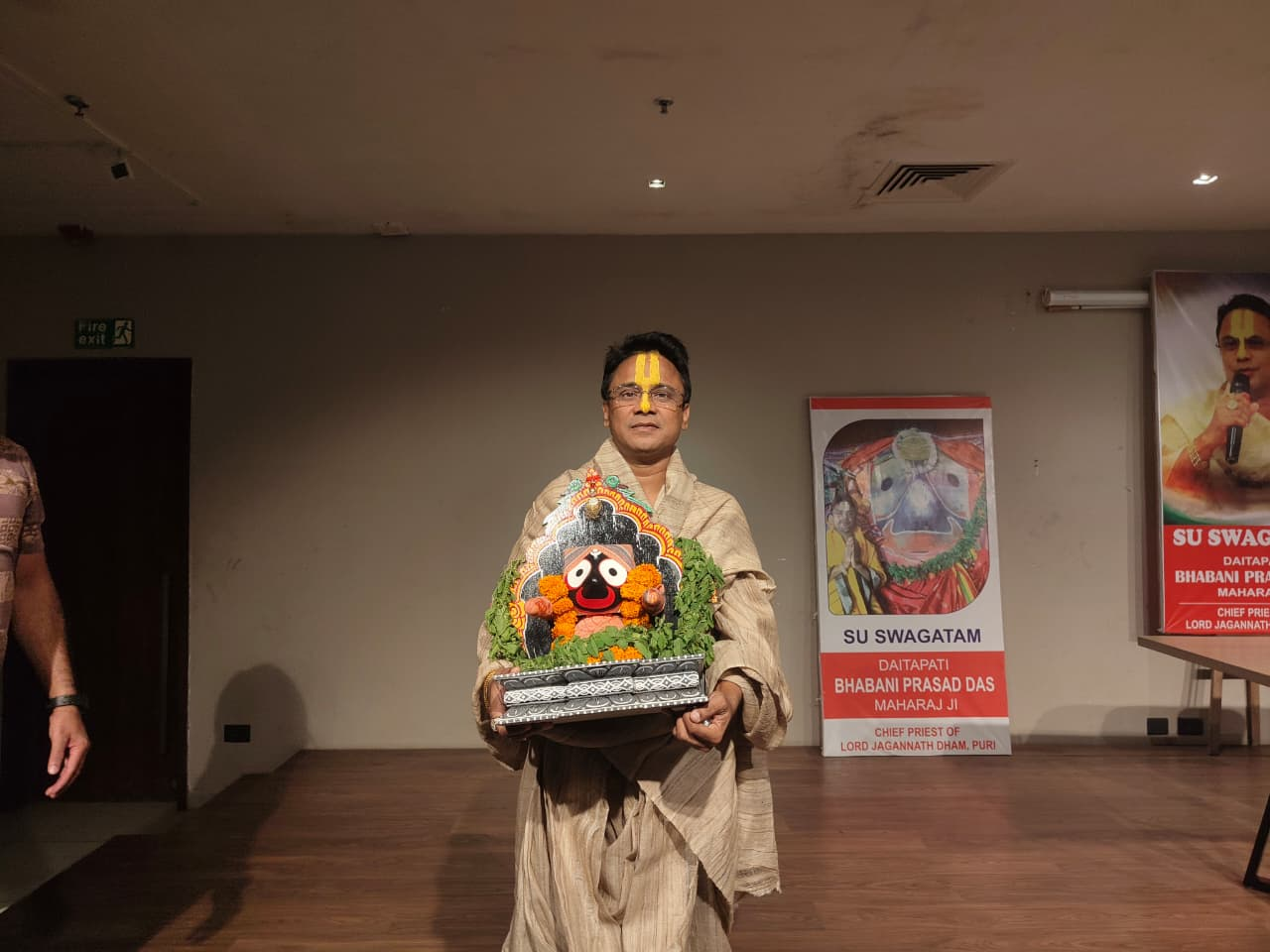
Rooted in the timeless legacy of Sanatan Dharma, the Maha Yagya represents a continuation of sacred rituals believed to have originated in the Treta and Dwapar Yugas, now being revived in the present era to promote emotional, social, and spiritual well-being. The event is expected to draw devotees, seekers, and spiritual enthusiasts from across the region.
For the first time in Bengal, the sacred traditions of the Jagannath Temple will be recreated with authenticity and precision. The rituals will be led by Maharaj Shri Daitapati Bhabani Prasad Das Ji, a respected descendant of the revered Daitapati lineage associated with Lord Jagannath’s rituals.
A key highlight of the three-day event will be the manifestation of Lord Jagannath in 32 divine forms—an extraordinary spiritual experience typically witnessed only within the sanctum of Puri. This rare occasion offers devotees an opportunity to experience the Lord’s multifaceted presence beyond traditional temple boundaries.
At the heart of the Maha Yagya lies the concept of universal participation and inclusivity. The ceremony will feature the offering of the “Jagannath Tilak,” symbolizing divine grace, unity, and spiritual protection. More than a ritual, the Tilak represents a message of equality and a reminder of shared humanity under divine guidance.
Speaking on the occasion, Maharaj Ji described the event as a “spiritual calling” rather than just a gathering, inviting individuals to pause, reflect, and reconnect with their inner selves. He emphasized that the Maha Yagya serves as a platform for collective harmony, rooted in ancient wisdom yet deeply relevant to modern times.
Organized by the Sri Rajadhiraj Jagannath Trust and the Shri Jagannath Darshan Charitable Trust, the event will also feature Mahaprasad Seva, Odissi dance performances, and authentic Vedic rituals conducted by learned Brahmins.
The Shri Jagannath Vishwashanti Maha Yagya stands as a powerful reminder of India’s enduring spiritual heritage and its role in fostering unity, peace, and cultural continuity in today’s world.
25, Mar 2026
India’s Sports Sector Expands Rapidly, Cricket Commands Nearly 90% Share
India’s sports industry has achieved a significant milestone, crossing the $2 billion mark for the first time, reflecting strong growth and increasing commercial potential. The sector expanded by 13.4% year-on-year to reach approximately $2.13 billion (Rs 18,864 crore), underlining its rapid evolution in recent years.
Over the past four years, the industry has nearly doubled in size, registering an impressive compound annual growth rate (CAGR) of around 19%. This steady rise highlights growing investments, expanding fan engagement, and the increasing commercialization of sports across the country.
Cricket continues to dominate India’s sports economy, contributing a massive 89% of the total revenue—an increase from 85% the previous year. With earnings of about Rs 16,704 crore, cricket alone now surpasses the total value of the entire Indian sports industry recorded just a year earlier.
Meanwhile, the share of other emerging sports has declined to 11%, indicating a widening gap between cricket and the rest of the sporting ecosystem. Despite efforts to promote disciplines such as football, badminton, and kabaddi, cricket’s overwhelming popularity and financial strength continue to drive the market.
The latest figures highlight both the success and the imbalance within India’s sports landscape. While the overall growth signals a positive outlook, experts believe there is a need to further support and invest in non-cricket sports to ensure more balanced and sustainable development across the sector.
24, Mar 2026
Automha and Comau Showcase Advanced Logistics Solutions at LogiMAT 2026
Stuttgart, March 24, 2026 – Automha, together with Comau, is showcasing a full portfolio of end-to-end logistics solutions at LogiMAT 2026 (Hall 1, Booth F37), Europe’s most important International Trade Show for Intralogistics Solutions and Process Management, taking place in Stuttgart, Germany from March 24–26. The solutions on display are designed to optimize the entire logistics value chain – from inbound handling to automated storage and outbound shipping – addressing the needs of both third-party logistics (3PL) operators and manufacturing intralogistics environments.
By combining Automha’s expertise in high-density automated storage and retrieval systems (AS/RS) with Comau’s advanced robotics, mobile automation solutions, intelligent vision systems and digital integration capabilities, customers can now rely on a complete offering that covers all phases of the logistics flow: inbound product handling, intelligent storage strategies, automated storage and retrieval, order preparation and synchronized shipping. This integrated 360° approach ensures seamless connectivity across the entire logistics process and can include, when required, process design, software orchestration and turnkey solutions implementation.
Pietro Gorlier, CEO of Comau, affirms: “The global automation and logistics market is expected to exceed 10% CAGR, driven by sustained mid-to-high growth across key segments over the next several years*. With our combined process knowledge, systems and software expertise, we are perfectly positioned to deliver turn-key solutions that cover the entire intralogistics value chain, from the design and optimization of warehouse layouts to automated process flows and outbound material handling.”
During the three-day event, visitors have the opportunity to discover Quaterways, Automha’s advanced multidirectional shuttle system, designed to move orthogonally along aisles and easily access storage channels, enabling fully automated storage and retrieval operations. Unlike traditional shuttle solutions, which are limited in movement or require dedicated transfer systems between different warehouse areas, Quaterways introduces a truly multidirectional movement logic, allowing the shuttle to operate continuously and smoothly both along main aisles and within storage channels. This approach enables significant reductions in cycle times, increased storage density, simplified system architecture and improved operational flexibility, especially in high-variability environments.
Integrated with Automha’s proprietary Warehouse Management System (AWMS), Quaterways offers high versatility, enabling maximum storage density, operational flexibility, and real-time control. Its ability to manage multiple pallet formats within the same channel and dynamically optimize movement paths makes Quaterways particularly well suited for complex environments, such as those typical of 3PL and e-commerce operations.
Autosat GTR, the latest evolution of Automha’s Autosat shuttle technology, will also be featured at the booth. A benchmark solution for high-density pallet storage, with over 12,500 units installed worldwide and a presence in 79 countries, Autosat GTR is available in 20 standard models. It is designed to handle a wide range of pallet types and load units while maintaining full compatibility with major racking systems and forklifts, allowing for easy integration into both new warehouses and existing infrastructures.
Comau’s MyMR autonomous mobile robots will also be on display as will its MATE-XT and MATE-XB wearable exoskeletons, which enhance material handling efficiency and operator ergonomics across logistics and manufacturing workflows. MyMR AMRs provide flexible, software-driven material transport between storage areas and production lines, enabling just-in-time supply and reducing non-value-added movements. The wearable robotic exoskeletons, MATE-XT and MATE-XB, are engineered to improve worker safety and productivity during repetitive or overhead tasks, including truck unloading and manual sorting activities, by reducing shoulder and lower-back muscle strain.
* In-house estimates based on published market research..
24, Mar 2026
Indian Railways Updates Ticket Cancellation and Refund Rules
Indian Railways has revised its ticket cancellation and refund guidelines to improve transparency, reduce misuse, and make seat allocation more efficient for passengers.
Under the updated system, refund eligibility will now depend on how early a passenger cancels their ticket before the train’s departure.
Revised Refund Structure
As per the new rules:
- Tickets cancelled 72 hours or more before departure will be eligible for up to 75% refund, after deduction of applicable charges.
- Cancellations made between 72 and 24 hours before departure will allow around 25% refund.
- If a ticket is cancelled between 24 and 8 hours, passengers may receive approximately 50% refund.
- No refund will be granted if cancellation is done within 8 hours of departure.
Officials say the revised structure is designed to discourage last-minute cancellations that often lead to seat blocking and reduce availability for other passengers.
Greater Flexibility for Boarding Point Changes
Along with refund reforms, Indian Railways has also introduced a passenger-friendly update allowing changes to the boarding station.
Passengers can now modify their boarding point up to 30 minutes before departure, offering greater flexibility, especially for those travelling from cities with multiple railway stations.
Earlier, such changes were permitted only until chart preparation. The new rule extends convenience closer to departure time.
Aim: Prevent Misuse and Improve Efficiency
Railway officials have stated that the updated policy also aims to curb irregular practices by ticket agents and bulk booking operators who sometimes reserve and cancel tickets repeatedly for unfair advantage.
By tightening cancellation rules, Indian Railways hopes to ensure fair access to confirmed seats and improve overall booking system efficiency.
Significance of the New Policy
The revised rules are important because they:
- Promote fair ticket availability for genuine passengers
- Reduce last-minute cancellations and seat wastage
- Improve transparency in refund calculations
- Strengthen system efficiency and booking discipline
- Offer better flexibility for boarding adjustments
Conclusion
The new cancellation and refund framework marks a step toward a more structured and efficient railway booking system. While stricter in approach, the policy is designed to enhance fairness, reduce misuse, and improve travel convenience for millions of passengers across India.
24, Mar 2026
Climate Narrative Hub Launches Guide to Support Context-Rich Reporting on Human–Wildlife Interactions on International Day of Forests
New Delhi, Mar 24: Climate Narrative Hub (CNH), an initiative by Dasra and Momentum Shifts, in collaboration with the Rainmatter Foundation, has launched a new guide to support journalists and content creators in reporting on human–wildlife interactions with greater context, clarity, and on-ground understanding. Released on the International Day of Forests, the manual aims to strengthen storytelling around how communities and wildlife share landscapes across India.
Co-created with a coalition including – Network for Conserving Central India, Wildlife Conservation Society–India, Coexistence Consortium, The Corbett Foundation, Vidhi Centre for Legal Policy, and The Nature Conservancy – this handbook moves beyond episodic reporting tied only to moments of crisis and instead seeks to build a richer understanding of one of the most complex environmental and social challenges facing many regions today.
In doing so, it encourages a broader approach to reporting on human–wildlife interactions by drawing greater attention to coexistence, adaptation, and the everyday practices through which communities navigate shared environments. Across many forested and biodiversity-rich regions, people live alongside wildlife with a deep understanding of local landscapes, seasonal shifts, and ecological patterns. It aims to support narratives that more meaningfully reflect these lived realities.
Vishaka George, Communication Consultant, Dasra said,
“There are many stories to be told about our forests, their biodiversity, and the communities that live alongside them. Told more often and with care, they can deepen public connection to nature and shift conversations towards protecting both communities and wildlife. We hope this resource encourages more thoughtful, sensitive storytelling, mindful of language, data, and whose voices are centred.”
The handbook also supports more informed and well-rounded storytelling by offering practical resources, including:
-
Sample questionnaire for more sensitive reporting – frameworks for engaging with affected communities and experts in an informed and sensitive manner, highlighting key pitfalls such as sensationalism of language.
-
Directory of experts – a curated directory of researchers, journalists, and practitioners to ensure nuanced on-ground reporting.
-
Repository of data sources – a collection of key data references to ground reporting in evidence and support well-rounded, contextualised storytelling.
Drawing from consultations with researchers and practitioners, the guide highlights a few key principles for stronger narrative: moving beyond the immediate event to ask what larger ecological or systemic factors are at play, using clear and neutral language, and ensuring balanced sourcing by including voices such as forest-dwelling communities, Adivasi elders, women, and local conservation practitioners alongside officials. It also underlines that stories can benefit from showing the full spectrum of human–wildlife relationships, including adaptation, local response, and practical solutions on the ground.
24, Mar 2026
DALKHAI Initiative: Strengthening Local Livelihoods to Curb Migration
The state government of Odisha has stepped up efforts to address the issue of labour migration by promoting the DALKHAI initiative, a programme aimed at creating more employment opportunities within local communities and improving rural livelihoods.
The initiative focuses on ensuring that people, especially in rural and tribal regions, can find work closer to home instead of being forced to migrate to other states in search of daily wages. Officials said the programme is being implemented through coordinated efforts of multiple departments to support income generation and skill-based employment.
The main objective is to build stronger village-level economies by promoting self-reliance and creating sustainable livelihood options. The government believes that when employment is available locally, families can remain together and maintain better social and economic stability.
Under the initiative, emphasis is being placed on encouraging small-scale enterprises, supporting agricultural and allied activities, and expanding rural infrastructure-related work. Skill development and capacity-building programmes are also being integrated to help youth and workers access better job opportunities within their own regions.
Officials highlighted that migration is often driven by lack of stable income opportunities in local areas. By addressing this gap, the DALKHAI initiative aims to reduce economic pressure on families and improve overall living conditions in rural communities.
The government has described the programme as part of its broader commitment to inclusive development, where growth is not limited to urban centres but extends equally to villages and remote areas.
Experts note that such initiatives can help strengthen rural economies, increase local spending power, and reduce dependency on external labour markets. Over time, this is expected to contribute to more balanced regional development and improved quality of life.
In essence, the DALKHAI initiative is being positioned as a step towards ensuring that people can earn a dignified livelihood in their own villages, reducing the need for migration and supporting long-term rural development.
24, Mar 2026
India’s Heritage Sites Attract Film Shoots and Foreign Tourists, Boosting Eco-Tourism Growth
India’s iconic heritage monuments are emerging as popular destinations for film shootings and international tourism, reflecting a growing blend of culture, cinema, and sustainable travel promotion across the country.
Among the most prominent examples is the UNESCO World Heritage Site Qutub Minar, which has recently witnessed a rise in film shoots, documentary productions, and visual storytelling projects. The monument’s architectural grandeur and historical significance continue to attract filmmakers seeking authentic backdrops for cinema and digital content.
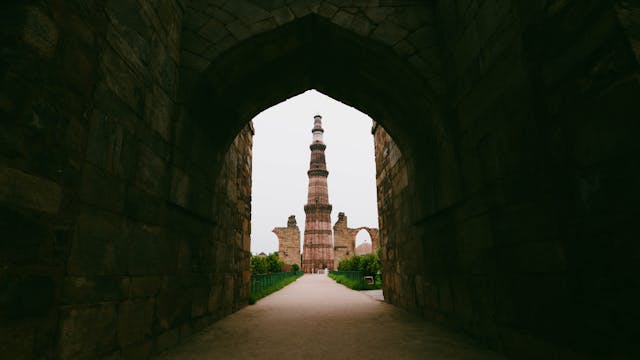
Pic Credit: Pexel
Tourism officials report that increased media exposure and cinematic visibility of heritage sites have contributed to a steady rise in foreign tourist arrivals. International visitors are showing greater interest in India’s cultural landmarks, history, and architectural heritage, with sites like Qutub Minar becoming key attractions in travel itineraries.
Experts say this growing trend is not only boosting tourism but also strengthening India’s cultural and eco-tourism ecosystem. By promoting responsible tourism practices, authorities aim to ensure that heritage conservation goes hand in hand with visitor engagement and economic development.
The government and tourism bodies have been encouraging controlled film shootings at protected monuments under strict guidelines to ensure that heritage structures are not damaged. These initiatives are designed to balance creative use of historical sites with long-term preservation.
Tourism stakeholders believe that film shoots play a major role in global destination branding. When Indian monuments appear in films, documentaries, or digital media, they generate international curiosity and encourage more foreign travelers to explore these destinations in person.
Alongside cultural tourism, eco-tourism efforts are also being strengthened. Sustainable travel practices such as regulated visitor flow, improved cleanliness standards, and awareness campaigns are being implemented at major heritage sites to reduce environmental impact.
Officials note that this integrated approach—combining heritage conservation, film tourism, and eco-friendly travel—supports local employment, boosts small businesses, and enhances India’s global tourism profile.
With rising international interest and increasing creative use of historical sites, India’s heritage monuments are evolving into dynamic cultural spaces that connect history, cinema, and sustainable tourism.
24, Mar 2026
India’s Growth Accelerates Across Infrastructure, Economy and Global Standing: PM Narendra Modi
Prime Minister Narendra Modi on Monday said India is witnessing rapid and broad-based growth, driven by major improvements in infrastructure, economic performance, and global influence.
Speaking at an event, he pointed to the sharp expansion of infrastructure as a key sign of progress. India now has over 160 airports, alongside growing road networks, railway modernization, and digital connectivity—developments that are improving mobility and boosting economic activity across regions.
The Prime Minister emphasized that India’s growth is no longer limited to policy announcements but is visible on the ground. He said faster execution of projects and time-bound delivery have helped shift the country from gradual progress to accelerated development.
On the economic front, he noted that India has remained resilient despite global challenges, including geopolitical tensions in regions such as West Asia. Stable growth, rising investments, and continued focus on manufacturing and exports have supported this momentum.
He also highlighted India’s increasing global standing, stating that the country is being seen as a reliable economic partner. According to him, consistent policy decisions and reforms have strengthened confidence among international investors and institutions.
Referring to governance, the Prime Minister said several key decisions taken in recent weeks reflect the government’s intent to maintain growth despite external pressures. He added that India’s ability to move forward even during global uncertainty demonstrates its economic strength.
Earlier in the day, while addressing the Lok Sabha, he also assured that India is prepared to handle global disruptions, including energy challenges, through strategic planning.
Overall, the Prime Minister presented India’s growth as a combination of faster infrastructure development, economic resilience, and rising global credibility, signaling a shift toward sustained, high-speed progress.


