


17, Oct 2025
Gulf Oil Kicks Off Chai-Pakoda Ride 2025 in Bangalore Celebrating India’s Biking Culture
Gulf Oil Flags off Chai Pakoda Ride 2025 in Bangalore, Celebrating Three Years of India’s Biking Culture through Association with India Bike Week
Bangalore, October 17, 2025 : Gulf Oil Lubricants India Limited, one of India’s leading lubricant brands, kicked off the Bangalore edition of the much-loved Chai-Pakoda Ride 2025, marking the third consecutive year of its association as the main sponsor of India Bike Week (IBW), Asia’s biggest motorcycling festival. This year’s rides once again set the stage for a thrilling celebration of camaraderie, adventure, and community spirit through motorcycling. Over the past two years, this collaboration has drawn 12000+ riders and motorcycle enthusiasts across 20 cities, turning the rides into one of the most anticipated community-driven biking experiences in the country.

This year’s Bangalore ride saw 170+ bikers come together at Peepai Brewery & Kitchen, Bangalore, before embarking on a 42 km route to Hills Drive Cafe, Kanivepura, that blended the thrill of open roads with the spirit of togetherness. True to its focus on safety, Gulf organized a pre-ride briefing and safety drill, with experienced IBW Marshals leading the ride in groups to ensure smooth coordination. Every participant was also equipped with safety riding gear, underscoring the brand’s commitment to safe and responsible riding. The event wrapped up with interactive challenges and fun activities at the destination, and shared moments that celebrated the unifying culture of motorcycling.
Speaking on the occasion, Mr. Ravi Chawla, Managing Director & CEO, Gulf Oil Lubricants India Ltd., said, “The Chai-Pakoda Rides have become a cherished ritual for biking enthusiasts, and we are thrilled to bring Bangalore another unforgettable experience this year. Our continued partnership with India Bike Week reflects Gulf’s commitment to not just powering mobility but of creating experiences that celebrate passion, freedom, and the brotherhood of riders. As a customer-first company, these experiences also give us the pulse of the ground while enabling riders to truly feel the performance and reliability that Gulf stands for. For us, it’s about creating moments that riders will remember, while reinforcing the trust they place in us.”
Now in its 12th year, India Bike Week has firmly established itself as the country’s premier celebration of motorcycling culture, a space where riders come together to bond, share stories, and fuel their passion for the open road. Among its signature traditions, the Chai-Pakoda Rides continue to expand their footprint, offering bikers a chance to explore scenic trails, bond over chai and conversations, and immerse themselves in a shared love for motorcycles.
As a cornerstone of India Bike Week’s build-up activities, the Chai-Pakoda Rides continue to grow in scale and popularity, spanning multiple cities and creating touchpoints for Gulf to engage directly with the biking fraternity. With Gulf’s continued support, these rides have evolved into immersive journeys that blend road safety, adventure, and community engagement. By spanning multiple cities and growing in scale every year, they provide Gulf with a powerful platform to connect directly with India’s biking fraternity.
- 0
- By Neel Achary

17, Oct 2025
Indians Celebrate Diwali with Family Travel, Spiritual Trips, and Festive Getaways
Indians Embrace Diwali Celebrations Family Travel, Spiritual Journeys and Festive Getaways Take Centre Stage
Mumbai, 17 October 2025: Diwali 2025 marks a vibrant shift in the way Indians celebrate moving beyond traditional home gatherings to immersive travel experiences that reflect celebration, discovery, and togetherness. Thomas Cook (India) Limited, India’s leading omnichannel travel services company, and its group company, SOTC Travel, have witnessed a growing trend in consumer preferences, with families including multigenerational groups, group of friends, couples increasingly choosing to make travel an integral part of their Diwali celebrations.

Rajeev Kale, President & Country Head, Holidays, MICE, Visa Thomas Cook (India) Limited, said, “There is a growing trend where families, including multi-generations, are choosing to celebrate special occasions and festivals like Diwali – for bonding time and celebrations, while exploring favourite/new destinations. What’s particularly interesting is the increase in average spends, with travellers opting for longer stays—moving from traditional 3-day breaks to 6–12 day holidays. Multigenerational families are maximising school vacations for Diwali, while millennials and working professionals are combining weekends with festive holidays for extended getaways. Top international favorites include Europe’s Switzerland, France, Italy, Austria, Spain and Portugal. Australia and New Zealand remain popular for their outdoor experiences and wildlife encounters, while Japan and South Korea appeal to younger travellers with their blend of tradition and pop culture. Short-haul favourites include Vietnam, Oman, Maldives, Bali and Cambodia emerging strongly. Visa-free and easy visa destinations like Thailand, Malaysia, Sri Lanka, Nepal, Bhutan, Dubai-Abu Dhabi, Indonesia and the Philippines continue to drive demand.
On the domestic front, travellers are choosing destinations like Kerala, Rajasthan, Uttarakhand, Andamans as well as spiritual circuits like Char Dham, Kailash Mansarovar, Ayodhya-Prayagraj and Varanasi. Based on the growing appetite from young India’s millennials for outdoor adventure, we have created unique ‘Pilgrimage Plus’ portfolio that blends darshans with adventure— river rafting in Rishikesh, trekking in Uttarakhand, paragliding in Bir and ziplining over the Ganges.
Given the rising popularity of festival travel, there’s understandably an expected increase in rates. As a result, we have observed a trend where travellers are securing airfares by booking well in advance. At Thomas Cook, we’ve curated festive portfolios that blend tradition with exploration including our regional group tours with on-tour pujas and curated vegetarian meals. With travellers seeking meaningful and memorable experiences, our focus remains on crafting journeys that celebrate the spirit of the season.”
S.D. Nandakumar, President & Country Head – Holidays & Corporate Tours, SOTC Travel, shared, “Traditionally, Indian festivals have been centred around home rituals and family gatherings. However, we are witnessing a strong shift—families are increasingly celebrating by travelling, blending tradition with exploration, relaxation and quality time. We have designed our Diwali festive packages curated specially for families and multi-generational groups. We are seeing interest not only from India’s metros but also from regional India’s tier 2 and 3 markets, reflecting a strong, nationwide aspiration to travel.
A growing trend among young migrant professionals is extending their weekend, travelling back home to spend quality time with family and celebrate the festive season together for a 5–6 day break. Cruises are also gaining popularity and to elevate this experience, we’ve partnered with Disney Cruise Line for exclusive sailings from Australia–New Zealand, bringing the magic of Disney closer to home; also domestic sailings like Cordelia’s festive sailings are seeing strong interest from Young India’s millennials and Gen Z, couples and working professionals looking for a quick break.
Spiritual Tourism is a strong trend this festive season and we are witnessing interest in spiritual circuits like Char Dham, Kashi, Ayodhya, Rameswaram, Tirupati, Amritsar, Varanasi, Prayagraj, Dwarka and Sri Lanka, with special themed tours such as ‘Ramayan Anant Yatra’ and ‘Ramayan Trails’—offering a deeper connection with faith and culture during the festive season.
What is noteworthy is that Indians being value-seekers are smart planners — most having booked their holidays well in advance, recognising surge festive fares and the risk of last-minute disappointment; also coupled with BOGO offers and discounts, travellers are now maximizing their holidays.”
With travellers seeking to rediscover togetherness in new destinations, festive travel in 2025 is redefining the meaning of home and celebration. Whether through moments of devotion, adventure, or discovery, Indians are embracing travel as a heartfelt expression of festive spirit and family bonding.
16, Oct 2025
International Day of Rural Women: Stories of Empowerment Through Skill-Building
India, 16th october 2025: The vision of a future-forward, inclusive, and economically vibrant India is incomplete without the participation of women in the workforce. With equal access to education, economic opportunities, and safety, women can drive social change, overcome socio-cultural barriers, and confidently run businesses. Initiatives like Mudra Yojana and Stand-Up India have contributed to an increase in the Female Labour Force Participation Rate, from 23.3% in 2017–18 to 41.7% in 2023–24. However, the Economic Survey 2024–25 highlights that women still own only 22% of India’s MSMEs, most of which are micro-enterprises.
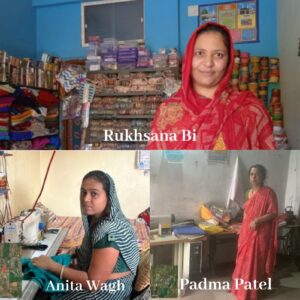
To empower aspiring women entrepreneurs, Transform Rural India (TRI), a development design organisation, is working to transform India’s bottom 100,000 villages into thriving localities. Through scalable and grounded solutions, TRI is creating entrepreneurial ecosystems that provide counselling, skill development, financial literacy workshops, and peer group meetings to foster collaboration and resource sharing within communities. Many rural women have emerged as inspiring examples of resilience and enterprise.
1. Padma Patel
Padma (35) from Kari village, Barwani district, Madhya Pradesh, is now the proud owner of Muskan Saree Shop & Silai Centre. Born into a family engaged in agricultural labour and goat herding, she initially ran a small bangle shop to support her family. Her journey took a transformative turn when she joined TRI’s Entrepreneurship Development Program (EDP) through the Enterprise Facilitation Hub.
With guidance from TRI’s Nari Adhikar Kendra, she strengthened her financial literacy and business skills. Padma expanded her shop to include sarees and a sewing counter. Today, she enjoys a thriving business during festive and wedding seasons and plans to establish a dedicated sewing centre on newly acquired land. She actively inspires other women to acquire skills and leverage resources to realise their dreams.
2. Anita Wagh
Anita (32), from Kansul village, Pansemal, Barwani district, could not complete education beyond Class 10. Yet, she turned her tailoring skills into a profession after marriage, starting the Jai Dasha Mata Silai Center. With support from a self-help group and guidance from TRI’s Pansemal Enterprise Facilitation Hub and Nari Adhikar Kendra, she trained under TRI’s Accelerated Entrepreneurship Development Program (AEDP) to gain marketing and strategic skills.
Relocating her centre to Pansemal, Anita serves women from nearby villages, focusing on quality, versatility, and timely delivery. Today, she runs a successful enterprise and plans to expand into a cloth shop, gaining financial independence and respect within her family and community.
3. Rukhsana Bi
Rukhsana (33) from Julwaniya, Barwani, has established her own Ayesha Collection Cloth Shop. Limited education and social constraints initially restricted her to household duties. With the support of her husband and in-laws and guidance from TRI’s Enterprise Facilitation Hub, Rukhsana developed a business plan, identified a market gap, and secured support through a self-help group.
Her shop now serves families in Julwaniya and surrounding villages, providing her with financial independence and social recognition. Rukhsana contributes to family decisions, educates her children, and plans to expand into a full-fledged shop in the near future.
15, Oct 2025
PerformAce partners with mFilterIt to Redefine Ad Performance in India
New Delhi, India, 15 October 2025: PerformAce Media, India’s leading precision MarTech specialist, has entered a strategic collaboration with mFilterIt, a global frontrunner in digital ad-trust solutions. This partnership empowers brands and agencies with advanced, performance-driven advertising—layered with robust fraud protection and sophisticated Attention Metrics to reveal true audience engagement.

Addressing the New Age of Digital Advertising
Today’s digital world demands more than outdated metrics like CTR. The surge in AI-driven bots and invalid traffic means advertisers face greater risks of digital fraud, while the challenge of ensuring brand safety is greater than ever. Moreover, viewability rates, while important, are simply not enoughbrands need assurance that their messages are truly absorbed by a real, engaged audience.
Through this partnership, PerformAce and mFilterIt will equip advertisers to move beyond conventional measures, integrating:
- Invalid traffic and brand safety protection
- Attention-based measurement models
- Transparent, actionable campaign insights that maximize ROI
What’s New: Key Innovations
- Ad Fraud Prevention & Brand Safety: Every rupee spent is safeguarded by eliminating invalid traffic and avoiding unsafe placements.
- Performance Optimization: Data-driven insights allow brands to fine-tune creative, targeting, and placements on the fly.
- ROI Maximization: Identifies top-performing platforms and formats for high-impact conversions and scalable growth.
- Next-Gen Attention Metrics: Tracks advanced engagement signals—time spent, ad positioning, active interactions (clicks, sound, screen orientation) and video quartile progression.
- Custom Audiences & Retargeting: Enhanced targeting powered by real user-intent scores enriches campaign precision and effectiveness.
Real-World Outcomes
In a recent OTT campaign analyzed by mFilterIt, optimizing for invalid traffic and unsafe environments, coupled with attention-based creative adjustments, resulted in tangible ROI gains, actionable audience insights, and improved content strategies. By bringing this intelligence into PerformAce’s proprietary stack—VisionTV, AudienceX, NativeHub, InsightX, and ConnectX—advertisers gain unparalleled campaign clarity and transparency.
Leadership Perspectives
Saurabh Gaur, Co-Founder & CEO, PerformAce Media, said:
“At PerformAce, we’re committed to not just delivering reach at scale, but also to ensuring genuine accountability, brand safety, and attention-led performance. With mFilterIt, we’re empowering advertisers to demand more: real ROI, real trust, and real results.”
Amit Relan, Co-Founder & CEO, mFilterIt, added:
“Attention is fast becoming the new currency for advertisers. Together with PerformAce, we ensure every impression is verified and every campaign is optimized for meaningful engagement.”
15, Oct 2025
TEAS Winner Meenakshi Debuts Solo Exhibition at Anupa Mehta Contemporary Art
Anupa Mehta Contemporary Art’s TEAS award recipient Meenakshi has launched her first solo exhibition
Mumbai: October 15, 2025 : To celebrate Mahatma Gandhi’s 156th birth anniversary, the Anupa Mehta Contemporary Art (AMCA) gallery is showcasing the debut project of its award-winning artist Meenakshi Nihalani till October 25. The art project titled ‘Seven Yards of Blue’ which is inspired by Gandhi’s letters around the Champaran Satyagraha and chronicles its impact on the farmers of India, is scheduled till October 13 at the art gallery.
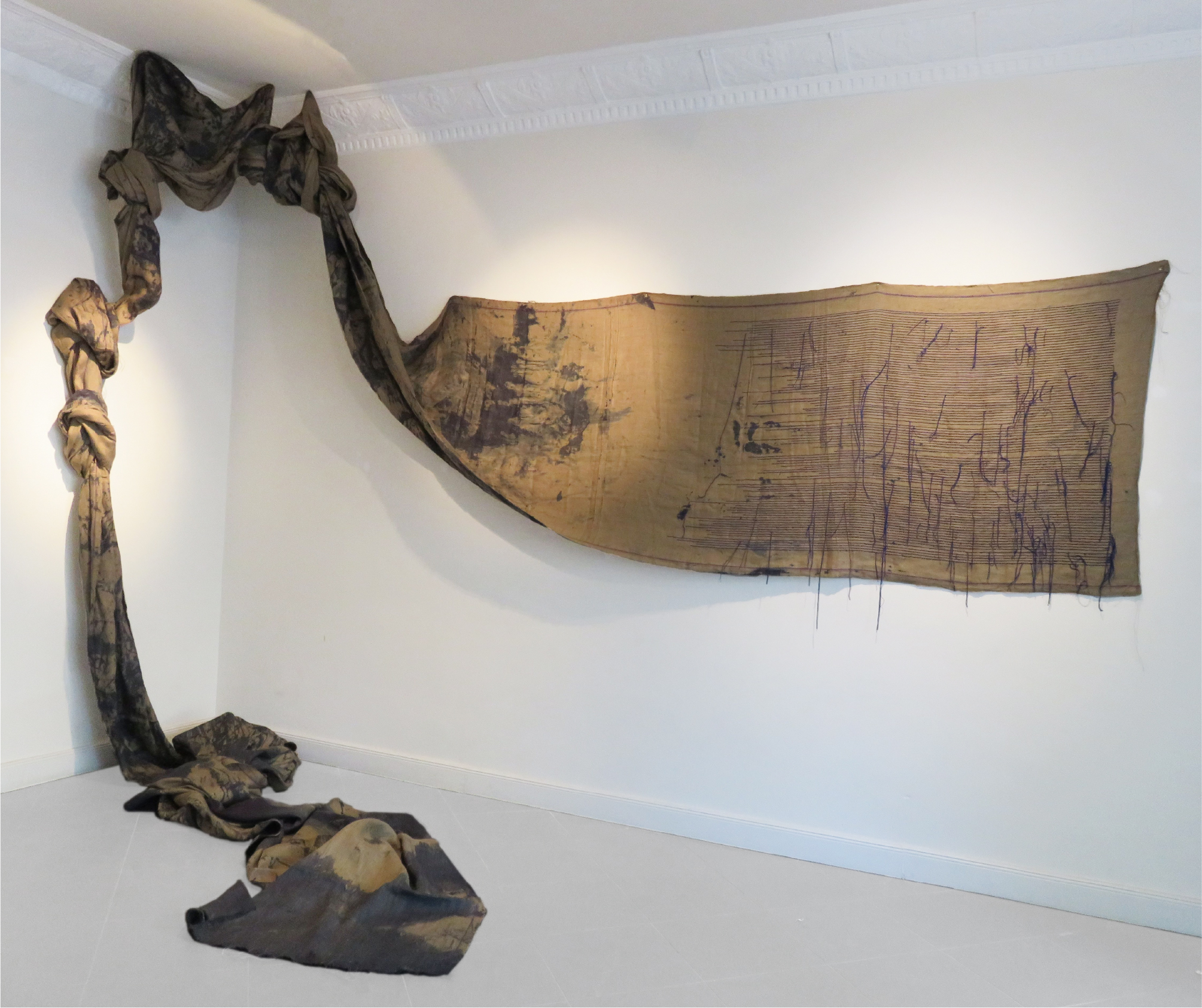
Artist Meenakshi Nihalani was the recipient of AMCA’s first ever ‘The Emerging Artist Solo’ (TEAS) award that recognises emerging artists whose work focuses on subjects of socio-political and economic relevance. The exhibition is curated by Anupa Mehta and supported by Hampi Art Labs, where Meenakshi recently completed her residency.
The Champaran movement, led by Gandhi in 1917, was India’s first significant civil disobedience campaign focused on ending forced indigo cultivation. Meenakshi’s immersive installation works, combining textiles and sculpture, explore the plight of indigo farmers, chronicling their resilience amid colonial oppression and creating a nuanced dialogue between the past and present.
“We are very excited to display Meenakshi’s impactful work at AMCA as a tribute to Mahatma Gandhi during this very special month that celebrates his birth anniversary. This exhibition allows us to reflect on the enduring relevance of resistance, justice, and self-reliance. We look forward to having many more meaningful conversations in the years to come with the TEAS award and we hope to keep inspiring fresh new talent to express their views on relevant socio-political and economic events through contemporary art,” said Anupa Mehta, gallerist and curator.
As an annual event, the TEAS award and exhibition program aims to launch and nurture emerging talent, fostering vital cultural dialogues both within India and internationally. The highly anticipated opening is expected to attract artists, collectors, critics, and audiences eager to experience a powerful confluence of art, history, and activism.
15, Oct 2025
Roots at Mahindra University reveals stellar line-up bridging tradition and youth
Hyderabad, 15th October 2025: Mahindra Group’s newest cultural initiative, Roots at Mahindra University – a one day festival bridging ancient traditions with today’s youth – has finally unveiled its line-up of diversely talented artists. With this new IP, Mahindra is breaking ground by empowering students to create a living, breathing ecosystem where heritage becomes an active, two-way dialogue. The festival will place the next generation at the very heart of cultural sustainability.

India’s cultural heritage is diverse, and shifting every few hundred kilometres. But what happens when this thriving culture faces the danger of becoming a niche? For a generation of digital natives, these traditions are not just about history but a piece of identity shedding away. So, they want to extend their efforts towards sustaining these traditions and confluence it into the mainstream. And from this desire, Roots at Mahindra University was born. The students’ mission is simple but profound: to give unique legacy art forms a stage in the here and now.
And the line-up of the festival reflects this very philosophy with: The Raghu Dixit Project, pioneers of India’s folk-rock movement who have redefined Kannada folk poetry for global audiences. Swarathma, who turns music into environmental, social and cultural activism with electrifying performances. Bringing a northern flavour is Alif, aka, Mohammed Muneem Nazir, a poet, singer
songwriter from Kashmir. His work on Coke Studio Bharat and Made In Heaven is steeped in ideas of identity, longing, and resilience. Not to forget Hamza Rahimtula + Rajasthan Folkstars’ rare dialogue between DJing and Manganiyar traditions led by Khartal virtuoso Jaisa Khan and Firoz Khan on the Bhapang and Morchang. It started as a spontaneous collaboration that has pushed Rajasthani folk into global dance circuits.
Meanwhile, there’s Gotte Kanakavva, the 65-year-old daily-wage worker and farmer who is now a folk icon, awarded and celebrated for keeping Bathukamma songs alive. Lastly, Arko and Friends ft. Gaboo’s fresh collaboration will bring together Bollywood with indie experimentation, bridging popular and alt music.
“Young people often express the need to reconnect to India’s artistic traditions, and believe they must shoulder the responsibility to both preserve and reinvent them. Roots is a manifestation of this belief. This is not nostalgia but a generational mandate. It is their way of saying that culture is not a museum exhibit but alive, and belongs in the present to the young. By bringing forgotten art forms through authentic acts in contemporary spaces, Roots is not just preserving traditions but evolving them,” said Jay Shah, Vice President, Head – Cultural Outreach, Mahindra & Mahindra
Dr. Yajulu Medury, Vice Chancellor of Mahindra University, added, “Roots is not a festival planned from the top down for the attendees. The very generation it endeavours to inspire is the one building it piece by piece from the ground up – not just as volunteers but as cultural entrepreneurs. And the line-up of the festival embodies this ethos of not just preserving the past but making it relevant for the future.”
Roots at Mahindra University promises not just performances but a cultural movement demonstrating how the youth has the power and the responsibility to keep the chain of memory alive, and become guardians of India’s cultural future.
14, Oct 2025
Record-Low Inflation Opens Window for Growth Acceleration: PHDCCI
India, 14th oct 2025: CPI has seen a sharp decline in India’s headline inflation to 1.54% in September 2025, the lowest in over eight years according to the date released by Ministry of Statistics & Programme Implementation today.

“The record-low inflation offers a strong foundation for India’s next phase of growth. It is a moment of opportunity to revitalize private investment, stimulate consumption, and accelerate job creation,” said Mr. Rajeev Juneja, President, PHDCCI in a press statement issued here today.
Food inflation (Provisional) regist
He added, “The moderation in food and fuel prices has provided much-needed relief to households and improved purchasing power. Going forward, we urge the government to leverage this price stability to enhance credit availability, ease of doing business, and export competitiveness, especially for MSMEs and labour-intensive sectors.”
This phase of low inflation should be complemented by accelerated implementation of infrastructure and logistics projects to lower input costs, further support for agriculture supply chains to prevent food price spikes, and continued focus on technology-driven productivity gains in manufacturing and services, he added.
We anticipate that India’s inflation will remain within a comfortable range over the next two quarters, supported by adequate food supplies, moderate energy costs, and prudent monetary management by the Reserve Bank of India said Dr. Ranjeet Mehta, CEO & Secretary General, PHDCCI.
13, Oct 2025
Ex-BEL CMD V. Gowtama Mannava Joins Olee.Space as Strategic Production Advisor
Former Bharat Electronics CMD V. Gowtama Mannava joins Olee.Space as Strategic Production Advisor
India, October 13, 2025: Olee.Space, a leading photonics and defense technology innovator, today announced the appointment of Venkateswara Gowtama Mannava, former Chairman and Managing Director of Bharat Electronics Limited (BEL), as its Strategic Production Advisor. With a career spanning more than 4 decades in India’s defense electronics and technology sector, Mr. Gowtama brings extensive experience in strategic leadership, growth through innovation, and large-scale defense production to enhance Olee.Space’s purpose of developing indigenous capabilities in defense aerospace, and communications systems.

In his advisory role, Mr. Gowtama will lead Olee.Space through developing cutting-edge defence electronic systems encompassing various technologies including LIDAR (Light Detection and Ranging) and Secure Communication Networks as per India’s vision for long-term technological self-reliance and Atmanirbhar Bharat. His technical expertise will play a crucial role in speeding up the Olee.Space’s timeline towards deploying high-performing systems and growing international defense partnerships.
Commenting on the appointment, James Solomon, Founder & CEO, Olee.Space, said, “Mr. Gowtama’s appointment represents a turning point for Olee.Space as we move forward to align our innovations with India’s strategic vision for defense and civilian use cases. His unmatched deep experience in heading indigenous defense programmes will lead us to speed up technology development and drive operational excellence across our programs.”
An experienced technocrat, Venkateswara Gowtama Mannava was the Chairman and Managing Director of Bharat Electronics Limited. During his tenure, BEL solidified its position as India’s premier defense electronics company, breaking new ground in radar, communications, and electronic warfare systems. He promoted R&D partnerships, defense electronics innovation, and convergence of emerging technologies across spheres.
Venkateswara Gowtama Mannava, former Chairman and Managing Director of Bharat Electronics Limited (BEL), added, “Passion and commitment are driving the Olee.Space team to new frontiers. I am excited to join a team that is transforming how India develops and deploys cutting-edge defense technologies, and I look forward to supporting their mission of technological superiority and self-reliance.”
This appointment reaffirms Olee.Space’s ongoing commitment to harnessing profound operational expertise with technological innovation to enhance its leadership in India’s strategic technology ecosystem.
Earlier this year, Olee.Space raised $3 million in seed funding from leading global and domestic investors, including BIG Global, IIM A Ventures, Rockstud Capital, and SIDBI, enabling it to accelerate innovation in strategic photonics and defense communications. The appointment of Venkateswara Gowtama Mannava, as Strategic Production Advisor reinforces the company’s commitment to combining cutting-edge technology with operational expertise.
11, Oct 2025
Fertility Expert Sayali Vaidya Hosts India’s Biggest Natural Conception Event in Pune
Mrs Sayali Vaidya, India’s Leading Voice In Fertility Yoga, Brings Conceive Naturally Conference,India’s Biggest Natural Conception Event In Pune
Pune, 11th october 2025: One of India’s leading voices in fertility yoga, Mrs Sayali Kalpesh Vaidya, in association with Sundar Wellness Center, is organising the Conceive Naturally Conference (CNC). Its purpose is to empower couples in the planning stage for natural conception through yoga, Ayurveda, manifestation, and emotional healing. Touted as India’s largest one-day fertility and wellness conference, it will take place on October 5th, 2025, starting from 10:00 A.M at Buntara Bhavan Auditorium in Baner, Pune.

The theme of the conference is Breathe. Believe. Conceive. CNC will be a confluence of science and spirituality, where couples and individuals will find hope, healing, and community. The conference is not just limited to couples in the planning stage. It is open for everyone, including women facing fertility challenges and health-conscious individuals.
Throughout the conference, there will be sessions, workshops, and panel discussions. The first session, A Journey from Fear to Faith, will be organised by Mrs Sayali Kalpesh Vaidya. Following this, there will be sessions like Healing through Mantra and Breathwork by Mr Kalpesh Vaidya, and Dr Neha Phulpagare will host a session on Vocal Resonance For Inner Balance. Mrs. Vaidya will also launch her most awaited book, before she takes the stage for a panel discussion on Conceive Naturally With A Holistic Approach.
Talking about the Conceive Naturally Conference, Mrs Sayali Kalpesh Vaidya said, “This conference is the biggest natural conception event carried out across the country. Over 1,200 attendees, along with wellness coaches, and Ayurvedic and homoeopathic MDs, will participate. My mission is to guide people, and their bodies for a safer conception through this conference. We are planning to organise yogic healing sessions, emotional release practices that open your heart and mind. With this, there will be scientific insights to support your journey with real-life success stories that will establish trust and faith in the process. We are very thrilled and excited to become a part of your journey to conceive.”
Mrs Sayali Kalpesh Vaidya, the founder of Sundar Wellness Center and a fertility yoga expert, has supported over 5,000+ students in their journey. She is blending the science of yoga, Ayurveda, and soulful practices for couples to conceive naturally. She also founded Yoga With Sayali, where she helps her 148K+ Instagram followers as well as 23K YouTube subscribers with yoga tutorials, fertility guidance, tips, and live sessions.
As a leading figure in fertility yoga, she has helped many couples who were dejected after several attempts to conceive. With the Conceive Naturally Conference, Sayali is igniting hope amongst couples through holistic tools and practices to conceive naturally. Sayali has formed a community through her platform, and during the conference, the couples who were previously a part of the programme, will share their testimonials. This will create a sense of community for new joinees and inculcate a feeling of safety and hope for parenthood.
Her 90-Day Mindful Fertility Programme has helped many couples during their conception phase. The diplomas and certificates in Yogic Science, Naturopathy, Pre-Natal and Post Natal Yoga, along with Master’s in Yogashastra has legitimised her practice. It has helped people discover the power of holistic practices that go beyond conventional methods.
This conference also underscores the importance of mind and body wellness, as well as a balanced lifestyle for a safer conception. CNC will serve as living proof that parenthood can begin naturally with the right mindset, yoga, and maintaining a holistic lifestyle.
10, Oct 2025
Nobel Prize Dialogue Bengaluru: The Future We Want
India, 10th october 2025:Nobel Prize laureates and leading thinkers will gather to explore how knowledge, creativity, and investment in young people can shape a more inclusive, sustainable, and equitable future—rooted in India’s rich intellectual tradition. Featuring Nobel Prize laureates David MacMillan (chemistry, 2021) and James Robinson (economic sciences, 2024), alongside renowned experts Tolullah Oni, Gagandeep Kang, Montek Singh Ahluwalia, and Kush Parmar. The event will spotlight transformative talks on the origins of prosperity, the future of urban ecosystems, cutting-edge scientific discoveries, and innovations in global health, culminating in insightful panel discussions on megatrends shaping the next decade. The program will be enriched by captivating cultural performances by Dr. L. Subramaniam and Kavita Krishnamurthy.
3 November 2025 | 10:30 AM–1:00 PM
JN Tata Auditorium, Indian Institute of Science, Bengaluru


