


6, Jun 2025
SBI Chairman CS Setty Calls RBI’s 50 bps Rate Cut and CRR Move Bold and Timely, Says Policy Boosts Banking and Economic Growth
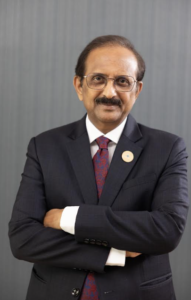
By-Mr. CS Setty, Chairman at SBI & Chairman at IBA
“A 50-bps policy rate cut, a staggered 100 bps CRR cut and change of stance to neutral, RBI today’s monetary policy communication was action packed – innovative, out of the box and an unanticipated surprise. The MPC has broadly addressed any concerns on slowdown in growth on account of global uncertainties and fully capitalized on the softening domestic inflation to deliver a frontloaded rate cut, staggered durable liquidity injection yet conserving the space for future action.
The policy is definitely positive for all sectors of the economy, particularly for banking and finance. In particular lower cost of borrowing will act as a counterbalance to any uncertainty.”
- 0
- By Neel Achary

6, Jun 2025
Bajaj Finserv AMC’s Siddharth Chaudhary Hails RBI’s Bold 50 bps Cut and CRR Reduction as Timely Support for Economy Amid Global Uncertainties

By-Mr. Siddharth Chaudhary, Head- Fixed Income, Bajaj Finserv AMC
“The Monetary Policy Committee (MPC) delivered surprises on three fronts. First, it implemented a 50-basis point rate cut, exceeding market expectations of a 25-basis point reduction. This move aims to support the economy amid rising trade uncertainties and easing inflationary pressures. Second, the MPC shifted its monetary policy stance from “accommodative” to “neutral”, with the Governor emphasizing that future actions will be guided by incoming data. Third, a 100 bps CRR cut.
Prior to the policy announcement, we had highlighted a strong likelihood of a 50-basis point cut, noting that any further easing would depend on a significant deterioration in global growth and trade conditions. With today’s decision, short- to medium-term bonds are expected to perform well, supported by a substantial liquidity surplus following a 100-basis point cut in the Cash Reserve Ratio (CRR). Core liquidity surplus is now projected to be around INR 8 trillion. However, as market expectations approach the terminal rate, profit booking is evident in longer-term bonds.
It is also worth noting that the pre-policy real interest rate of 2% was relatively high, especially in the context of heightened global uncertainties. Given the domestic growth-inflation dynamics, a more accommodative stance was justified to sustain economic momentum. With the FY26 inflation forecast revised downward to 3.7% from 4%, the real interest rate now stands at 1.8%, which remains elevated. Going forward, further rate cuts will only be feasible if inflation projections decline further in upcoming policy reviews.”
6, Jun 2025
RBI’s 50 bps Rate Cut Lauded as Timely Boost for Housing Demand and Economic Growth, Experts Urge Effective Transmission

By-Mr. Amit Bhagat, Co-Founder, CEO and MD, ASK Property Fund
“RBI’s announcement of a further rate cut of 50 bps is a significant proactive step at a time when demand for residential real estate is seeing signs of slowing down across segments due to increased prices. Home ownership continues to be an aspiration and dream for every Indian household, and these rate cuts, followed by reduced home loan interest rates, will strengthen home buyer confidence.
A cumulative rate cut of 1 per cent in the last 6 months is likely to benefit the affordable segment significantly, which was most impacted due to affordability”.
By-Dr. Bharath Supra, Associate Professor – Finance & Programme Chairperson, SBM, Navi Mumbai Campus
The 50 basis point reduction in the repo rate, bringing it down to 5.5% is a surprise move, something that surpassed market expectations. I congratulate the Reserve Bank of India’s MPC, under Governor Sanjay Malhotra, for this shot in the arm. It is exactly what India needed now to spur economic growth in the face of global uncertainties.
However, the rate cut’s impact hinges critically on how effectively banks and financial institutions pass them on to end borrowers. The transmission of rate cuts to retail and SME segments has remained a sticky point. Without stronger transmission mechanisms, the RBI’s monetary easing may not translate into actual credit growth or consumer spending. I am confident that the banks and financial institutions will rise up to the occasion and do their part for the country.
6, Jun 2025
Artificial Intelligence – 1 Million Jobs

By-Dr.Krishna Kumar C, Director & Professor, Asian school of Business,Thiruvananthapuram
It`s time to study AI
10 Lakh skilled professionals by 2026 (Union IT ministry`s report)
India is poised to see a massive surge in demand for Artificial Intelligence (AI) professionals, with projections estimating the need for one million skilled individuals by 2026, according to the report -India’s AI Revolution: A Roadmap to Viksit Bharat -released by the Union Ministry of Electronics & IT.
The world has seen a major shift in the last two decades. Technology has taken over our lives. In 2000, the five largest corporations in terms of market capitalization were Microsoft and CISCO, both technology companies, General Electric, a diversified conglomerate, Walmart, a retail giant and Exxon Mobil, a player in the oil and gas field. The scenario has changed drastically in the last two and a half decades. The leader in Apple today, followed by Microsoft, Nvidia, Amazon and Alphabet-all technology companies.
The changing face of technology is now experienced by all of us. In the mid-1970’s there was only one watch brand, HMT, available in India and one popular scooter brand, Bajaj. A customer in Kerala had to travel all the way to Kochi to buy a watch or a scooter since the brands had only one showroom each in Kerala. For a Bajaj scooter, one had to book and wait for over five years to get an allotment letter from the company. Today, one does not have to move away from their table. In one click you can order a laptop computer or television or vegetables and they get delivered to your doorstep.
Traditional avenues of marketing are giving way to digital marketing. The younger generation has almost stopped reading newspapers and magazines. They can be best approached through their mobile devices. Advertisements and messages to such customers can now be delivered through social media platforms. This shift is visible in the digital marketing spends too. In India, according the Statista.com, the spend on digital marketing was Rs. 59,000 crores in 2023. By 2027 this figure is expected to reach close to Rs.100,000 crores.
Fintech refers to the use of technology to deliver financial services. Fintech is gaining prominence in our lives. All of us now depend on mobile banking apps and online payment technologies. The onslaught of COVID-19 forced us to shift to online payment platforms and now it has become a way of life even for roadside vendors. The finance minister announced recently that she wants to target 100 crore UPI transactions per day in the next three years.
Artificial Intelligence is all around us. Many of us may not realize its impact and influence in our daily lives. Digital assistants like Siri and Alexa understands our commands and help us in a host of activities. When we do shopping online, AI provides us suggestions based on our purchase habits and preferences. When we watch movies on OTT platforms, AI studies our preferences in terms of languages and genre and recommends movies to us for viewing. Self-driving cars and direction apps like Google maps and Apple maps work using AI.
A question that haunts all of us is whether AI and machines will take over and make humans redundant. This is very similar to the fear that we had when computers entered our offices and factories a few decades ago. Computers did not reduce jobs; on the other hand, it created many more opportunities to us. A similar thing can be expected from AI. AI may take away many jobs, but many more are likely to be created. Of course, this would imply that we would have to acquire new skillsets that would be required to manage these new jobs.
-What role does AI play in finance?
The Finance Industry also uses artificial intelligence extensively to improve efficiency and speed of tasks. AI finds application in forecasting, management of investments, risk management, fraud detection, customer service and so on. AI is helping the finance industry, especially the banking sector to automate traditionally banking processes. AI helps financial organizations to engage with the customers in a much better way by predicting their behaviour and understanding their purchase preferences. Organizations are enabled to offer personalized and innovative products and services, accurate and timely customer support and refine their credit scores on real-time basis.
AI is also finding applications in stock markets. Stock market predictions and forecasts become more accurate with the use of AI as compared to traditional methods. AI stock trading models have in-built risk management algorithms that adjust portfolios based on real-time data. It helps minimize potential losses.In the insurance industry, AI helps organizations to analyze vast datasets to detect fraudulent claims and other suspicious activities more effectively than human agents. AI-powered systems can automate parts of the claims process, reducing processing time and costs.
The aspiration of a commerce graduate would be to get placed in the financial sector. If the students do not get exposed to the changes in this sector brought in as a result of the introduction of artificial intelligence and equips themselves by gaining adequate knowledge in this field, them may find themselves outdated by the time they graduate and approach the job market.
Courses- BCom , BCA, B. Tech ,M. Tech B. Tech and M. Tech
Students and professionals who are interested to learn more and gain knowledge about Artificial Intelligence have many options open to them now. For those who wish to pursue the engineering stream, there are B. Tech and M.Tech courses that incorporate machine learning and artificial intelligence into the curriculum. The Kerala Digital University offers MSc and M Tech programmes that focus on artificial intelligence, along with other specializations. The Indian Institute of Management, Kozhikode offers a Professional Certificate Programme in Data Science and Artificial Intelligence for Managers. The Government of Kerala’s ASAP, Additional Skill Acquisition Programme offers a 720-hour programme – AI-Machine Learning Developer.
There are certain Arts & Science colleges in Kerala that offer AI certification as a value-added course for their BCA students. In such courses, the value-added certifications are provided by private partners. Students should check out the quality of the course provider before selecting such courses. There are private universities in Karnataka that have incorporated AI into their BCom and BCA programmes. Recruiters are likely to value courses provided by universities or institutions of repute rather than by private agencies.
Recruiters prefer students who have hands-on experience as compared to those who posses only theoretical knowledge. There are universities that offer practical experience during the delivery of the programme. In such courses, BCA students would create AI algorithms and BCom students would use AI algorithms to work on financial data and come up with financial forecasts. Getting hands-on experience will help the students in their job placements as such students are deployable with minimum onboarding training.
Studying AI also opens up great career opportunities. The rapidly growing field of artificial intelligence offers a wide range of opportunities. AI professionals are needed in sectors such as healthcare, finance, and cyber security. Opportunities can also be found in technology companies, research institutions, and startups. There are possibilities like machine learning engineer, AI researcher, data scientist, AI consultant etc. The best courses from undergraduate level are available today, including in Kerala. You can choose the appropriate ones from a recognized university.To stay ahead in this rapidly evolving field, continuous learning is essential. You should obtain the best AI courses, certifications, and practical training.
Asian School of Business LAUNCHES 3 EXCLUSIVE JOB-ORIENTED DEGREE COURSES IN EMERGING TECHNOLOGIES
The Asian School of Business (ASB), a premier B-School in Thiruvananthapuram, is redefining undergraduate education in Kerala. ASB has launched 3 Bachelor Degree programmes in emerging technologies like AI, FinTech, Data Science, Digital Marketing and E-Commerce. The new courses starting from this academic year are BCA (Hons) – Data Science & AI, BBA (Hons) -Digital Marketing & E-Commerce and B.Com (Hons) -AI & FinTech. These CUSAT- offered programmes are aligned with the National Education Policy 2020 and are designed to meet industry demands. Across all programs, students are guided to pursue industry-relevant certifications from Google, HubSpot, SEMrush, and LinkedIn, with access to over 100 free online course certifications. With this launch, ASB brings its hallmark of academic excellence, innovation, and career-readiness to undergraduate education.The Bachelor of Commerce (B.Com) in FinTech with Artificial Intelligence (AI) offered by ASB is a forward-thinking undergraduate program tailored for students aiming to excel at the intersection of finance and technology. This course integrates foundational commerce subjects with cutting-edge technologies, preparing graduates for the evolving financial landscape.
6, Jun 2025
Aster DM Healthcare champions sustainability with e-Waste recycling and tree plantations in tribute to World Environment Day 2025
Bangalore, June 06, 2025 – In celebration of World Environment Day 2025, Aster Volunteers, the global CSR arm of Aster DM Healthcare, announced a series of environmentally responsible initiatives aimed at promoting sustainability and social inclusivity.
As part of their ongoing commitment to environmental conservation, Aster Volunteers successfully undertook a large-scale e-waste collection drive and tree plantation campaign across India. Through the e-waste collection drive, Aster’s hospitals and offices across five states collected for proper disposal of nearly 1.14 tons of electronic waste, preventing hazardous materials from harming the environment. Additionally, recycling bins were strategically placed in schools, communities, and localities to encourage the ongoing responsible waste disposal and recycling habits, supporting the principles of a circular economy and resource conservation.

Complementing these efforts, the team will be planting at least 5,000 trees across various locations in their respective clusters, built on last year’s successful planting of over 15,000 trees which contributed to local ecological rejuvenation.
Dr. Azad Moopen, Founder & Chairman of Aster DM Healthcare, stated, “At Aster, we are committed to continuously reducing our carbon footprint and will continue our efforts to achieve our environmental goals. Our steadfast dedication to sustainability has earned Aster the highest ESG ranking with a ‘Strong’ rating among listed healthcare companies in India by Crisil in 2023.
“On the occasion of World Environment Day, we reaffirm our pledge to align with India’s vision of a cleaner and greener future by 2047. Every device responsibly recycled, and every tree planted reflects our dedication to creating a sustainable environment for future generations. Let us all continue working together towards a healthier, greener planet,” he added.
Beyond these campaigns, Aster DM Healthcare is advancing its sustainability agenda through several long-term initiatives. In the past fiscal year, the group used over 11.108 million kWh of renewable energy from solar, wind, and hydro sources, cutting its carbon footprint to 7,942 tonnes of CO2. At Aster CMI Hospital, 86% of energy came from renewables, and at Aster RV Hospital, 99%. Aster is commissioning a 55-acre solar plant at one of its units, which is expected to generate 60,225 MWh of solar energy annually, furthering its shift toward renewable energy. Furthermore, on the water & waste management front, Aster has installed 19 sewage treatment plants across India and has successfully produced 97,656 kilolitres of recycled material, reducing landfill burden and conserving resources.
Aligned with the 17 United Nations Sustainable Development Goals (UNSDGs), Aster has made significant progress in areas such as Good Health and Well-Being, Gender equality, Clean Water and Sanitation, Affordable and Clean Energy, Decent work and Economic Growth, Climate Action, Reduced Inequalities, Responsible Consumption and Production, and Partnership for the Goals.
6, Jun 2025
RBI’s 50 bps Repo Rate Cut Sparks Real Estate Revival, Lifts Homebuyer and Developer Sentiment

In a much-anticipated move, the Reserve Bank of India (RBI) has cut the repo rate by 50 basis points to 5.5%, signaling a supportive policy stance aimed at bolstering economic growth and stimulating demand across key sectors. The decision is being welcomed across the board, particularly by the real estate industry, which stands to benefit significantly from lower borrowing costs and improved liquidity conditions.
The rate cut comes at a critical juncture, with the real estate sector showing signs of steady recovery amid rising demand in both affordable and mid-income housing segments. With home loan interest rates expected to soften further, the move is expected to make housing more accessible, especially for first-time buyers—a demographic that has been instrumental in driving residential sales over the past few quarters.
Mr. Vikas Garg, Joint Managing Director, Ganga Realty, described the RBI’s decision as:
“The RBI’s decision to reduce the repo rate to 5.5% is a timely and impactful step that brings a wave of optimism for the real estate sector. With home loan interest rates expected to decline further, housing becomes more accessible, especially for first-time buyers. This move is poised to strengthen end-user demand and support the residential market’s recovery. It also improves liquidity and reduces the cost of capital, which is crucial for project execution and overall sectoral stability. As the policy stance shifts to ‘neutral,’ it signals a balanced approach to growth while keeping inflation in check. This reduction in rates reinforces confidence among both homebuyers and developers and is expected to catalyze momentum across key housing markets.”
The sentiment was echoed by Mr. Saransh Trehan, Managing Director, Trehan Group, who emphasized the broader economic and sectoral impact of the move.
He said” The RBI’s decision to cut the repo rate by 50 basis points to 5.5% is a welcome move and a strong signal of support for India’s economic momentum. For the real estate sector, this is a timely boost that will significantly improve housing affordability and buyer sentiment. Lower interest rates directly translate to reduced EMIs, encouraging prospective homeowners to make purchasing decisions with greater confidence. This development is particularly beneficial for first-time buyers and will likely drive demand in both affordable and mid-segment housing. From a developer’s standpoint, easier credit availability will also help streamline project execution and enhance liquidity. We believe this rate cut, combined with the government’s continued focus on infrastructure and urban development, will reinvigorate the realty sector and contribute meaningfully to India’s growth story.”
With the RBI’s decision expected to ease financial pressures on both consumers and developers, industry stakeholders are optimistic that this move will serve as a catalyst for sustained growth in the housing market. The repo rate cut also reinforces the central bank’s commitment to maintaining a growth-supportive environment while keeping inflationary pressures in check—a delicate balance that is crucial for long-term stability and investor confidence.
As the real estate sector gears up for the next phase of expansion, the latest policy intervention is seen not just as a rate adjustment, but as a strategic boost to economic sentiment and homeownership aspirations across the country.
6, Jun 2025
Mahindra EPC enables savings of 262 Crore Litres of Water and 8.4 MU of Energy in FY25
Chandigarh, June 06, 2025: Mahindra EPC Irrigation Limited, a pioneer in micro irrigation in India, has enabled savings of an estimated 262 crore litres of water and 8.4 MU (million units) of energy in FY’25. With a commitment to land restoration and drought resilience, Mahindra EPC achieved this feat through its customized micro irrigation systems, community irrigation and agricultural water management projects.

This achievement is an outcome of Mahindra EPC’s broader effort to “Do More with Less” and “Rejuvenating Nature”. This is a key pillar of Mahindra Group’s Sustainability Mandate and aims to safeguard natural resources and play a meaningful role in climate action.
Commenting on the achievement, Ramesh Ramachandran, Managing Director – Mahindra EPC Irrigation Ltd., “Putting farmers first, at Mahindra EPC we aim to drive widespread adoption of micro irrigation. With this milestone we not only enabled significant water savings, but also energy savings, all while continuing to make Indian farming more resilient. Underlining our dedication to environmental stewardship and farmer prosperity, this milestone aligns with the government’s goal of ‘Per Drop, More Crop’, as well as that of the Mahindra Group’s Sustainability Roadmap.”
Mahindra EPC’s innovation in irrigation technologies is part of a broader initiative to address critical issues such as land degradation and drought. By providing farmers with the necessary tools and knowledge for effective water management, Mahindra EPC plays a vital role in boosting agricultural productivity while preserving essential natural resources.
The company provides customized end-to-end water management solutions to individual farmers and communities and supports farmers with modern scientific solutions, through automation, alternative techniques and community related initiatives.
To deliver on various solutions Mahindra EPC has a strong network of over 1,000 channel partners which is supported by its branch offices spread across India. The company is also known for its quality services related to planning, design, installation and agronomy, and it also enables delivery of these services to farmers digitally.
5, Jun 2025
Toyota Kirloskar Motor Flags Off Environment Month 2025 – Themed “Sustainable Resource Management Drive”
Bengaluru, 5th June 2025: Toyota Kirloskar Motor (TKM) today flagged off the Environment Month 2025, reaffirming its commitment to sustainability through the theme “Sustainable Resource Management Drive”. This initiative aligns with the broader goals of the Toyota Environmental Challenge 2050 and the global theme of “Enhancing Awareness Towards Realising Toyota Global Vision 2050”. The campaign aims to strengthen a culture of sustainability across the company and its value chain. A key element of this year’s focus is the adoption of ‘Zero-Base Thinking’ – a strategy that involves reevaluating all resources from the ground up and retaining only those that contribute genuine value, thereby promoting long-term sustainable efficiency through Refuse, Recycle (circular economy), Reuse and Reduce (4Rs).

Observed every June, Toyota’s Global Environment Month serves as a platform to drive action on critical environmental issues. The 2025 edition builds on the continual efforts to strengthen awareness and engagement, while also marking more than 25 years of TKM’s successful journey in India and reflecting its key environmental achievements through the theme ‘Journey to Green @ 25”. Some of the key environmental milestones includes:
-
- Achieved 100% renewable energy utilization for grid electricity, thus enhancing the pace towards achieving zero carbon emissions from manufacturing
- An impressive 89.3% of TKM’s total water requirement for production is met through recycled water and rainwater harvesting
- Adoption of effective waste management practices at the plant facilities, enhancing the recyclability of waste to 96%
- TKM has set-up one of its kind ‘Ecozone’ an experiential environmental learning center, spread across 25 acres of land, with 17 educational theme parks designed to imbibe ecological consciousness specially among children to develop them into eco champions. Thus far, TKM has achieved 42,000+ outreach including students and various stakeholders
Speaking on the occasion, Mr. B. Padmanabha, Executive Vice President and Director – Manufacturing, Toyota Kirloskar Motor said, “At TKM, environmental stewardship is deeply ingrained in our corporate philosophy and operational strategy. Environment month is more than just a calendar event-it serves as a call to action for every individual in our value chain to actively contribute to a greener future. Our commitment to ‘Zero Base Thinking’ pushes us to go beyond incremental improvements and embrace transformative solutions that create lasting impact. Each initiative is designed not only to engage stakeholders but also provide practical insights into sustainable living and green innovations”
Environment Month 2025 will be driven by the “TKM Sustainable Hub 2025”, a dynamic platform focuses on learning, innovation and interactive engagement in sustainability. Key highlights of weekly sustainable stall series being held through the eco month, includes:
-
- Green Expo: Featuring students from the Toyota Technical Training Institute (TTTI) presenting models based on key environmental KPIs
- Wealth from Waste: A creative initiative led by school students promoting innovative upcycling materials
- Green Exhibition: Spotlighting eco-friendly lifestyle products, daily essentials, etc.
- Tech Show: Display of Sustainable Energy Solutions such as Solar Stoves, Electric Bicycles, etc
Additionally, diverse eco initiatives are being implemented in pursuit of a plastic-free future, promoting recycling and material reuse, reducing resource consumption, enhancing afforestation efforts and more – each reflecting a broader commitment to environmental responsibility, namely:
- Plastic Packaging Elimination: Targeting zero plastic packaging by 2030 (promote alternate package solutions), with immediate goals such as a 5% reduction in parts packaging and complete elimination of plastic based bottles, covers, cutlery by July 2025
- Promotion of Circular Economy: Introduction of upcycled products – copier paper, tissue paper, bags, and repurposed garment, reducing waste and extending material life
- Carbon and Resource Reduction Targets: Kaizen-driven improvements to reduce CO2, water consumption, waste and paper usage towards realising the goal of achieving ‘Plant Zero CO₂ by 2030’
- Green Coverage and Afforestation: Sapling distribution and plantation drives across TKM premises and partner locations to support biodiversity and ecosystem restoration
- Community Engagement: Increased outreach to ITI colleges, government schools, and local communities to raise environmental awareness and create eco mindset
Furthermore, to encourage participation and innovation, TKM will also recognize exemplary environment driven contributions from individuals and teams across its ecosystem, including employees as well supplier-dealer-logistics partners. As the month unfolds, TKM reaffirms its commitment to achieving carbon neutrality, minimizing environmental impact, and embedding a culture of sustainability throughout its operations. Guided by Toyota’s philosophy of “Respect for the Planet,” the initiative translates vision into actions through meaningful collaboration and forward-thinking solutions that inspire long-term eco-responsibility.
5, Jun 2025
Marriott India strengthens the Green Commitment on World Environment Day 2025
5th June 2025, Thursday: Marriott India proudly achieved its ambitious goal for World Environment Day 2025, a commitment to plant 100,000 trees across its extensive portfolio of over 150 hotels nationwide. This significant undertaking marked a powerful escalation of Marriott India’s dedication to sustainability and ecological restoration, building upon the success of its previous environmental initiatives.
This landmark endeavor was built upon the successful foundation of last year’s “Two Trees per Room” initiative, launched on World Environment Day 2024. That program, a cornerstone of Marriott India’s environmental stewardship, saw over 32,600 trees planted by more than 4,900 volunteers. This year, Marriott India exponentially scaled its impact, with over 15,000 volunteers planting 100,000 trees. This monumental achievement reinforced its commitment to tangible environmental action and a healthier planet.

To achieve this ambitious goal, each Marriott India property actively participated in localized tree-planting initiatives. This collective effort, in collaboration with reputable reforestation organizations, was designed to dramatically expand our collective green footprint. Trees were strategically planted in areas optimized for ecosystem restoration, biodiversity enhancement, and climate change mitigation, while also providing vital support to local communities.
“Marriott India is incredibly proud to have successfully achieved our goal of planting 100,000 trees, a testament to our profound dedication to environmental responsibility,” said Sanjay Gupta – Chairman of the Marriott India Business Council. “This ambitious goal truly underscores our belief that sustainability is not just a passing trend, but a fundamental pillar of responsible hospitality. We are committed to making a lasting, positive impact on our environment for generations to come.”
On World Environment Day 2025, JW Marriott Pune reaffirmed its commitment to sustainability by pledging to plant four saplings for every hotel room, totaling 1,664 saplings and seeds. Partnering with Vanvibhag Pune, these trees were successfully planted within their jurisdiction, contributing significantly to local reforestation efforts. This initiative highlights JW Marriott Pune’s dedication to environmental stewardship and community collaboration, aiming to create a greener, healthier future for generations to come.
Marriott India’s dedication extends beyond this signature initiative. We continue to implement a wide array of innovative practices aimed at minimizing our ecological impact, including energy-efficient operations, robust waste reduction programs, and responsible sourcing. By leading through example, Marriott India is committed to setting new benchmarks for sustainable hospitality within the industry.
5, Jun 2025
From Banaras to Baltimore: Dr. Yashasvi Singh’s Global Achievement
National, 05th June 2025: In a proud moment for India and the city of Varanasi, Dr. Yashasvi Singh, a 39-year-old urologist from the holy city, has become the only Indian to be awarded the prestigious Satyendra Tewari Fellowship at the globally renowned Johns Hopkins University, USA.
Dr. Singh, currently serving as Associate Professor of Urology at the Institute of Medical Sciences (IMS), Banaras Hindu University (BHU), was selected through a rigorous national selection process involving performance evaluations and interviews conducted by the Indian American Urological Association (IAUA) and the Urological Society of India (USI). His achievement marks a historic milestone as he becomes the inaugural recipient of this elite international fellowship.
A Journey Rooted in Dedication
Born in Varanasi, Dr. Singh’s academic journey began at St. John’s DLW in 2003, followed by an MBBS degree from NSCB Medical College, Jabalpur. He pursued his MS in General Surgery from Maulana Azad Medical College (MAMC), New Delhi, where his exposure to complex surgical challenges sparked a lasting interest in urologic oncology.
His surgical finesse deepened under the mentorship of Dr. P.B. Singh at Max Hospital, Patparganj, leading to his super-specialization in Urology (MCh) from GMCH Guwahati. After completing a fellowship at KKCC Erode in minimally invasive urological cancer surgeries, Dr. Singh joined BHU in 2020, where he rose to become an Associate Professor.
Mastering the Future of Surgery
As part of the fellowship, Dr. Singh trained at the Brady Urological Institute, Johns Hopkins Hospital, Baltimore, from April 14 to May 2, 2025. There, he observed state-of-the-art robotic and open urological cancer surgeries—including nephrectomies, prostatectomies, cystectomies, and lymph node dissections—using cutting-edge da Vinci robotic platforms (Xi, SP, and DV5).
Dr. Singh is also spearheading research into the molecular underpinnings of kidney and prostate cancers, focusing on the role of micro miRNA and small nuclear RNA—potential game-changers in early cancer detection and personalized therapy.
Global Recognition for Indian Medical Talent
The fellowship also gave Dr. Singh the opportunity to attend the American Urological Association (AUA) conference and present India’s growing expertise in robotic surgery on a global platform. His efforts are expected to foster long-term research collaborations between Johns Hopkins and BHU, benefiting future generations of Indian urologists.
A Symbol of Hope and Excellence
Dr. Yashasvi Singh’s story—from the narrow lanes of Banaras to the cutting-edge surgical theaters of Baltimore—embodies the spirit of India’s medical excellence, perseverance, and global ambition. At a time when India is rapidly advancing in medical innovation and surgical technologies, his achievement offers inspiration to thousands of young doctors dreaming of global impact. As robotic surgery revolutionizes cancer care with precision and faster recovery, Dr. Singh stands at the forefront of this transformation—carrying India’s aspirations in his skilled hands.


