


5, Jun 2025
REHAU India Marks World Environment Day with a Call for Conscious Action and Local Impact
As people come to terms with intensifying realities of climate change, every act of environmental responsibility counts and REHAU India is proving that sustainability isn’t merely a pledge, but a practice. On the occasion of World Environment Day 2025, the global leader in polymer-based solutions celebrated its enduring emphasis on sustainable innovation, local action, and meaningful change. From advanced water recycling systems at its state-of-the-art Vadodara facility to spirited employee-led clean-up drives across the country, REHAU’s approach remains rooted in combining German engineering with ground-level impact.
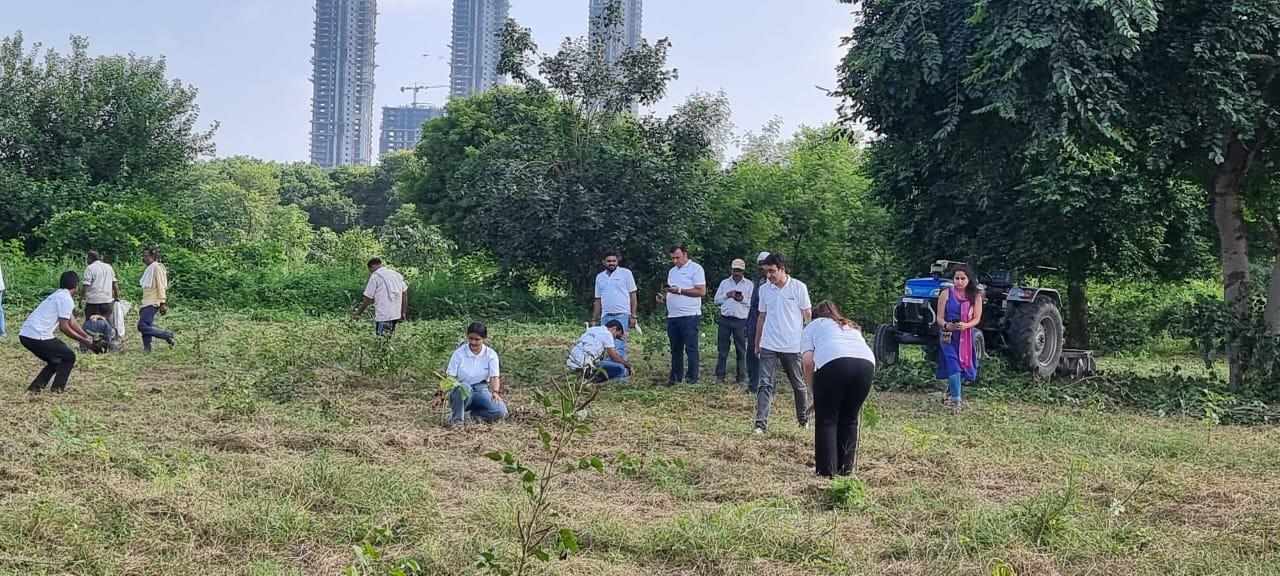
Last year’s highlight was the company’s nationwide clean-up initiative under its annual REHAU Return program, conducted in sync with World Cleanup Day 2024. Over five days in September, teams from Delhi NCR, Mumbai, Bangalore, Pune, and Vadodara joined hands to collect over 1,500 kilograms of waste all of which was responsibly handed over to local municipalities for recycling.
“We believe sustainability begins with us and must ripple outward,” said Mr. Tushar Verma, Executive Vice President, REHAU India. “These initiatives are a reflection of our culture, our people, and our responsibility. We’re deeply aware that true environmental change happens when action becomes habit – right from saving water, reducing waste, or choosing the right materials for long-term impact.”, he added.
This mindset is perhaps best exemplified by REHAU India’s pioneering water conservation initiative at its Vadodara manufacturing facility. The plant recycles approximately 2.1 million litres of water annually, a volume sufficient to meet the yearly water needs of 25 families. In a state like Gujarat, which is classified as water-stressed with rising concerns around groundwater quality – this effort offers a real, measurable contribution toward sustainable industrial practice.
While water conservation and waste management remain core focus areas, REHAU India’s sustainability vision extends to its product innovation too. By embracing eco-conscious materials and engineering solutions that are RoHS-compliant, DOP-free, and often crafted from post-industrial recyclates, the company continues to integrate environmental thinking into the DNA of its offerings right from edgebands, solid surfaces, or energy-efficient interior panels.
In recent years, the group has made meaningful strides in reducing its global carbon footprint not only through pledges, but through measured, tangible action. Since 2018, carbon emissions have been brought down from 135,157 tons to 47,305 tons in 2024 – a dramatic 65% reduction. To put that into perspective, it’s the environmental equivalent of taking over 47,000 cars off the road for an entire year. This kind of progress doesn’t happen overnight. It reflects years of focused efforts: cleaner energy use, smarter processes, and a deeper understanding that true innovation is as much about responsibility as it is about results.
These decisions that are deemed thoughtful, precise, and people-first – are powered by a wider global focus to sustainability across all REHAU subgroups. “We see it not merely as a duty, but a design challenge,” said Verma. “How can we make what we do better, cleaner, more enduring? It starts from the materials we use to the communities we work in, we’re constantly looking for ways to raise the bar.”, he highlights.
As the world reflects on environmental responsibility this June 5, REHAU India’s message is clear: change doesn’t always have to be loud. However, it must be consistent. Through deliberate innovation, mindful resource use, and a culture that puts sustainability into practice, REHAU is helping shape a future that respects both progress and the planet.
- 0
- By Neel Achary

5, Jun 2025
Youth Climate Activism Empowering the Changemakers of Tomorrow

By- Shilpa Gandhi Principal Jasudben ML School and Bloomingdales Pre-Primary, Mumbai
The climate crisis is now not a distant reality. However, despite growing global awareness, climate change education remains a missing piece in the puzzle. UNESCO’s report across 76 countries reveals an alarming gap: while sustainability and environmental topics account for 50% of curricula in grades 3, 6, and 9, climate change gets a dismal 21% share, and biodiversity fares even worse at just 12%. What’s more troubling? In comparison to science curricula, social sciences rarely cover these topics, giving young minds less exposure. We often ignore the power of school education and young minds for a greener future. This has led to changemakers of tomorrow and education being lower in the priority levels in the global climate agenda—something we can no longer afford.
The Rise of Youth Climate Activism
Youth Climate Activism is not a high-profile figure task but has reached a grassroot movement where diverse people come together. In recent years, young leaders have emerged, inspiring millions with their activism. To pacify that social media platforms have become vital tools for spreading awareness, organizing campaigns, and building communities, proving that age is no barrier to creating impactful change. Schools can play a major role in this.
1. Cultivating a Connection with Nature
Experiencing nature firsthand is one of the most powerful ways to nurture a sense of responsibility for the environment.
● Lessons on biodiversity, climate science, and sustainable practices equip students with the knowledge to make informed decisions and take meaningful actions to protect the planet.
● Documentaries on wildlife and nature can help teach students about the importance of natural resources.
● Outdoor activities and Nature camps can help young people develop a love for the natural world.
● Activities such as wildlife observations, guided hikes, wildlife observations, and introduction to the ecosystem deepen their understanding of ecological systems which can ignite passion and curiosity for preservation.
● The use of interactive and gamified approaches can make learning about ecology fun and engaging.
2. Engaging Through Volunteer Activities
The act of giving back is transformative.
● Volunteer initiatives like beach cleanups, tree planting drives, waste segregation, and rewarding students who participate in environmental projects.
● Community conservation projects offer young people hands-on experiences that instill a sense of environmental responsibility. These activities can teach them teamwork, resilience, and the importance of individual contributions to collective goals.
● To reduce the carbon footprint, students can be taught about thrifting and its benefits.
A Collective Responsibility
As per the UN’s latest report, in this century, there is a two-thirds likelihood of global warming of 3 °C. While the effects of climate change are felt universally, their impacts are unevenly distributed across different regions. The solution lies in equipping young minds with knowledge and actively contributing to climate solutions. This will give the ability to integrate climate change into mainstream instruction and equip the next generation to address the defining issue of our time. Empowering young climate activists is not just about ensuring a sustainable future; it is also a collective responsibility. Together, we can make a positive impact on our planet, one action at a time. The future of the Earth is in their hands—and ours.
5, Jun 2025
Hon’ble Chief Minister of Maharashtra Unveils Advanced OT Floor at Susheel Eye Care – A Unit of Dr. Agarwal’s Eye Hospital in Nashik
Mumbai / Nashik, 6th June 2025: In a significant milestone for eye care services in Maharashtra, Hon’ble Chief Minister Shri Devendra Fadnavis today inaugurated the new state-of-the-art operation theatre (OT) floor at Susheel Eye Care, a unit of Dr Agarwals Eye Hospital, College Road, Nashik. The event also marked the first anniversary of the hospital’s successful operations in the region, reinforcing its commitment to providing world-class eye care to the people of Nashik and surrounding districts.
The newly launched OT floor is equipped with cutting-edge technology and infrastructure designed to deliver advanced ophthalmic surgeries, including cataract, retina, cornea, glaucoma, and refractive procedures.

Speaking at the inauguration, Dr. Sharad Patil, Head – Clinical Services, Susheel Eye Care, a unit of Dr. Agarwal’s Eye Hospital said, “The launch of our new OT floor marks a significant milestone in our journey to meet the growing demand for quality eye care in Nashik. This facility enhances our ability to deliver world-class surgical outcomes with even greater precision and efficiency. Over the past year, our hospital has touched thousands of lives, and with this expansion, we are better equipped than ever to provide the full spectrum of advanced ophthalmic services to our community.”
Mr. Rahul Agarwal, COO, Dr. Agarwals Eye Hospital, stated, “Maharashtra is a key focus market for us, and we are deeply honoured to have the Hon’ble Chief Minister grace this landmark occasion. In just one year, our new branch in Nashik branch has also become a Key and trusted eye care destination. This new OT floor is a testament to our continued investment in clinical excellence and infrastructure in the region.”
5, Jun 2025
Empowering Indian Nurses for Global Careers: TERN and TNAI Launch Free Residential German Training Program’s Second Batch
National, 5th June, 2025: In a landmark initiative to boost global career opportunities for Indian nurses, TERN Group, an AI-powered global talent mobility platform, has joined hands with The Trained Nurses’ Association of India (TNAI) to launch a full-time, second residential German language training batch at the TNAI campus in Greater Noida.

This program is designed to equip Indian nurses with the language skills and cultural readiness required for a successful healthcare career in Germany. Offered completely free of cost, the initiative covers training, accommodation, food, and visa preparation, removing all traditional barriers to global migration.
Avinav Nigam, Founder & CEO, TERN Group, said, “This partnership with TNAI goes beyond training — it’s about creating meaningful, long-term career opportunities for Indian nurses on the global stage. With Germany projected to face a shortage of over 500,000 healthcare workers by 2030, there is a clear and urgent demand. By equipping Indian professionals with the right language skills and cultural preparation, we’re not only helping to bridge this critical gap but also empowering nurses to build rewarding international careers with dignity, transparency, and zero cost.”
Mrs. Annie Kumar, National President, TNAI, said, “Our mission at TNAI has always been to empower nurses and elevate the nursing profession in India. We are proud to be shaping a future where Indian nurses are not just participants, but leaders in global healthcare.”
Ms. Evelyn P. Kannan, Secretary-General, TNAI, said, “This partnership with TERN takes that mission forward on a global scale, offering our nurses ethical, transparent, and fully supported pathways to international careers.”
TERN, an AI-powered global talent mobility platform, ethically connects skilled professionals to overseas job opportunities with end-to-end support and zero fees. TNAI, the largest professional association in India for nurses, is almost 118 years old and the apex national association for Indian nurses, committed to advancing their education, welfare, and professional standards. In collaboration with TNAI, TERN is empowering Indian healthcare professionals to build successful global careers. In the first batch of the partnership, the platform had registered an 82% success rate.
Previously, TERN has partnered with NSDC, Sharda University, Kailash Institute, and The Language Spectrum to offer German language training. Among TERN’s public sector tie-ups are TOMCOM (Govt. of Telangana) to place youth in Japan’s healthcare sector.
4, Jun 2025
Grundfos Champions Sustainable Manufacturing on World Environment Day with Smarter Water and Energy Solutions

By-Shankar Rajaram Area Sales Director – Industry INDO Region, Grundfos
04 June 2025: On World Environment Day: “As industries evolve, sustainability must lead the way. At Grundfos, we believe that the future of manufacturing is defined not just by efficiency but by responsibility—reducing resource consumption, minimising emissions, and preserving the planet for generations to come.
Water and energy are the lifeblood of industry, yet their overuse puts immense strain on our environment. It is time for a shift—from consumption to conservation, from waste to reuse, and from outdated methods to innovative, sustainable solutions.
Our intelligent solutions help industries optimise energy and water use, ensuring that every drop and every watt counts. By integrating smarter technologies, we empower businesses to achieve their production goals while reducing their environmental footprint. The path to sustainability is not just a choice—it is imperative. On this World Environment Day, we reaffirm our commitment to driving change, enabling industries to make sustainability not just an ambition but a measurable reality. Together, we can build a future where progress and environmental stewardship are in harmony.”
4, Jun 2025
360 ONE Asset Invests INR 170 cr in Paras Healthcare, Reinforcing Its Commitment to Transformative Healthcare in India
Chandigarh, 4 June 2025: 360 ONE Asset, a wholly-owned subsidiary of 360 ONE WAM, has completed an investment of INR 170.60 crore in Paras Healthcare, a leading multispecialty hospital chain in North India. The transaction includes both primary capital infusion and a secondary component, including a partial exit by an existing investor.
Founded by Dr. Dharminder Nagar, a seasoned entrepreneur with deep expertise in healthcare delivery, Paras Healthcare operates more than 2,000 beds across eight hospitals in Tier 1 and Tier 2 cities in North India. The group has built a strong reputation for offering accessible, high-quality medical care with an emphasis on affordability, underpinned by an asset-light business model with strong unit economics.

Umesh Agrawal, Senior Fund Manager & Strategy Head – Financial Services & Industrials, 360 ONE Asset, said, “This marks our seventh investment in the Indian healthcare services segment, reaffirming our strong conviction in the sector’s long-term potential. We are proud to partner with Paras Healthcare in expanding access to affordable quality care to under-served customers. This investment is also the latest from our market-leading Pre-IPO strategy.”
4, Jun 2025
World Environment Day 2025: India’s Real Estate Sector Anchors the Green Transition

As the world observes World Environment Day with the theme “Ending Plastic Pollution,” the conversation around sustainability has moved beyond policy to on-ground transformation—and the real estate sector is emerging as a critical driver of this change.
With over 430 million tonnes of plastic produced each year globally, and a significant portion ending up in landfills and oceans, industries across the board are being challenged to rethink their impact. Among them, real estate holds a unique position, contributing close to 40% of global carbon emissions, but also possessing the power to reverse that trend through sustainable development.
India, one of the fastest-growing real estate markets in the world, has an even greater responsibility. As the country prepares to urbanize over 400 million people by 2050, the infrastructure being built today will define the carbon footprint of tomorrow. This puts Indian developers at the heart of the climate conversation.
Encouragingly, many have already begun integrating green building practices, embracing certifications like IGBC (Indian Green Building Council) and EDGE (Excellence in Design for Greater Efficiencies), while also committing to nature-positive urbanism.
According to Knight Frank India, more than 35% of new real estate launches in 2024 were green-certified, a sharp rise from just 12% in 2020.
Among the notable voices driving this transformation is Signature Global, one of India’s leading real estate brands. Known for its focus on mid-income and premium housing, the company has placed sustainability at the core of its operations.
Mr. Lalit Aggarwal, Co-founder & Vice-Chairman of Signature Global, said “Green has been our priority and focus since inception. In 2025, we are intensifying our Go Green vision by planting 25,000 trees across Gurugram and across our project sites. Most of our developments are either IGBC or EDGE certified. Sustainability is not an afterthought—it’s embedded in our design, planning and execution. As developers, we have a responsibility to build not just for the present, but for the planet.”
Signature Global’s roadmap includes the integration of smart water and energy management systems, use of rainwater harvesting as standard infrastructure, and a commitment to reducing plastic and construction waste across all project sites. The company has also aligned its practices with India’s national climate goals and global ESG frameworks, reinforcing its position as a green-first developer.
Globally, the real estate sector is undergoing a shift. A recent McKinsey study confirmed that companies actively adopting ESG practices not only contribute to climate resilience but also enjoy higher long-term returns and investor confidence. The built environment, according to the International Energy Agency, holds the potential to deliver more than 20% of the emissions reductions needed to keep global warming below 1.5°C. As a result, countries are now framing urban development not just as an economic priority, but as a climate mission.
Mr. Ashok Kapur, Chairman, Krishna Group and Krisumi Corporation, said, “The real estate sector bears a significant responsibility towards the environment, particularly as India’s housing segment accounts for over 30 percent of greenhouse gas emissions. This makes it imperative to embrace practices that support development while fostering sustainable living. As the nation advances towards its goal of net-zero carbon emissions by 2070, every industry, including real estate, must play a proactive role in shaping a greener future.”
“At Krisumi, sustainability is at the core of our philosophy. Our projects are meticulously designed with eco-friendly features and sustainable architectural principles to minimise environmental impact. This commitment not only nurtures ecological balance but also enhances the overall living experience for our residents,” Mr. Kapur added.
India’s broader vision for the future includes transitioning towards net-zero emissions by 2070, with the real estate and infrastructure sectors playing a defining role. Policy support, such as FAR incentives for green buildings, fast-track environmental clearances, and increasing access to green finance, are helping accelerate this shift. States like Maharashtra, Haryana, and Gujarat are leading the charge with progressive frameworks that reward sustainable construction.
Looking ahead, the green transformation of India’s real estate sector will be shaped by four major trends: wider adoption of climate-linked real estate financing instruments, the use of AI and data analytics in building energy management, incorporation of biodiversity corridors within large-scale projects, and the circular use of materials through modular construction and recycling.
As the world calls for urgent action to end plastic pollution and reduce emissions, India’s real estate sector has begun to redefine its role—from being a source of environmental pressure to becoming a core part of the solution. World Environment Day 2025 is not just a reminder of the challenges, but a recognition of the opportunities to build better.
4, Jun 2025
TVS Motor Company Begins a New Era in Indian Motorsport as Official Provider of Race-Tuned Machines to Independent Teams at INMRC 2025
Chandigarh, June 4, 2025: In a landmark moment for Indian motorsports, TVS Motor Company has become the official race machine provider for the National Championship Pro Stock 200 class at the 2025 Indian National Motorcycle Racing Championship (INMRC), which is scheduled from 6-8th June at MIC, Chennai. This marks the first time in the history of Indian motorsports that a brand has been entrusted to design, develop, and provide race-tuned motorcycles specifically for the National Championship, reaffirming TVS Motor’s leadership and commitment to racing excellence. This breakthrough paves the way to democratize two-wheeler racing, making it easier and more affordable for independent racers to participate, reflecting FMSCI and MMSC’s vision of expanding competitive motorsport.

The National Championship Pro Stock 200 at INMRC 2025 is a new and exciting format introduced by the MIC to elevate competition and support independent racing teams. As part of this development, TVSM will provide race-tuned TVS Apache GP200R motorcycles to independent teams, who will engage their racers to compete in this championship class. Additionally, PETRONAS TVS Racing team will provide complete technical support and machine service and maintenance to ensure peak performance throughout the season. With 20 years of TVS Apache’s racing heritage behind it, this milestone marks a powerful step forward in Indian motorsports. The selection process for participating teams and racers was recently concluded at the Madras International Circuit on May 28, 2025. Seven teams and twelve racers have been selected for this dynamic new class.
Vimal Sumbly, Head – Premium Business, TVS Motor Company said, “At TVS Motor Company, our racing DNA drives us to innovate and lead from the front. We are proud to be the first two-wheeler manufacturer in Indian motorsport history to provide race-tuned machines to independent teams for the National Championship. This landmark development, supported by the vision of the Madras International Circuit makes it easier and more affordable for independent teams to participate and compete at the highest level. This year holds even greater significance as we mark two decades of our flagship performance brand, the TVS Apache – a true embodiment of our ‘Track to Road’ philosophy. As we charge into the new season, we aim not just to race, but to raise the bar for motorsports in India once again.”
SPECIFICATIONS OF THE RACE-TUNED TVS APACHE GP200R
The race-tuned TVS Apache GP200R is engineered for performance and agility, delivering significantly enhanced output and handling. It features:
· Cubic Capacity: 200 cc
· Bike Weight: 105 kg
· Maximum Power: 40% increase over stock engine
· Top Speed: 155+ kph
Key highlights of the race-tuned TVS Apache GP200R include:
· Modified cylinder head for higher volumetric efficiency, high lift camshaft, high compression ratio, advanced ECU with closed-loop control, quickshifter and data logging capabilities, fine-tuned induction and exhaust system.
· Adjustable front and rear suspension, aerodynamic bodywork, lighter racing wheels, aluminum subframe, and higher braking power.
PETRONAS TVS RACING TEAM FOR INMRC 2025 PRO STOCK 300-400CC CLASS
With legendary 11-time national champion Jagan Kumar retired from competitive racing, he will continue to serve as a rider coach for the PETRONAS TVS Racing team. Joining the team this year are two young and skilled racers, Rakshith Dave and Alwin Sundar. They will be joined by ARRC ace rider Sarthak Chavan, along with top performer, Chirant V and the first ever Indian rider to participate as a wildcard entry in world Moto3, KY Ahamed. The team is focused on achieving peak performance and continuing TVS Racing’s legacy of excellence in this competitive class.
BIKE MODIFICATIONS FOR THE 300-400CC CLASS
For the 2025 season, the Pro Stock 300-400cc race bikes will benefit from several enhancements, including engine refinement based on the 2024 season learnings, planned new aerodynamic bodywork from mid-season, and modifications to the rear suspension to enhance handling and performance.
OVER FOUR DECADES OF RACING DNA
For over 43 years, TVS Racing has been at the forefront of Indian motorsports, continuously pushing the boundaries of racing excellence. This commitment to innovation and performance extends beyond the racetrack into TVS Motor Company’s flagship motorcycle brand—TVS Apache, which celebrates 20 years of engineering excellence this year. The TVS Apache series embodies TVS Racing’s ‘Track to Road’ philosophy, integrating race-derived technology into high-performance motorcycles. Spanning 160cc, 180cc, 200cc, and 310cc models, the lineup features segment-first innovations, from ride-by-wire technology to race-tuned fuel injection.
With over 400,000 riders in the Apache Owners Group (AOG), TVS Apache has built a passionate global community, bringing the thrill of racing to streets and track enthusiasts alike. As it enters its next chapter, TVS Apache remains dedicated to offering cutting-edge performance, redefining what it means to ride with power and precision.
4, Jun 2025
Rishikesh’s Rakesh Kumar Wins SOG Grandmaster Series (North & East Zone), Honoured at City Ceremony
Rishikesh, June 4th, 2025: In the recently held SOG Grandmasters Series Championship, Rakesh Kumar from Rishikesh has secured the title of Indian Rummy Grandmaster for the North & East Zone. Kumar’s remarkable achievement was celebrated at a special city ceremony, in the presence of Rishikesh Mayor Shambhu Paswan.
The event was also graced by distinguished guests, including Gaurav Dhyanchand- Tournament Director, SOG Grandmasters Series, President of the Dhyanchand Foundation, and the grandson of hockey legend Major Dhyan Chand and former Air Force officer and hockey player D.P. Raturi.

The SOG Grandmasters Series, organised by the Skillhub Online Games Federation (SOGF), drew over 1,50,000 participants from across India, making it one of the largest skill-based gaming events in the country. The two-day championship, hosted at the Hyatt Regency, Gurugram from April 29 to 30, featured elite competitions in chess, chess for the blind, and rummy, spotlighting India’s rising talent in mind sports.
SOGF is proud to celebrate Rakesh Kumar’s success, which not only brings honour to the region but also inspires a new generation of players to pursue excellence in mind sports.
The SOG Grandmasters Series is recognised for its innovative “phygital” approach, blending physical and digital formats to make mind sports more accessible and inclusive. The championship reflects a broader movement to elevate skill-based games into recognised, competitive disciplines, with India’s sports industry projected to reach $130 billion by 2030.
The initiative was started by Adv. Nandan Jha, Founder of SOGF, with their tech platform partner Rummy Culture.
4, Jun 2025
Traffic Police Visits TAS, Teach Students About Road Safety

– Police organised activities for students and demonstrated traffic rules in a fun way
– The assembly area was converted into a miniature road simulator with various traffic
The students of The Academy School (TAS), Pune, learned important road safety lessons from the Pune Traffic Police. Notably, the activity was organised for students from Nursery to Grade II.
An activity was organised at the TAS campus, wherein official uniformed traffic police officials visited the school to give an orientation and teach road safety to students. The TAS management and officials teamed up to convert the school assembly area into a miniature traffic simulator with roads, traffic signals, zebra crossings, and signage, among other props.
The activity was organised to help students understand the basics of road safety in an age-appropriate and fun way. Officials gave simple demonstrations and taught them traffic rules, such as using pedestrian crossings, traffic signals, basic signage reading, and wearing seat belts and helmets.
“The activity is a part of the daily routine that will stay with them all their lives. It is important to teach them in a way that is not just theoretical but also practical. It was an activity where students had fun and learn simultaneously. Not only did the students listen and watch the demonstrations, but they also participated in the activities that gave a hands-on learning experience,” said Dr. Maithili Tambe, CEO of TAS.


